Connect with us
DAPA Banner

Business

S&P 500, Nasdaq dip with economic data, earnings in focus

Published

on

S&P 500, Nasdaq dip with economic data, earnings in focus
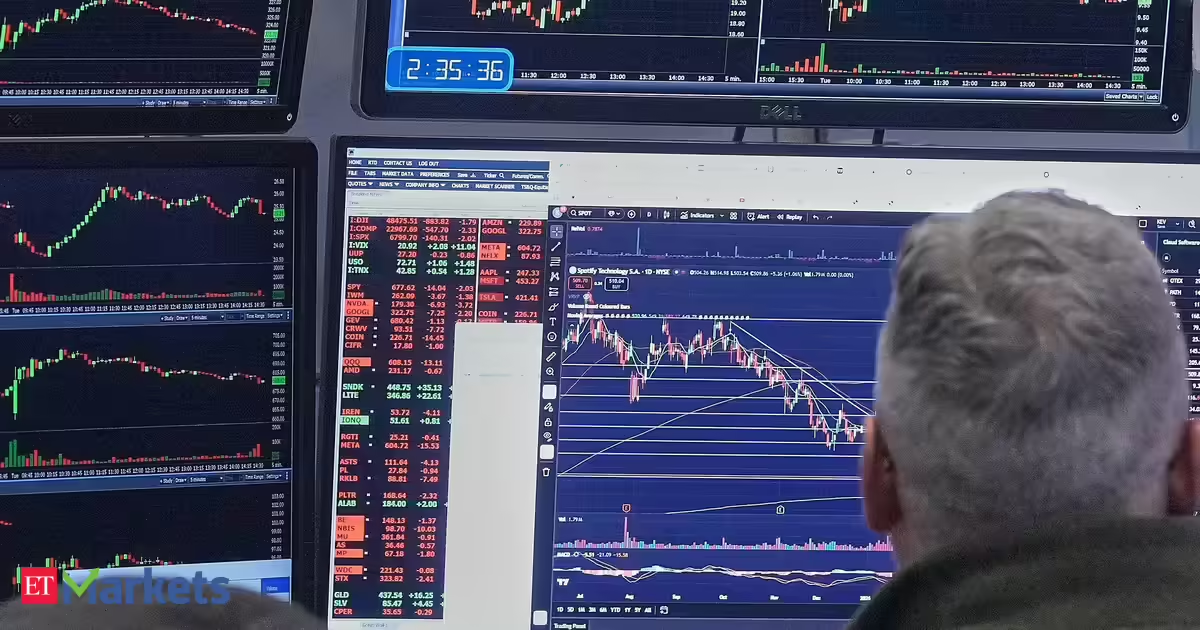
The S&P 500 and the Nasdaq closed lower on Tuesday while the Dow edged up to its third record close in a row, as investors digested disappointing retail sales figures and waited for a key labor market report. The S&P 500 communication services sector was the market’s weakest sector, weighed down by Alphabet shares, which fell 1.8% after Google’s parent said it sold bonds worth $20 billion.

The announcement played in to investor ‌worries about the amount of ⁠money technology ⁠companies say they must spend to support the artificial-intelligence boom, with Amazon, Alphabet, Meta and Microsoft collectively set to spend hundreds of billions in 2026 as they race for AI dominance. Meanwhile, U.S. retail sales unexpectedly stalled in December as households scaled back spending on vehicles and other big-ticket items, suggesting a slower growth path for consumer spending and the economy heading into the new year. The flat reading compared with economists’ estimates for 0.4% growth. Trader hopes edged up for a more dovish Federal Reserve with the probability of a one-notch April rate cut up to 36.9% from 32.2% on Monday, according to CME Group’s FedWatch tool. Markets still expect, however, that the central bank will keep rates on hold until June, when President Donald Trump’s Fed chair nominee, Kevin Warsh, would take charge if approved by the U.S. Senate.

Mark Luschini, chief investment strategist ⁠at Janney Montgomery Scott, ‌described the disappointing retail data as “bad news is good news,” particularly for rate-sensitive industry indexes such as utilities and real estate , ​which were leading the ​benchmark’s sector gainers.

But the strategist pointed to caution ahead of the delayed but closely watched nonfarm payrolls report, due on Wednesday.

Advertisement

“In ⁠anticipation of the jobs report, nobody wants to get too far above their risk budget in ​the event the number does cause some consternation,” said Luschini. Potentially adding some angst was White House economic adviser Kevin Hassett’s ​comment on Monday that U.S. job gains could be lower in the coming months because of slower labor force growth and higher productivity due to AI gains.


The Dow Jones Industrial Average rose 52.27 points, or 0.10%, to 50,188.14, after hitting an intraday record high earlier in the day. The S&P 500 lost 23.01 points, or 0.33%, to 6,941.81 and the Nasdaq Composite lost 136.20 points, or 0.59%, to 23,102.47.
With the S&P 500 narrowly missing a return to its late January record close on Monday, Janney’s Luschini said: “When a security or an index reapproaches a high level again there’s often some hesitation, some contention that has to take place before it can break through that peak again.” Gains ‌of more than 2% in stocks such as Walt Disney and Home Depot helped push up the blue-chip Dow, countering declines in shares including Coca-Cola, which finished down 1.5% after missing Wall Street estimates for fourth-quarter revenue.In other individual stocks, Datadog jumped 13.7% and led S&P 500 ​percentage gainers on the ​day after the cloud-based monitoring and analytics platform ⁠beat quarterly estimates. In the consumer discretionary sector, Marriott closed up 8.5% for its biggest daily gain since April after also hitting a record high. The hotel chain projected a 35% jump in fees from co-branded credit cards, as affluent travelers splurge on luxury vacations. Shares of S&P Global slumped 9.7%, making it the biggest loser in the S&P 500 ​after forecasting 2026 profit below analysts’ estimates. Peers Moody’s and MSCI also fell. Spotify shares soared 14.7% after the audio-streaming platform forecast first-quarter earnings above expectations, benefiting from strong user growth and price hikes.

Advancing issues outnumbered decliners by a 1.47-to-1 ratio on the NYSE where there were 795 new highs and 65 new lows. On the Nasdaq, 2,276 stocks rose and 2,447 fell as declining issues outnumbered advancers by a 1.08-to-1 ratio.

The S&P 500 posted 72 new 52-week highs and 11 new lows while the Nasdaq Composite recorded 105 new highs and 107 new lows.

On U.S. exchanges, 17.89 billion shares changed hands compared with the 20.68 billion-share moving average for the last 20 sessions.

Advertisement
Continue Reading
Click to comment

You must be logged in to post a comment Login

Leave a Reply

Business

Constellation Brands to add Hopwtr to non-alcoholic portfolio

Published

on

Constellation Brands to add Hopwtr to non-alcoholic portfolio

The transaction is expected to close in April.

Continue Reading

Business

Unilever acquisition fulfills McCormick’s global ambitions

Published

on

Unilever acquisition fulfills McCormick’s global ambitions

Unilever Foods’ distribution infrastructure will rapidly scale McCormick’s global footprint. 

Continue Reading

Business

Nike (NKE) earnings Q3 2026

Published

on

Nike (NKE) earnings Q3 2026

A Nike logo is displayed at a Nike store in Austin, Texas, Feb. 5, 2026.

Brandon Bell | Getty Images

Shares of Nike fell in extended trading Tuesday after the retailer warned sales will fall for the rest of the calendar year, led by an expected 20% decline in its key China market during the current quarter.

Advertisement

Chief Financial Officer Matt Friend said during the company’s earnings call that Nike expects sales for its current fiscal fourth quarter to drop between 2% and 4%, compared with Wall Street estimates of a 1.9% increase, according to LSEG.

For the duration of the calendar year, Friend said, the company expects sales to fall by a low single-digit percentage, led by growth in North America and offset by declines in China. That outlook wasn’t comparable to estimates.

Nike CFO: Expect sales down low-single digits from now through end of 2026

Nike beat expectations across the business on both the top and bottom lines for its fiscal third quarter, but its guidance left investors with more questions about how long its turnaround will take. Friend also cautioned that Nike’s guidance was based off of where the global economic picture stands today — and it could change given recent geopolitical volatility.

“We also recognize that the environment around us has become increasingly dynamic, and we could experience unplanned volatility due to the disruption in the Middle East, rising oil prices and other factors that could impact either input costs or consumer behavior,” said Friend. “We are focused on what we can control.”

Shares fell more than 8% in extended trading.

Advertisement

Here’s how the world’s largest sneaker company did for its fiscal third quarter, compared with estimates from analysts polled by LSEG:

  • Earnings per share: 35 cents vs. 28 cents expected
  • Revenue: $11.28 billion vs. $11.24 billion expected

The company’s reported net income for the three-month period that ended Feb. 28 was $520 million, or 35 cents per share. That’s a 35% decline from $794 million, or 54 cents per share, a year earlier. That plunge came as Nike’s gross profit margin slid 1.3 percentage points to 40.2%, “primarily due to higher tariffs in North America,” the company said.

Sales were flat at $11.28 billion, compared to $11.27 billion last year.

What to know about Nike's road ahead in China

While Nike beat expectations on the top and bottom lines, it posted a mixed picture regionally. Nike’s largest market of North America continued to show steady growth, as revenue climbed 3% to $5.03 billion, but that was just shy of Wall Street’s expectations of $5.04 billion, according to StreetAccount.

Meanwhile, Nike’s Greater China market continued to shrink, with revenue down 7% to $1.62 billion during the quarter. Still, that total beat analyst estimates of $1.50 billion, according to StreetAccount.

Nike is continuing to work through a colossal turnaround under CEO Elliott Hill. About a year and a half into his tenure, Hill has made strides in repairing parts of the business, but has been clear that it’ll take time for the entire company to improve given the retailer’s scale and complexity. 

Advertisement

He reiterated that expectation on Tuesday, saying in a news release that “the pace of progress is different across the portfolio.”

“The areas we prioritized first continue to drive momentum,” Hill said. “The work is not finished, but the direction is clear, our teams are moving with focus and urgency, and our foundation is getting even stronger to build the future of NIKE.”

Friend said Nike’s turnaround efforts “will continue to impact results over the balance of the calendar year.”

The group’s Frankfurt-listed shares plummeted 8.7% at the open in Europe on Wednesday.

Advertisement

Nike’s recovery was already coming at a tough time as a global trade war dented its efforts to improve profitability and drive sales from inflation-weary shoppers. But now the athletic company will have to contend with a new war in the Middle East that’s already led to rising gas prices and is expected to send consumer prices even higher, which could push shoppers to cut back on nice-to-haves like new clothes and shoes to save money elsewhere. 

“We continue to be encouraged by the momentum in North America. We’ve got a strong order book for summer,” Friend said. “We’re seeing positive signs and sell through. We’re not seeing a consumer reaction to what’s going on in the Middle East at this point in time, in North America.”

Hill has focused in part on revitalizing Nike’s business with wholesale partners as opposed to direct sales on its website and in stores. Wholesale revenue climbed 5% to $6.5 billion.

Meanwhile, direct sales slid 4% to $4.5 billion.

Advertisement
Choose CNBC as your preferred source on Google and never miss a moment from the most trusted name in business news.
Continue Reading

Business

Slide insurance chief risk officer Larson sells $202k in stock

Published

on


Slide insurance chief risk officer Larson sells $202k in stock

Continue Reading

Business

UK firms hit by energy and supply shocks but confidence remains resilient

Published

on

UK firms hit by energy and supply shocks but confidence remains resilient

More than three quarters of UK businesses are already feeling the impact of the Middle East conflict, as rising energy costs and supply chain disruption begin to feed through into operations, yet confidence at the firm level remains notably resilient.

New research from Barclays, based on a survey of more than 500 business leaders, shows that 66 per cent of companies are experiencing pressure from higher fuel and energy prices, while half report moderate to significant disruption to supply chains.

The findings highlight the speed at which geopolitical instability is affecting day-to-day business activity, with shipping and logistics costs also rising for 43 per cent of firms, adding further strain to margins.

Companies are already responding by adjusting operations and cutting costs. Around 37 per cent have taken steps to reduce energy usage or improve efficiency across their supply chains, while nearly a third have increased prices to offset rising expenses.

Other measures include reducing discretionary spending and tightening overall cost control, with many firms expecting to intensify these actions over the coming months. More than a third are planning further price increases, signalling that cost pressures are likely to continue feeding through to consumers.

Advertisement

The data suggests that while businesses are adapting quickly, the cumulative effect of higher costs and uncertainty is beginning to reshape decision-making across sectors.

Access to finance is emerging as a key factor in maintaining resilience. Barclays’ research shows that 41 per cent of businesses see support with cashflow management as essential, while 39 per cent highlight the importance of working capital and short-term credit.

Existing cash reserves are also playing a crucial role, with more than 80 per cent of firms identifying them as vital in navigating current conditions. Trade finance and cross-border payment solutions are similarly viewed as important tools for managing disruption in international markets.

Abdul Qureshi, head of business banking at Barclays, said the current environment presents a “convergence of pressures” for UK firms.

Advertisement

“For SMEs, dependable cash flow and access to working capital are increasingly important, not only to keep operations running, but to safeguard future growth plans,” he said.

The impact of rising costs is already being reflected in consumer spending patterns. Barclays data shows fuel spending rose by nearly 11 per cent year-on-year at the onset of the conflict, driven by higher prices and demand.

At the same time, discretionary spending is beginning to soften, with spending on holidays and travel falling by almost 8 per cent as households adopt a more cautious approach to their finances.

This shift in consumer behaviour is likely to create additional headwinds for businesses, particularly those reliant on non-essential spending.

Advertisement

Despite these challenges, the research reveals a striking divergence between business-level confidence and broader economic sentiment.

While 78 per cent of firms remain confident in their own prospects and 74 per cent are optimistic about their sector, confidence in the wider economy is significantly weaker. Fewer than half of respondents expressed confidence in the UK economy, with even lower levels for the global outlook.

This suggests that while businesses believe they can manage current pressures internally, there is growing concern about the external environment and its longer-term implications.

Most business leaders expect geopolitical uncertainty to weigh on investment and growth plans over the next year, although the majority anticipate only a moderate impact. A smaller proportion, around one in ten, foresee a significant constraint on their operations.

Advertisement

Matt Hammerstein, chief executive of Barclays UK Corporate Bank, said firms are being forced to balance immediate challenges with long-term planning.

“Businesses are having to manage disruption today while remaining ready to invest and grow when conditions improve,” he said.

The findings paint a picture of an economy under pressure but not yet in retreat. UK businesses are adapting to rising costs and uncertainty, drawing on cash reserves and financial support to maintain stability.

However, the persistence of energy price volatility and geopolitical risk means the coming months will be critical.

Advertisement

While confidence at the firm level remains strong, the widening gap with broader economic sentiment suggests that resilience may be tested further if external conditions deteriorate, particularly if cost pressures intensify or demand weakens.


Amy Ingham

Amy is a newly qualified journalist specialising in business journalism at Business Matters with responsibility for news content for what is now the UK’s largest print and online source of current business news.

Advertisement
Continue Reading

Business

Wayne Jones named new chair of Greater Manchester Chamber at ‘pivotal moment’ for reborn business group

Published

on

Business Live

‘I’m proud to take on this role at such an important time for the organisation’

The new Chair of Greater Manchester Chamber of Commerce, Wayne Jones OBE

Wayne Jones OBE, the new chair of Greater Manchester Chamber of Commerce(Image: Greater Manchester Chamber of Commerce)

Greater Manchester Chamber of Commerce has appointed past president Wayne Jones OBE as its new chair in a move it says “marks a new chapter for the organisation, but one rooted firmly in continuity”.

The Chamber was sold out of administration last year, with directors vowing a “seamless transition” of its business support services. Now Mr Jones, who has been a Chamber board member for more than a decade, is to succeed Phil Cusack as chair.

Mr Jones serves on the Liverpool-Manchester Railway Partnership Board and was in 2016 named a Global Ambassador for Manchester. He was previously a member of the executive board of MAN Energy (now Everllence).

In a statement, the Chamber said: “His appointment comes at a pivotal moment. Greater Manchester Chamber is entering its first full financial year as a new organisation, and the role of Chair has never carried more weight. With the organisation navigating a period of genuine evolution, the Chair’s responsibilities extend beyond the boardroom: providing leadership, representing the Chamber’s voice externally, and maintaining the confidence of the business community across all ten boroughs of Greater Manchester.”

Advertisement

Mr Jones said: “Greater Manchester has always been a place that punches above its weight, and the Chamber has a vital role to play in making sure businesses here have the support, the platform and the representation they deserve. I’m proud to take on this role at such an important time for the organisation, and I’m looking forward to getting to work.”

Emma Holt, president of the Chamber, added: “Wayne has been part of the foundation of this organisation for a significant period. He knows what we stand for, he knows what Greater Manchester needs, and he has the credibility and the drive to help us move forward with purpose. We’re delighted to welcome him into this role.”

The Chamber also paid tribute to Phil Cusak’s “service and commitment” to the organisation.

Advertisement
Continue Reading

Business

CCI survey reveals 82pc of consumers tightening belts

Published

on

CCI survey reveals 82pc of consumers tightening belts

A survey of West Australian households has returned bleak findings, with consumer confidence now lower than during the Covid-19 pandemic.

Continue Reading

Business

Trump says US has plenty of jet fuel for Europe, market disagrees

Published

on

Trump says US has plenty of jet fuel for Europe, market disagrees


Trump says US has plenty of jet fuel for Europe, market disagrees

Continue Reading

Business

Oil extends losses on Iran de-escalation hopes; markets eye Trump’s speech

Published

on


Oil extends losses on Iran de-escalation hopes; markets eye Trump’s speech

Continue Reading

Business

US gas tops $4 a gallon as Iran conflict drives sharp rise in fuel costs

Published

on

US gas tops $4 a gallon as Iran conflict drives sharp rise in fuel costs

U.S. gasoline prices on Monday topped $4 a gallon nationwide, adding pressure to household budgets as oil markets surge in response to the lingering Iran conflict.

Data from GasBuddy showed the national average price for regular gasoline at $4.018 per gallon, with mid-grade at $4.541 and premium at $4.904. AAA data also confirmed the national average moving above the $4 threshold, reinforcing the upward trend in fuel costs.

Advertisement

Prices have risen sharply in recent weeks, with the national average up about $1.06 per gallon, or roughly 36%, when tensions escalated following U.S. and Israeli strikes targeting Iran in late February. 

The increase reflects a broader rally in oil markets, with U.S. crude futures settling at $102.88 a barrel on Monday, up $3.24. Prices also jumped more than $3 in Asian trading after Kuwait said an oil tanker was attacked at a Dubai port, underscoring ongoing supply risks.

OIL HAS SURGED SINCE THE IRAN CONFLICT BEGAN, BUT GAS PRICES MAY NOT BE DONE RISING

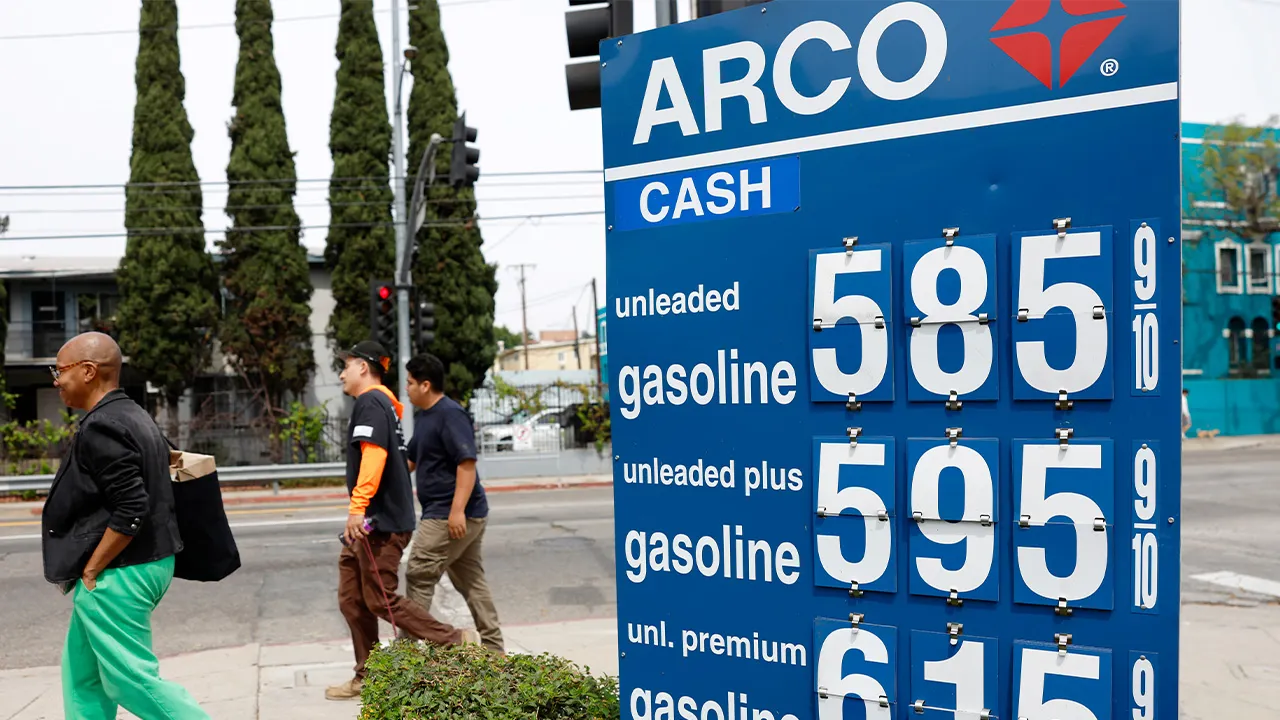
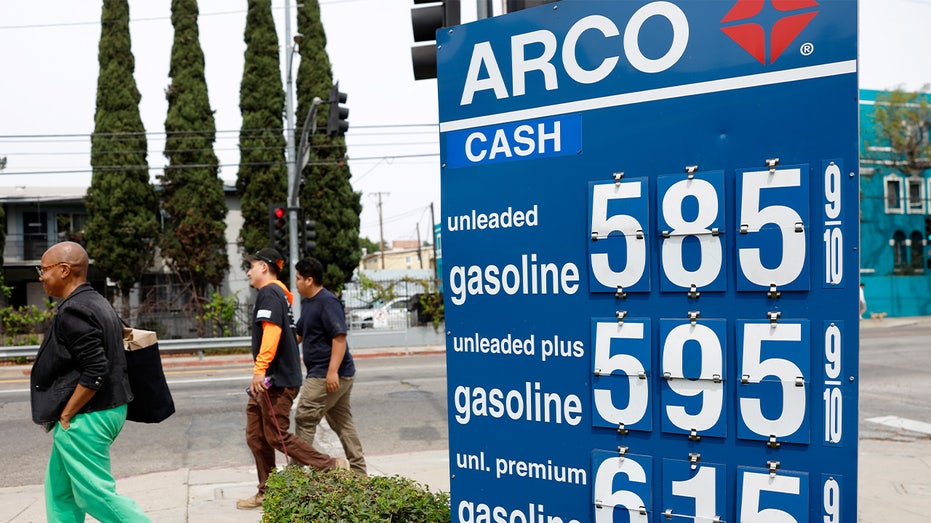
arco gas prices

Gas prices are displayed at an Arco station on March 30, 2026, in Los Angeles. (Mario Tama/Getty Images)

Fuel markets have been particularly sensitive to disruptions tied to the Strait of Hormuz, a critical corridor for global crude shipments, where Iran has effectively restricted traffic, tightening supply expectations.

Advertisement

Further gains at the pump are possible if crude prices continue to rise, analysts say.

The Trump administration has moved to mitigate the impact, issuing a 60-day waiver of the Jones Act that allows foreign-flagged vessels to transport fuel and other goods between U.S. ports. However, industry analysts expect the measure to have only a limited effect on retail gasoline prices.

POWELL WARNS OF NEW ENERGY SUPPLY SHOCK AS GAS PRICES SURGE: ‘NO ONE KNOWS HOW BIG IT WILL BE’

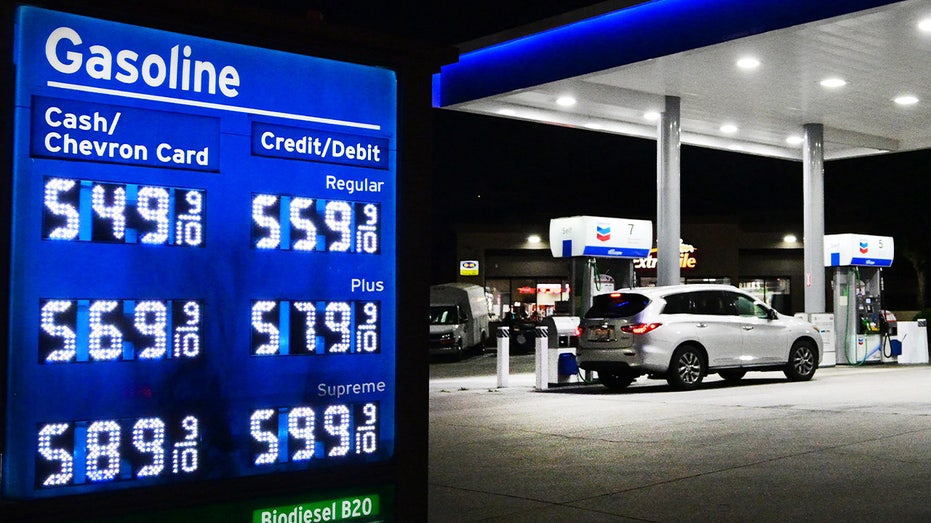
gas station high prices

High gas prices are listed at Chevron station in Los Angeles on March 9, 2026. (Frederic J. Brown/AFP via Getty Images)

Rising fuel costs are weighing on consumers already facing broader price pressures and have emerged as a political challenge for President Donald Trump and congressional Republicans ahead of the November midterm elections.

Advertisement
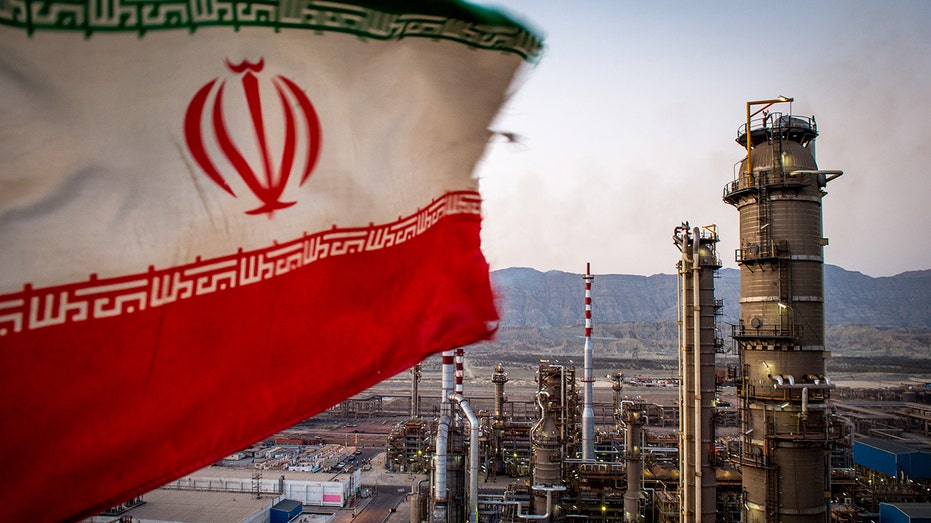
Iranian flag flies above oil refinery

An Iranian national flag flies at the Persian Gulf Star Co. gas condensate refinery in Bandar Abbas, Iran. (Ali Mohammadi/Bloomberg via Getty Images / Getty Images)

CLICK HERE TO GET FOX BUSINESS ON THE GO

Trump has pledged to reduce energy prices and boost domestic oil and gas production, but his second term has so far been marked by market volatility and geopolitical tensions.

Reuters contributed to this report. 

Advertisement
Continue Reading

Trending

Copyright © 2025