
Business
SpaceX Investors Turn To Warren Buffett’s Playbook As Volatile Stock Continues Wild Ride Since Record IPO

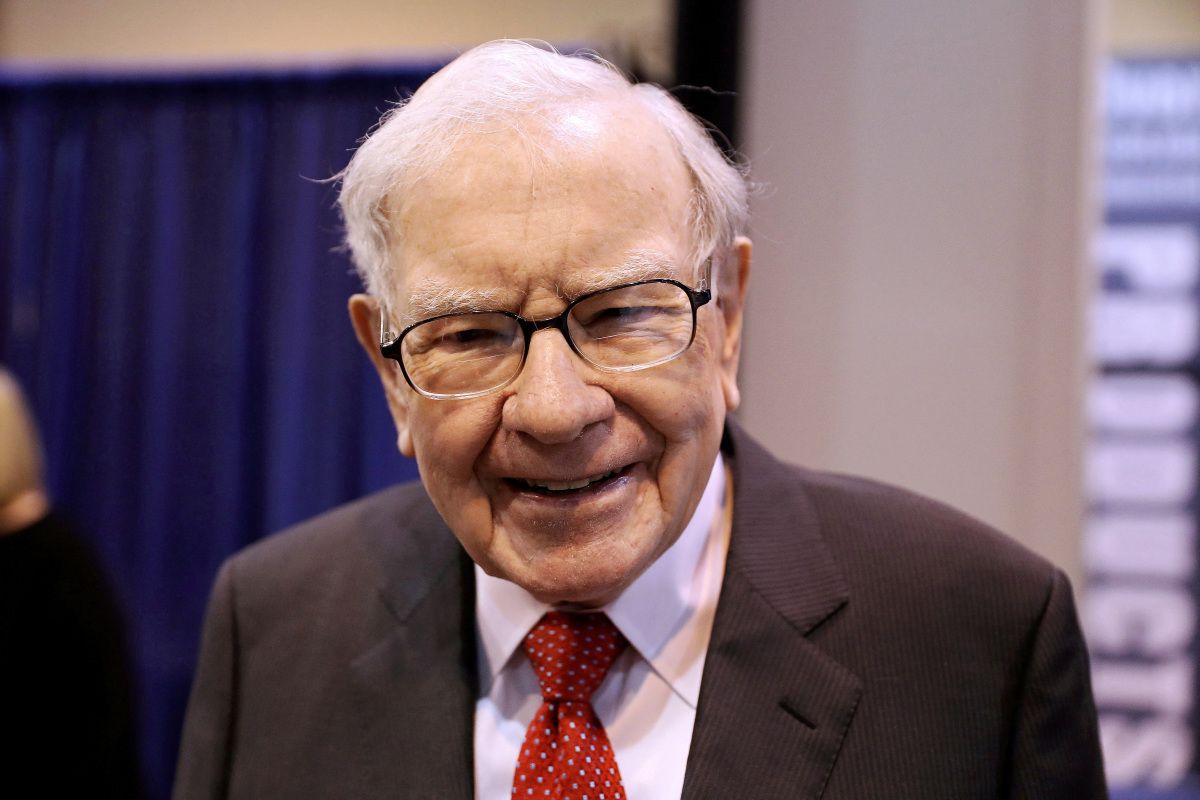
Investors weighing whether to buy shares of Space Exploration Technologies, better known as SpaceX, are increasingly turning to Warren Buffett’s decades-old investing principles for guidance, even though the legendary Berkshire Hathaway chairman has never publicly commented on the stock and has historically steered clear of technology and space-related businesses.
SpaceX went public in June, immediately becoming the seventh-largest company traded on a U.S. stock exchange following what analysts described as a record-setting initial public offering. The listing briefly made SpaceX CEO Elon Musk the world’s first trillionaire, according to reporting from The Motley Fool. Shares now trade on the Nasdaq under the ticker SPCX, and the stock has since experienced substantial volatility, including a notable price crash in the weeks following its debut.
Buffett has long emphasized the importance of investors staying within what he calls a “circle of competence,” meaning individuals should generally limit their investments to businesses and industries they genuinely understand. Buffett himself was famously slow to embrace technology investments throughout most of his career, though Berkshire Hathaway did eventually take a significant stake in IBM after watching the company for decades, an investment that ultimately did not perform particularly well for the conglomerate.
Investment writer Christopher Ruane, writing for The Motley Fool’s UK operation, said he has applied that same framework to his own thinking about whether to invest in SpaceX.
“Buffett stuck to industries and companies he felt he properly understood before investing,” Ruane wrote. “He talked about staying inside his ‘circle of competence.’ Importantly, he also noted that it is possible for someone to grow their circle of competence over time. That matters when it comes to thinking about SpaceX stock. I try to stay inside my circle of competence in the way Buffett discussed. I do not fully understand all of the business, but I feel comfortable that I have a strong enough handle on it to decide whether or not to invest.”
Buffett has repeatedly stated that his aversion to investing in businesses he cannot fully understand is a firm rule rather than a loose guideline. In comments cited by The Motley Fool, Buffett has said in no uncertain terms, “Never invest in a business you cannot understand,” a standard that presents a particular challenge for investors evaluating SpaceX given the company’s increasingly complex corporate structure.
That complexity stems in part from SpaceX’s business spanning multiple distinct operations under one corporate umbrella, including rocket construction and launch services, satellite-based internet provision through its Starlink network, and, following a merger with Musk’s separate company xAI, artificial intelligence and social media operations as well. According to SpaceX’s revised regulatory filing ahead of its IPO, the company estimates it is targeting a combined total addressable market of $28.5 trillion, which it has described as “the largest in human history,” with $22.7 trillion of that figure stemming specifically from enterprise applications rather than its traditional space launch business.
Adding further to the complexity, SpaceX’s filing warned that the company “may issue a significant amount of equity in connection with future transactions,” language that fueled speculation Musk could eventually seek to combine Tesla with SpaceX in some form, a prospect that would further complicate efforts by outside investors to project the company’s future earnings and overall business trajectory.
Beyond the circle-of-competence framework, Buffett has also long emphasized investing in companies with proven, resilient business models and durable competitive advantages, a principle reflected in his historical investments spanning insurance companies and consumer staples businesses such as Coca-Cola. Applying that lens to SpaceX, Ruane pointed to the company’s strong and growing revenue, along with what he described as resilient underlying demand for satellite launches and Starlink’s Wi-Fi provision, both markets he expects to remain substantial over the long term. He also pointed to SpaceX’s proprietary space launch and recapture technology, established customer base and strong brand as factors helping differentiate the company from potential competitors.
Buffett has separately weighed in more directly on how he generally approaches newly public companies, even without commenting specifically on SpaceX. In a 2019 interview referenced by The Motley Fool, Buffett said Berkshire Hathaway had never purchased shares in a company’s initial public offering, reflecting his longstanding skepticism that IPOs are typically structured to benefit the company and its early investors rather than new public shareholders. Buffett has also expressed public admiration for Musk personally, even as he has historically avoided investing in companies carrying the kind of elevated risk and lofty valuation many analysts have attached to SpaceX following its public debut.
The Motley Fool has separately noted that SpaceX continues to report financial losses despite having raised and invested billions of dollars, a pattern the publication compared to the kind of unprofitable, heavily capitalized businesses that Buffett and his late longtime investing partner, Charlie Munger, historically viewed with considerable suspicion. Buffett has offered investors a simple mental exercise for evaluating any potential stock purchase: writing down a clear, specific answer to the prompt “I’m buying this stock because,” and treating an inability to complete that sentence convincingly as a warning sign against making the investment.
Since its June debut, SPCX shares have continued trading with significant volatility, reflecting the broader uncertainty among investors and analysts over how to properly value a company spanning such a wide and rapidly evolving range of business lines. As of recent trading, SpaceX shares were down more than 1% on the day, according to Yahoo Finance UK market data, continuing a pattern of day-to-day price swings that has characterized the stock since its listing.
For everyday investors weighing whether SpaceX belongs in their own portfolios, the recurring conclusion among those applying Buffett’s principles has generally been one of caution rather than outright avoidance, with some, including Ruane, describing SpaceX as sitting close to the edge of their personal circle of competence, but not entirely outside it. Whether that framework ultimately proves useful for evaluating a company as complex and fast-evolving as SpaceX remains an open question that individual investors will likely need to continue weighing for themselves as the stock’s post-IPO volatility continues to play out in the months ahead.


The fund received an anchor allocation of 10.25 lakh shares in the ESDS IPO at ₹429 apiece, worth about ₹44 crore. The investment accounted for nearly 5% of the fund’s assets of around ₹907 crore as of July 31, 2026. ESDS Software more than doubled from its issue price on September 4, closing at ₹908.40, a gain of nearly 112%. The surge helped lift the fund’s NAV by 5.19% in a single day, even as the benchmark Nifty 50 gained just 0.1%.
 ET Bureau
“One of our anchor allocations from a recent IPO in this space saw a strong listing, which contributed to the fund’s NAV movement on the day,” said Motilal Oswal Mutual Fund‘s Varun Sharma, who manages the Digital India Fund.
The fund’s NAV could get a further boost after ESDS Software remained locked at the 20% upper circuit at ₹1,090.05 on Monday. Based on the fund’s exposure to the stock, the latest rise could translate into an additional gain of around 1% for unitholders, assuming other portfolio holdings remain unchanged.
Such sharp single-day gains in equity fund NAVs are rare, as schemes typically spread their investments across a diversified portfolio of stocks to limit the impact of sharp moves in any single holding. A 6-7% upmove in a fund’s NAV is usually 30-50% of a diversified equity scheme’s average annual gains.

Read more: Sebi extends deadline for angel funds to comply with accredited investor mandate
Among the fund’s top holdings are Eternal, PB Fintech, Coforge, Hexaware Technologies and One97 Communications. Motilal Oswal Digital India Fund invests across the broader technology ecosystem, spanning digital, internet, artificial intelligence, software and platform-led business models.Sharma said the fund’s focus remains on “identifying well-run, scalable businesses with long-term structural growth potential rather than on any single event or listing.”
Technology funds have underperformed over the past year amid AI-led disruption, a sharp rotation away from momentum sectors and a cooling-off in elevated valuations. The BSE IT TRI has declined 13.83% in the past year, while Motilal Oswal Digital India Fund has gained 3.29%.
Business
DOJ Expands Beef Price Probe To Kroger, Walmart, Publix And Five Other Major Grocery Chains Over Rising Prices

WASHINGTON — The Justice Department is expanding its antitrust investigation into beef affordability to include eight of the country’s largest grocery retailers, seeking detailed records on pricing, costs and profit margins as consumers continue facing sharply elevated beef prices at supermarkets nationwide.
The department’s Antitrust Division announced the expanded probe Tuesday in a post on X, confirming that letters had been sent to Kroger, Walmart, Publix, Albertsons, Aldi, Ahold Delhaize USA, Costco and Amazon.
“Beef prices are a critical concern to Americans, and a priority for this Justice Department,” the department wrote in its announcement.
Associate Attorney General Stanley E. Woodward Jr. signed the letters, which were dated July 16, according to copies obtained by Newsweek. In the letters, Woodward described beef pricing as “a matter of critical concern to the American public, and a priority for the United States Department of Justice.” The department requested detailed information covering the companies’ retail sales and pricing, costs and profit margins for beef products, their internal analyses of market trends, and their wholesale arrangements with meatpacking companies, spanning the period from 2020 through 2026.
The expanded retail-level scrutiny builds on an earlier phase of the investigation. According to Fox Business, the DOJ launched an initial antitrust probe in May targeting the so-called “Big Four” meatpackers, JBS, Cargill, Tyson Foods and National Beef, companies the department says collectively control more than 85% of the U.S. beef processing market. Tuesday’s announcement extends that scrutiny further down the supply chain to the retail level, where consumers directly purchase beef products.
The investigation comes amid a dramatic run-up in beef prices over the past several years. According to Bureau of Labor Statistics data cited by Forbes, the average price of ground beef climbed from $3.95 per pound in December 2020 to $6.89 per pound in July 2026, an increase of roughly 74%, far outpacing the broader inflation rate of 3.4% recorded over a comparable period. Uncooked beef prices specifically were up 9.4% from a year earlier as of July, according to the same data.
Analysts have pointed to several converging factors behind the sustained price increases, including a national cattle herd that has fallen to its lowest level in roughly 75 years, driven by prolonged drought conditions and other supply pressures affecting ranchers across the country.
According to Reuters, the Antitrust Division’s broader investigation into meatpackers began after President Donald Trump publicly accused those companies of manipulating beef prices. That scrutiny has already produced tangible legal consequences for at least one major processor: Tyson Foods agreed earlier this year to settle a class-action lawsuit for $82.5 million after grocers accused the company of deliberately restricting beef supply in order to inflate prices across the United States.
Beef affordability has emerged as a persistent political challenge for the Trump administration throughout the year. In August, Trump announced he would temporarily suspend tariffs on certain beef imports in an effort to bring cheaper meat into the domestic market, framing the move as a way to ease pressure on American consumers while giving the country’s cattle herd time to rebuild.
“As we work to rebuild this herd and help our ranchers, for the next 90 days, the United States will allow up to 300,000 metric tons of product for ground beef to be imported with no out of quota tariff,” Trump wrote in an Aug. 21 post on Truth Social. “We have a commitment that this beef will be sold at 25 percent below current market prices. This deal will reduce prices for Americans while giving space for our Great American Beef Herd to grow again.”
That decision drew immediate pushback from cattle ranchers and some Republican lawmakers, who argued the temporary import expansion could ultimately undercut the same domestic producers the administration says it wants to support. Sen. Thom Tillis, R-N.C., was among the most vocal critics of the plan.
“If you think that providing subsidized beef for some period of time is going to make farmers happy and prices go down on a systemic basis, you’re wrong,” Tillis said. “It doesn’t happen.”
According to Fox Business, the expanded retail-level investigation is intended in part to give ranchers an additional avenue for addressing pricing pressures beyond the powerful meatpacking companies that stand between cattle producers and grocery store shelves, following the backlash Trump’s tariff-suspension plan generated within the farming community.
The eight companies now facing DOJ scrutiny represent a broad cross-section of the American grocery industry, spanning traditional supermarket chains, warehouse clubs and online retail. Newsweek’s review of the letters noted that the specific ground beef products and pricing referenced varied by retailer, including offerings such as Kroger’s 80/20 Ground Beef Tray, Publix Market Ground Beef, Walmart’s All Natural 80% Lean/20% Fat Ground Beef Chuck, and comparable products sold under Albertsons’ Signature Select brand, Aldi’s Simply Nature organic line, Ahold Delhaize’s Nature’s Promise brand, Costco’s Miami Beef offering and Amazon Grocery’s own private-label ground beef.
The Justice Department has not publicly detailed the specific legal theory underlying its investigation into the retailers beyond describing the probe broadly as concerning “beef affordability.” Several of the companies contacted for comment, including Publix and Walmart, did not immediately respond to media inquiries regarding the investigation, according to multiple outlets that reached out following the DOJ’s announcement.
With the letters seeking six years of detailed pricing, cost and margin data from each of the eight companies, the investigation is expected to take considerable time to develop, and it remains unclear what, if any, enforcement action might ultimately follow depending on what the requested records reveal. For now, the expanded probe signals that federal officials view potential anticompetitive practices at the retail level, not just among meatpackers, as a possible contributing factor behind the sustained rise in beef prices that has continued weighing on American consumers’ grocery budgets throughout 2026.

Yes. Corporate subscriptions are available for teams and organisations, with discounted rates as user numbers increase. Pricing starts from $1,625 + GST per user.
Get in touch
to discuss the right option for your organisation.
Business News subscriptions are used by executives, investors, consultants and professionals who need to stay informed and make better decisions about the WA market. When you subscribe you’ll get
- Unlimited access to WA’s most trusted business journalism
- Data & Insights — detailed profiles of WA companies, people, projects and deals
- MyBN — a personalised feed based on the companies, people and sectors you follow
- Special publications and industry reports
- Daily and weekly email newsletters
Data & Insights is a research tool built specifically for the WA market. It draws on more than 30 years of Business News reporting, updated regularly to reflect what’s happening now. Use it to:
- Look up detailed profiles of WA companies, including financials, directors and ownership
- Find decision-makers and track their career movements
- Research live and completed projects across WA industries
- Monitor deals, appointments and market activity
- Access industry rankings and league tables
Data & Insights is updated daily by our dedicated research team, which uses the latest announcements, ASX filings and editorial coverage to keep our person, company, list and project records up to date.
Business News welcome all opportunities to make our dataset accurate, complete and current, so if you have an update request, please email the team at
general@businessnews.com.au, and we’d be happy to assist.
MyBN
is part of every subscription. It’s your personalised view of Business News. You can follow the companies, people, sectors and projects that matter to you, and get a news feed and alerts tailored to your interests. You can save articles to read later and retain only what you need.
Only subscribers have full access to all content on the Business News website.
If staying informed about the WA economy is part of your job, and/or you’re looking for networking opportunities in WA, Business News is built for you.
Business News subscribers are:
- Executives and directors tracking competitors, clients and market movements
- Investors and advisers researching companies, deals and industry trends
- Consultants and professionals staying across sectors relevant to their clients
- Business owners looking for leads, context and market intelligence
Most Business News publications cover national or global markets. Business News is focused entirely on Western Australia, which means the journalism, the data and the intelligence are all built around WA companies, people and projects — not adapted from a national feed. Data & Insights, included with every subscription, combines more than 30 years of WA-specific editorial research with live business data. There’s no comparable product for the WA market.
The Morning Digest Email provides a comprehensive wrap of the major headlines, relevant to WA business, and includes with a snapshot of the overnight news covering oil, gold and ASX-listed companies.
The Afternoon Wrap Email focuses on the news covered by our team of journalists during the course of the working day, including exclusive stories and analysis, all of which relates to WA business and the local economy.
The BN Weekender Email contains a wrap of the Business News from the week that was, highlighting the top stories in each area of WA business.
Sign up for free.
We’re happy to help.
Get in touch
and our team will come back to you.
Business
Is The Stock Market Open Today? NYSE, Nasdaq Closed For Labor Day 2026 Holiday, Markets Reopen Tuesday
NEW YORK — U.S. financial markets are closed Monday, Sept. 7, in observance of Labor Day, with both the New York Stock Exchange and the Nasdaq suspending trading for the federal holiday before resuming normal operations Tuesday morning.
Labor Day is one of 10 official holidays the NYSE and Nasdaq observe each year, and it consistently falls on the first Monday in September. This year’s observance lines up with the federal holiday designated by the U.S. Office of Personnel Management, which also closes government offices, banks and postal services nationwide.
Trading on both major exchanges will resume at their standard 9:30 a.m. Eastern time opening bell Tuesday, Sept. 8, following the closure. Regular U.S. stock market hours run from 9:30 a.m. to 4 p.m. Eastern time, Monday through Friday, with both exchanges also closed on weekends year-round.
Bond markets are following the same closure schedule Monday, in line with guidance from the Securities Industry and Financial Markets Association, the trade group representing securities firms, banks and asset managers. Bond markets close on nine of the same 10 stock market holidays each year, the lone exception being Good Friday, and also close for Columbus Day and Veterans Day, two federal holidays the stock exchanges themselves remain open for.
Investors looking ahead to the rest of 2026 have three more scheduled market closures remaining on the calendar. The NYSE and Nasdaq will close for Thanksgiving Day on Thursday, Nov. 26, and for Christmas Day on Friday, Dec. 25. Both exchanges will also observe two abbreviated trading sessions this year, closing early at 1 p.m. Eastern time on Friday, Nov. 27, the day after Thanksgiving, and again on Thursday, Dec. 24, Christmas Eve.
While U.S. equity markets sit idle Monday, several major international exchanges are continuing normal operations. According to reporting compiled ahead of the holiday, the London Stock Exchange, the Shanghai Stock Exchange and Hong Kong’s Stock Exchange are all open for regular trading Monday, since Labor Day is a specifically American holiday not observed by those markets. Canada’s Toronto Stock Exchange, by contrast, is closed alongside U.S. markets, given that Canada observes its own Labor Day on the same date.
For investors who prefer to keep trading regardless of the holiday, cryptocurrency markets remain a notable exception to the closure. Unlike traditional stock exchanges, cryptocurrency trading platforms operate continuously around the clock, without pausing for federal holidays, weekends or any scheduled closures.
Investors with brokerage accounts do have some limited options for placing orders even while the major exchanges are closed. Extended trading hours allow investors to place buy and sell orders for stocks and exchange-traded funds outside of standard market hours, though brokers generally caution that this comes with added risk. Trading volume during extended or after-hours sessions tends to be considerably lighter than during regular trading hours, which can lead to greater price volatility and increases the chance that an order may not execute in full, or at the price an investor originally intended.
Major American banking institutions are also observing the Labor Day holiday, with branch locations closed at institutions including Wells Fargo, JPMorgan Chase, Capital One and Bank of America. Customers seeking in-person banking services will need to wait until branches reopen Tuesday, though most digital and automated banking services, including online banking, mobile apps and ATMs, are expected to remain functional throughout the holiday.
Monday’s closure comes as U.S. markets head into the historically volatile month of September following a solid August. The S&P 500 climbed 2.6% in August, according to available market data, even as September has historically been the weakest month of the year for U.S. equities, with the index averaging a 2.7% decline over the trailing five-year period during that month specifically. That seasonal pattern has led some analysts to caution investors to brace for potential volatility in the weeks following the holiday, even though past performance in any individual month offers no guarantee of how markets will actually behave going forward.
Labor Day itself traces back to legislation signed into law by President Grover Cleveland in 1894, formally establishing the holiday to recognize the economic and social contributions of American workers. The observance predates the modern structure of the NYSE and Nasdaq holiday calendars by decades, though it has long since become one of the standard closures observed by U.S. financial markets each year alongside other major federal holidays.
Looking further ahead, the stock market’s next scheduled closure after Labor Day will not come until Thanksgiving in late November, meaning investors face a lengthy stretch of uninterrupted regular trading days between the two holidays, aside from any unscheduled closures that might arise from severe weather or other extraordinary circumstances. Such unscheduled closures remain historically rare; the NYSE and Nasdaq have closed for more than the standard holiday schedule only a handful of times over the past century, including during Superstorm Sandy in 2012 and in the days immediately following the Sept. 11, 2001, terrorist attacks.
For investors wanting to plan around future market closures, the NYSE has already published its holiday calendar extending through 2028, giving traders and portfolio managers ample advance notice of upcoming closures well beyond this year’s remaining schedule. With Monday’s Labor Day closure now underway, U.S. markets are set to reopen Tuesday morning for a full week of regular trading, resuming the normal rhythm of daily market activity following the three-day holiday weekend.

Japan Q2 GDP beats forecast, supporting case for BOJ rate hike
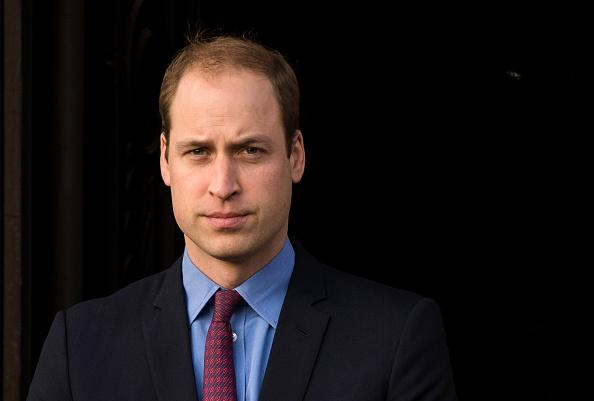
LONDON — Prince William and Princess Kate are deliberately avoiding any “knee-jerk” reaction to Prince Harry and Meghan Markle’s return to the United Kingdom, according to royal insiders, with experts describing the couple’s calculated restraint as its own kind of message to the Duke and Duchess of Sussex.
A source told People on Sept. 1 that William and Kate are consciously choosing not to make a fuss over the Sussexes’ move back to Britain, following six years living primarily in the United States.
“They are watching this space. It’s private — they don’t feel the need to say anything or demonstrate anything outwardly,” the source told the outlet.
Kinsey Schofield, host of the YouTube channel “Kinsey Schofield Unfiltered,” told Fox News Digital that Harry and Meghan’s relocation alone will not automatically repair their relationship with senior royals.
“Trust is earned through behavior over time, not by changing your zip code,” Schofield said. “Prince William and Catherine don’t appear to feel any urgency whatsoever. Harry and Meghan made the dramatic decision to return to Britain. That doesn’t mean the Prince and Princess of Wales suddenly have to rearrange their lives around them. If Harry genuinely wants a relationship with his brother again, I suspect William is going to want to see consistency rather than another grand gesture.”
Royal commentator Richard Fitzwilliams told Fox News Digital that the timing and manner of the Sussexes’ return will not necessarily help their standing within the royal family.
“Moving back to Britain, especially in the way they did it and with Harry, we are told, still demanding an apology, won’t get them brownie points with the royal family,” Fitzwilliams said. “However, it does give them the initiative as everyone has been so shocked. William ostentatiously played polo with Catherine supporting him on the day the Sussexes saw the King and Queen and didn’t bother to mention their plans and those fit their children, so we are told.”
Christopher Andersen, author of the book “Kate!,” said William and Kate are unhappy that the Sussexes are once again drawing significant public attention just as their own family navigates a major milestone.
“Just at the moment when their eldest child is leaving home for the first time to start his first year at prep school, the Sussexes land back in the U.K. to stir things up,” Andersen said. “Granted, George isn’t going very far — Eton is a brief stroll down the hill from Windsor Castle and a short ride from the family home, Forest Lodge. But it’s a big deal when a future king enrolls at Eton — when William enrolled there in 1995, it was treated as a major news event. Even though Harry and Meghan have agreed to lie low for the next few weeks, it’s inevitable that they will be a major, and highly unwelcome, distraction.”
Andersen went further, describing outright skepticism within the Wales household toward the Sussexes’ underlying motivations.
“The Prince and Princess of Wales are suspicious of the Sussexes’ motives, to say the least. They are not about to invite Harry and Meghan over for tea any time soon,” Andersen said. “William and Kate are playing it cool publicly, but obviously they are exasperated. They were not prepared for this — certainly not now. There is a great deal of speculation about what Harry and Meghan really are up to — and not just inside the Waleses’ camp. Harry and Meghan’s arrival on the royal family’s doorstep puts the King and Camilla in an awkward position — and for several reasons.”
Andersen argued that King Charles faces a genuine dilemma no matter how he chooses to respond to his younger son’s return.
“If the King welcomes his estranged son back into the royal fold, will William see it as a betrayal — especially after all the damning things Harry wrote about in his memoir Spare?” Andersen said. “Will Charles also risk alienating his subjects, the vast majority of whom want Harry and Meghan to return to the U.S.? Keep in mind that recent polls show Meghan with a 22 percent approval rating in Great Britain. It won’t sit well with nearly 80 percent of the country if the King says all is forgiven. And then there is the issue of security. With Archie and Lilibet attending school in the Cotswolds, the King is going to look awfully heartless if he continues to deny the Sussexes’ royal protection.”
Royal broadcaster Ian Pelham Turner told Fox News Digital he expects public sentiment toward Meghan and Kate to become its own point of ongoing competition.
“Recently I suggested that there was going to be a battle royal between Meghan and Kate over who would eventually win the public crown for the Queen of hearts,” Turner said. “My personal attitude is that William felt comfortable with Harry in America because he could constantly control the narrative for being the future King without any brand interference from his brother.”
Turner suggested the dynamic could grow more contentious behind the scenes going forward.
“In doing so, his vision of the future has allegedly brought disagreement with King Charles to a point where there has been talk of very heated rows,” Turner said. “So, I am not sure there are cool heads with William and Kate who may be hoping that behind the scenes attacks on Meghan again criticizing any aspirations she may have of building a career in Britain may bear fruit.”
The commentary comes as William and Kate continue their own public schedule largely unaffected by the Sussexes’ return, including a recent appearance together at a polo event in Windsor. Harry and Meghan, for their part, are reported to have committed to keeping a low profile in the weeks surrounding Prince George’s start at Eton College, though royal watchers say sustained public and media attention on the Sussexes’ presence in Britain is likely regardless of how much the couple themselves attempt to stay out of the spotlight.
With King Charles facing competing pressures from within his own family and from broader public opinion polling that remains unfavorable toward the Sussexes, royal commentators say the coming weeks and months are likely to offer a clearer picture of whether Harry and Meghan’s return marks the beginning of any genuine reconciliation, or simply a new chapter in a family rift that has persisted since the couple’s initial departure from royal duties in 2020.

BNY Investments is a global, multi-specialist asset management group, underpinned by the strength and resilience of BNY, with its 240-year history and experience. Managing nearly $2 trillion in assets, they offer investment solutions developed and managed by talented asset class specialists, each with distinct philosophies and proven approaches. Note: This account is not managed or monitored by BNY Investments, and any messages sent via Seeking Alpha will not receive a response. For inquiries or communication, please use BNY Investments’ official channels.

A majority of federal grants handed out as part of an invitation-only scheme to upgrade community infrastructure was directed to Labor seats, a report has found.

Equity Bancshares, Inc. (EQBK) Lincoln Bancorp – M&A Call – Slideshow

A company of Manulife Investment Management, John Hancock Investment Management serves investors through a unique multimanager approach, complementing our extensive in-house capabilities with an unrivaled network of specialized asset managers, backed by some of the most rigorous investment oversight in the industry. The result is a diverse lineup of time-tested investments from a premier asset manager with a heritage of financial stewardship. Note: This account is not managed or monitored by John Hancock Investment Management, and any messages sent via Seeking Alpha will not receive a response. For inquiries or communication, please use John Hancock Investment Management’s official channels.
ESDS rally sparks 5.19% NAV jump in Motilal Oswal Digital India Fund

2026 Summer Box Office Sets All-Time Record With $4.76 Billion

Blue Jays’ Santander to begin rehab assignment with Bisons

Weekend Open Thread – Corporette.com

Weekend Open Thread: Brooks Brothers

London Mayor Sadiq Khan handed a peerage by Keir Starmer alongside 15 other Labour figures… just days before the PM leaves No10

The bond meltdown and AI bubble brewing the next global financial crisis | The Business | ABC NEWS

Counting the leftover money in my wallet. #cashenvelopes #cashstuffing #savingschallenges

Psychology Says: Never Share Financial Issues. True Honest Explanations. #motivation #moneymind
-

 Fashion3 days ago
Weekend Open Thread: Beyond Yoga
-
 Crypto World3 days ago
Bitcoin price stalls near $82K as key resistance holds
-

 Politics3 days ago
Best Gaming Laptops, CPUs, TVs, And Keyboards To Upgrade Your Set Up For GTA VI
-

 Tech4 days ago
The Birds Outside, Drawn For You Automatically
-

 Crypto World4 days ago
IMF Says El Salvador’s Post-Review Bitcoin Purchases Used No Public Funds
-
 Crypto World3 days ago
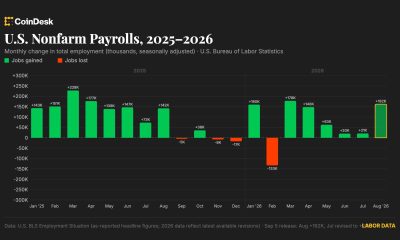
U.S. added stronger than expected 162,000 jobs in August as labor market bounced back
-

 Sports4 days ago
Alexandre Pato consortium’s Northampton Town investment approved
-

 Sports4 days ago
Commanders’ Chig Okonkwo is a top breakout fantasy football candidate
-

 Sports3 days ago
Golden Eaglets Drawn in Group B for 2026 WAFU B U17 Championship
-
 Crypto World3 days ago
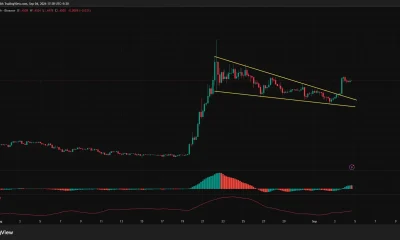
XRP price breaks falling channel as bulls target $1.53
-

 Politics4 days ago
A new European chapter for Gibraltar
-

 Politics3 days ago
How To Avoid Winter Colds: 4 Everyday Habits That Spread Germs, Says Pharmacist
-

 Politics4 days ago
The House | Bin the lectures, bring gossip and be ready to banter: how the new PM should prepare for his Trump encounter
-

 Crypto World3 days ago
From warning to listing: UK’s largest retail investment platform opens access to crypto ETNs
-

 Crypto World3 days ago
FinCEN flags $12.7B tied to Southeast Asia crypto investment scams
-

 Tech4 days ago
A Worthy Android Ereader, With Some Tradeoffs
-

 Tech3 days ago
How To Edit Claude’s Memory
-

 Crypto World3 days ago
Trezor Data Breach Impacts 67,000 More US Customers
-

 Politics4 days ago
33 Cosy Autumn Home Decor Ideas: Blankets, Pumpkin Decorations, And Candles
-

 Tech3 days ago
beyerdynamic AVENTHO Y Debuts at IFA 2026 and Makes Wireless Headphones Less Disposable
You must be logged in to post a comment Login