
Business
SpaceX Revolutionizes Global Internet in 2026


SpaceX has pushed its Starlink megaconstellation past the 10,000-satellite mark in orbit, a milestone that underscores the company’s rapid dominance of low-Earth orbit and its ambition to deliver high-speed internet to every corner of the planet, according to a widely shared social media post and tracking data released Sunday.

Finance and space commentator Wall Street Mav highlighted the achievement in a Truth Social-style X post on Easter Sunday, April 5, 2026, noting that Starlink now accounts for more than two-thirds of all active satellites circling Earth. The post, which included a striking animation of the constellation, quickly garnered hundreds of thousands of views and sparked discussion about the future of global connectivity.
As of April 5, independent trackers report 10,168 operational Starlink satellites, with 10,177 in orbit and more than 11,700 launched since the program began in 2019. The constellation has grown steadily, crossing the 10,000-operational threshold in mid-March when a Falcon 9 mission from Vandenberg Space Force Base in California added another batch of satellites.
The low-altitude design — satellites orbiting between 480 and 550 kilometers — is central to Starlink’s strategy. At these heights, even uncontrolled satellites will naturally deorbit within about five years due to atmospheric drag, burning up harmlessly on re-entry and minimizing long-term space debris, the X post emphasized. SpaceX equips each satellite with a collision-avoidance system that allows autonomous maneuvers to steer clear of other objects, including the company’s own fleet.
“Every satellite is in a lane to avoid other Starlink satellites,” the post stated. “They all are connected to a collision avoidance system and can make small course adjustments if needed.”
SpaceX now has over 10,000 Starlink satellites in orbit (and growing), providing internet data service to every corner of the earth. Even ships at sea or aircraft in the sky can receive high speed internet service.
Over 2/3 of the active satellites in orbit are Starlink now. And… pic.twitter.com/ApetXzroOv
— Wall Street Mav (@WallStreetMav) April 5, 2026
This infrastructure enables Starlink to provide high-speed, low-latency internet anywhere on Earth without the need for expensive underground or undersea fiber cables. Users require only a small dish antenna that automatically scans the sky for the nearest satellite. The service already reaches ships at sea, aircraft in flight and remote communities previously cut off from reliable broadband.
Starlink’s expansion comes as the company reports more than 10 million active customers worldwide as of early 2026, with median download speeds around 170 Mbps and Priority plans reaching up to 300 Mbps. Coverage now blankets nearly all populated regions, including polar areas, with uptime exceeding 99.9 percent. In 2025 alone, the network added more than 4.6 million new customers and expanded to 35 additional countries and territories.
The milestone reflects SpaceX’s aggressive launch cadence. The company has conducted dozens of Starlink missions in 2026, deploying batches of 25 to 29 satellites per flight. Recent launches have included direct-to-cell capabilities for mobile connectivity and improved V2 Mini satellites with inter-satellite laser links for better global performance.
Elon Musk, SpaceX’s founder and CEO, has described Starlink as essential infrastructure for the future, enabling everything from rural education and disaster response to potential support for Mars missions. The network has proven critical in conflict zones, maritime operations and areas hit by natural disasters where traditional infrastructure fails.
Yet the rapid buildup has also raised concerns. Astronomers have long complained about light pollution from the bright satellites interfering with ground-based observations. Some experts worry about the long-term risk of orbital crowding, though SpaceX maintains that its automated systems and low orbits keep the risk of collisions low. One reply to the viral post noted fears of a “Kessler Syndrome” scenario, but the company points to its deorbiting record — roughly 1 to 2 satellites re-enter daily on average — as evidence of responsible stewardship.
The constellation now dwarfs all other satellite operators combined. Independent trackers show Starlink making up roughly 65 to 70 percent of active satellites in orbit, a dominance that has drawn regulatory scrutiny in some markets over competition and spectrum use. Still, demand continues to surge, with the company adding customers at a rate of roughly a million every 50 days in recent periods.
For everyday users, Starlink has transformed connectivity. Rural households, RVers, maritime fleets and airlines now access reliable broadband previously unavailable. In-flight Wi-Fi on equipped aircraft and high-speed service on ships demonstrate the network’s versatility beyond fixed terrestrial installations.
SpaceX continues to iterate on the technology. Newer satellites feature enhanced capabilities for direct-to-cell service, potentially eliminating the need for traditional cell towers in remote areas. Future plans include denser shells of satellites and even larger constellations, though regulatory limits from the Federal Communications Commission cap certain phases at around 7,500 satellites initially, with approvals for expansion.
The achievement arrives amid broader discussions about space infrastructure. While governments and traditional telecoms have invested in fiber and 5G terrestrial networks, Starlink offers a satellite-first alternative that bypasses costly ground infrastructure. Proponents argue it levels the playing field for global digital access; critics caution about reliance on a single private company for critical communications.
Wall Street Mav’s post framed the milestone positively, emphasizing the absence of long-term orbital trash and the revolutionary potential of orbital connectivity. Replies ranged from celebration of exponential innovation to questions about coordination with other satellite providers and even lighthearted observations about the visual density of the animation, which exaggerates satellite sizes for clarity.
As of early April 2026, SpaceX shows no signs of slowing. Additional Falcon 9 launches are scheduled throughout the month, with analysts expecting the constellation to continue growing toward the company’s long-term target of 12,000 or more satellites in the initial phase, with potential for tens of thousands more in later generations.
The broader impact extends to geopolitics and economics. Starlink has been credited with maintaining connectivity in regions affected by conflict or natural disasters, while also prompting traditional telecom providers to accelerate rural broadband efforts. Pricing remains a point of discussion, with residential plans positioned as premium alternatives to slower legacy satellite services.
For SpaceX, the Starlink program has become a major revenue driver, helping fund ambitious goals such as reusable rocket development and human spaceflight. The network’s success has also intensified competition, with rivals like Amazon’s Project Kuiper and European initiatives racing to deploy their own constellations.
Despite occasional anomalies — such as a fragmentation event in late March that posed no risk to the International Space Station — the constellation’s reliability remains high. SpaceX coordinates closely with NASA, the U.S. Space Force and international partners to track objects and mitigate risks.
As the animation in the viral post illustrates, the night sky is increasingly populated with moving points of light from Starlink. For many, that sight symbolizes progress toward a truly connected planet. For others, it prompts reflection on humanity’s growing footprint in space.
The milestone of 10,000-plus satellites marks more than a numerical achievement. It represents a fundamental shift in how the world accesses information, conducts business and stays connected — all from a network of small satellites orbiting hundreds of kilometers overhead.
SpaceX officials have not issued a formal statement on the exact 10,000 threshold Sunday, but company updates and independent trackers confirm the constellation’s continued expansion. With launches occurring nearly weekly, the number is expected to climb further in the coming months.
For users in remote villages, aboard ships crossing oceans or passengers flying at 30,000 feet, the practical result is simple: high-speed internet anywhere, delivered not by cables buried in the ground but by a constellation of intelligent satellites overhead.
The viral X post captured a moment of awe at that scale. As one commenter replied, “This is what exponential innovation looks like.” Whether viewed as the greatest infrastructure project in history or a concentration of private power in space, Starlink’s growth is reshaping the digital world in real time.



Ukraine marks 40th anniversary of Chornobyl disaster under cloud of war

Goldman Sachs flags shrinking supply shock in USD outlook, sees delayed dollar weakness
Business
Earnings call transcript: New China Life Insurance Q4 2025 reveals earnings miss, stock dips

Earnings call transcript: New China Life Insurance Q4 2025 reveals earnings miss, stock dips

Russia stocks lower at close of trade; MOEX Russia Index unchanged


Casino Group FY 2025 slides: EBITDA surges 14% amid restructuring
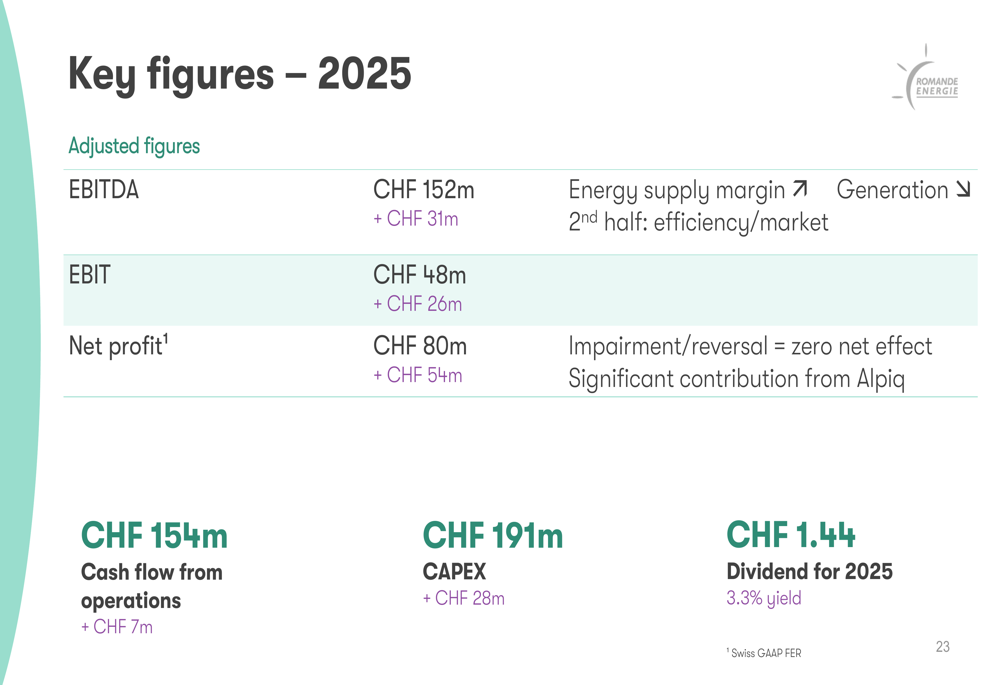
Romande Energie 2025 slides: EBITDA jumps 25%, eyes net-zero future
Earnings call transcript: Romande Energie beats Q4 2025 forecasts
Earnings call transcript: Casino Group enters recovery phase with 2025 turnaround


Mali army bases hit in large-scale attacks claimed by al Qaeda-linked militants
Business
Trump Justice Department Revives Firing Squads for Federal Executions in Major Policy Shift

WASHINGTON — The U.S. Justice Department announced Friday it is expanding federal execution methods to include firing squads, reinstating lethal injection protocols from the first Trump administration and streamlining processes to expedite capital punishment cases as part of a broader push to strengthen the federal death penalty.

AFP
The move fulfills a directive from President Donald Trump on his first day in office to prioritize seeking and carrying out death sentences for the most serious federal crimes. Acting Attorney General Todd Blanche issued guidance directing the Bureau of Prisons to update its execution protocol to include additional constitutional methods currently authorized in certain states, explicitly naming the firing squad alongside lethal injection using pentobarbital.
“Among the actions taken are readopting the lethal injection protocol utilized during the first Trump Administration, expanding the protocol to include additional manners of execution such as the firing squad, and streamlining internal processes to expedite death penalty cases,” the Justice Department said in a statement.
The announcement comes amid ongoing challenges in obtaining lethal injection drugs due to pharmaceutical companies’ reluctance to supply them for executions. Firing squads, though rare in modern U.S. history, remain authorized in a handful of states and are viewed by proponents as a reliable backup method. The last federal execution occurred in 2021 during Trump’s first term.
Critics immediately condemned the decision as a step backward for humane punishment and due process. Death penalty opponents, civil rights groups and some religious leaders called the revival of firing squads barbaric and unnecessary in an era when many states have moved away from capital punishment. Several Democratic lawmakers vowed to challenge the policy in court, arguing it raises constitutional concerns under the Eighth Amendment’s prohibition on cruel and unusual punishment.
Supporters, including some conservative lawmakers and victims’ rights advocates, praised the move as a necessary tool to ensure justice for the most heinous federal crimes, including terrorism, mass murder and certain drug-related killings. They argue that when lethal injection drugs are unavailable, alternative methods like firing squads provide a constitutional and effective option.
The Justice Department emphasized that the changes aim to clear backlogs on federal death row and respond to Trump’s executive order directing the department to prioritize capital cases. There are currently around 40 federal inmates on death row, with executions halted during the Biden administration.
Legal experts note that while states like Utah, Mississippi and South Carolina have used or authorized firing squads in recent years, federal adoption represents a significant policy reversal. The protocol would likely involve a team of marksmen aiming at the heart from a set distance, with one rifle loaded with a blank to diffuse responsibility.
The announcement has ignited fierce debate across political and social lines. Progressive organizations called it a return to “medieval” practices, while conservative commentators framed it as restoring law and order. Public opinion polls on the death penalty remain divided, with support generally higher for certain federal crimes like terrorism.
Civil liberties groups warned that expanding execution methods could lead to rushed proceedings and increased risk of error in capital cases. They pointed to past exonerations of death row inmates and concerns about racial disparities in sentencing. The American Civil Liberties Union vowed legal challenges to any implementation of the new protocols.
The Justice Department’s action also includes efforts to expedite internal reviews and appeals processes for death penalty cases. Officials cited difficulties obtaining lethal injection drugs as a primary reason for exploring alternatives, noting that several pharmaceutical companies have policies against supplying execution drugs.
Death penalty experts say firing squads have a long but limited history in the United States. Utah carried out the last firing squad execution in 2010 before shifting away, though some states have reinstated the option as a backup. Federal adoption would mark a notable expansion of its use in modern times.
The policy shift reflects broader Trump administration priorities on crime and justice. In his first term, the administration carried out 13 federal executions after a 17-year hiatus, the most in any single administration in decades. The current moves signal intent to resume and accelerate that pace.
As reactions poured in Friday, the announcement dominated headlines and social media discussions. Victims’ families of federal capital cases expressed mixed emotions — relief at the prospect of finality for some, while others focused on the broader moral questions surrounding state-sanctioned killing.
For now, the Justice Department has laid the groundwork for firing squads as an option, but actual implementation would require further procedural steps, legal challenges and selection of specific cases. The development ensures the federal death penalty will remain a contentious issue throughout Trump’s second term.

Financial Literacy in 50 Minutes – What School Never Taught You About Money!

Ukraine marks 40th anniversary of Chornobyl disaster under cloud of war

XRP Price Outlook Strengthens as Breakout Retest Holds and Outflows Rise

Manchester United reach agreement with Casemiro over contract clause amid transfer speculation

US brings back mandatory military draft registration

Steven Gerrard disagrees with Gary Neville over ‘shock’ Chelsea and Arsenal claim | Football


-

 Business6 days ago
Powerball Result April 18, 2026: No Jackpot Winner in Powerball Draw: $75 Million Rolls Over
-

 Politics7 days ago
Zack Polanski demands ‘council homes not luxury flats for foreign investors’
-

 Fashion1 day ago
Weekend Open Thread – Corporette.com
-

 Tech7 days ago
Auto Enthusiast Scores Running Tesla Model 3 for Two Grand and Turns It Into Bare-Bones Go-Kart
-
Entertainment6 days ago
NBA Analyst Charles Barkley Chimes in on Ice Spice McDonald’s Fiasco
-

 Politics5 days ago
Gary Stevenson delivers timely reminder to register to vote as deadline TODAY
-
Crypto World5 days ago
Bank of Hawai’i (BOH) Q1 2026: Net Income Drops to $57.4M as Net Interest Margin Expands
-
Crypto World3 hours ago
Hyperliquid $HYPE Rally Builds Momentum as AI Sector Enters Prove-It Phase
-

 Politics3 days ago
Making troops accountable for war crimes threatens US alliance, ex-SAS colonel warns
-

 Business4 days ago
Rolls-Royce Voted UK’s Most Iconic Trade Mark as IPO Register Hits 150
-

 Politics3 days ago
Disabled people challenge government SEND proposals over segregation concerns
-

 Politics3 days ago
Zack Polanski responds to home secretary’s taser threat
-
Politics3 days ago
Wings Over Scotland | How To Get Away With Crimes
-

 Politics3 days ago
Starmer handler McSweeney to be dragged from shadows by Foreign Affairs Committee
-
Crypto World7 days ago
Kelp DAO rsETH Bridge Hack Drains $292M as DeFi Losses Top $600M in Two Weeks
-
 Crypto World4 days ago
Five Value Stocks with Recovery Potential in 2026: PayPal (PYPL), Nike (NKE), and More
-

 Politics3 days ago
‘Iran is still a nuclear threat’
-

 Crypto World4 days ago
New York sues Coinbase, Gemini over prediction market offerings
-

 Business4 days ago
The Job Benefits Most Men Don’t Know to Negotiate
-

 Crypto World2 days ago
Michael Saylor says BTC winter is over. Market analyst disagrees, says bitcoin was in a pullback
You must be logged in to post a comment Login