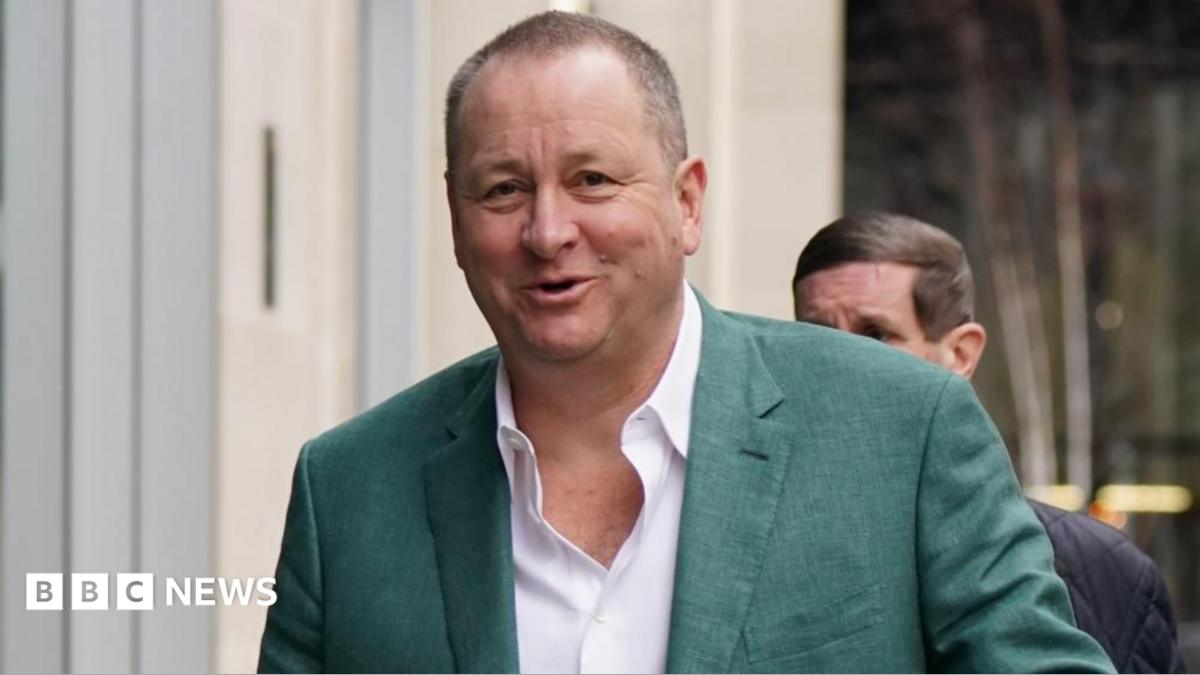
Billionaire Sports Direct founder Mike Ashley has criticised recent cost of living and retail policies from AndyBurnham as “populist reactions”.
In a letter to the prime minister, the entrepreneur accused him of “jumping on ‘everyday fixes’ or bandwagons”, while “disastrous” business rates policies and increases to the cost of employing workers were causing businesses to struggle.
He also described a previous proposal of increasing business rates on large warehouses to help reduce them for pubs and clubs as “delusional”.
A Downing Street spokesperson said Burnham would “build a new economy that backs British business, delivers growth in every postcode and ensures the essentials in life – like energy, water and housing – are affordable again.”
Advertisement
Promises including cutting VAT from household electricity bills and reducing business rates for some firms is “just the start”, they added.
The businessman called on Burnham to use his first Budget, scheduled for 27 October, to lower costs for employers and change the government’s position on business rates.
Pubs, social clubs and live music venues will get a 20% business rates cut from April, while a review has been launched into how the tax, which high street firms have long called for reform to, is calculated.
“Shortsighted or populist reactions to underlying business challenges are not the answer,” Ashley said in the letter.
Ashley has repeatedly called for a fundamental overhaul of the tax, including levelling the playing field between High Street retailers and online rivals.
Advertisement
“If your answer is to tax larger retailers even more, through hiking business rates on retailer owned or third-party warehouses whilst reducing rates for pubs and clubs, then that is simply delusional,” he wrote.
Burnham previously said before he was prime minister that cuts for pubs, clubs and music venues could be paid for by higher levies on warehouses operated by online firms such as Amazon, and targeting the owners of empty high street properties.
Ashley built Frasers Group from a single Sports Direct store in Maidenhead in 1982 to a sprawling empire of dozens of brands employing 30,000 people.
The billionaire has frequently attracted controversy from investors and the media, with accusations over the years of building success by exploiting workers.
Advertisement
In 2016, Ashley admitted to MPs that workers at his Derbyshire warehouse had been paid below the minimum wage and a policy of fining staff for being late was unacceptable.
Ashley also used his letter to ask Burnham how the prime minister intends to revive Harvey Nichols, which has faced financial challenges in recent years.
Referencing comments by Tory peer and former Marks & Spencer boss Lord Rose, who called the announcements “hot air”, Ashley said “I agree with him”.
Advertisement
“It is the disastrous business rates position (which I have raised many times over the years) and the dramatically increasing cost of employing people that are really causing business to struggle,” Ashley said.
“You have the chance to make a difference or get it horribly wrong,” he added.
Ashley said the High Street will be “further devastated” without major reforms, and warned Burnham’s suggestion he will consider further business rates changes in the coming Budget are “too little, too late”.
He also used the letter to attack Burnham’s plans to clamp down on the use of recommended retail prices, saying instead the real issue is “price fixing in sporting goods and other markets” – where he cited the rising cost of official football merchandise.
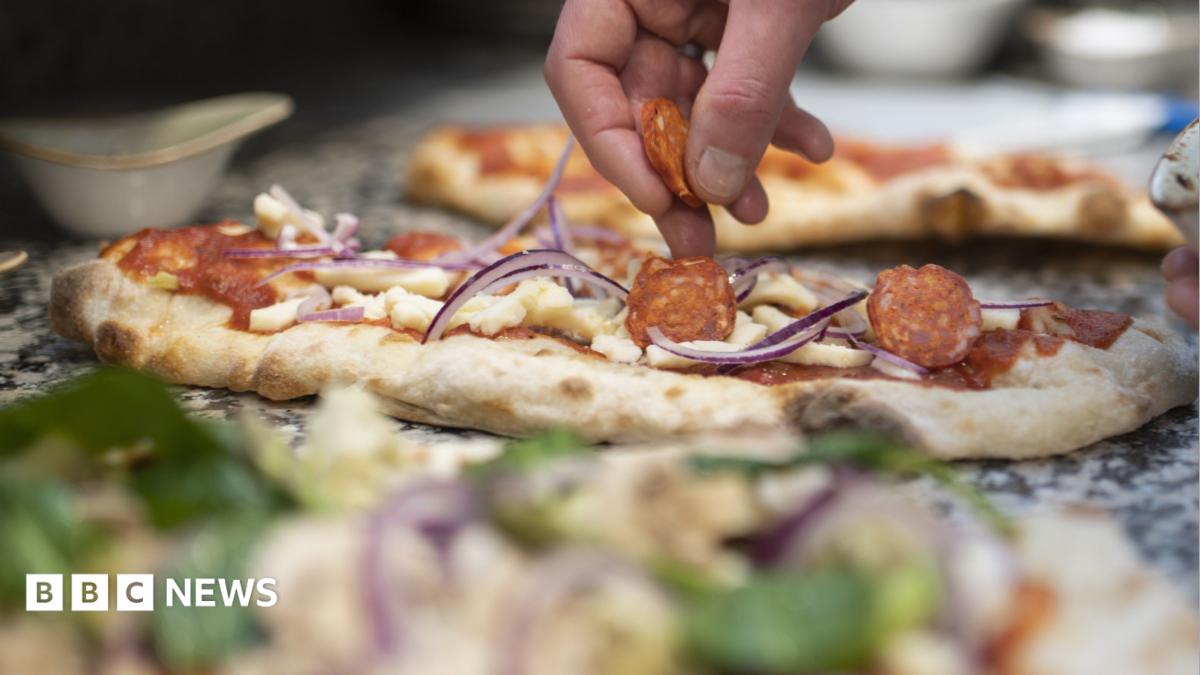
The robot pizza-making business has, it’s true, been littered with sorry tales of overcooked promises and melting fortunes. Besides Picnic, other companies that have come and gone include Zume, external and Pazzi, which used, external robot arms to assemble pizzas, as well as Basil Street, external, a purveyor of pizza vending machines.
Although so-called fast food might seem an easy target for automation, it’s proved harder than many expected. Plus, bringing robots into pizza restaurants could take away entry-level jobs in the hospitality sector. Is the future really filled with robotic pizza?
“We haven’t yet seen any of the success stories materialise the way some people thought they would,” admits Sara Senatore, senior restaurants analyst at Bank of America. Her employer has financial interests in multiple high street pizza chains including Papa Johns and Domino’s.
Food preparation bots are sometimes clumsy – dropping ingredients in the wrong places at times, she explains. Conversely, “Humans are very efficient at making pizza.”
Advertisement
But Kindell, despite his frustrations with Picnic, is surprisingly undeterred. He is a fan of full automation. “I want to be able to walk up to, let’s say, a type of kiosk, put in your order, and it makes a fresh pizza,” he tells the BBC.
Kindell, who once made all his dough by hand – until an elbow tendon injury forced him to investigate using machines instead, is now working on his own version of a pizza-making robot.
He declines to share details but the contraption will make square pan-style pies and that the machine is inspired by the way 3D printers work. If things go well, he says he could have a fully operational version of the device by the summer of 2027.
Given that he admits he has “no experience” in robotics, I question why he would want to invest in such a dicey business. Kindell says that failed pizza robot companies have nonetheless generated useful data and made strides in developing their technology. It’s just a matter of time before someone gets these things to work, he insists.
Advertisement
On jobs, he claims that even “fully autonomous” pizza robots won’t threaten workers. Kindell previously used Picnic’s robots at T-Mobile Park, home of the Seattle Mariners, a baseball team.
Usually, he’d need about 10 people to make pizza in such a setup. With the robots that number fell to just two. But the other eight people were still employed, he says, in roles where they interacted with customers, and advertised the pizza around the stadium.
“We had so many more people able to hand out the pizza,” says Kindell. “It was so much faster.”
Apple sent invitations to members of the press and select guests Wednesday, Aug. 26, confirming the keynote date alongside the tagline “Surprise and shine” and an accompanying image. The keynote is scheduled to begin at 10 a.m. Pacific time, 1 p.m. Eastern and 6 p.m. British time, and will be held at the Steve Jobs Theater on Apple’s Cupertino campus.
A date chosen around the calendar
This year’s scheduling carried unusual complexity due to how the calendar fell in 2026. Labor Day landed on Monday, Sept. 7, and Apple has historically avoided holding its iPhone event on the day immediately following the holiday, ruling out a Tuesday, Sept. 8 date. That left Wednesday, Sept. 9 as the most likely option, a prediction that multiple outlets, including Forbes and MacRumors, had made in the weeks leading up to Apple’s official confirmation.
Advertisement
The Sept. 9 date also matches the exact day Apple held its iPhone event in each of the past two years, extending a pattern of holding its flagship product reveal during the second week of September. Bloomberg’s Mark Gurman had also flagged the date in his Power On newsletter earlier this month, describing Apple’s preparations as being in full swing ahead of what he called a big event.
What’s expected on stage
The centerpiece of Wednesday’s keynote is expected to be the debut of the iPhone 18 Pro and iPhone 18 Pro Max, alongside Apple’s first foldable iPhone, a device widely viewed as the company’s most significant new hardware category in years. Reports have suggested the foldable device could start at around $2,000, with pricing potentially climbing past $2,500 for higher storage configurations.
Apple is expected to stick with familiar display sizes for the standard Pro lineup, with the iPhone 18 Pro featuring a 6.3-inch display and the iPhone 18 Pro Max featuring a 6.9-inch display, consistent with the current generation. Notably, Apple is not expected to release a standard iPhone 18 model alongside the Pro lineup this year; that device is anticipated to arrive separately in early 2027.
Advertisement
Beyond the phones, the event is expected to include the introduction of two new Apple Watch models. Apple has already addressed part of its fall hardware lineup separately, having unveiled new Mac computers on Tuesday, Aug. 25, ahead of the September keynote.
The pre-order timeline, with a notable shift
Perhaps the most closely watched detail surrounding this year’s launch has been the timing of pre-orders, given an unusual calendar conflict. Apple traditionally opens pre-orders on the Friday immediately following its September keynote. This year, however, that Friday falls on Sept. 11 — the 25th anniversary of the Sept. 11, 2001, terrorist attacks in the United States, a date Apple has respectfully avoided using for major announcements or sales activity in the past.
As a result, pre-orders for the iPhone 18 Pro lineup are widely expected to shift to Saturday, Sept. 12 instead. If Apple follows its typical pre-order timing pattern from past launches, orders would likely open at 5 a.m. Pacific, 8 a.m. Eastern and 1 p.m. British time that day.
Advertisement
Following the pre-order window, the new devices are expected to become available in stores and begin shipping to customers on Friday, Sept. 18 — one week after pre-orders open, consistent with Apple’s typical rollout cadence in recent years.
A launch two weeks in the making
Apple’s decision to send invitations on Aug. 26 also followed a pattern industry watchers had anticipated. The company has announced its annual iPhone event exactly two weeks in advance for four consecutive years, according to 9to5Mac’s Zac Hall, making late August the strongest predicted window for this year’s invitations even before they went out. That timing held true, with Apple issuing its formal invite precisely 14 days ahead of the Sept. 9 keynote.
Why this year’s event carries extra weight
Advertisement
This year’s launch arrives with added significance beyond the usual annual iPhone refresh. The event is expected to double as one of the final major keynotes overseen under Apple’s current leadership transition, with incoming Chief Executive John Ternus set to formally take over the role on Sept. 1, just over a week before the keynote takes the stage. Outgoing CEO Tim Cook is transitioning to the role of executive chairman after 15 years leading the company.
The introduction of Apple’s first foldable device alongside that leadership shift has raised the stakes considerably for what is typically a predictable annual product cycle, with analysts and industry watchers framing the September event as a pivotal moment both for Apple’s product lineup and for its next generation of corporate leadership.
With the keynote date now officially locked in, attention turns to the specifics Apple will reveal on stage Sept. 9, including final pricing, technical specifications for the foldable device, and confirmation of the broader software updates expected to accompany the new hardware. Apple has not released an official agenda beyond confirming the date, time and location of the event, meaning many of the details currently circulating remain based on analyst predictions and industry reporting rather than direct company confirmation.
For consumers planning to purchase the new devices, the coming weeks are expected to follow a now-familiar rhythm: an announcement on Sept. 9, pre-orders opening Sept. 12, and devices reaching customers’ hands by Sept. 18 — assuming Apple’s typical launch cadence holds for a third consecutive year.
ServiceNow, Inc. (NOW) Deutsche Bank 2026 Technology Conference August 27, 2026 2:40 PM EDT
Company Participants
Gina Mastantuono – President & CFO
Advertisement
Conference Call Participants
Brad Zelnick – Deutsche Bank AG, Research Division
Presentation
Advertisement
Brad Zelnick Deutsche Bank AG, Research Division
Okay. I think we’re live. Welcome back, everybody. I’m still Brad Zelnick, Deutsche Bank Software Equity Research. And for this session, truly delighted to be joined by none other than the Chief Financial Officer of ServiceNow. That’s Gina Mastantuono. Gina, thank you so much for being here.
Gina Mastantuono President & CFO
Advertisement
Thank you so much for having me, Brad. Happy to be here. Good to see everyone.
Brad Zelnick Deutsche Bank AG, Research Division
Always good to see you. It’s always good to see you in Southern California.
Advertisement
Gina Mastantuono President & CFO
Yes. Although, it’s super hot down here right now.
Advertisement
Question-and-Answer Session
Brad Zelnick Deutsche Bank AG, Research Division
Although super hot. So I don’t think you need really much of an introduction. But I want to jump in. When I think of ServiceNow, I often think back to the founding of the company. I think about your founder, Fred Luddy, and the platform nature of what he built and how it’s endured the test of time. Can you just help us bridge from the past into the future, why are you so confident that ServiceNow will continue to lead in the AI era?
Advertisement
Gina Mastantuono President & CFO
Well, listen, I think, first and foremost, Fred is just an incredible founder, incredible human being. And he built this incredible platform, one data model, one architecture, one platform. 20 years ago, people didn’t know what a platform was, so funny, right? And so they’re like, “Platform? What’s the platform? Give me a use case.” And he was an IT guy. So he gave the most important IT use case solving the problems of the people that he
U.S. crude oil inventories edged up in a fourth consecutive weekly increase as both imports and exports fell and production held steady, according to data released Wednesday by the U.S. Energy Information Administration.
Commercial crude oil stocks excluding the Strategic Petroleum Reserve rose by 95,000 barrels to 428.9 million barrels in the week ended Aug. 21 and were about 1% above the five-year average for the time of year, the EIA said. Crude stocks were expected to have risen by 500,000 barrels, according to a Wall Street Journal survey of analysts.
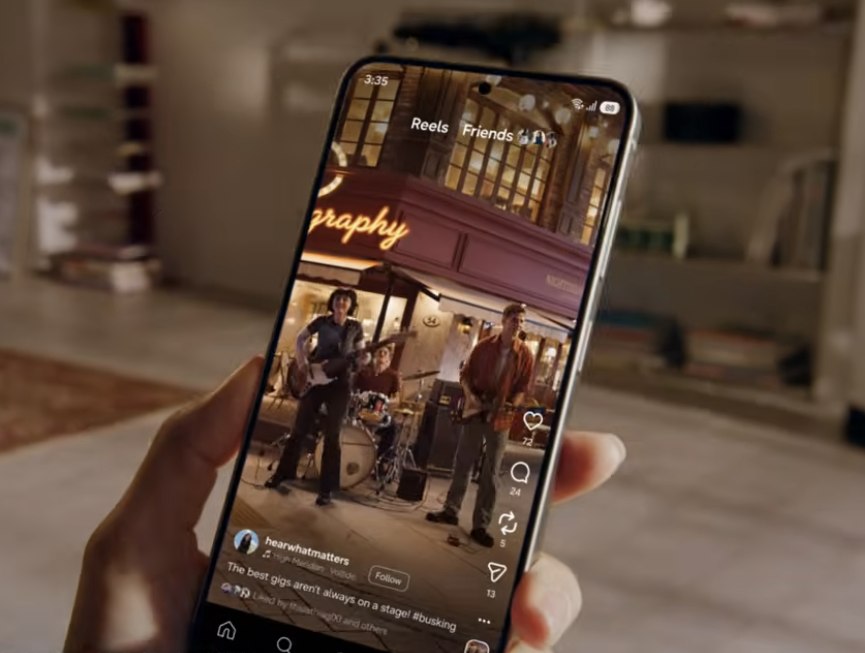
SEOUL, South Korea — Samsung Electronics officially unveiled the Galaxy S26 FE on Thursday, introducing the latest entry in its “Fan Edition” lineup as a lower-cost alternative to its flagship Galaxy S26 series, with the device set to hit store shelves next week.
The launch continues a strategy Samsung has pursued for several years: offering a pared-down version of its flagship hardware and software at a more accessible price point, aimed at consumers who want many of the same features found in the company’s top-tier phones without paying full flagship prices. Here are 10 things to know about the new device.
1. It’s available starting next week
Advertisement
The Galaxy S26 FE will be available from select carriers starting Sept. 3, with nationwide availability in the United States beginning Sept. 4, according to Droid Life. Some carriers may offer the device a day earlier than the general release date.
2. It costs more than its predecessor
The new model will retail for $699 in the U.S., $50 more than the Galaxy S25 FE it replaces, according to How-To Geek. In Europe, the device is priced at €799. The price increase reflects a broader trend across Samsung’s 2026 lineup, with several models this year costing more than their predecessors.
3. It runs on a new, more efficient processor
Advertisement
The Galaxy S26 FE moves to a 3-nanometer Exynos 2500 chip, an upgrade from the 4-nanometer Exynos 2400 found in the previous generation. The newer manufacturing process is expected to deliver both improved performance and better power efficiency compared with last year’s model.
4. The display stays largely the same
The device features a 6.7-inch Dynamic AMOLED display with a 120Hz refresh rate and peak brightness of 1,900 nits, according to Droid Life. That represents continuity rather than a major upgrade over the S25 FE’s screen specifications.
5. It has a triple rear camera system
Advertisement
The Galaxy S26 FE ships with a 50-megapixel main wide-angle sensor, a 12-megapixel ultrawide lens, and an 8-megapixel telephoto lens offering 3x optical zoom. Samsung has also incorporated what it describes as advanced image processing improvements across the camera system compared with the prior generation.
6. The selfie camera got an upgrade
One of the more notable hardware changes is an upgraded 12-megapixel front-facing camera, which Samsung says is designed to capture more people in group shots, an improvement over the front camera used in the S25 FE.
7. Battery capacity increased slightly
Advertisement
The device comes equipped with a 4,900mAh battery supporting 45W wired charging, an increase over the battery capacity found in last year’s model, giving users modestly longer battery life between charges.
8. It borrows premium features from Samsung’s flagship lineup
Much of what sets the S26 FE apart from its predecessor comes through software rather than hardware. The device includes FanCam, a feature that debuted on Samsung’s Galaxy Z Fold 8 and Z Flip 8 devices, which uses intelligent tracking to keep a selected subject centered and properly framed during video or photo capture. It also includes Super Steady video recording with Horizontal Lock, designed to keep footage level, along with improved Nightography low-light photography and Photo Assist editing tools.
9. It includes Samsung’s newest AI features
Advertisement
The Galaxy S26 FE ships with access to Now Nudge and Now Brief, AI-powered productivity features previously available on the Galaxy S26 and S25 series. Now Nudge is designed to help automate certain phone tasks, such as adding items to a calendar or surfacing relevant files based on context, according to Droid Life. The device runs Android 17 with Samsung’s One UI 9 software layer on top.
10. It comes with long-term software support and multiple color options
Samsung is offering the Galaxy S26 FE with 8GB of RAM and 128GB of storage, an IP68 water and dust resistance rating, and what the company says will be seven years of software updates, extending the device’s usable lifespan well beyond typical smartphone upgrade cycles. The phone is available in three color options: Blueberry, Pistachio and Graphite.
Where it fits in Samsung’s lineup
Advertisement
The Galaxy S26 FE occupies a specific niche within Samsung’s broader Android lineup, positioned above budget options like the $550 Galaxy A57 5G but well below the pricing of Samsung’s full flagship Galaxy S26 series. How-To Geek described the device as landing in “sweet spots in both Samsung’s lineup and the Android phone market at large,” even as the company’s decision to raise the price by $50 over last year’s model has drawn some criticism from potential buyers weighing the value proposition against competitors.
A response to rising phone prices industrywide
The launch comes amid a broader trend of rising smartphone prices across the industry, driven in part by higher component costs, including memory chips. Samsung’s FE line has historically served as a counterweight to that trend, offering a way for budget-conscious consumers to access many flagship-level features without paying full price for the company’s top-tier devices.
With the Galaxy S26 FE now officially announced and set to reach store shelves within days, attention turns to how the device performs against both Samsung’s own more expensive Galaxy S26 lineup and competing devices from rivals like Apple, whose iPhone 18 Pro lineup is expected to launch later this month. For consumers deciding between generations, some reviewers have suggested that shoppers already satisfied with the Galaxy S25 FE may find the incremental upgrades in this year’s model, concentrated mainly in the processor and software rather than the core hardware, insufficient to justify an immediate upgrade.




















































You must be logged in to post a comment Login