




Connect with us
DAPA Banner
DAPA Coin
DAPA
COIN PAYMENT ASSET
PRIVACY · BLOCKDAG · HOMOMORPHIC ENCRYPTION · RUST
ElGamal Encrypted MINE DAPA
🚫 GENESIS SOLD OUT
DAPAPAY COMING

Business

SRG Global subsidiary fined $135k over Henderson site incident

Published

on

SRG Global subsidiary fined $135k over Henderson site incident

Subiaco-based SRG Global has been ordered to pay $135,000 over an incident where a worker was struck by a 27-kilogram piece of wood at a Perth construction site.

Continue Reading
Click to comment

You must be logged in to post a comment Login

Leave a Reply

Business

Martin Marietta Strikes $13.5 Billion Deal for Limestone Supplier

Published

on

Martin Marietta Strikes $13.5 Billion Deal for Limestone Supplier

Martin Marietta Materials MLM -2.05%decrease; down pointing triangle has struck a deal to combine with limestone supplier Lhoist North America in a transaction valued at $13.5 billion, including debt.

The details

Martin Marietta said Monday it expects to use a mix of $7 billion in cash along with shares of its stock valued at $6.5 billion to fund the deal, confirming an earlier report from The Wall Street Journal.

Copyright ©2026 Dow Jones & Company, Inc. All Rights Reserved. 87990cbe856818d5eddac44c7b1cdeb8

Continue Reading

Business

5 Innovative Ways Everyday People Are Supporting Charities in 2026

Published

on

5 Innovative Ways Everyday People Are Supporting Charities in 2026

As tech transforms every aspect of the world we live in, it’s perhaps unsurprising that it’s even creating a shift in the way that people engage with charitable giving.

Innovation, technology, and business-led initiatives are providing more opportunities than ever for charity and non-profit organisations to continue their fantastic work.

In this article we explore five modern approaches which are reshaping philanthropy – take a look!

1. Prize-Based Fundraising Campaigns

Prize-based fundraising is a highly popular approach which has always existed in some form or another.

Advertisement

These prize draws allow participants to contribute to charitable causes for the opportunity to win rewards – one great example is Raffle House, whose model offers homes, cars, and cash prizes while raising funds for a range of organisations across the UK supporting a range of causes.

This approaches collective participation with a gamified element, making it an engaging way for participants to support good causes, helping to engage wider audiences who may not otherwise interact with traditional fundraising campaigns.

2. Digital donation makes it easier than ever

Digital donations have simplified charitable giving to make it easier than ever to give instantly, from the comfort of your own sofa.

With mobile-friendly interfaces and simple yet secure payment systems, JustGiving is one such organisation enabling users to donate in just a few clicks without unnecessary barriers.

Advertisement

The approach also democratises fundraising so that anyone can create a campaign for any cause, and share these on a local, national, or global level, empowering individuals to take an active role in driving fundraising efforts and putting the power in the hands of ordinary people to make real change.

3. Corporate social responsibility

Businesses are more aware than ever of the role their operations can play in creating a better world – or a worse one.

That’s why many now choose to enact corporate social responsibility (CSR) initiatives as part of their business strategy. These may include corporate donations, employee volunteering, and matched giving schemes.

Platforms such as Benevity aid with CSR initiatives by providing a way to manage employee giving programmes, volunteering efforts, and donation matching schemes. This not only amplifies the impact of charitable contributions but also fosters a culture of purpose within organisations.

Advertisement

4. Community events

Grassroots fundraiainsg has always been one of the most powerful ways to unite people behind a cause, and community-led fundraising capitalises on community spirit to create collective impact.

From bake sales to sponsored swims, local events, and school fundraisers, these activities demonstrate that even a small contribution can go a long way when people come together for a common goal.

5. Subscription-Based Giving Models

Though it’s not new, the subscription model has been one of the most vital and transformative for charities

With a predictable income, organisations can plan for long-term projects, and set fundraising aims to work towards specific goals.

Advertisement

It’s also beneficial for the donor, who receives regular updates which tell them how their money is being spent, helping to build trust and long-term engagement with the causes they support.

Charitable giving is a powerful tool of community and collaboration, and in the digital era, there are more ways than ever for individuals to make a positive impact.

Whether through digital platforms, corporate initiatives, community events, or new fundraising models, there are now more ways than ever for individuals to make a meaningful contribution.

Advertisement
Continue Reading

Business

Rocket Lab to Buy Iridium for $8 Billion in ‘Transformative’ Space Deal

Published

on

Rocket Lab to Buy Iridium for $8 Billion in ‘Transformative’ Space Deal

Rocket Lab to Buy Iridium for $8 Billion in ‘Transformative’ Space Deal

Continue Reading

Business

GIFT Nifty hits record open interest of $21.56 billion; contracts touch all-time high

Published

on

GIFT Nifty hits record open interest of $21.56 billion; contracts touch all-time high
GIFT Nifty has achieved its highest-ever open interest, underscoring growing participation from global investors in India’s offshore derivatives market.

On June 25, 2026, GIFT Nifty recorded an all-time high open interest of 446,150 contracts, valued at US$21.56 billion (around Rs 2.04 lakh crore). The latest milestone surpassed the previous record of 410,100 contracts with an open interest of US$21.23 billion, set on October 24, 2025.

The record open interest reflects rising participation by international investors and continued confidence in GIFT Nifty as a preferred offshore trading platform for Indian equity derivatives.

Trading activity on NSE International Exchange (NSE IX) has expanded rapidly since GIFT Nifty commenced full-scale operations on July 3, 2023. Since then, the platform has recorded a cumulative trading volume of more than 69.56 million contracts, with total cumulative turnover exceeding US$3.21 trillion as of June 25, 2026.

Advertisement

“We are glad to witness the success of GIFT Nifty and express our sincere gratitude to all the participants for their overwhelming support and making GIFT Nifty a successful contract,” the exchange said in a statement.


NSE IX, the international multi-asset exchange based at GIFT City, currently commands over 99.6% market share within the International Financial Services Centre (IFSC).
Besides GIFT Nifty, the exchange offers trading in Indian single-stock derivatives, index derivatives, currency derivatives, depository receipts and global stocks.It also facilitates listings of equity shares, SPACs, REITs, InvITs, debt securities and ESG debt instruments under the regulatory framework of the International Financial Services Centres Authority (IFSCA).

The exchange has also secured regulatory exemptions from the U.S. Commodity Futures Trading Commission (CFTC) and relief from the U.S. Securities and Exchange Commission (SEC), enabling eligible U.S. investors to participate in derivatives listed on NSE IX.

NSE International Exchange holds a market share of over 99.6%, highlighting extensive leadership in GIFT IFSC.

(Disclaimer: Recommendations, suggestions, views and opinions given by the experts are their own. These do not represent the views of The Economic Times)

Advertisement
Continue Reading

Business

Brexit has been hugely damaging to the freight and logistics sector

Published

on

Business Live

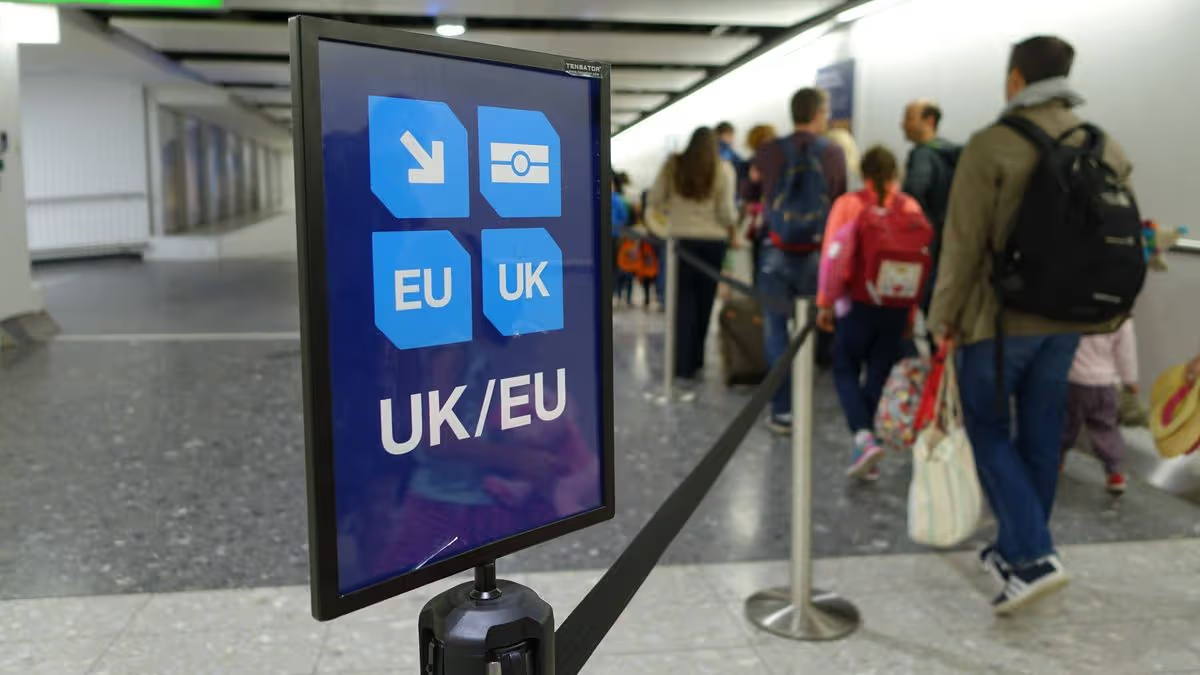
Re-establishing pre-2016 UK-EU links will lead to transport and communications networks working smoothly again.

Brexit has impacted how we travel with the EU.(Image: Getty )

It is now a decade since we voted by a narrow margin to leave the European Union (EU), when 53% voted to leave and 47% to remain.

No point blaming anyone else as Wales voted by the same ratio. The effects of that catastrophic decision on Britain’s freight and logistics sector – moving goods for import and export – are still being felt.

Advertisement

From 31 January 2020 (when the final Brexit date was enacted by the Westminster parliament) the political relationship between the UK and the EU changed totally. However, the economic and logistics links continued with the EU still the UK’s largest and geographically nearest trading partner.

It is not just trade but tourism, investment, supply chain movements, economic growth and inter-supply of energy that relate to the movement of people and goods on a significant scale.

For the UK economy to grow, it will need stronger links in trade, investment, transport and logistics. The Schengen area, with more than 450 million people across 25 EU member states and four non-EU countries, includes some of the world’s wealthiest consumers.

Transport is a key consideration for inward investors who need to move goods efficiently or enable managers to travel easily between dispersed sites on reliable, predictable routes.

Advertisement

Transport forms the fundamental trading infrastructure When connections between economies are difficult or burdened by unnecessary obstacles, the efficient movement of goods services and people is compromised, competition weakens and business (and the total economy) growth becomes harder to achieve. This has been understood since the Romans built straight roads to move goods and increase Rome’s wealth, while the Roman Army helped establish and protected trade routes.

As under the Roman regime the economies of EU member states and of the UK continue to be connected through integrated supply chains. Such supply chains require long-term investment to achieve predictable journey times particularly for just-in-time (JIT) operations. Such investments are justified financially at airports, seaports, and railway operations such as the Channel Tunnel.

The Channel Tunnel (paralleled by ports investment) has been essential to the UK as an island nation serving as it does one of the busiest people and goods routes. It is also a major engineering and political accomplishment of our time.

The ‘protecting our borders’ claim by Brexiteers was always unrealistic. Their propaganda failed to identify that the EU would also introduce constraints on inward movements. The Schengen area has new regulations illustrated by this summer’s delays for British travellers as a new entry/exit system is introduced.

Advertisement

Car design is dictated by international construction regulations determined by the biggest markets. These make specifications to the smallest detail. In its most simple form indicator switches must be on the left of the steering wheel to be sold in the EU. No manufacturer will put them elsewhere. The market for right hand drive cars is fortunately large enough to enable construction of right-hand drive cars.

There have been practical difficulties arising from the fragmentation of European logistic routes. Irish imports and exports to the EU have changed their routes with more direct movement via French ports resulting in fewer Irish trucks on the A40/A48/M4 corridor .

Two-thirds of ‘EU’ laws are still in place. The fast-track process to repeal these laws ended on June 23. Now each regulation incorporated into a UK act of parliament must pass through the slower Westminster repeal process.

The previous system allowed goods to cross borders freely, without checks, certificates, or delays. It has now been replaced by the EU-UK Trade and Cooperation Agreement. British firms exporting to Europe must prove where goods are manufactured, retest products already certified as safe in the UK, and complete paperwork that was unnecessary before 2021.

Advertisement

Food exporters now incur border inspections and comply with separate EU and UK rules adding £54m to annual costs. Between 2021 and 2024, border checks cost exporters £4.bn. Large firms, especially those shipping in bulk, are better able to absorb these costs than smaller businesses, many of which have withdrawn from the EU market.

If the UK is to have anywhere near a level playing field in the EU market compared with Schengen countries, there must be a gradual programme of barrier reduction with improved supply chain flows aimed at economic growth on both sides of ‘La Manche.’

Hopefully, a growing recognition will arise in both London and Brussels that re-establishing pre-2016 UK-EU links will lead to transport and communications networks working smoothly again.

Professor Stuart Cole CBE is Emeritus Professor of Transport (Economics and Policy), University of South Wales.


Advertisement
Continue Reading

Business

Airbnb deploys anti-party technology ahead of July 4 holiday weekend

Published

on

Airbnb deploys anti-party technology ahead of July 4 holiday weekend

Airbnb is rolling out its anti-party technology ahead of the July 4 weekend to address the risk of disruptive parties in communities around the country on one of the busiest travel weekends of the year.

The company said its anti-party tech looks at a range of factors to help identify attempted bookings of entire home listings that could pose a higher risk for an unauthorized party and redirects those guests to alternative accommodations.

Advertisement

Guests who are redirected from booking an entire home can instead book private room listings and hotels on the Airbnb platform.

“This is the fifth year in a row we’ve run these defenses for July 4, and last year they redirected more than 20,000 people from higher-risk bookings over the holiday weekend,” said Rog Kaiser, vice president of fraud and safety operations at Airbnb.

AIRBNB LAUNCHES MAJOR EXPANSION WITH AIRPORT PICKUPS, LUGGAGE STORAGE AND AI-POWERED TRAVEL TOOLS

A vacation rental house in Maine

Airbnb uses anti-party technology to block high-risk bookings. (Catherine Robotis/UCG/Universal Images Group via Getty Images)

“That kind of capability – improved year over year – is what it takes to help make the holiday great for our hosts, guests and the communities around them,” Kaiser added.

Advertisement

Airbnb said that in 2025, its anti-party tech helped block or redirect over 20,000 people from booking entire home listings in the U.S. over the July 4 weekend, noting that it has made improvements to the technology.

That figure included about 3,100 people in Florida, another 3,100 people in Texas and about 2,500 people in California.

BANK OF AMERICA CARDHOLDERS CAN VISIT 250 MUSEUMS FREE DURING JULY 4 WEEKEND

Ticker Security Last Change Change %
ABNB AIRBNB INC. 145.56 +3.68 +2.59%

The company explained that these anti-party measures are part of a broader suite of tools it uses to promote responsible travel and work in concert with its global reservation screening technology, which uses machine learning to mitigate higher-risk bookings year round.

Advertisement

Additionally, Airbnb’s announcement warned parents, grandparents and other adults about the platform’s policies restricting them from booking accommodations for minors.

The company’s rules specifically prohibit minors under the age of 18 from having Airbnb accounts, and adult account holders are prohibited from booking a stay for a minor unless the adult will be present for the entire trip.

AIRBNB APOLOGIZES AFTER ‘SUPERHOST’ ALLEGEDLY USED AI-DOCTORED PHOTOS TO CLAIM $16K IN FAKE DAMAGES

Fourth of July fireworks show over Nashville, Tennessee

Fourth of July weekend is expected to be one of the busiest travel weekends of the year. (Nashville Convention and Visitors Corp)

Violations of those policies could result in the loss of an Airbnb account – including the cancellation of upcoming trips that had been booked – and violators may face financial liability for any property damage that occurs during a stay.

Advertisement

Account holders may also face liability if law enforcement becomes involved following a disruptive party.

“These efforts reflect our ongoing commitment to help reduce the risk of disruptive parties, and we are seeing positive results,” the company said in its announcement. “In 2025, fewer than 0.06% of stays on Airbnb in the U.S. resulted in a report of a party to us.”

GET FOX BUSINESS ON THE GO BY CLICKING HERE

Airbnb’s announcement also noted it has several tools available to neighborhood residents, hosts, guests and law enforcement to address unauthorized parties at its listings, including:

Advertisement
  • Neighborhood Support Line for local residents to report issues, like a party in progress at a home they believe is listed on Airbnb.
  • A 24-Hour Safety Line for hosts and guests to reach out to the company’s safety team for support.
  • A noise sensor offer for hosts, which can help get ahead of issues before they start while respecting guest privacy.
  • A dedicated channel to support law enforcement and a specialized response team for incidents when there is an issue that may involve an Airbnb listing or stay.
Continue Reading

Business

Grab Holdings: Southeast Asia’s Super-App Is Getting Stronger (NASDAQ:GRAB)

Published

on

Grab Holdings: Southeast Asia's Super-App Is Getting Stronger (NASDAQ:GRAB)

This article was written by

Dear Reader,I am a Senior Derivatives Expert with over 10 years of experience in the field of Asset Management, specializing in equity analysis and research, macroeconomics, and risk-managed portfolio construction. My professional background covers both institutional and private client asset management, where I have advised on and implemented multi-asset strategies, but highly focusing on equities and derivatives.As you might be as well, I am a stock market enthusiast. My core passion lies in understanding how macro trends influence both asset prices and investor behavior. I closely follow EU and US central bank policies, sector rotation, and sentiment dynamics, and construct actionable investment strategies.BA in Financial Economics, MA in Financial Markets. In the past decade, I have navigated through various market conditions, and this was my PhD.One of the essential goals of writing on Seeking Alpha is to share insights with colleagues, fellow investors, exchange ideas, and become slightly better than yesterday. I contribute to the idea that investing should be accessible, inspiring, and empowering. It might sound like a cliche, I know, but in the end it’s highly valuable – so let’s help each other build confidence in long-term investing. The analysis and opinions shared in my articles and comments are for informational purposes only and should not be considered financial advice. Please do your own research before making any investment decisions.Thank you and have a lovely day!Best regards

Analyst’s Disclosure: I/we have no stock, option or similar derivative position in any of the companies mentioned, but may initiate a beneficial Long position through a purchase of the stock, or the purchase of call options or similar derivatives in GRAB over the next 72 hours. I wrote this article myself, and it expresses my own opinions. I am not receiving compensation for it (other than from Seeking Alpha). I have no business relationship with any company whose stock is mentioned in this article.

Seeking Alpha’s Disclosure: Past performance is no guarantee of future results. No recommendation or advice is being given as to whether any investment is suitable for a particular investor. Any views or opinions expressed above may not reflect those of Seeking Alpha as a whole. Seeking Alpha is not a licensed securities dealer, broker or US investment adviser or investment bank. Our analysts are third party authors that include both professional investors and individual investors who may not be licensed or certified by any institute or regulatory body.

Advertisement
Continue Reading

Business

Why is Applied Aerospace and Defense stock climbing today?

Published

on


Why is Applied Aerospace and Defense stock climbing today?

Continue Reading

Business

Perth office building to bring arts to CBD

Published

on

Perth office building to bring arts to CBD

Activate Perth’s Al Taylor and developer Randal Humich are collaborating on an office building project at 110 William Street to draw the arts into the CBD.

Continue Reading

Business

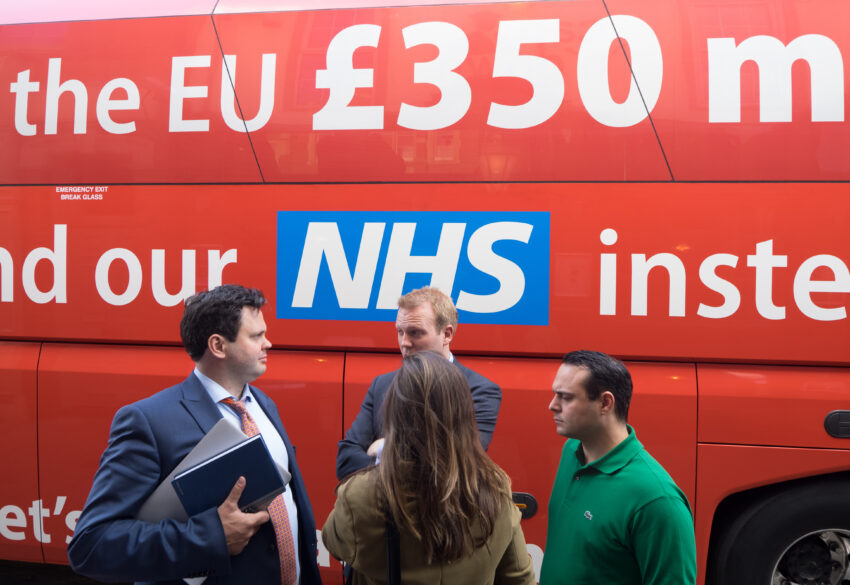
Brexit Has Made UK Inflation Worse, Says Bank of England Economist

Published

on

Brexit regret has reached record levels, according to new polling which said just 9% of Brits consider it to be more of a success than a failure.

Brexit has made inflation harder to control in Britain and left the country exposed to “self-sustaining” price rises, according to the Bank of England’s chief economist, Huw Pill.

In remarks that will resonate with the small and medium-sized firms still wrestling with stubborn cost pressures, Pill said policymakers had found it tougher to rein in the pace of price rises since the 2016 vote to leave the European Union.

Speaking at a conference in Uzbekistan, Pill argued that the structural overhaul of Britain’s labour and goods markets brought about by Brexit had reshaped the economy in ways the Bank was “still learning about” and “still digesting”.

“My own view is that those changes have led us to a structure which is more prone to this sort of self-sustaining momentum in pricing, which can lead to greater inflation persistence,” he said.

Pill pointed to two forces in particular: the new trade barriers thrown up between Britain and its largest trading partner, and the end of the free movement of workers, which has drained the pool of available labour in sectors that long leaned on European staff.

Advertisement

The numbers lend weight to the argument. UK inflation has averaged roughly 3.6 per cent since the referendum in June 2016, and has dipped below the Bank’s 2 per cent target in only one month over the past five years. Over the same period, German inflation has averaged 2.5 per cent and French inflation 1.9 per cent, according to the Bank of England’s own analysis.

The picture is not entirely one-sided. Britain formally left the EU in 2020, just before the pandemic shut down much of the economy and triggered a wave of state support that fuelled demand. Inflation then surged to a 41-year high of 11.1 per cent in October 2022, as savings amassed during lockdown were unleashed at the very moment Russia’s invasion of Ukraine sent energy prices soaring. Even so, that peak sat above the 8.8 per cent reached in Germany and the 6.3 per cent seen in France.

Pill’s intervention lands only weeks after Andrew Bailey, the Bank’s governor, said the institution had been proved right in its long-standing warnings that Brexit would damage the economy. Bailey has urged the UK to rebuild its trade ties with the EU, arguing that shrinking the markets Britain trades with inevitably weighs on growth.

“I think the level of activity and growth in the economy has been lower,” Bailey said. “If you reduce the size of the markets that we trade with, so we reduce our export markets, then that does tend to have a negative impact on growth. It tends to have a negative impact on productivity and the size of the market.”

Advertisement

The comments build on a growing body of evidence. Company-level data has suggested that Brexit has knocked around 6 per cent off the UK economy, a figure that chimes with earlier estimates that Brexit dealt a 5 per cent blow to output.

The labour squeeze hits SMEs hardest

Britain marked 10 years since the referendum last week, and the anniversary has prompted a fresh round of stocktaking. In its own assessment, Goldman Sachs concluded that businesses most reliant on EU workers “have experienced the largest increases in vacancy rates since the Covid pandemic” as the new migration system bit into the available workforce.

For owner-managers, that is more than an academic point. James Moberly, an economist at the bank, said the shortages could feed directly into inflation as companies forced to pay more to recruit pass those costs on to customers through higher prices, a dynamic that lands squarely on the bottom line of smaller firms with thinner margins.

“Going forward, reduced cyclicality of migration flows compared with the pre-Brexit period could lead to greater volatility in labour market tightness and domestic inflationary pressures,” Moberly said. He added that Brexit had “materially weighed on Britain’s economic performance relative to other advanced economies”.

Advertisement

For Britain’s 5.5 million SMEs, the warning from Threadneedle Street carries a practical sting. If inflation is now structurally harder to shift, interest rates may stay higher for longer, keeping the cost of borrowing, recruitment and everyday trading elevated well into the second half of the decade.


Jamie Young

Jamie Young

Jamie is Senior Reporter at Business Matters, bringing over a decade of experience in UK SME business reporting.
Jamie holds a degree in Business Administration and regularly participates in industry conferences and workshops.

When not reporting on the latest business developments, Jamie is passionate about mentoring up-and-coming journalists and entrepreneurs to inspire the next generation of business leaders.

Advertisement
Continue Reading

Trending

Copyright © 2025