
Business
Stanford Scientists Create ‘Xenocortical’ Mice With Human Brain Tissue to Study Devastating Brain Disorders

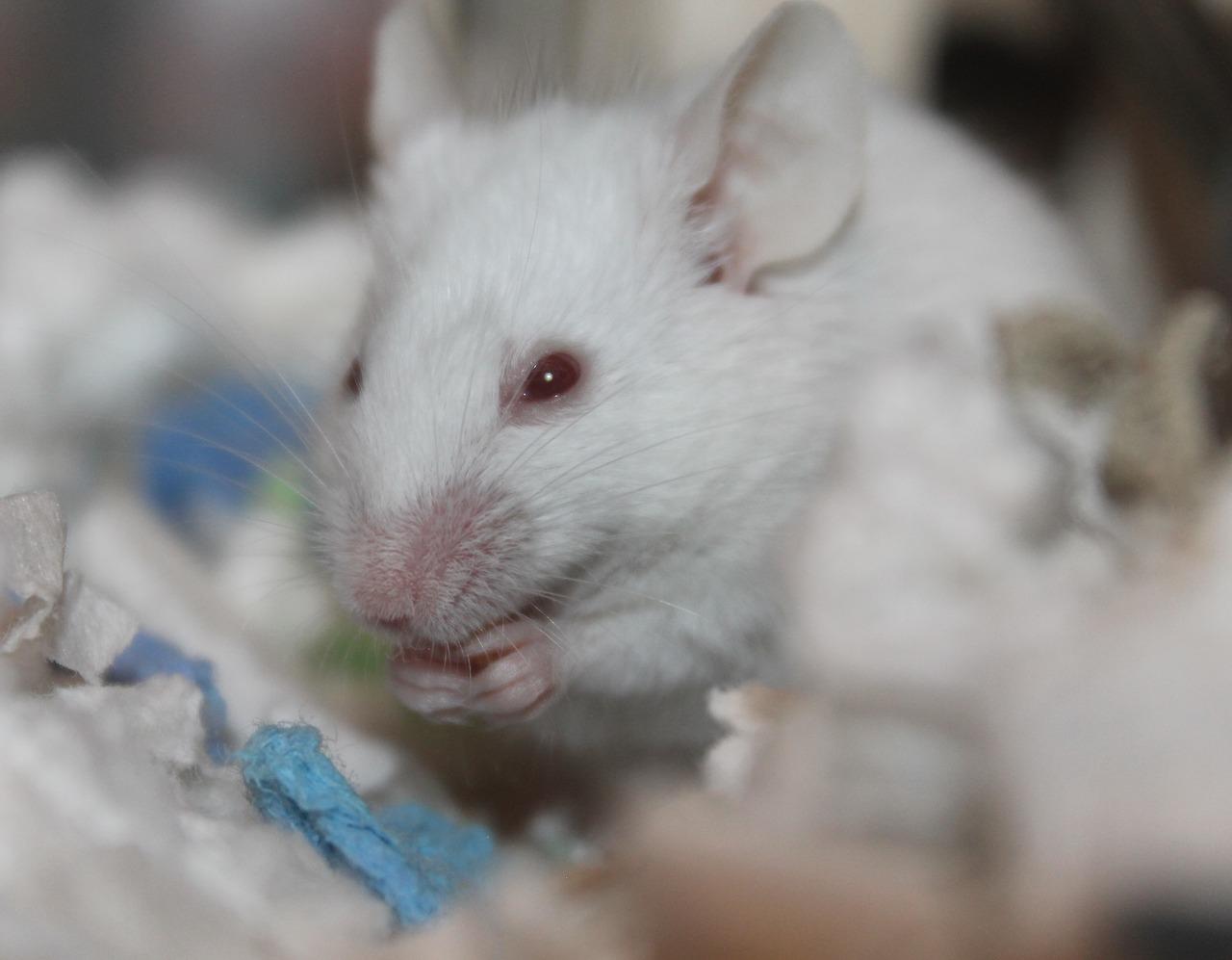
Stanford University researchers have successfully transplanted lab-grown human brain tissue into genetically engineered mice, creating a new experimental platform scientists say could dramatically expand their ability to study neurological and psychiatric disorders that have long been difficult to research directly in living human brains.
The findings, published online September 16 in the journal Nature, describe an approach the research team calls “xenocortication.” Scientists engineered a strain of mice so that most of their neocortex and hippocampus, the brain regions responsible for higher cognitive functions and memory, never formed during early development. Researchers then transplanted human cortical organoids, self-organizing, three-dimensional clusters of laboratory-grown tissue that resemble specific regions of the developing brain, into the resulting cavity shortly after birth.
Cortical organoids are created by reprogramming human skin cells into induced pluripotent stem cells, which can then be coaxed to differentiate into most of the body’s cell types, including the specialized neurons and support cells found in the brain’s outer cortex. The technique builds on years of prior work by the study’s senior author, Sergiu Pașca, a neuroscientist and stem cell biologist who holds the Kenneth T. Norris Endowed Professorship in Psychiatry and Behavioral Sciences at Stanford and directs the university’s Brain Organogenesis Program.
According to Stanford’s own reporting on the study, the transplanted human tissue did not simply survive inside the mice; it expanded rapidly, eventually accounting for more than 90% of the total cortical tissue volume within the mice’s brains roughly three months after the transplant procedure. The human-derived neurons formed working connections both within the graft itself and with the surrounding mouse nervous system, with axons extending as far as the cervical spinal cord. Researchers also recorded coordinated electrical activity across the transplanted tissue, indicating the human cells were forming functional, organized circuits rather than simply existing as inert tissue.
Pașca described the significance of that integration directly. “In these mice, the human grafts generated a broad diversity of cortical cell types and established functional connections throughout the mouse nervous system,” he said. He was careful to characterize the limits of what the model represents, distinguishing it clearly from popular conceptions of “mini brains” grown in a dish. “They are not miniature brains and do not reproduce the full complexity of the human brain, but they allow us to study human neural cell types and developmental processes that would otherwise be extremely difficult to access,” Pașca said.
Remarkably, researchers found that the transplanted tissue contained detectable numbers of von Economo neurons, a rare and unusual type of nerve cell that had previously only been observed in postmortem human brain tissue and had never before been successfully generated either in laboratory culture or in earlier transplant experiments. Compared with previous cortical organoid transplant approaches, the xenocortical grafts also produced roughly three times more of a specific class of projection neurons that extend connections far beyond their region of origin, a feature researchers say makes the model considerably more representative of actual human cortical development than prior techniques.
Despite the scale of human tissue integration, the engineered mice retained largely normal function. Researchers found that so-called “apallial” mice, those genetically modified to lack most of their neocortex and hippocampus before any transplant occurred, were still able to move around their environment, see, hear and smell. Following the human tissue transplant, xenocortical mice performed on behavioral tests in a manner generally comparable to same-age normal mice by three to six months after surgery, despite carrying a brain composed overwhelmingly of human-derived cortical tissue.
To demonstrate the model’s potential research applications, scientists exposed xenocortical mice to five hours of low-oxygen conditions, designed to mimic aspects of the kind of oxygen deprivation that can occur around birth in human infants. That exposure caused substantial damage to the human-derived cortical tissue specifically, and oxygen-deprived xenocortical mice subsequently showed difficulty maintaining a steady gait and balance, a pattern researchers noted bears resemblance to symptoms seen in children with cerebral palsy. Normal mice and apallial mice lacking the human tissue transplant, by contrast, were largely unaffected by the same low-oxygen exposure. Pașca said understanding that difference could prove scientifically valuable well beyond the immediate experiment. “Finding out what accounts for this difference could yield clues about human neural susceptibility to oxygen deprivation, shed light on mechanisms underlying cerebral palsy and provide a platform for testing potential therapeutic strategies,” he said.
Researchers say the broader platform could eventually help scientists study a range of conditions that have historically been extremely difficult to investigate at the cellular and molecular level in living human brain tissue, including profound autism, schizophrenia, cerebral palsy and epilepsy. Alison Singer, president of the Autism Science Foundation, described the potential significance of the approach for future precision medicine efforts. “The idea that you can make an organoid model with an individual’s unique genetic character and use that to learn what’s gone awry in that individual’s brain is a critical step toward precision medicine,” Singer said.
Given the ethical complexity inherent in transplanting human neural tissue into animal models, Pașca organized a conference in Asilomar, California, in November 2025 specifically to debate the ethical implications of this kind of research before the study’s publication. Stanford’s Office of Technology Licensing holds patents related to the generation of cortical organoids, with Pașca listed as an inventor, along with a separate provisional patent application covering the organoid transplantation technique itself.
Researchers say the xenocortical mouse platform will primarily serve as a tool for studying how disease-associated genetic changes alter human neural development and circuit formation, and for testing whether potential treatments can prevent or reverse those changes, offering scientists a living system in which to study human brain biology that was previously accessible only through limited postmortem tissue samples or simplified laboratory cell cultures.


French draft budget caps spending growth to satisfy EU despite rising debt burden

Flames, smoke seen near Riyadh airport after Saudi warning of aerial attack threat
Business
Kevin Durant, 37, Enters His 20th NBA Season With a Hall of Fame Case Still Growing as Retirement Looms

HOUSTON — Kevin Durant is entering his 20th NBA season with the Houston Rockets, and at 37 years old, he continues adding to a resume that already stands among the strongest Hall of Fame cases in league history, even as the forward himself has offered hints that his playing career may be nearing its final stretch.
Durant’s credentials speak for themselves: two NBA championships, two Finals MVP awards, the 2014 NBA MVP, 16 All-Star selections, 12 All-NBA Team selections, and four Olympic gold medals as Team USA’s all-time leading scorer. He is currently the NBA’s sixth all-time leading scorer, having passed Dallas Mavericks Hall of Famer Dirk Nowitzki for that position on January 18 during a game against New Orleans. Durant now sits 544 points behind Michael Jordan for fifth place on the all-time scoring list.
Even at his age, Durant showed no signs of significant decline during his first full season in Houston. He appeared in 78 games during the 2025-26 season, leading the Rockets in scoring at 26.0 points per game while also leading the team in minutes played and shooting accuracy. He added 5.5 rebounds and 4.8 assists per game, production that earned him an All-NBA Second Team selection and helped Houston win more than 50 games and secure the fifth seed in the Western Conference, despite the team’s offense being tested by an injury to starting point guard Fred VanVleet during the year. The Rockets were ultimately eliminated in the first round of the 2026 playoffs by the Los Angeles Lakers.
Durant’s individual honors continued piling up throughout the season. He earned his 16th career All-Star selection, making him, at 37, the oldest player in Rockets franchise history to receive the honor. That selection also gave him the fourth-most All-Star appearances in NBA history, trailing only LeBron James, with 22, Kareem Abdul-Jabbar, with 19, and Kobe Bryant, with 18. Durant also continued closing in on one of basketball’s rarer statistical milestones: with 997 career games of 20 or more points, he needs just three more such performances to join James, Karl Malone and Abdul-Jabbar as the only players in NBA history to reach 1,000 career 20-point games. He is also one of just two players in league history to combine a career scoring average above 25 points per game with a true shooting percentage of at least .600.
Durant re-signed with the Rockets in February, committing to Houston for at least the near term even as questions persist about how much longer his career will continue. Speaking to Rockets legend Hakeem Olajuwon in an interview for Durant’s media company, Boardroom, Durant declined to set a firm timeline for retirement but suggested that playing five more seasons, which would take him to age 42, one year older than LeBron James is now, “sounds like it might be a stretch.”
In a separate, widely circulated clip, Durant went further, signaling to fans that the upcoming 2026-27 season could be his last, holding up a single finger to indicate one more year when informed that the news would be difficult for fans to hear. Should that timeline hold, Durant’s final season would close out a career spanning two decades and stops with the Seattle SuperSonics and Oklahoma City Thunder, Golden State Warriors, Brooklyn Nets, Phoenix Suns and Houston Rockets.
Rockets head coach Ime Udoka has pushed back on any notion that age has diminished Durant’s effectiveness on the floor, pointing instead to the consistency he has brought to a young Houston roster. “There’s no dropoff. It’s the same ol’ Kevin, efficient,” Udoka said. “It’s good for the group to have that [in Houston], and it’s rubbed off on our young guys. He goes about every day the same as he always has.”
Durant’s continued excellence at his age has drawn direct comparisons to James, who has similarly defied typical career arcs, recently signing a new two-year contract after his 23rd NBA season and continuing his own career into his 40s, most recently agreeing to join the Philadelphia 76ers. Some analysts have noted that James’s own longevity storyline has, at times, overshadowed the attention given to Durant’s comparable late-career production, even as both players continue performing at a level far exceeding typical expectations for players their age.
Heading into the 2026-27 season, Houston faces its own set of questions beyond Durant’s individual outlook. With VanVleet expected back from injury and the Western Conference growing increasingly competitive, some analysts have characterized the coming season as a pivotal, potentially final opportunity for Durant to pursue a championship with the Rockets, particularly given ongoing questions about the team’s ball-handling depth beyond Durant himself once opposing defenses key in on him.
Whatever the outcome of Houston’s season, Durant’s Hall of Fame case appears secure regardless of how much longer he continues playing. With his combination of individual accolades, historic scoring milestones and sustained production well into his late 30s, Durant’s enshrinement in the Naismith Memorial Basketball Hall of Fame is widely regarded as a formality once his playing career eventually does come to a close, whether that arrives after this season or, as history suggests may still be possible, several years further down the road.


Federal aviation officials are preparing to launch an AI-powered air-traffic control tool in one of the nation’s busiest corridors as soon as Monday, The Wall Street Journal’s Andrew Tangel writes.
The software, called Smart, is expected to help the Federal Aviation Administration and airlines reduce delays and cancellations and find routes for flights when disruptions scramble air traffic. It will make its debut in the Washington, D.C., area ahead of a broader nationwide rollout, according to government and industry officials.
Copyright ©2026 Dow Jones & Company, Inc. All Rights Reserved. 87990cbe856818d5eddac44c7b1cdeb8

VCR: Consumer Discretionary Sector Dashboard For September
Business
Dow Jones Futures: Nasdaq, S&P 500 Hold; Robinhood, Sandisk, AMD, Moderna Surge Into Buy Areas

Dow Jones futures will open Sunday evening, along with S&P 500 futures and Nasdaq futures. The stock market was mixed, with the 10-year Treasury yield at 5%. The Nasdaq rose modestly, amid continued sector rotations among growth stocks. The S&P 500 largely held its ground but the Dow Jones and small-cap Russell 2000 fell solidly to three-month lows. Robinhood Markets…
Copyright ©2026 Investor’s Business Daily, LLC. All rights reserved. 87990cbe856818d5eddac44c7b1cdeb8

Gland Pharma, LIC Housing Finance, Gujarat Energy, CAMS and Amber Enterprises India saw the highest mutual fund selling among smallcap stocks in August, according to Dolat Capital.

TUCSON, Ariz. — A YouTube clip showing a faint light at the Catalina Foothills house of Nancy Guthrie, the 84-year-old mother of “Today” co-host Savannah Guthrie, circulated this week and revived online claims that someone had returned to the property. Authorities have not confirmed the footage or tied it to the investigation.
Guthrie was last seen Jan. 31 after a relative dropped her off following dinner. Her garage opened shortly before 9:50 p.m. and closed minutes later. She was reported missing Feb. 1 when she did not arrive at a friend’s house to watch a church service. Relatives found blood on the front porch. Pima County sheriff’s officials and the FBI have treated the case as a kidnapping for ransom. No suspect has been publicly named.
A content creator using the account marktheshark943 posted video he described as “breaking news,” pointing to a yellow glow near a door or window and saying a rock previously seen in the driveway was gone. Photos of the rock circulated online. Neither claim has been independently verified, and the Pima County Sheriff’s Department has not issued a statement about lights or landscaping at the house.
Similar videos appeared earlier this month. Another creator filmed illuminated windows and speculated on camera that timers or occupants could explain them. Neighbors and social media users have long watched the dark-sky foothills property. The house had multiple cameras and more than a dozen outdoor fixtures when Guthrie disappeared. That does not mean a new light equals a new lead.
Comments on the latest clip included “Someone is playing games!” and talk of taunting. Those are posts, not evidence. Family members, including daughter Annie Guthrie and her husband, Tommaso Cioni, live nearby. People online have guessed they visit to maintain the house. There is no public confirmation of who, if anyone, was inside.
Sheriff Chris Nanos said in February that relatives are not suspects. “To be clear, the Guthrie family, to include all siblings and spouses, has been cleared as possible suspects.” He has also said Guthrie was not wandering because of dementia. “She is as sharp as a tack.” She uses a pacemaker and daily heart medication and has trouble walking.
The last major public images remain doorbell video of a masked person, about 5-foot-9 to 5-foot-10, in gloves and an Ozark Trail backpack, at the door the night she vanished. The camera disconnected about 1:47 a.m. Investigators recovered some Nest data with Google’s help. Gloves found near the house were tested. A hair lead went nowhere, Nanos said later. Two ransom-style notes were released July 31; one claimed she had died. Human remains found in August near West Ajo Way and South La Cholla Boulevard were not linked to the case, the sheriff’s department said.
In July, Nanos told “Today” the file was still active. “We have so much DNA to sort through,” he said. “These are labs all across the country that are talking to one another about how best to look at what they have in front of them for DNA evidence. And, so I’m still positive we will resolve this case.” He added, “We’re working this as hard as we can. There’s no lead too small.”
Spokesperson Angelica Carrillo said in an email that a sheriff-FBI task force “remains committed to finding Nancy and providing answers to her family” and that DNA and digital work is “complex and time-intensive.” A department post said that when a significant development occurs, “it will be shared publicly.”
On Sept. 15, Savannah Guthrie thanked actress Allison Janney on air and said the family wanted to “give her a proper goodbye.” “We just want our mom home,” she said. Reward figures reported in coverage have ranged from an FBI offer of up to $50,000 to larger private totals; the department has not restated those figures in connection with the new video.
Seven months on, the official picture is unchanged: an 84-year-old missing from a dark foothills street, a masked figure on a doorbell camera, unfinished lab work, and no arrest. A YouTube drive-by of a porch light is not a status update. Anyone with information is asked to contact the Pima County Sheriff’s Department or the FBI.

Porsche could face another 4,000 job cuts, Handelsblatt reports
Business
Warren Buffett sounds alarm as stock market warning returns for only second time in 155 years

That backdrop comes as Warren Buffett, one of the most closely watched investors in the world, has issued a blunt message about the current market mood. Between 1965 and 2025, Berkshire Hathaway, the company he once led, delivered an annual compound return of about 19.7%, compared with 10.5% for the S&P 500 including dividends.
In a recent conversation with CNBC’s Becky Quick, Buffett said, “It’s tough to find values when everybody is preferring gambling.” The Oracle of Omaha has made a similar point in recent months, describing the market as a church with a casino attached and saying he had never seen people in more of a gambling mood.
Buffets approach
Buffett’s approach to investing has long centred on businesses that can earn more than they spend over an extended period. That is why he places so much emphasis on economic moats and competitive advantages. A moat can come from a strong brand, scale, switching costs or a network that becomes more valuable as more people use it. Such advantages can support durable cash flow, which companies can use to pay dividends, buy back shares or reinvest in their operations. Over long periods, that compounding can drive portfolio returns.
Buffett has also generally preferred buying when investors are less interested or more fearful, rather than when a particular story has taken over the market. Berkshire Hathaway remained relatively cautious on the artificial intelligence (AI) trade for a long time as the frenzy pushed valuations higher. It was only about a year ago that Berkshire initiated a position in Alphabet.

What does that mean for investors?
That does not necessarily mean the current AI boom will follow the same path as the dot-com era. The two periods also have important differences.
A high CAPE ratio remains significant because elevated readings have generally pointed towards more modest future returns. The current level can therefore be viewed as a warning about valuations rather than a signal that a market crash is about to happen. Markets can remain expensive for extended periods, just as inexpensive markets can become even cheaper. The CAPE ratio is therefore more useful for considering the next few years than trying to predict the next few weeks.Buffett’s investment approach has instead focused on owning businesses that can compound through different market cycles, with attention to economic moats, quality management teams and durable cash flows. Those cash flows can either be returned to shareholders or reinvested in the business. Holding such positions over long periods also means that a few difficult years do not necessarily determine the overall investment outcome.
Buffett steps down as chairman
Buffett, 96, is stepping down as chairman of Berkshire Hathaway after more than six decades at the helm of the company. He will become chairman emeritus with immediate effect and will remain a director.
His oldest son, Howard Buffett, will succeed him as chairman, marking another step in Berkshire’s long-planned succession. Howard has been a member of Berkshire’s board since 1993.
As he moves into the chairman emeritus role, Buffett said he remains confident about Berkshire’s future and will continue as a shareholder. “The company is in excellent hands, and I look forward to remaining a shareholder alongside you.”
(Disclaimer: Recommendations, suggestions, views and opinions given by the experts are their own. These do not represent the views of The Economic Times)
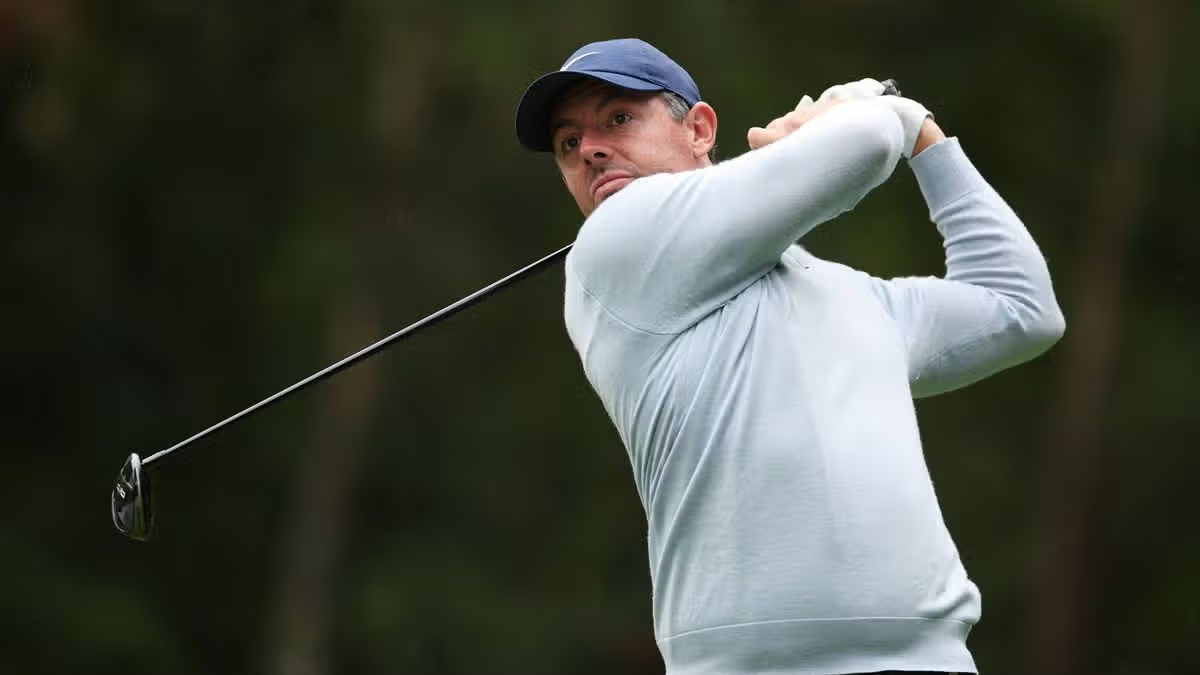
Golf latest: Rory McIlroy reacts as former Masters winner withdraws from BMW PGA
French draft budget caps spending growth to satisfy EU despite rising debt burden

Google Stock: Here’s How Antitrust Advertising Ruling Could Play Out




![No Money [ DJ BEN RMX ]](https://wordupnews.com/wp-content/uploads/2026/02/1770218101_maxresdefault-80x80.jpg)

-

 Tech6 days ago
The Latest Weird Thing to Play Doom Is the Mapped-Out Brain of a Fruit Fly
-

 Fashion19 hours ago
Weekend Open Thread: Talbots – Corporette.com
-

 Crypto World5 days ago
Kraken Lets xStocks Holders Earn Yield Through DeFi
-

 Crypto World3 days ago
US Charges Robinhood Engineers Over Crypto Listing Trades
-

 Crypto World5 days ago
Revolut Attackers Warn of Ongoing Daily Customer Data Leaks
-

 Crypto World3 days ago
What Is the Status of the U.S.-Iran Peace Talks? Here's What Both Sides Are Saying
-
 Crypto World7 days ago
Can AI Build a Startup in 72 Hours? Elon Musk's Team Will Livestream the Test
-

 Crypto World5 days ago
Elon Musk Drops a Bombshell: Grok 5 Could Be the AGI Breakthrough
-
 Business6 days ago
Rivals Sam Altman and Elon Musk Rally Behind Dario Amodei’s Call for a Slowdown in AI Development
-
 Crypto World6 days ago
New Tesla Roadster Uses SpaceX Tech. Will It Impact the Stock Price?
-
 NewsBeat5 days ago
‘Sick conspiracy’: Trump says only guardrails AI needs is ‘a strong and smart (High IQ!) president’ in all-caps rant
-

 Crypto World4 days ago
Robinhood engineers charged over $50K crypto scheme
-
 Crypto World4 days ago
NVIDIA Analysis: Attempted Rising Wedge Breakout Amid Pressure on the AI Sector
-
Business5 days ago
SK Hynix ADRs Fall More Than 6% as Memory Rally Breaks on Fears of Slower AI Spending
-

 Crypto World5 days ago
DOJ Seeks to Seize $61M in Iran Oil Funds From Binance Accounts It Vouched For
-
 NewsBeat6 days ago
Last Night of the Proms pays moving tribute to Dolly Parton as Sheridan Smith wears a gold sequin jumpsuit in memory of the Queen of Country
-
Crypto World5 days ago
Can Circle’s Arc Repeat Robinhood Chain’s Meme Coin Boom?
-

 Crypto World6 days ago
Goldman Sachs backs 25bp Fed hike after CPI
-

 Crypto World5 days ago
3 Token Unlocks to Watch in the Third Week of September 2026
-
 NewsBeat14 hours ago
Trump says US has reached an agreement to take permanent control of Greenland’s security
You must be logged in to post a comment Login