Two illegal immigrants raped a woman at knifepoint while she was star gazing in a park during a ‘harrowing attack’.
Afghanis Khan Agah and Noorullah Ahmdzai treated their victim as an ‘object they could use and abuse’ on August 16 last year in Barking Park, east London, a court heard.
Their victim was on a date with another man when, at around 11pm, her attackers pinned her down and said ‘they just wanted to have some fun with her’.
Ahmdzai, 26, raped her while Agah held a Swiss Army-type knife to her date’s throat, threatening to kill him if he tried to call the police before the pair switched roles.
Advertisement
Prosecutors said the woman was suffocated during the ‘petrifying and awful’ sex attack ‘which left her numb’.
The Daily Mail overturned a reporting restriction preventing Agah from being named.
During the trial, Agah said he was aged 16 at the time of the attack and is now 17, but court records stated he is 19.
The court made a temporary reporting restriction ordering that the press could not name Agah because he could be under 18.
Advertisement
Khan Agah can now be named after he was convicted at Snaresbrook Crown Court of rape
Noorullah Ahmdzai also faces a lengthy prison term for the attack in east London last August
But the Daily Mail successfully argued there was a public interest in his name being published.
Advertisement
Nutan Fatania, prosecuting, said: ‘This was a terrifying knife-point rape at the hands of these two defendants on two strangers.
‘The complainants had met for the first time that day and they were laying down on each other with a guitar, star gazing, when these two men approached them and overpowered them.
‘They viewed the woman they came across as an object they could use and abuse.
‘She was not a human being to them, she was an object they were entitled to violate, but she was not an object, she was real human being subjected to a harrowing attack.’
Advertisement
Detective Constable Megan Lelliott, who led the investigation, said: ‘This was a horrific ordeal for the victim who has been exceptionally brave in not only reporting what happened to her, but also reliving the whole experience during the trial.
‘Her courage means two dangerous men will be held accountable for their actions.
‘We remain committed to thoroughly investigating all reports of rape and sexual offences, while providing every support to those who come forward.
‘We would encourage anyone who believes they have been a victim-survivor to contact police. You will be listened to.’
Advertisement
Agah and Ahmdzai were convicted of two counts of rape, two charges of threatening with a knife, as well as one offence of assault by penetration and one of false imprisonment following a trial at Snaresbrook Crown Court.
Home Office guidance says the pair should be deported because their sentences, due to be passed in October, will be more than a year.
Judge Leslie Cuthbert warned the rapists they faced ‘lengthy custodial sentences’.
Their victim, who cannot be named for legal reasons, told the trial that she began messaging her date on an online dating app roughly two weeks before the assault.
Advertisement
She said she was lying down in his arms under the stars after he serenaded her with his guitar when they were attacked.
The assailants brandished a knife in front of the woman’s date telling him: ‘I will kill you right now.’
DNA samples retrieved from the victim’s clothing just after the attack, were used by officers to prove that Agah and Ahmdzai were responsible.
Ahmdzai falsely claimed the woman they raped offered to have sex with them for £20 but the jury of five men and seven women rejected his account in nine hours.
Advertisement
Ahmdzai came to Britain on a small boat in August 2023 and was housed in a hotel in London by the Home Office at the taxpayer’s expense, before being moved to Liverpool.
While in Liverpool his claim for asylum was rejected and he began working at a building site to pay for an appeal and returned to London.
Agah also came to the UK illegally but how he arrived remains unclear.
Judge Cuthbert has ordered a dangerousness report to be produced for Agah and Ahmdzai.
Advertisement
He has also asked for a report to establish Agah’s age.
GARY, Ind. (AP) — Tens of thousands of residents in northwest Indiana were in survival mode Thursday as they endured a ninth day without power, throwing out spoiled food, lining up for hot meals and searching for places to charge their phones.
In Gary, Indiana, schools remained closed after the deadly Aug. 11 storm downed trees and power lines. Residents turned to social media to find open laundromats and working Wi-Fi, while others sought food, diapers and cleaning wipes for low-income neighbors.
Meanwhile, heavy rains in central Ohio brought flash flooding that covered roadways Thursday morning in Columbus, the state capital, where emergency crews rescued motorists from stranded cars and saved a 12-year-old boy who was swept off a bridge.
Northern Indiana Public Service Co. said 68,000 customers were still without power as of Thursday morning, the majority of them in Lake County beside the Illinois border. The utility said it has restored power to 306,500 others since Aug. 11. But power is not expected to be fully restored until Tuesday in some places, including Gary.
Advertisement
Courtney Page-Tan, an Indiana University Indianapolis professor who studies community resilience, said health concerns grow each day of a prolonged outage. With many people using generators, poor ventilation can lead to carbon monoxide poisoning. In addition, those reliant on medical devices risk having them lose their charge, while refrigerated food once safe to eat could pose health risks as it spoils.
“Nine days is a long time for a community to be without power,” Page-Tan said.
Residents are exhausted from days without power
Shatiya Hardin, a hair stylist in Gary for 25 years, has been unable to open her salon since the storm. She said residents in her lower-income neighborhood initially took the outages in stride. But now patience is wearing thin.
“We’re always in survival mode in Gary. And I think that’s probably why it wasn’t so much of an uproar because the first few days, it was like, ‘OK, we’re used to this …. but this is the second week now,” Hardin said. “It’s not OK for us to continually be in survival mode, doing the best that we can.”
Advertisement
More than a week after the initial storm, many residents in East Chicago, Indiana, who lost power regained it, but then lost it again. Kevin Mejia, who has a community Facebook page, was in that category Thursday.
“If I make one post, I get 500 comments,” Mejia, 30, said. “A lot of people have been reaching out to me for food: ‘Hey, I threw out hundreds of dollars in groceries.’ Elderly people don’t know who to turn to.”
He’s been sleeping on the floor because his mattress is too warm. With no power, his window air conditioners are silent.
Raydia Martin, assistant director of the Flourish Community Hub at Flourish Church in Gary, said the “silver lining” has been the response from volunteers and community groups.
Advertisement
Sign up for Morning Wire:
Our flagship newsletter breaks down the biggest headlines of the day.
Advertisement
“We thrive best, you know, as humans on certainty and predictability,” Martin said. “So for something so devastating to happen so quickly, it definitely takes a toll on people mentally. Just not knowing what’s coming next, where the next meal is going to come from, and when this is all going to be over. We need to have a light at the end of the tunnel.”
The utility, NIPSCO, has called the destruction “unprecedented and widespread,” and said crews from around the country have arrived to help repair downed wires, broken poles and damaged equipment.
Advertisement
Illinois, which is served by a different utility, recovered sooner from the same storm, but Melody Birmingham, an executive at NIPSCO’s parent company, said that part of Illinois had fewer trees and different infrastructure, including some power lines that may have been buried.
“No storm is created equal,” she said. “No service territory is the same.”
Schools across northwest Indiana are still closed
The power outages have also disrupted the start of the school year for thousands of children.
Gary’s school district, with about 4,300 students, started its school year in early August but has been closed since Aug. 13 and will remain closed through at least Friday, officials said.
Advertisement
Portage Township Schools had to cancel its Aug. 12 start of classes because of the storm and now is planning an Aug. 25 launch of the academic year. Officials this week said there are “existing safety concerns regarding trees down across several properties and damage that needs to be repaired.”
Page-Tan said school closures can have significant consequences for vulnerable families.
“For a lot of households that live paycheck to paycheck, if they are missing work because they’re unable to find childcare, it can be detrimental to the stability of a family,” she said.
Flash flooding brings new woes to central Ohio
About 250 miles (400 kilometers) southeast of Gary, heavy rains drenched Columbus, Ohio, with more than 3 inches (7 centimeters) of rain in 12 hours, Columbus Mayor Andrew Ginther said.
Advertisement
Two women who were on foot and trapped in a flooded creek were rescued, Fire Division Lt. Nick Davis said. He also reported that first responders saved the life of a 12-year-old bicyclist who was swept off a bridge in high water.
The city was still cleaning up from severe weekend thunderstorms when the heavy rains struck midweek.
“We’ve been all hands on deck supporting residents since last week,” Ginther said Thursday morning at a news conference. “We’re going to be focused on recovery, even with this curveball from Mother Nature.”
___
Advertisement
Rico reported from Atlanta and White from Detroit. Dylan Lovan in Louisville, Kentucky, contributed.
Hayden Panettiere‘s on-off boyfriend Brian Hickerson, who was at the scene when she was pronounced dead this week, has finally broken cover after the beloved child actress’s shock passing from a suspected overdose.
Panettiere was just 36 years old – and, with her untimely death, has come a reexamination of her tumultuous romance with Hickerson.
Indeed, the Daily Mail has unearthed a series of intimidating messages Hickerson allegedly sent Panettiere amidst the most abusive throes of their relationship.
Advertisement
It was the summer of 2020, and Hickerson, himself an aspiring actor, was facing a host of charges stemming from alleged domestic violence incidents with Panettiere.
But, in an apparent attempt to influence his girlfriend into dropping the charges, Hickerson warned Panettiere that he had a trove of damaging information ready to use against her, police said at the time.
Hayden Panettiere’s on-off boyfriend Brian Hickerson, who was at the scene when she was pronounced dead this week, has finally broken cover
Advertisement
The 37-year-old real estate agent was pictured outside his grandmother’s house in South Carolina on Tuesday, two days after Panettiere was found ‘unresponsive’ in a nearby apartment
Actress Hayden Panettiere, 36, died on Sunday following a suspected overdose. Her on-off boyfriend, Brian Hickerson (left), was at the South Carolina apartment where she was pronounced dead (pictured in 2018)
‘It is very simple, it is a very simple fix, between me and you, you gotta make one phone call,’ Hickerson allegedly texted Panettiere.
‘Time to go to war, I guess,’ another message read.
Advertisement
In the end, Hickerson pled no contest to two felony counts of injuring a spouse or girlfriend, with the remaining charges dropped and Hickerson serving 33 days in jail.
Perhaps the biggest question now is why, after that brief prison stint, did Panettiere reconcile with the convicted felon and abuser, especially after she detailed his years of violent abuse in her memoir earlier this year.
The on-off couple were photographed together as recently as March 2026, and a heavily redacted police report from the scene of her death this week referred to Panettiere as Hickerson’s ‘girlfriend’.
Strangely, Hickerson had nothing but kind words to share about the actress upon the publication of her memoir in May, despite Panettiere writing of one incident in which he ‘[busted] up my face so badly I [didn’t] leave the house for weeks.’
Advertisement
In hindsight, it may have been a subtle sign that their relationship timeline was far blurrier than suspected.
On Monday, TMZ reported that Panettiere had kept their reconciliation a secret for the sake of her book. The next day, her estranged mother, Lesley Vogel, told NBC News that she ‘always knew they were together’ despite reports of the pair being on and off.
Although an investigation into the circumstances surrounding Panettiere’s death is still ongoing, friends have expressed their regret that those in Panettiere’s inner circle did ‘very little’ to convince her to sever ties with Hickerson.
‘Many people close to her didn’t think Brian was great, but nobody got through to her enough for her to end the relationship completely,’ an insider exclusively told the Daily Mail.
Advertisement
‘Everyone ended up doing very little. No matter how bad it could be, people close to her couldn’t and wouldn’t reason with her enough to make her change for the better. She didn’t have anyone who was her wake-up call.’
Hickerson was widely unliked by Panettiere’s friends, who often ‘made comments that she needed to get away from him,’ another insider shared.
Panettiere was open about her struggles with addiction and postpartum depression in the years before her death (pictured in 2010)
A source told the Daily Mail that Panettiere’s inner circle did ‘very little’ to convince her to break up with Hickerson following his multiple domestic violence charges (pictured in 2018)
Advertisement
‘Obviously, she had confided in people because it got around town. There were so many people that tried to get her away from him but she kept going back,’ they added.
‘It’s probably one of those trauma bonds. It’s a cycle and I think she got caught up in a vicious cycle.’
Panettiere was newly single and recently out of rehab when she first crossed paths with Hickerson at a Los Angeles bar in 2018, she recalled in her memoir.
The star had infamously relinquished full custody of her three-year-old daughter Kaya to her ex-fiancé, Ukrainian boxer Wladimir Klitschko, as her struggles with postpartum depression and addiction to opioids and alcohol made motherhood an impossible struggle.
Advertisement
She described being swept off her feet ‘at lightning speed’ by Hickerson, who only had one small acting credit from 2017 to his name at the time.
Within weeks they were living together at her Los Angeles home – dancing in her living room, redecorating, playing board games and watching ‘practically every Netflix series ever made.’
‘I finally began to feel beautiful again,’ she wrote, praising his smile and sense of humor. ‘I also started to feel safe, loved and cherished. It was like Brian and I were two best friends living together under one roof.’
It wouldn’t be long, however, that their relationship would take a violent turn.
Advertisement
Panettiere and Hickerson began dating in 2018. He was arrested multiple times throughout their relationship, eventually pleading no contest to two felony counts of injuring a spouse or girlfriend in 2021 (pictured in 2019)
Chris Applebaum, who directed the music video for Panettiere’s 2008 song Wake Up Call, explained to the Daily Mail that Hickerson’s ‘abusive and horrible’ behavior was a not-so-hidden secret to Panettiere’s close friends and family.
‘I knew about [Brian], but I never crossed paths with him,’ Applebaum said.
‘I knew all about him and how he was so abusive and horrible, and we know what happens in those kinds of relationships. The victim will always protect the abuser, and there’s horrible dynamics in that way.’
Advertisement
Hickerson was arrested in Los Angeles and charged with domestic violence for the first time in May 2019 and released on bail. He pleaded not guilty to one count of felony domestic violence later that month, and the case was dismissed at the end of September.
The following year, on Valentine’s Day, Hickerson was arrested for domestic battery in Wyoming after a physical altercation with a woman, later identified as Panettiere.
Hickerson pleaded not guilty to the charge in April of that year. In July 2020, Panettiere obtained a restraining order against him, sharing in a public statement that she hoped others would be inspired by her to walk away from abusive partners.
Three months later, Hickerson was arrested on seven felony charges and one misdemeanor charge stemming from allegedly abusive incidents that occurred between May 2019 to January 2020, including one count of dissuading a witness from prosecuting a crime.
Advertisement
It was during a February 2021 preliminary hearing in Wyoming, covered by the Daily Mail, where the snapshots of the intimidating text messages and videos allegedly sent by Hickerson to Panettiere were read aloud in district court.
A mugshot of Hickerson (seen) was taken following his February 2020 arrest for domestic battery in Wyoming, a misdemeanor in the state
He ultimately pleaded no contest to two felony counts of injuring a spouse or girlfriend in 2021, while the other six counts were dropped. He was sentenced to 45 days in jail and four years’ probation, plus $500 in fines and mandatory domestic violence classes.
Hickerson also faced serious financial issues after his domestic violence arrests, ultimately filing for bankruptcy in July 2022. In court documents obtained by the Daily Mail, he listed his total assets as $25,700 and his liabilities at nearly $60,000.
Advertisement
Hickerson said he only had $6,250 in his checking account and the only property he owned was an iPhone, a printer, $2,000 in clothing and $100 worth of jewelry. His debt included nearly $20,000 in credit card expenses and about $18,000 in medical bills. The case was later closed.
Amid their tumultuous relationship, Panettiere made the bold decision to get sober from alcohol and drugs. Although the actress had a long history of abusing substances, revealing that she began taking ‘happy pills’ as early as 15 years old, her addiction worsened while she was battling postpartum depression.
In 2020, she entered a treatment center for what ultimately became an eight-month rehab stint. Panettiere later described her sobriety journey as an ‘everyday battle,’ though the status of her sobriety on the day of her death remains unclear.
According to a redacted incident report obtained by the Daily Mail on Tuesday, Hickerson allegedly showed police a ‘bag of medication’ that Panettiere had been taking at the time of her death. Narcan, a nasal spray used to reverse the effects of opioid overdose, was also reportedly found inside the apartment.
Advertisement
While Panettiere was open with her fans about her years-long struggle with addiction, however, it seemed she was less willing to fully acknowledge her toxic relationship. So much so, Panettiere apparently kept details about their relationship hidden from even her closest friends.
‘Everyone knew she was still seeing Brian [Hickerson], but no one knew if it was serious. She didn’t like to talk about him,’ a third source told the Daily Mail. ‘Brian is a dirt bag. She has dated tons of dirt bags.’
In March 2022, Panettiere was knocked to the ground while trying to break up a fight between Hickerson and patrons outside the Sunset Marquis hotel in Los Angeles. At one point, Panettiere appeared to yell ‘Brian, jail!’ in a possible attempt to warn Hickerson about his probation.
In May 2022, Panettiere was knocked to the ground while trying to break up a fight between Hickerson and patrons outside the Sunset Marquis hotel in Los Angeles
Advertisement
At one point, Panettiere appeared to yell ‘Brian, jail!’ in a possible attempt to warn Hickerson about his probation
The following year, Panettiere told to the New York Times that the pair had recently become sober and reconnected as friends. Still, she was hesitant to define their relationship, admitting to the outlet, ‘There are feelings there, yes.’
Indeed, questions surrounding the status of Panettiere’s relationship with Hickerson had been looming in recent months up until her passing. Those questions, however, were answered on Tuesday, when the redacted incident report from her death referred to Panettiere as Hickerson’s ‘girlfriend.’
Just last March, they were photographed traveling side-by-side at Los Angeles Airport. Two months later, Hickerson made several bombshell statements to TMZ about his past abuse, and his hopes to one day marry Panettiere.
Advertisement
‘Man, I mean, I think it speaks for itself… I got arrested for abusing her,’ Hickerson said in May.
‘And I wouldn’t blame her friends for being pissed off at me… I had a lot to drink and I got physical with her. I got arrested. I spent the night in jail and that’s just what happens when you lay hands on women.’
Hickerson said he ‘had a couple opportunities to apologize’ to Panettiere for what happened.
‘Our relationship now is… I think it’s just a mutual respect thing. She’ll always hold a special place in my heart and, you know, I hope the same for her,’ he said. ‘We’re just good buddies.’
Advertisement
He added that he ‘of course’ thought about marrying the actress but admitted that he and Panettiere ‘probably wouldn’t be good together.’
Panettiere was photographed arriving at a book signing for her memoir, ‘This Is Me: A Reckoning,’ in May 2026 in New York City
But when later asked her thoughts about Hickerson’s dreams for marriage, the actress scoffed at the idea.
‘I don’t think that’s going to happen,’ Panettiere told TMZ.
According to court documents obtained by the Daily Mail, Hickerson filed a petition with the Los Angeles County Superior Court to change his felony charges to misdemeanor charges. Under his four-years’ probation terms, Hickerson was ordered to attend Alcoholics Anonymous meetings ‘at the minimum rate of 1 per week,’ according to court records, and complete 26 anger management sessions.
Hickerson completed his probation on August 1, and asked the court to expunge the charges from his record. However, on August 13, a Los Angeles judge denied Hickerson’s petition.
Three days later, Panettiere was found dead in an apartment block located in Greenville, South Carolina. She was described as ‘unresponsive’ and in ‘cardiac arrest’ after a suspected overdose, according to a recording of the 911 call obtained by the Daily Mail.
Advertisement
On Tuesday, police confirmed that Hickerson, along with his brother Zach Hickerson, were in the apartment with the actress. An officer at the scene said Zach was ‘very emotional’ amid the distressing scene, but Hickerson didn’t show any upset until Panettiere was declared dead.
The star’s father, Alan Lee ‘Skip’ Panettiere, confirmed his daughter’s death in a statement shared on Sunday, announcing the ‘tragic passing of our beloved Hayden.’
‘She was an incredible light and a force of nature who brought immeasurable love and joy to all who knew her – and to the millions who watched her onscreen.’
‘This person in her life that we have been trying to get rid of for quite some time was with her at her death and that was Brian Hickerson,’ Vogel told NBC News.
‘There is a lot of history in the past that Brian has enabled Hayden many times and this is why her father and I had been concerned for a long time about him,’ she said.
Panettiere’s mother said her daughter had ‘sadly lost her way’ and that she ‘wish it were different.’
‘I wish she had stayed true to herself because she had many incredible attributes.’
David Mitchell is back on our TV screens as the accidental detective for the second series of BBC’s Ludwig which is filmed and set in Cambridge
Karen Price Assistant Editor of Screen Time
21:36, 20 Aug 2026
BBC Ludwig viewers had plenty to say as series 2 of the Cambridge-set drama starring David Mitchell launched.
Shot on location in the city, the leading actor who plays the puzzler-turned-detective, has close to ties to Cambridge having been to university there.
Advertisement
In series 2, David’s character John ‘Ludwig’ Taylor no longer needs to impersonate his twin brother and following his successful closure rate for the major investigation team, he’s back under his new job title of crime scene consultant.
The drama also features Anna Mawell Martin once more as John’s sister-in-law and Line of Duty and The Celebrity Traitors star Mark Bonnar joins the cast as Gareth Fisher.
In the opening episode on Thursday, August 20, an unusual double confession at a theatre saw John taking centre stage as he had to prove who didn’t commit the crime.
Just minutes into the opening episode of series 2, fans were rushing to social media to say how much they loved it.
One said on X – formerly Twitter – “Binge watched S1 of #Ludwig Absolutely loving it. S2 here we come. It’s real life Scooby Doo.”
Another added: “Delighted that #Ludwig is back. One of the best new shows in recent years.” While a third commented: “#Ludwig is back. I am so happy.”
A fourth said: Great casting in the brilliantly quirky #Ludwig – David Mitchell and Anna Maxwell Martin are just superb. The latter is a firm favourite of mine.”
Advertisement
One fan simply reacted: “Nice to have #Ludwig back.” And a sixth said: “#Ludwig is back, woohoo! #BBC1.”
As far as Cambridge as a location for the drama is concerned, when asked about the show’s setting during a Q&A for season 1, David said: “Yes, I was a student there, and I love Cambridge. I’m delighted that it was set in Cambridge, because I genuinely feel that having a picturesque context is such a key part of the genre.
“Obviously, Inspector Morse – set in Oxford. Miss Marple – set variously in different villages. Poirot and Sherlock Holmes – set in the past, which we all know is more aesthetically pleasing, despite the horrible time people had living through it.”
Advertisement
More recently, ahead of season 2, he said of the city: “I went to university there, and I love it. You want people to enjoy slipping into this world like a pair of slippers, but with a dead body in them. Cambridge is obviously a great candidate for that. Inspector Morse is one of my favourite shows, but that was set in Oxford.
“That’s where people want to escape to in this kind of program. I think you’ve got to have a beautiful setting to juxtapose with the nature of the crimes.”
A British man died after he jumped from a boat while on a tourist excursion on his second day of a holiday in Zante.
Cameron William Wallace, 34, was on a turtle-spotting trip with a close friend when he fatally jumped into the sea on Tuesday at around 3pm.
Mr Wallace, from Exeter, had rented a boat with friend Steve Pittman and was near the island of Marathonisi, off the southern coast of Zakynthos, when the incident occurred.
Port authority officers and beachgoers helped get Mr Wallace to shore, where cardiopulmonary resuscitation (CPR) and first aid were immediately performed.
Advertisement
Mr Wallace, a former electrical engineer, was rushed to the port of Agios Sostis and then to hospital by patrol boat after being found in a critical condition.
Mr Wallace was later pronounced dead at the General Hospital of Zakynthos.
A preliminary investigation has been launched into the incident by the Zakynthos Port Authority. A post-mortem into his death will also be carried out.
Mr Wallace had recently celebrated his engagement with 34-year-old Silvana Bernardes.
Advertisement
Cameron William Wallace, 34, was on a turtle-spotting trip with a close friend when he fatally jumped into the sea on Tuesday at around 3pm (Pictured: Mr Wallace and his fiancé Silvana Bernardes)
While it is believed the holiday followed Mr Wallace’s losing his job after running his electrical engineering business for a decade.
Ms Bernardes told The Sun her fiancé ‘was really excited to go’ to Zante, with the news of his death coming as a ‘huge shock’.
Advertisement
She continued: ‘It was a complete accident. We don’t know if it was a heart attack or too much water in his lungs.’
The news of Mr Wallace’s death was broken by Mr Pittman on Wednesday morning.
He told Ms Bernardes: ‘I’m really sorry, I don’t know how to say this but something really bad has happened, Cameron’s died.’
It is understood Mr Pittman has been left feeling guilty over Mr Wallace’s death. However, Ms Bernardes insisted there was ‘nothing he could have done’.
Advertisement
Tributes have since poured in from the friends and family of Mr Wallace, who described him as a ‘well loved friend’ who will be ‘greatly missed’.
One woman, who is believed to be the 34-year-old’s older sister, said: ‘I’m heartbroken to announce my baby brother Cameron Wallace’s sudden passing whilst on holiday. We are in total shock and beyond devastated.’
Ms Bernardes said her fiancé Mr Wallace ‘was really excited to go’ to Zante, with the news of his death coming as a ‘huge shock’
She linked the post to a GoFundMe, adding: ‘We desperately need financial help to bring him home to lay him to rest if anyone could be so kind xxx’
Advertisement
While a friend wrote: ‘Cam…Where do I even begin mate? You were one of the few people who always kept in contact…from my Jakarta days right through to my wedding, where you flew halfway across the world just to be there for me.
‘I’ll always remember those Sunday morning phone calls when you were absolutely bladdered and all our chats about life…the future and everything in between. You were someone who always checked in.
‘No matter how much time had passed or how busy life got..,you always made the effort to call… ask how I was doing and stay connected.
‘I’m going to miss those calls more than you know. You were a genuinely good friend to me… and I’ll always be grateful that you made the effort to stay in my life.
Advertisement
‘Rest easy, mate. I’ll miss you.’
A Zakynthos Port Authority spokesman said this week: ‘Yesterday afternoon (Tuesday), the [authority] was informed of a 34-year-old foreigner (British citizen) in a difficult position near the Marathonisi area of Laganas, Zakynthos.
‘With the assistance of beachgoers, he was transported to the shore, where he was provided with first aid using the cardiopulmonary resuscitation (CPR) method.
‘The 34-year-old was picked up by a patrol boat and transported to the port of Agios Sostis, Zakynthos.
Advertisement
‘Subsequently, the man was taken to the Zakynthos General Hospital, where he was pronounced dead. A preliminary investigation is being conducted by the Zakynthos Port Authority.’
The Daily Mail has approached the Foreign Office for comment.
Newly single Margaret Qualley arrives barefoot and ditches her wedding ring in first red carpet appearance since split from Jack Antonoff as she joins Jacob Elordi at The Dog Stars premiere
Margaret Qualley ditched both her wedding ring and her shoes as she made her first red carpet appearance since splitting from husband Jack Antonoff at the world premiere of The Dog Stars on Thursday.
The newly single actress, 31, was joined by her co-star Jacob Elordi as the pair dressed to impress at the premiere held at Odeon Leicester Square in London.
Two-time Golden Globe nominee Margaret, who portrays Cima in the film, looked incredible in a plunging black tasselled gown which boasted a V-neckline and showed off her amazing figure.
The star donned a pair of quirky Chanel barefoot sandals from the brand’s 2027 collection as she walked the carpet.
Advertisement
Styling her dark tresses loose, the star beamed for solo photos before joining co-star Jacob, 29, who looked dapper in a navy pinstriped suit.
Jacob, who portrays leading role Hig in the sci-fi and action movie, dressed smart in the double-breasted blazer which he layered over a crisp white shirt and matching navy tie.
The Australian actor also hit the red carpet solo without supermodel girlfriend Kendall Jenner and opted for a pair of sunglasses.
Advertisement
Margaret Qualley ditched both her wedding ring and her shoes as she made her first red carpet appearance since splitting from husband Jack Antonoff at the world premiere of The Dog Stars
The newly single actress, 31, who portrays Cima in the film, looked incredible in a plunging black tasselled gown which boasted a V-neckline and showed off her amazing figure
Advertisement
Meanwhile Kimberley Garner, 35, cut a glamorous figure as she hit the red carpet.
The former Made In Chelsea star looked incredible in a one-shoulder embellished corset dress which showed off her amazing figure.
She put on a leggy display in the daring number through a thigh-high split and added inches to her frame in a pair of towering clear heels.
The Saturday’s singer Una Healy, 44, turned heads in a figure-hugging red and black floral gown which showed off her incredible figure.
Advertisement
The TV personality added inches to her frame in a pair of black strappy heels and accessorised with a pair of drop earrings.
Lottie Moss, 28, caught the eye in a bold leopard print unitard which boasted a halter neckline and cropped trousers.
The OnlyFans star wowed in a pair of platform black heels and toted her belongings in a matching handbag.
The radio presenter, 48, looked sensational in the sleeveless number as she posed up a storm for photos.
She was joined by her supportive daughters Ava, 19, and Hero, 15, on the red carpet.
The star donned a pair of quirky Chanel barefoot sandals from the brand’s 2027 collection as she walked the carpet
Leading stars Jacob and Margaret beamed for photos at the world premiere
Advertisement
Jacob looked dapper in a navy pinstriped suit complete with a white shirt and tie
Margaret simply accessorised the black gown with a pair of dazzling drop earrings
Kimberley Garner and Myleene Klass both cut a glamorous figures in white gowns
Lottie Moss caught the eye in a bold leopard print unitard which boasted a halter neckline and cropped trousers
Advertisement
It was announced in July that Margaret had split from music producer Jack after nearly three years of marriage; pictured together in March 2025
The former Made In Chelsea star looked incredible as she put on a leggy display in the daring number through a thigh high split and added inches to her frame in towering heels
The Saltburn star, who portrays leading role Hig in the sci-fi and action movie, posed with Rak Jasper the dog from the film
Tigerlily Taylor turned heads in funky checked capris and a yellow blouse
Advertisement
The OnlyFans star wowed in a pair of platform black heels and toted her belongings in a matching handbag
The Saturday’s singer Una Healy turned heads in a figure higging red and black floral gown which showed off her incredible figure
Styling her blonde tresses in a neat half up do, Kimberley strutted the red carpet
Brian May gave a thumbs up as he posed for photos on the red carpet
Advertisement
Jacob also hit the red carpet solo without supermodel girlfriend Kendall Jenner and opted for a pair of sunglasses
The cast reunited at the premiere; pictured L-R Benedict Wong, Guy Pearce, Margaret, Josh Brolin, and Jacob
Myleene put on a very leggy display in towering gold heels
She was joined by her supportive daughters Ava, 18, and Hero, 15, on the red carpet
Advertisement
Margaret couldn’t contain her laughter as she chatted to co-star Guy Pearce
Jacob gave Rak Jasper the dog a treat
The synopsis reads: ‘In a post-apocalyptic world, a virus wipes out humanity. Survivors face roaming scavengers called Reapers. Protagonist Hig, a pilot, survived the flu but lost his wife’
Meanwhile Brian May gave a thumbs up as he walked the star-studded red carpet in a smart black suit.
Advertisement
Love Island star Tasha Ghouri cosied up to boyfriend Cam Whitnall at the premiere.
The reality star looked gorgeous in a blue one-shoulder gown while Cam looked smart in an all-black outfit.
Pregnant former Victoria’s Secret model Nadine Leopold cradled her bump in a glamorous black tasselled gown.
Styling her blonde tresses loose, Nadine beamed for photos in the one-shoulder black dress.
Advertisement
Guy Pearce, 58, who plays Pops, made a dapper early arrival in a navy suit complete with a peach open collar shirt.
Benedict Wong, 55, turned heads in a smart black jacket which he layered over a white T-shirt and beige trousers.
Pregnant BBC Radio 1 DJ Yinka Bokinni cradled her growing baby bump in a grey zebra print dress and heels.
The stars will later head over to Soho House for the afterparty to celebrate the thriller.
Advertisement
Ridley Scott’s sci-fi flick The Dog Stars had a staggering $110million-budget and will be hitting US/UK theaters August 28.
The synopsis reads: ‘In a post-apocalyptic world, a virus wipes out humanity. Survivors face roaming scavengers called Reapers. Protagonist Hig, a pilot, survived the flu but lost his wife.’
Pregnant former Victoria’s Secret model Nadine Leopold cradled her bump in a glamorous black tasslled top and trousers
Strictly Come Dancing star Janette Manrara looked glamorous in a black gown
Advertisement
Love Island star Tasha Ghouri cosied up to boyfriend Cam Whitnall
Tasha looked stunning in a blue one shoulder gown
Newly weds Neil Jones and Chyna Mills dressed to impress for the night
Kai Widdrington was all smiles as he posed with his stunning girlfriend Chloe Wells
Advertisement
Director Ridley Scott arrived with his wife Giannina Facio
Olivia Cox showed off her amazing figure in a red gown
Gav Murphy and Honey Ross posed for photos together
Guy Pearce, 58, who plays Pops, made a dapper early arrival in a navy suit complete with a peach open collar shirt
Advertisement
Benedict Wong, 55, turned heads in a smart black jacket which he layered over a white T-shirt and beige trousers
Traitors winner Stephen Libby looked effortlessly cool as he posed with Daniel Quirke
L-R Kai Widdrington, Chloe Wells, Alexis Warr, Maddie Ingoldsby, Chyna Mills and Neil Jones
Rak Jasper the dog sat perfectly on the red carpet
Advertisement
Pregnant BBC Radio 1 DJ Yinka Bokinni cradled her growing baby bump in a grey zebra print dress and heels
Ridley Scott’s sci-fi flick The Dog Stars had a staggering $110million-budget and will be hitting US/UK theaters August 28
Margaret’s appearance comes after her rep confirmed her breakup to TMZ on July 10, insisting there ‘was no infidelity’ and ‘no trust issues’ leading to the demise of her ‘rocky’ marriage to the 42-year-old Bleachers frontman.
The two-time Actor Award nominee and the 14-time Grammy winner haven’t been pictured together since the Grammy Awards on February 1.
Advertisement
A source told DeuxMoi on July 8 that ‘there were many factors that allegedly contributed to the split, with those close to the situation also alleging Jack had long been difficult to live with’.
The Blue Moon actress and Antonoff – who began dating in the summer of 2021 – split in July after nearly three years of marriage.
Qualley changed her Instagram handle back to include her legal name Sarah Margaret Qualley instead of her previous handles @isimolady and @isimostar, which referenced the pop star hitmaker’s 2024 track Isimo.
The House Tour co-director recently deleted photos she shared in March on Instagram from their wedding day at Beach Haven in his native New Jersey.
Advertisement
Qualley was previously romantically linked to her Death Note co-star Nat Wolff, SNL alum Pete Davidson and her Love Me Like You Hate Me leading man Shia LaBeouf.
And Antonoff had reportedly dated the likes of photographer Carlotta Kohl, Golden Globe winner Lena Dunham and two-time Oscar nominee Scarlett Johansson.
The deafening silence from Prince William spoke volumes on Thursday.
Experts said he was likely to be seething at his brother’s return.
There was no word from the heir to the throne following the bombshell news from the Duke and Duchess of Sussex.
The Prince and Princess of Wales are bitterly estranged from Harry and Meghan. They may fear that the couple’s move back to Britain is a deliberate strategy to force them into reconciliation while King Charles is monarch.
Advertisement
Former BBC royal correspondent Peter Hunt said William would be ‘apoplectic’ at his brother’s move.
‘In the long term, the return of the Sussexes to the UK opens up the prospect of two rival courts, William’s and Harry’s,’ he said.
‘In the short term, Harry will be able to deepen his rapprochement with his father.
‘His presence back home will make it harder for his brother to duck a reconciliation.
Advertisement
‘The surprise return of Harry and Meghan is likely to have left William apoplectic.’
There was no word from the heir to the throne following the bombshell news that the Duke and Duchess of Sussex will return to the UK. Pictured: Prince Harry in Washington on Wednesday
Harry and former Suits actress Meghan (right) were once part of the so-called Fab Four with the then-Duke and Duchess of Cambridge (left)
Advertisement
Harry and former Suits actress Meghan were once part of the so-called Fab Four with the then-Duke and Duchess of Cambridge.
Their fallout is said to have begun even before Harry married Meghan at Windsor Castle in May 2018, with Harry accusing William of being snobbish towards his bride.
In March 2019, it was announced the Sussexes would set up their own household, breaking away from the joint operation with William and Kate, amid reports of a rift.
The animosity became obvious during the Megxit saga of 2020, and since then Harry has let loose a barrage of accusations against his brother, Kate, Charles and Camilla during tell-all interviews, his score-settling memoir Spare, and his Netflix documentary.
Advertisement
The brothers were last seen together publicly at their father’s coronation in 2023. In his autobiography Harry claimed his ‘archnemesis’ brother ‘Willy’ knocked him to the floor into a dog bowl in a row over Meghan’s alleged rude behaviour.
He also alleged it was William and Kate who encouraged him to wear a Nazi uniform to a fancy dress party in 2005.
Harry and Meghan, in their Netflix series two months after the Queen’s death, claimed Kensington Palace had lied to protect William when it issued a statement denying a story he had bullied Harry out of the Royal Family.
Harry also wrote of how Charles pleaded with his sons at a meeting at Windsor just after the funeral of the Duke of Edinburgh, saying: ‘Please, boys. Don’t make my final years a misery.’
Advertisement
In an interview with Oprah Winfrey, Meghan said Kate made her cry ahead of the wedding – the opposite of reports circulating that Meghan had left Kate in tears over Princess Charlotte’s bridesmaid dress fitting.
It was the saga over Meghan’s claims that royals had questioned the likely skin colour of her unborn son Archie that ended with Kate being branded a racist – a situation William may never forgive them for.
William is likely to have taken Harry’s accusations about Kate closer to heart than any criticism of himself.
Advertisement
Share or comment on this article:
A deafening silence from William and Kate… but the Prince of Wales will be seething – and he could be forced into a reconciliation
Within an hour of arriving in Botton, a small, picturesque village in the UK’s North Yorkshire moors, I was standing in a farm field shovelling hay.
Alongside me were my friend Max*, his father, a co-worker named Richard, two volunteers and several learning-disabled residents of the Esk Valley Camphill Community. We spent the next few hours on a conservation project, moving hay, stopping regularly to lean on our tools and talk, and at one point gathering on a picnic bench beside the cars for a tea and biscuit break.
Officially Richard was “providing care” and the learning-disabled residents of the community (often referred to as villagers) were “receiving care”, with volunteers helping the co-workers along the way. On the ground, though, I could already see that the structure of the community served to sideline this distinction rather than reinforce it.
I had driven into the North Yorkshire moors expecting something resembling a care institution. This was something else.
Advertisement
The Entrance to Botton Village in the North Yorkshire Moors National Park. Thomas Moore
While I was there, I would observe two radically different interpretations of social care side by side.
On the side where I stayed: care as long-term communal life, in which support grows out of relationships rather than being delivered through them.
On the other: care as professional service delivery. My time here would completely change the way I thought about social care.
The Insights section is committed to high-quality longform journalism. Our editors work with academics from many different backgrounds who are tackling a wide range of societal and scientific challenges.
Advertisement
The Esk Valley Camphill Community, based at Botton Village, is part of the Camphill movement – an international network of communities built on the belief that people with and without learning disabilities can live and work together as genuine community members, rather than as service users and service providers.
The Camphill community in Botton was founded in 1955 by Karl König, the Austrian paediatrician who had established the Camphill movement in rural Scotland 16 years earlier, inspired by the educational philosophy of Rudolf Steiner.
The land at Botton was acquired from W.F. Macmillan and his family (the publishing family behind Macmillan Publishers, as well as local landowners and philanthropists). One of the family members, Alistair Macmillan, had a learning disability and later lived in Botton as a resident.
Over the following decades it grew into a community of around three to 400 people at its peak. Today, around 120 residents continue this way of life across 19 households, now operating as Esk Valley Camphill Community, one of two organisations based in the village, alongside the Camphill Village Trust.
Advertisement
My friend Max
I had known Max since we were children. We went to the same primary school, then the same secondary school, and then (the usual thing) our lives gradually went their separate ways. When his father invited me to visit him for the day, I agreed without quite knowing what I was agreeing to.
Max had tried different forms of support after school: a special needs school instead of sixth form and a service-based care arrangement that had struggled to accommodate him. Some of it worked better than others, but none of it seemed to fit him particularly well. Like many people with learning disabilities, his needs weren’t well met by standard service-based care.
That is why it was Max himself who surprised me most that day. I had always known him as intensely sociable, the kind of person who greeted everyone he passed, genuinely and entirely without edge. What I found in Esk Valley felt different though. He moved through the community with a settled ease I hadn’t seen in him before, introducing me to people as we walked, explaining who worked where, updating me on the latest community news.
As he showed me around, I didn’t get more than a few seconds’ break between enthusiastic comments, news and updates. Before he was part of Esk Valley, leaving the house unsupervised had often been difficult. Here, he had become part of an intentional community: a place where people choose to build a shared life together, not just live near each other. This had given him a rhythm and structure that allowed his individuality to flourish and his independence to grow.
Advertisement
At some point in the afternoon, during a pause in an otherwise ordinary conversation, he said something that stayed with me.
It’s been the best two years of my life. Much better than anything before.
I nodded and carried on. But long after I had returned home at the end of the day, I found myself returning to those words. What had this place managed that others hadn’t? And why did Esk Valley feel so unlike most models of care?
Becoming part of the community
I am a philosophy PhD researcher at the University of Sheffield, working on the question of what it means to be a person and how individuality and community relate. After visiting Max, I became fascinated by the Esk Valley community. When an opportunity came up to volunteer for three months in a non-academic organisation as part of a researcher employability project, the choice felt obvious.
For three months I lived in one of the community’s 19 houses, shared meals with the household and took part in community life. Each house is home to two or three co-workers, a similar number of villagers and usually one volunteer. What gives the community its texture, though, is the structure of daily life.
Advertisement
The author doing conservation work with the community. Thomas Moore
Life in Esk Valley follows a shared daily rhythm: communal breakfast in each household at around 7.30am, a morning workshop from 9am until noon, then back to the houses for lunch until 1.30pm, a second workshop in the afternoon, and communal dinner around 6.30pm.
Importantly, people don’t only eat meals in the household they live in. People rotate between houses for lunches and dinners throughout the week, meaning that roughly half your meals are eaten in other households. It is a simple arrangement, but its effect runs through everything. It stops the 19 houses from becoming 19 separate nuclear units. Instead, a web of daily relationships runs across the whole village because people are sitting down together at other people’s tables, several times a week, as a matter of routine.
The workshops themselves cover a wide range of work: there is a garden workshop, a wood workshop, a craft workshop, a cooking club and a forestry team, among others.
Most weeks during my stay I worked four half-days in the garden workshop, enough time to become part of its rhythms. I had expected the experience in Esk Valley to inform my research. I hadn’t expected it to fundamentally change how I thought about social care and community life.
Members of Esk Valley Community having fun in the fields. Esk Valley Community/Ikuko Tsuchiya
The moments that changed my thinking were rarely dramatic. They were usually small interactions that quietly revealed assumptions I hadn’t realised I was carrying.
One of the first came during my first working day. Claire, one of the co-workers who was living in the same shared house I was, casually asked Linda (who was officially someone “receiving care” in the village) to show me how the transport arrangements worked. Linda took charge enthusiastically, walking me over to what villagers called the transport depot: a small hay shed where cars arrived each morning and afternoon to take people between the village and Homefield Garden, a collection of fields the community owned nearby. She showed me where people gathered and explained how the whole system operated. She knew every detail of it.
Advertisement
What interests me now is my own reaction at the time. I remember feeling mildly surprised that Linda had been given this responsibility. I now realise this was because I had arrived with an assumption I hadn’t consciously examined: that in care organisations, responsibilities belonged to staff providing care.
Without thinking about it, I had sorted the world into two columns. “Explaining how things work” sat in the staff column. “Having things explained to me” sat in the resident column. Yet here was someone officially classified as receiving support quietly helping to ensure the smooth running of village life and doing it perfectly well.
The longer I stayed, the more I noticed people slipping between categories that mainstream social care often treats as fixed. People receiving support were also providing it. People being cared for were also contributing to the care of others. Responsibilities were shared in ways that felt, at first, unfamiliar, and then, gradually, completely obvious.
Britain’s social care system faces well-documented pressures. By the end of my first few weeks in Esk Valley, I had started to wonder whether there was a deeper problem sitting beneath all of those – the largely unquestioned assumption that social care is a service to be provided by people formally employed to supply it.
Advertisement
That question became sharper the more I compared Esk Valley with the logic underlying mainstream social care.
A broken system and another new prime minister
Social care is in crisis. Roughly one in ten posts in adult social care is unfilled at any given time, pay is low, and burnout and stress are widely recognised as problems.
Turnover is very high, around 23.7% in 2025, declining from a high of 31.4% in 2020 primarily due to a large rise in international recruitment.
Care workers, who would ideally develop close relationships with the people they support, leave before those relationships have had time to develop into anything. The people they support start again with someone new. As a 2022 report for the Health and Social Care Select Committee put it:
Advertisement
The National Health Service and the social care sector are facing the greatest workforce crisis in their history … The situation is regrettably worse in social care. One in three care workers left their job in 2020–21, a serious setback to the continuity of care which is so essential to those who receive social care. In December 2021, Care England reported that 95% of care providers were struggling to recruit staff, and 75% were struggling to retain their existing staff. Care workers often find themselves in underpaid roles which do not reflect the value to society of the service they provide.
Now, the new prime minister, Andy Burnham, has vowed to put whatever political capital he has into fixing what he calls a broken system saying that carers “should be the best paid people in society, not the worst”.
What if we stopped treating care like a service?
But something slightly different was nagging at me as I settled into life in Esk Valley. The crisis I kept reading about was real and care workers are certainly underpaid. Many people would agree that the scale of the crisis should merit a radical rethink of social care. Yet mainstream debates about social care increasingly seemed to me to be a debate about how to fix a system whose assumptions remained largely unquestioned.
Advertisement
There has been little serious questioning of the idea that care should be organised around shifts, that strong professional boundaries rather than friendships should separate carer from cared-for, or that the quality of care is fully or best measurable through standardised outcomes.
Most people probably share these assumptions implicitly without noticing them.
Professional carers support people with learning disabilities.
Support is arranged by agencies, managed by co-ordinators and delivered according to care plans.
This model has become common sense. But it is also, historically speaking, very new.
Until relatively recently, care for people with disabilities and support needs was primarily organised through families, local communities, charities and religious institutions, rather than through professionalised care services.
Advertisement
The idea that care should be organised as a specialised professional service, delivered by paid staff and governed through formal systems of regulation and inspection, emerged comparatively recently, during the 20th century, and particularly from the late 20th century onwards. In England, this shift coincided with the growing marketisation of social care, including the expansion of outsourced provision, contractual commissioning and individualised funding arrangements.
What we now think of as standard social care is, in large part, the product of that marketisation. It is not the only way care has ever been organised, in fact it is a historical aberration. Yet it is now the way we have gradually come to naturally assume care must be.
Esk Valley offered something different. There, people with and without learning disabilities depended on each other in ordinary, practical ways: cooking together, working alongside one another, navigating disagreements and making decisions as a community.
Advertisement
One afternoon this became vivid in a way I hadn’t expected.
I was being given a lift to a workshop when David, a co-worker who had been at the village for decades, mentioned to the group that he was exhausted due to juggling young children and the demands of community life. Mike, one of the villagers, listened quietly while David spoke. Then, when there was a pause, he looked at him directly.
“You need to slow down,” Mike said. “Take more time off. You’re doing too much. I felt tired yesterday, so I had the day off.”
David nodded. Mike was right, and everyone in the car seemed to know it.
Advertisement
I found myself sitting with the strangeness of that moment for a while afterwards. Mike was officially someone receiving care. David was officially someone providing it. But what I had just watched looked less like a care relationship than a friendship, the kind where you tell someone an uncomfortable truth because you have known them long enough, and care about them enough, to say it out loud.
That kind of familiarity does not emerge quickly. What made it possible in Esk Valley was, in part, the sheer length of time people had spent there together. Many co-workers and villagers had been part of the community for decades.
Margaret and Ruth, a co-worker and a villager, had supported each other for more than 50 years. They had watched fellow co-workers and villagers arrive as young people then slowly grow old in the village alongside them, sometimes starting families along the way. The relationship they had built across that time could not be replicated by a well-intentioned support worker who had been assigned the previous week and would likely move on within the year.
For people with learning disabilities who rely on carers, sometimes for help with the most intimate aspects of daily life, a constant cycle of new faces is not just inconvenient. It is a barrier to the kind of trust that makes good support possible in the first place.
Advertisement
Which made me wonder: what if some of what people with learning disabilities most need cannot be delivered through a service at all? What if it can only grow, slowly, out of the kind of long-term relationships and shared community life that conventional social care so rarely has the time or stability to build?
That tension now sits at the centre of Botton Village, because since 2014 it has contained two very different understandings of care living side by side.
Two ideas of care side-by-side
For most of its history, Botton Village was one unified community. The Camphill Village Trust managed roughly 30 households, five farms, a café, a shop and various workshops, all operating on the founding principles of the worldwide Camphill movement: no employment contracts, pooled income, shared meals and shared seasons. The boundary between work and home life was deliberately blurred. The point was not efficiency. The point was that support should be embedded in something that actually resembled a life.
Co-workers did not dispute the need for some changes, but argued that the changes would lead to the complete dismantling of the founding Camphill principles of shared life. They pointed out that the Care Quality Commission’s follow up inspections in 2012 and 2013 had found the issues raised in 2011 had been adequately addressed and care in Botton was now working well. They also pointed out that HMRC itself had long recognised the co-worker model as a distinct and legitimate arrangement, with its own agreed tax treatment, rather than conventional employment.
As a result of the restructure, around half of Botton was converted into a more conventional professional service. Employment contracts were introduced. Shift patterns replaced the open-ended rhythms of communal life. Co-workers who had previously lived alongside residents were replaced with carers, most often commuting in from Middlesbrough or Whitby every day (over an hour’s round trip).
But not everyone accepted this. Around 80% of the co-workers broke away to form a new organisation, Esk Valley Camphill Community, and after a protracted legal battle gained the right to operate 19 of Botton’s households on the original principles of the Camphill movement. They have done so ever since, and are now formally recognised as a Shared Lives scheme.
Shared Lives is a model in UK social care policy in which people with learning disabilities, or older people who need support, live as part of an ordinary household or community, rather than being placed in residential care or supported living arrangements where paid carers provide support to people living independently.
Advertisement
By registering as a Shared Lives scheme, they found a model that could accommodate their communal way of life, and partners more aligned to their ideals to oversee the provision of care in the community (first the Avalon Group, now PSS).
Working in the community gardens. Esk Valley Community
Shared Lives schemes exist across the country, and the evidence behind them is quietly compelling.
Both an independent report from Social Finance and research by Shared Lives Plus have concluded that it would cost on average £26,000 less per person per year for a learning disabled person to be in shared lives arrangements (compared with more conventional supported living arrangements).
Based on this figure, Shared Lives Plus have calculated that if shared lives services were delivering 10% of social care support to 130,000 people with a learning disability, it would save the taxpayer £2.6 billion per year. A more realistic goal of 5% is calculated to save £1.3 billion per year.
People using them also report lower levels of loneliness and higher levels of satisfaction. They tend to produce the kind of stable, long-term relationships that the mainstream care market consistently struggles to sustain. This suggests that Shared Lives deserves far more attention than it currently receives and has the potential to play a key role in responding to the social care crisis.
Advertisement
Botton Village today therefore contains two organisations, one operating on a type of shared lives model and the other operating on a conventional service model.
In one half there is Esk Valley, pooling the income each household receives into a communal budget, with households drawing from it based on need, and embedding care in the routines and relationships of shared community life.
In the other half there is the Village Trust, providing care as a more standardised professional service. What makes this so striking is that almost every variable that might explain differences in outcomes is held constant. The setting is the same. The history before 2014 is the same. The founding tradition is the same. Only the model of care differs. Over time I came to see the split not primarily as a local management dispute (though it was also that), but as two philosophical visions of care made concrete.
The difference was never more visible to me than at Michaelmas.
Advertisement
Michaelmas, the feast of St Michael, celebrated in late September, had historically been one of the village’s most significant community occasions. The turn of the seasons was marked as a shared event when villagers, co-workers and volunteers gathered together at a large meal. When I was there, that celebration continued as it always had in the Esk Valley half of the village.
But in the Village Trust half, there were no celebrations. That year the festival fell on a Sunday. Participation was not part of anyone’s contracted working hours. So, it did not happen.
It is, on the surface, a small thing. But it points to something large: when care is organised as a professional service, the moments of familial and community life that fall outside the job description simply disappear.
The inspection data now recognises the benefits of communal life for people with learning disabilities. The shared lives arrangement that includes Esk Valley Camphill Community (then Avalon Scarborough Services) received a “Good” rating in its most recent report from the Care Quality Commission in 2023.
Advertisement
More broadly, across the UK in 2023, the Care Quality Commission rated 97% of Shared Lives schemes in England as good or outstanding, compared with just 78% of the wider social care sector.
Meanwhile, the Village Trust half of Botton, despite sharing the same location as Esk Valley, received a “Requires Improvement” rating. Care Quality Commission inspections capture certain things well and others less so, and no single report is the whole picture. But taken alongside everything else it contributes to an overall case that is hard to dismiss. Indeed, Esk Valley’s own GP, Dr Marcus Van Dam, has arrived at a similar picture through a clinical audit of residents’ health records across both halves of the village, findings he presented at a public lecture in Ireland.
To me, these differences were not just abstract. They were visible in everyday life across the village.
What daily life revealed about care
One of the sharpest observations I heard during my time in Botton came from Maisie, a co-worker who had been at the village since long before the 2014 split.
Advertisement
We were talking about the period prior to the split when regulators had begun to look more closely at Botton and at how work was structured within it. Their concern, as Maisie described it, was that villagers had little genuine choice about whether to participate in workshops.
“The social workers kept wanting residents to have ‘choice’,” Maisie said. “They said they didn’t have to work if they didn’t want to. But whenever you talked to anyone, they were so proud they had a job, just like their parents and their siblings.”
The anxiety behind the intervention was not inherently unreasonable. In the past there have been instances of those with learning disabilities being put to work in ways that exploited rather than supported them.
But Maisie’s point cut in a different direction. The regulatory framework was applying the logic of conventional employment, where work is something that you do in exchange for money, and would most likely not freely choose to do full-time otherwise.
Advertisement
As the Care Quality Commission framed it in its 2011 report concerning the pre-split Botton Village:
Each villager has a timetable of activities, which covers the working day with little flexibility. If someone wanted to spend the day doing something different or have a lie in on a morning, they are not aware that they can do this.
But the formerly unified Camphill community at Botton operated on a different logic entirely, and the Esk Valley half continues to do so. The villagers who tended the gardens, ran the workshops and helped maintain the farms were not working in the conventional sense. They were contributing to a community they were part of, and that contribution was visible and meaningful to the people around them. Besides, many villagers also spent some time each week volunteering outside the community, for example for the North York Moors National Park Authority or the nearby Cycle Hub Cafe.
Stripping out the expectation of participation in community life, in the name of protecting choice, risked stripping out something the villagers genuinely valued about their own lives.
It is a tension that the Harvard divinity professor Dan McKanan has also identified in his extensive studies of Camphill communities. In his research, he found that regulators had begun evaluating Camphill communities as if the villagers living in them were customers, with the criteria for good care being the range of individual choices on offer. McKanan recalls someone telling him: “The Care Inspectorate came in and said, where’s the choice of food on the menu? I said, we are trying to emulate family life. How many families have a menu?”
Advertisement
It is a good question. When we sit down to eat at a family table, even as adults returning to visit our parents, we don’t expect a restaurant menu. We understand that family life doesn’t operate like a market. We accept shared meals, shared routines, the ordinary small negotiations of living alongside other people. Most of us would think something had gone badly wrong if choice from a formalised menu became part of family life. The puzzle is why we don’t bring the same intuition to how we organise social care.
Community Members Working Outside the Community with North York Moors National Park Authority.
The forum
Importantly, Esk Valley did have structures to ensure villagers had a genuine say in how they lived their lives together in community, including their work.
Once a month, the whole community, split into four groups of nearby households, gathered for a forum. Villagers, co-workers and volunteers sat together in a circle, and anyone could raise anything they wanted discussed: a concern about a workshop rota, a suggestion for a community event, a complaint about how something had been handled. The chair moved around the circle. Everyone was given the chance to speak.
Advertisement
I attended several of these sessions during my time in Esk Valley. What struck me was less the content of what was discussed, which ranged from the practical to the personal, and more the quality of the listening. People waited. They responded to what had actually been said. Villagers with learning disabilities that meant they found verbal communication or social cues difficult were given the time and space they needed and gave it back to others in turn.
Decisions that affected the whole community were made, in a meaningful sense, by the whole community. This kind of collective voice, in which the people being supported have a real say in how their care is organised, is almost entirely absent from mainstream social care.
By the end of my fieldwork, Esk Valley no longer felt like simply an unconventional care model. It felt like evidence that community itself may be part of what good care actually is. Not a backdrop to care. Not an optional extra. Part of the thing itself.
Perhaps care wasn’t supposed to be a service
Britain’s social care crisis is usually framed in terms of what we don’t have enough of: staff, funding, capacity. Those shortages are real, and they matter. But after three months in Esk Valley, I found myself wondering whether social care would be in such a state if we were more willing to question our assumptions about what good care is supposed to look like in the first place.
Advertisement
Esk Valley is not a simple national blueprint. A valley community in North Yorkshire, organised around decades of shared life and a specific philosophical tradition, cannot quickly and easily be replicated to serve hundreds of thousands of people nationally.
There should be greater recognition and support for existing intentional communities, and a concerted effort to help establish new ones. Yet communities cannot be built overnight. They depend on relationships, shared commitments and a culture that develops over years rather than months.
Creating more intentional social care communities similar to Esk Valley would therefore be part of a long-term response to the social care crisis, offering an alternative model of support centred on belonging, contribution and community life.
But the most important thing Esk Valley vividly reveals is not an easily scalable national solution to the social care crisis. It is that our current social care models are not inevitable, but the product of a particular history and of broader assumptions about how we live together. By embodying a radically different model of social care – and of social life – that not only works but thrives in practice, it invites us to question our assumptions about what good care is in the first place, and, more broadly, what it means to live a good life.
Advertisement
In particular, it raises the possibility that some of what people with learning disabilities most need may be what our current conventional model is structurally least able to provide: the experience of belonging to a community, of contributing to shared life, and of being genuinely part of something over time.
I often think about Max and what he said that afternoon in the valley: “It’s been the best two years of my life.”
What Max had found in Esk Valley was not just better support. It was a place where he belonged. Before moving to Esk Valley, Max had more formal freedom: at home, his family would have done anything within their means to accommodate him, and in a supported living arrangement he could have had money and more individual options.
What he didn’t have was a community structured firmly enough to give him genuine belonging, and within which his particular individuality could actually develop and take shape. It was the structure of the community itself, the workshops, the shared mealtimes, the rhythm of communal life, which gave him the ground to become himself. He wasn’t less free for being expected to show up. He became the best version of himself because of it.
Advertisement
Whether a care system organised primarily as a professional service can ever fully provide that or whether something essential is lost in the translation of community into contract, is a question we have not begun to ask seriously enough.
*All names have been changed to protect the anonymity of study participants
To hear about new Insights articles, join the hundreds of thousands of people who value The Conversation’s evidence-based news. Subscribe to our newsletter.
It is no surprise this version of Brook has come immediately after he was overlooked as captain.
He was seriously considered by managing director Rob Key and others at the England and Wales Cricket Board before ultimately being overlooked.
I am sure he will have asked himself why that was the case and, after incidents like the one in Wellington and some of the things he has said to the media in the past, it comes back to maturity.
Yes, Brook has shown himself an able tactician and leader of the white-ball team but at no point did I believe he was ready to be England’s Test captain.
Advertisement
That role is about more than purely the decisions made on the field.
It is about representing your country, and sometimes stepping up when needed to talk about difficult topics around the world. We have seen that in the episodes involving Zimbabwe and Afghanistan in the recent past.
Brook has not shown he has the maturity to do that part of the job, meaning Joe Root was the only candidate. The hierarchy had no choice.
But Root’s second stint is unlikely to last long, possibly only until the end of next year’s Ashes, and the ball is in Brook’s court to show before then that he is the best candidate next time around.
Advertisement
Who knows, Jacob Bethell, who is highly rated as a leader, may have overtaken him by then but there is no reason Brook cannot be Test captain when Root leaves the role, especially if he is showing maturity through batting like this.
Of course, some people will view Brook’s innings through the prism of what has come before. They may say it only adds to the frustration around why Brook could not bat more sensibly during the Ashes.
Who knows what may have happened if he did.
I get that argument – the winter was one of the biggest disappointments in recent memory in English cricket – but it is now time to look to the future, and time to put the Ashes behind us.
Advertisement
Lessons have been learned; you can see that by the decisions made and the people now in charge. Root and Stephen Fleming should be more astute operators.
So, with big series on the horizon after this – a winter trip to South Africa and then the Ashes next summer – it has got to the stage where we have to move on.
With that in mind, it was not just Brook’s performance that has been encouraging so far.
Though he will be annoyed to get out misjudging the length of spinner Usman Ali as Brook did, Jordan Cox batted with similar restraint and class for his 73.
Advertisement
Root batted as he does, holding together a more measured batting performance. It was something every England fan will be happy to see.
While two calm days have been most welcome after what we have witnessed in recent months, we do not want England to dispense with everything we saw under Brendon McCullum and Ben Stokes’ Bazball regime.
This team should retain a lot of their positivity, but do so without delving into the recklessness and inflexibility we saw before.
Ruthlessness was another thing the Bazballers were often lacking and this Test has presented Root’s England the perfect opportunity to show what they have learned.
Advertisement
Pakistan have picked the wrong team. They should have picked another seamer and are desperately missing some pace in their attack.
It means this is as kind an opponent England could have wished for to start their long-awaited reset.
England can now press home their advantage and go 1-0 up in this series. Brook has begun to show them the way.
Jonathan Agnew was speaking to BBC Sport’s Matthew Henry
To support delivery, the Department and Council are proposing to offer a capital grant of up to £5.2 million to help bring forward a high-quality scheme
Investors and developers are being called on to help shape the regeneration of a key site in a Co Down town.
Advertisement
Communities Minister Gordon Lyons announced the launch of a Pre Market Engagement exercise for the redevelopment of the Irish Street site in Downpatrick. The opportunity will be run in partnership with Newry, Mourne and Down District Council.
To support delivery, the Department and Council are proposing to offer a capital grant of up to £5.2 million to help bring forward a high-quality scheme.
The engagement invites developers, investors, and hotel operators to help shape proposals for a landmark regeneration scheme on the prominent town centre site, comprising the former PSNI station, a number of listed buildings along Irish Street and an 83-space Council-owned car park.
Minister Lyons said: “The Irish Street development site has the potential to transform the town centre, creating a vibrant destination that reflects Downpatrick’s rich heritage while supporting a growing tourism economy and strengthening local businesses. This is a significant opportunity to bring forward a high-quality regeneration scheme in one of the most important locations in Downpatrick.
Advertisement
“Through this engagement, we are inviting developers, investors and hotel operators to work with us to shape a scheme that can deliver real and lasting benefits for Downpatrick and the wider region, encouraging growth and improving the tourism offer.”
The Department’s vision for the 2.02-acre site includes a hotel-led regeneration scheme that will enhance the town centre, support tourism, and act as a catalyst for wider regeneration, alongside complementary residential, retail, and public realm uses. It will further enhance the town’s appeal as a place to visit, live, and work, creating new opportunities for investment, regeneration, and sustainable growth.
Newry, Mourne and Down District Council Chairperson, Councillor Glyn Hanna, said: “The redevelopment of this key town centre site will provide a significant social and economic boost for Downpatrick and act as a catalyst for the wider regeneration of the town. This landmark regeneration scheme will support local businesses, create new job opportunities, and enhance the town’s tourism offering.”
Malachy McGrady, Chair of the Downpatrick Regeneration Working Group, said: “The Irish Street site is widely recognised as a key opportunity to drive regeneration in Downpatrick town centre. The Working Group welcomes this important step forward and looks forward to seeing proposals that reflect the ambition and potential of Downpatrick as a place to live, work and visit.”
Advertisement
Developers, investors, hotel operators, and other interested parties are encouraged to participate in the Pre-Market Engagement process. For further details, please go to eTendersNI Portal at https://etendersni.gov.uk/epps/home
Attorneys who represented a worker alleging he was undercompensated for supervising a renovation project at the Malibu home of Ye, the artist formerly known as Kanye West, are asking a judge to dismiss claims filed against their law firm.
Handyman Tony Saxon maintained in his initial Los Angeles Superior Court lawsuit that the 49-year-old musician agreed to pay him $20,000 per week under a 2021 agreement. However, Ye provided only one $20,000 payment in addition to $100,000 intended for construction costs. Judge Brock T. Hammond previously upheld a March 11 jury decision that awarded Saxon $140,000.
Ye, alongside his company, Shore Drive Holdings LLC, launched a separate lawsuit targeting Saxon and West Coast Trial Lawyers APLC, the firm representing the handyman. Their amended complaint filed July 10 asserts that a $1.8 million lien placed on Ye’s property in January 2024 was a “fabrication and the defendants who prepared it, verified it and stood behind it knew as much.”
Ye is asking that the lien be declared void, and he is also seeking $2.27 million in damages (Ian West/PA)
Ye’s suit calls the lien a “pressure device recorded to cloud the property’s title and to coerce payment of the unrelated employment claims (Saxon and West Coast) were pursuing in the underlying action.”
Ye is asking that the lien be declared void, and he is also seeking $2.27 million in damages.
Advertisement
On Wednesday, attorneys for Saxon and West Coast filed court papers with Hammond asking that the portion of the complaint pertaining to the law firm be dismissed. The West Coast lawyers state that the Ye pleadings are “uncertain, ambiguous and unintelligible” and improperly combine multiple parties and theories without apportioning conduct, making it impossible to discern which allegations are directed at which defendants.
The West Coast attorneys also contend that all of Ye’s claims are barred by the litigation privilege because they arise from “protected petitioning activity.”
In his lawsuit filed in September 2023, Saxon maintained he was forced to sleep on the mansion floor while acting as a security guard and fired in November 2021 for not complying with Ye’s “dangerous requests” that could cause the plaintiff to be injured.
Saxon said he often complained to Ye about various dangers during the remodeling.





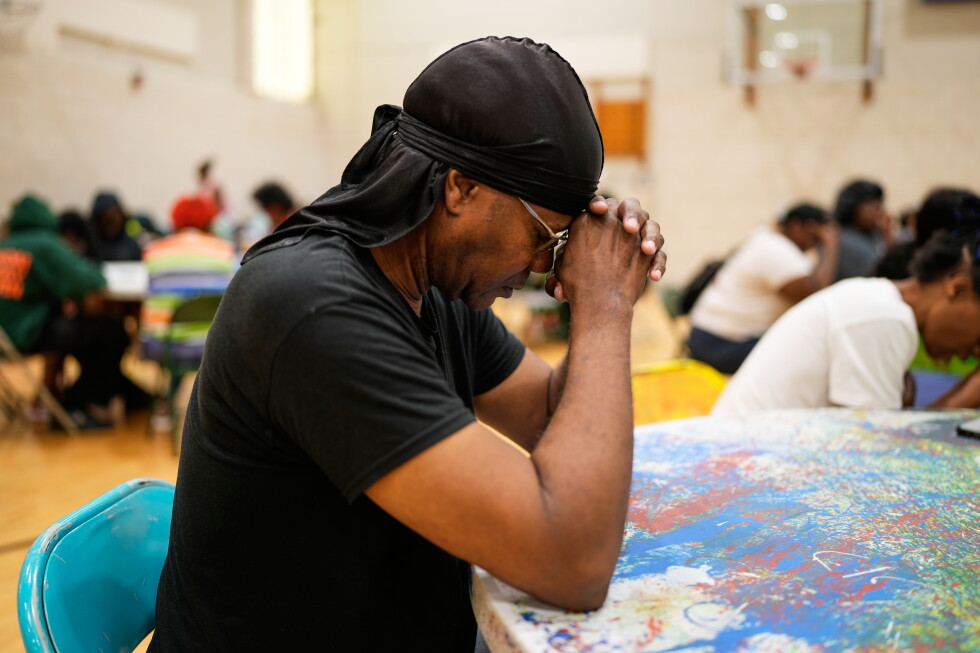
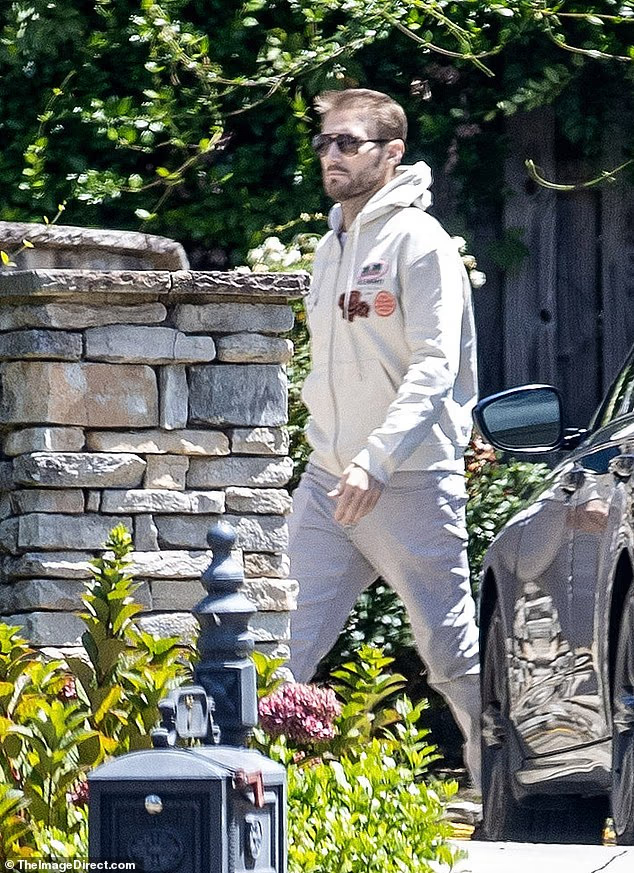



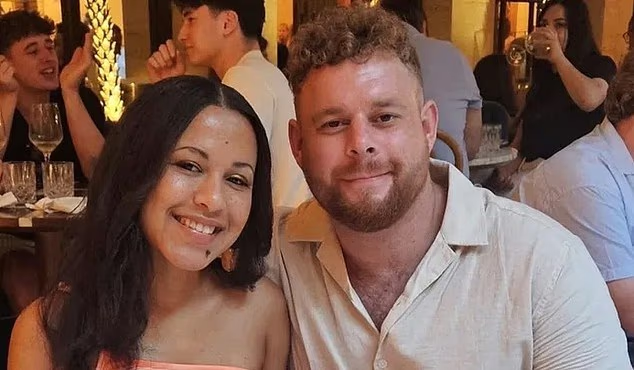

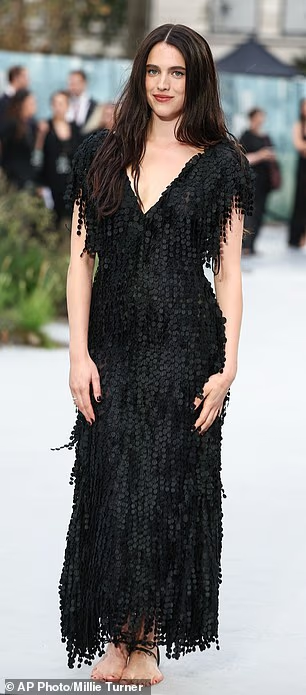


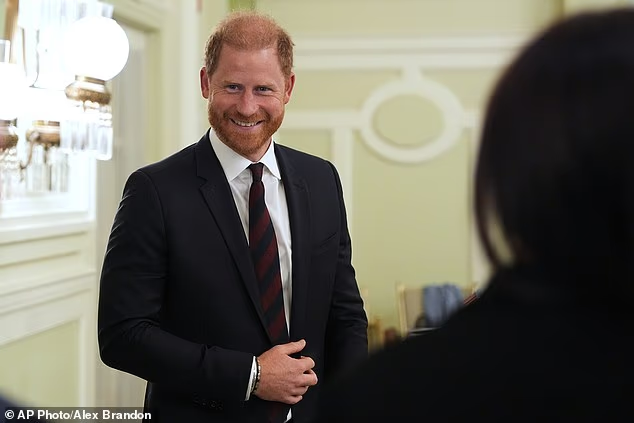

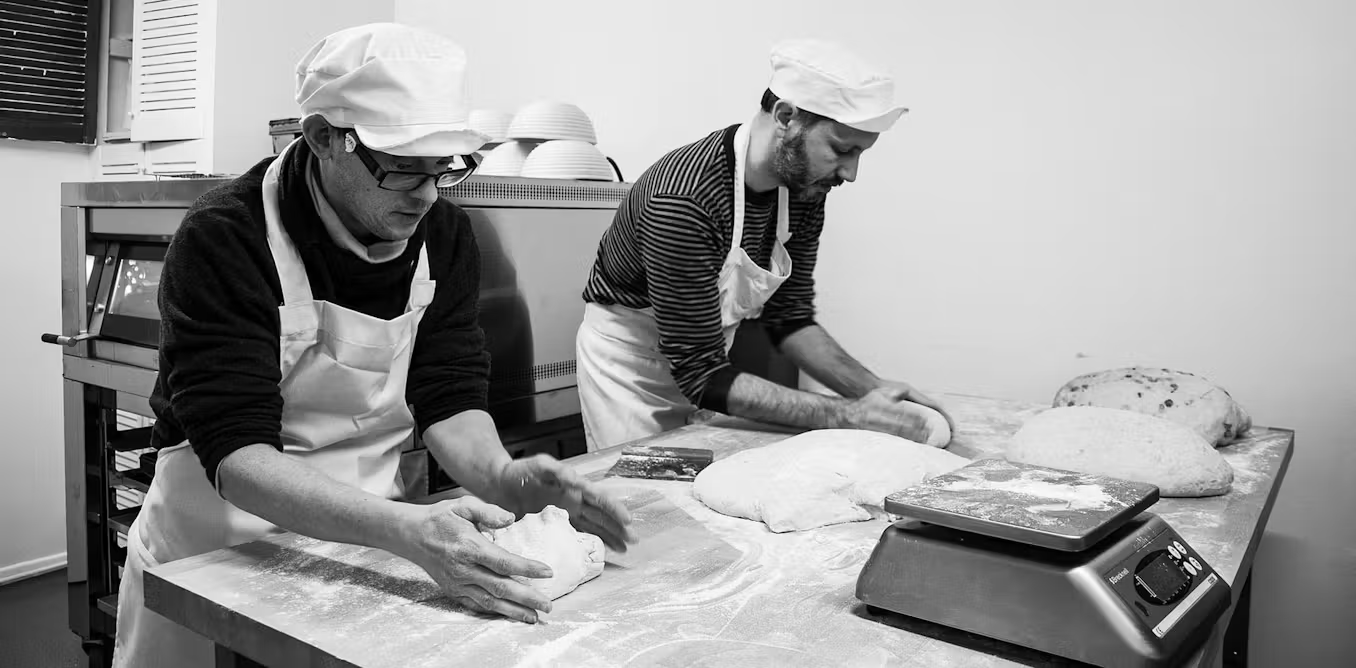

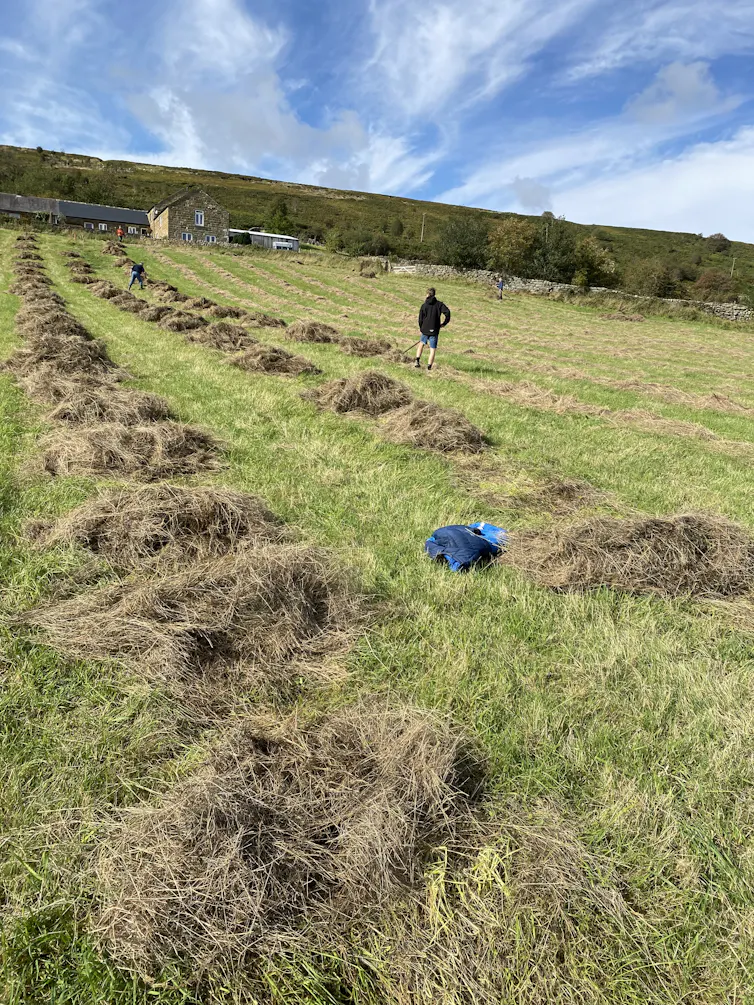
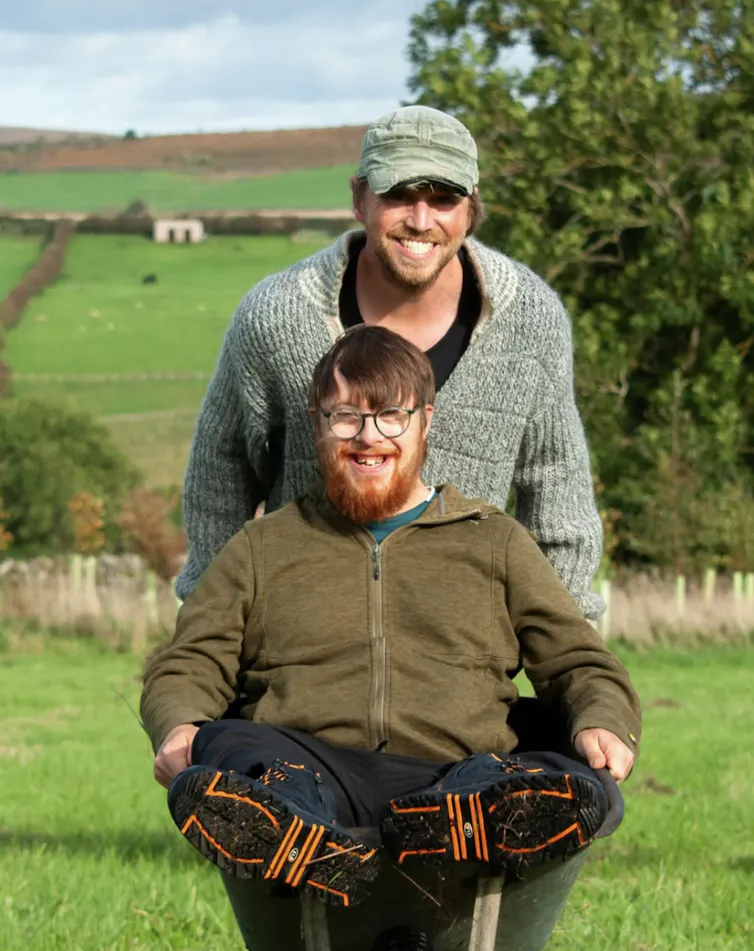
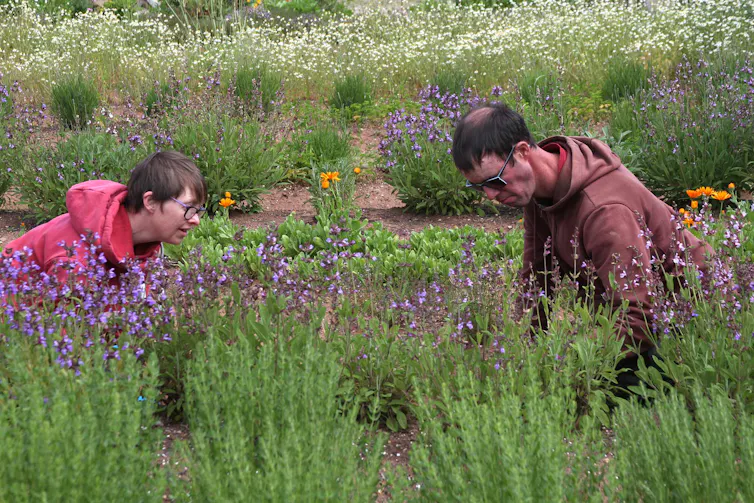
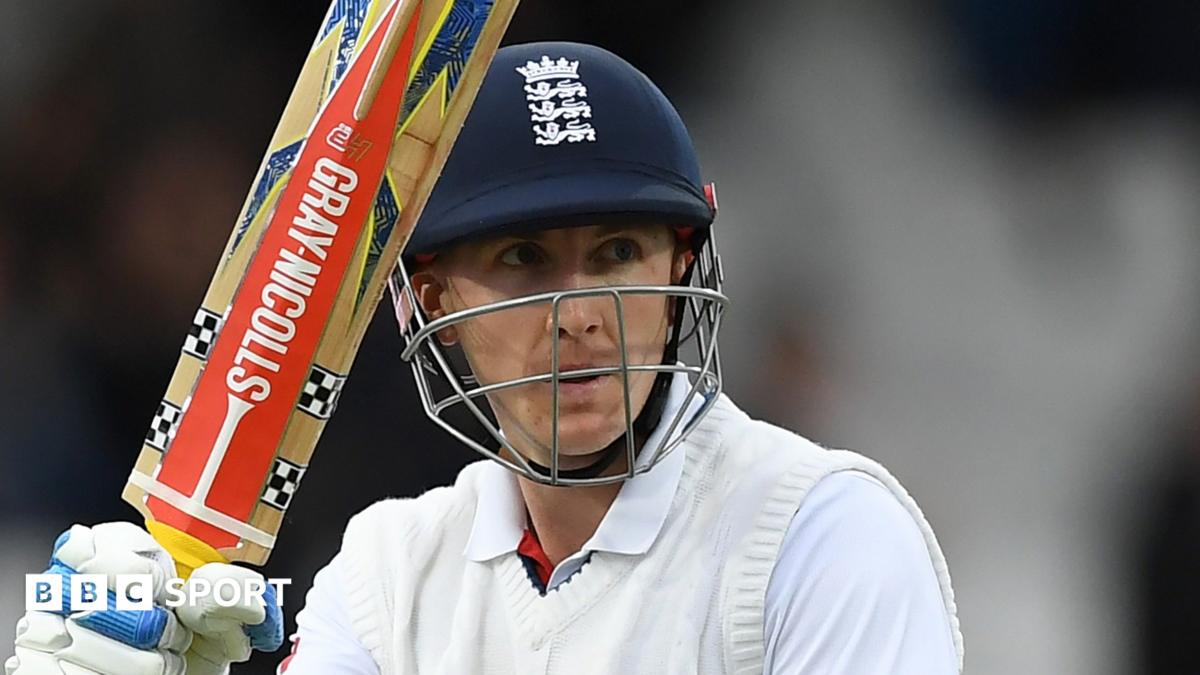










































You must be logged in to post a comment Login