Connect with us
DAPA Banner
DAPA Coin
DAPA
COIN PAYMENT ASSET
PRIVACY · BLOCKDAG · HOMOMORPHIC ENCRYPTION · RUST
ElGamal Encrypted MINE DAPA
🚫 GENESIS SOLD OUT
DAPAPAY COMING

Business

Stealth Tax to Hit UK Family Holidays in 2026

Published

on

Stealth Tax to Hit UK Family Holidays in 2026

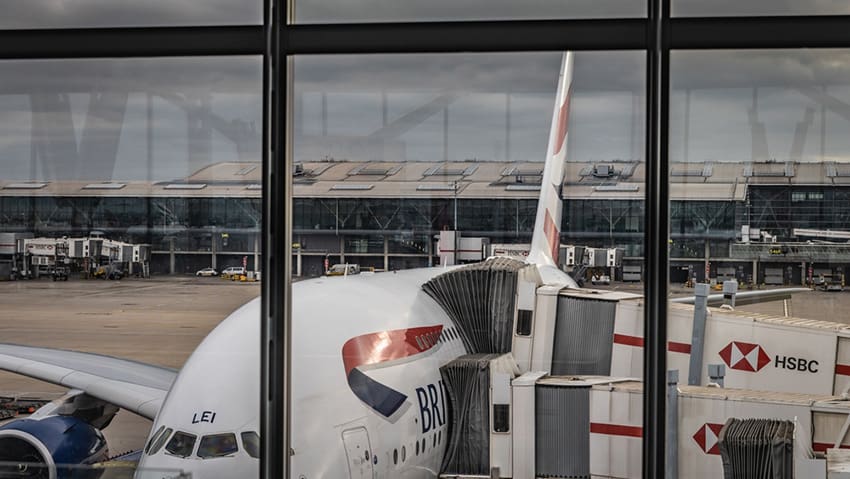
British families planning a getaway this summer could find the cost of flying creeping up again, after it emerged that Treasury officials are quietly drawing up plans for a £1bn VAT raid on the fees airports charge airlines, a move the industry has branded a stealth tax on holidaymakers and exporters alike.

The proposals, being worked up inside HMRC, would impose the standard 20 per cent rate of VAT on top of the per-passenger charges levied by airports such as Heathrow, Gatwick and Manchester for the use of runways, terminals and ground services. Those fees are almost always passed straight through to passengers in the ticket price, meaning the burden would land squarely on travellers and the small and medium-sized businesses that depend on affordable air travel to reach overseas customers.

At Heathrow, where the regulated charge currently sits at around £24 a head, the change would add close to £5 to the cost of every passenger — before a single penny of Air Passenger Duty, fuel surcharge or booking fee has been added. The official APD rates published by HMRC already range from £15 to £106 for an economy seat depending on distance, and rose again from April under increases pencilled in at the Autumn Budget.

A retrospective sting

What is alarming airlines and airports most is not just the prospect of a new levy, but the possibility that Whitehall might backdate it. Industry sources tell Business Matters that ministers are exploring whether to apply the charge as far back as four years, the maximum permitted under current legislation, generating an immediate windfall for the Exchequer running to around £1bn from Heathrow alone.

Heathrow generated £1.13bn in revenue from passenger charges last year, while Gatwick reported £607m and Manchester Airports Group, owner of Manchester and Stansted, recorded £470m. Factoring in smaller hubs, the total VAT take could comfortably top £1.5bn, although officials have yet to clarify whether the tax would bite on both outbound and inbound legs.

Advertisement

One airline industry insider described the plan as “a stealth tax on families at a time when the cost-of-living crisis means many people are already struggling to afford a holiday”. The warning lands alongside fresh evidence that Britons are already tightening their belts on travel, Barclays data recently showed holiday spending falling for the first time since the pandemic as cost-of-living and Iran conflict fears bite.

Reeves giveth, HMRC taketh away

The disclosure could hardly come at a more awkward moment for the Chancellor. Even as her officials sharpen the pencil on aviation VAT, Rachel Reeves was on her feet in the Commons unveiling a £1bn cost-of-living package designed to take the sting out of the school summer holidays.

From 25 June to 1 September, theme parks, zoos, museums, cinemas, soft play centres and theatres will charge a reduced 5 per cent rate of VAT in place of the usual 20 per cent. Children’s meals are included in the cut, which the Treasury values at £300m. The Government claims the measure will shave £20 off a theme-park day out for a family of four, £1.50 off cinema tickets and £2 off a family meal.

Fuel duty will be frozen for the rest of the year, free bus travel will be offered to children throughout August, and import taxes have been trimmed on a basket of staple foods. The energy-intensive chemicals and ceramics sectors, meanwhile, will share a £470m lifeline aimed at protecting jobs in some of the country’s most exposed manufacturing hubs.

Advertisement

Ms Reeves told MPs the package would be paid for by raising “hundreds of millions of pounds a year” from oil and gas majors such as BP and Shell, with the Office for Budget Responsibility due to assess the impact at the autumn fiscal event. Broader support on household energy bills was held in reserve, with the Chancellor signalling that targeted help would follow in the autumn “if bills continue to rise”.

The hospitality and visitor economy were quick to welcome the move. Fiona Eastwood, chief executive of Merlin Entertainments, which operates Alton Towers and Legoland, confirmed the discounted rate would apply to both admission tickets and children’s meals. Kate Nicholls, chair of UKHospitality, said it was “the quickest and simplest way to lower prices and boost consumer confidence”.

Aviation cries foul

The aviation sector, however, is in no mood to applaud. An Airlines UK spokesman said: “The UK is already one of the most overtaxed aviation markets in the world and, as the cost burden increases, we risk becoming even more uncompetitive. The only people cheering a move like this would be those running rival airports overseas.”

Industry analysis backs the point. The Office for Budget Responsibility already forecasts APD will raise close to £5bn a year by the end of the decade, while Airlines UK research suggests mandatory taxes can account for as much as half the price of an off-peak short-haul ticket. Bolting VAT on to airport charges would compound a tax burden that low-cost carriers say is already pushing routes, and the SME-friendly connectivity that comes with them, into mainland Europe.

Advertisement

Andrew Griffith, the shadow business secretary, was blunter still: “Any additional tax on aviation is a tax on doing business, a brake on exports or an attack on hard-working families. No government on the side of growth would indulge this idea.”

The proposals may also collide with international aviation rules, which broadly exempt airfares from VAT. Heathrow is understood to be taking specialist tax advice, while one industry source characterised the work inside HMRC as a “fishing trip” by officials looking for new revenue. “It’s a very technical conversation, with HMRC trying to work out if they can capture additional tax revenue,” the source said. “The question is whether it’s going to move forward and, if it does, whether it is going to hit passengers.”

What it means for SMEs

For Britain’s small and mid-sized businesses, the stakes are real. Air freight, sales travel and trade-show attendance all sit downstream of airport economics, and any uplift in landing charges feeds quickly into per-trip costs. It is also the second time in twelve months that the regulator has tangled with the Heathrow pricing model, earlier this year Heathrow was forced into a bigger cut of passenger landing fees by the Civil Aviation Authority, capping charges below the level the airport had sought.

Airports are unlikely to absorb a new VAT charge in-house. Heathrow has been lobbying loudly for measures to restore competitiveness, including the reinstatement of VAT-free shopping for international visitors, warning that the UK is losing ground to European rivals on tax. Adding a fresh 20 per cent layer to its core regulated charge would, the airport believes, run directly counter to the Government’s own growth narrative.

Advertisement

A government spokesman insisted there was no formal policy change in train, telling reporters: “The Government is not considering any changes to tax rules in this area. HMRC routinely engage businesses on how existing tax rules are being applied.”

That is unlikely to settle nerves in boardrooms in West London or aboard the airlines. For now, families booking summer flights can enjoy a temporary VAT cut at the theme-park turnstile, but the smart money in the aviation lobby is on a rather chillier autumn at the airport check-in desk.


Amy Ingham

Amy is a newly qualified journalist specialising in business journalism at Business Matters with responsibility for news content for what is now the UK’s largest print and online source of current business news.

Advertisement

Continue Reading
Click to comment

You must be logged in to post a comment Login

Leave a Reply

Business

Vedanta demerger unlocks 20% value; Aluminium arm becomes most valuable

Published

on

Vedanta demerger unlocks 20% value; Aluminium arm becomes most valuable
Mumbai: The Vedanta group managed to unlock about 20% value amidst its five companies, even as the shares of its four newly-demerged businesses gave up their early gains to end with losses on their stock exchange debut.

While shares of Vedanta Aluminium Metal, Vedanta Oil and Gas, Vedanta Power and Vedanta Iron and Steel ended 1-5% lower on the BSE on Monday, the combined value of these four entities along with the residual entity-Vedanta stood at around ₹902. This represents gains of 20% over ₹773.25, the last traded value of the consolidated entity of Vedanta on April 29.

With this restructuring, Vedanta Aluminium Metal has become the most valuable company of the group, while Vedanta Iron and Steel has the least market capitalisation. Vedanta is the largest producer of aluminium in the country, and the share value of the business was in line with what analysts had estimated.

Vedanta Grp Unlocks 20% Value, Aluminium Unit Most ValuableAgencies

Taking Off All 4 newly listed firms close first session lower

While the power business listed at a higher-than-expected value, that of the oil and gas business was at the lower end of the estimated range. Iron and steel, which is the smallest business for the company, listed at a higher-than-expected price, but ended with sharp losses.
“24 years ago, Vedanta was the first Indian company to be established at London Stock Exchange. You can say that the seed of Vedanta was sown that day,” Anil Agarwal, the non-executive chairman of Vedanta said.

Advertisement


Investors got one share in each of the four new entities for each held in Vedanta in one of India’s largest corporate restructuring exercises, which has taken place nearly three years after it was first announced. The demerger was aimed at simplifying corporate structure, while unlocking value, as each of them became pure-play businesses.
“The seed that we sowed 24 years ago has now taken the form of a huge tree. And today I am happy to see that every branch is ready to become another strong tree on its own,” he said at the listing.

Continue Reading

Business

Wall Street rallies on US-Iran deal, oil price slide

Published

on

Wall Street rallies on US-Iran deal, oil price slide

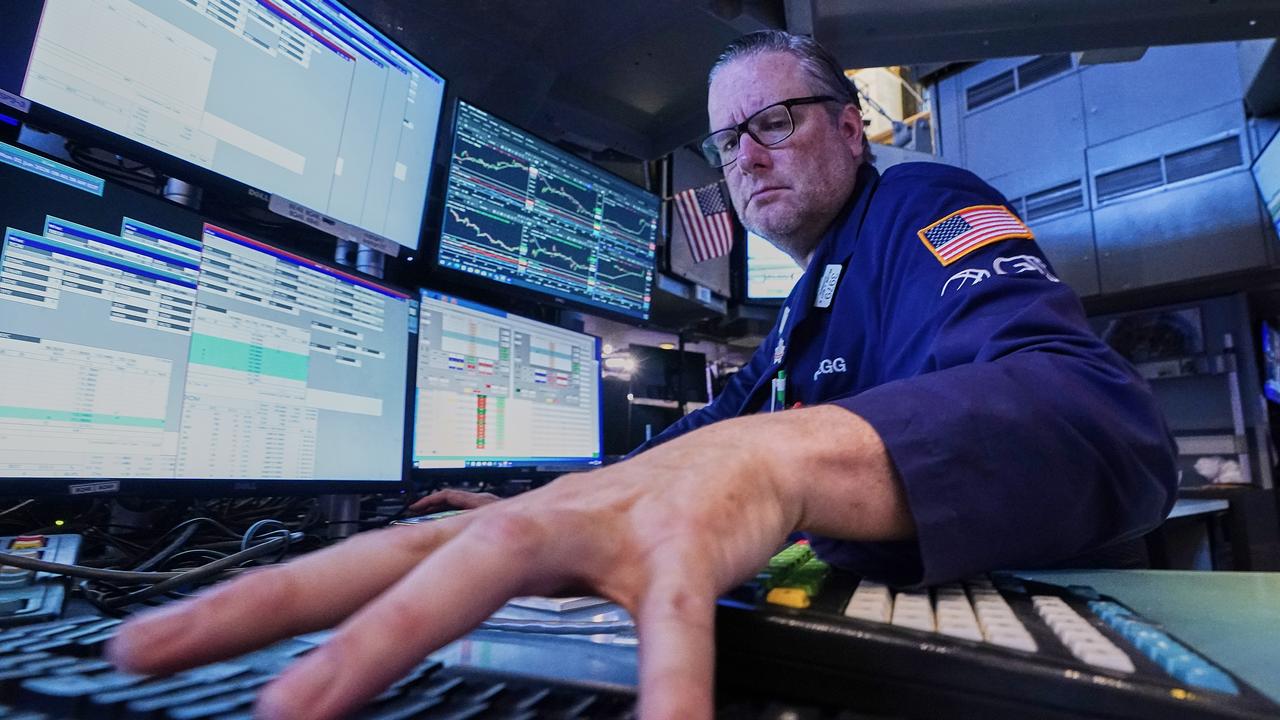
Wall Street has rallied, with the Nasdaq climbing 3.0 per cent and the Dow marking a record-high close after the United States and Iran struck a preliminary agreement to end the Middle East war and reopen the Strait of Hormuz.

Continue Reading

Business

M-Cap of Vedanta’s split cos jumps 67% to Rs 3.5 lakh crore

Published

on

M-Cap of Vedanta's split cos jumps 67% to Rs 3.5 lakh crore
ET Intelligence Group: Vedanta‘s demerger has resulted in a significant value unlocking for shareholders. On its listing debut, the combined market capitalisation of the parent and four newly listed entities jumped to ₹3.5 lakh crore. This is about 67% higher than the one-year average market capitalisation of ₹2.1 lakh crore for the undivided company.

The sharp jump indicates that investors are willing to pay a premium for pure-play exposure to sectors such as aluminium, power, zinc and iron ore, and oil and gas.

The demerger has resulted in the separation of Vedanta into five listed entities-Vedanta Aluminium, Vedanta Power, Vedanta Oil & Gas, Vedanta Iron & Steel, and a residual Vedanta, which retains zinc, copper and other base-metal businesses.

M-cap of Split Cos Rises 67% to 3.5 L-CrAgencies

one-year average market capitalisation of Undivided Vedanta was ₹2.1 lakh crore

Vedanta Aluminium‘s price-to-sales multiple of around three is broadly in line with sector peers, suggesting much of its value may already be reflected in the stock. However, Vedanta Iron & Steel trades at 0.6 times sales, significantly below Tata Steel and JSW Steel, pointing to a persistent discount. Vedanta Oil & Gas occupies a middle ground, trading at 1.5 times sales compared with 0.5 for ONGC and 3.2 for Oil India.
A break-up of the combined market capitalisation shows that Vedanta’s aluminium business is the dominant value driver, contributing nearly ₹2 lakh crore, or over half of the total valuation. This underscores the scale and earnings strength of the aluminium segment.

Advertisement


The residual Vedanta entity accounts for about ₹1.2 lakh crore, translating into roughly one-third of the overall valuation.
The higher contribution from aluminium suggests that investor interest remains concentrated in large, cash-generating core businesses, while smaller verticals are yet to see meaningful rerating.On Monday, Vedanta’s shares closed at ₹302.6, down 2% while Vedanta Aluminium Metal fell 5% to ₹500.7. Vedanta Power slipped 1% to ₹41, while Vedanta Oil & Gas declined 5% to ₹37.1. Vedanta Iron & Steel also dropped 5% to close at ₹21.1.

Continue Reading

Business

BlackRock California Municipal Opportunities Fund Q1 2026 Commentary (MACMX)

Published

on

BlackRock California Municipal Opportunities Fund Q1 2026 Commentary (MACMX)

Night cityscape with illuminated skyscrapers and financial stock market chart overlay showing global trade data and growth trends in economy.

peshkov/iStock via Getty Images

• The fund posted returns of -0.22% (Institutional shares) and -0.28% (Investor A shares, without sales charge) for the first quarter of 2026.

• The main performance drivers were yield curve positioning and overweight holdings in

Advertisement
Continue Reading

Business

What is Helium-3 and could we get it from the moon?

Published

on

What is Helium-3 and could we get it from the moon?

One company planning to extract helium-3 from the moon is Interlune, based in Seattle. “We’ve spent the last four years developing, prototyping and testing technologies… We have a team of 30 people, and growing,” says Rob Meyerson, co-founder and chief executive. Meyerson was president of Blue Origin, Jeff Bezos’ rocket company between 2003 and 2018.

Continue Reading

Business

Humacyte, Inc. (HUMA) Discusses V012 Study Top-Line Results for Engineered Vessel in Dialysis Access Transcript

Published

on

OneWater Marine Inc. (ONEW) Q1 2026 Earnings Call Transcript

Humacyte, Inc. (HUMA) Discusses V012 Study Top-Line Results for Engineered Vessel in Dialysis Access June 15, 2026 5:00 PM EDT

Company Participants

Laura Niklason – Founder, President, CEO & Director
Shamik Parikh – Chief Medical Officer

Conference Call Participants

Advertisement

Mohamad Anas Hussain
Bruce Jackson – The Benchmark Company, LLC, Research Division
Iseult McMahon – BTIG, LLC, Research Division
Swayampakula Ramakanth – H.C. Wainwright & Co, LLC, Research Division
Allison Bratzel – Piper Sandler & Co., Research Division

Presentation

Operator

Advertisement

Good evening, and welcome to the Humacyte Virtual Investor Event. [Operator Instructions] As a reminder, this call is being recorded, and a replay will be made available on the Humacyte website following the conclusion of the event. I’d now like to turn the call over to your host, Dr. Laura Niklason, Founder, President and Chief Executive Officer of Humacyte. Please go ahead, Laura.

Laura Niklason
Founder, President, CEO & Director

Hi, everyone, and thank you so much for taking the time on a Monday evening to hear our presentation on our recent clinical results, top line results from our V012 study, which was — which evaluated Humacyte’s engineered vessel, the ATEV, in comparison to autogenous fistula for dialysis access. These are our typical disclaimers. What I’d like to start off with so that we’re not bearing the lead is that the V012 trial met its primary efficacy endpoint, which — at this interim analysis, which was the measurement of how many catheter-free days patients who got our vessel, the ATEV had as compared to patients who received a fistula.

Advertisement

This primary — this interim analysis was done after the first 80 enrolled patients had reached at least 1 year of follow-up. The 80th patient reached 1 year in April of this year, and we received the top line results only very recently. There were — patients who received ATEV had 91

Advertisement
Continue Reading

Business

T-Mobile declares $1.02 per share quarterly dividend

Published

on


T-Mobile declares $1.02 per share quarterly dividend

Continue Reading

Business

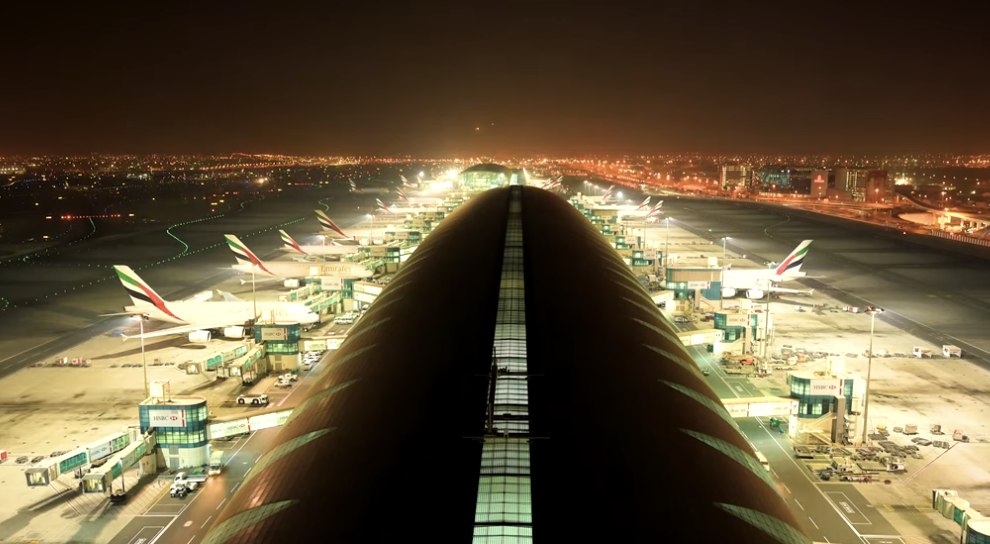
Dubai International Airport Open Today as DXB Stays Operational, Travelers Urged to Check Flights First

Published

on

Dubai International Airport

DUBAI, United Arab Emirates — Dubai International Airport is open today and operating, according to the airport’s official website and recent aviation updates, though passengers are still being urged to confirm individual flights before leaving for the terminal. The clearest picture from available public information is that DXB remains active and serving travelers rather than closed, with airlines and airport officials continuing to post travel guidance and flight-status information.

Dubai airport status

Dubai Airports’ official site directs travelers to find their flight status and review travel guidance, a sign that passenger operations are running and that the airport is maintaining normal public-facing services. A live flight-tracking page for DXB also shows the airport as an active major hub, reinforcing that operations are ongoing.

Recent travel reporting says Dubai International is fully open and that all terminals are serving arriving and departing passengers. The reporting also says check-in, security, immigration and baggage services are operating as usual, with no broad closure in place.

What travelers should do

Even when DXB is open, airline schedules can change quickly because of weather, air traffic, maintenance issues or regional disruptions. Dubai Airports’ public guidance and travel reporting both emphasize checking with the airline before heading to the airport.

Advertisement

That advice matters most for connecting passengers and long-haul travelers, since one delay can affect several legs of a trip. Travelers should monitor airline apps, departure boards and official airport notices for the latest gate and timing updates.

Why the question is circulating

Search interest around Dubai International tends to rise when the region faces airspace disruptions or rumors of flight interruptions. Recent reporting in March said the airport had resumed service after a temporary suspension, and that passengers were being advised to verify schedules directly with airlines.

More recent updates, however, show a return to regular operations, with the airport’s website focused on flight status, visitor guidance and standard passenger services. That makes the answer for today straightforward: Dubai International Airport is open, and the current public-facing information points to normal operations.

Latest available signals

Dubai Airports’ official homepage includes travel guidance and flight-status links, which are typically used when an airport is accepting passengers and managing active traffic. Flight-tracking data likewise indicates that DXB remains a functioning international airport with live movement and scheduling information available to the public.

Advertisement

The latest travel update cited in search results says the airport is “fully operational today” and that there are no closures or widespread disruptions in effect. While airline-level changes can still happen, the airport itself is open and serving passengers.

What this means for passengers

For people flying through Dubai today, the safest approach is to treat DXB as open but verify the flight itself before traveling. That applies especially to passengers with tight connections, family travel or international itineraries that depend on on-time departures.

If a carrier has altered a schedule, the airline will usually post the update before it appears at the airport. Travelers should use official airline channels first, then the airport’s flight-status tools, rather than relying on social posts or secondhand reports.

Background on DXB

Dubai International is one of the world’s busiest international airports and a central hub for travel across Europe, Asia, Africa and the Middle East. Because of that scale, even small operational changes can affect millions of travelers and generate widespread online interest.

Advertisement

That visibility is one reason routine operational updates can quickly become global headlines. When DXB is open, the airport generally continues to function as a high-volume transit point, with travelers using official tools to track departures, arrivals and service notices.

Bottom line for today

Dubai International Airport is open today, and the latest available public information indicates normal passenger operations. Travelers should still confirm their flight directly with the airline before heading to the airport because schedules can change even when the airport itself is fully operational.

Continue Reading

Business

Microsoft Looks Cheap – The Cash Flow Says Otherwise (NASDAQ:MSFT)

Published

on

Microsoft: I Like This Price And I Like This Strategy More Than The Stock (NASDAQ:MSFT)

This article was written by

I’m a full-time investor focused on special situations and opportunistic ideas across the public equity markets. My capital is concentrated in a small number of names at any given time. I’d rather own eight to fifteen high-conviction positions than a diversified basket, and I typically hold through multi-quarter or multi-year time horizons rather than trading around short-term price action. Special situations are where I spend most of my research time: spinoffs, post-bankruptcy equities, recapitalizations, activist setups, complex capital structures, forced-seller dynamics, and underfollowed micro- and small-caps where the market is mispricing fundamentals or asymmetrically discounting future cash flows. I’m drawn to ideas where there’s a clear catalyst, where the bear case is well understood, and where information asymmetry creates a window before the broader market catches up. Sector-wise, I gravitate toward companies riding durable secular tailwinds, defense and the broader national-security supply chain, AI infrastructure (the picks-and-shovels layer more than the pure-play LLM names), space and dual-use technology, and digital transformation in legacy industries. The screen is strong unit economics, high incremental returns on invested capital, defensible moats, and management with meaningful skin in the game.


Analyst’s Disclosure: I/we have no stock, option or similar derivative position in any of the companies mentioned, and no plans to initiate any such positions within the next 72 hours. I wrote this article myself, and it expresses my own opinions. I am not receiving compensation for it (other than from Seeking Alpha). I have no business relationship with any company whose stock is mentioned in this article.

Seeking Alpha’s Disclosure: Past performance is no guarantee of future results. No recommendation or advice is being given as to whether any investment is suitable for a particular investor. Any views or opinions expressed above may not reflect those of Seeking Alpha as a whole. Seeking Alpha is not a licensed securities dealer, broker or US investment adviser or investment bank. Our analysts are third party authors that include both professional investors and individual investors who may not be licensed or certified by any institute or regulatory body.

Advertisement
Continue Reading

Business

Form 13D/A ARTIVA BIOTHERAPEUTICS For: 15 June

Published

on


Form 13D/A ARTIVA BIOTHERAPEUTICS For: 15 June

Continue Reading

Trending

Copyright © 2025