
Business
Sugar Rationing in Infancy Linked to Lower Cancer Risk and Longer Life, New Study Finds in British Adults


The amount of sugar a baby consumes during their first two years of life may have measurable effects on their health decades later, including a reduced risk of several cancers and a longer estimated lifespan, according to a new study that took advantage of a unique natural experiment created by Britain’s wartime food rationing.
The study, published in the journal PNAS in early August, examined health outcomes among 64,761 people born in Britain between 1951 and 1956, a period when sugar and other common foods were still rationed to prevent shortages in the years following World War II. Using data from the long-running UK Biobank study, researchers compared health outcomes among adults who spent their first 1,000 days of life under sugar restrictions with those born after the rationing program ended.
Researchers focused specifically on that first-1,000-day window because it spans from conception until a child’s second birthday, a relatively brief but critical period in early development during which food preferences and taste patterns begin to form, meaning a person’s earliest food environment can shape health outcomes that persist well into adulthood.
Among adults who spent their first 1,000 days under sugar rationing, researchers found a notably lower risk of several types of cancer compared with those who were not exposed to the restrictions. Those exposed to early sugar rationing showed a 69% lower risk of liver cancer, a 52% lower risk of prostate cancer, a 41% lower risk of lung cancer, a 40% lower risk of rectal cancer, and a 36% lower risk of breast cancer.
Beyond cancer risk, researchers also found evidence that early sugar rationing was associated with slower biological aging. The study measured telomeres, the protective caps found at the ends of chromosomes that have been linked to longevity in previous research, and found that adults exposed to sugar rationing during infancy had longer telomeres than those who were not exposed. Based on that difference, researchers estimated the exposure was associated with an increase in life expectancy of slightly more than two years.
The study also identified lasting behavioral differences tied to early sugar exposure. Researchers found that adults who had experienced sugar rationing during their first 1,000 days continued to consume less sugar, eat smaller portions and maintain healthier, more varied diets more than 50 years later, suggesting the early dietary environment may have shaped long-term eating habits and food preferences well into late adulthood.
This is not the first study to draw on data from Britain’s wartime and postwar sugar rationing period to examine long-term health effects. According to The Hill’s coverage of the research, a separate recent study using the same underlying UK Biobank data found that people exposed to sugar rationing during their first 1,000 days were significantly less likely to develop anxiety and depression in adulthood. Earlier studies relying on the same historical natural experiment have also identified lower risks of chronic disease, reduced odds of developing Alzheimer’s disease, and better cardiovascular health outcomes among those exposed to sugar restrictions during early infancy, building a broader body of evidence pointing toward meaningful, long-lasting health effects tied to early-life sugar exposure.
Despite the consistency of these findings across multiple studies using the same dataset, researchers involved in the new PNAS study cautioned against overinterpreting the results as definitive proof of direct causation. The study was observational in nature, meaning researchers compared outcomes between two naturally occurring groups, those born before and after Britain’s rationing program ended, rather than conducting a controlled experiment in which sugar intake was directly and randomly assigned to different infants. As a result, the researchers noted the findings demonstrate a strong association between early sugar exposure and later health outcomes, rather than conclusive proof that limiting sugar during infancy directly causes the improved health outcomes observed decades later.
Britain’s historical rationing program offers researchers a rare and valuable natural experiment precisely because it affected an entire population uniformly and for a defined period of time, rather than reflecting individual families’ voluntary dietary choices, which are typically influenced by socioeconomic status, education level and other confounding factors that can complicate efforts to isolate the specific effects of early sugar consumption in more conventional observational nutrition studies. Sugar rationing in Britain began during World War II and continued for several years afterward as the country worked to stabilize its food supply, with sugar remaining among the last rationed items to be lifted in the mid-1950s.
The consistent pattern of findings across multiple independent studies using the UK Biobank’s rationing-era data, spanning cancer risk, biological aging, mental health outcomes, chronic disease risk, and cognitive health, has added to a growing body of scientific evidence suggesting that the earliest years of a child’s life, particularly the specific 1,000-day window from conception to age two, may represent an unusually consequential period for shaping long-term health trajectories through diet and other early environmental exposures.
While the new findings are unlikely to translate directly into formal public health recommendations given the observational nature of the underlying data, they add further weight to existing public health guidance from organizations including the World Health Organization and American Academy of Pediatrics, both of which have generally recommended limiting or avoiding added sugars during infancy and early childhood, citing broader concerns about childhood obesity, dental health and the establishment of long-term dietary habits, independent of the specific cancer and longevity associations identified in this newest research.
As researchers continue mining the UK Biobank’s unique wartime rationing data for additional insights into how early-life nutrition shapes long-term health, the consistency of findings across this growing body of research is likely to keep drawing scientific interest in better understanding the specific biological mechanisms, whether related to metabolic programming, gut microbiome development, or other pathways, that might explain how sugar exposure during a child’s first 1,000 days could produce measurable health effects persisting more than half a century later.

Business
Super Hi International Holding Ltd. 2026 Q2 – Results – Earnings Call Presentation (NASDAQ:HDL) 2026-08-26


Seeking Alpha’s transcripts team is responsible for the development of all of our transcript-related projects. We currently publish thousands of quarterly earnings calls per quarter on our site and are continuing to grow and expand our coverage. The purpose of this profile is to allow us to share with our readers new transcript-related developments. Thanks, SA Transcripts Team

Microsoft has opened pre-orders for its Xbox Series X25 Limited Edition console and matching special-edition controller, marking the 25th anniversary of the Xbox brand with a translucent green design inspired by the original console.
The full package, referred to as the Xbox 25th anniversary collection, carries a manufacturer’s suggested retail price of $899.99 in the United States. Regional pricing varies, with the United Kingdom listed at £759.99. The console ships with the matching controller and includes a full-game digital download of Halo: Campaign Evolved. Launch is scheduled for Nov. 13, 2026.
In an official statement, Microsoft said: “Beginning today, some of XBOX’s most dedicated fans will be invited via email to pre-order the XBOX 25th anniversary collection. Tomorrow, Thursday, August 27 at 7 a.m. PDT, all players in select markets can visit the XBOX site or participating retailers for an opportunity to pre-order while supplies last. The XBOX 25th anniversary collection launches on November 13, 2026, for an MSRP of $899.99 USD. Pricing varies by market, and players can check their local Microsoft Store or authorized retailers for region-specific pricing and availability. Pre-orders are limited to one XBOX 25th anniversary collection per customer.”
The console features a translucent OG Green shell with tributes to Xbox history and individual numbering via unique engraving on each unit. Internally it is based on the current Xbox Series X hardware with 1TB of storage. The included Halo: Campaign Evolved is described as a faithful yet modernized remake of the original campaign that launched with the first Xbox in 2001.
A matching Xbox Wireless Controller X25 Special Edition is available separately for $79.99 in the United States, £74.99 in the United Kingdom and €79.99 in Europe. The controller is scheduled to launch on Oct. 20, 2026, and pre-orders for it began earlier. It adopts the same translucent green aesthetic and incorporates design details that reference the original Xbox controller.
Pre-order access is staggered. Selected long-time customers received email invitations starting Aug. 26 for early ordering. Broader availability begins Aug. 27 at 7 a.m. PDT through the official Xbox website and participating retailers in select markets. Microsoft has emphasized that supplies are limited and that purchases are capped at one console package per customer.
The announcement came during Microsoft’s Xbox presentation at Gamescom 2026. The Series X25 was first revealed earlier in the year as part of anniversary celebrations. Microsoft has positioned the hardware as a collector’s item that celebrates 25 years of the platform rather than a next-generation performance upgrade.
Reaction among players has focused on the price point. The $899.99 cost exceeds that of the standard Xbox Series X, reflecting the limited-edition design, packaging and included software. Some observers noted that the premium aligns with other anniversary or special-edition consoles released by major platforms in recent years. Others questioned the value relative to the underlying hardware specifications, which remain those of the existing Series X.
Microsoft has previously taken steps to limit scalping on high-demand releases, including purchase limits and verified-customer priority windows. The one-per-customer restriction and early access for dedicated fans are consistent with those efforts. Availability is expected to be tight, particularly in the initial days of the general pre-order window.
Halo: Campaign Evolved forms a central part of the package. The remake updates the original campaign while preserving core gameplay and story elements that helped establish the Xbox brand. Including the full game at no additional cost adds tangible software value to the hardware purchase.
The controller’s earlier October release allows players to obtain the anniversary aesthetic ahead of the console itself. It is expected to function with existing Xbox Series X and Series S systems as well as compatible Windows PCs, following standard Xbox Wireless Controller compatibility.
Regional pricing and exact retail partners will vary. Microsoft directs customers to check local Microsoft Store pages and authorized retailers for availability and final costs, which may include taxes or additional fees depending on location. Pre-orders in some markets could open at slightly different local times corresponding to the 7 a.m. PDT global window.
The Series X25 arrives at a time when Microsoft continues to support the current generation of Xbox hardware while developing future platforms. The anniversary edition does not alter the core technical specifications of the Series X and is intended primarily as a commemorative product. Collectors and long-time fans form the primary audience, though the included game may broaden interest.
Microsoft has not disclosed production quantities. The combination of individual numbering, limited pre-order windows and one-per-customer rules indicates a controlled release designed to reach dedicated players first. Secondary-market prices for similar limited consoles have historically risen above retail after sell-outs, though outcomes depend on overall supply.
Players interested in the package are advised to prepare accounts and payment methods in advance of the Aug. 27 general opening. Those who received early-access emails can complete purchases immediately. The separate controller offers a lower-cost entry point for fans seeking the anniversary design without purchasing the full console set.
The Xbox 25th anniversary collection represents Microsoft’s formal hardware tribute to a quarter-century of the brand. With confirmed pricing, release dates and pre-order details now public, attention turns to how quickly the limited stock will be claimed once broader ordering begins.

Exclusive-Trian has no plans to make bid for Wendy’s right now, sources say

For Robert Clamon, vehicles have never just been part of the job. They’ve shaped both his career and the many lessons he brings to leadership.
From working as a mechanic at San Jose BMW to managing fleet operations, Clamon has built his career around practical problem-solving, preparation, and accountability. His interest in motorcycle racing has reinforced many of the same ideas, especially the value of focus, judgement, and knowing when to push forward and when to slow down. After recovering from a serious motorcycle accident, those lessons took on even more meaning.
Today, Robert Clamon works as an Area Fleet Operations Supervisor with PG&E in San Jose. We spoke with him about the path from the workshop to management, what racing has taught him about risk, and why he believes strong leadership often starts with understanding the work firsthand.
You started your career as a mechanic. What did that teach you?
Working at San Jose BMW gave me a strong technical foundation, but the biggest lesson was probably accountability. When you’re working directly on a vehicle, the quality of the work matters immediately, and you learn quickly that small details can have bigger consequences.
That stayed with me when I moved into management. I understand what it feels like to be the person doing the hands-on work because I’ve been there. It makes you think differently about the decisions you make as a manager and how those decisions affect the people carrying them out.
Was moving from the workshop into management a difficult transition?
It was definitely an adjustment. As a mechanic, you’re mainly responsible for your own work. In management, you suddenly have to think about people, priorities, workflow, and how one decision can affect several other parts of an operation.
When I became General Manager at Weston’s Auto Body, I had to start looking at the whole picture rather than the single job in front of me. That taught me that technical ability and leadership are very different skills. You need to know when to step in, when to listen, and when to let somebody work through a problem themselves.
How did your experience at Monterey-Salinas Transit change your view of fleet operations?
That role showed me how connected everything is. If one part of a fleet isn’t available when it should be, the effect can spread well beyond the maintenance side of the operation.
It made me think more about reliability, planning, communication, and staying ahead of problems rather than waiting for them to appear. It also reinforced something I’ve always believed, which is that simple processes often work better than complicated systems that nobody wants to follow.
Motorcycle racing seems very different from fleet management. Do the two overlap at all?
More than people might think. Racing involves risk, but good racing isn’t about being reckless. You prepare the bike, understand what it can do, pay attention to the conditions, and make decisions quickly.
There’s a similar mindset in operations. You can’t remove every risk, but you can prepare well enough that you’re not making decisions blindly. Motorcycles also teach you to respect small details because one small mechanical issue or one poor decision can have a much bigger consequence than expected.
You were also involved in a serious motorcycle accident. Did that change your outlook?
Absolutely. Recovery taught me patience in a way that work probably never could.
There were times when improvement felt very slow. You want to get back to where you were straight away, but recovery doesn’t work like that. You have to focus on the next step rather than the finish line.
I still use that thinking now. When there’s a difficult situation at work, I try not to solve ten things in my head at once. I take a breath, work out what needs attention first, and move from there.
What does good leadership look like to you today?
Integrity, honesty, and dependability are the big three for me. I don’t think leadership means walking into a room and having all the answers.
Some of the best ideas I’ve seen have come from the people closest to the work. If somebody points out a problem or suggests a better way to do something, my first question is whether it solves something real. If it does, then it’s worth discussing.
You’ve said you try to learn something new every day. What does that look like in practice?
I think it’s realistic if you don’t make the definition too narrow. Learning something new doesn’t have to mean taking a course every day.
It might mean asking someone why they do a task a certain way, learning something technical, noticing why a process failed, or listening to a different point of view. I try to learn from my own mistakes, but I also pay attention to what other people have learned. You don’t have to experience every mistake firsthand to understand the lesson.
Outside work and motorcycles, you foster miniature pigs. What do you enjoy about that?
It’s very different from fleet operations, which is part of what I like about it.
Animals require patience and consistency. You can’t rush them just because you’ve got somewhere else to be. Miniature pigs also have more personality than people expect, so you learn quickly that each one responds differently.
I’m also a big dog lover. Being around animals gives me a chance to switch off from work and focus on something completely different.
After moving through several different roles, how do you personally judge success?
One thing I’ve always believed is that what people say about you when you’re not in the room tells you a lot.
Titles change, jobs change, and companies change. If people remember that you were dependable, that you helped them, or that you made the team stronger, that means something to me. I’d rather be remembered for going above and beyond and helping somebody improve than simply for the position I held.
What would you tell someone hoping to move from a technical role into leadership?
Don’t rush past the stage you’re in.
When I was a mechanic, I didn’t know how valuable that experience would become later. Now I can look back and see that it gave me a perspective I still use every day.
Learn the job you have, pay attention to the people around you, and take responsibility when you make a mistake. A promotion doesn’t mean you suddenly know more than everyone else. The strongest leaders I’ve seen never stop being students of the work.

Saudi Arabia is becoming one of the Middle East’s most important digital entertainment markets. Intriguingly, betting is part of the new landscape.
Searches and engagement around Saudi Arabia online casinos reflect a growing demand that is developing alongside the country’s wider digital entertainment boom.
Operators of these platforms are licensed in other jurisdictions, which presents the Saudi Arabian government with an economical conundrum.
Online Gambling Interest Has Increased Dramatically
The Blask Index measures how much attention people in a particular country give to gambling brands.
It indicates how much attention online casino and betting platforms are receiving, and the latest figures point to a noticeable increase in interest amongst Saudi Arabians.
The figures show a notable jump in gambling interest across Saudi Arabia at the end of 2025, rising from around 484,900 in October to 889,200 in November and then to 1.37 million in December.
That shows interest in gambling more than doubled between October and December, before dropping earlier this year to about 597,500 by March.
However, it was still around 79.4 percent higher than the previous year. The huge December spike did not last, but overall interest was still stronger than it had been previously.
A temporary spike can sometimes be linked to a particular event, marketing campaign or change in consumer behaviour.
However sustained year-on-year growth suggests that a larger audience is becoming aware of these platforms and looking for ways to access them.
The figures also indicate which operators are attracting the most attention. According to the data, 1xBet recorded the highest annual player spend at 165,580, followed by GrandPashaBet at 154,240 and Baji at 104,220.
These three brands accounted for almost 39% of total brand awareness among Saudi users and were associated with estimated combined betting volumes exceeding $480 million.
Saudi Arabia Is Building a Gaming Powerhouse
The rise in gambling interest in Saudi Arabia is happening against the backdrop of something much larger.
The country is trying to become one of the world’s leading forces in gaming and eSports, and it is putting significant money and resources behind that goal.
The Kingdom’s official policy has been very clear about where it wants this industry to go.
Saudi Arabia has invested heavily in video games, eSports, digital entertainment and related technology as part of its effort to diversify the economy beyond oil.
The National Gaming and eSports Strategy has set ambitious targets for the country to become a global gaming hub by 2030.
The government wants the sector to create more than 39,000 jobs, contribute roughly SAR 50 billion to the economy and help produce more than 30 internationally successful games.
A major part of this push comes from the Public Investment Fund (PIF), Saudi Arabia’s sovereign wealth fund. The PIF has invested in game developers through Savvy Games Group, and their $4.9 billion acquisition of Scopely was one of the most significant moves.
The Kingdom’s ambitions have become even more obvious through its involvement with Electronic Arts.
A consortium led by the PIF recently completed its $55bn acquisition of the company behind major franchises including EA Sports FC, Battlefield and The Sims.
It’s one of the biggest transactions in the history of the video game industry and emphasises Saudi Arabia’s determination to become a major force in global gaming.
Growing Demand Does Not Mean Regulation Is Coming
The fact that the data points to a growing interest in gambling doesn’t mean that Saudi Arabia is any closer to changing their policy.
Saudi Arabia still prohibits gambling, and there is currently no official system for licensing online casinos or betting websites.
The government is concentrating on investing in video games, eSports, technology and digital entertainment as part of its broader economic transformation.
The Blask figures show a gap between official policy and some aspects of customer behaviour.
While the government is investing billions of dollars into gaming and eSports, some internet users are simultaneously showing interest in offshore gambling platforms.
This is possible because the internet gives people access to international platforms even when those services are not available domestically.
While the figures suggest some demand for online gambling, they don’t indicate that the government intends to respond by changing its laws.
The fall in the Blask Index after its December 2025 peak is another reason to be cautious, as it could mean that some of the increased interest was temporary.
However, the reported 79.4% year-on-year increase suggests that the underlying audience is still larger than it was previously.
The bigger picture is that Saudi Arabia’s approach to gaming is clearly long-term. PwC has estimated that the country’s gaming and eSports sector could contribute around $13.3 billion to the economy by 2030.

Vistance Networks authorizes $150 million share buyback program

Airbnb (ABNB) and Expedia Group (EXPE) stock were both trending higher earlier Tuesday, adding to a recent trend of the online travel platforms outperforming despite concerns about the Iran war and a rocky recent market for tech stocks. Airbnb stock was ahead a fraction at 190.23 in recent trades on the stock market today. Expedia Group, parent of Expedia, Hotels.com…
Copyright ©2026 Investor’s Business Daily, LLC. All rights reserved. 87990cbe856818d5eddac44c7b1cdeb8
Check out what’s clicking on FoxBusiness.com.
Brothers Joey and Jesse Buss are going from one sport to another.
Buss Sports Capital, the investment group founded by the brothers, has reached a deal to acquire approximately 5% of the San Diego Padres, according to The Athletic.
The Buss family sold its controlling stake in the Los Angeles Lakers to Mark Walter last year.
After Walter sold the franchise in recent weeks to a group led by Joshua Kushner and Bob Iger, Joey and Jesse and three of their siblings, Janie, Johnny and Jim, voted to sell the family’s remaining 17.8% of the team to Iger and Kushner.
CLICK HERE FOR MORE SPORTS COVERAGE ON FOXBUSINESS.COM
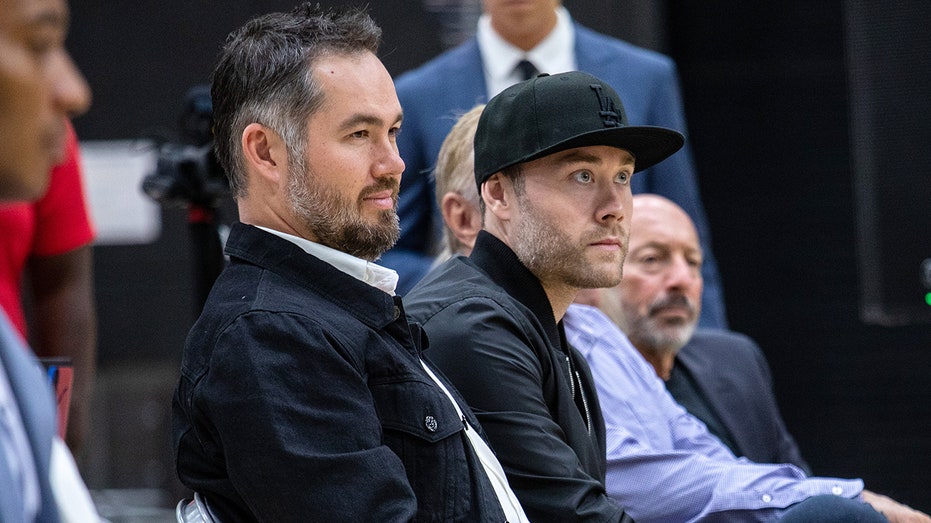
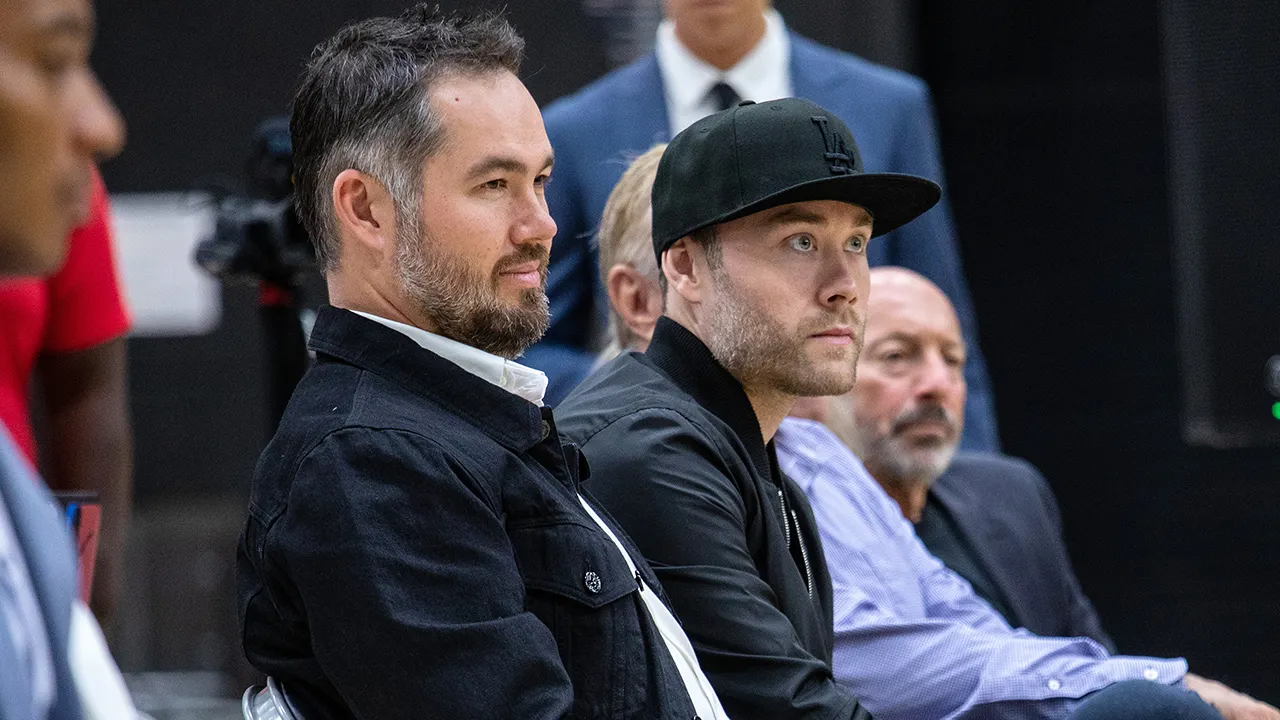
Siblings Joey and Jesse Buss (in black hat), from left, sit in the front row during a news conference announcing new Los Angeles Lakers head coach Darvin Ham at the UCLA Health Training Center in El Segundo, Calif., June 6, 2022. (Jay L. Clendenin/Los Angeles Times via Getty Images / Getty Images)
However, not all siblings were on board with the move. Jeanie Buss, who serves as governor of the Lakers, argued that her siblings can’t sell through an attorney, setting up a family feud over their Lakers stake.
Kwanza Jones and José Feliciano acquired controlling shares of the Padres last week for $3.9 billion. Joey and Jesse said they were honored to join Jones and Feliciano.
“We are honored to join Kwanza and José and have the opportunity to contribute to the future of a team that Jesse and I have loved since we were kids growing up in San Diego,” Joey Buss said in a statement obtained by The Athletic.
ZERO BS. JUST DAKICH. TAKE THE DON’T @ ME PODCAST ON THE ROAD. DOWNLOAD NOW!

Jesse Buss, director of scouting/assistant general manager of the Los Angeles Lakers, attends a game between the Lakers and the New York Knicks during the 2018 NBA Summer League at the Thomas & Mack Center in Las Vegas July 10, 2018. (Sam Wasson/Getty Images / Getty Images)
“Sports have always been a part of our family’s story, and great organizations have a unique ability to bring people together and create a lasting sense of community. Padres fans have built one of the most passionate and loyal communities in all of sports, and we believe there is a tremendous opportunity to deepen that connection in San Diego and around the world.”
The two brothers will join the Padres’ ownership advisory board with their investment.
GET FOX BUSINESS ON THE GO BY CLICKING HERE

Nicole Buss and Joey Buss attend the 2019 NBA Awards at the Barker Hangar in Santa Monica, Calif., June 24, 2019. (Rich Fury/Getty Images / Getty Images)
“The Padres are on the cusp of something special, and through Buss Sports Capital, we look forward to bringing our experience and perspective to the ownership group and doing our part to build on the strong foundation already in place,” Joey Buss said.
The Buss brothers’ acquisition of the Padres makes them rivals with Walter, with whom they co-owned the Lakers. Walter owns the Los Angeles Dodgers, and the National League West foes have gone head-to-head in the postseason multiple times over the last decade.
Business
Massive Cochrane Review Finds Vaping Beats Nicotine Patches for Quitting Smoking, With Key Caveats

Nicotine e-cigarettes may be the most effective tool available for helping smokers quit, outperforming both traditional nicotine replacement therapies like patches and gum and non-nicotine vaping options, according to a major new systematic review published in the Cochrane Database of Systematic Reviews.
The international team of researchers behind the review pooled data from 80 randomized controlled trials examining various smoking cessation approaches, drawing on results from nearly 30,000 smokers worldwide. Because the review was published as a “living systematic review,” a format the Cochrane Database uses specifically to continuously incorporate ongoing and emerging evidence, it represents one of the most comprehensive and continuously updated assessments of smoking cessation methods currently available to inform evidence-based medical practice.
Researchers found high-certainty evidence that approximately four additional smokers out of every 100 will successfully quit using nicotine e-cigarettes compared with traditional nicotine replacement therapy options such as patches and gum, tools that have served as the primary recommendation from doctors for decades. Nicotine e-cigarettes also outperformed non-nicotine e-cigarettes, producing roughly two additional successful quitters per 100 smokers.
Nicola Lindson, the study’s lead author and a smoking cessation expert at the University of Oxford, emphasized the practical importance of expanding available quitting options given how difficult the process typically proves for smokers. “Quitting smoking is hard and a lot of people who smoke will have tried many times to quit smoking and been unsuccessful,” Lindson said. “For that reason, it is important that there are a number of different options available to help somebody quit, which could encourage them to keep trying.” Lindson also framed the relevant safety comparison for people who continue actively smoking. “Although nicotine vapes are unlikely to be completely risk-free, they are less harmful than smoking and that is the most important comparison to make for people who are still smoking tobacco.”
The review’s findings apply specifically and exclusively to regulated nicotine e-cigarettes, not unregulated disposable vapes or devices containing other substances such as THC. Jamie Hartmann-Boyce, a health policy expert at the University of Massachusetts Amherst and one of the review’s authors, drew a clear distinction between the two categories of products. “Unlicensed e-cigarettes are potentially dangerous, with issues including unstable batteries and harmful chemicals,” Hartmann-Boyce said. “Anyone looking to use e-cigarettes to quit smoking should only purchase devices that have been tested and approved by their country’s regulatory body. Lists of regulated devices are available from the FDA in the US and MHRA in the UK.” Hartmann-Boyce further characterized the overall strength of the evidence supporting regulated e-cigarettes as a viable cessation tool specifically. “We have very strong evidence that regulated nicotine e-cigarettes are substantially less harmful than smoking,” Hartmann-Boyce said. “Based on the consistency of the findings here, it’s clear that they are a proven and viable option for people wishing to quit traditional cigarettes.”
Despite the strength of the evidence regarding quit rates, the review carries significant limitations that researchers were careful to flag directly. The study did not examine whether people who successfully quit smoking by switching to vaping subsequently went on to quit vaping itself, or whether they simply transferred their nicotine dependence from cigarettes to e-cigarettes without ultimately breaking free of nicotine altogether. Chris Bullen, a co-author of the study and population health expert at the University of Auckland in New Zealand, was explicit about that gap in the current research. “We did not investigate the issues around use of e-cigarettes in people who don’t smoke, nor of the issues related to becoming dependent on e-cigarettes and how best to quit using them,” Bullen said. “These are genuine concerns that require separate evidence reviews.”
The review also does not resolve the broader question of whether the benefits of using vaping as a quitting tool ultimately outweigh the long-term health risks associated with vaping itself, a question that remains scientifically unsettled given how much more research exists on the long-term effects of traditional cigarette smoking compared with vaping, a considerably newer product category. According to the review, no serious short-term harms were detected across the studies analyzed, though the authors emphasized that larger and longer-duration trials remain essential to fully assess the safety profile of vaping products over extended periods of use.
That caution reflects a broader and growing body of emerging research pointing toward potential harms associated with vaping, including evidence suggesting vapes may be linked to increased cancer risk, according to related coverage from the same publication. The central tension the review leaves unresolved is whether, for an individual smoker specifically trying to quit, the demonstrated benefit in quit-success rates outweighs those still-developing long-term risk concerns, a question the study’s authors acknowledged will require continued rigorous research to fully answer.
Tobacco use remains one of the leading preventable causes of death globally, killing more than 7 million people each year, according to figures cited in the review’s coverage, with more than 1.6 million of those deaths occurring among nonsmokers exposed to secondhand smoke. Given that scale of harm, researchers behind the review suggested that expanding the range of proven, effective options available to help people quit smoking, including regulated nicotine vaping, could meaningfully contribute to reducing tobacco-related mortality, even as questions about vaping’s own long-term health effects remain an active and important area of ongoing scientific investigation.
Funding for the systematic review came from Cancer Research UK, the National Cancer Institute of the National Institutes of Health, and the FDA Center for Tobacco Products, according to the study’s disclosed funding sources.
This story includes information about tobacco and nicotine use, including vaping as a cessation strategy. If you are currently smoking and considering methods to quit, a health care provider can help you weigh the available options, including regulated nicotine replacement therapies and e-cigarettes, based on your individual health history and circumstances.

Fox News anchor Bret Baier explores how the technology is changing how the world operates on Special Report.
Microsoft co-founder Bill Gates warned that the emergence of artificial intelligence (AI) will present major challenges as it reshapes industries and work, suggesting that it could be helpful to explore ways to reserve work in certain areas for humans to ease the transition.
Gates on Tuesday published an essay on his GatesNotes website that calls for public debate and a plan to manage the technological evolution of AI and its impact on the workforce and society at large, which he said should be a priority given its transformative potential.
“In terms of equity, AI will either be the greatest equalizer ever invented, or the worst source of injustice. The challenge is monumental. Even under the best circumstances, the transition to this new AI era will be one of the most turbulent times in human history,” he wrote.
Gates said there are significant questions about how AI can be deployed in a way that doesn’t widen the divide between the rich and poor, as well as how to best protect those vulnerable to losing their jobs due to AI.

Microsoft co-founder Bill Gates said AI could be a great equalizer or exacerbate inequities between rich and poor. (Hans Gutknecht/MediaNews Group/Los Angeles Daily News via Getty Images)
“I believe that answering these questions and acting on the answers should be the world’s top priority. If the world takes the right steps, AI will be a force for good and leave everyone better off,” Gates wrote.
“Unfortunately, right now we are not preparing for it. I don’t see evidence that leaders, experts and communities are confronting the challenges adequately,” he said. “There is no plan to ease the entry into the AI era.”
Gates said he thinks many commentators are underestimating the scope of the impact AI will have, in part because of current reliability issues, as well as misleading analogies to the impact of past technological innovations because of how much more transformative AI can be.
The billionaire co-founder of Microsoft acknowledged his potential bias toward tech in general and AI given how he made his fortune, along with his ongoing work as chairman of the Gates Foundation that involves AI deployment.
WARREN BUFFETT EXCLUDES GATES FOUNDATION FROM HIS ANNUAL DONATIONS OF BERKSHIRE STOCK
However, he added that his “views on AI are not motivated by the potential to make more money for myself,” adding that profits generated from his investments will go to the Gates Foundation to tackle inequity.
“For as long as I can remember, I’ve wished innovation could happen faster. With AI, my feelings are more complicated. I wish the world could get the benefits rapidly and delay the problems it will cause as long as possible, but the benefits and problems are arriving at the same time,” Gates wrote.
“I believe we need time to prepare for the period of social, political and economic upheaval we are about to enter,” he added. “The people who need the most time are the ones who have the least – the accounting worker who’s replaced by a bot or the $20-an-hour worker who loses their job to a $10-an-hour robot.”

Gates said AI could cause one of the most turbulent periods in human history as it reshapes work and more. (iStock)
Gates said AI is likely to impact workers in industries such as law, customer service, medicine, software and manufacturing over the course of a decade, adding, “There will be some new jobs, but without the right policies there will be far fewer than exist today.”
“If someone had a credible plan for slowing down AI advances globally, I would likely support it. However, I don’t think that’s going to happen. The geopolitical and economic incentives are pushing too hard to go full speed ahead,” he wrote.
BILL GATES APOLOGIZES TO FOUNDATION STAFF OVER EPSTEIN TIES
Gates said he believes that as AI and robotics improve, “we’ll set aside certain things for only people to do,” with some roles classified as “Human Reserved” for varying reasons.
“We might set something aside as Human Reserved for economic reasons. For example, we may do it because allowing machines to take over a certain role will displace a large number of people who can’t easily change jobs,” he said.
“Sometimes the decision to make something Human Reserved will be driven by other factors. In health, for example, imagine a robot giving you the awful news that you have an incurable disease. There’s no technical reason why it couldn’t. Yet it shouldn’t,” Gates said.

Gates said he could see some jobs set aside for humans over a period of time to ease the adjustment. (Joe Scarnici/Getty Images for Laver Cup)
He added that he believes the Human Reserved domain “will evolve over time,” as AI could be phased-in over years or decades in certain fields, or a persistent mixture of humans and AI in areas like education and healthcare.
“The lines will vary from place to place. Some countries might insist on having humans take care of the elderly. But a country like Japan, which has a shrinking workforce and not enough young people to care for the old, may welcome a caregiving robot,” Gates wrote.
GET FOX BUSINESS ON THE GO BY CLICKING HERE
He added that he doesn’t have answers to a host of questions over matters like who would determine what roles could be reserved for humans, the criteria used to make those decisions, preventing companies from skirting those rules or how those dynamics would affect international trade.
Gates said those questions “will need to be worked out in public as part of the transition plan.”

The 10 Greatest Side-Scrolling Games of All Time, Ranked

Cases of liver disease linked to type 2 diabetes and obesity have soared in the past decade

Super Hi International Holding Ltd. 2026 Q2 – Results – Earnings Call Presentation (NASDAQ:HDL) 2026-08-26





-

 Fashion5 days ago
Weekend Open Thread: Madewell – Corporette.com
-

 Crypto World23 hours ago
SpaceX stock could rise 75% to $240, JPMorgan says
-

 Business4 days ago
Musk’s Tesla, SpaceX Confirm $16.8 Billion ‘Terafab’ Chip Plant as World’s Largest Building in Texas
-

 Crypto World5 days ago
anatomy of crypto’s biggest liquidation event since 2021
-

 Crypto World2 days ago
A $30 Billion AI Fund Implodes, Now the SEC Is Investigating Wall Street’s Role
-

 Politics4 days ago
6 months on, Irish renters crushed by effects of government housing bill
-
 NewsBeat5 days ago
The ‘Lucky Dip Gang’ causing carnage for clicks: After five thugs were killed speeding in the wrong direction on a motorway, GUY ADAMS investigates a sick new trend… and why police aren’t even allowed to pursue them
-

 Business4 days ago
Mystery AI Model ‘Ox Alpha’ Draws Developers With Free Access as Chinese Lab Origins Remain Debated
-

 Crypto World19 hours ago
Did Trump Just Move SpaceX Stock With One Truth Social Post?
-

 News Videos7 days ago
Don’t Leave Your Financial Future To Chance | August 19, 2026
-

 Business6 days ago
Five Below: Kids Discount Retailer Reaps Rich Rewards
-

 Business2 days ago
Moderna CEO warns China is pouring state money into mRNA technology
-

 Business5 days ago
UK firms in critical financial distress rise 9% to 53,756
-

 Business2 days ago
NVIDIA Stock Drops Nearly 2 Percent to $210 on Seventh Losing Day Ahead of Critical AI Earnings
-

 Sports4 days ago
Deshaun Watson fires back at Browns fans after being booed: ‘It’s a disrespectful thing’
-

 Crypto World6 days ago
Optimism-funded team's deciding vote shifts $49 million in OP tokens away from users
-

 Tech7 days ago
OpenAI confirms ChatGPT is down as logins and signups fail
-

 Crypto World4 days ago
Google Gemini AI Predicts Ethereum Could Become the Trade Retail Misses in 2026
-

 Business7 days ago
PayPal and Venmo now accepted for tuition at several universities
-
 Crypto World5 days ago
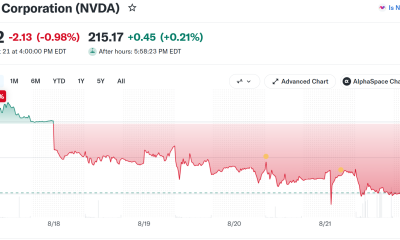
Nvidia Stock Suffers Longest Losing Streak Since 2022: Will Q2 Earnings End It?
You must be logged in to post a comment Login