
Business
Sugar Rationing in Infancy Linked to Lower Cancer Risk and Longer Life, New Study Finds in British Adults


The amount of sugar a baby consumes during their first two years of life may have measurable effects on their health decades later, including a reduced risk of several cancers and a longer estimated lifespan, according to a new study that took advantage of a unique natural experiment created by Britain’s wartime food rationing.
The study, published in the journal PNAS in early August, examined health outcomes among 64,761 people born in Britain between 1951 and 1956, a period when sugar and other common foods were still rationed to prevent shortages in the years following World War II. Using data from the long-running UK Biobank study, researchers compared health outcomes among adults who spent their first 1,000 days of life under sugar restrictions with those born after the rationing program ended.
Researchers focused specifically on that first-1,000-day window because it spans from conception until a child’s second birthday, a relatively brief but critical period in early development during which food preferences and taste patterns begin to form, meaning a person’s earliest food environment can shape health outcomes that persist well into adulthood.
Among adults who spent their first 1,000 days under sugar rationing, researchers found a notably lower risk of several types of cancer compared with those who were not exposed to the restrictions. Those exposed to early sugar rationing showed a 69% lower risk of liver cancer, a 52% lower risk of prostate cancer, a 41% lower risk of lung cancer, a 40% lower risk of rectal cancer, and a 36% lower risk of breast cancer.
Beyond cancer risk, researchers also found evidence that early sugar rationing was associated with slower biological aging. The study measured telomeres, the protective caps found at the ends of chromosomes that have been linked to longevity in previous research, and found that adults exposed to sugar rationing during infancy had longer telomeres than those who were not exposed. Based on that difference, researchers estimated the exposure was associated with an increase in life expectancy of slightly more than two years.
The study also identified lasting behavioral differences tied to early sugar exposure. Researchers found that adults who had experienced sugar rationing during their first 1,000 days continued to consume less sugar, eat smaller portions and maintain healthier, more varied diets more than 50 years later, suggesting the early dietary environment may have shaped long-term eating habits and food preferences well into late adulthood.
This is not the first study to draw on data from Britain’s wartime and postwar sugar rationing period to examine long-term health effects. According to The Hill’s coverage of the research, a separate recent study using the same underlying UK Biobank data found that people exposed to sugar rationing during their first 1,000 days were significantly less likely to develop anxiety and depression in adulthood. Earlier studies relying on the same historical natural experiment have also identified lower risks of chronic disease, reduced odds of developing Alzheimer’s disease, and better cardiovascular health outcomes among those exposed to sugar restrictions during early infancy, building a broader body of evidence pointing toward meaningful, long-lasting health effects tied to early-life sugar exposure.
Despite the consistency of these findings across multiple studies using the same dataset, researchers involved in the new PNAS study cautioned against overinterpreting the results as definitive proof of direct causation. The study was observational in nature, meaning researchers compared outcomes between two naturally occurring groups, those born before and after Britain’s rationing program ended, rather than conducting a controlled experiment in which sugar intake was directly and randomly assigned to different infants. As a result, the researchers noted the findings demonstrate a strong association between early sugar exposure and later health outcomes, rather than conclusive proof that limiting sugar during infancy directly causes the improved health outcomes observed decades later.
Britain’s historical rationing program offers researchers a rare and valuable natural experiment precisely because it affected an entire population uniformly and for a defined period of time, rather than reflecting individual families’ voluntary dietary choices, which are typically influenced by socioeconomic status, education level and other confounding factors that can complicate efforts to isolate the specific effects of early sugar consumption in more conventional observational nutrition studies. Sugar rationing in Britain began during World War II and continued for several years afterward as the country worked to stabilize its food supply, with sugar remaining among the last rationed items to be lifted in the mid-1950s.
The consistent pattern of findings across multiple independent studies using the UK Biobank’s rationing-era data, spanning cancer risk, biological aging, mental health outcomes, chronic disease risk, and cognitive health, has added to a growing body of scientific evidence suggesting that the earliest years of a child’s life, particularly the specific 1,000-day window from conception to age two, may represent an unusually consequential period for shaping long-term health trajectories through diet and other early environmental exposures.
While the new findings are unlikely to translate directly into formal public health recommendations given the observational nature of the underlying data, they add further weight to existing public health guidance from organizations including the World Health Organization and American Academy of Pediatrics, both of which have generally recommended limiting or avoiding added sugars during infancy and early childhood, citing broader concerns about childhood obesity, dental health and the establishment of long-term dietary habits, independent of the specific cancer and longevity associations identified in this newest research.
As researchers continue mining the UK Biobank’s unique wartime rationing data for additional insights into how early-life nutrition shapes long-term health, the consistency of findings across this growing body of research is likely to keep drawing scientific interest in better understanding the specific biological mechanisms, whether related to metabolic programming, gut microbiome development, or other pathways, that might explain how sugar exposure during a child’s first 1,000 days could produce measurable health effects persisting more than half a century later.


IGX has proposed acting as a facilitator for regasification capacity bookings at LNG terminals, without getting involved in contractual negotiations or payment settlements. GAIL and other stakeholders submitted their views as part of the Petroleum and Natural Gas Regulatory Board‘s (PNGRB) consultation on the proposal.
Also read: BPCL looks to deliver groceries along with LPG cylinders
“Imposing an artificial layer of transaction costs for a service that does not streamline the fundamental contractual process will unjustifiably increase the financial burden on end-users,” GAIL said. Downstream natural gas consumers are already facing significant margin pressures due to high and volatile global LNG spot prices, it added.
GAIL, which operates an LNG terminal on India’s western coast, said information asymmetry has not been a significant barrier to participation by terminal users. “No significant inefficiencies in the existing framework have been observed that necessitate creation of a separate booking platform,” it said.

More than half of India’s LNG regasification capacity of around 57.5 million tonnes per annum remains underutilised because of weak domestic gas demand. Under these circumstances, a booking platform is unlikely to lead to any meaningful increase in capacity utilisation, GAIL said.

Tennessee Attorney General Jonathan Skrmetti said the agreement could set a new standard for protecting children across social media platforms.
Other social media and technology companies should “be paying very close attention” to Meta’s approximately $18 billion settlement over allegations its platforms harmed children, Tennessee Attorney General Jonathan Skrmetti told FOX Business.
“I think you’re going to see the next domino fall very soon,” Skrmetti said, arguing the agreement sets a precedent for holding social media, artificial intelligence and other child-facing platforms accountable.
Meta announced Wednesday it had reached an agreement with 52 attorneys general across states, U.S. territories and Washington, D.C., to pay up to $18 billion and overhaul teen experiences on Facebook and Instagram.
The settlement, which requires court approval, resolves claims filed by 47 states.
META SETTLES FEDERAL TRIAL OVER CLAIMS FACEBOOK, INSTAGRAM ADDICT CHILDREN
“The most important thing is that all of the design decisions that made Instagram dangerous for kids are being addressed,” Skrmetti said.
“So, there are guardrails in place, there are time limits. Parents have much more control over what their kids are going to see. There’s more transparency there. So, it’s going to make it a better experience for kids.”

The agreement requires time limits, nighttime restrictions, stronger age checks and expanded parental controls for users under 18. (iStock)
The agreement requires time limits, nighttime restrictions, stronger age checks and expanded parental controls for users under 18, according to Meta.
“The goal is to eliminate all of the triggers for mental health problems that were baked into the platform as a result of the effort to make it so addictive,” Skrmetti said.
Skrmetti said the changes to Meta’s platforms are ultimately more important than the financial penalty.
“They agreed to some pretty sweeping changes, and that’s way more important than the money,” he said.
Meta said the payments will be distributed annually over 10 years, with participating states receiving approximately $12.7 billion. Another $5.3 billion will be released only if TikTok and YouTube implement specified child-safety measures and make matching payments.
An independent auditor will assess Meta’s implementation of and compliance with the agreement, according to the company.
“If kids are still at risk, if some of these features aren’t addressed in a way that meaningfully changes the danger of the platform for young users, the auditor will be in a position to make that public,” Skrmetti said.
The states would then be able to seek enforcement of the agreement, he added.
STATE SUES SNAPCHAT OVER ALLEGED ADDICTIVE FEATURES AND ADULT CONTENT FOR KIDS

Meta said Wednesday the agreement builds on its existing efforts to protect teens and give parents greater control over their children’s use of its platforms. (Matt Cardy/Getty Images)
Skrmetti said companies that have not reached similar agreements could increasingly become the focus of litigation.
“As fewer and fewer participants in the industry have not entered a deal like this, they’re going to be under incredible pressure because all of the litigation focus is going to be on them,” Skrmetti said.
He said the settlement should also serve as a warning to the broader technology industry.
“If they’re designing exploitive elements into the platform that take advantage of kids and the vulnerabilities of kids’ brains, there will be consequences down the road for that,” he said.
Skrmetti also credited the bipartisan coalition that negotiated the agreement.
“I think it’s kind of inspirational that you had people who have very different political opinions come together and work to do right by America’s kids,” Skrmetti said.
Meta said the agreement builds on its existing efforts to protect teens and give parents greater control over their children’s use of its platforms.
“Ensuring teens have a safe and productive experience on our platforms is an absolute imperative for Meta,” the company said in a statement. “We want to get this right for parents and teens, and that’s why we partnered with state attorneys general to set a new industry standard.”

Tennessee Attorney General Jonathan Skrmetti said companies that have not reached similar agreements could increasingly become the focus of litigation. (FOX Business )
GET FOX BUSINESS ON THE GO BY CLICKING HERE
A Meta spokesperson referred FOX Business to comments from Chief Legal Officer C.J. Mahoney, who called on TikTok, YouTube and other platforms to adopt the same safeguards.
“The framework we’ve negotiated will empower parents to easily manage how their children access our platforms,” Mahoney said.
“Our new Time Limit commitments, Night Mode features and usage limits during school hours set the right path forward for our whole industry, but this framework will only work if all our peers join us. Because teens move fluidly across dozens of apps, we need an industry-wide solution. We therefore call on our industry peers, TikTok and YouTube, to implement this new framework, right away.
“As a parent, I’m proud of both the work Meta has done to protect kids historically and of this new groundbreaking agreement. But its success depends on all other social media platforms following Meta’s lead.”
YouTube and TikTok could not immediately be reached by FOX Business for comment.
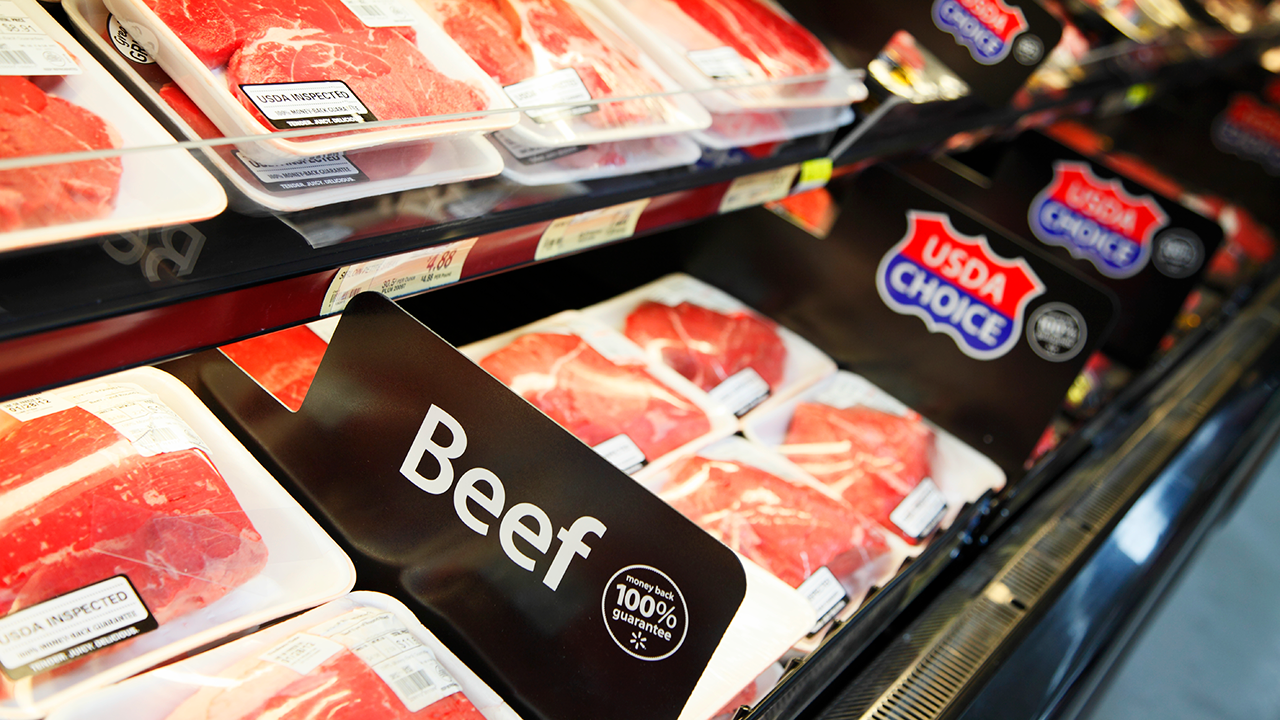
American farmer and rancher Steven McBee Jr. joins ‘Varney & Co.’ to discuss soaring beef prices, the cattle shortage, the reopening of livestock imports and AI’s growing impact on farmland values.
President Donald Trump on Wednesday formally increased the amount of foreign beef that can enter the U.S. at a lower tariff rate by 300,000 metric tons, advancing an affordability push aimed at bringing down elevated ground beef prices.
The temporary increase applies to lean beef trimmings under the U.S. beef tariff-rate quota and will be released in three 100,000-metric-ton tranches beginning Sept. 1, according to a White House proclamation.
Trump said the move is intended to increase the supply of ground beef and lower prices for American consumers as the U.S. cattle herd remains near historic lows and domestic beef production is expected to decline this year.
The proclamation puts into effect a policy Trump previewed last week, when he announced plans to allow up to 300,000 metric tons of additional foreign beef into the country as part of an effort to ease grocery costs.

President Donald Trump signs an executive order in the Oval Office. (Bonnie Cash/UPI/Bloomberg via Getty Images / Getty Images)
The formal action follows pushback from Republican lawmakers in cattle-producing states, who have warned that increasing foreign beef imports could undercut ranchers working to rebuild the U.S. herd.
The administration, however, says domestic supplies remain insufficient to meet demand at reasonable prices.
The Department of Agriculture forecasts U.S. beef production will decline by about 4% this year compared with 2025, according to the proclamation. The White House attributed the supply pressure in part to restrictions on live cattle imports from Mexico aimed at preventing the spread of New World Screwworm, as well as drought and wildfire conditions affecting cattle-producing regions.
The U.S. cattle herd has fallen to its lowest level in 75 years, though USDA data cited by the administration suggests the herd began showing early signs of growth in July.
TRUMP’S FOREIGN BEEF PUSH TO CUT GROCERY COSTS SPARKS GOP REVOLT FROM RANCHING COUNTRY
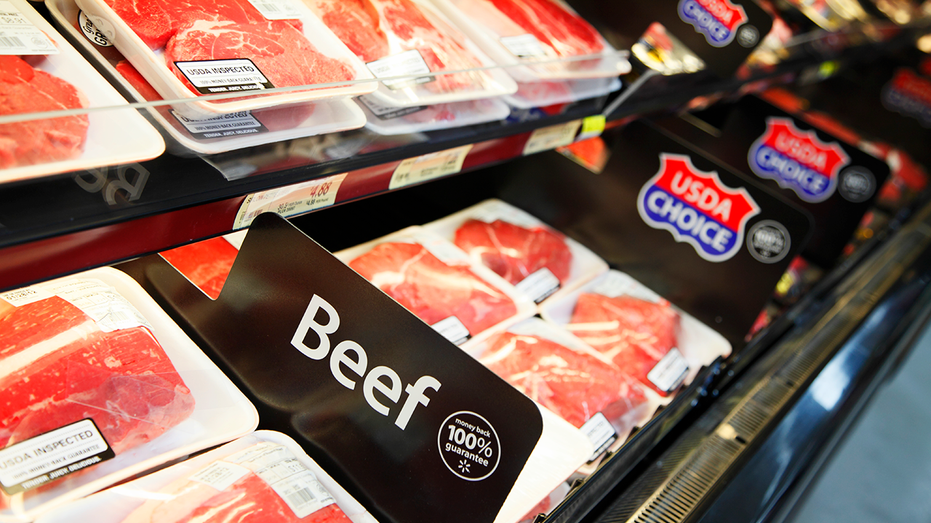
Beef on display at a grocery store in Chicago. (John Gress/Corbis / Getty Images)
The administration said USDA forecasts domestic beef consumption will increase through the remainder of 2026, adding further pressure to supplies.
The latest action follows a separate move in February that increased the 2026 quota for lean beef trimmings from Argentina by 80,000 metric tons. The new 300,000-metric-ton increase does not affect that allocation and instead applies to “other countries or areas.”
The first 100,000 metric tons will be available from Sept. 1 through Sept. 30, followed by another 100,000 metric tons from Oct. 1 through Oct. 30. The final tranche will open Oct. 31 and remain available until the quota is filled or Nov. 30, whichever comes first.
The administration is also tying the expanded quota to prices.

The U.S. cattle herd has fallen to its smallest level in 75 years. (Jonne Roriz/Bloomberg/Getty Images / Getty Images)
CLICK HERE TO GET FOX BUSINESS ON THE GO
The agriculture secretary and U.S. trade representative are directed to monitor whether beef entering under the additional quota is sold at prices 25% below the market price for lean beef trimmings.
If that discount does not materialize, the officials must notify Trump, who could eliminate the remaining increase.
Business
Meta Settles State Lawsuits Over Facebook, Instagram Child Addiction Claims for Up to $17.1 Billion

Meta has agreed to pay as much as $17.1 billion to settle claims from 29 states that the company designed Facebook and Instagram to addict children and misled the public about the safety of its platforms, according to court papers disclosed Wednesday, averting one of the highest-profile tests yet of allegations that social media companies have harmed young users.
The settlement resolves claims brought by 29 states and comes just as the underlying trial had begun proceedings in federal court, in a case that could have seen Meta Chief Executive Mark Zuckerberg called to testify had it gone forward. The states had accused Meta of violating consumer-protection laws and improperly collecting children’s personal data without parental consent, allegations Meta has denied while maintaining it has worked to protect children on its platforms.
Under the terms of the agreement, Meta will pay at least $12.1 billion over 10 years, according to the District of Columbia attorney general’s office. The company could be required to pay an additional $5 billion, bringing the total potential settlement to $17.1 billion, contingent on whether other major social media companies agree to adopt comparable child-safety measures of their own.
Meta framed the agreement as an extension of existing efforts to protect younger users on its platforms. “Ensuring teens have a safe and productive experience on our platforms is an absolute imperative for Meta,” the company said in a statement. “We want to get this right for parents and teens, and that’s why we partnered with state attorneys general to set a new industry standard.”
As part of the settlement, Meta agreed to implement a series of concrete new safeguards for young users, including strict daily time limits, blocking app access during certain nighttime hours, muting notifications during school hours, and introducing additional tools giving parents greater control over their children’s use of Facebook and Instagram.
Meta also used the settlement announcement to publicly pressure two of its largest competitors, TikTok and YouTube, to adopt similar restrictions on their own platforms. The company argued that safety measures limited to individual apps have limited real-world impact given how frequently teenagers move between different social media platforms throughout the day. “For meaningful progress to happen, we urge TikTok and YouTube to join us and state attorneys general in adopting this new standard, to ensure teens use social media in a healthy and responsible way,” Meta said.
The settlement caps a lengthy and closely watched legal battle over the extent to which social media platforms bear responsibility for mental health harms experienced by young users. The underlying litigation had formed part of a broader wave of legal action against major technology companies, with an appeals court previously ruling that Meta and other companies must face thousands of separate lawsuits over claims of child social media addiction, according to earlier Fox Business reporting. That broader wave of litigation has included similar claims filed against other platforms; a separate state lawsuit has targeted Snapchat over allegedly addictive features and adult content accessible to children on that platform.
Wednesday’s settlement notably avoided a trial that could have forced Zuckerberg to publicly testify about internal company decisions regarding platform design and child safety, a prospect that had drawn significant attention given the potential for internal Meta communications and executive testimony to become part of the public record. By reaching a settlement before that testimony occurred, Meta avoided both the immediate legal exposure of a potential adverse verdict and the reputational risk associated with a high-profile public trial examining the company’s internal knowledge of its platforms’ effects on young users.
The financial terms of the settlement, structured as payments spread across a full decade rather than a single lump sum, reflect a common approach in large-scale corporate legal settlements, allowing the company to manage the financial impact over an extended period rather than absorbing the full cost immediately. The additional $5 billion contingent payment, tied specifically to whether TikTok and YouTube adopt comparable safety standards, introduces an unusual structural element to the agreement, effectively giving Meta a financial incentive to actively lobby its competitors toward adopting similar child-safety measures.
News of the settlement generated immediate market reaction, with Meta shares moving higher in early trading Wednesday following the disclosure, according to Fox Business, as investors apparently viewed the resolution of the litigation as removing a significant source of legal and financial uncertainty hanging over the company.
Legal analysts and attorneys involved in the broader wave of social media litigation have continued weighing in on the settlement’s significance for the industry more broadly. The case represented one of the most direct tests to date of whether social media companies could be held legally and financially accountable for design choices that plaintiffs argued were specifically intended to maximize youth engagement, potentially at the expense of young users’ mental health and wellbeing.
Meta’s settlement arrives amid a broader period of intensified scrutiny facing major technology and social media companies over child safety practices, spanning ongoing litigation, ongoing congressional interest in platform regulation, and continued public debate regarding the appropriate role of parental controls, age verification and platform design in protecting young users online. Whether the newly announced child-safety measures Meta has agreed to implement, including daily time limits and nighttime access restrictions, meaningfully change how teenagers use Facebook and Instagram in practice remains to be seen as the company begins rolling out those changes across its platforms.
With this settlement now resolving the claims brought by the 29 participating states, attention within the broader social media litigation landscape is likely to shift toward whether TikTok and YouTube ultimately respond to Meta’s public challenge to adopt similar restrictions, and toward how the remaining thousands of individual lawsuits still pending against Meta and other platforms over child social media addiction claims continue to move through the broader consolidated litigation process in the months ahead.
Business
TikTok Down Now? Users Report Outage as App Faces Fresh Disruption Following Recent Oracle Data Center Issues
Some TikTok users reported difficulty accessing the app Wednesday morning, according to outage-tracking service Downdetector, though independent status monitors offered a mixed picture on whether the disruption represented a confirmed, widespread outage.
Downdetector posted on its official account on the social platform X that “user reports indicate problems with TikTok since 10:34 AM EDT,” tagging the post with the hashtag #TiktokDown and directing affected users to its outage-tracking page for further updates. The post had drawn more than 2,300 views within roughly the first hour of being published.
Independent status-tracking services offered varying assessments of TikTok’s operational status around the same time. According to StatusGator, TikTok was currently operational, though the service had logged 10 user-submitted reports of outages over the preceding 24-hour period. UptimeRobot’s most recent automated check, run Tuesday afternoon from North American infrastructure, similarly did not detect any unusual response times or error codes. Separately, IsDown reported no ongoing official outage as of its most recent check, though the service noted user reports often detect emerging issues before official status pages formally acknowledge them.
Given the scattered nature of these reports across different monitoring services, Wednesday’s disruption may reflect a more limited or regionally concentrated issue rather than a confirmed, platform-wide outage affecting all users simultaneously. TikTok has not issued a public statement specifically addressing Wednesday’s reported problems as of this report.
Wednesday’s reports follow a pattern of recurring reliability issues TikTok has faced throughout 2026, many of them tied to the platform’s underlying U.S. cloud infrastructure. According to StatusGator’s incident history, TikTok experienced a 1-hour, 43-minute disruption on Aug. 19, described as a “search not working and pages not loading” issue, alongside earlier incidents in late June and early July involving posts and videos becoming unavailable after sharing and the app failing to open or load properly. None of those earlier incidents were officially acknowledged by TikTok through a public statement, according to StatusGator’s records.
TikTok’s broader infrastructure reliability has come under particular scrutiny since the completion of its ownership restructuring earlier this year, which established a new American joint venture built around hosting U.S. user data domestically through Oracle’s cloud infrastructure. That arrangement was specifically designed to address national security and data sovereignty concerns that had previously threatened the app with an outright U.S. ban, with Oracle agreeing to host American user data on domestic servers as part of the broader restructuring deal involving major investors including Oracle, Silver Lake and MGX.
That new infrastructure arrangement, however, has already produced multiple significant outages tied directly to Oracle’s data center operations. According to TechRadar, TikTok confirmed that a major outage occurring in late January was caused by a power outage at one of its primary U.S. data centers operated by Oracle, triggered by severe winter weather. The company explained the scope of the disruption at the time. “The winter storm led to a power outage which caused network and storage issues at the site and impacted tens of thousands of servers that help keep TikTok running in the US,” TikTok said. An Oracle spokesperson, Michael Egbert, confirmed the cause separately. “Over the weekend, an Oracle data center experienced a temporary weather-related power outage which impacted TikTok,” Egbert said, according to Reuters reporting cited by TechRadar. That January incident took nearly a week to fully resolve across all affected geographic regions, according to TechRadar’s coverage.
A second Oracle-related outage struck TikTok in early March, just weeks after the first, according to American Bazaar Online. That report noted the recurrence prompted concern among industry observers regarding the underlying reliability of TikTok’s new infrastructure partnership. Sarah Chen, a cloud infrastructure analyst at Gartner, offered a pointed assessment of the pattern at the time. “Two outages in a matter of days isn’t just bad luck – it suggests fundamental capacity or configuration issues,” Chen said. According to the same report, the first of those two outages had occurred just 48 hours after TikTok’s U.S. ownership transfer formally completed, initially affecting users for approximately three hours before service was restored, with the company attributing that earlier disruption to “migration-related configuration adjustments” tied to the broader ownership transition.
TikTok has also experienced larger, more widely reported disruptions earlier in the year tied to the same infrastructure. According to LiveNOW from Fox, a separate January outage generated more than 35,000 Downdetector reports at its peak overnight, with users reporting videos failing to load and displaying zero views. That outage struck just days after TikTok finalized the deal creating its new American entity, with Adam Presser, TikTok’s former head of operations and trust and safety, appointed to lead the new U.S. joint venture as chief executive, working alongside a seven-member, majority-American board that includes TikTok’s global CEO, Shou Chew.
Given this documented pattern of recurring Oracle-related infrastructure issues throughout 2026, Wednesday’s reported problems, while limited according to most current monitoring services, fit within a broader trend of periodic reliability challenges TikTok has faced since transitioning to its new U.S.-based cloud infrastructure earlier this year. Users experiencing difficulty accessing TikTok Wednesday were generally advised by monitoring services to first attempt basic troubleshooting steps, including updating the app, trying an alternative device, checking their internet connection, or logging out and back in to reset their session, before assuming a broader, confirmed platform-wide outage is underway.
As of this report, neither TikTok nor Oracle had issued a public statement addressing Wednesday’s reported issues, and the scope, cause and expected resolution timeline for any underlying disruption remained unclear. Given the platform’s recent history of infrastructure-related outages tied to its Oracle data center partnership, users and industry observers alike are likely to continue closely monitoring whether Wednesday’s reports develop into a more significant, officially acknowledged incident or remain a limited, quickly resolved disruption affecting only a subset of TikTok’s user base.

Parton wasn’t always wealthy. She grew up in poverty and in her 1971 hit Coat of Many Colours describes how she would wear rags which her “mama” had knitted together to school.
In a 2017 BBC interview, she said her father gave her business lessons from early in her career.
“My dad wasn’t an educated man, he wasn’t able to read and write, but my daddy had a great sense of business,” she told the BBC’s World Service in 2017.
“So when I got into the music business, I thought of it as a business. And so I started early on keeping my own songs and my own publishing company.”
While her publishing company helped build her wealth, Parton had plenty of other business ideas.
In 1985, she co-founded a film and TV production company called Sandollar Productions, which helped to make 90s cult thriller Buffy The Vampire Slayer.
Then there was Dollywood – the theme park in in the foothills of the Smoky Mountains in her home state of Tennessee, which she became co-owner of in 1986. It had changed owners multiple times since it was first set up 25 years earlier and her buy-in exponentially boosted visitor numbers.
She kept improving the park. In 2015, she opened the DreamMore Resort, a four-star hotel and spa down the road from Dollywood. Today, many of Parton’s family members work at the theme park and it is the biggest employer in its county.
She launched the Dolly Beauty cosmetics line in 2025 and she opened Dolly’s Tennessean Travel Stop in June this year. The shop offers a signature coffee brand named Cup of Ambition, a nod to her Grammy-winning single 9 to 5.
Paul Milliken, a reporter from Fox 5 Atlanta who had interviewed Parton many times, said diversification was the key to her business success.
“It’s a lesson that continues from her to this day to young artists,” he told BBC’s Wake Up to Money.

Yes. Corporate subscriptions are available for teams and organisations, with discounted rates as user numbers increase. Pricing starts from $1,625 + GST per user.
Get in touch
to discuss the right option for your organisation.
Business News subscriptions are used by executives, investors, consultants and professionals who need to stay informed and make better decisions about the WA market. When you subscribe you’ll get
- Unlimited access to WA’s most trusted business journalism
- Data & Insights — detailed profiles of WA companies, people, projects and deals
- MyBN — a personalised feed based on the companies, people and sectors you follow
- Special publications and industry reports
- Daily and weekly email newsletters
Data & Insights is a research tool built specifically for the WA market. It draws on more than 30 years of Business News reporting, updated regularly to reflect what’s happening now. Use it to:
- Look up detailed profiles of WA companies, including financials, directors and ownership
- Find decision-makers and track their career movements
- Research live and completed projects across WA industries
- Monitor deals, appointments and market activity
- Access industry rankings and league tables
Data & Insights is updated daily by our dedicated research team, which uses the latest announcements, ASX filings and editorial coverage to keep our person, company, list and project records up to date.
Business News welcome all opportunities to make our dataset accurate, complete and current, so if you have an update request, please email the team at
general@businessnews.com.au, and we’d be happy to assist.
MyBN
is part of every subscription. It’s your personalised view of Business News. You can follow the companies, people, sectors and projects that matter to you, and get a news feed and alerts tailored to your interests. You can save articles to read later and retain only what you need.
Only subscribers have full access to all content on the Business News website.
If staying informed about the WA economy is part of your job, and/or you’re looking for networking opportunities in WA, Business News is built for you.
Business News subscribers are:
- Executives and directors tracking competitors, clients and market movements
- Investors and advisers researching companies, deals and industry trends
- Consultants and professionals staying across sectors relevant to their clients
- Business owners looking for leads, context and market intelligence
Most Business News publications cover national or global markets. Business News is focused entirely on Western Australia, which means the journalism, the data and the intelligence are all built around WA companies, people and projects — not adapted from a national feed. Data & Insights, included with every subscription, combines more than 30 years of WA-specific editorial research with live business data. There’s no comparable product for the WA market.
The Morning Digest Email provides a comprehensive wrap of the major headlines, relevant to WA business, and includes with a snapshot of the overnight news covering oil, gold and ASX-listed companies.
The Afternoon Wrap Email focuses on the news covered by our team of journalists during the course of the working day, including exclusive stories and analysis, all of which relates to WA business and the local economy.
The BN Weekender Email contains a wrap of the Business News from the week that was, highlighting the top stories in each area of WA business.
Sign up for free.
We’re happy to help.
Get in touch
and our team will come back to you.
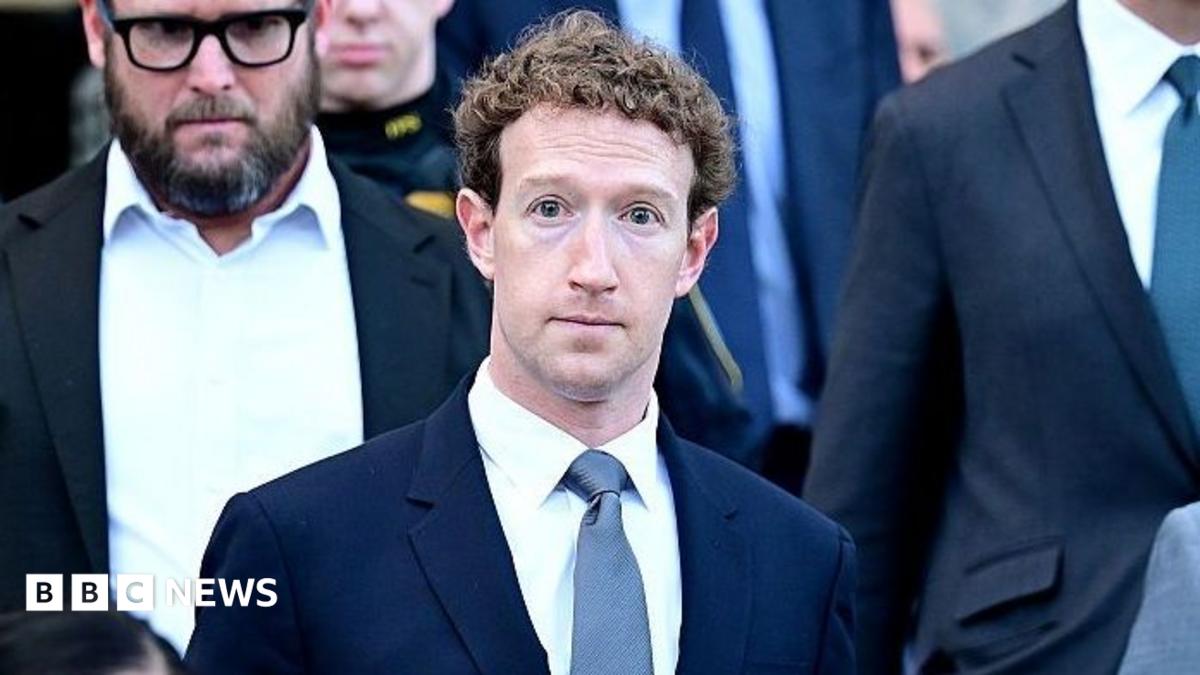
As part of the settlement, the social media giant has agreed to make a number of changes to the way Instagram and Facebook operate for its youngest users.
Some experts say it is long overdue.
The new safety barriers include a two-hour time limit across both platforms, which will be a default setting for known teen users. But direct messaging on the platforms will not count towards the daily use limit.
Notifications will be muted between midnight and 06:00 and on school days between 08:00 and 15:00.
Likes on posts and content will also be entirely hidden on the platforms for teens.
Most of these new features will be made either default or an option for teens within six months.
However, new efforts by Meta to better identify which users on its platforms are children will take up to a year to be rolled out.
I would be surprised if these measures remain within the confines of the US for very long, as other countries will almost certainly be keen to adopt them too.
Meta also says the new features will only truly help children if all of its rivals adopt them as well.
It’s a highly competitive industry, but given the global backlash against social media and its impact on children, perhaps others like TikTok and Snapchat may have to follow suit.
The question then is whether children will still bother with them, once they are deliberately toned down into a much blander offering.
And perhaps that would bring the social media era to a natural end, as existing adults gradually aged out of it.
Arturo Bejar, the ex-Instagram engineer turned whistleblower, says the proof of the pudding will be in whether the new teen safety features are effective.
“At the end of the day, Meta needs to be held accountable for results, not efforts,” he told me.
Additional reporting from Kali Hays

Ocular Therapeutix CEO Dugel sells $233,159 in shares

The government hopes the plug-in panels will offer people a more affordable way into solar energy compared to roof installation, although savings will be lower because they generate less power.
A one-panel kit will cost £699 while two-panels will be £1,089, according to UK solar company UKSOL.
The government expects prices to settle at £400-£600 as competition increases and more products are developed.
Its research shows a household could save between £70 and £110 a year on their energy bills.
The precise amount will depend on how the panels are orientated and how long they run. An unshaded south-facing spot is best.
Households which use energy during daylight hours will benefit most as the electricity must be used as it is generated.
Any power not consumed will flow back to the grid, but it’s unlikely homes will get any cash for this.
Unlike rooftop solar panels, these systems do not need to be certified under the official Microgeneration Certification Scheme (MCS), which is the UK’s official quality mark for small-scale renewable energy systems.
But it also means they will not normally qualify for the Smart Export Guarantee that pays people for excess solar power.

Pov: playing minecraft with your bestfriend!
GAIL opposes IGX platform for LNG terminal capacity booking

Bitcoin whales move $40M after decade-long dormancy





-

 Fashion5 days ago
Weekend Open Thread: Madewell – Corporette.com
-

 Crypto World1 day ago
SpaceX stock could rise 75% to $240, JPMorgan says
-

 Business4 days ago
Musk’s Tesla, SpaceX Confirm $16.8 Billion ‘Terafab’ Chip Plant as World’s Largest Building in Texas
-

 Crypto World5 days ago
anatomy of crypto’s biggest liquidation event since 2021
-

 Crypto World2 days ago
A $30 Billion AI Fund Implodes, Now the SEC Is Investigating Wall Street’s Role
-

 Politics5 days ago
6 months on, Irish renters crushed by effects of government housing bill
-

 Crypto World21 hours ago
Did Trump Just Move SpaceX Stock With One Truth Social Post?
-
 NewsBeat5 days ago
The ‘Lucky Dip Gang’ causing carnage for clicks: After five thugs were killed speeding in the wrong direction on a motorway, GUY ADAMS investigates a sick new trend… and why police aren’t even allowed to pursue them
-

 Business4 days ago
Mystery AI Model ‘Ox Alpha’ Draws Developers With Free Access as Chinese Lab Origins Remain Debated
-

 News Videos7 days ago
Don’t Leave Your Financial Future To Chance | August 19, 2026
-

 Business6 days ago
Five Below: Kids Discount Retailer Reaps Rich Rewards
-

 Business2 days ago
Moderna CEO warns China is pouring state money into mRNA technology
-

 Business2 days ago
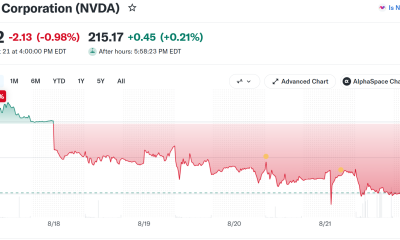
NVIDIA Stock Drops Nearly 2 Percent to $210 on Seventh Losing Day Ahead of Critical AI Earnings
-

 Business5 days ago
UK firms in critical financial distress rise 9% to 53,756
-

 Sports4 days ago
Deshaun Watson fires back at Browns fans after being booed: ‘It’s a disrespectful thing’
-

 Crypto World7 days ago
Optimism-funded team's deciding vote shifts $49 million in OP tokens away from users
-

 Tech7 days ago
OpenAI confirms ChatGPT is down as logins and signups fail
-

 Crypto World4 days ago
Google Gemini AI Predicts Ethereum Could Become the Trade Retail Misses in 2026
-
 Crypto World5 days ago
Nvidia Stock Suffers Longest Losing Streak Since 2022: Will Q2 Earnings End It?
-

 Business7 days ago
PayPal and Venmo now accepted for tuition at several universities
You must be logged in to post a comment Login