



Connect with us

Business

Sugar stocks Balrampur Chini, Dhampur Sugar, Uttam Sugar Mills rally up to 11%. Here are 2 triggers

Published

on

Sugar stocks Balrampur Chini, Dhampur Sugar, Uttam Sugar Mills rally up to 11%. Here are 2 triggers
Shares of sugar companies, including Balrampur Chini Mills, Dhampur Sugar, Dalmia Bharat Sugar, Shree Renuka Sugars and EID Parry, rallied up to 11% as sugar prices climbed sharply amid tight inventories and supply concerns. Prices have risen from around Rs 41-42 per kg in the quarter to above Rs 50 per kg.

In today’s session, Balrampur Chini Mills gained over 3% to Rs 752 on the BSE, while Dhampur Sugar Mills gained 8% to Rs 200 per share. Uttam Sugar gained 11% to Rs 359 per share. Triveni Engineering shares rose 4% to Rs 306, while Eid Parry gained over 4% to Rs 831.

What’s behind the sharp rise?

1.) Festive period – India’s sugar demand usually surges from August to November as the country celebrates festivals like Ganesh Chaturthi, Dussehra and Diwali, which leads to heightened demand for sweets, biscuits and other confectionery items.

Advertisement

Also read: Sugar production hit by Red Rot disease, El Nino; govt taking measures: Pralhad Joshi

Last month, the government ordered dealers to hold sugar stocks for no more than 30 days in a bid to bolster supplies. However, sugar prices have risen 10% over the past month to record highs, with analysts expecting them to remain elevated for at least the next three months. Meanwhile, patchy rains and dry weather have hit sugarcane output, further supporting prices.


2.) Supply worries – A key trigger behind the sugar price spike is the worsening supply outlook in Brazil, the world’s largest sugar producer. The country has warned of a delay in the harvest amid adverse weather conditions. Adding to uncertainty, Brazil has suspended its bi-weekly harvest and production reports, leaving investors with limited visibility on the supply situation.
The shift towards ethanol is further intensifying concerns over a potential sugar supply crunch.In June, 58% of Brazil’s cane juice was diverted towards ethanol, given that it is likely to be more profitable than sugar. Brazil has also raised its mandatory ethanol blending target to 32% in July from 30% in June, significantly higher than the 25-27% mix seen just months earlier.

Supply concerns are not limited to Brazil. Intense heatwaves and El Nino conditions across the EU and the UK have added to fears of tighter supplies, with sugar output from the region trimmed to 14.98 million tonnes. In Asia, Thailand, the world’s third-largest sugar producer, has cut its projected output by 15.6% to 9.5 million tonnes. India, the world’s second-largest sugar producer after Brazil, is also projecting lower sugar production. Authorities are physically verifying mill volumes to enforce strict hoarding limits.

Global deficit estimates are also pointing towards a tighter market. Green Pool has projected a global sugar deficit of 3.3 million tonnes, while StoneX has estimated the shortfall at 1.7 million tonnes. The International Sugar Organisation has forecast a deficit of 0.26 million tonnes.

Advertisement

Read more: No ethanol link, decline in sugarcane production and stockpiling driving up sugar price: Experts

With production concerns mounting across major sugar-producing regions and global benchmark prices continuing to climb, the supply outlook has emerged as the key factor driving the sharp move in sugar prices.

Government tightens sugar curbs

The government halved the stockholding limit for bulk sugar consumers to 15 days, intensifying efforts to contain record prices just as festive demand begins to build. The move announced late Wednesday was followed by an order requiring sugar mills to report sales, buyers, and price levels during August 17 to 19, as ex-mill prices surged about ₹10 a kg, or 20%, in the past four to five days.

New Delhi is tightening market scrutiny amid concerns over hoarding and an acute squeeze in supplies ahead of the August-November festive season, while assessing whether imports are needed to ease the shortage, industry executives told ET.

Advertisement

(Disclaimer: Recommendations, suggestions, views and opinions given by the experts are their own. These do not represent the views of The Economic Times)

Continue Reading
Click to comment

You must be logged in to post a comment Login

Leave a Reply

Business

Market Fear Index Jumps

Published

on

Stocks Little Changed After Fed Decision

The stock market’s so-called fear index jumped ahead of the market open with several key events coming this week.

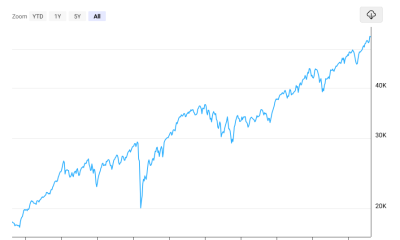
The Cboe Volatility Index, or VIX, was up 5.1% at 15.91 as ongoing yield pressure in long-term Treasuries alongside tensions in the Middle East hitting crude oil markets added extra macro uncertainty to equities.

U.S. Treasury Secretary Scott Bessent is set to ​hold a press conference at 2 p.m. Eastern time when he is expected to announce details about new economic restrictions on Iran.

Continue Reading

Business

Graduate job vacancies drop by almost 50% in a year

Published

on

A forlorn young woman slumped over a desk looking at a laptop

The number of graduate jobs has fallen almost in half in the past year, according to new figures, as employers cut entry-level roles in favour of AI and battle rising costs.

Jobs website Adzuna said it had just 8,383 graduate vacancies listed in July, down from 15,397 at the same point last year.

Adzuna also found competition among job seekers across all levels is rising, with an average of 2.14 job seekers per vacancy in July, up from 1.93 a year earlier.

Businesses have said employer national insurance and minimum wage hikes have made hiring more expensive, particularly for junior staff.

Advertisement

The number of graduate vacancies listed hit its lowest level since Adzuna started recording such data in 2016. The firm pointed to a peak for graduate roles in 2017, when it had more than 55,800 listed on its website. That is more than six times the number of roles listed on the site in July.

Andrew Hunter, the co-founder of Adzuna, said the figures show “employers still haven’t found a reason to open up hiring” for recent graduates.

Official figures show the UK’s youth unemployment rate – which covers 16-to-24-year-olds – was 16.2% in the three months to March 2026. The number of young people not in education, employment or training (Neet) is now over one million.

Young people have told BBC News previously they have applied for hundreds of jobs before even receiving a response.

Advertisement

They also expressed frustration at the growing number of employers using AI to screen applications.

Many university graduates also face mounting student debt.

Former government minister Alan Milburn is leading a major review of the youth unemployment crisis. He has previously said the number of entry-level jobs is shrinking, as is the number of part-time jobs traditionally filled by teenagers and students.

The Adzuna data also showed vacancies for jobs in travel, teaching and construction rose in recent weeks.

Advertisement

But sectors including healthcare, nursing, hospitality and logistics posted fewer vacancies.

Prime Minister Andy Burnham recently changed the rules for public contracts so that companies bidding for them have to show how they will create jobs and training opportunities.

Continue Reading

Business

Wall St futures under pressure ahead of Bessent briefing, Nvidia earnings

Published

on


Wall St futures under pressure ahead of Bessent briefing, Nvidia earnings

Continue Reading

Business

Iran faces ‘economic D-Day’, says US Treasury Secretary Scott Bessent

Published

on

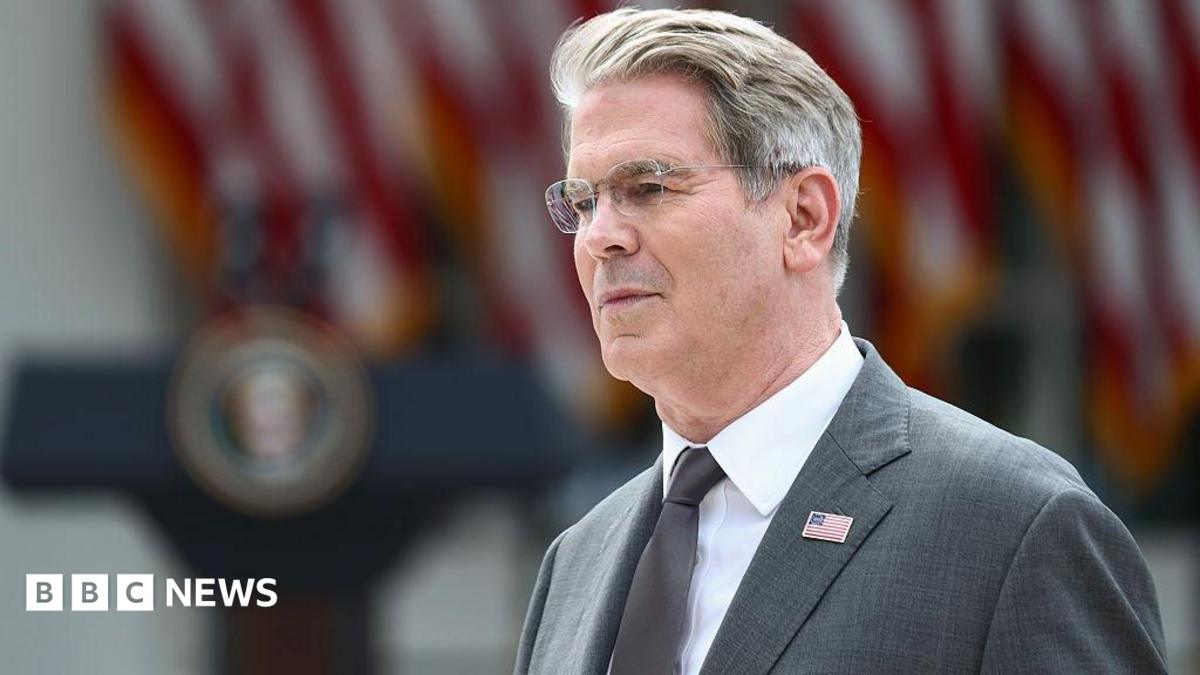
US Treasury Secretary Scott Bessent's head and shoulders in profile. He has grey hair and glasses. He is wearing a grey suit with a US flag lapel pin, a silver tie, and a white shirt. Behind him in soft focus are US flags and a podium.

The US Treasury Secretary has threated Iran with “the single greatest financial offensive ever”, claiming the US-Israel war with Iran was “entering its endgame”.

Scott Bessent said the US would sever all economic ties with the country in “an economic D-Day” and that any nation partnering with Iran financially would also be isolated.

Bessent’s threat to the Iranian regime follows several U-turns and extended deadlines from US President Donald Trump’s administration on previous threats.

Iran dismissed Bessent’s comments and said it would shut down all oil exports from the region “if the war continues”, according to news agency Reuters.

Advertisement

The Iranian regime has also issued a new warning to shipping not to pass through the Strait of Hormuz without its permission, the agency reported.

One fifth of the world’s oil and gas usually passes through strait, a waterway south of Iran, but the flow has been effectively blocked by the country since the conflict began at the end of February.

Bessent made the comments in an opinion piece for the Financial Times, external. He did not detail what the economic pressure on Iran would involve, but he is expected to do so in a press conference in the US at 13:00 local time (18:00 BST) on Monday.

“The world should understand that our objective is to sever every economic lifeline that sustains the tyrannical regime until Tehran stands alone,” he wrote in the piece.

Advertisement

The US has made several threats to Iran over the course of its war with the country, including Trump saying in April that “a whole civilisation will die tonight” unless Iran agreed a deal to end the war and unblock the Strait of Hormuz.

The US eventually climbed down from that position after mediator Pakistan intervened and called for more diplomacy.

The Iranian regime already faces tough economic sanctions from the US.

Former US president Barrack Obama and several US allies had agreed a deal with the country in 2015 which lifted many sanctions in return for Iran agreeing to limit its nuclear programme.

Advertisement

However, Trump pulled out of that deal in 2018, calling it “defective at its core, and reimposed all US sanctions on Iran.

During Joe Biden’s term as US president, he made some attempts to reinstate the Obama-era deal, but this did not happen.

In April this year, the Trump administration launched a wave of sanctions on foreign banks and firms doing business with Tehran after it became clear its military operations had not caused Iran’s regime to surrender.

Advertisement
Continue Reading

Business

Endeavour Group Limited (EDVGF) Q4 2026 Earnings Call Transcript

Published

on

OneWater Marine Inc. (ONEW) Q1 2026 Earnings Call Transcript