Connect with us
DAPA Banner
DAPA Coin
DAPA
COIN PAYMENT ASSET
PRIVACY · BLOCKDAG · HOMOMORPHIC ENCRYPTION · RUST
ElGamal Encrypted MINE DAPA
🚫 GENESIS SOLD OUT
DAPAPAY COMING

Business

Surviving When Predictive Models Break

Published

on

Surviving When Predictive Models Break

Yesterday’s chaotic nine-goal thriller between Paris Saint-Germain and Bayern Munich completely shattered every conservative forecasting model on the market.

By examining the massive collapse of predictive algorithms during that specific match, business leaders can learn brutal, necessary lessons about surviving sudden operational chaos.

Corporate executives love to boast about making “calculated, data-driven decisions,” totally ignoring the fact that most financial forecasts are incredibly fragile. You can hire the most expensive analysts, build a massive spreadsheet and present a flawless quarterly projection to the board, but the reality of business is inherently volatile. When a massive supply chain failure or a sudden regulatory change hits your sector, the historical data is basically useless. To truly understand how quickly a supposedly perfect model can disintegrate, corporate leaders need to look outside the boardroom and study the aggressive, heavily scrutinized world of sports analytics. Yesterday’s Champions League clash is the absolute perfect case study.

No sane predictive model anticipated a 5-4 result between two European heavyweights. Examining the pre-match analytics on platforms like ThePuntersPage provides a brilliant corporate baseline, showing exactly what the smartest algorithms in the world expected to happen. They expected a tight, heavily defensive chess match. Instead, they got absolute pandemonium. Watching how the market reacted to that unexpected chaos offers a masterclass in modern risk management for any scaling enterprise.

The Illusion of the Safe Corporate Bet

Before the referee even blew the whistle in Paris, the financial narrative was already fully settled. Every major syndicate and data analyst backed the under on total goals. The logic was completely sound: semi-finals are notoriously tense, both squads possess world-class defensive structures and the stakes were simply too high for either manager to risk playing an open, attacking style. It was the textbook definition of a “safe bet.”

Advertisement

This exact same mentality traps small and medium-sized enterprises every single day. Founders look at historical revenue charts and assume that because a specific product line or vendor relationship has been stable for three years, it will automatically remain stable for the fourth. They confuse historical consistency with future security. But relying entirely on past performance creates a massive operational blind spot. When you assume a market is safe, you stop aggressively monitoring the perimeter for threats. Just like the oddsmakers who totally failed to account for a sudden, aggressive tactical change in the first ten minutes of the match, companies that cling to their comfortable, safe bets are usually the first ones to get wiped out when the industry suddenly pivots.

Navigating the Black Swan Event

In financial terminology, a Black Swan is an unpredictable, incredibly rare event that carries severe consequences. Five goals being scored before the halftime whistle in a Champions League semi-final is the sporting equivalent of a Black Swan. It completely destroys the mathematical framework. When an event like this occurs, staring at your outdated dashboard and wondering why the numbers look wrong is a massive waste of time.

Corporate leaders constantly make the mistake of trusting the data even after the foundational reality has changed. According to a recent January 2026 financial analysison streamlining disconnected risk data, banks and massive corporations consistently fail to react to macroeconomic shocks because their internal reporting systems are too slow to process sudden, violent changes in the market. The algorithm cannot save you if the algorithm was built for a reality that no longer exists. When the match suddenly turns chaotic, or when a major competitor unexpectedly drops their pricing by forty percent, executives need to immediately abandon their rigid pre-planned models. Survival requires aggressive, real-time adaptation, totally disregarding the beautiful quarterly forecast that took three months to build.

Damage Control and the Art of Hedging

Perhaps the most valuable lesson from yesterday’s match is not how the models failed, but how Bayern Munich handled a catastrophic situation. Down 5-2 away from home, the German side was staring at total tournament elimination. An amateur manager would have panicked, thrown every single player forward and likely conceded three more goals on the counter-attack, completely bankrupting their chances for the second leg.

Advertisement

Instead, they executed perfect damage control. They tightened their structure, absorbed the pressure and managed to claw back two late goals to make it 5-4, entirely saving the aggregate tie. This is exactly how ruthless founders manage a terrible financial quarter. If a new product launch is failing miserably, you do not double down and burn the rest of your venture capital trying to force it to work. You cut your losses, hedge your remaining assets and mitigate the damage so the company lives to fight another day. Reviewing strategies on mastering risk management as a trader directly translates to this executive mindset. It is about understanding that sometimes, the goal is not to win the quarter. No, the goal is simply to stop the bleeding before the damage becomes terminal.

Building an Agile Operational Framework

Business culture heavily romanticizes the maverick CEO who stubbornly sticks to their initial vision regardless of what the market dictates. In 2026, operating with that level of stubborn pride is borderline negligence. The market does not care about your initial vision, and it certainly does not care about your perfectly formatted Excel spreadsheets.

To survive in an increasingly volatile commercial environment, small and medium enterprises must transition away from rigid, multi-year plans and build highly agile frameworks. You train your management team to view corporate metrics with the same ruthless, emotionally detached objectivity found in the live sports forecasting industry. You learn to read the room, identify the exact moment the historical data becomes useless and pivot your resources without hesitation. Stop treating your business forecasts like an absolute guarantee. Treat them like a pre-match probability that can, and inevitably will, get blown to pieces the second the reality of the market kicks in.

Advertisement
Continue Reading
Click to comment

You must be logged in to post a comment Login

Leave a Reply

Business

Trump Secures Clear Edge Over Xi in Beijing Summit with Major Trade and Energy Wins

Published

on

Trump Secures Clear Edge Over Xi in Beijing Summit with

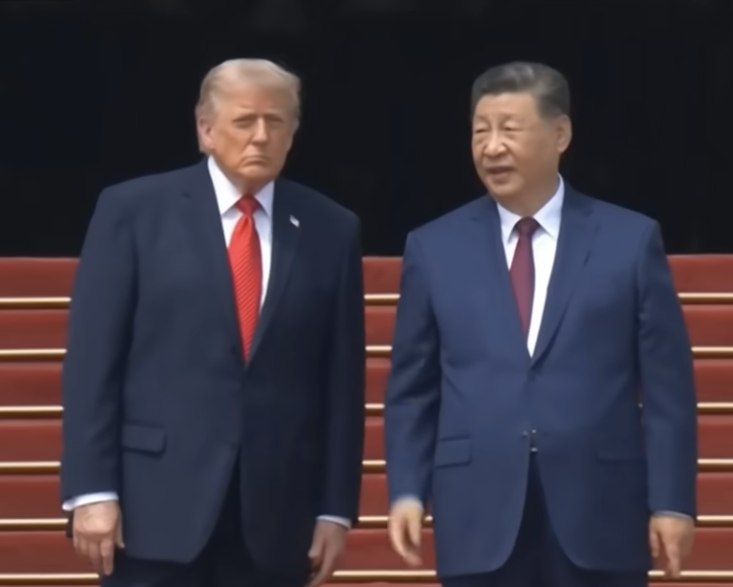
BEIJING — President Donald Trump emerged from two days of intense negotiations with Chinese President Xi Jinping with tangible victories that strengthen America’s economic position, as the United States extracted concrete commitments on energy purchases, Boeing aircraft orders and agricultural exports while holding firm on core strategic issues including Taiwan and technology restrictions.

The high-stakes summit, the first U.S. presidential visit to China in nearly a decade, concluded Friday with Trump declaring the meetings “extremely productive” and securing deliverables that directly benefit American workers, manufacturers and energy producers amid global disruptions caused by the Iran conflict. While both leaders projected warmth and mutual respect, analysts assessing outcomes say Trump achieved more measurable gains without making significant concessions on America’s strategic red lines.

Trump brought a powerful delegation of U.S. business leaders including Elon Musk, Tim Cook and Jensen Huang, leveraging their presence to push for expanded market access and fairer trade practices. The trip yielded commitments from China to significantly increase purchases of U.S. energy, Boeing aircraft and agricultural goods — moves designed to help offset global oil supply concerns and support American jobs.

Key Wins for the United States

White House officials highlighted several concrete outcomes. China agreed to ramp up imports of American liquefied natural gas and other energy products, providing crucial stability for U.S. producers facing volatile global markets. Boeing secured firm commitments for additional aircraft orders, a major boost for American manufacturing and aerospace workers. Agricultural exports also received a significant lift, benefiting Midwest farmers.

Advertisement

On the diplomatic front, both nations reaffirmed that Iran must not develop nuclear weapons and that the Strait of Hormuz must remain open for energy shipments — a critical priority for global markets and U.S. allies. Trump’s team successfully avoided major concessions on Taiwan, with no softening of America’s support for the island’s security despite Xi’s firm public statements on the issue.

Trump used the summit to reinforce America’s technological edge, with U.S. executives pressing successfully for improved regulatory conditions. The meetings also advanced discussions on fentanyl precursor chemicals, addressing a key domestic priority for the Trump administration.

China’s Limited Gains

While Xi hosted Trump with full state honors and emphasized “partnership over rivalry,” Beijing offered mostly incremental steps rather than structural reforms. Chinese state media focused heavily on optics and mutual respect, but analysts note that China conceded more on commercial purchases to secure stability during a period of global uncertainty. Xi’s warning on Taiwan was firm but produced no policy shift from the American side.

Trump’s approach — combining personal diplomacy with business leverage — proved effective. The inclusion of top American CEOs created direct pressure that translated into purchasing commitments, giving the U.S. side measurable economic wins that can be highlighted domestically.

Advertisement

Strong Domestic and International Reaction

In Washington, Republicans hailed the summit as a clear success for American interests, with many praising Trump’s ability to extract concessions while protecting strategic priorities. Business groups welcomed the energy and aircraft deals as immediate boosts for U.S. exporters. Democrats offered measured praise for the energy stability agreements while calling for stronger action on human rights.

Taiwanese officials expressed satisfaction that no major concessions were made on their security. European and Asian allies viewed the outcome as a net positive for global stability, with U.S. leadership helping maintain pressure on key issues like Iran.

Strategic Context and Long-Term Impact

The summit occurred against the backdrop of ongoing U.S.-China competition, but Trump’s team successfully framed the relationship as one of managed rivalry rather than outright confrontation. By securing commercial wins without compromising on technology export controls or Taiwan policy, the administration advanced America’s economic interests while maintaining strategic deterrence.

Analysts note that Trump’s personal rapport with Xi, built over multiple meetings, allowed for more direct and results-oriented discussions than traditional diplomatic channels. The presence of Musk, Cook and Huang amplified American leverage, demonstrating the synergy between U.S. government policy and private-sector strength.

Advertisement

For China, the visit provided valuable stability during a challenging period, but the tangible concessions on purchases and energy suggest Beijing blinked first on immediate economic pressure points. Xi maintained his public stance on Taiwan but failed to extract any softening of U.S. positions.

What Comes Next

Trump returns to Washington with deliverables he can tout as proof of his “America First” approach delivering results. Follow-up negotiations will focus on implementing the new purchase agreements and addressing remaining issues. Xi’s invitation to visit the White House in September keeps dialogue channels open.

The Beijing summit marks a notable chapter in U.S.-China relations, with Trump demonstrating that targeted diplomacy backed by economic leverage can produce favorable outcomes for American interests. While the broader strategic competition continues, this meeting delivered clear edges for the United States on trade, energy security and maintaining firm positions on core national security concerns.

As Air Force One departed Beijing, Trump’s team projected confidence that the agreements reached will strengthen the U.S. economy and global standing. In the ongoing superpower relationship, this round clearly tilted toward American priorities and practical wins. The true test will be in the months ahead as both nations implement what was agreed and prepare for future engagements.

Advertisement
Continue Reading

Business

Aussie stocks down for four of past five weeks

Published

on

Aussie stocks down for four of past five weeks

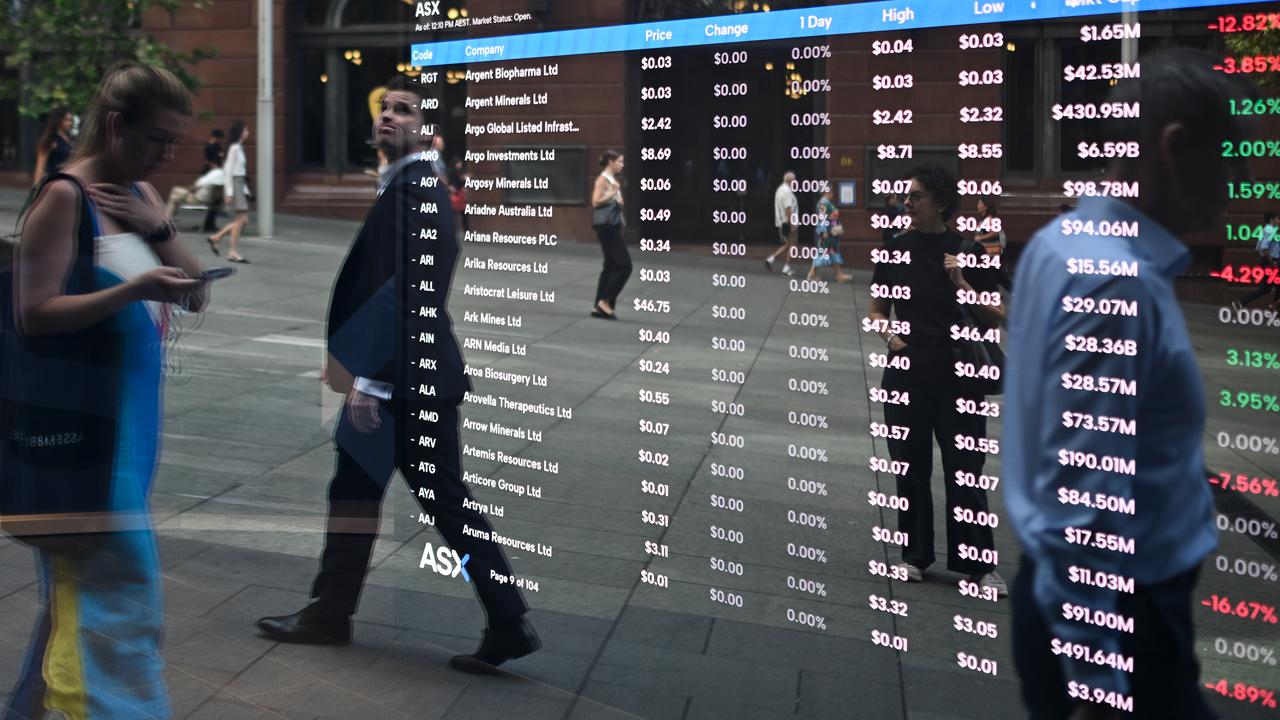
Australia’s share market has fallen for four of the past five weeks, following a storm of profit warnings, earnings disappointments, interest rate hikes and fuel security woes.

Continue Reading

Business

At Close of Business podcast May 15 2026

Published

on

At Close of Business podcast May 15 2026

Claire Tyrrell speaks to Ella Loneragan about the state of major projects in South Perth, as development times ramp up.

Continue Reading

Business

UK borrowing costs rise and pound falls as leadership drama continues

Published

on

UK borrowing costs rise and pound falls as leadership drama continues

“Overall, UK politics is a mess, there are already signs that foreign buyers are ditching the gilt market. If there is a major rout in the pound and/or gilts in the coming days, prospective candidates may need to assess whether now was a wise time to make a move against the PM,” she said.

Continue Reading

Business

Intuitive Machines Set To Launch In The Space Race

Published

on

Intuitive Machines Set To Launch In The Space Race

Intuitive Machines Set To Launch In The Space Race

Continue Reading

Business

Hargreave Hale AIM VCT allots 105,364 shares at 33.55p

Published

on


Hargreave Hale AIM VCT allots 105,364 shares at 33.55p

Continue Reading

Business

Zelenskiy condemns Russia after strike on Kyiv apartment block kills 24

Published

on

Zelenskiy condemns Russia after strike on Kyiv apartment block kills 24


Zelenskiy condemns Russia after strike on Kyiv apartment block kills 24

Continue Reading

Business

Vodafone appoints Olaf Koch as non-executive director

Published

on


Vodafone appoints Olaf Koch as non-executive director

Continue Reading

Business

How China may have made lifelong teetotaler Trump sip alcohol

Published

on

How China may have made lifelong teetotaler Trump sip alcohol
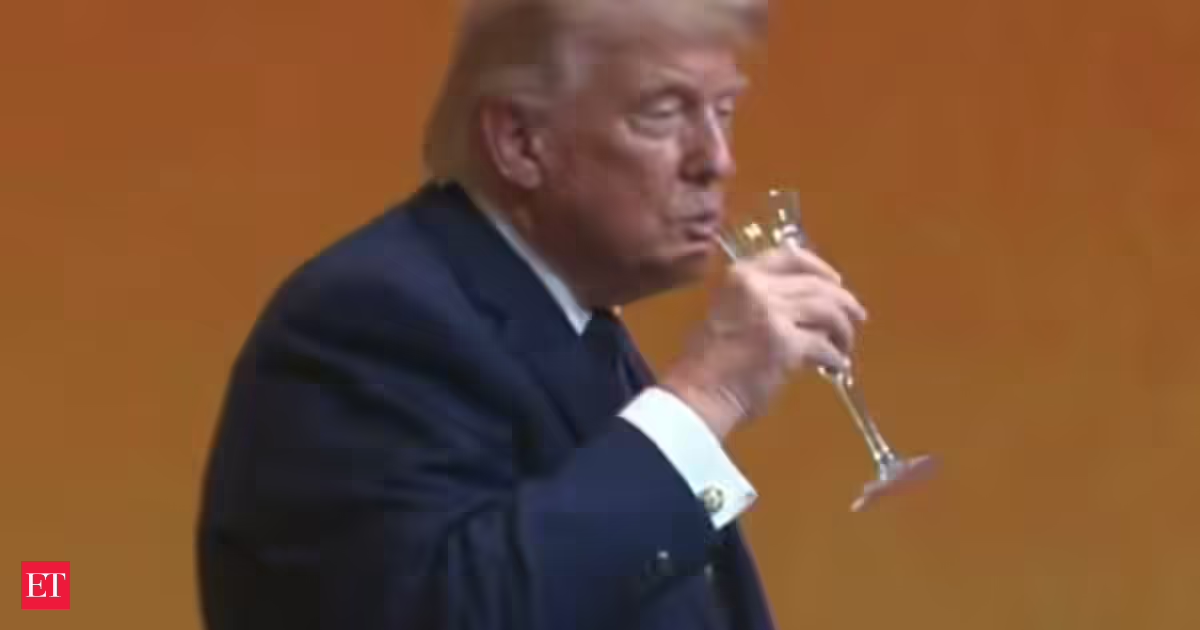
US President Donald Trump, who has long claimed he has never consumed alcohol in his life, may have briefly broken his sobriety during his visit to China. A video from the trip has gone viral online, appearing to show Trump raising a glass of wine during a toast and taking a sip.

“Trump has never had alcohol in his life. China gave him a beverage to toast, and Trump drank it. This is a very subtle, but STRONG statement on who’s really in charge,” claimed one viral social media post.

According to the Asian Business Daily, “During the proceedings, President Trump was seen raising his glass containing the toasting wine and bringing it to his lips, appearing to take a sip. He then handed the glass to a staff member, and cameras caught him seemingly holding the wine in his mouth for a moment before swallowing.”

Trump has repeatedly said he has never consumed alcohol — a rare claim among modern US presidents.

Advertisement

“I’ve never had a drink,” Trump told Fox News after his election victory in 2017.
According to the BBC, Trump’s decision to avoid alcohol stems from the death of his older brother, Freddie Trump, who died at the age of 42 from complications related to alcoholism.
Trump has also reportedly advised his children to stay away from drugs, alcohol and cigarettes.
However, Bruce LeVell, a former Trump adviser and former White House small business advocate, dismissed the viral speculation in a post on X, saying, “It’s not alcohol, and I speak for the President.”

In another post, he added, “President Trump does not drink or do drugs. You want a president like that.”

Trump was on an official visit to China on an invitation from Chinese president Xi Jinping. It was the first visit to China by a US president in nine years.

What happened during Trump’s China visit

Trump departed China on Friday while highlighting several business agreements reached during the trip, even as Beijing warned Washington against mishandling the sensitive Taiwan issue and criticised the Iran war.

“We’ve settled a lot of different problems that other people wouldn’t have been able to solve,” Trump said after meeting Chinese President Xi Jinping in Beijing on the second day of talks.

Advertisement

The discussions reportedly covered the Iran conflict, Taiwan, trade ties and other major geopolitical issues. While Xi did not publicly comment on his talks with Trump regarding Iran, China’s foreign ministry later issued a strong statement expressing frustration over the conflict.

Continue Reading

Business

3M: Iran Conflict And Inflationary Pressure Could Derail The Recovery (NYSE:MMM)

Published

on

3M: Iran Conflict And Inflationary Pressure Could Derail The Recovery (NYSE:MMM)

This article was written by

I’ve been researching companies in-depth for over a decade, from commodities like oil, natural gas, gold and copper to tech like Google or Nokia and many emerging market stocks, which I believe could help me provide useful content for readers. After writing my own blog for about 3 years, I decided to switch to a value investing-focused YouTube channel, where I researched hundreds of different companies so far. I would say my favorite type of company to cover are metals and mining stocks, but I am comfortable with several other industries, such as consumer discretionary/staples, REITs and utilities.

Analyst’s Disclosure: I/we have no stock, option or similar derivative position in any of the companies mentioned, and no plans to initiate any such positions within the next 72 hours. I wrote this article myself, and it expresses my own opinions. I am not receiving compensation for it (other than from Seeking Alpha). I have no business relationship with any company whose stock is mentioned in this article.

Seeking Alpha’s Disclosure: Past performance is no guarantee of future results. No recommendation or advice is being given as to whether any investment is suitable for a particular investor. Any views or opinions expressed above may not reflect those of Seeking Alpha as a whole. Seeking Alpha is not a licensed securities dealer, broker or US investment adviser or investment bank. Our analysts are third party authors that include both professional investors and individual investors who may not be licensed or certified by any institute or regulatory body.

Advertisement
Continue Reading

Trending

Copyright © 2025