

Business
SUV-led demand keeps PV segment on strong growth path: Subhash Gate


Recent monthly sales data underscores the resilience of the PV segment. Leading automakers such as Mahindra & Mahindra, Maruti Suzuki, and Tata Motors have reported robust growth, with SUVs continuing to dominate demand across both urban and rural markets. However, not all players are riding the same wave. Hyundai, for instance, has posted a marginal decline in domestic volumes over the past year, hinting at intensifying competition and shifting consumer preferences.
Offering his perspective on the sector, Subhash Gate from Choice Institutional Equities noted, “So, if you are talking about the PV space, like we already know that all the companies are coming with very good numbers. Like, if you are talking about Mahindra & Mahindra, Maruti, Tata Motors, three companies have come up with very good numbers in the month. We also expect same thing during the month.” He added that SUV-led growth remains the key driver, stating, “We expect that all the PV segment which is driven by SUVs will definitely perform very well in this particular month.”
The March quarter performance has also exceeded expectations. Gate pointed out, “If you are talking about in fourth quarter, the numbers are coming in 21.1% overall if you are talking about. So, as per our expectation numbers have come up with very good in this particular quarter and all the numbers are in line with our estimate.” He further emphasized that both rural and urban demand trends are supporting the growth trajectory, with PV volumes expected to grow in the range of 15–20%.
CV Segment Faces Temporary Speed Bump

In contrast, the commercial vehicle segment is witnessing signs of a near-term slowdown. While the longer-term outlook remains intact due to a favorable replacement cycle, short-term disruptions are becoming evident.
Gate explained, “So if you are talking about commercial vehicles, even in our report also we explained that there is a replacement cycle is going on because if we talk about previously there were two seasons we saw the replacement cycle which is 2009 to 2012, after that 2014 to 2019 and now 2026 to 2028 we expect this replacement cycle will boom, the commercial vehicle segment.”
However, caution among buyers is rising. “But what happened in the commercial vehicle segment is that like now people are more cautious about the logistic issues. So, because of that people are afraid to buy commercial vehicles,” he said.
Despite this, some pockets remain resilient. Gate highlighted that “In terms of M&HCV trucks as well as in terms of LCV, like 10 to 11 percentage as per our expectation the numbers are pretty good.” Yet, weakness in the bus segment has dragged overall performance, impacting companies like Ashok Leyland and Eicher Motors.
He also flagged external risks, noting, “We expect that because of supply chain disruption and logistic issues, commercial vehicles numbers may get impacted but will definitely if war situation may get prolonged, it will definitely be impacted for next two to three months.” Still, he maintained confidence in the structural upcycle, adding that the replacement cycle is expected to continue until 2028.
Supply Risks and Cost Pressures Loom
Beyond demand trends, the industry faces potential headwinds from rising input costs and supply constraints, particularly related to gas availability and pricing.
Gate observed, “So, if you are talking about like recently government has hiked the price. So, it will definitely impact the demand of the overall auto industry.” He also warned of broader implications, stating that higher freight, insurance, and export-related costs could weigh on the sector, especially since exports account for 15–20% of total sales.
On the production front, automakers have so far avoided disruptions, but risks remain. “Right now we are not facing till 31st March we are not facing any kind of production disruption, but as soon as these gas related, CNG related issues will persist longer time, it will definitely impact auto ancillaries, then it will directly impact production of these particular companies,” he said.
Capacity utilization is another concern, particularly for market leader Maruti Suzuki. “Maruti Suzuki already work on full capacity of 90 to 100 percentage… if they get hampered for this particular production disruption, it will definitely impact on their volumes going ahead,” Gate cautioned.
Tractor Segment: Mixed Signals Ahead
The tractor segment, often seen as a proxy for rural health, is also showing early signs of stress despite a strong base.
Gate explained, “Right now if you see that even most of the managements had told in the conference call that tractor industry may get some kind of slip in upcoming months or upcoming quarters because of the rabi and all these kharif picks are not that much efficient in this particular season.”
While March numbers remain healthy on a year-on-year basis, underlying risks tied to agricultural output and fertility conditions could lead to volatility in the coming quarters.
The Road Ahead
The Indian auto sector remains fundamentally strong, supported by SUV demand, rural recovery, and an ongoing CV replacement cycle. However, near-term uncertainties—from geopolitical tensions to supply chain disruptions and input cost pressures—are likely to create pockets of volatility.
For now, the growth engine is firmly in the hands of passenger vehicles. Whether commercial vehicles and tractors can regain momentum will depend largely on how quickly global and domestic disruptions ease.



Exclusive-From lottery draws to fiscal spending, China broadens digital yuan footprint
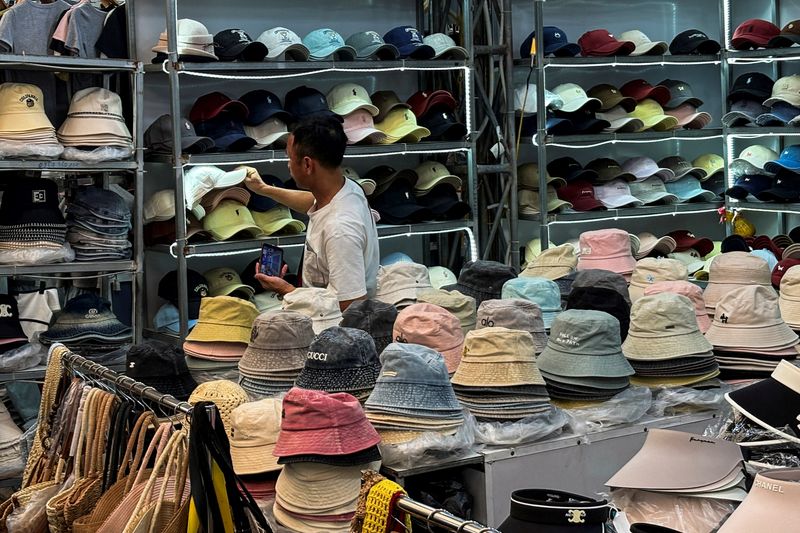

US investigates Vietnam’s intellectual property practices

Italian Inflation Inches Up In May On Rising Energy Pressures

New York — Reports of disruptions with Apple Pay spread rapidly on Friday evening, May 30, 2026, as some users encountered issues completing transactions and processing payments through the popular mobile service.
The problems surfaced around 7:24 p.m. Eastern Time, according to tracking data from outage monitoring sites. Users took to social media and community forums to share experiences, with complaints ranging from failed in-store tap-to-pay attempts to delays in online purchases and person-to-person transfers.
One user described sending money to a family member that appeared in their own account but did not show up on the recipient’s side, highlighting frustration during evening hours when alternative banking options are limited.
Scope of the Reported Disruptions
While Apple’s official system status page continued to list Apple Pay as available, user reports on platforms like DownDetector and community discussions indicated intermittent problems for a portion of customers. Issues appeared concentrated in the United States but drew attention from international users as well.
Affected services included contactless payments at retailers, in-app purchases, and Apple Cash transfers via iMessage or the Wallet app. Some transactions showed as pending or completed on one end but failed to reflect on the other, creating confusion over fund locations.
Apple has not issued a formal statement on the matter as of late Friday. Similar intermittent glitches have occurred in the past, often resolving within hours without long-term impact on user accounts.
User Experiences and Reactions
Social media quickly amplified the reports. The account @status_is_down, which tracks service outages, posted about the situation, asking users if they were affected and using hashtags #ApplePay and #ApplePayDown. The post referenced community discussions linking the issue to broader payment processing challenges.
Complaints highlighted timing frustrations, with some users needing funds for weekend expenses ahead of the Memorial Day holiday period. Banking hours limitations compounded concerns for those relying on digital wallets for immediate transfers.
Despite the issues, many customers reported that traditional card payments and alternative digital wallets continued functioning normally, allowing workarounds for essential transactions.
Technical Context of Apple Pay
Apple Pay relies on a combination of device-based tokenization, secure element technology in iPhones and Apple Watches, and backend processing through partnered banks and payment networks. This architecture generally provides high reliability and security, but occasional server-side or network-related hiccups can affect availability.
The service powers billions of transactions annually and has become a standard for contactless payments globally. Disruptions, though uncommon, tend to generate significant visibility due to the large user base and integration across retail, transit and online platforms.
Previous incidents, such as a mid-May 2026 Apple Cash outage, were resolved relatively quickly after Apple acknowledged the problem on its system status dashboard. In those cases, affected users were advised to monitor accounts and use backup payment methods.
Broader Implications for Digital Payments
The May 30 reports underscore the growing dependence on digital wallets in everyday commerce. As consumers shift away from physical cards, even short outages can disrupt routines, particularly for those without immediate cash or alternative cards on hand.
Industry analysts note that payment systems operate within complex ecosystems involving banks, card networks like Visa and Mastercard, and technology providers. A glitch on one side can create ripple effects across linked services.
Consumer protection remains strong, with funds in Apple Cash typically FDIC-insured through partner banks. Users experiencing missing transfers are encouraged to contact Apple Support or their linked financial institutions for resolution.
Advice for Affected Users
Those facing problems with Apple Pay on May 30 can try several troubleshooting steps while awaiting full resolution:
- Restart the device and ensure a stable internet connection.
- Check for iOS updates and verify cards in the Wallet app remain properly added.
- Remove and re-add affected cards if transactions consistently fail.
- Use physical cards or other payment apps as temporary alternatives.
Monitoring Apple’s official system status page provides the most direct updates on service health. For transfer-related issues, documenting transaction details helps when reaching support.
Looking Ahead
Digital payment reliability has improved significantly over recent years, but incidents like this serve as reminders of the importance of having backup options. Apple Pay’s overall track record remains strong, with rare widespread outages compared to its scale of operations.
As of Saturday morning, May 31, many users reported services returning to normal, though some continued experiencing residual delays. The episode highlights ongoing challenges in maintaining seamless performance across global financial technology infrastructure.
The incident also fuels broader conversations about digital resilience, redundancy in payment systems, and user preparedness for occasional service interruptions in an increasingly cashless society.
For the latest developments, users should check official channels and outage trackers. Most disruptions of this nature prove temporary, with accounts and funds remaining secure throughout.
Business
LIC, HAL, among 10 stocks that saw sharpest decrease in government shareholding in Q4. Check list

Foreign selling, geopolitical tensions and market volatility eroded the value of the Government of India’s holdings in key listed companies during the March 2026 quarter, with LIC, IRFC and HAL leading the sharp declines.

Ignacio Rodriguera does not follow a traditional career path. He built his life through hands-on work, real-world learning, and deep ties to his community. Based in Los Angeles, he works as an HVAC and electrical technician while also organizing independent punk shows and festivals.
His definition of success reflects that journey.
“Success isn’t just a single outcome,” he says. “It’s consistency, growth, and impact over time.”
That mindset shapes everything he does.
Early Life in East Los Angeles
Rodriguera was born at Lincoln Hospital and raised in East Los Angeles. He grew up with strong cultural roots tied to Culiacán, Sinaloa, Mexico. His early environment played a major role in shaping his values.
He describes that influence simply: loyalty, independence, and looking out for others.
At the same time, he was drawn to the local punk scene. That world introduced him to people who were building something on their own terms. It left a lasting impact.
Learning Through Experience, Not Theory
Rodriguera completed high school but credits most of his education to real-life experience. He learned by working, solving problems, and building connections.
“I’ve built everything through experience,” he says. “Learning as I go and growing from it.”
This approach carried into both sides of his career. On one side, he works in HVAC and electrical systems. On the other, he runs music events across Los Angeles.
Both require practical thinking and quick decisions.
What Does an HVAC Technician Do?
Rodriguera’s technical work focuses on helping lower-income families. He works through a program that ensures homes have safe heating, cooling, and electrical systems.
This work is direct and impact-driven. It is not abstract.
“Through my work, I’m able to directly support families in need,” he says.
In a city where many struggle with housing conditions, this role carries real weight. It also reinforces his connection to the community he grew up in.
Building a Career in Music Promotion
Alongside his trade work, Rodriguera built a second career in music. He organizes independent punk shows and festivals across Los Angeles.
These are not large corporate events. They are grassroots and community-driven.
Success in this space depends on trust and execution.
“You have to be someone people can rely on,” he explains. “Artists, teams, and partners need to know you’ll follow through.”
That reliability has helped him grow his reputation over time.
How He Handles Setbacks in Live Events
Live events come with risk. Plans change fast. Problems happen in real time.
Rodriguera recalls one major setback where an event faced last-minute changes. The situation created pressure and uncertainty.
Instead of reacting emotionally, he focused on solutions.
“I reworked logistics and strengthened communication,” he says. “I made decisions based on long-term integrity.”
That experience changed how he operates. It pushed him to improve his systems and be more selective with partnerships.
“It made me sharper and more disciplined,” he adds.
Leadership in Grassroots Communities
Rodriguera does not describe himself as a traditional leader. But his actions reflect leadership.
He builds teams. He organizes people. He delivers outcomes.
His leadership style is rooted in consistency and accountability.
“Not every situation will go as planned,” he says. “How you handle those moments defines your reputation.”
That mindset is critical in both trades and events. In both fields, people depend on execution, not just ideas.
Balancing Work, Family, and Long-Term Goals
Rodriguera puts strong emphasis on balance. He believes success is not just about professional wins.
“Personal and professional success have to work together,” he says.
He stays organized with short-term tasks and long-term goals. He breaks projects into smaller steps and tracks progress over time.
“I focus on what moves the project forward the most,” he explains.
Family also plays a key role. It keeps him grounded and focused.
Staying Resilient in a Demanding Career
Both of Rodriguera’s careers require resilience. There are setbacks, pressure, and uncertainty.
His approach is simple and direct.
“When things get heavy, I step back and break it down,” he says. “Even small moves keep you going.”
He does not dwell on self-doubt. He focuses on action.
This mindset allows him to keep moving forward, even during difficult periods.
Giving Back Through Work and Events
Community impact is a consistent theme in Rodriguera’s work.
Through his technical role, he helps families maintain safe living conditions. Through his events, he supports local vendors and artists.
He is also preparing for a major milestone. His final LA Punk Invasion festival will focus on giving back.
“My goal is to donate all remaining proceeds after expenses back into the community,” he says.
This reflects a full-circle moment. The same community that shaped him now benefits from his work.
A Career Built on Consistency and Trust
Rodriguera’s story is not about rapid growth or overnight success. It is about steady progress and long-term commitment.
He measures success by more than just outcomes.
“I look at whether the project stayed true to the vision,” he says. “And whether it made an impact.”
That focus on integrity and execution defines his career.
In both trades and music, he operates with the same principles: show up, follow through, and keep building.
That consistency is what sets him apart.

Key Macro Charts Update: Still Looking Good

Tucson, Ariz. — Nancy Guthrie, the 84-year-old mother of NBC “Today” co-host Savannah Guthrie, remains missing nearly four months after she disappeared from her Catalina Foothills home, with investigators offering few public updates and no suspects identified as of late May 2026.
The house on the quiet suburban street now stands largely silent. Fresh and artificial yellow flowers, signs and photos that once filled the front yard have mostly been removed, leaving only fabric flowers, scattered art pieces and a few remaining signs. The driveway and path to the front door are roped off with No Trespassing notices clearly posted.
Guthrie was last seen by family members on Jan. 31, 2026. She failed to appear the next morning at a friend’s home for a virtual church service, prompting concern. Authorities believe she was abducted from her residence sometime between late Jan. 31 and early Feb. 1. Door camera footage reportedly showed a masked individual at the front door around the time of her disappearance.
Ongoing Investigation and Limited Updates
The Pima County Sheriff’s Department and the FBI continue to describe the case as active and ongoing. Tens of thousands of tips have been received, but public information has been sparse in recent weeks. Sheriff Chris Nanos told local media in mid-May that he believes an arrest will eventually be made.
“The Pima County Sheriff’s Department remains fully committed to the investigation into Nancy Guthrie’s disappearance,” a department spokesperson said in an earlier statement. “This is an active and ongoing investigation.”
FBI Director Kash Patel publicly criticized the sheriff’s office in early May during an appearance on Sean Hannity’s podcast. Patel alleged local authorities initially kept the FBI out of the investigation for four days.
“For four days we were kept out of the investigation,” Patel said.
The sheriff’s office pushed back, stating that coordination with the FBI began immediately. A member of an FBI task force was notified and present at the scene the night Guthrie was reported missing, according to department spokespeople.
True Crime Streamers Draw Neighborhood Concern
Despite the lack of new developments, true crime content creators continue visiting the property, drawing attention and occasional law enforcement response. On May 18, YouTuber Jonathan Lee Riches and other streamers conducted a multi-hour “reenactment” outside the home that extended into the early morning hours.
Deputies patrolled the area throughout the night. Fans stopped by to chat, share theories and donate items including cookies, bug spray and battery packs. One visitor reportedly received a citation for illegal parking.
A deputy was heard discussing resident complaints with Riches, noting both “frivolous” calls and legitimate concerns. The department has maintained an enhanced law enforcement presence in the neighborhood due to uncertainty over who might appear at the property.
Neighbors have expressed frustration over the repeated visits disrupting the normally quiet area. The sheriff’s office has declined further comment on the streamer activity.
Broader Context and Challenges
The case has drawn national interest because of Savannah Guthrie’s prominent role in morning television. The family has offered a substantial reward for information leading to Nancy Guthrie’s recovery. The harsh desert terrain surrounding the Catalina Foothills has complicated searches, with experts noting how quickly evidence or remains could be obscured in the environment.
Recent discovery of prehistoric skeletal remains several miles from the home briefly generated attention but was quickly ruled unrelated to the investigation. The bones, estimated to be several hundred to 1,000 years old, were associated with Native American artifacts and transferred to the Tohono O’odham Nation.
Sheriff Nanos has faced separate scrutiny from county supervisors over unrelated matters involving his work history, though those issues are distinct from the Guthrie investigation.
Community and Media Impact
In the early weeks after the disappearance, the street saw a heavy presence of reporters and streamers. That daily presence has largely subsided, but occasional visits continue. The case has sparked widespread online discussion, with amateur sleuths and content creators analyzing available footage and speculating on possible motives.
Law enforcement has emphasized the importance of verified tips over public speculation. The investigation involves a dedicated task force combining local and federal resources focused on evidence analysis, including DNA and digital forensics.
As the four-month mark approaches, the empty house with its roped-off entrance serves as a somber reminder of the unresolved case. Family members and investigators continue to appeal for public assistance, hoping new information will break the long silence.
The Pima County Sheriff’s Department urges anyone with information to contact authorities. The FBI also maintains an open line for tips in the suspected abduction.
No timeline has been given for further public updates, as investigators work to balance transparency with the need to protect the integrity of the active case. For now, the quiet Tucson neighborhood waits amid fading memorials and persistent questions surrounding Nancy Guthrie’s disappearance.
Business
Prince Harry Keen on Balmoral Summer Visit with Children to See King Charles as Meghan Hesitates

London — is reportedly eager to bring his children, Archie and Lilibet, to Balmoral Castle this summer to create memories with their grandfather, King Charles, drawing on his own fond childhood experiences at the Scottish royal estate, according to multiple media reports on May 30, 2026.
However, sources close to the couple indicate that his wife, Meghan Markle, remains reluctant to return to Britain, making a family trip to the Highlands unlikely in the near term. The couple’s summer plans appear divided as their children prepare to break from school next month, highlighting ongoing challenges in bridging the transatlantic family divide.
Harry, 39, has long spoken warmly of Balmoral, describing it in his 2023 memoir “Spare” as a place of happiness and outdoor adventure during his youth. The estate in the Scottish Highlands served as the royal family’s traditional summer retreat, where he recalled spending time fishing, shooting and exploring the hills.
In the book, Harry wrote fondly of the location: “To me, Balmoral was always simply Paradise.” He described family life there as centered on the outdoors, noting that his grandmother, Queen Elizabeth II, insisted on daily fresh air. The prince also reminisced about simple meals like fish fingers and cottage pies shared with his brother, Prince William.
Childhood Memories and Family Healing Hopes
Harry’s desire to return stems from a wish for his children to experience the same environment and build relationships with their British relatives, particularly King Charles, whose health has been a point of public concern. Insiders told British media outlets that Harry views Balmoral as a potential setting for reconciliation and family healing.
One source was quoted as saying Harry “genuinely believes Balmoral could be the place where things finally start healing” and that he feels “time is precious” for his children to spend with their grandfather. Reports suggest Harry wants Archie and Lilibet to see the royal residence as part of their heritage.
Royal commentator Richard Fitzwilliams addressed the reported plans, stating it is “only natural to want to share it with your nearest and dearest” when one has positive childhood memories of a place. He noted that a summer visit could align with King Charles being in residence from mid-August, though it would likely not coincide with Harry’s expected July trip to Britain for Invictus Games events.
Meghan’s Reported Reluctance
Sources indicate Meghan does not share the same enthusiasm for a Balmoral trip. The Duchess of Sussex is said to prefer alternative summer destinations, including time at the couple’s recently completed villa in Portugal. Fitzwilliams observed that Balmoral’s traditional activities, such as hunting, deer stalking and its strong outdoor focus, are unlikely to appeal to her.
He added that the estate “is not everyone’s idea of paradise,” pointing to the late Princess Diana’s well-documented discomfort with the location as a historical parallel. Meghan has not visited Britain since the couple’s brief return for events in 2023, and reports suggest she has little interest in future extended stays.
The couple’s summer schedule remains fluid. With Archie and Lilibet’s school year ending soon, decisions on travel and family time are under discussion. Harry has maintained some contact with his father, but the broader family rift that began after the couple stepped back from royal duties in 2020 continues to influence arrangements.
Background on the Royal Rift
The Duke and Duchess of Sussex have lived primarily in California since 2020, building lives centered on media projects, charitable work and raising their children away from royal protocols. Harry’s memoir and the couple’s Netflix series and public interviews detailed grievances with royal life, intensifying tensions with the family.
Despite the distance, Harry has expressed a desire to mend relationships. King Charles has publicly voiced hope for reconciliation, though practical challenges remain, including security arrangements and scheduling around royal commitments.
Balmoral holds deep significance for the royal family. It was a favored retreat for Queen Elizabeth II, who spent significant portions of her summers there. King Charles has continued the tradition, using the estate for both private family time and official duties.
Current Family Dynamics
Harry’s reported urgency around the visit reflects concerns about his father’s health following King Charles’s cancer diagnosis and treatment. Reports suggest Harry wants his children to form memories with their grandfather while time allows. However, logistical and personal barriers, particularly Meghan’s stance, complicate those hopes.
The couple has maintained a busy schedule in 2026, with Harry focusing on Invictus Games initiatives and both pursuing various philanthropic and commercial endeavors. Their Portugal property represents a European base that may offer a more comfortable environment for family holidays this summer.
Royal observers note that any Balmoral visit would require careful coordination. Past attempts at family gatherings have faced difficulties, and public interest remains high whenever Harry returns to Britain. His July trip for the Invictus Games “One Year to Go” event in Birmingham is expected to be a focused professional visit rather than an extended family holiday.
Public and Media Interest
The story has generated significant commentary in British media, with speculation about possible outcomes and their implications for royal relations. Some analysts view Harry’s interest in Balmoral as a positive signal toward reconciliation, while others see the reported differences with Meghan as further evidence of diverging priorities.
The family divide has been a persistent narrative since 2020. While occasional meetings have occurred, including limited interactions with King Charles, full reconciliation remains elusive. Security concerns, media scrutiny and differing lifestyles continue to present obstacles.
As summer approaches, the coming weeks may clarify the couple’s plans. Whether Harry travels alone with the children or the family opts for a different destination will likely draw close attention from royal watchers. For now, the prince’s nostalgic pull toward Balmoral contrasts with the practical realities shaping the family’s decisions.
The situation underscores the complex balance Harry navigates between his royal heritage, fatherhood and life in California. King Charles is expected to spend much of the summer at Balmoral as per longstanding tradition, providing a potential window for visits if arrangements can be made.
As of May 30, 2026, no official confirmation has come from Buckingham Palace or the Sussexes’ representatives regarding specific summer travel plans. The couple continues to prioritize their children’s privacy and normalcy amid ongoing public curiosity about their relationship with the royal family.

Christian Horner, the British motorsport executive who steered Red Bull Racing through two decades of Formula 1 dominance, has been engaged by Oakley Capital as an advisor on the firm’s investments in premium sports.
The move marks his first substantive role since departing the Milton Keynes constructor earlier this year.
The London-headquartered private equity house, founded by serial entrepreneur Peter Dubens, said Horner will work alongside its dealmakers to identify and unlock opportunities in what has become one of the most contested corners of European private markets. Sports assets, long viewed as trophy holdings, are increasingly being repositioned by sophisticated investors as resilient, cash-generative businesses with global growth profiles, as institutional capital floods into the sector.
For Horner, 52, the appointment caps a remarkable commercial chapter. Between 2005 and 2025 he led Red Bull’s Formula 1 operation to eight Drivers’ Championships, six Constructors’ titles and 124 race victories, while overseeing the launch of Red Bull Powertrains and Red Bull Advanced Technologies. Under his leadership, the team generated more than $3 billion in commercial revenue through global partnerships and sponsorships, a track record that few in motorsport, or indeed wider sports business, can rival.
Peter Dubens, Founder and Managing Partner of Oakley Capital, said: “Christian Horner is widely recognised as a highly successful leader in global sport. His track record, expertise and commercial instinct will be invaluable as we continue to scale our sports portfolio. We are increasingly drawn to businesses in this space that share the hallmarks of a typical Oakley investment: founder-led, high-growth and supported by resilient revenues, or under-commercialised ‘scarce’ assets with significant untapped potential. We look forward to working with Christian in order to unlock these opportunities.”
Horner added: “Sports businesses are benefitting from growing global audiences and participation rates as more people embrace healthier, active lifestyles. I have known and respected Peter and the Oakley team for many years and have always admired their approach to building ambitious, founder-led businesses. Oakley Capital has established a strong reputation across the sports and consumer landscape and I look forward to working together in the future and sharing my experience to help support the next generation of standout sports businesses.”
The hire fits a broader pattern in the UK mid-market, where private equity houses have been doubling down on co-investments and bolt-on strategies to navigate a more discerning fundraising environment. Sports, alongside consumer health and digitally native brands, has emerged as a defensive growth story, with global broadcasting rights, participation-led categories and premium consumer products commanding investor appetite that has so far defied broader macro headwinds.
Oakley’s existing sports portfolio gives Horner a substantive platform from which to operate. The firm is invested in Athena Racing, now rebranded GB1, the ‘Challenger of Record’ for the 38th America’s Cup; NOX, the high-performance padel racket brand that has become a global benchmark in the world’s fastest-growing racket sport; Vice Golf, the digitally-native German golf brand disrupting traditional equipment retail; and North Sails, the storied marine sports business that remains a leader in performance sailmaking.
Industry observers will read the appointment as a signal that Oakley intends to accelerate dealmaking in the sector at a moment when valuations for premium sports assets are being stress-tested. For Horner, whose contacts span team owners, rights-holders, sponsors and governing bodies, the brief offers a route back into the commercial heart of the industry without the operational burden of running a team. Specialist outlet Sportcal noted that the move places Horner at the centre of Oakley’s sports partnerships strategy, reflecting how senior executives are increasingly migrating into advisory roles at private equity firms as the asset class matures.
For seasoned readers of UK private markets, the message is unambiguous: the smart money is treating sport as an industry, not a hobby, and Oakley wants a seat at the table when the next generation of category-defining businesses changes hands. Those keen to understand the mechanics underpinning these deals can revisit Business Matters’ guide to investing in private equity like an insider.

Jamie Young
Jamie is Senior Reporter at Business Matters, bringing over a decade of experience in UK SME business reporting.
Jamie holds a degree in Business Administration and regularly participates in industry conferences and workshops.
When not reporting on the latest business developments, Jamie is passionate about mentoring up-and-coming journalists and entrepreneurs to inspire the next generation of business leaders.

Tewinbury Farm Hotel launches fitness and wellbeing offering

What Those Dots Under The Icons On Your MacBook Dock Are For

QUANTO devi GUADAGNARE per COMPRARE una FIAT PANDINA? #money #cars #fiat #finance #salary

Steven Gerrard disagrees with Gary Neville over ‘shock’ Chelsea and Arsenal claim | Football

US brings back mandatory military draft registration

Register Renaming | Hackaday
QUANTO devi GUADAGNARE per COMPRARE una FIAT PANDINA? #money #cars #fiat #finance #salary

KEVIN WARSH PAPER ON XRP LIQUIDITY! – MORE DTCC & RIPPLE CONNECTIONS! – BRAD SHERMAN ATTACKS CRYPTO!

He’s so f*cked (I secretly brought in his wife) | Financial Audit
-

 Business5 days ago
NYT Strands Answers May 24 2026 Revealed for Puzzle No. 812 Theme Summer Essentials
-

 Politics5 days ago
Bridgerton Season 5: Cast, Release Date And Everything We Know So Far
-

 NewsBeat3 days ago
Israel says it has killed new Hamas military leader in Gaza City airstrikes
-

 Business3 days ago
Selena Gomez Reportedly Upset Over Benny Blanco’s Comments on Her ‘Terrible’ Diet
-

 Crypto World7 days ago
Robinhood crypto COO Tanya Denisova exits
-
 Crypto World3 days ago
Micron Crosses $1 Trillion Market Cap as AI Demand Reshapes Memory Sector
-

 Tech5 days ago
Microsoft’s quiet Claude Code retreat and the real cost of enterprise AI
-

 Business5 days ago
BTS Sells Out Four Las Vegas Shows at Allegiant Stadium for ARIRANG World Tour
-

 Tech1 day ago
Waymo dominates autonomous vehicle registrations as Tesla trails behind
-
Tech3 days ago
The Samsung pay deal is the moment Korean unions changed register
-
 Tech4 days ago
China assigns ID codes to 28,000+ humanoid robots
-

 Tech3 days ago
Millions of AI agents imperiled by critical vulnerability in open source package
-
Crypto World5 days ago
Brian Armstrong Outlines Crypto Vision for the Future Financial System
-

 Tech5 days ago
Westone Audio and Etymotic Acquired by Fidelity Collective in Major IEM Market Move
-
Crypto World3 days ago
SpaceX’s $2 Trillion IPO: Why Tech Giants Nvidia (NVDA), Apple (AAPL), and Microsoft (MSFT) May Face Pressure
-
 Crypto World5 days ago
Nvidia (NVDA) CEO Calls on Super Micro to Strengthen Export Controls Amid Smuggling Probe
-

 Tech3 days ago
NASA taps Blue Origin to deliver lunar rovers for Moon Base initiative
-
 Entertainment4 days ago
‘Breaking Bad’ Star’s Easy-to-Binge 6-Part Crime Series Spin-Off Is Finally Heading to Free Streaming
-

 Crypto World3 days ago
Spain blocks prediction markets Polymarket Kalshi
-
 Entertainment4 days ago
Taylor Swift Fans Label Travis Kelce’s Beer-Chugging A ‘Red Flag
You must be logged in to post a comment Login