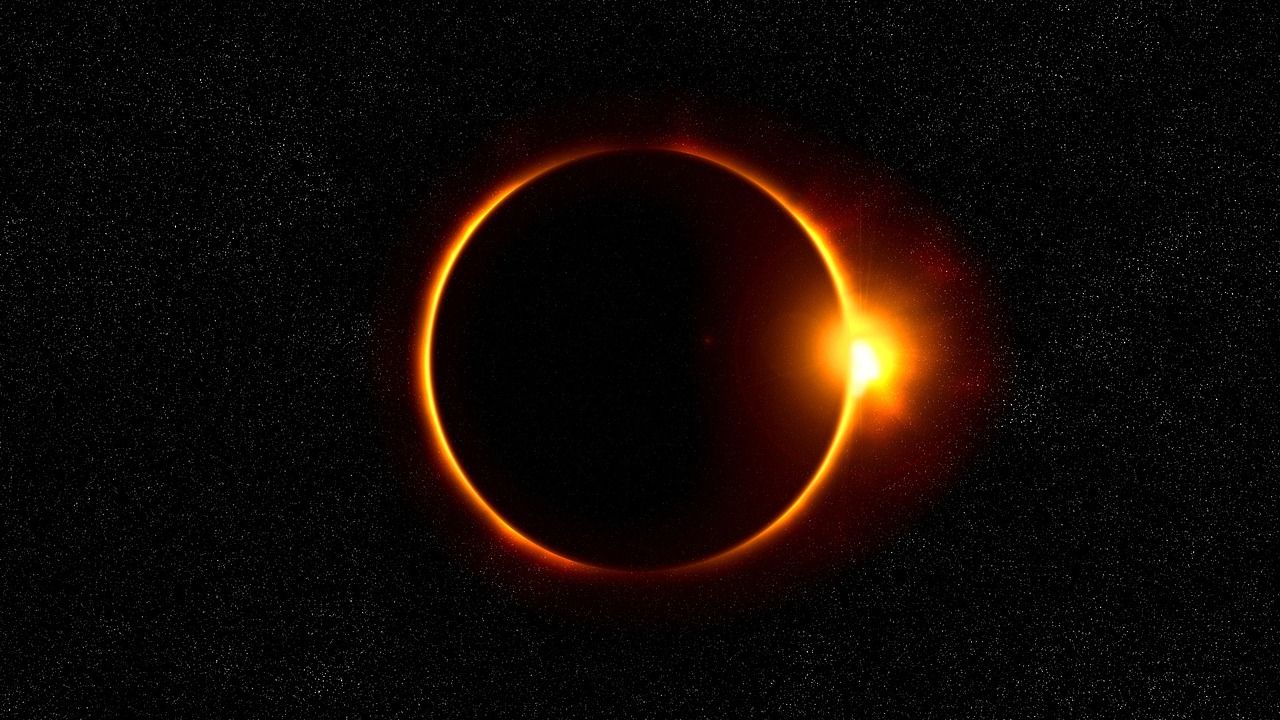
A total solar eclipse will sweep across the Northern Hemisphere on Wednesday, Aug. 12, marking the first total eclipse visible from mainland Europe since 1999 and offering millions of people across multiple continents a chance to witness the moon completely block the sun.
The path of totality, the narrow band of Earth’s surface where the moon fully covers the sun, stretches roughly 182 miles wide and traces an unusual route that arcs up and over the North Pole before sweeping down across the North Atlantic. Only skywatchers positioned within that narrow path will experience true totality, when day briefly turns to twilight and the sun’s outer atmosphere, or corona, becomes visible to the naked eye. A much broader surrounding region will instead see a partial eclipse, in which the moon takes a visible “bite” out of the sun without fully covering it.
Russia
The eclipse begins over the remote Taymyr Peninsula in Siberian Russia, an uninhabited stretch of Arctic tundra. Because the event occurs above the Arctic Circle during summer, when the sun never fully sets, totality technically begins at the unusual local time of 11:59 p.m. The path quickly exits Russian territory after this initial landfall, looping over the North Pole before continuing toward Greenland.
Greenland
After crossing the Arctic Ocean, the path of totality drops onto the remote, frozen terrain of eastern Greenland. This portion of the eclipse’s path passes through dramatic, largely uninhabited Arctic landscapes, offering a strikingly different viewing experience compared with the more accessible locations later in the path. Skywatchers traveling to Greenland for the eclipse will see totality occurring relatively high in the sky, set against the island’s stark icecap scenery.
Iceland
Iceland represents one of the two most popular and accessible destinations along the entire path of totality, alongside Spain. The moon’s shadow first makes landfall in Iceland at the Straumnes Lighthouse in the Westfjords region at 17:43:28 UT, with totality lasting roughly 1 minute 26 seconds at that specific point. The shadow then races south across the country at speeds of roughly 2,110 miles per hour, crossing the Snæfellsnes Peninsula before passing directly over the capital, Reykjavik, and continuing across the Reykjanes Peninsula. The shadow’s final exit point from mainland Iceland comes at the Reykjanestá Lighthouse at 17:50:07 UT, meaning the total duration of totality across the country spans roughly six minutes and 48 seconds from first landfall to final departure. Notably, this will be the first total eclipse visible from Iceland since June 30, 1954, and the first visible specifically from Reykjavik since 1433, underscoring the rarity of the event for residents there. The point of maximum eclipse duration overall, 2 minutes 18 seconds, occurs over open ocean roughly 44.7 kilometers west of Iceland’s Látrabjarg peninsula, meaning locations on land near that area will experience close to the longest totality available anywhere along the path.
Portugal
After crossing the Atlantic Ocean, the eclipse’s path clips a small section of northeastern Portugal before continuing into neighboring Spain. While this represents only a tiny sliver of Portuguese territory, it nonetheless gives the country a brief claim to totality alongside its larger neighbor.
Spain
Spain stands as the other major hub for eclipse tourism this year, given its accessibility and status as the first place on mainland Europe to experience a total solar eclipse since 1999. The path of totality crosses the Iberian Peninsula from west to east, passing through numerous provincial capitals and cities including A Coruña, Oviedo, León, Bilbao, Zaragoza and Valencia, before extending out over the Balearic Islands, including Palma. Because Spain sits near the end of the eclipse’s overall path, the event will occur late in the day, close to sunset, creating what eclipse chasers describe as a dramatic, low-angle viewing experience. In A Coruña, one of the first Spanish locations to see the eclipse, totality is expected to begin at 19:31 local time, reach its maximum at 20:28, and conclude at 21:22, just minutes before the day’s sunset at 21:41. Roughly the entire northern half of the Iberian Peninsula will experience totality, while the southern half will see only a partial eclipse. Spain’s total solar eclipse marks the first such event visible from the Iberian Peninsula in more than a century.
Countries Seeing a Partial Eclipse
Beyond the narrow path of totality, a much larger swath of the Northern Hemisphere will witness a partial solar eclipse, in which the moon obscures only part of the sun’s disk. This broader viewing region includes much of Europe, including the United Kingdom, Ireland, France, Germany, Italy and the Scandinavian countries. In the United Kingdom and Ireland specifically, the eclipse will appear as a thin, inverted crescent of sunlight low over the western horizon, even though neither country falls within the path of totality itself. Skywatchers across these regions are advised to look toward the west or west-northwest to catch the partial phase as it unfolds.
Safety Reminders for All Viewers
Regardless of location, anyone observing any phase of the eclipse outside of totality itself must use certified solar eclipse glasses or a properly fitted solar filter on telescopes, binoculars or cameras. It is never safe to look directly at the sun without this protection during the partial phases of the eclipse. Only viewers positioned within the narrow path of totality may safely remove their eclipse glasses, and only during the brief window when the moon fully and completely covers the sun.
With the eclipse now just days away, astronomy outlets and eclipse-chasing communities are finalizing travel plans and live-coverage arrangements, with Iceland and Spain expected to draw the largest concentrations of visiting eclipse tourists given their combination of accessibility and dramatic scenery. For those unable to travel to the path of totality, live-streamed coverage of the event is expected to be made widely available online as Wednesday’s eclipse approaches, offering a chance to witness the celestial event even from far outside its narrow physical path.






















![F.HERO x URBOYTJ Ft. MINNIE ((G)I-DLE) - MONEY HONEY (Prod. By URBOYTJ) [Official MV]](https://wordupnews.com/wp-content/uploads/2026/02/1770112248_maxresdefault-80x80.jpg)








































You must be logged in to post a comment Login