

Business
Tackle workplace sickness to unlock hidden growth, former John Lewis boss says


Tackling unemployment linked to long-term illness will unlock economic growth that’s “hiding in plain sight”, former John Lewis chair Sir Charlie Mayfield has said.
More than 250 of the UK’s biggest employers, including British Airways, Tesco, Royal Mail, and several government departments, have signed up to his Get Britain Working taskforce.
The group aims to prevent people dropping out of work due to ill-health and encourage those signed off to come back, with official figures showing the issue costs the UK £212bn a year.
However, some employers have said previously that tax rises mean many firms cannot afford to invest, while others have warned against pushing ill people into work.
The companies signed up will track sickness absence, return-to-work outcomes, and disability participation, which the government said would make workplace health performance visible for the first time.
Many big UK businesses, including Sainsbury’s, EDF Energy, and Currys, as well as 10 mayoral authorities, including London and Manchester, have agreed to take part.
Sir Charlie told the BBC: “I can’t tell you how many people I’ve met who said: ‘I was signed off work for three months, or six months, and I never had any contact with my employer at all.’
“That’s not because the employer is a bad person. It’s because we’ve got a situation at the minute where people don’t talk to each other when they really need to.”
Sir Charlie’s comments come as pressure grows on Andy Burnham, who is widely expected to take over as prime minister later this month, to reduce the UK’s welfare bill to free up money elsewhere.
According to government figures, total welfare spending in Great Britain is forecast to be 23.6% of the total amount the government spends in the 2025 to 2026 financial year.
Sir Charlie said his plans could help cut that bill.
“Fixing these problems at the fundamental level, could make a really big contribution to getting this economy working better — for employers, for employees, for the taxpayer, for all of us.”
He added: “This is not a zero-sum game. It’s not a question of employers win and employees lose and vice versa. Everybody can win.”
Sir Charlie suggested Burnham would back his plans.
“I can’t see any reason why he wouldn’t because of what Andy has said about good growth. If this isn’t good growth, I’m not sure what is, quite frankly.”
He said getting people back into work who are currently not working due to ill-health would be a simple way of boosting the workforce.
“You wouldn’t have had to build a single house, open a new channel of immigration, you wouldn’t have to wait for a cohort of young people to join the workplace. This is basically growth hiding in plain sight.”


German employees will be required to visit a doctor in person and obtain a sick note on the first day of illness, under tough new rules unveiled by Chancellor Friedrich Merz as part of a sweeping package to revive the country’s stagnant economy.
The measure scraps the current system, under which workers could secure a certificate over the phone and did not need one at all until their third day off. It is a marked contrast with Britain, where employees can self-certify for a full seven days before a fit note is required.
“The number of sick days is too high,” Merz told journalists. “We are creating a set of tools that will enable those involved, both employees and companies, to correct this. We know this is a tough decision. But we can no longer afford the competitive disadvantage caused by prolonged absences from work.”
Germans take an average of roughly 15 working days of sick leave a year, according to figures from the Federal Statistical Office, lower than France and most Nordic countries but well above Sweden, the Netherlands, Denmark, Poland and Italy. By comparison, the latest Office for National Statistics data shows around 149 million working days were lost to sickness or injury in the UK last year, some 2 per cent of all working hours, or just over four days per worker. British absence rates have nonetheless been climbing, with UK sick days recently hitting a 15-year high, driven in large part by mental health conditions.
While employers’ groups welcomed the German move, it has infuriated the country’s powerful trade unions. Frank Werneke, head of the services union Verdi, accused Merz of fostering “a culture of distrust of employees”.
Doctors are equally unimpressed, warning the requirement will overwhelm general practice with appointments that serve no clinical purpose. “Our practices would be flooded with patients who don’t need in-person care and would be better off in bed,” said the German Association of Family Physicians, which branded the measure “an absolute catastrophe”.
The sick note crackdown forms part of a broader reform programme negotiated between Merz’s centre-right Christian Democratic Union and its coalition partner, the centre-left Social Democrats. Alongside a promised bonfire of red tape, the retirement age could rise gradually from 67 to as high as 70 in the coming decades, while tax cuts for lower and middle earners will be funded by higher rates on incomes above €250,000 (£215,000).
For UK business owners watching from across the Channel, the episode is a reminder that absence management remains a live policy battleground, and that handling staff sickness fairly and lawfully is as much about trust and process as it is about cost. It also underlines how seriously Germany’s slowdown is being taken in Berlin: sluggish growth in Europe’s largest economy is one of the factors expected to shape the continent’s economic pecking order through 2040.
Carsten Brzeski, an economist at Dutch bank ING, said the reforms were overdue but should not be oversold. “It may have taken longer than many hoped, but Germany’s long-awaited summer of reforms has finally arrived,” he said. “It is not a package that will morph a stagnating economy into a booming economy overnight. But it is a package that could create the preconditions, the framework, for future growth.”

Amy Ingham
Amy is a newly qualified journalist specialising in business journalism at Business Matters with responsibility for news content for what is now the UK’s largest print and online source of current business news.

VGW has announced chief executive and founder, Laurence Escalante, will step down from his role, effective immediately.


Pope Leo praises US history of welcoming immigrants at 250th anniversary

Martin is revealing everything you need to know right now to cut the cost of getting away.

Business owners could face fines even when they pay their PAYE and VAT in full and on time, simply for using the wrong payment channel, under new rules being consulted on by HMRC.
The government is seeking views on plans to require businesses to pay their PAYE and VAT return liabilities by Direct Debit, with the aim of reducing late payment, limiting the flow of debt and simplifying the payment process to cut errors. The consultation runs until 16 August 2026.
Responses from the business community and tax agents will, HMRC says, help determine the scope of any changes, whether safeguards are needed, and which taxpayers should be excepted from the requirement. The Institute of Chartered Accountants in England and Wales notes that exceptions are proposed for those without UK bank accounts, the digitally excluded and payments above £20 million.
The sting, however, is in the enforcement. If Direct Debit becomes mandatory, a penalty could apply where a payment is made through another channel, even if the tax is paid in full and on time. That has raised eyebrows among accountants and business owners, not least because late payment already carries interest and penalties under the existing regime.
Harvey Dhillon, founder and chief executive of small business accountants Zmartly, said the underlying move was, “for once, a sensible fix”.
“The late-payment penalties I see are rarely from firms that cannot pay, but from a wrong reference or the right money hitting the wrong period, and Direct Debit quietly ends that. That part is genuinely good,” he said.
But he questioned the prospect of fines for those who pay on time by other means: “When did paying your tax in full and on time become something HMRC could fine you for? That is the oddity in this consultation. A charge that can land even when the tax is paid in full and on time, purely because it went by bank transfer, is a fine for using the wrong envelope.
“The one caught is the careful business that always pays, not the debtor this is meant to chase. So before 16 August, set up the Direct Debit, but tell the consultation that method is not the same as payment.”
Tony Redondo, founder of Newquay-based Cosmos Currency Exchange, warned the switch could cause cash flow problems for firms that time their payments deliberately, a discipline that matters given the consequences of missing a tax or VAT deadline.
“HMRC frames it as efficiency, and cutting the tax gap caused by manual errors. But businesses use Faster Payments and CHAPS deliberately for cash flow control. A mandatory Direct Debit hands HMRC a preferred creditor’s schedule, not yours,” he said.
“Worse, HMRC is consulting on penalising businesses that pay in full and on time, simply for using the ‘wrong’ channel. That flips compliance on its head. You’re punished not for failing to pay, but for failing to use their preferred technology. It treats SMEs like errant children.”
There is a further wrinkle for the many owners who pay their tax by card. Rob Burgess, founder of London-based Head for Points, said the changes would be “very handy for HMRC and very inconvenient for those of us who don’t want the trouble of ensuring the right sum is in the right bank account on a specific day”.
“Another tranche of people it will affect are those who choose to earn rewards points and other benefits on card payments, plus those using certain credit cards also enjoy a period of interest-free credit,” he added.
“If you are currently earning points from paying VAT or PAYE via a card, you should complete the consultation questionnaire with good reasons why Direct Debit is not suitable for you and similar businesses.”
The government says it recognises that some businesses may face challenges in paying by Direct Debit, such as managing cash flow and adapting to new processes, and stresses that consultation feedback will directly inform its approach. Given that more than a million taxpayers already fall foul of HMRC deadlines each January, business owners may conclude it is a consultation worth responding to.

Jamie Young
Jamie is Senior Reporter at Business Matters, bringing over a decade of experience in UK SME business reporting.
Jamie holds a degree in Business Administration and regularly participates in industry conferences and workshops.
When not reporting on the latest business developments, Jamie is passionate about mentoring up-and-coming journalists and entrepreneurs to inspire the next generation of business leaders.


Ukrainian family in Kyiv loses treasured cultural items in Russian attack


Rescuers scour rubble as Kyiv mourns deadliest Russian attack this year
Business
Gold Climbs Back Toward $4,200 as Weak Jobs Report Hammers Rate Hike Odds and Dollar Slides Friday

Gold futures climbed sharply Friday morning, approaching $4,200 per ounce and extending a two-day recovery that has erased a significant portion of the month-long selloff driven by the escalation of the U.S.-Iran conflict and its knock-on effect on inflation expectations and Federal Reserve policy pricing.
The August gold contract was trading at $4,179.30 as of 9:45 a.m. EDT, up $53.60, or 1.30%, on the session, building on Thursday’s 1.47% advance and pushing the metal toward a level it has not closed above since early June. The gains came on an abbreviated pre-holiday session ahead of the Fourth of July weekend, with U.S. equity markets already closed for the day and trading volume in commodity markets running below normal as market participants wound down for the long weekend.
Gold climbed toward $4,200 an ounce on Friday, extending gains from the previous session as weaker-than-expected U.S. jobs data prompted traders to scale back bets on Federal Reserve rate hikes. The U.S. economy added just 57,000 jobs in June, the fewest in four months and well below forecasts of 110,000, while the unemployment rate stood at 4.2%.
That followed a report on Wednesday showing private-sector job growth also came in below expectations. Fed funds futures now imply roughly a 50% chance of a September rate hike, down from 67% before the latest employment data.
That shift in rate expectations is directly consequential for gold, which competes with interest-bearing assets for investment capital. When the probability of higher rates falls, the opportunity cost of holding non-yielding gold declines, making the metal more attractive to institutional and retail investors simultaneously. Treasury yields have fallen meaningfully over the past two days in response to the jobs data, providing the mechanical backdrop for gold’s recovery even before considering the metal’s safe-haven and inflation-hedge dimensions.
Meanwhile, gold drew additional support from lower oil prices and easing inflation concerns as commercial shipping through the Strait of Hormuz continued to recover amid progress in U.S.-Iran talks.
The commodity price channel matters here beyond oil’s direct effect. When crude oil prices fall, headline inflation expectations ease, which in turn reduces the urgency for the Federal Reserve to tighten further. Lower inflation expectations narrow the real yield advantage that interest-bearing assets hold over gold, again supporting the metal’s price. The combined effect of a weak jobs report, falling oil prices and reduced rate hike probability has created a rare triple tailwind for gold heading into the holiday weekend.
Friday’s move is a recovery trade set against a backdrop of a dramatic 2026 so far for precious metals. Gold surged past $5,100 per ounce in January 2026, marking a record high that captivated investors worldwide. The metal had gained an extraordinary 64% throughout 2025, breaching both the $3,000 and $4,000 thresholds for the first time in history.
Gold entered 2026 in spectacular fashion, surging to an all-time high of $5,595 per ounce on January 29, 2026. By the end of the first half, however, the picture had changed materially. The U.S.-Iran military conflict that escalated in late February 2026 proved paradoxically bearish: rising oil prices supercharged inflation expectations, prompting markets to price out Fed rate cuts and even assign a roughly 50% probability to at least one rate hike by year-end.
The roughly 24% peak-to-trough decline from the January all-time high to the recent floor near $4,170 per ounce represents one of the more significant corrections in gold’s multi-year bull run, even as the metal remains substantially higher than it traded just one year ago, when prices were closer to $3,303 per ounce. The correction is also the kind of volatility that both major investment banks and independent analysts have flagged as characteristic of a market processing genuinely conflicting macro signals rather than one experiencing a fundamental breakdown in its long-term demand thesis.
Wall Street’s longer-term outlook for gold remains constructive despite the correction. “Structurally, EM central bank diversification — following the 2022 freezing of Russia’s reserves — remains the anchor of our $4,900 per ounce end-2026 forecast,” said Lina Thomas, a Goldman Sachs researcher. The bank also noted that a recent World Gold Council survey said a record 45% of the 76 central banks surveyed between February and May expect to increase their own gold reserves over the next 12 months.
JPMorgan has gone further, forecasting prices per ounce to average $6,000 by the final quarter of 2026. Greg Shearer, head of Base and Precious Metals at JPMorgan, has described the metal as stuck in technical no-man’s land, trading above the 200-day moving average while capped below the 50-day moving average, but noted that the structural demand case, led by central bank diversification away from dollar assets, remains intact.
Precious metals have plummeted since the war in Iran began in late February, with gold prices falling by roughly 24%. Year to date, bullion is down more than 6% after reaching a record high in late January.
That year-to-date decline sits alongside a 25% gain over the trailing 12 months, a combination that reflects just how sharp the January peak was and how significant the subsequent correction has been in absolute dollar terms even as the longer-term uptrend remains intact.
The holiday weekend’s compressed trading environment means the next major price catalyst for gold will likely arrive when markets reopen Monday, July 6, when investors will be assessing the full weight of this week’s employment data, any new developments from the Doha negotiations between U.S. and Iranian officials, and whether the momentum built during Thursday and Friday’s sessions translates into sustained buying or represents merely a short-covering bounce ahead of the Fourth of July break.
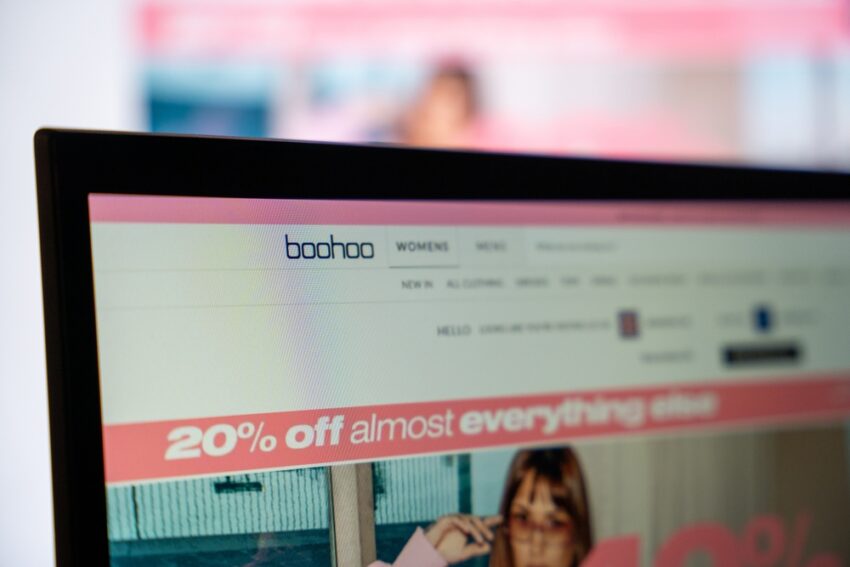
Boohoo staff have been told to swap the grey tracksuit bottoms for the office wardrobe, as chief executive Dan Finley defends his decision to bring the online fashion group’s entire corporate workforce back in five days a week.
Finley, who has led a turnaround at the Manchester-based retailer since 2024, said its 1,500 head office employees should not be “sat in bed with grey tracksuit bottoms on” but in the workplace, wearing and testing the clothes the business produces and collaborating face to face with colleagues.
For a fashion company, he argued, physical presence carries a particular weight: products need to be tried on, trends need to be observed, and that simply cannot happen from the sofa. Finley, who claims to wear only clothing made or sold by the group, added that working in Manchester should be “celebrated”, with staff out and about “living and breathing” the city, attending events, meeting people and socialising after work.
The chief executive believes younger employees, who make up a significant share of both Boohoo’s workforce and its customer base, stand to gain most from being physically present, learning from senior colleagues and building the professional relationships that are difficult to replicate over a video call.
Founded in Manchester in 2006 by Mahmud Kamani and Carol Kane, Boohoo built its name on trend-led fast fashion, accessories and beauty, and now counts Karen Millen and Debenhams among its brands. The group, which has moved to rebrand as Debenhams Group as part of a wider marketplace push, is in the middle of a major restructuring to cut debt and recover from falling sales, driven by fierce competition from ultra-fast fashion rivals Shein and Temu.
Boohoo’s move places it firmly on one side of a debate that continues to divide British business. Before 2020, working from home was often treated as a rare perk or a “Friday luxury”, but the pandemic turned hybrid arrangements into the norm for millions. According to the Office for National Statistics, more than a quarter of working adults in Great Britain now split their week between home and the workplace.
Many employers have since rowed back, arguing that physical presence is essential for collaboration, mentoring junior staff and overseeing output, while others are keen to justify expensive, long-term real estate leases. Amazon demanded a full five-day return for its corporate workforce, and major UK employers including Boots, Morrisons and the engineering firm Laing O’Rourke have followed suit for head office staff. Others, such as Santander, have tightened hybrid rules without abandoning flexibility altogether, wary of resignations and keen to bank the savings from smaller offices.
The tide, though, appears to be turning slowly in the employers’ favour. Average office attendance in the UK has been above 40 per cent every week since early January, reaching 44.2 per cent in the week to 12 February, according to Remit Consulting’s ReTurn report.
For Finley, the calculation is simpler still: a fashion business that cannot see its own clothes on its own people is flying blind. The tracksuit bottoms, it seems, will have to wait for the weekend.
Jamie Young
Jamie is Senior Reporter at Business Matters, bringing over a decade of experience in UK SME business reporting.
Jamie holds a degree in Business Administration and regularly participates in industry conferences and workshops.
When not reporting on the latest business developments, Jamie is passionate about mentoring up-and-coming journalists and entrepreneurs to inspire the next generation of business leaders.
Business
Banks Closed, Many Retailers Open as July 4 Holiday Weekend Begins Friday, Target Plan Standard Friday Hours
Banks and government offices across much of the United States will be closed Friday in observance of the Independence Day holiday weekend, while major retailers including Walmart, Target, Costco and Publix plan to maintain normal or adjusted hours to accommodate shoppers preparing for celebrations.
The federal holiday falls on Saturday, July 4, prompting many institutions to observe the closure on the preceding Friday. Financial markets will also shut down, with trading resuming Monday. Post offices, federal courthouses and many state government facilities are expected to follow suit.
Major banks including Chase, Bank of America, Wells Fargo and Citibank have confirmed they will not conduct regular branch operations Friday. ATM access and online banking services will remain available, but in-person transactions and customer service at physical locations will be limited.
Retail giants are taking a different approach to capitalize on holiday spending. Walmart stores are scheduled to operate regular hours, offering groceries, household goods and last-minute barbecue supplies. Target locations similarly plan standard operations, with some adjusting pharmacy hours.
Costco warehouses will be open Friday according to normal schedules in most regions, though members should check local listings as select locations may vary. The membership retailer typically maintains consistent hours during holidays to serve its customer base.
Publix supermarkets in the Southeast will operate on modified schedules, with many stores closing earlier than usual to allow employees time with family. Customers are advised to verify specific store hours through the company’s website or app.
Holiday Shopping and Travel Patterns
The lead-up to Independence Day traditionally drives strong consumer spending on food, beverages, outdoor equipment and patriotic merchandise. Retailers stock up on popular items such as grills, fireworks and summer apparel in anticipation of increased foot traffic.
E-commerce platforms including Amazon and Walmart’s online services will process orders throughout the weekend, with delivery times potentially affected by holiday staffing. Same-day and next-day options may be limited in some areas.
Travel is expected to reach near-record levels as Americans take advantage of the long weekend. AAA forecasts millions of trips by car, plane and other modes, with gas prices and airport security lines under close watch.
Roadside restaurants, convenience stores and service stations will largely remain open to support travelers. National parks and recreational areas are preparing for heavy visitation, with some implementing reservation systems to manage crowds.
Banking and Financial Services
For those needing in-person banking services, credit unions and smaller community banks may maintain limited hours, though most will follow the federal holiday schedule. Financial markets closure means no trading on major exchanges Friday.
Bill payments, transfers and other digital transactions will process normally through online platforms. Customers with urgent needs are encouraged to use mobile apps or contact customer service lines, which often operate with reduced staffing.
Mortgage, loan and investment offices will generally be closed, potentially delaying closings or account maintenance. Individuals should plan accordingly for any time-sensitive financial matters.
Government benefits, tax refunds and other payments scheduled for Friday may be issued earlier or delayed until Monday depending on processing systems. Social Security and other federal payments typically follow holiday-adjusted calendars.
Retailer-Specific Plans
Walmart has confirmed that the vast majority of its stores will operate regular hours Friday, with some supercenters extending evening operations for holiday shoppers. Pharmacy and vision center hours may be reduced at select locations.
Target stores plan standard Friday hours, with many locations featuring extended evening availability. The retailer has promoted holiday deals online and in stores to attract customers stocking up for weekend gatherings.
Costco members can expect normal warehouse access, though food courts and other services may close earlier. The retailer advises checking specific location schedules through its website, as regional variations occur.
Publix, a staple in southern states, typically shortens hours on holiday eves. Many stores will close by early evening, allowing employees to prepare for personal celebrations while still serving customers throughout the day.
Other major chains including Kroger, Albertsons and regional grocers are expected to maintain similar patterns, balancing customer convenience with employee needs. Convenience stores and gas stations will largely remain open 24 hours where applicable.
Travel and Public Services
Airports will operate with full staffing to handle increased passenger volumes, though some airlines may adjust schedules. Travelers are advised to arrive earlier than usual and check for potential delays.
Public transportation systems in major cities will run on holiday or weekend schedules. Commuter rail and bus services may have reduced frequency, particularly during off-peak hours.
National parks, beaches and recreational areas anticipate heavy crowds. Park rangers and local authorities urge visitors to follow safety guidelines and practice leave-no-trace principles.
Fireworks displays and community events are scheduled across the country, with many municipalities adjusting public transit to accommodate attendees. Safety reminders regarding fireworks handling and crowd management have been widely issued.
Preparation Advice for Consumers
Financial experts recommend completing necessary banking transactions by Thursday to avoid weekend delays. Online bill pay and mobile deposits can help manage finances during closures.
Shoppers should verify store hours through retailer websites or apps before heading out, particularly for specialized services like pharmacies or customer service desks. Stocking up early can help avoid last-minute crowds.
Travelers are encouraged to fill gas tanks, check vehicle maintenance and monitor weather forecasts. Packing snacks, water and entertainment can ease potential delays on busy highways.
For those celebrating at home, grocery lists should account for potential store closures on Saturday. Many retailers extend holiday hours or offer online ordering with curbside pickup as convenient alternatives.
The July 4 holiday weekend provides an opportunity for rest and celebration while reminding Americans of the interconnected nature of modern services. As institutions observe the holiday, digital alternatives help maintain continuity for essential needs.

Germany bans phone-in sick notes: workers must see a doctor on day one
Bitcoin Recovery Hinges on Breakout Above $72K Resistance (BTC Price Analysis)

Lakers interested in Andre Drummond, Jonas Valanciunas, Kevon Looney


-

 Fashion7 days ago
Weekend Open Thread: Staud – Corporette.com
-

 Tech6 days ago
Claude Code turned every engineer into three. Now companies need more product thinkers
-

 Crypto World4 days ago
Strategy authorizes up to $1.25B in Bitcoin sales under new capital plan
-

 Politics6 hours ago
The House | “Reframing the debate from a binary discussion of winners and losers”: Yuan Yang reviews ‘We Are Not Machines’
-

 News Videos5 days ago
MAJOR BITCOIN & MARKET UPDATE!!!! (MUST WATCH ASAP!!!)
-

 Tech4 days ago
Anonymous researcher drops 0-day ‘exploitarium’ repo
-

 Crypto World6 days ago
Coinbase, Circle Deepen Crypto Stock Losses Despite Resilient S&P 500
-

 Business4 days ago
Australia treasurer says alleged access of prime minister’s bank data ’incredibly concerning’
-

 Crypto World7 days ago
Kraken's xStocks Opens Bending Spoons IPO Registration to EEA Retail
-

 Sports7 days ago
FIH Pro League: India defeat Pakistan 7-1, register biggest win of campaign | Other Sports News
-

 Tech6 days ago
Bluekit phishing kit adopts browser-in-the-middle for login theft
-

 Tech6 days ago
Russian hackers now target Signal backup recovery keys
-
 Business4 days ago
The AI boom won’t burst all at once. It will pop in ‘rolling bubbles’: Macquarie
-

 Sports2 days ago
Broncos roster: OL Ben Powers (No. 74) entering final year of contract
-

 Tech6 days ago
Silicon Valley paid to kill AI regulation, now it wants the rules back
-

 NewsBeat3 days ago
Presenter Caroline Flack’s brother Paul Flack dies aged 55
-

 Crypto World1 day ago
Binance stock trading tops $1B in first month after launch
-
 NewsBeat1 day ago
New exhibition reflects five decades of movement between island of Ireland and GB
-

 Tech6 days ago
OpenAI mulls delaying IPO over valuation concerns
-

 Crypto World2 days ago
Alibaba-affiliate Ant Group enters the humanoid robot market with 12 deals
You must be logged in to post a comment Login