Connect with us

Business

Tesla Shares Climb Nearly 3% to $336 as Robotaxi Gains and AI Push Offset Profit Pressure

Published

on

Xiaomi YU7 GT Electric SUV

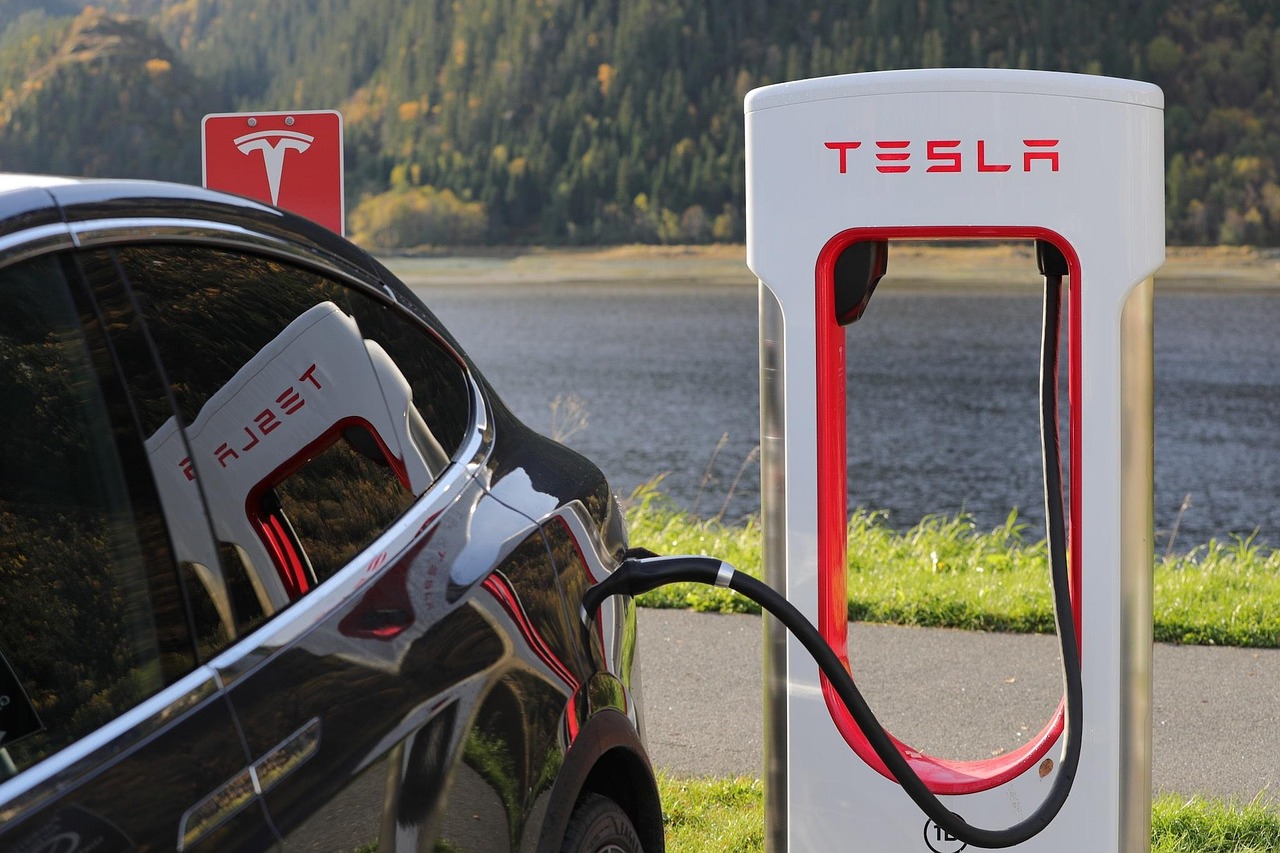
Tesla Inc. shares advanced nearly 3% on Thursday, reclaiming ground after a volatile stretch, as investors weighed the electric-vehicle maker’s record vehicle deliveries against thinner margins and heavy spending on autonomy and artificial intelligence.

The stock rose $8.93, or 2.73%, to $336.44 in afternoon trading on the Nasdaq, according to market data as of 1:20 p.m. EDT on Aug. 13. The move extended a recent rebound that has partially erased losses from a sharp sell-off following second-quarter results. Tesla remains well below its 52-week high near $499 and is down substantially for the year, reflecting ongoing debate over the pace of its transition from pure automaker to a company centered on robotaxis, humanoid robots and energy storage.

In the second quarter ended June 30, Tesla delivered a record 480,126 vehicles, a 25% increase from a year earlier and well ahead of its own earlier guidance. Model 3 and Model Y accounted for the vast majority of those deliveries. Total revenue climbed 26% to $28.24 billion, the first time the company generated more than $100 billion on a trailing twelve-month basis. Energy storage deployments reached 13.5 gigawatt-hours, up 41%, while services and other revenue jumped 50% to a record $4.58 billion.

Profitability told a different story. Adjusted earnings came in at 33 cents per share, missing Wall Street estimates that had clustered around 50 cents. Operating income fell sharply and free cash flow turned negative by more than $1 billion as capital spending surged. Regulatory credit revenue, once a reliable profit contributor, dropped significantly. The company has guided for more than $25 billion in capital expenditures this year, roughly triple historical levels, directed at expanding battery capacity, AI compute, Cybercab production and Optimus manufacturing lines.

Advertisement

Tesla said Cybercab, its purpose-built autonomous vehicle without steering wheel or pedals, began production at Gigafactory Texas. Engineering test drives on public roads started, and employee rides were underway on the Texas campus. The unsupervised Robotaxi service expanded to seven major U.S. metros, including new Florida cities, with the company reporting hundreds of thousands of unsupervised miles and no notable safety incidents in the period. Full Self-Driving subscription adoption continued to rise, with more than half of North American deliveries including the feature at the time of purchase.

Construction of Optimus production lines advanced at the Fremont factory after the company decommissioned Model S and Model X assembly there. Tesla Semi volume production remains on track for later this year at a new Nevada facility. Megafactory Texas, focused on energy storage, neared completion. In early August, Tesla and SpaceX jointly announced plans for Terafab, a large semiconductor facility in Grimes County, Texas, with an initial investment of $16.8 billion aimed at producing AI chips for vehicles, robots and data centers.

China remained a mixed picture. Tesla’s retail sales there have faced pressure even as the broader battery-electric vehicle market expanded, with recent monthly figures showing a notable year-over-year decline for the company while overall EV demand rose. International markets outside China, including parts of Asia, Europe and Latin America, posted record deliveries in several countries during the quarter.

Chief Executive Elon Musk, speaking on the second-quarter earnings call, emphasized the company’s dual focus on near-term execution and longer-term autonomy and robotics. “We’re super excited about our autonomy and robotics roadmap,” Musk said. “There is so much awesome stuff coming that it is difficult to squeeze everything into an earnings call. We will have a lot of product announcements. This is going to be a great year for Tesla … one of our best years ever and I think next year will be even better.”

Advertisement

Musk also noted shifting customer behavior around Full Self-Driving. “In fact, a lot of people are buying Tesla full self-driving with the car attached, as opposed to a car with FSD,” he said. On Optimus, he described the humanoid robot as potentially the biggest product the company has ever pursued while acknowledging the difficulty: “It is a very complex problem to solve … No one’s ever achieved this.”

Analysts remain divided. Consensus ratings lean toward Hold, with an average price target in the low $400s, implying meaningful upside from current levels if the company can demonstrate sustained progress on Robotaxi utilization, Optimus production and margin recovery. Valuation remains elevated relative to traditional automakers, reflecting the premium investors assign to Tesla’s AI and autonomy ambitions. High capital intensity and the need to convert software and robotics investments into recurring high-margin revenue continue to dominate the debate.

The broader electric-vehicle landscape has grown more competitive. Global EV sales continued rising in 2026, yet U.S. demand has faced headwinds after the expiration of certain incentives. Chinese manufacturers have gained share in key markets. Tesla’s ability to differentiate through software updates, energy products and autonomous services will likely determine whether the current recovery in the share price can extend.

Tesla next reports third-quarter results in late October. Until then, investors will watch weekly Robotaxi metrics, battery production progress, any further regulatory developments on unsupervised driving, and signals on Optimus timelines. The stock’s recent bounce shows willingness to look past near-term margin compression toward those longer-term catalysts, but the path remains sensitive to execution and broader market sentiment toward high-growth technology names.

Advertisement

Market participants also noted recent comments from Musk on broader mobility visions, including a brief social-media remark that flying cars would eventually arrive. Such statements keep attention on Tesla’s expansive technological agenda even as day-to-day trading focuses on deliveries, cash flow and the pace of autonomy commercialization.

For now, the Aug. 13 advance leaves Tesla shares trading with a market capitalization around $1.3 trillion to $1.4 trillion, still reflecting substantial optimism about the company’s ability to scale beyond traditional vehicle sales. Whether that optimism proves durable will hinge on the coming quarters of operational progress in robotaxis, energy storage and humanoid robotics.

Continue Reading
Click to comment

You must be logged in to post a comment Login

Leave a Reply

Business

Average pay of CEOs of S&P 500 companies rose to record $22.8 million following Elon Musk’s nearly $1 trillion compensation, AFL-CIO finds

Published

on

Average pay of CEOs of S&P 500 companies rose to record $22.8 million following Elon Musk's nearly $1 trillion compensation, AFL-CIO finds
Elon Musk’s record-setting compensation packages from Tesla and SpaceX are reshaping executive CTC across corporate America, with S&P 500 boards increasingly using them as a benchmark for larger CEO pay, an American Federation of Labour and Congress of Industrial Organisations study found, according to a Reuters report.

Excluding Musk, the average compensation for S&P 500 chief executives jumped 21% to a record $22.8 million in 2025, data released on Thursday by the AFL-CIO showed. It was the highest figure since the AFL-CIO began tracking CEO pay in the 1990s.

Labour officials attributed the increase to a growing number of mega-pay packages inspired by Musk’s Tesla compensation plan, which could be worth as much as $1 trillion if he meets all its targets.

Tesla shareholders approved the restricted-stock plan in November, with the company valuing it at $158 billion. Including that amount, average S&P 500 CEO compensation reached $340.1 million last year, according to the AFL-CIO’s latest Paywatch study.

Advertisement

Musk also became the world’s first trillionaire based on his stake in satellite and AI company SpaceX.


Musk’s pay “changes the dynamic when other CEO compensation plans come up, boards use it as a reference,” Fred Redmond, the AFL-CIO’s secretary-treasurer, told Reuters in a telephone interview.
Meanwhile, employee wages are being held back by the rise of artificial intelligence and a Republican-led National Labour Relations Board, which labour leaders view as hostile to union-organising efforts, Redmond said.Excluding Musk’s Tesla compensation, the average CEO-to-worker pay ratio at S&P 500 companies widened to 312:1 last year from 285:1 in 2024. Including Musk’s package, the ratio reached 5,387:1.

“As we talk to our members, they’re pissed off over what’s happening to them, and they feel as though they should be more vocal in terms of calling attention to inequality,” Redmond said.

He noted that union representation had reached its highest level in 16 years.

Rising CEO pay and inequality have fed into broader political debates over why US workers struggle to afford housing, healthcare and other necessities.

Advertisement

The mean annual wage for US workers was $69,770 in May 2025, up 3% from a year earlier, according to Labour Department data.

Corporate compensation committees often argue that executive pay plans are tied to shareholder value and incentivise executives to deliver results. They also note that investors, including the largest asset managers, usually support such proposals at annual meetings.

Average shareholder support for advisory “say-on-pay” votes at S&P 500 companies stood at 90.6% through late June, according to compensation consultancy Semler Brossy, up from 89.4% for all of 2025.

Special awards draw scrutiny.

Advertisement

Shareholders have been less supportive of the growing number of special compensation awards, Semler Brossy found.

“These awards, which are usually intended to be one-offs and exist outside of annual compensation programs, are a hot-button issue,” the firm found.

Among S&P 500 companies that disclosed special awards, Goldman Sachs paid CEO David Solomon $118.9 million last year, including a major retention award. About 71% of votes cast backed the package, well below the broader S&P 500 average.

“We’re very pleased with the strong supermajority this vote received,” Goldman Sachs spokesperson Tony Fratto said.

Advertisement

Real estate investment trust Welltower awarded CEO Shankh Mitra $821 million, intended to cover most of his compensation over the next decade. Only 19% of votes cast supported the package.

“Welltower’s board and compensation committee remain committed to engaging with shareholders to gather their feedback and understand their perspectives,” a spokesperson told Reuters.

The spokesperson added that Mitra would receive the full amount only if he met all performance targets.

(Disclaimer: This article is based on inputs from agencies. These do not represent the views of The Economic Times)

Advertisement
Continue Reading

Business

Opinion: Precision fermentation startups ever closer to commercial scale

Published

on

Opinion: Precision fermentation startups ever closer to commercial scale

Numerous companies exhibited advances in precision fermentation at IFT FIRST.

Continue Reading

Business

Accelerant Holdings Stock Soars 44% After Blowout Q2 Earnings Beat Expectations By 100%

Published

on

Accelerant Holdings Stock Soars 44% After Blowout Q2 Earnings Beat

Shares of Accelerant Holdings surged Thursday after the specialty insurance platform reported second-quarter results that dramatically exceeded Wall Street expectations, with earnings coming in double what analysts had forecast and revenue beating estimates by more than 30%.

The stock traded at $19.53, up $5.93, or 43.53%, as of 1:01 p.m. Eastern time, extending gains from earlier in the session and marking one of the sharpest single-day moves in the company’s short history as a public company. Shares had closed at $13.61 the previous day before the earnings release, meaning Thursday’s rally has pushed the stock roughly 81% above its 52-week low of $10.77, set just two weeks earlier on July 31.

Accelerant reported second-quarter earnings that beat analyst expectations by 100%, alongside revenue that came in approximately 30.22% above consensus forecasts, according to market data. The company hosted its earnings call at 8 a.m. Eastern time Thursday to walk investors through the results in greater detail.

Accelerant operates what it describes as a data-driven risk exchange for commercial insurance, connecting specialized underwriters, known as Members, with third-party risk capital providers, while using artificial intelligence and proprietary data to support underwriting decisions. The company’s capital-light business model has become a central part of its investment case, with only about 9% of premiums retained on its own balance sheet and a growing share of exchange written premium placed with outside capital partners, a structure designed to generate durable free cash flow without requiring the company to hold significant underwriting risk itself.

Advertisement

The company’s full-year 2025 results, reported earlier this year, showed exchange written premiums up 35%, total revenue up 51%, and adjusted EBITDA up 149%, reflecting the scaling benefits of its capital-light platform model. More recent trailing figures have shown continued strength, with gross margins near 70% and substantial operating cash flow and free cash flow generation, even as the company’s bottom-line profitability has remained negative on a trailing basis, a pattern common among high-growth platform businesses still working to achieve full profitability at scale.

Despite the strong operational metrics, Accelerant’s first-quarter 2026 results showed a loss of 2.3 cents per share, a sharp reversal from a $3.27 per share profit in the first quarter of 2025, a swing driven primarily by non-operating, accounting-related factors rather than the company’s core underlying business performance.

Accelerant has continued to signal confidence in its long-term growth trajectory through corporate actions beyond its quarterly results. The company’s board approved a share repurchase program earlier this year authorizing up to $200 million in buybacks of Class A common shares, with the program running through the end of 2028. Accelerant also recently announced key leadership additions, naming Cliff Jenks as general counsel and corporate secretary and Ray Iardella as head of investor relations, moves aimed at strengthening the company’s corporate governance and its engagement with the investment community as a newly public company.

Accelerant went public in July 2025, and its stock has experienced significant volatility in the roughly 13 months since its debut. Shares fell sharply in late July of this year, tumbling from the mid-$14 range to a closing low near $11.20 by July 30, before beginning a steady recovery that carried the stock back into the mid-$13s heading into Thursday’s earnings release. Thursday’s post-earnings surge has now pushed shares well above where they traded before that late-July pullback, though the stock has traded with substantial volatility throughout its time as a public company, reflecting the market’s ongoing effort to properly value a fast-growing but not yet consistently profitable specialty insurance technology platform.

Advertisement

Institutional investors have shown growing interest in the stock in recent months. Utah-based Grandeur Peak Global Advisors initiated a new position in Accelerant following the company’s IPO, while Keenan Capital disclosed a new stake in the company in a filing earlier this year. Not all shareholder activity has pointed toward accumulation, however, with an entity called Badly Bent LLC disclosing plans to sell up to 80,000 shares of Accelerant Class A common stock on or after August 10, continuing a pattern of periodic share sales the entity has made over the preceding three months, according to regulatory filings.

Technical indicators following Thursday’s rally suggested the stock had moved into sharply overbought territory in the very short term, with the daily relative strength index reading near 77 and even higher readings on shorter intraday timeframes, levels that market analysts have said sometimes signal a risk of near-term pullback even amid a broader bullish fundamental backdrop. Even so, some analysts have pointed to Accelerant’s valuation, trading at roughly nine times projected 2026 enterprise value to EBITDA even after Thursday’s rally, as still reasonable relative to the scale of the company’s cash generation and growth trajectory.

With Thursday’s earnings beat now digested by the market, investors are likely to watch closely in the coming months for further confirmation that Accelerant’s rapid premium and revenue growth can continue translating into sustained free cash flow generation and an eventual path to consistent bottom-line profitability, key questions that will likely continue shaping sentiment toward the stock following its dramatic post-earnings rally.

Advertisement
Continue Reading

Business

Water bills set to rise for many after firms permitted extra funding

Published

on

Hands only image of someone turning on a mixer tap to fill a glass of water

Water companies have been given the green light to increase bills for customers by an extra £3.4bn in coming years to meet increased pressures on infrastructure and the environment.

Nearly a third of the extra funding provisionally approved for 13 water companies in England and Wales is earmarked for making sure water services are maintained.

Some of the rest will be used to meet rising demand from housebuilding and data centres and to address pollutants known as “forever chemicals”.

Prime Minister Andy Burnham said the proposal was “real money out of family budgets at a time when they are struggling with the cost of living”, and an environmental group described the decision as “an insult”.

Advertisement

Customers of five water companies – Severn Trent Water, Southern Water, Thames Water, Wessex Water, and South East Water – are facing additional bill rises over the next two years, on top of increases that were already announced in 2024.

The new increases will vary between firms.

Southern, for example, will charge £43 extra next year, while South Eastern will only charge £1 more in 2029. The increases will only come into effect if they are given final approval later this year.

The other eight water firms identified – Anglian Water, Dwr Cymru Welsh Water, Hafren Dyfrdwy, Northumbrian Water, Wouth West Water, United Utiliites, Yorkshire Water, SES Water – would recover their additional spending through customer bills after 2030.

Advertisement

Many consumers are angry at being asked to pay anything more against a backdrop of interruptions to supply sometimes lasting for days, and rivers, lakes and beaches too polluted to use safely.

But water companies argue that these problems can only be solved by boosting spending to replace pipes, build treatment plants and establish new reservoirs.

Climate change has also increased pressure on the water infrastructure by making heavy rains and heatwaves more frequent.

Advertisement
Continue Reading

Business

Asustek Computer Shares Jump 10% After Q2 Profit Nearly Doubles On Surging AI Server Demand

Published

on

Samsung Unveils Three New Foldable Phones and Smart Glasses Ahead

TAIPEI — Shares of Asustek Computer surged Thursday after the Taiwanese electronics maker reported second-quarter earnings that nearly doubled from a year earlier, extending a rally that has made the company one of the standout performers of Taiwan’s ongoing artificial intelligence-driven technology boom.

Asustek shares, traded on the Taiwan Stock Exchange under ticker 2357, climbed to 937.00 Taiwan dollars as of 1:30 p.m. local time, up 85.00 Taiwan dollars, or 9.98%, from the previous close of 852.00 Taiwan dollars. The move pushed the stock close to its 52-week high of 964.00 Taiwan dollars, a level reached earlier this year, and firmly within reach of a fresh record following Thursday’s earnings-driven rally.

Asustek reported second-quarter 2026 earnings per share of 25.64 Taiwan dollars, nearly double the 13.20 Taiwan dollars reported in the same period a year earlier. Revenue for the quarter came in at 257.7 billion Taiwan dollars, up 37% from the second quarter of 2025, while net income reached 19.0 billion Taiwan dollars, an increase of 94% year-over-year. The company’s profit margin expanded to 7.4%, up from 5.2% a year earlier, with the improvement driven primarily by the strength of revenue growth outpacing the rise in costs. Both headline figures topped analyst expectations, with revenue exceeding consensus estimates by 4.8% and earnings per share surpassing forecasts by roughly 65%.

The results extend a run of strong performance for Asustek that has been building for much of 2026. The company’s first-quarter results, reported earlier this year, showed record brand revenue of roughly 194.05 billion Taiwan dollars, or about $6.19 billion, a 44% increase from the prior year, driven by surging demand for AI servers alongside stable notebook computer shipments. That first-quarter report also showed net profit climbing 34% year-over-year to 4.82 billion Taiwan dollars, or roughly $160.9 million, underscoring a consistent pattern of accelerating profitability across the company’s recent quarterly results.

Advertisement

Asustek’s rapid growth has been anchored heavily in its expanding artificial intelligence server business, a segment that has grown from a relatively modest contributor to the company’s overall revenue into one now approaching a fifth of total sales, according to earlier company disclosures. The company has continued to emphasize strong order visibility and margin resilience in its guidance to investors, even as component shortages and rising input costs have weighed on parts of the broader global electronics manufacturing sector throughout the year.

Wall Street analysts have offered a mixed, evolving picture of the stock heading into Thursday’s results. JPMorgan analyst Albert Hung upgraded Asustek to neutral from underweight earlier this year, raising his price target to 750 Taiwan dollars from 525, even while remaining cautious on the outlook for consumer PC demand specifically. Morgan Stanley, by contrast, had previously downgraded the stock to underweight from equal weight, cutting its price target to 500 Taiwan dollars from 625, citing concerns about growing margin risk across hardware companies more broadly as component costs have climbed. Despite that split in analyst sentiment, the stock’s overall rating from covering analysts has remained a buy, with five analysts recommending purchase against a single sell rating heading into this week’s results.

Asustek’s share price performance has significantly outpaced broader regional benchmarks over the past year. According to data compiled by Stockopedia, the stock had outperformed the FTSE Developed Asia Pacific Index by more than 36 percentage points over the trailing six months even before Thursday’s earnings-driven gain, with shares trading nearly 29% above their 200-day moving average heading into the results. Simply Wall St separately noted that the stock has risen roughly 40% over the past year, even as some analysts have observed that the company’s earnings per share growth, averaging 45% annually over the past three years, has significantly outpaced the stock’s own price appreciation over the same period, suggesting the shares may not have fully caught up to the company’s underlying earnings growth.

Asustek’s rally forms part of a broader surge across Taiwan’s technology sector this year, fueled by explosive global investment in artificial intelligence infrastructure. Other major Taiwanese technology names, including chip foundry giant TSMC, have similarly posted strong gains throughout 2026 as global demand for AI-related hardware, from advanced semiconductors to servers and specialized computing equipment, has continued accelerating.

Advertisement

Looking ahead, Asustek’s next scheduled quarterly earnings report is due November 5, giving investors roughly three months to assess whether the strong order momentum and margin improvement seen in Thursday’s second-quarter results can be sustained into the back half of the year. With the stock now trading near its 52-week high following the earnings beat, market participants are likely to watch closely for any further signals on AI server order backlogs and pricing trends as the company works to build on what has already been one of its strongest years of growth in recent memory.

Continue Reading

Business

Rumo S.A. (RUMOF) Q2 2026 Earnings Call Transcript

Published

on

OneWater Marine Inc. (ONEW) Q1 2026 Earnings Call Transcript