
Business
Tesla Shares Slide Despite Record Q2 Deliveries as Investors Weigh Robotaxi Timeline

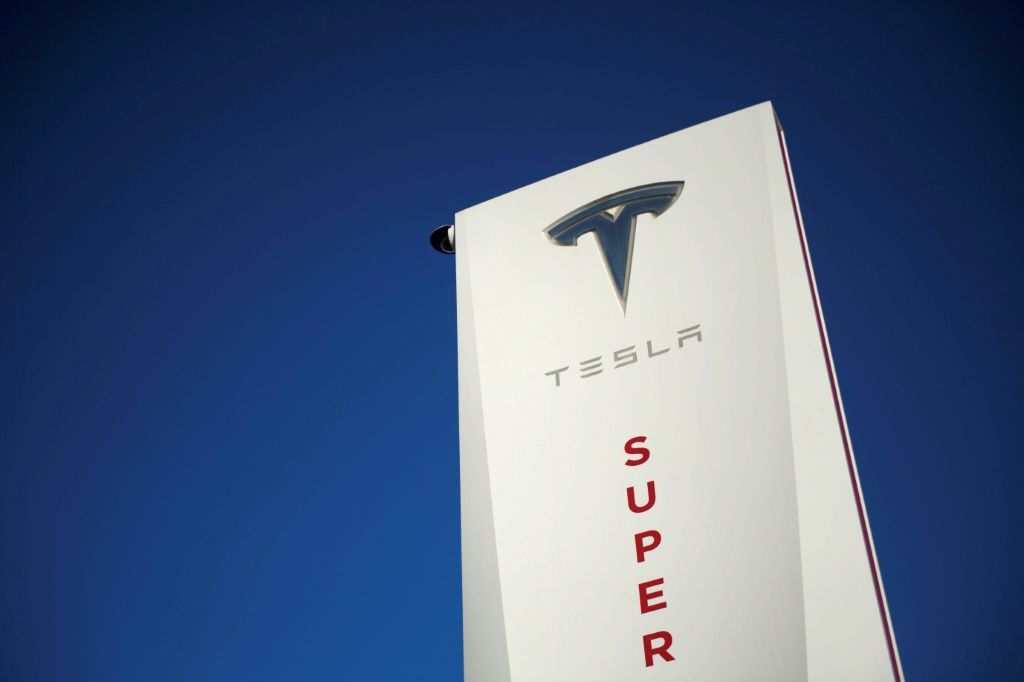
Tesla Inc. shares fell more than 6% to trade around $396 Thursday despite the electric vehicle maker reporting stronger-than-expected vehicle deliveries for the second quarter, highlighting investor focus on the pace of autonomous driving progress and profitability amid heavy spending on artificial intelligence initiatives.
The company delivered 480,126 vehicles in the April-June period, surpassing analyst expectations and marking a significant rebound from prior quarters. Production exceeded 450,000 units, with energy storage deployments reaching 13.5 gigawatt-hours, demonstrating operational strength across multiple segments.
Deliveries benefited from recovering demand in Europe and steady performance in other international markets, though North American sales faced headwinds. The results provide a positive data point ahead of Tesla’s full quarterly earnings later this month, where margins, capital expenditure and future guidance will face greater scrutiny.
Tesla’s Robotaxi ambitions remain central to its valuation narrative. The company has begun unsupervised operations in limited areas of Austin, Texas, with plans for broader expansion. Progress on Full Self-Driving software continues, though regulatory approvals and safety validations will determine commercialization timelines.
Chief Executive Elon Musk has emphasized artificial intelligence and autonomy as core to Tesla’s future, positioning the company beyond traditional automotive manufacturing. Investments in data centers, computing infrastructure and robotics underscore this strategic direction.
Delivery Rebound and Operational Highlights
Second-quarter deliveries exceeded the Wall Street consensus of approximately 397,000 to 406,000 vehicles. The beat reflects improved supply chain dynamics, new model refreshes and marketing efforts to stimulate demand.
Model 3 and Model Y continued dominating sales volumes, while Cybertruck production ramped steadily. Energy storage growth highlighted diversification beyond vehicles, with Megapack deployments supporting grid stability projects worldwide.
Tesla’s Shanghai factory and other international facilities contributed meaningfully to output. The company maintains flexibility to adjust production based on regional demand patterns.
Analysts expect second-quarter revenue and profit figures to reflect higher vehicle volumes, though increased competition and pricing pressures may affect average selling prices. Cost reductions through manufacturing efficiencies remain a key focus.
Autonomy and AI Investments
Tesla’s Full Self-Driving software has received regulatory nods in additional markets, enabling supervised and unsupervised testing. The Cybercab robotaxi vehicle, designed without steering wheel or pedals, represents the company’s vision for dedicated autonomous fleets.
Unsupervised operations in Austin mark a milestone, though scaling to profitable ride-hailing networks requires overcoming technical, regulatory and public acceptance hurdles. Competitors including Waymo and others have established operations in select cities.
Capital spending remains elevated as Tesla builds AI training infrastructure and expands manufacturing capacity. The company has committed billions toward these initiatives, betting on long-term leadership in autonomous technology.
Musk has repeatedly highlighted the transformative potential of robotaxis, projecting significant revenue contributions in coming years. Skeptics point to historical delays in meeting ambitious timelines for Full Self-Driving capabilities.
Market Position and Challenges
Tesla maintains leadership in the global electric vehicle market despite intensifying competition from legacy automakers and Chinese manufacturers. Pricing strategies and technology differentiation help sustain demand.
The company’s energy business, including solar and storage, provides a hedge against automotive cyclicality. Virtual power plants and grid services represent growing opportunities as renewable energy adoption accelerates.
Regulatory environments vary globally, with incentives for electric vehicles supporting sales in Europe and parts of Asia while policy shifts in the United States create uncertainty. Trade tensions and tariffs impact supply chains and costs.
Tesla’s valuation reflects expectations for growth beyond vehicles into software, energy and robotics. High multiples leave limited room for execution shortfalls, contributing to stock volatility.
Outlook and Investor Sentiment
Wall Street analysts maintain a range of views, with bulls citing robotaxi potential and bears emphasizing near-term margin pressures and competition. Consensus price targets suggest moderate upside from current levels, though forecasts vary widely.
Second-quarter earnings, scheduled for late July, will provide updates on profitability, cash flow and forward guidance. Delivery numbers offer an early positive indicator, but operational metrics will determine market reaction.
Tesla continues expanding its Supercharger network and exploring new vehicle platforms to address different market segments. Software updates regularly enhance existing vehicle capabilities, supporting customer satisfaction and residual values.
The company’s gigafactories in multiple continents support production scalability while mitigating regional risks. Vertical integration in battery technology provides competitive advantages in cost and performance.
As Tesla navigates its transformation into an AI and robotics company, execution on autonomy milestones will heavily influence investor confidence. The coming months will test the company’s ability to convert technological progress into sustainable financial returns.


Robert F. Abbott has been investing his family’s accounts since 1995, and in 2010 added options, mainly covered calls and collars with long stocks. He is a freelance writer, and his projects include a website that provides information for new and intermediate-level mutual fund investors. A resident of Airdrie, Alberta, Canada, Robert has earned Bachelor of Arts and Master of Business Administration (MBA) degrees.
Analyst’s Disclosure: I/we have no stock, option or similar derivative position in any of the companies mentioned, and no plans to initiate any such positions within the next 72 hours. I wrote this article myself, and it expresses my own opinions. I am not receiving compensation for it (other than from Seeking Alpha). I have no business relationship with any company whose stock is mentioned in this article.
Seeking Alpha’s Disclosure: Past performance is no guarantee of future results. No recommendation or advice is being given as to whether any investment is suitable for a particular investor. Any views or opinions expressed above may not reflect those of Seeking Alpha as a whole. Seeking Alpha is not a licensed securities dealer, broker or US investment adviser or investment bank. Our analysts are third party authors that include both professional investors and individual investors who may not be licensed or certified by any institute or regulatory body.

WestJet flight attendants go on strike after talks fall through

Equity mutual funds delivered gains up to six percent in the last week of July. Top performers included technology and transportation sector funds which saw significant returns. SBI Technology Opp Fund and Aditya Birla SL Digital India Fund led the gains. ICICI Pru Transportation and Logistics Fund also performed well during this period. Several other tech and logistics funds also registered positive returns.
Ukrainian drones kill two in Russia, strike Wildberries warehouse, governors say

4 Hyperscalers, One Message: The AI Trade Isn't Over

Hungarian companies pivot after Orban’s allies lose political influence
Seven mutual fund NFOs from Kotak, Motilal Oswal, AlphaGrep, JioBlackRock, Edelweiss and Franklin India will open for subscription this week. The offers span index funds, ETFs, a fund of funds and a short-duration debt scheme, with minimum investments ranging from Rs 10 to Rs 5,000.
Business
Mcap of nine of top-10 most valued firms jumps Rs 2.51 lakh cr; Bajaj Finance biggest winner

Last week, the BSE benchmark Sensex climbed 2,034.87 points, or 2.67 per cent, and the NSE Nifty surged 616.15 points, or 2.59 per cent.
“Markets staged a strong rebound during the week, snapping their recent losing streak as easing crude oil prices, improving geopolitical sentiment, encouraging Q1 FY27 earnings, and renewed foreign institutional investor (FII) buying lifted risk appetite,” Ajit Mishra – SVP, Research, Religare Broking Ltd, said.
While Reliance Industries, Bharti Airtel, HDFC Bank, ICICI Bank, State Bank of India, Tata Consultancy Services (TCS), Bajaj Finance, Larsen & Toubro, and Life Insurance Corporation of India (LIC) were the gainers from the top-10 pack, Hindustan Unilever emerged as the only laggard.
The market valuation of Bajaj Finance surged Rs 80,345.97 crore to Rs 7,10,817.51 crore, the most among the top-10 firms. Shares of NBFC Bajaj Finance on Friday ended over 8 per cent higher after the firm reported a 28 per cent year-on-year rise in consolidated profit after tax (PAT) for the June quarter of FY27.

Bharti Airtel’s valuation soared Rs 44,959.5 crore to reach Rs 12,30,005.63 crore.
The market valuation of TCS jumped Rs 40,414.03 crore to Rs 8,55,894.78 crore and that of Reliance Industries climbed Rs 39,447.35 crore to Rs 17,69,108.79 crore.The market capitalisation (mcap) of Larsen & Toubro rallied Rs 21,096.8 crore to Rs 5,41,844.69 crore and that of State Bank of India edged higher by Rs 10,845.97 crore to Rs 9,47,799.81 crore.
HDFC Bank’s mcap advanced Rs 8,164.73 crore to Rs 11,52,150.63 crore.
The valuation of LIC went up Rs 4,427.49 crore to Rs 5,37,435.05 crore and that of ICICI Bank climbed Rs 1,660.37 crore to Rs 10,29,878.30 crore.
However, the mcap of Hindustan Unilever declined Rs 10,326.46 crore to Rs 4,93,602.13 crore.
Reliance Industries remained the most valued firm, followed by Bharti Airtel, HDFC Bank, ICICI Bank, State Bank of India, TCS, Bajaj Finance, Larsen & Toubro, LIC, and Hindustan Unilever.

The latest inflow marks a sharp reversal from the preceding months, when Foreign Portfolio Investors (FPIs) withdrew Rs 49,340 crore in June, Rs 32,963 crore in May, Rs 60,847 crore in April and a massive Rs 1.17 lakh crore in March, according to data from the Central Depository Services (India) Ltd (CDSL).
Prior to the four-month selling spree, FPIs had invested Rs 22,615 crore in Indian equities in February.
Despite the turnaround in July, foreign investors have pulled out a net Rs 2.54 lakh crore from Indian equities so far in 2026, way more than the Rs 1.66 lakh crore withdrawn during the whole of 2025.
Market experts attributed the renewed foreign investor interest to relatively stable domestic markets, reasonable large-cap valuations, improving earnings prospects and a more favourable global environment.
V K Vijayakumar, Chief Investment Strategist at Geojit Investments, said excessive volatility in markets such as South Korea and Taiwan, coupled with concentration risk in the “chip trade”, is prompting FPIs to look for relatively stable markets like India.
The stability of the rupee and fair valuations of India’s large-cap stocks are other factors facilitating renewed FPI inflows into the country, he added.Vedant Gupte, Co-Founder and CEO of investment platform Trackk, said improving earnings prospects also strengthened investor sentiment, with June quarter results showing signs of recovery across key sectors.
IT stocks, in particular, witnessed a sharp re-rating as better-than-expected earnings helped ease concerns over the impact of artificial intelligence on the sector’s growth prospects, he said.
At the same time, easing pressure from the US dollar and expectations that US interest rates are near their peak have improved the investment environment for emerging markets, Gupte added.
Foreign investor interest was not limited to equities, with the debt market continuing to attract significant inflows during the month.
FPIs invested Rs 29,212 crore in debt through the general route and another Rs 3,033 crore through the fully accessible route in July.
Going forward, the trajectory of foreign flows is likely to be influenced by both global developments and domestic triggers.
Pabitro Mukherjee, Deputy Vice President-Research at Bajaj Broking, said investors in the coming month will closely track crude oil price movements and developments in the ongoing US-Iran geopolitical tensions.
On the domestic front, the Q1FY27 earnings season and the RBI’s monetary policy scheduled for August 5 will remain in focus, he added.
Life after Orban: Hungary Inc digs in as new political era takes hold

Linda Blair Breaks Silence After Reported Raid on Her Home

GB win two more golds at European Aquatics Championships

POV: Infinite Money Glitch


-
 Sports6 days ago
Commonwealth Games boxing: Jadumani Singh seals dominant 5-0 win over Pakistan’s Sumama Rehman to enter quarter-finals | Commonwealth Games News
-

 Business3 days ago
Why Trees Belong on the Risk Register
-

 Fashion2 days ago
Weekend Open Thread: Wit & Wisdom
-

 Tech6 days ago
Intel is reversing course and bringing hyper-threading back to its server chips
-

 Politics1 day ago
Meta enters AI-training agreement with far-right ‘propaganda rag’ Newsmax
-

 Politics6 days ago
Luke Littler dismantles Gerwyn Price to retain title in Blackpool
-

 Crypto World17 hours ago
MicroStrategy Post-Earnings CLARITY Act Push Could Add New Catalyst for Its Stock
-

 Politics5 days ago
The Part of the Electric Transition Nobody Wants to Discuss
-
 Entertainment5 days ago
‘Stargate’ Creator’s New Sci-Fi Series Returns for Season 3 Tomorrow
-

 News Videos6 days ago
BITCOIN JUST ENTERED THIS CRITICAL ZONE…
-

 Business4 days ago
Major shareholder moves on Canyon
-

 Politics7 days ago
Spain sweeps the board at 2026 World Cup with individual awards
-

 News Videos3 days ago
Bitcoin Enters the 3rd Stage of the Bear Market
-

 Crypto World1 day ago
XRP Ledger v3.3.0 brings five institutional features
-

 Crypto World4 days ago
Kraken Enables Retail Access to Jersey Mike’s IPO via Tokenized Shares
-

 Tech5 days ago
New macOS Sequoia & Sonoma security updates for older Macs
-

 News Videos4 days ago
Claude: Build Financial Dashboards in Minutes (2026)
-

 Sports2 days ago
Seema Kaliramna Wins Discus Throw Bronze, Takes India’s CWG Medals Tally To 17
-

 Politics3 days ago
Luke Littler’s dominance sparks GOAT debate
-

 Business4 days ago
Johnson & Johnson agrees to $5.5B settlement over talc cancer claims
You must be logged in to post a comment Login