Connect with us
DAPA Banner
DAPA Coin
DAPA
COIN PAYMENT ASSET
PRIVACY · BLOCKDAG · HOMOMORPHIC ENCRYPTION · RUST
ElGamal Encrypted MINE DAPA
🚫 GENESIS SOLD OUT
DAPAPAY COMING

NewsBeat

How to know if it’s time to quit your first job

Published

on

How to know if it’s time to quit your first job

Actor Emily Blunt was recently asked for advice for young women who hate their jobs. Her response – to quit and pursue what you want or love to do, even if it earns no money – generated polarised reactions.

Many people bristled at the financial impossibility of following this advice. Others rightly pointed out that this question is too complex to be answered in a brief interview reply.

At any stage of your career, it can be challenging to know why, when and how to quit. These decisions are especially tough when considering leaving your first “real” job. You’ve never made the leap, and the stakes can be high.

Thankfully, there are signposts that can help. These come in the form of jolts: events that cause us to stop and rethink our relationship with work. As an organisational psychologist, I’ve spent the past 15 years studying how people quit their jobs, including the jolts that lead them to look for the exit door.

Advertisement

No one’s 20s and 30s look the same. You might be saving for a mortgage or just struggling to pay rent. You could be swiping dating apps, or trying to understand childcare. No matter your current challenges, our Quarter Life series has articles to share in the group chat, or just to remind you that you’re not alone.

Read more from Quarter Life:


Jolts are typically (but not always) negative events. They may happen directly to us at work, but can also come from events in the lives of those around us – for example, a major work failure, a small slight from your boss, or the departure of a well-liked coworker.

Advertisement

While they can happen any time, they are especially common in the first year of a new role, in moments where you realise that the reality of a job doesn’t line up with your expectations. Outside of work, good or bad news in your personal life can also jolt you into reevaluating the time and energy you’re investing in work.

The key question is: when is a jolt an insignificant moment of doubt, and when does it signal a real problem that needs addressing?

Determining the answer requires perspective that comes from separating yourself from the emotional aftermath of jolts. So, when they happen, it’s typically best not to respond right away, but instead have a plan to revisit them at a later time.

By scheduling a recurring check-in on your relationship with work, perhaps every three to six months, you’ll free yourself from the pressure of having to think through every jolt immediately – which can be a recipe for discontentment and burnout. In “batching” your jolts, you’ll find that many fade away over time, allowing you to see the ones that signal a real problem in your relationship with work.

Advertisement

To determine whether a jolt points to a real problem, it helps to mentally zoom in and out of your relationship with work. Is the cause of the jolt an everyday drain on your positive energy? Has it revealed that your job is no longer fulfilling its purpose in the broader scheme of your career?

Finally, think about all of the positive aspects of your job, and ask yourself: does this problem outweigh them? If the answer is yes to one or more of these questions, then it’s worth taking action.

Stick or twist

So, what do you do when you realise a jolt is a real problem?

The first step is to speak up to see if the problem can be resolved. Too often, especially early in their careers, people don’t ask for changes at work because they assume the answer will be no, or that complaining will harm their reputation.

Advertisement

Bringing up problems to your boss can indeed be a career-limiting move. Research has found that managers tend to rate employees who raise problems lower than those who don’t speak up, or who only speak up with positive suggestions for improvement.

However, speaking up is less likely to backfire when workers offer a realistic solution that benefits not only themselves but also the organisation.

illustration of unhappy office workers
When is a jolt a sign of a bigger problem?
Overearth/Shutterstock

Speaking up is sometimes all it takes to get your relationship with work back on track. And even if it fails, it is still valuable. You can move on to considering quitting with the knowledge that the cause of your departure was unresolvable, which will reduce future feelings of regret over “what could have been”.

The next step is to weigh up your alternative career options. It’s critical not to rush this process. Spending weeks, months or even years on a career plateau, looking for the right next move, is common. During this time, beware of the tendency to withdraw a bit at work and give other behavioural “tells” to observant colleagues that you’re eyeing the exit door.

However, once you locate and secure what’s on the other side of that door, it’s time to resign.

Advertisement

The best way to resign

In almost all cases, it’s best to deliver your resignation in a face-to-face (or video) meeting with your boss, during which you share why you’re leaving and give a reasonable notice period. What constitutes reasonable notice differs by country, industry, profession and company. Check your contract and do some research to determine what is right for your situation.

Resigning via email or other messaging platforms is tempting, but it elicits more negative responses than communicating face-to-face. During the resignation, there is little value in disparaging the company or those in it. It’s best to focus on the opportunity ahead rather than problems in your current job.

The way you leave your first job can have lasting implications for your career. The goal should be to avoid burning bridges while leaving in a way that minimises disruption to your team. That means remaining fully engaged during your notice period, and providing the best possible handover of your tasks and projects.

You may even consider giving more notice than necessary and expressing gratitude as you leave. Doing so will not only make for a more enjoyable notice period and a smoother transition, it could also set you up for a future job move that is becoming increasingly common: boomeranging back to your former employer.


Advertisement

Source link

Continue Reading
Click to comment

You must be logged in to post a comment Login

Leave a Reply

NewsBeat

The one redeeming quality of the Misfits boxing circus

Published

on

The one redeeming quality of the Misfits boxing circus

It’s is hard to know where to start and where to end when talking about the Misfits boxing circus on Saturday night in Manchester.

There is an image of little Tommy Fury avoiding the lunges of Eddie Hall, with his 80 inch chest, and of Big Stacks, the “Hardest Man in Britain”, turning away after four rounds of body sparring, or perhaps the moment when the rapper, Jordan McCann, got hit for the first time and also turned away in utter confusion. Take your pick.

It was crude, ugly, shameful in parts, but addictive in all sorts of ways. A crowd of nearly 20,000 left throwing wild punches, laughing and vowing to return. Misfits, the business, knows its audience.

Eddie Hall lost to Tommy Fury by decision in a Misfits exhibition bout
Eddie Hall lost to Tommy Fury by decision in a Misfits exhibition bout (PA)

Fury’s real boxing experience was more than enough to beat Hall; it was rudimentary, but it was enough. The Stacks and McCann fights were ridiculous – it has to be said. It is not a criticism, just a fact: all four of the men in involved would have struggled to win a fight at the Haringey Box Cup, which took place over the same weekend.

Big Stacks is also known as Charlie Roberts and is perhaps best known as the self-proclaimed “Hardest Man in Britain”. Now, that is a serious title and Stacks, thankfully, has a sense of humour; I hope he does. His fight with Armz Korleone – the best name of the weekend – was nearly called off when McCann slapped Stacks at the press conference. The slap caused a cut, there were stitches, the doctors said “no fight”, a deal was done for the pair to hit each other to the body. It was dismal; Stacks, who claimed he was out all night, saved himself in the fourth. The rematch is coming soon.

Advertisement

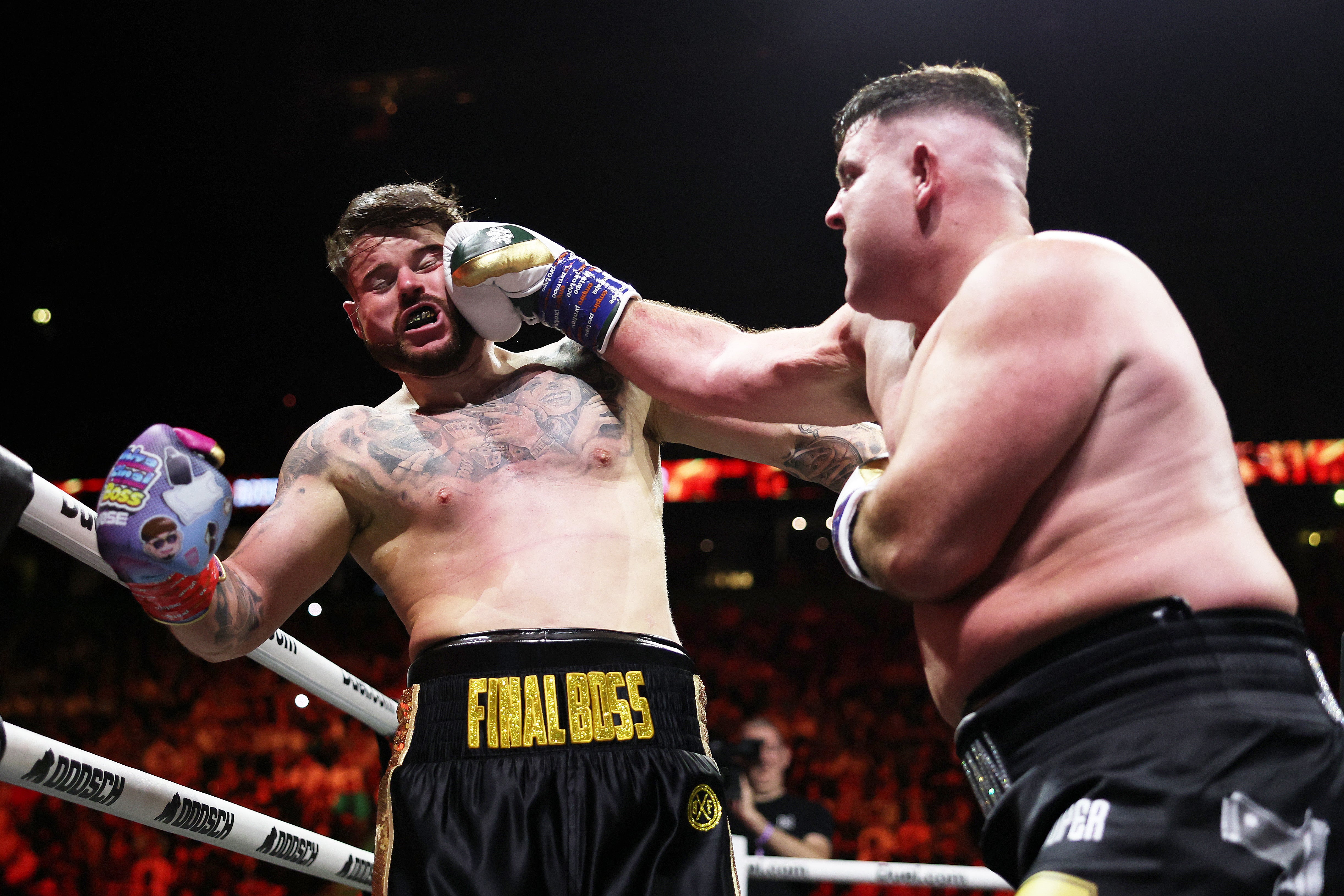
McCann was fighting the viral sensation, Ibiza Final Boss (his real name is Jack Kay); you will know him as the man with the odd haircut, dancing to music at clubs in Ibiza. Honest, that’s his fame; McCann threatened violence all week and then was hit after a few seconds and his body stiffened; he was, for a moment, out on his feet. He showed guts to stick with it; he found out that rapping about fighting and fighting are two very different vehicles. At the end of a thousand swings and four rounds, the man with the pudding-bowl haircut and immaculate teeth got the nod. The crowd loved it.

Ibiza Final Boss gets cracked by a punch from Jordan McCann
Ibiza Final Boss gets cracked by a punch from Jordan McCann (Getty)

In another fight, a boxer called Anthony Taylor dropped to his knees in frustration, claiming a substance had been rubbed into his eyes. It was dramatic and then he raced at his opponent and tried to rugby tackle about ten men. It was not the first and it will not be the last chaotic end to a Misfits fight. The crowd came for the skirmishes and they know that Taylor, a serial offender, often delivers a bit of anarchy.

When Misfits started in 2022, with KSI as one of the founding members, it had a fresh quality, an innocence in some ways. It was not a threat to the real boxing business. The thinking at the time was that traditional boxing could learn from the influencers, learn about having a social media presence, learn about marketing. That was a convenient theory.

DAZN logo

Enjoy 185+ fights a year on DAZN, the Global Home of Boxing

Never miss a fight from top promoters. Watch on your devices anywhere, anytime.

Advertisement

Buy Now

ADVERTISEMENT. If you sign up to this service we will earn commission. This revenue helps to fund journalism across The Independent.

DAZN logo

Enjoy 185+ fights a year on DAZN, the Global Home of Boxing

Never miss a fight from top promoters. Watch on your devices anywhere, anytime.

Buy Now

ADVERTISEMENT. If you sign up to this service we will earn commission. This revenue helps to fund journalism across The Independent.

Advertisement

On Saturday, Misfits pushed right up to the thin crossover line between boxing and the glory days of wrestling. It’s not a threat to boxing, but the carnival on Saturday was not very dignified. They might not be very good at boxing but they are still judged as boxers and so is the event. Great business, not a great image for the sport.

Source link

Continue Reading

NewsBeat

North Yorkshire councillors’ home addresses to be secret

Published

on

North Yorkshire councillors' home addresses to be secret

Under new laws set to come into force later this month, North Yorkshire Council will remove councillors’ usual residential addresses from its website by default.

The changes follow the recent passing of new laws, which scrap the decades-old requirement for politicians to publish where they live.

The move comes amid mounting national concerns over councillor safety.

Advertisement

Previously, members had to apply on a case-by-case basis to have their addresses redacted as a “sensitive interest” if they feared intimidation.

In North Yorkshire alone, 19 councillors have already withheld their home addresses under these safety rules.

Now, the authority’s standards and governance committee is set to meet on June 19 to rubber-stamp changes to its code of conduct to reflect the law.

Under the new rules, a councillor’s address will only be made public if they explicitly request it.

Advertisement

Without that permission, the online register will simply state that the information is “withheld from publication”.

However, politicians must still register their addresses confidentially with the council’s monitoring officer to maintain transparency.

Barry Khan, the council’s monitoring officer, said in a report prepared ahead of the meeting: “The legal change aims to improve councillor safety, reduce risks of harassment, modernise transparency rules and ensure that personal data is handled proportionately.”

Parish and town councils in North Yorkshire are also being encouraged to review their codes of conduct regarding addresses.

Advertisement

Officials say the change represents a modern, proportionate approach to personal data that prioritises the safety of elected officials without compromising local democracy.

Source link

Advertisement
Continue Reading

NewsBeat

Government to restrict new sales of towel rails and underfloor heating

Published

on

Cambridgeshire Live

The Government is working on new energy-efficiency rules that would ban new sales of or restrict more than a third of ‘space heating systems’ – including many towel rails, gas fires and under-floor heating systems

The Government is drawing up plans that would prohibit devices such as underfloor heating and towel rails. Proposed new energy-efficiency regulations would also outlaw or place restrictions on half of all gas fires and storage heaters.

According to the Telegraph, the rules would render more than a third of ‘space heating systems’ illegal to sell. Devices would be required to feature heating controls and timing controls, meaning they could only operate for a specified number of hours and under conditions in which they function efficiently.

The EU has already implemented comparable restrictions. The change will follow a similar ban on tumble dryers.

Advertisement

From January 19, 2027, the sale of new air-vented, condenser, and gas-fired tumble dryers will be prohibited in Great Britain. The regulations, introduced by the Department for Energy Security and Net Zero, set minimum energy performance standards so stringent that only highly efficient heat pump tumble dryers will be permitted for sale as new models.

Claire Coutinho, shadow energy secretary, told The Telegraph: “Ed Miliband wants to tell you how long your towel rail can be switched on. He’s already decided how you are allowed to dry your pyjamas and now he wants to make it harder to have underfloor heating in your home.”

The new regulations would prohibit approximately half of all current underfloor heating and towel rail systems, along with between 17 per cent and 27 per cent of gas heaters, reports the Mirror. The Government clarified that the ban applies solely to new sales, leaving existing systems and heaters already in use unaffected.


Under the new regulations, towel rails will be restricted to operating for no more than six hours daily, while fires and electric storage heaters will be required to feature temperature controls and power-saving modes.

Advertisement

A Department for Energy Security and Net Zero spokesman said: “Our reforms will save households money by improving the energy efficiency of underfloor heating, towel rails and storage heaters.”

Source link

Continue Reading

NewsBeat

The 41 Best Disease-Fighting Foods, According to Science

Published

on

The 41 Best Disease-Fighting Foods, According to Science

GP Dr Dawn Harper previously told HuffPost UK that she’s sceptical of “superfoods” – “there is no one single silver bullet that will enhance your chances of living a long and healthy life,” she said.

You might think that Dr Jennifer Di Noia, an Associate Professor of Sociology at William Paterson University, whose 2014 paper sought to find the best fruits and veg to reduce our disease risk, was more fond of terms like these.

But she had her own concerns. “Efforts to define… powerhouse fruits and vegetables (PFV), foods most strongly associated with reduced chronic disease risk… are lacking,” she wrote at the time.

So, the researcher set out research-backed terms.

Advertisement

What counts as “powerhouse fruits and vegetables” or PFVs?

In her study, “powerhouse” fruits and vegetables had to offer at least 10% more of 17 nutrients per 100 calories than other foods.

These nutrients the study looked at were:

  1. potassium,
  2. fibre,
  3. protein,
  4. calcium,
  5. iron,
  6. thiamin,
  7. riboflavin,
  8. niacin,
  9. folate,
  10. zinc,
  11. vitamin A,
  12. vitamin B,
  13. vitamin B,
  14. vitamin C,
  15. vitamin D,
  16. vitamin E, and
  17. vitamin K.

These nutrients had been deemed of public health importance by the Food and Agriculture Organisation of the United Nations and Institute of Medicine, the paper read.

The more of these a plant packed per calorie, the higher the PFV’s nutrient density score was.

Advertisement

However, the paper stressed that these aren’t the only potentially health-boosting components of food; therefore, these metrics could miss some produce that’s great for us.

41 fruits and vegetables, ranked by disease-fighting potential

Of the 47 foods the study author looked at, 41 met her criteria for “PFV”. (The six that missed the mark were raspberries, tangerines, cranberries, garlic, onion, and blueberries).

In order, their nutrient density scores were:

Advertisement
  • Watercress – 100.00
  • Napa cabbage – 91.99
  • Chard – 89.27
  • Beetroot greens – 87.08
  • Spinach – 86.43
  • Chicory – 73.36
  • Leaf lettuce – 70.73
  • Parsley – 65.59
  • Romaine lettuce – 63.48
  • Collard greens – 62.49
  • Turnip greens – 62.12
  • Mustard leaves – 61.39
  • Endive – 60.44
  • Chive – 54.80
  • Kale – 49.07
  • Dandelion leaves – 46.34
  • Red pepper – 41.26
  • Rocket – 37.65
  • Broccoli – 34.89
  • Pumpkin – 33.82
  • Brussels sprouts – 32.23
  • Spring onion – 27.35
  • Kohlrabi – 25.92
  • Cauliflower – 25.13
  • Cabbage – 24.51
  • Carrot – 22.60
  • Tomato – 20.37
  • Lemon – 18.72
  • Iceberg lettuce – 18.28
  • Strawberry – 17.59
  • Radish – 16.91
  • Winter squash (all varieties) – 13.89
  • Orange – 12.91
  • Lime – 12.23
  • Grapefruit (pink and red) – 11.64
  • Swede – 11.58
  • Turnip – 11.43
  • Blackberries – 11.39
  • Leeks – 10.69
  • Sweet potato – 10.51
  • Grapefruit (white) – 10.47.

With that said, the best approach for a healthy diet is eating a balance of healthy foods. Diets rich in fruits and vegetables of all different kinds is liked to better heart health, the British Heart Foundation has said.

Source link

Continue Reading

NewsBeat

Makerfield by-election LIVE as Keir Starmer speaks out on Andy Burnham and leadership challenge

Published

on

Manchester Evening News

Controversy over Reform UK candidate Robert Kenyon’s past comments about women has damaged his campaign in the tightly fought Makerfield by-election, according to new polling that suggests the contest could be too close to call.

Research conducted by Opinium for Forward Democracy, found that reports about Mr Kenyon’s comments, which have previously been described as ‘misogynistic’, are now widely known among voters and are having a significant impact on his candidacy.

Mr Kenyon’s previous posts included him responding to insulting comments directed at television presenter Carol Vorderman. As a result of the unearthed social media, Vorderman described Mr Kenyon as a ‘little coward’ and sent a letter to 6,000 female voters across the constituency.

Advertisement

The Opinium survey of 543 voters, conducted between 3 and 11 June using a mixed online and face-to-face methodology, puts Burnham on 46 per cent and Kenyon on 41 per cent. However, the five-point gap is within the poll’s margin of error of just under five percentage points, meaning the race remains highly competitive.

The data also shows Mr Kenyon’s past comments appear to have cut through in the constituency.

When voters were asked whether things candidates had said or done during the campaign made them more or less likely to support them, Kenyon recorded a net score of minus eight points, with 30 per cent saying that they were less likely to vote for him compared with 22 per cent who said they were more likely to do so. By contrast, Labour candidateAndy Burnham recorded a small positive net score of plus two points.

The polling found that 73 per cent of voters had heard reports about Kenyon’s comments, including around 80 per cent of both Labour and Reform supporters. Among voters aware of the controversy, 45 per cent said it made them less likely to vote for him, compared with just 11 per cent who said it made them more likely to support him.

Advertisement

The effect was particularly pronounced among younger voters and among those backing Burnham, while women were more likely than men to say the reports made them “much less likely” to support the Reform candidate.

You can read the full story HERE.

Source link

Advertisement
Continue Reading

NewsBeat

Starbucks Korea to shut stores early for training after marketing controversy

Published

on

Starbucks Korea to shut stores early for training after marketing controversy

StarbucksSouth Korean operation has announced it will close all its stores nationwide early on June 22 for mandatory history and social sensitivity training. The initiative comes after the coffee chain faced backlash for a marketing campaign widely perceived as mocking victims of a brutal military crackdown on pro-democracy protesters in 1980.

Shinsegae Group, which owns a 67.5 per cent stake in Starbucks Korea, confirmed that group executives and employees at Starbucks Korea’s headquarters will attend training led by history and sociology professors this Wednesday. All Starbucks stores across the country will close at 3pm next Monday, enabling staff to watch a recording of the session, according to a statement from Shinsegae.

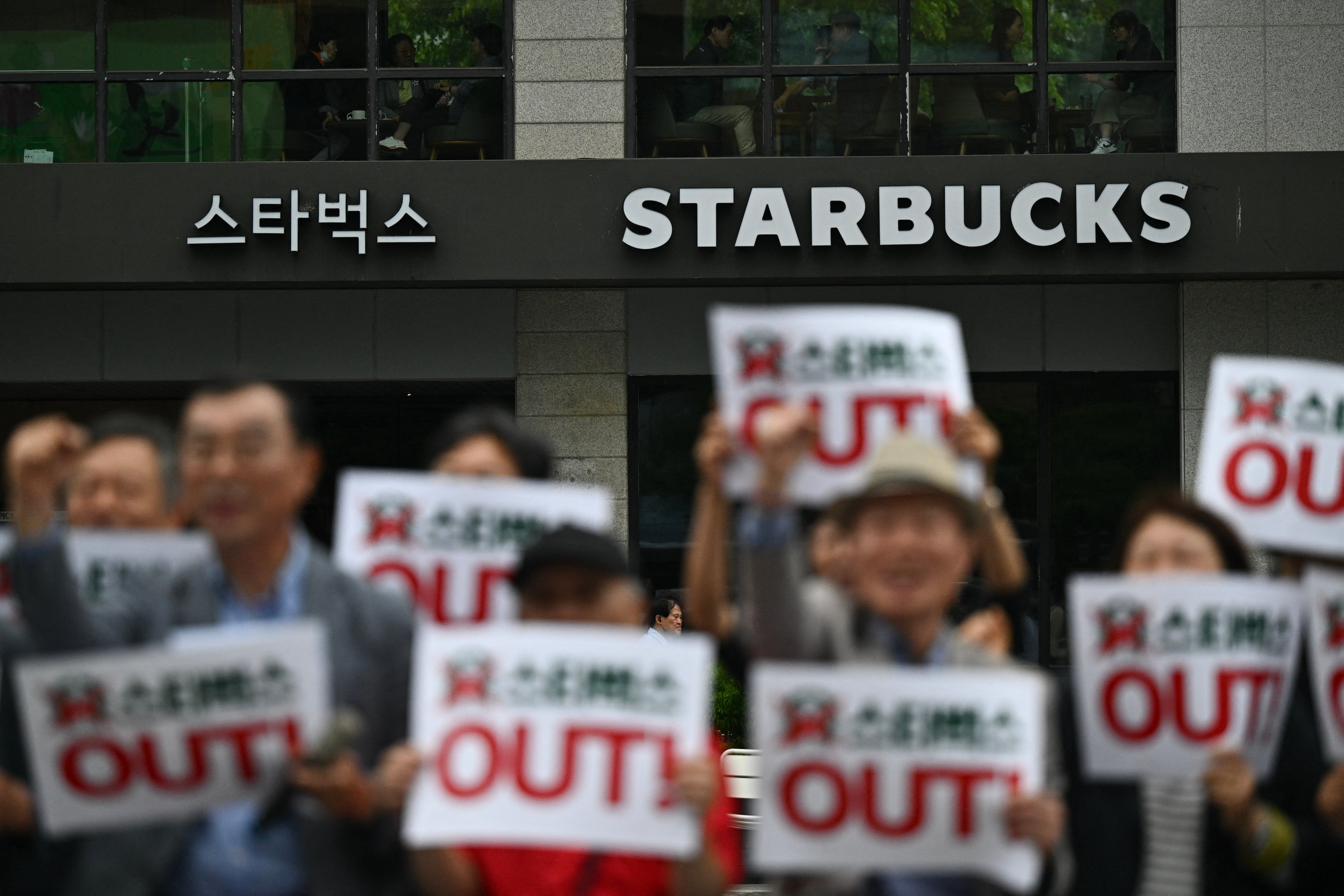
The coffee chain triggered an uproar when it attempted to promote a series of stainless-steel tumblers it called “SS Tank” by declaring May 18 to be “Tank Day.” The date marks the anniversary of the 1980 pro-democracy uprising in the southern city of Gwangju. It was violently suppressed by Seoul’s military government at the time, which deployed troops, tanks and helicopters, leaving hundreds dead or injured.

The campaign further fueled outrage by using the slogan “Thwack it on the table!” which many read as a reference to a notorious 1987 police statement that attempted to cover up the torture death of student activist Park Jong-chol. Authorities had falsely said Park died after investigators “hit the desk with a thwack.”

Advertisement
The campaign further fueled outrage by using the slogan “Thwack it on the table!”
The campaign further fueled outrage by using the slogan “Thwack it on the table!” (AFP/Getty)

With the promotion sparking immediate backlash, Shinsegae canceled it within hours and fired the chief executive of Starbucks Korea. Shinsegae Chairman Chung Yong-jin later issued a nationally televised apology as police opened an investigation following complaints from relatives of the victims of the Gwangju crackdown. Chung will undergo separate training with the chief executives of Shinsegae affiliates on June 24.

Shinsegae said the decision to close all Starbucks stores early for the first time since the chain’s 1999 launch in South Korea and require companywide training shows “how seriously it views the marketing controversy and its determination to prevent a recurrence.”

The crackdown in Gwangju came months after General Chun Doo-hwan seized power in a coup in late 1979. Government records show about 200 people died in Gwangju, but activists say the true death toll was much higher. Chun’s government also imprisoned tens of thousands, saying it was rooting out social evils.

Public anger over Chun’s dictatorship led to massive nationwide protests in 1987, forcing him to accept a constitutional revision introducing direct presidential elections, which is widely seen as the start of South Korea’s transition to democracy.

Source link

Advertisement
Continue Reading

NewsBeat

Michelle Keegan reveals daughter Palma’s exciting milestone after glimpse at TV return

Published

on

Manchester Evening News

Michelle shared new snaps of herself out and about with her little girl

Michelle Keegan has seemingly revealed an exciting milestone for her daughter, Palma, as her return to the small screen was also teased.

Advertisement

While the actress and her husband, Mark Wright, largely keep their daughter out of the spotlight, over the weekend, Michelle did share new snaps of herself out and about with their little girl.

It was in March that the couple celebrated a year since they welcomed their daughter, Palma Elizabeth Wright, into the world. Fans may recall that the couple revealed to the world that they were expecting their first child together in a sweet pregnancy announcement just after Christmas 2024, which featured Michelle debuting her blossoming baby bump on a Spanish beach.

Michelle and Mark, both 39, then later announced they’d welcomed their daughter into the world on March 12, almost a week after she was born, as they confirmed their unique name for the first child.

And it seems Palma may soon be giving her parents the runaround, as in a number of photos posted to her Instagram Story on Sunday (June 14), Michelle could be seen holding her daughter’s hand as she toddled along next to her, hinting she has reached a special walking milestone.

Advertisement

Meanwhile, Michelle has been seen for the first time in her ‘gripping’ new drama. The Stockport-born actress will be starring as DI Emma Crane in the new ITV crime drama, The Blame. Her character will investigate the death of a teenage figure skater, starring alongside Douglas Booth as DI Tom Radley.

According to ITV: “Set to air this autumn, The Blame is a gripping new series set to have audiences on the edge of their seats. Produced by acclaimed Quay Street Productions (part of ITV Studios), written, developed for television and executive produced by Megan Gallagher (All Her Fault, Wolf), the drama dives into secrets, suspicion, and systemic corruption – all under the surface of the seemingly quiet town, Wakestead.”

The six-part series is centred around DI Emma Crane and DI Tom Radley investigating a tragic murder in the fictional town of Wakestead. They quickly identify their main suspect, but as the case progresses, an unexpected lead comes to light. As Emma and Tom dig deeper, they uncover a web of lies, institutional cover-ups and moral compromise, which forces Emma to question the people closest to her.”

Advertisement

Source link

Continue Reading

NewsBeat

Should You Stop Taking Vitamin D Now That It’s Sunny?

Published

on

Should You Stop Taking Vitamin D Now That It’s Sunny?

According to the NHS, most adults should consider taking vitamin D supplements from October to early March.

But now that the Easter eggs have been unwrapped and April Fool’s Day has passed, is it time to put the supplements down?

Not always, said Kyle Crowley, a chief product officer and nutritionist at Protein Works.

Who may still need vitamin D supplements in spring?

Advertisement

“It’s suggested that optimal exposure to sunlight is between five and 30 minutes a day. Therefore, if you don’t hit these requirements each day, you may need to consider supplementing,” said Crowley.

That rises to 25 minutes a day for people with darker skin tones.

“In fact, studies show that nearly half of UK adults have below-optimal levels of vitamin D. Most surprisingly, adults aged 18–29 have the lowest average. So, if you’re a student studying indoors or working all day indoors, this lifestyle will limit your daily exposure and taking vitamin D would be recommended.”

The NHS said that “People at high risk of not getting enough vitamin D, all children aged 1 to 4, and all babies (unless they’re having more than 500ml of infant formula a day) should take a daily supplement throughout the year.”

Advertisement

They include people who are not often outdoors (e.g. those in care homes or who are housebound), those who wear clothes that cover most or all of their skin while outdoors, and those with darker skin in that “at-risk” category.

Crowley advised taking vitamin D3 supplements if you choose to, instead of vitamin D2 kinds, as vitamin D3 seems better for our immune systems.

What if I’m not sure whether I need vitamin D?

“It is important to note that there is a difference between having a vitamin D deficiency and being below optimal levels. A deficiency, which is usually a vitamin D level below 25 nmol/L, should be addressed by a medical professional,” Crowley stated.

Advertisement

“The best way to find out about your vitamin D levels is to get a blood test. This is definitely worth it if you tend to get ill often, or generally feel like your health is not at its best.”

  • below 25 nmol/L – Deficient

  • 25-50 nmol/L – Insufficient

  • 50-75 nmol/L – Adequate

  • 75 nmol/L or above – Optimum.

How much vitamin D should I take?

Don’t take vitamin D supplements if you don’t need them, as too much over a long period of time can lead to hypercalcaemia.

Advertisement
  • Babies (0-12 months) – 8.5-10 mcg/day (340-400 IU/day)
  • Children (1 year and over) – 10 mcg/day (400 IU/day)
  • Adults (including pregnant or breastfeeding people) – 10 mcg/day (400 IU/day).

Source link

Continue Reading

NewsBeat

Strictly Come Dancing stars share heartbreaking loss years after marriage split

Published

on

Manchester Evening News

Neil and Katya Jones took to social media to detail the loss of their beloved dog, Crumble

Two Strictly Come Dancing stars have revealed that they have suffered a heartbreaking joint loss, years after their marriage came to an end.

Advertisement

Fans of the BBC One dance show will already be aware that Neil and Katya Jones were once in a relationship. The two professional dancers married in August 2013, but after six years of marriage, in August 2019, they announced their separation.

The statement at the time read: “As our fans and loyal supporters, you are really important to us, and so we wanted to let you know some news. After 11 years, we have made the mutual decision to separate. We will always love each other, just in a different way as friends. This will never change what a great team we make and we are really proud of everything we have achieved together.

“Our shared love of dance means we will keep working and dancing together as well as exploring individual projects. No matter what we do we will always support and respect each other. We wish one another every happiness and we will remain the best of friends. We are really looking forward to getting back to the ballroom and can’t wait to keep on dancing. Lots of love from us both.”

The former couple have remained on good terms, continuing to work and perform together on Strictly, and they have also continued to share owner of their pet dogs, Chorizo and Crumble. An Instagram page for the pups reads: “Crumble -Chi x shit x poo SHE/HER, Chorizo (adopted) Chihuahua mix HE/HIS, parents @mr_njonesofficial and @katyajones.”

Advertisement

But it was over the weekend that Neil confirmed the devastating death of Crumble. Alongside pictures of the adorable pooch, he shared: “Today we said goodbye to Crumble. She may have been small, but she had the biggest personality and brought so much joy to everyone who knew her.

Content cannot be displayed without consent

“She loved cuddles, belly rubs, and being close to the people she loved.” He added: “She will be missed more than words can say, but we find comfort in knowing she is finally at peace and no longer in pain. Sleep tight, Crumble.”

The post was quickly flooded with messages of love and support. Fellow dancer Karen Hauer said: “Oh Neil. I’m so sorry .. so sad .. she was a beautiful little girl. Sending all the love,” while Joanne Clifton replied: “It’s SO sad .. Sending love.” Former Strictly contestant Gemma Atkinson commented: “I’m so sorry Neil.”

Katya, meanwhile, shared a video to her Instagram Story of Crumble, and told her followers: “I know you are the sassiest girl up there [heart emoji].” She then shared pictures of her and her 2025 Strictly partner Lewis Cope back dancing together and commented: “Danced my way through this heartbreaking weekend [dog emoji].”

Advertisement

Source link

Continue Reading

NewsBeat

Portfolio Diet: Food Plan And Heart Benefits

Published

on

Portfolio Diet: Food Plan And Heart Benefits

In a recent video, surgeon, author, and medical myth debunker Dr Karan Rajan said that the portfolio diet could “reduce your [low-density lipoprotein] LDL cholesterol as much as a statin”.

Statins are medications designed to lower a person’s LDL, or “bad”, cholesterol levels, thus reducing their risk of heart disease and stroke.

A 2003 study found that the portfolio reduced LDL cholesterol by almost 29%. In other words, it seemed about as good as low-dose statins (those which reduce LDL cholesterol by 30% or less) at lowering “bad” cholesterol.

The British Heart Foundation cautioned that statins may carry unique benefits and better-proven outcomes outside of just lowering LDL cholesterol. If you’ve been prescribed statins, keep taking them as long as your doctor advises.

Advertisement

But if you’re trying to keep your LDL levels healthy in general, some research suggests the portfolio diet can reduce “bad” cholesterol by as much as 30%.

What is the portfolio diet?

The diet, which was invented in the early 2000s by Dr. David J.A. Jenkin, is designed to combine several LDL cholesterol-reducing foods into a single plan.

Speaking to Harvard Health, dietitian Andrea Glen – who was involved in 2023 research that showed sticking strictly to the Portfolio diet was linked to a 14% lower risk of heart disease – said: “A lot of different foods can lower LDL cholesterol, but only by a little bit – about 5% to 10%.

Advertisement

“The idea behind the portfolio diet was to combine many of these foods together to get a larger reduction.”

How can I follow a portfolio diet?

The portfolio diet focuses on four main components:

  1. Plant protein, especially soy protein, found in tofu, edamame beans, lentils, and tempeh.
    Consuming these has been linked to a 4-6% LDL cholesterol reduction, and the portfolio diet asks you to aim for least 35g a day.
  2. Plant sterols, like those found in minimally processed olive, sunflower, and rapeseed oils and fortified products e.g. some margarines, milks, and yoghurts which say they help to lower cholesterol.
    A 2014 review of studies found that eating up to 3.3g a day of plant sterols a day lowered participants’ LDL cholesterol levels by 6-12% after four weeks, though consuming more did not lead to better results. The portfolio diet suggests 2g of plant sterols a day, which the British Heart Foundation says you probably won’t get from oils, fruits, veg, and grain alone: reach fof fortified foods for the most effective does.
  3. Tree nuts, like almonds, Brazil nuts, hazelnuts, cashews, macadamia nuts, walnuts, and pistachios.
    These could help to reduce LDL cholesterol by anywhere from 3-19%. The portfolio diet asks you to eat a handful, or 42g, of tree nuts a day.
  4. Soluble fiber, which you can get from fruits, vegetables, whole grains, and legumes (e.g. black beans, oats, Brussels sprouts, barely, sweet potatoes, carrots, avocado, and soft fruit, like apples and pears).
    Getting enough soluble fibre has been linked to 5-11 lower LDL cholesterol level points. The portfolio diet recommends 18g a day.

Taking psyllium husk can help if you’re struggling to reach your soluble fibre goals, while (as we mentioned) plant sterol-fortified yoghurts, spreads, and milk products are probably the best way to help you meet that target.

Advertisement

Source link

Continue Reading

Trending

Copyright © 2025