Ask a senior Thai official which country Thailand considers its most important strategic partner, and you will receive a carefully constructed non-answer — a fluent recitation of Thailand’s commitment to balanced relationships, multilateral frameworks, and ASEAN solidarity. Ask the same question to a Thai business executive, and you will likely get a more direct response: it depends entirely on what you are trying to do.
That gap between diplomatic language and commercial reality defines Thailand’s position in 2026 better than any policy document. Thailand is simultaneously China’s most economically integrated ASEAN partner, the United States’ oldest treaty ally in Southeast Asia, and an active architect of the ASEAN multilateral system. It is running all three identities at once — not because it cannot choose, but because it has decided, strategically, not to.
Key takeaways
Thailand’s multi-alignment is not indecision — it is policy.China accounts for $153 billion in bilateral trade and is Thailand’s largest investor. The US is Thailand’s oldest security ally and a critical export market. The EU, South Korea, and Canada are all active FTA partners. Bangkok is not hedging. It is deliberately cultivating leverage across all axes — and has been doing so for decades.
The tariff squeeze from Washington is real and tightening.China’s manufacturers using Thailand as an export base face intensifying US scrutiny on rules of origin, value addition, and supply chain provenance. The era of simple trade rerouting is over. Executives building supply chains through Thailand need a genuine value-addition strategy — not just a Thai address on a shipping label.
The tension at the heart of Thailand’s position is the opportunity for business.China’s $1 trillion global trade surplus is flooding ASEAN with capital, technology, and competitive pressure simultaneously. Thailand’s response — absorbing Chinese investment while actively diversifying its partnerships — creates exactly the kind of complex, multi-directional business environment where well-positioned companies thrive and poorly positioned ones get squeezed.
The paradox at the centre
Start with the number that defines Thailand’s strategic dilemma most sharply: 90.6 percent. That is the proportion of Thai respondents in the 2024 ISEAS-Yusof Ishak Institute survey who expressed concern about China’s growing economic influence — the highest rate in Southeast Asia, ahead of Vietnam, the Philippines, and every other ASEAN member state. It is a striking figure for a country whose government has simultaneously signed a five-year cooperation plan with Beijing, welcomed nearly $7 billion in Chinese investment, and invited Chinese firms to build its digital infrastructure.
The paradox is not a contradiction. It is a description of Thailand’s actual situation: deeply economically integrated with a partner it does not entirely trust, dependent on relationships it cannot afford to lose, and acutely aware of the risks that come with both. Thai policymakers have watched what happens when smaller economies become overly dependent on a single great power — and they have no intention of becoming a case study.
The result is a foreign policy posture that has no single name but is immediately recognisable in practice: say yes to Chinese investment while maintaining American security guarantees, pursue ASEAN solidarity while negotiating bilaterally with every major power, and never let any single partner feel so essential that it stops being a partner and starts being a constraint. It is a strategy built less on ideology than on instinct — the instinct of a small or middle power that has learned, often through hard experience, that alignment is a trap and optionality is survival.
Advertisement
In practical terms, this means signing infrastructure agreements with Beijing while quietly renewing basing arrangements with Washington, showing up to multilateral summits with carefully worded communiqués that satisfy everyone and commit to nothing irreversible, and cultivating enough economic interdependence with each major power to remain relevant without becoming dependent. The genius of the approach, if it can be called that, lies precisely in its refusal to be codified. A doctrine can be challenged, tested, or called out as a bluff. A disposition, a habit of perpetual calibration, is far harder to pin down or pressure into abandonment. The risk, of course, is that what looks like sophisticated balance can tip, under sufficient stress, into paralysis — or worse, into the appearance of bad faith to every partner simultaneously. But for now, and for the foreseeable future, it remains the dominant grammar of statecraft across much of the region.
The land bridge: China’s largest bet in Thailand
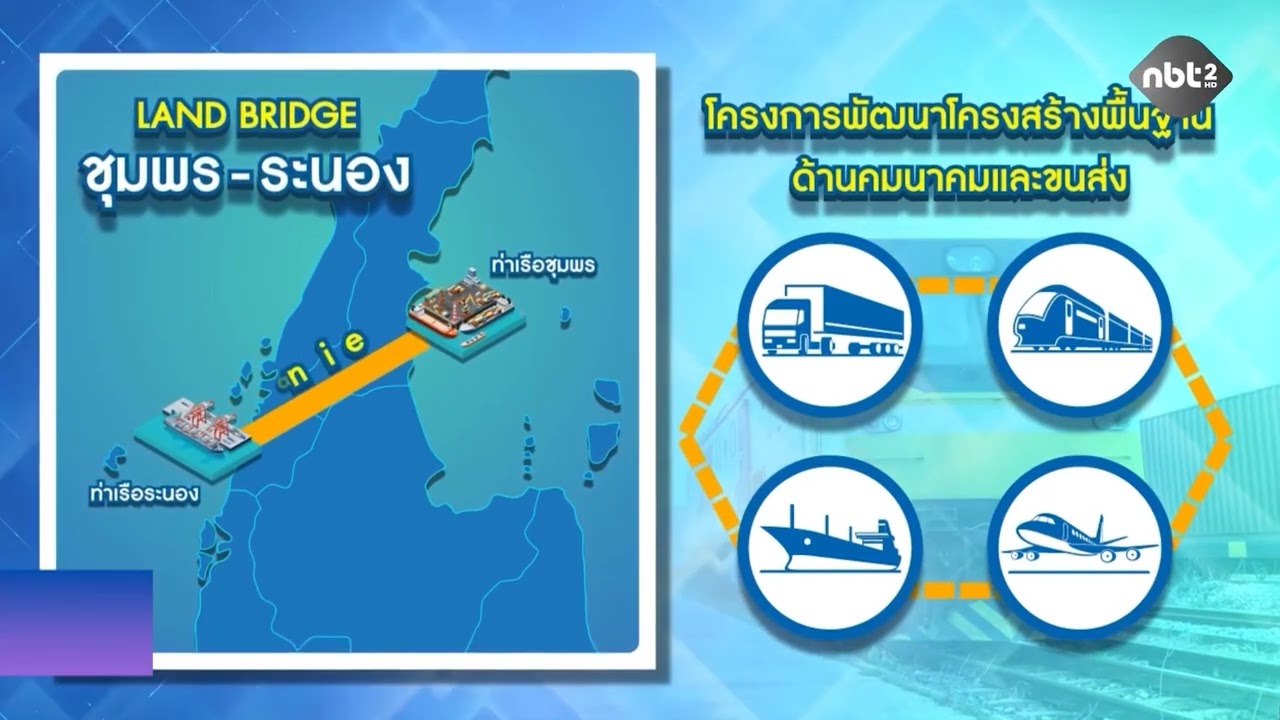
No single project better illustrates the complexity of Thailand’s position than the proposed Southern Economic Corridor land bridge — a megaproject connecting deep-sea ports on the Gulf of Thailand and the Andaman Sea via a 90-kilometre rail and motorway corridor across Chumphon and Ranong provinces.
The strategic logic is compelling. A completed land bridge would allow cargo to bypass the Strait of Malacca — one of the world’s most congested shipping chokepoints, through which roughly 40 percent of global trade currently passes — reducing transit times between the Indian Ocean and the South China Sea by two to five days and shaving significant costs off regional shipping routes.
China is the most widely expected primary backer for this project — for reasons that are as strategic as they are financial. A Thai land bridge funded and built by Chinese capital, using Chinese construction expertise, and integrated into Chinese-operated logistics networks would extend the reach of Chinese trade infrastructure deep into the Indian Ocean without requiring Chinese territorial control of any chokepoint. For Beijing, it is Belt and Road logic applied with extraordinary precision.
For Thailand, the calculus is more complicated. The project offers genuine economic transformation — an estimated $28 billion in infrastructure investment, tens of thousands of construction and operational jobs, and a permanent shift in Thailand’s position in regional logistics. But accepting Chinese backing at the scale required would deepen a dependency that Thai policymakers are simultaneously trying to manage. The land bridge negotiations, which have been underway for several years, are moving carefully — and the pace is deliberate, not accidental.
Advertisement
Washington’s pressure: the tariff tightrope
If Beijing represents Thailand’s deepest economic entanglement, Washington represents its most immediate commercial pressure point.
The United States shifted in 2025 from a China-specific tariff strategy to a broader, value-chain-wide protectionist approach targeting entire supply chains in electric vehicles, lithium-ion batteries, solar components, semiconductors, and steel. Countries across ASEAN — including Thailand — found themselves subject to scrutiny that previously applied only to direct Chinese exports.
The implications for Thailand are significant. A Thai facility that is majority-owned by a Chinese firm, uses primarily Chinese-sourced inputs, and exports finished goods to the US market now faces serious rules-of-origin questions that did not exist three years ago. The “36% tariff on Thai goods” framework that emerged from 2025 trade negotiations added urgency to those questions, placing Thailand in active dialogue with Washington over trade terms while simultaneously deepening its economic ties with Beijing.
As one trade expert from Chulalongkorn University put it: “The US wants assurances on market access, but Thailand is walking a tightrope between its largest trading partners.” That assessment captures the position precisely — and it applies not just to Thailand’s government but to every international company operating in the country.
Advertisement
The businesses best positioned to navigate this environment are those that can demonstrate genuine value addition in Thailand — local supply chain integration, Thai employment at skilled levels, meaningful R&D or design functions — rather than those that are simply using Thai addresses to access preferential trade terms. The era of tariff arbitrage through nominal Thai presence is over. The era of genuine Thailand-based value creation is just beginning.
BRICS, FTAs, and the diversification playbook
Thailand’s response to the pressure from both sides has been to accelerate its diversification — not away from China or the US, but toward a broader portfolio of relationships that reduces its exposure to any single partner’s leverage.
The BRICS application is the most visible symbol of this strategy. Thailand has applied for BRICS membership — a move that reads differently depending on who is interpreting it. For Beijing, it signals alignment with a China-led multilateral framework. For Washington, it raises questions about Thailand’s commitment to Western-aligned institutions. For Bangkok, it is simply the next logical step in a multi-alignment strategy that has been running for decades: join every club that offers leverage, and use membership in each to strengthen your position in all the others.
Simultaneously, Thailand is pursuing an ambitious FTA agenda. The Thailand-EU Free Trade Agreement — under negotiation for years — has regained momentum, driven partly by European interest in supply chain diversification and partly by Thai interest in reducing dependence on the China-US axis. FTA frameworks with South Korea and under the ASEAN-Canada agreement offer additional diversification vectors.
Advertisement
ASEAN trade with China rose 15 percent in 2024, while US trade increased 12 percent and EU trade remained strong at €258.7 billion — a distribution of relationships that reflects exactly the kind of balanced portfolio Thailand is trying to maintain at the national level. The FTA strategy is Thailand’s attempt to institutionalise that balance, locking in preferential access to multiple major markets so that no single partner can credibly threaten to withdraw access without consequence.
Public sentiment as a business risk
Strategic frameworks and FTA negotiations are one thing. Public sentiment is another — and executives operating in Thailand need to take the latter seriously.
The gap between Thailand’s government posture toward China and Thai public opinion about Chinese influence is one of the most significant political risks in the country’s business environment. The 90.6 percent concern figure from the ISEAS survey is not an outlier — it reflects consistent polling trends showing unease about Chinese economic dominance, Chinese land ownership, Chinese labour practices at Chinese-owned facilities, and the displacement of Thai manufacturers by Chinese competitors.
This sentiment has already produced concrete policy responses. Proposed VAT on low-priced Chinese goods, stricter enforcement of foreign business ownership rules, and parliamentary scrutiny of Chinese-funded infrastructure projects are all expressions of the same political dynamic: a government that wants Chinese investment but faces an electorate that is increasingly sceptical of Chinese influence.
Advertisement
For business executives, the implication is clear: a market entry strategy that ignores Thai public sentiment about China is not just politically naive — it is commercially risky. Chinese-invested businesses that integrate into local supply chains, hire Thai workers at all levels, and invest in community relationships are dramatically better positioned than those that operate as self-contained Chinese enclaves. Non-Chinese firms operating alongside Chinese partners need to understand how their association is perceived — and manage that perception actively.
The business strategy for Thailand’s multi-alignment reality
What does all of this mean for the executive making decisions about Thailand today?
First, understand which axis your business primarily operates on. A manufacturing operation selling primarily to the US market has different exposure — and different strategic requirements — than one selling into ASEAN or China. The tariff environment, the rules-of-origin requirements, and the political risk profile differ significantly across these axes. Know yours before you build.
Second, treat Thai partnerships as strategic assets, not operational conveniences. In a multi-alignment environment, a Thai partner with genuine government relationships, local supply chain integration, and community credibility is worth substantially more than a logistics facilitator. The companies that build real Thai partnerships will navigate Thailand’s political crosscurrents far more effectively than those that treat the country as a pass-through.
Advertisement
Third, plan for scenario divergence. Thailand’s balancing act is impressive, but it is not permanent. A sharp deterioration in US-China relations, a change of government in Bangkok, or a significant shift in Chinese investment flows could move the needle in any direction. Executives with five-to-ten-year horizons should stress-test their Thailand strategies against at least three divergent scenarios — closer alignment with China, closer alignment with the West, and continued multi-alignment — and ensure their position is viable under each.
Fourth, watch the land bridge. If Thailand secures financing for the Southern Economic Corridor project and construction begins, it will reshape regional logistics, investment flows, and geopolitical positioning in ways that affect every business with ASEAN exposure. It is the single most significant infrastructure development to monitor.
The bottom line
Thailand’s balancing act is not a failure to choose. It is a deliberate strategy, executed by a country that has spent fifty years learning how to extract maximum value from great-power competition without becoming its casualty.
For business executives, that strategy is both the context and the opportunity. A country committed to multi-alignment will keep its trade routes open, its investment environment active, and its diplomatic relationships functional regardless of what happens between Washington and Beijing. It will not be the cheapest operating environment in ASEAN. But it may well be the most resilient.
Advertisement
In a world defined by geopolitical volatility, resilience is undervalued — until it is the only thing that matters.
End of series — Thailand × China: The Business Opportunity
Articles in this series: 1. The Dragon Meets the Elephant · 2. Factory of the Future · 3. The EV Kingdom · 4. The Digital Silk Road · 5. The Balancing Act, Thailand’s Strategic Tightrope Between China, the US, and ASEAN
President Donald Trump said over 2,000 manufacturing jobs were created in Pennsylvania in recent months during a speech at the Mack Trucks facility in the state.
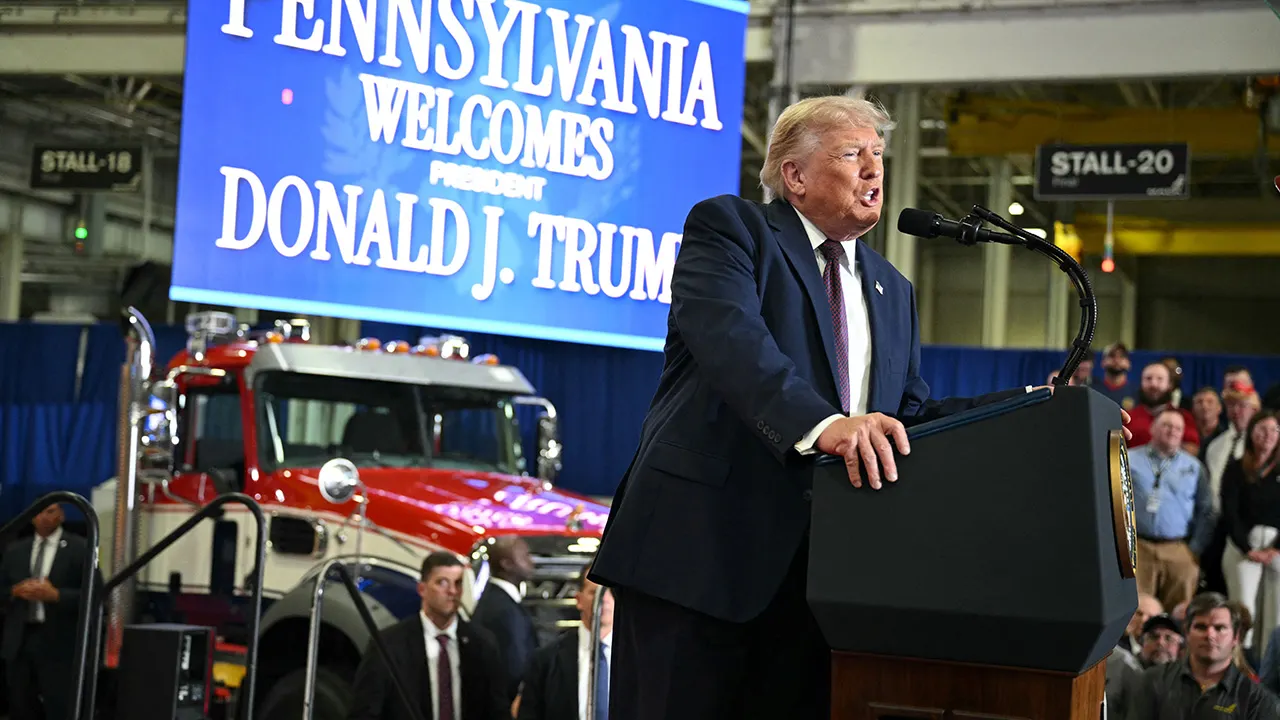
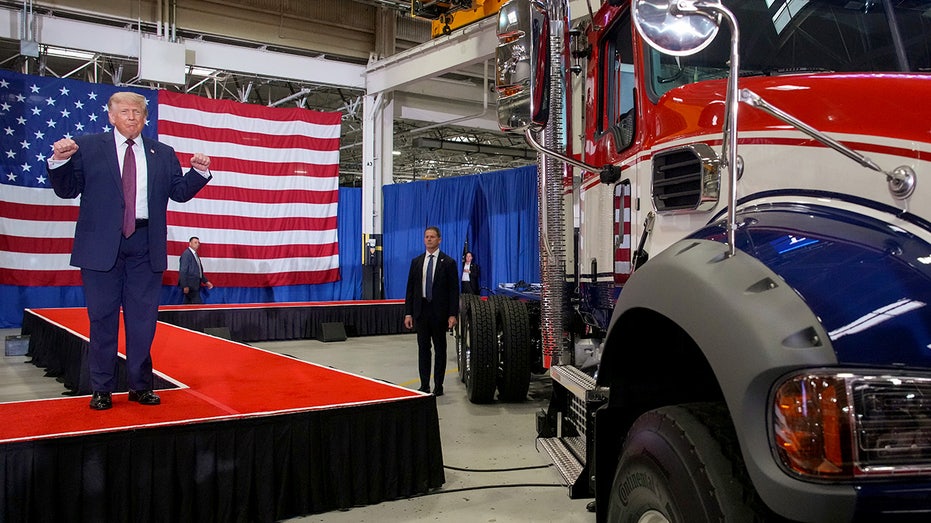
President Donald Trump on Tuesday visited the Mack Trucks facility in Macungie, Pennsylvania, to tout his economic agenda in a battleground district ahead of this fall’s midterm elections.
Trump spoke to a crowd at the Mack Trucks facility while accompanied by Rep. Ryan Mackenzie, R-Pa., who represents the Keystone State’s 7th congressional district where the plant is located. Mackenzie is running for reelection and will face Democratic challenger Bob Brooks this fall.
Advertisement
The president touted the impact of his economic policies on Pennsylvania, saying that they’ve helped boost job creation in the commonwealth with a particular focus on manufacturing jobs.
“More Americans are working today than at any time in the history of our country. And we’ve created over… 32,000 new jobs just starting in Pennsylvania alone. But you have to get credit for that,” Trump said. “And in the last few months alone, we’ve added 2,600 Pennsylvania manufacturing jobs, and that number’s going to go much higher as the factories start to open.”
President Donald Trump touted manufacturing jobs in his Pennsylvania speech at a Mack Trucks facility on Tuesday. (Mandel NGAN / AFP via Getty Images)
Trump also praised the role of Mack Trucks, which is owned by Volvo Group of Sweden, in supporting both the regional and national economy with its production.
Advertisement
“For more than 100 years, this legendary company has been making trucks right here in Eastern Pennsylvania, building the heavy machinery that keeps our economy rolling on, factories moving and our industries rolling all across the nation,” Trump said.
He also said that his move to roll back the Biden administration’s fuel emissions regulations, arguing that those more stringent standards would’ve raised costs on consumers and created problems for companies like Mack Trucks.
“I terminated Biden’s disastrous fuel emission standards that would have crushed Mack Trucks here,” Trump said. “It was the most insane environmental regulation ever conceived of by men. It was totally unreasonable and ridiculous, and you can sell trucks for much less money, that are much better trucks that work, that actually work.”
Advertisement
President Donald Trump at the Mack Trucks facility in Macungie, Pa., Tuesday. (Andrew Harnik/Getty Images)
Trump’s speech also referenced other notable investments in the region’s manufacturing industries, including the pharmaceutical, medical products and chip-making sectors.
“Eli Lilly has just announced — great company, by the way, drug company — a $3.5 billion investment in a brand-new, state-of-the-art manufacturing facility right down the road that’s going to create over a thousand jobs. Just that one,” Trump explained.
“Nokia is investing $30 million to expand its semiconductor testing and packaging operations, thousands of jobs,” he added. “And B. Braun has announced a $20 million expansion of its medical device manufacturing operation in Allentown.”
Former Modell’s Sporting Goods CEO Mitch Modell discusses his return to business with MitchModell.com, where he is selling New York Knicks-themed T-shirts, on ‘The Claman Countdown.’
The first New York Knicks NBA championship in 53 years has the entire city still in rapture days after beating the San Antonio Spurs in five games.
This special moment in Knicks history is something the players have not taken for granted, and one of them is working alongside 1800 Tequila to commemorate the moment in special fashion.
Advertisement
Miles “Deuce” McBride teamed up with the tequila brand to gift his teammates with custom New York-themed bottles of 1800 Milenio Tequila, which is the brand’s luxury expression made for legendary milestones like the Knicks had this season.
Miles “Deuce” McBride teamed up with 1800 Tequila to create 30 exclusive bottles to commemorate the team’s NBA Finals victory over the San Antonio Spurs. (1800 Tequila)
The bottles were designed specifically for the championship season by local illustrator and longtime Knicks fan Fefi. They feature New York City iconography, hometown sayings, and have visual nods to the grit, pride and energy that have been seen throughout this historic playoff run all around the bottle.
There were only 30 bottles created and gifted to the roster and several staff members from McBride, with each one being a personal keepsake to remember this signature moment in New York sports history.
“I’d say legacy means so much to me. The legacy of 1800 [Tequila] being passed down, it just correlates really well with everything in my life, everything New York, and everything Knicks,” McBride said.
Miles “Deuce” McBride with New York illustrator Fefi, who delivered the artistry for 1800 Tequila’s 30 commemorative bottles for the Knicks’ championship. (1800 Tequila)
The Knicks made 1800 Tequila the official tequila of the team, and that partnership was on full display during the playoff run. While having sold-out Knicks limited edition bottles, it also launched Row 18(00), which was a campaign featuring New York-based content creators that gave real Knicks fans who may have gotten priced out of attending playoff games at Madison Square Garden the chance to watch from Row 18 inside the arena.
Game 3 of the NBA Finals between the Knicks and Spurs, which marked the first finals game at MSG since 1999, had an average sale price around $7,683, according to Vivid Seats earlier this month. The cheapest ticket to attend was $3,940, and those four-figure prices were also seen earlier in the playoffs.
Advertisement
Jordyn Woods, the fiancee of Knicks star Karl-Anthony Towns, looks down at 1800 Tequila bottle commemorating the Knicks’ championship. (1800 Tequila)
I have a B.Tech degree in Mechanical Engineering from a top school in India. For nearly twenty five years, I have worked in the oil and gas sector, primarily in the Middle East. I work at the intersection of engineering, operations, and project management in an industry that does not forgive mistakes – so I have learned to be efficient, careful, and disciplined. These traits inform my investment strategy. For much of my professional career, I have maintained a serious and sustained interest in the U.S. equity markets, with a particular focus on technology, energy, and healthcare. I started as a growth investor, taking risks as I saw fit; but today, my investment approach blends elements of both value and growth. I seek to understand the underlying economics of a business, evaluate the durability of its competitive advantage (or “moat”), and assess its ability to generate consistent free cash flow over time. I believe, as Munger puts it, in “sitting on your ass” when holding a high-quality business—allowing time and compounding to do the heavy lifting. My orientation is moderately conservative; I look for upside while minimizing downside. Well, who doesn’t, but as I look towards retirement, I have started emphasizing the latter over the former. As a result, in recent years, I’ve gradually rebalanced toward income-generating assets—dividend-paying equities, REITs, and similar vehicles. I view investing not merely as a pursuit of high returns but something that will also generate peace of mind. I joined Seeking Alpha to both contribute to and learn from a community of thoughtful investors—people who, like me, are interested in the intersection of real-world business fundamentals and intelligent investing. PS – The icon I have used represents something fundamentally important to me – that is, to earn money through investing in ecologically sensitive businesses.
Analyst’s Disclosure: I/we have no stock, option or similar derivative position in any of the companies mentioned, and no plans to initiate any such positions within the next 72 hours. I wrote this article myself, and it expresses my own opinions. I am not receiving compensation for it (other than from Seeking Alpha). I have no business relationship with any company whose stock is mentioned in this article.
Seeking Alpha’s Disclosure: Past performance is no guarantee of future results. No recommendation or advice is being given as to whether any investment is suitable for a particular investor. Any views or opinions expressed above may not reflect those of Seeking Alpha as a whole. Seeking Alpha is not a licensed securities dealer, broker or US investment adviser or investment bank. Our analysts are third party authors that include both professional investors and individual investors who may not be licensed or certified by any institute or regulatory body.
The route will provide a connection for people travelling to the Alps during ski season
An easyJet plane
Budget carrier easyJet has announced its first international flight from Cornwall Airport Newquay.
The route to Geneva in Switzerland will operate once a week – on Saturdays – from January 16 to February 27, 2027, providing a connection for travellers from Newquay to the Alps during the ski season, with dates including February half term.
The seasonal service will be the only direct winter connection between Newquay and Switzerland and follows easyJet’s recent announcement of a summer route between Newquay and London Gatwick.
Kevin Doyle, easyJet’s UK Country Manager, said: “We are delighted to be putting another route on sale from Newquay, our first international service from the region, following the recent launch of our route to London Gatwick.
Advertisement
“Our winter service to Geneva will be perfect for those looking to book a winter getaway whether that’s for a city break or a ski trip in the French Alps. We are committed to providing our customers across the UK with greater regional connectivity at affordable prices.”
Nigel Scott, commercial director at Cornwall Airport Newquay, added: “We’re very pleased to be able to offer travellers in Cornwall a direct connection to the Alps with easyJet this winter.
“We know demand is high for direct ski access from the region, and this route provides an affordable and convenient way for travellers to land on the doorstep of some of Europe’s best ski resorts.
“Building on the success of easyJet’s summer Manchester route, and upcoming London Gatwick connection, we’re delighted to continue strengthening our partnership with easyJet into the winter season.”
Advertisement
Earlier in June, Cornwall Airport announced plans to launch a direct-flight package holiday programme to Tenerife in March next year. The South West transport hub has partnered with Murray Travel on the programme which will offer two direct departures from Newquay to Tenerife on Friday, March 5 and Friday March 12.
The news comes as the airport’s interim managing director, Amy Smith, steps down from the organisation after 11 years to take up a new role within the aviation sector. The transport hub has not announced a new boss yet, but is expected to appoint a new MD in the coming weeks.
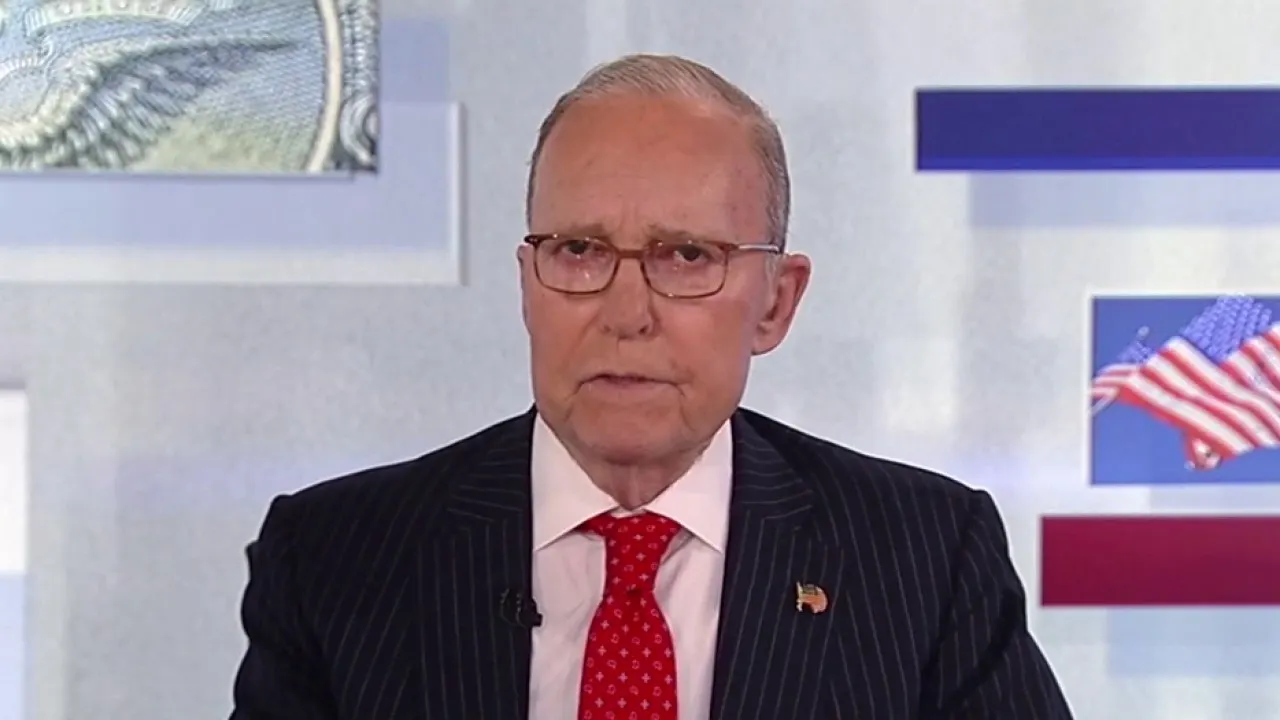
FOX Business host Larry Kudlow argues that President Donald Trump’s diplomatic efforts with Iran are facing undue criticism on ‘Kudlow.’
There’s vastly too much hand-wringing over President Trump’s diplomacy and potential dealmaking with Iran, and it’s coming from friends and foes alike. I think it has more to do with America’s crumbling political infrastructure, than it does regarding the merits of Mr. Trump’s efforts.
First of all, the so-called memorandum of understanding is a nonbinding political document which simply outlines topics to be covered in the months ahead for some kind of final deal. Some people are taking parts of this MOU completely out of context for their own political gain. Let’s step back for a moment.
Advertisement
Over the past year, beginning with Operation Midnight Hammer and continuing through Epic Fury and Economic Fury, American and Israeli allied forces have completely decapitated the Iranian leadership, turned their nuclear capacity into rubble, totally buried their enriched uranium, destroyed their navy, destroyed their airforce, destroyed their radar, destroyed much of their missiles, and drones, and destroyed virtually their entire industrial base. Inflation could be running at more than 200 percent. Food and medicine for average civilians are not available. Currency is worthless. The economy essentially shuttered. In other words, Iran’s military and economic capabilities have been decimated. And people know this whether they criticize it or not. General Jack Keane observed that we’re not even seeing Iranian fast boats anymore in the Strait of Hormuz.
Sen. Rand Paul, R-Ky., discusses President Donald Trump’s diplomatic approach with Iran and argues peace is preferable to military conflict on ‘Kudlow.’
Meanwhile, the New York Post’s Miranda Devine writes that Iranian women at Tehran are now going around on motorcycles wearing skirts and without hijabs covering their hair, a crime that used to result in fines, jail, and savage beatings. Yet the morality police may be dead. Another sign that the radical Islamist Republic is crumbling from the inside.
Because of Mr. Trump’s courageous actions, the only president in the last 50 years to go after Iran forcibly and successfully. Its leadership has been decapitated, their military capabilities have been virtually eliminated, and their nuclear operations have been shut down. All reduced to rubble.
Advertisement
In short, their capacity for harm has essentially been eliminated for years to come with no boots on the ground. So, all this gives Mr. Trump the opening for diplomacy in the future. Why not try it? And that leads to at least a temporary suspension of the naval blockade to reopen the Strait of Hormuz and bring down oil prices to sustain the world economy.
It’s a risk worth taking. Indeed I don’t think there’s any risk at all. And not a single dime of money will reach Iran unless the final deal verifiably with inspectors ends their nuclear program and their enriched uranium. That’s the final deal, not some non-binding memo.
Fox News contributor Miranda Devine says international media is neglecting a story about Iranian women wearing skirts in Tehran on ‘Kudlow.’
Even oil money will be put into an escrow account by the United States Treasury. And released only for buying the Iranian people food, farm, and medical help. Mr. Trump had this to say on the matter: “One of the things that we are doing also, and it came up last night, is money that’s being unfrozen is going to be used to buy food, and the food is going to be bought exclusively through the United States from our farmers. And corn, soybeans, all of the things they need are going to be bought from our farmers.”
Advertisement
That is quintessentially a Trumpian approach in deal making. The absolute key point is that the president, as he has said time and again, is going to end Iran’s nuclear capacity, period, full stop, with verification and inspection. Mr. Trump calls it nuclear honesty. And if Iran doesn’t play ball, then… We will go back to military, bombing, and the economic embargoes, and give them even more damage if that’s what it’s going to have to take.
Right now, Mr. Trump is making the right decisions. Opinion polls more and more are showing a favorable attitude towards his diplomacy and deal-making. So I say, let us stop this hand-wringing and let Mr. Trump do what he does best. Which is make a great deal for America.
I’m an economist and data analyst, with academic roots in econometrics, PPE (Philosophy, Politics & Economics), and an MBA, and 20 years of hands on experience across finance and analytics. Active in equity markets since 2018, I apply quantitative and first-principles thinking to hunt for the story hiding behind the numbers, situations where real earnings power diverges sharply from what the market is currently pricing. I’m drawn to overlooked small and mid-cap names where the numbers tell a more interesting story than the market is willing to acknowledge yet!
Analyst’s Disclosure: I/we have no stock, option or similar derivative position in any of the companies mentioned, and no plans to initiate any such positions within the next 72 hours. I wrote this article myself, and it expresses my own opinions. I am not receiving compensation for it (other than from Seeking Alpha). I have no business relationship with any company whose stock is mentioned in this article.
Seeking Alpha’s Disclosure: Past performance is no guarantee of future results. No recommendation or advice is being given as to whether any investment is suitable for a particular investor. Any views or opinions expressed above may not reflect those of Seeking Alpha as a whole. Seeking Alpha is not a licensed securities dealer, broker or US investment adviser or investment bank. Our analysts are third party authors that include both professional investors and individual investors who may not be licensed or certified by any institute or regulatory body.
Oklo CEO Jacob DeWitte joins Mornings with Maria to discuss the rising AI energy demand, a major Meta partnership and President Donald Trump’s nuclear agenda are accelerating America’s nuclear future.
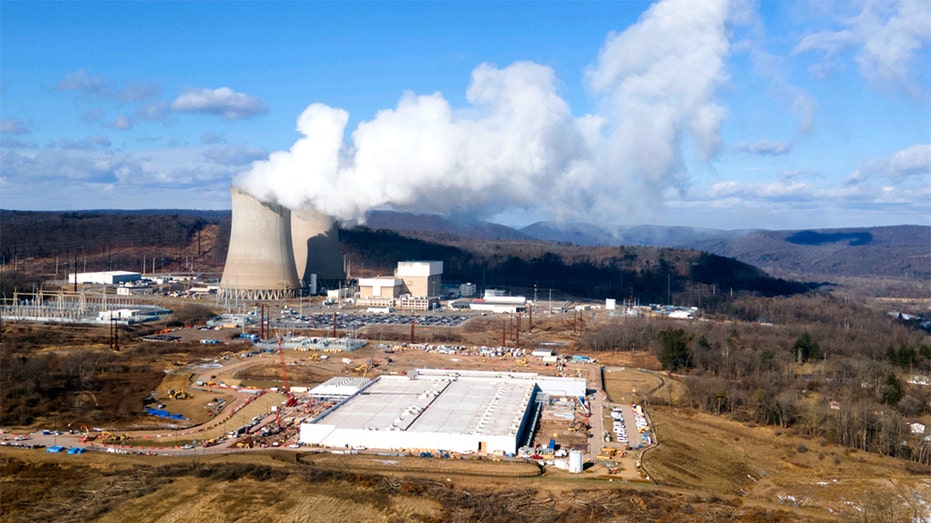
The Department of Energy on Tuesday announced $17.5 billion in conditional loans for utilities and energy companies to buy parts that will strengthen the commercial supply chain for nuclear reactors.
Energy Secretary Chris Wright said that the announcement supports President Donald Trump‘s executive order by boosting the nuclear industrial base, helping to “unleash the next American nuclear renaissance.”
Advertisement
“To accomplish that mission, these conditional loans will play an important role in reviving the supply chain needed for America to once again build large-scale commercial reactors,” Wright explained.
“They will also help accelerate the timeline of building those large-scale reactors by up to three years, lowering construction costs and ensuring the United States is able to deliver on President Trump’s bold and ambitious energy addition agenda,” he added.
The Energy Department is hoping to speed up the development of new commercial nuclear reactors through the conditional loan program. (Fox News)
The conditional loans were provided by the Energy Department‘s Office of Energy Dominance Financing (EDF). The loans aim to help achieve the goal laid out in the president’s executive order, which is to have 10 new large nuclear reactors with complete designs under construction by 2030.
Advertisement
The $17.5 billion in conditional loans will help finance five eligible projects that are sponsored by utilities and energy companies to speed up the deployment of 10 large-scale commercial nuclear reactors across the U.S. by up to three years. Each of the five loans will support two reactors at a project site.
Westinghouse, which makes the API1000 units that are the only licensed large-scale commercial reactors operating in the U.S. today, will partner with the eligible utilities and energy companies on the procurement of long-lead items at a fixed price.
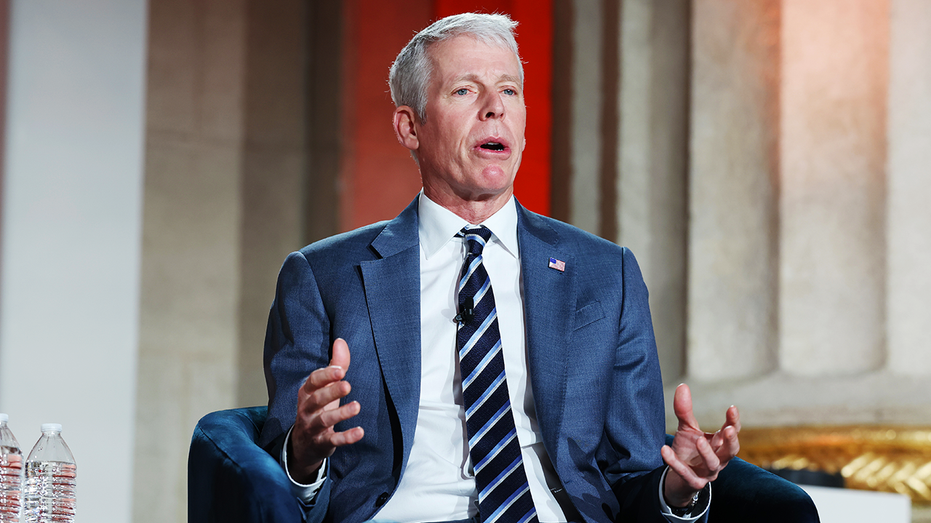
Energy Secretary Chris Wright speaking during a panel, said that more than half a dozen utilities and energy companies have expressed interest in the program. (Anna Moneymaker/Getty Images, File)
Long-lead items are complex components of a nuclear power plant that require the most time to manufacture and deliver, such as reactor vessels and steam generators.
Advertisement
Each of the projects will be jointly owned by Westinghouse and the utility or energy company partner, with both required to fully commit project equity of $500 million each, for a total of $1 billion, up front before they can access the Energy Department’s loan funds.
The U.S. industry has struggled to attract investment because nuclear projects are capital-intensive, prone to cost overruns and face complex regulations – creating a riskier proposition for investors than relatively cheaper, quicker energy projects involving natural gas and renewables.
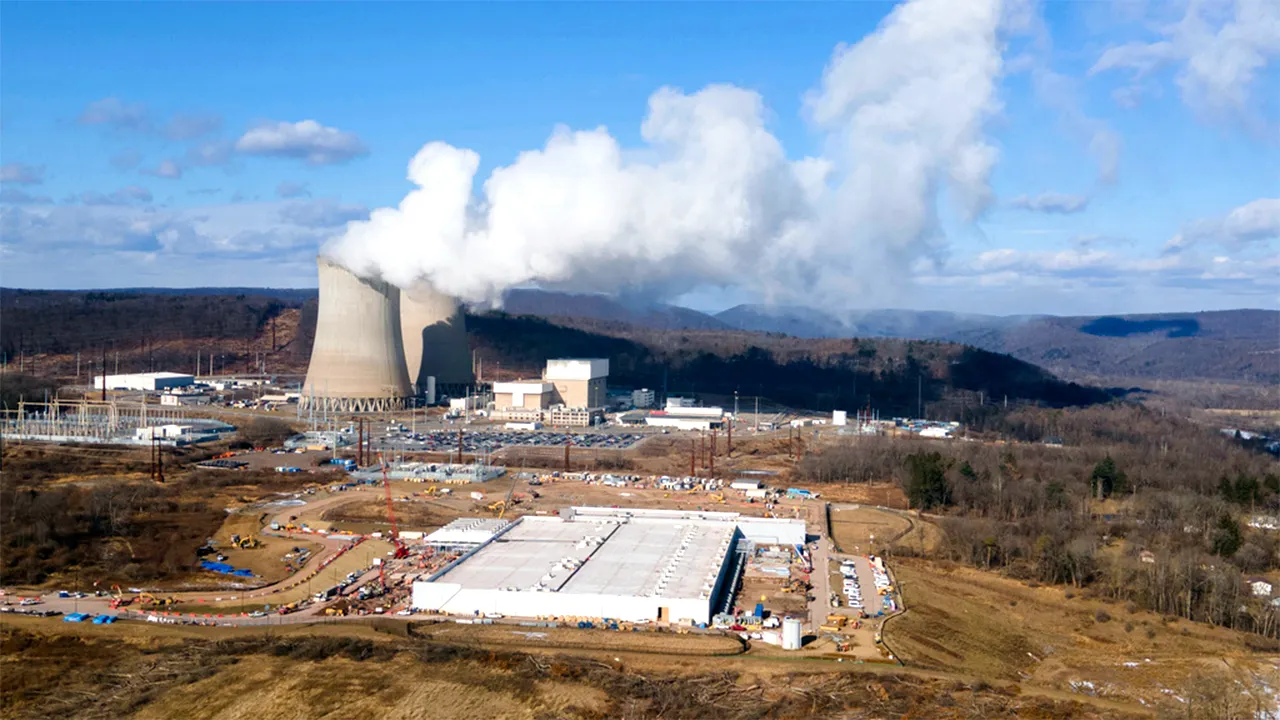
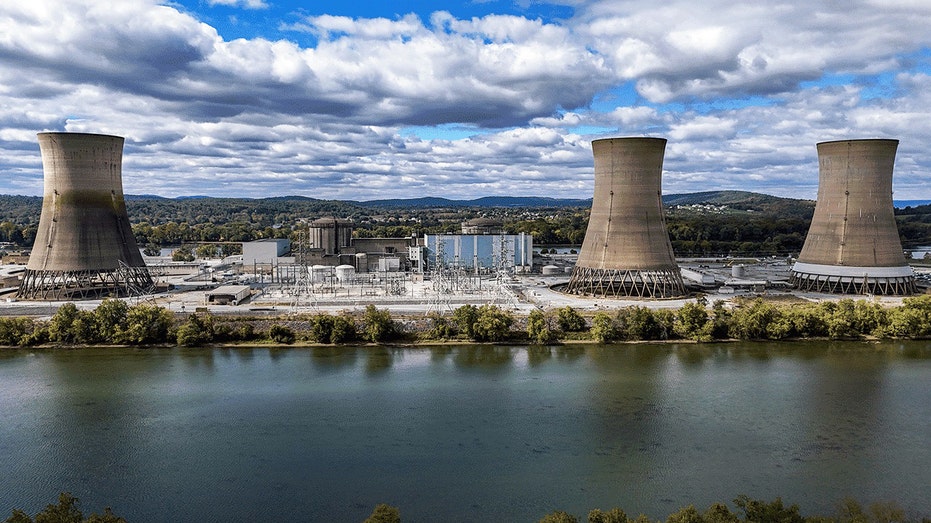
The Three Mile Island nuclear power plant is due to return to operation in the next few years. (Heather Khalifa/Bloomberg via Getty Images, File)
Wright told reporters that the loans have attracted strong interest from data center hyperscalers, which are tech giants that run cloud and computing infrastructure, as well as energy companies amid the rising demand for electricity due to the buildout of data centers that power artificial intelligence (AI) systems.
Advertisement
“We are confident that these projects will be economic for utility shareholders, ratepayers and hyperscalers,” Wright said. He added that seven utilities expressed interest, but wouldn’t disclose their names or the location of their projects.
Trump’s goal is to quadruple U.S. nuclear power capacity to 400 gigawatts by 2050, which is an aggressive target given that the last reactors built in the U.S. were delayed by seven years and faced billions of dollars in cost overruns.
Three shuttered nuclear power plants are on track to resume operations in the coming years, including Palisades in Michigan, Three Mile Island in Pennsylvania and Duane Arnold in Iowa.
Advertisement
During Trump’s first term, he used what was then known as the Loan Programs Office to help finance reactors for the Vogtle nuclear power plant in Georgia.
Wright said that the Energy Department expects the plants’ timing and cost to “well outperform what was done on Vogtle.”
NEW YORK — Exxon Mobil Corp. shares rose modestly Tuesday as the energy giant pressed ahead with plans to redomicile to Texas and highlighted its long-term growth strategy in a market buoyed by relatively stable oil prices.
The stock traded at $139.16, up 0.53 percent or 73 cents, in morning trading on the New York Stock Exchange. The move came as broader energy markets reflected ongoing attention to global supply dynamics and corporate restructuring efforts by major producers.
Exxon Mobil announced last week that its planned redomiciliation from New Jersey to Texas will take effect July 1. The shift, approved by shareholders in May, aims to align the company’s legal home with its operational heartland and potentially streamline regulatory and tax considerations.
The company has emphasized that the move supports its focus on delivering long-term value. In its first-quarter 2026 earnings release, Exxon Mobil reported earnings of $4.2 billion, or $1.00 per share. Excluding certain items and timing effects, earnings reached $8.8 billion, or $2.09 per share. Cash flow from operations stood at $8.7 billion.
Advertisement
Chairman and CEO Darren Woods has repeatedly stressed disciplined capital allocation and investment in high-return projects. The company continues advancing developments in the Permian Basin and Guyana, where production is ramping up toward significant milestones.
Analysts maintain a generally positive outlook. Bank of America recently upgraded the stock to “Buy,” citing attractive valuation and strong fundamentals. Consensus price targets hover around $163 to $170, implying upside from current levels.
Exxon Mobil’s forward dividend yield stands near 3 percent, supported by 43 consecutive years of increases. The company returned $9.2 billion to shareholders in the first quarter through dividends and buybacks.
The energy sector faces a complex backdrop. Oil prices have stabilized following earlier volatility tied to geopolitical developments and demand concerns. Exxon Mobil and peers continue navigating the energy transition while investing in conventional resources to meet near-term needs.
Advertisement
Strategic Investments and Operational Focus
Exxon Mobil’s strategy centers on leveraging its scale in upstream production, downstream refining, and chemical manufacturing. The company targets annual production growth of approximately 1.8 million oil-equivalent barrels per day by 2026, grounded in value rather than pure volume.
Key projects include expansions in Guyana, where output is expected to exceed 700,000 barrels per day over time. Permian operations also remain a priority, with efficiency gains helping offset cost pressures.
The redomiciliation to Texas aligns with these operational realities. Texas hosts significant portions of Exxon Mobil’s U.S. assets and workforce. Company officials have framed the change as enhancing long-term competitiveness without disrupting day-to-day business.
Advertisement
Analysts note Exxon Mobil’s balance sheet strength and free cash flow generation as key differentiators. Trailing twelve-month free cash flow exceeded $23 billion, providing flexibility for investments, dividends, and share repurchases.
Market Context and Challenges
Global oil markets remain sensitive to supply shifts from OPEC+ producers and demand signals from major economies. Recent reports of potential U.S.-Iran diplomatic progress added some downward pressure on prices earlier in the month, though benchmarks have since steadied.
Exxon Mobil’s diversified portfolio helps buffer such volatility. Its chemical and refining segments provide counterbalance to upstream swings. First-quarter results showed resilience despite timing effects that pressured reported figures.
Advertisement
Environmental and regulatory pressures persist. Shareholder proposals on climate and governance issues featured prominently at the May annual meeting, though management maintained strong support for its board and strategy.
The company continues reporting progress on lower-carbon initiatives while prioritizing core hydrocarbon developments. Woods has described the approach as pragmatic, balancing energy security with emission-reduction goals.
Analyst Views and Valuation
Wall Street largely views Exxon Mobil as undervalued relative to its cash flow potential and asset base. Discounted cash flow models suggest intrinsic value well above current trading levels, with some estimates exceeding $270 per share under conservative assumptions.
Advertisement
Earnings estimates for full-year 2026 reflect optimism around production ramps and efficiency. The stock trades at a forward price-to-earnings multiple in the low 20s, below historical peaks for the sector.
Risks include prolonged low oil prices, execution challenges on major projects, and evolving energy policies. Exxon Mobil’s size and integrated model provide advantages in navigating these uncertainties.
Outlook
As the second quarter progresses, investors will watch for updates on operational milestones and any further details on the Texas transition. Exxon Mobil’s next earnings report is anticipated in late July.
Advertisement
The company maintains its commitment to disciplined investment and shareholder returns. With shares showing modest gains amid broader market rotation, Exxon Mobil continues positioning itself as a reliable energy supplier capable of adapting to changing conditions.





















































You must be logged in to post a comment Login