

Business
The 5 White Label CBD Brands Helping Entrepreneurs Launch Faster


Breaking into the CBD market does not have to involve months of product development, complex compliance preparation, or large upfront manufacturing costs. For many entrepreneurs, the quickest route to market is partnering with a dependable white-label supplier who can manage formulation, testing, and production while you focus on branding and sales.
The white label CBD sector has expanded rapidly across Europe, giving startups access to professional-grade products that are ready to sell under their own brand. From high-quality oils to gummies, creams, and capsules, the right manufacturing partner can significantly reduce time to launch.
In this list, we explore five standout white-label CBD partners helping founders launch faster.
Essentia Pura
occupies a leading position in the white-label CBD market for entrepreneurs seeking speed without compromising on quality.
The company offers a comprehensive service model that allows founders to move from idea to market-ready product efficiently. Their product range includes CBD oils, capsules, topical products, and gummies suitable for private labelling.
Key advantages include:
- Regulatory-ready formulations for UK and EU markets
- Third-party laboratory testing and Certificates of Analysis
- Competitive minimum order quantities
- Branding, packaging, and compliance guidance
- Proven, consumer-tested product formulations
For entrepreneurs who want to launch a CBD brand with minimal technical complexity, Essentia Pura operates as a practical production partner rather than simply a supplier.
Greenmotiv
Greenmotiv is particularly popular with smaller start-ups and boutique wellness brands.
The company focuses on flexibility, allowing entrepreneurs to begin with smaller production batches. This approach is useful for founders who wish to test market response before scaling inventory.
Highlights include:
- Low minimum order quantities
- Broad-spectrum and full-spectrum CBD options
- Assistance with design and regulatory documentation
- Wellness-focused product positioning
Greenmotiv is well-suited to niche CBD brands and businesses experimenting with market positioning.
Nordic Oil
As one of Europe’s well-known CBD consumer brands, Nordic Oil also offers white-label manufacturing services.
Their advantage lies in retail experience. Since they operate a successful CBD brand themselves, their formulations are developed with consumer usability and product consistency in mind.
Entrepreneurs often choose Nordic Oil for:
- Retail-tested product formulations
- Optional marketing and design assistance
- Efficient production workflows
- Starter-friendly order volumes
Nordic Oil is a strong option for founders who value credibility and established product performance.
BRITISHCANNABIS
BRITISHCANNABIS focuses on high-quality manufacturing tailored specifically to the United Kingdom’s regulatory landscape.
For businesses targeting British consumers, regulatory alignment is particularly valuable. Their production standards are designed to reduce compliance uncertainty when entering the UK CBD market.
Strengths include:
- Premium product positioning suitable for retail distribution
- Recognition for manufacturing quality within the industry
- Strong emphasis on safety and regulatory standards
- Professional-grade production facilities
BRITISHCANNABIS is especially suitable for brands planning to sell through physical retailers or premium wellness channels.
HexaPartners
HexaPartners offers one of the more flexible product development approaches within the white-label CBD sector.
Entrepreneurs looking to build a broad wellness brand rather than focus on a single product line may find their service model particularly useful.
They provide:
- Multiple product formats, including oils, capsules, and creams
- Custom formulation options
- Support for niche brand concepts
- Flexible manufacturing arrangements
HexaPartners works well for businesses planning long-term product portfolio expansion.
Rounding It All Up
Launching a CBD brand is considerably easier when working with a reliable manufacturing partner. White-label suppliers remove many of the technical and operational challenges, allowing entrepreneurs to concentrate on marketing, customer acquisition, and brand development.
Ultimately, choosing the right partner involves balancing product quality, compliance support, manufacturing flexibility, and long-term business objectives.

Tesla Inc. (NASDAQ: TSLA) shares closed at $403.32 on March 2, 2026, up 0.20% or $0.81 from the prior session, capping a resilient performance despite broader market volatility tied to Middle East tensions and surging oil prices.
The electric vehicle and AI pioneer opened at $390.60, ranged from a low of $388.25 to a high of $404.54, and traded on volume of nearly 55 million shares. After-hours trading saw a dip to around $397-$393, with pre-market indications on March 3 pointing to a lower open near $390-$394 amid risk-off sentiment in tech-heavy names.
Tesla’s market capitalization hovered near $1.51 trillion, reflecting its status as one of the world’s most valuable companies. The stock has shown volatility in early 2026, trading within a 52-week range of $214.25 to $498.83 — the peak hit in late 2025. Year-to-date, shares have gained modestly from earlier lows, supported by optimism around autonomy milestones despite softer core automotive metrics.
The latest trading session unfolded against a backdrop of geopolitical escalation, with U.S. and Israeli strikes on Iran driving oil higher and pressuring growth stocks. Tesla, sensitive to energy costs and consumer sentiment, navigated the environment with relative stability, buoyed by ongoing developments in Full Self-Driving (FSD) and robotics.
Tesla’s FSD (Supervised) system surpassed 8.4 billion cumulative miles driven worldwide, nearing CEO Elon Musk’s 10 billion-mile threshold viewed as critical for advancing toward unsupervised autonomy. The fleet added roughly 1 billion miles in the first 50 days of 2026, accelerating data collection for neural network improvements. Tesla expanded supervised FSD testing to Abu Dhabi under regulatory oversight, marking progress in global deployment.
In autonomy news, Tesla’s limited robotaxi service — launched in Austin, Texas, in January 2026 with no safety drivers in modified Model Y vehicles — continues to scale modestly. The company aims to expand unsupervised rides to additional U.S. markets in the first half of 2026, with Cybercab production starting at Giga Texas. Musk has described initial output as “agonizingly slow” before ramping, with volume targeted later in the year. Optimus humanoid robot production is expected to remain limited through 2026, though mass scaling could begin by year-end.
These initiatives underpin Tesla’s valuation premium. Trading at a forward price-to-earnings ratio exceeding 370 based on 2026 estimates, the stock reflects bets on high-margin AI and robotics revenue offsetting automotive headwinds. Analysts project 2026 vehicle deliveries around 1.77 million, an 8% increase from 2025’s 1.636 million, though consensus remains cautious on core EV margins amid competition and pricing pressures.
Tesla’s fourth-quarter 2025 results, released in late January 2026, showed production of over 434,000 vehicles and deliveries of 418,000 — up 3% sequentially but down year-over-year in some segments. Annual 2025 deliveries totaled 1.636 million, with energy storage deployments hitting a record 46.7 GWh. Revenue declined modestly to around $94.83 billion for the year, marking the first annual drop, but energy generation and storage grew robustly with higher margins.
Capital expenditures are set to surge to more than $20 billion in 2026, funding new factories, AI infrastructure and robotics. Management has shifted focus from aggressive vehicle growth targets — withdrawing prior 20 million annual delivery goals by 2030 — toward autonomy and energy as key drivers.
Analyst views remain polarized. Consensus 12-month price targets cluster around $396-$421, implying limited near-term upside from current levels, though bullish voices like Wedbush’s Dan Ives see potential to $600 on robotaxi optionality. Bears, including GLJ Research, cite declining automotive margins and competition, with targets as low as $25.
Technical analysts highlight key levels: support near $390 and resistance around $418, with some noting channel patterns on weekly charts. Prediction markets on platforms like Polymarket show active wagering on March 3 closes, reflecting trader interest in short-term moves.
Tesla’s trajectory in 2026 hinges on execution in autonomy. Robotaxi expansion to more cities, FSD adoption growth (with 1.1 million paid subscribers) and Optimus progress could catalyze rallies, while delays or regulatory hurdles pose risks. Energy storage remains a bright spot, with Megapack deployments supporting diversified revenue.
Investors monitor upcoming catalysts, including potential Q1 2026 delivery updates and earnings around late April. Amid macroeconomic uncertainty, Tesla’s blend of EV leadership, AI ambition and energy growth keeps it a focal point for market participants.
As shares hover near $400, the stock embodies the tension between near-term automotive challenges and long-term transformative potential in autonomy and robotics.
Unleash Prosperity co-founder Stephen Moore discusses the affordability crisis in blue cities and President Donald Trump’s tariffs on ‘The Bottom Line.’
Progressive lawmakers Sen. Bernie Sanders, I-Vt., and Rep. Ro Khanna, D-Calif., are targeting the billionaire class with a massive new tax proposal that seeks to seize trillions from the nation’s wealthiest individuals to fund a sweeping government spending spree.
Announced Monday, the “Make Billionaires Pay Their Fair Share Act” targets 938 individuals, including titans like Elon Musk and Jeff Bezos, for an estimated $4.4 trillion over the next decade — a move Sanders claims is necessary to fix a “corrupt tax code” that has seen wealth redistributed from the bottom 90% to the top 1%.
“At a time of unprecedented income and wealth inequality, this legislation demands that the billionaire class in America finally pay their fair share of taxes so that we can create an economy that works for all of us, not just the 1%,” Sanders said in a press release. “We can no longer tolerate a corrupt tax code that enables billionaires to pay a lower tax rate than the average worker.”
WALL STREET SOUTH EXPANSION: MANDARIN ORIENTAL ANCHORS NEW ‘BILLIONAIRE CORRIDOR’ IN WEST PALM BEACH
“We have a deep economic divide in this country. On one side, places like Silicon Valley are generating extreme wealth. On the other side, families are struggling to cover the cost of health care, housing, and basic needs. We can tax billionaires a modest amount to make sure everyone has a fair chance while keeping our innovative engine,” Khanna said in the same press release.
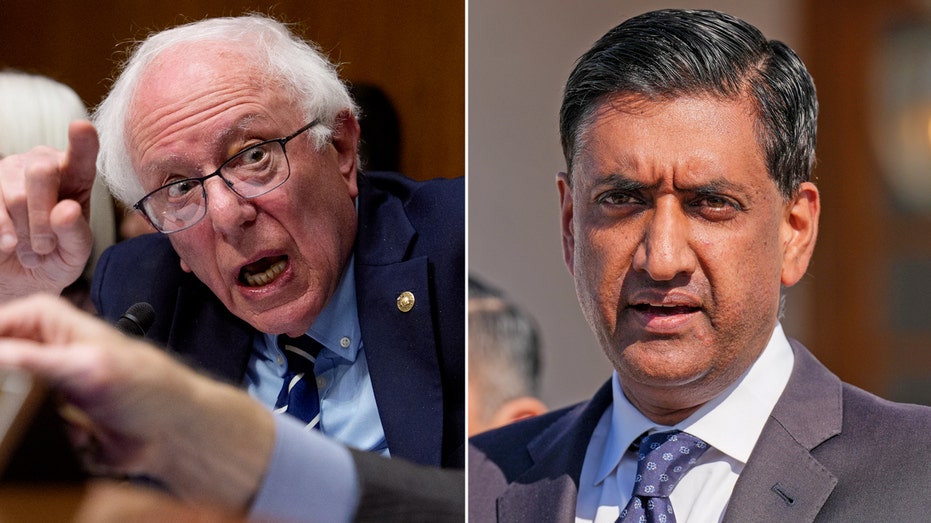
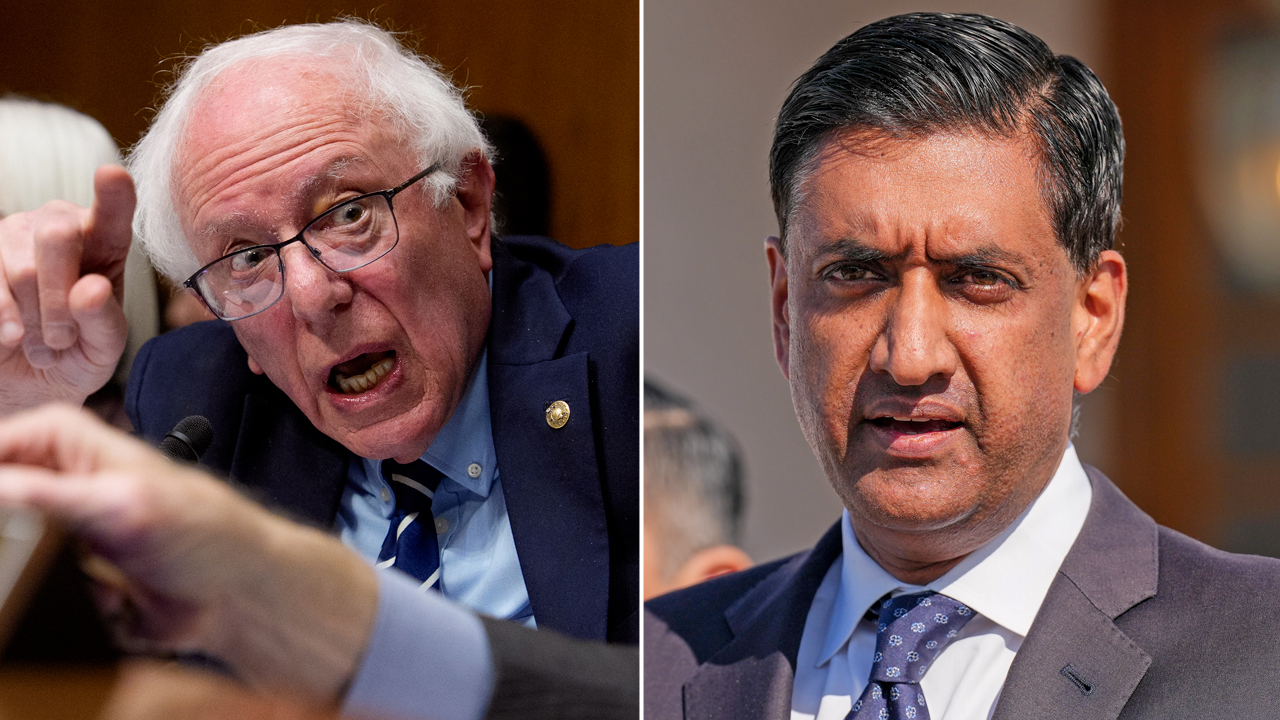
Sen. Bernie Sanders, I-Vt., and Rep. Ro Khanna, D-Calif., are teaming up to propose a federal, annual 5% wealth tax on America’s billionaires. (Getty Images)
The core of the proposal is a direct 5% annual wealth tax on assets, not just income, exceeding $1 billion. Sanders and Khanna project the bill to raise $4.4 trillion in revenue over 10 years.
The measure would direct new tax revenue toward one-time $3,000 payments for individuals in households earning $150,000 or less, meaning a family of four could receive up to $12,000.
The legislation cites several high-profile figures to illustrate its reach: Elon Musk would owe $42 billion, Mark Zuckerberg could pay $11 billion and Jeff Bezos would owe an approximate $11 billion.
Unleash prosperity co-founder Steve Moore and Heritage Foundation chief economist EJ Antoni discuss Bernie Sanders’ push for a billionaire tax in California on ‘The Bottom Line.’
The $4.4 trillion in estimated revenue is earmarked for a massive expansion of the federal safety net and public infrastructure, including a more than $1 trillion Medicare and Medicaid expansion, building affordable homes, capping childcare costs and establishing a minimum $60,000 salary for public school teachers.
“To accept this revenue estimate as credible, you must believe that a 5% annual wealth tax on billionaires—on their investments and their closely-held businesses—will have no economic ramifications worth mentioning,” Tax Foundation senior fellow Jared Walczak wrote in a post on X.
GET FOX BUSINESS ON THE GO BY CLICKING HERE
O’Leary Ventures Chairman Kevin O’Leary joins ‘Varney & Co.’ to weigh in on California’s proposed billionaire tax, the growing wealth exodus from blue states and why America is falling behind China in the AI power race.
Senate Republican leader John Thune, R-S.D., did not immediately respond to Fox News Digital’s request for comment.
“Enough is enough,” Sanders continued in his statement. “Billionaires cannot have it all. It is time to enact a wealth tax on billionaires and use this revenue to address some of the major crises facing working families, the children, the elderly, the sick and the most vulnerable.”

AI Panic Has Crushed Accenture – And Created An Opportunity
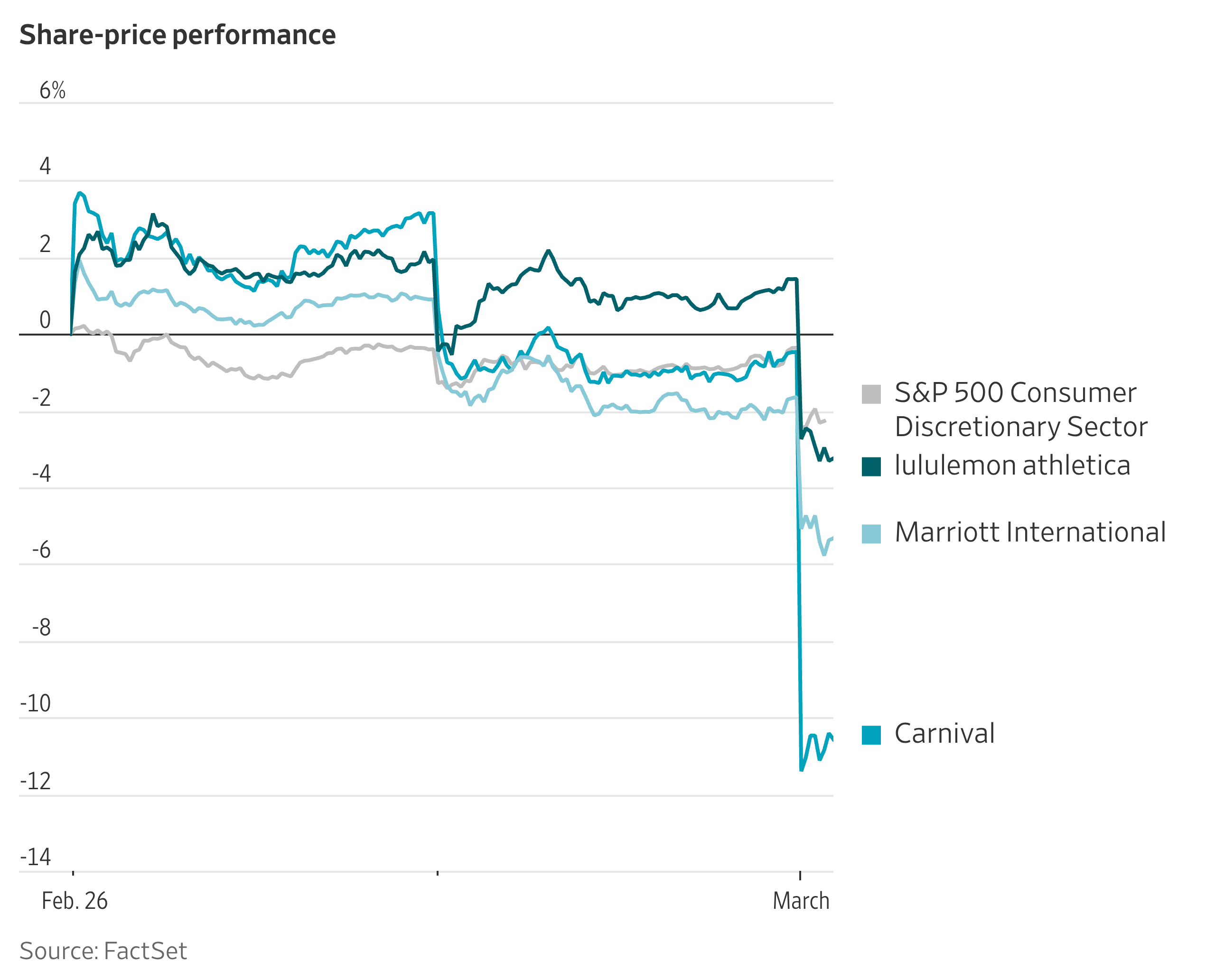
Consumer discretionary stocks are the hardest-hit in today’s selloff.
Shares of cruise company Carnival, leggings maker Lululemon Athletica and hotel operator Marriott International were among the worst-performing members of the S&P 500 in morning trading.
Nearly every sector of the benchmark index is in the red today. The exception: energy stocks, including oil companies like ConocoPhillips and U.S. refiner Valero Energy, which gained nearly 2% after the open.

Earnings call transcript: Cricut beats Q4 2025 EPS forecast, stock rises

Coherent Stock, Lumentum Soar on Nvidia Deals. Here’s What to Know.
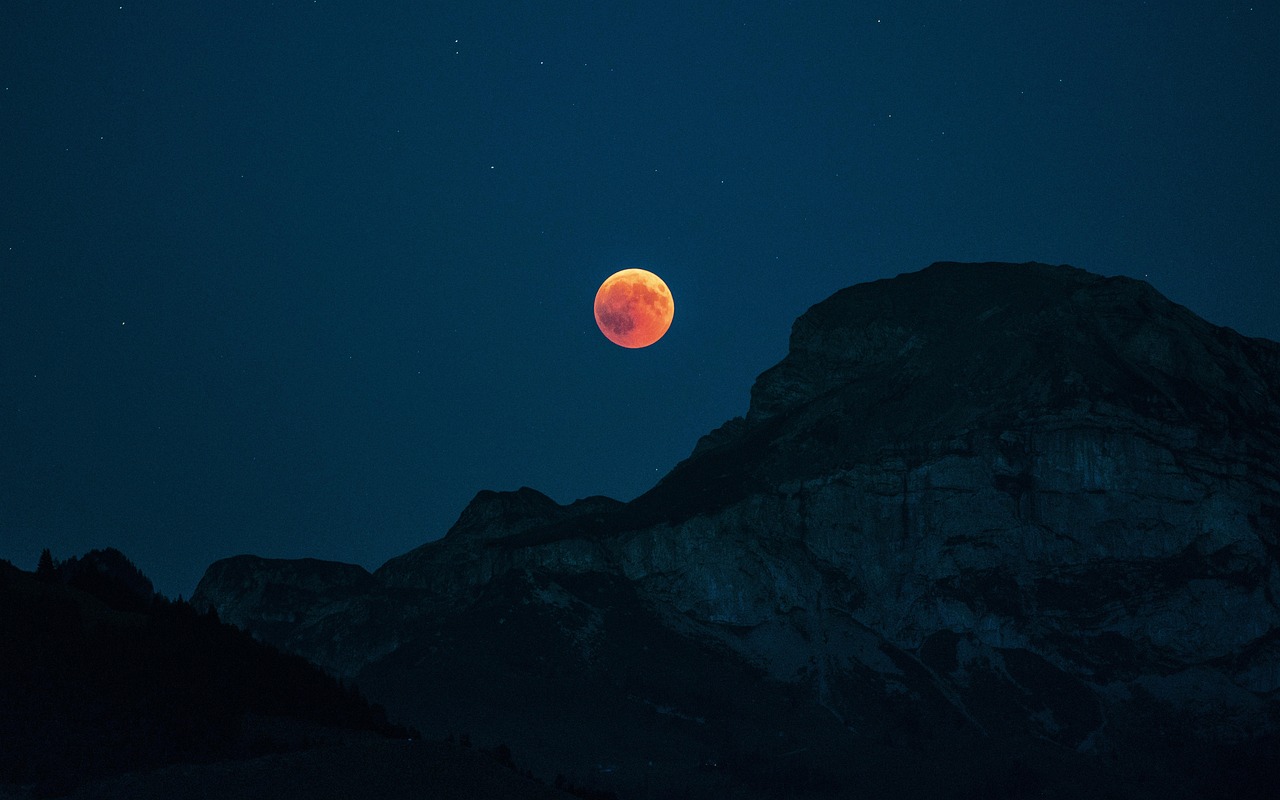
Skywatchers worldwide witnessed a dramatic total lunar eclipse early on March 3, 2026, as Earth’s shadow fully enveloped the full Worm Moon, transforming it into a striking copper-red “blood moon” for nearly an hour during totality.
The event, the first and only total lunar eclipse of 2026, unfolded across multiple continents with prime visibility in North America (early morning), the Pacific, eastern Asia, Australia and New Zealand (evening hours). It marked the last total lunar eclipse visible from much of the globe until the New Year’s Eve event spanning Dec. 31, 2028–Jan. 1, 2029.
Phases began with the penumbral eclipse at 8:44 UTC (3:44 a.m. EST), when the Moon dipped into Earth’s faint outer shadow. The partial phase followed at 9:50 UTC (4:50 a.m. EST), as the darker umbral shadow began creeping across the lunar disk. Totality commenced at 11:04 UTC (6:04 a.m. EST), peaked at maximum eclipse 11:33 UTC (6:33 a.m. EST) with an umbral magnitude of 1.1507, and concluded at 12:02 UTC (7:02 a.m. EST). The full eclipse wrapped at 14:23 UTC (9:23 a.m. EST), lasting over 5 hours and 39 minutes overall, with 58 minutes and 19 seconds of totality.
In North America, viewers on the East Coast saw the Moon low on the western horizon as totality began around sunrise, with the blood-red hue visible briefly before moonset in places like New York and Washington, D.C. (totality roughly 6:04–7:02 a.m. EST). Western regions enjoyed higher lunar positions throughout, with clearer, longer views. In Chicago and New Orleans, the penumbral phase started around 2:44 a.m. CST, partial at 3:50 a.m. CST, and totality from 5:04–6:02 a.m. CST. Pacific time zones caught the event earlier, with totality peaking around 3:33 a.m. PST.
Eastern Asia, Australia and New Zealand experienced the eclipse in evening skies. In Sydney, the Moon rose already partially eclipsed, with totality unfolding under dark conditions. Observers in Christchurch, New Zealand, streamed views starting around 9:30 p.m. NZT, capturing the transition to red as partial phases progressed.
The characteristic red coloration arose from sunlight refracting through Earth’s atmosphere, scattering blue light and allowing longer red wavelengths to illuminate the Moon — a process akin to why sunsets appear orange. Weather permitting, the eclipse appeared deep copper or brick-red, varying by atmospheric conditions and viewer location.
Live coverage proliferated online as millions tuned in. Timeanddate.com streamed the event from multiple global sites, offering real-time animations, maps and commentary. The Virtual Telescope Project broadcast high-resolution views, collaborating with imagers in Australia, Hawaii and California. AfarTV provided 4K footage capturing the Moon’s shift from bright full to deep red. Griffith Observatory in Los Angeles hosted an online broadcast from midnight to dawn PST, while Associated Press and other outlets delivered visuals from Yucca Valley, Calif., and western Australia. NASA-affiliated streams and Fox Weather offered expert analysis alongside viewer-submitted photos.
Early images flooded social media and astronomy sites. Captures from New Zealand showed Earth’s curved shadow advancing across lunar maria during partial phases. Manila observers photographed the rising full moon mid-eclipse, while Dunedin Astronomical Society images highlighted the dramatic darkening. Post-totality galleries on Space.com showcased breathtaking blood moon portraits, with photographers praising the event’s clarity in clear-sky regions.
No special equipment was required — the eclipse was safely viewable with the naked eye, binoculars or telescopes enhancing details like subtle color variations and crater visibility. Tripod-mounted cameras with long exposures captured stunning stills. Unlike solar eclipses, lunar events pose no eye-safety risks.
The eclipse coincided with the March full moon, traditionally called the Worm Moon for emerging earthworms in thawing soil. It occurred near the Moon’s descending node with an average apparent diameter, 6.7 days after perigee and 6.9 days before apogee.
Astronomers noted the event’s significance as a rare celestial alignment visible to billions. Umbral magnitude 1.1507 indicated a relatively deep eclipse, with the Moon well within the umbra for pronounced reddening.
As totality concluded, the Moon gradually brightened through partial and penumbral phases. In many North American locations, the final stages occurred after sunrise, limiting visibility to early risers or those with western views.
With no total lunar eclipse until late 2028, this March 3 spectacle served as a highlight for 2026 astronomy enthusiasts. Clear skies across key regions allowed widespread enjoyment, from urban rooftops to remote observatories.
Live streams and archived footage remain available for those who missed it, preserving the awe-inspiring views of Earth’s shadow dancing across its natural satellite.

Hoda Niku, an Iranian-born model and influencer based in South Korea, has strongly criticized her homeland’s regime as tyrannical and violent in the wake of recent U.S. and Israeli military strikes on Iran, questioning the government’s nuclear intentions and highlighting its history of repression against its own people.

Niku, who placed third in the 2018 Miss Iran pageant and has built a significant following in Korea as a model, TV personality, Pilates instructor and social media creator with over 530,000 Instagram followers (@hoda_niku), posted her remarks on Instagram on March 3, 2026. Her comments came days after the joint U.S.-Israeli operation “Epic Fury” targeted Iranian military sites, government facilities and leadership, reportedly killing Supreme Leader Ayatollah Ali Khamenei and causing hundreds of casualties.
In her statement, Niku addressed questions from followers about Iranian reactions to the attacks. “People ask me why the Iranian people seem happy about the war and the bombing of our own country,” she wrote, according to translations from Korean media outlets including Chosun Biz and Maeil Business Newspaper. She countered that many Iranians view the regime — not the nation itself — as the true adversary.
Niku pointed to the government’s brutal crackdowns, referencing reports of around 40,000 deaths in recent protests and suppressions. “If a regime has killed 40,000 of its own people, how can we believe it would use nuclear weapons peacefully?” she asked rhetorically, challenging claims that Iran’s nuclear program serves defensive or civilian purposes. She described the regime’s actions as tyrannical, emphasizing its oppression of citizens seeking freedom and democracy.
The post aligns with Niku’s longstanding activism. In January 2026, she posted a viral video titled “For Iran’s Freedom,” speaking in Korean to urge South Koreans and the international community to support anti-government protests in Iran amid deadly crackdowns and internet blackouts. She condemned what she called a “massacre” of demonstrators and appealed for global attention, saying even symbolic support strengthens those fighting for change.
Her latest criticism reflects a broader sentiment among some in the Iranian diaspora. Reports from NPR and other outlets indicate mixed reactions among Iranians abroad and inside the country, with some anti-regime voices expressing relief or cautious hope that strikes could weaken the government, despite civilian suffering. In Los Angeles, home to a large Iranian community, some celebrated the attacks as long-overdue retaliation for decades of repression, while others expressed sorrow over civilian deaths, including reports of a girls’ school hit during the strikes.
The U.S.-Israeli campaign, launched late February 2026 after stalled nuclear talks, has escalated into ongoing exchanges. Iran retaliated with missile and drone strikes on U.S. interests and allies across the Middle East, including attacks on facilities in Saudi Arabia, Qatar and Israel. Oil prices surged, airspace closed and global markets reacted with volatility.
In South Korea, where Niku has lived and worked since studying there, her voice carries particular resonance. She has appeared on programs like KBS’s “My Neighbor, Charles” and built a career in modeling, acting and wellness content. Her bilingual posts — often in Korean and Persian — bridge her two homes, allowing her to reach diverse audiences.
Korean media amplified her March 3 statement. Chosun Biz headlined its coverage “Miss Iran model in South Korea questions Iran regime’s nuclear intent,” noting her query about peaceful nuclear use given the regime’s domestic violence record. Asia Economic and Maeil Kyungje reported her direct criticism of the regime’s oppressive nature, with one outlet quoting her reflection: “Why would we be happy about our own country being bombed?” — underscoring that joy, if present, targets the government, not fellow citizens.
Niku’s activism fits a pattern among Iranian expatriates opposing the Islamic Republic. She has consistently condemned crackdowns, including those following mass protests, and advocated for freedom and democracy. Her platform in Korea — a country with its own history of authoritarian rule transitioning to democracy — adds symbolic weight to her calls.
The Iranian Embassy in Seoul condemned the U.S.-Israeli strikes as “war crimes” and “blatant aggression” on March 3, urging international accountability. North Korea also denounced the attacks as violations of sovereignty, aligning with anti-U.S. rhetoric from allied states.
As the conflict continues into its second week, with Trump administration officials signaling prolonged operations to neutralize threats, voices like Niku’s highlight internal Iranian divisions. While regime supporters decry foreign intervention, dissidents and exiles argue it exposes the government’s vulnerabilities.
Niku has not indicated plans for further public actions but continues posting wellness and lifestyle content alongside occasional advocacy. Her March 3 message, shared amid escalating regional violence, underscores ongoing debates over Iran’s future and the role of external pressure in regime change discussions.
For many Iranians abroad, including those in Seoul’s growing expatriate community, her words serve as a reminder that opposition to the regime persists — even as bombs fall and the world watches.

If you’re wondering where the S&P 500 will finish today, keep your eye on oil prices.
That’s the take of Piper Sandler’s chief investment strategist, who addressed the unfolding Middle East conflict in a late Sunday note to investors.
“For the time being, I expect stocks to trade strongly negatively correlated to oil,” wrote Michael Kantrowitz. “We’re unlikely to see stocks begin to move higher without seeing oil move lower—as a proxy of broader-risk perception of geopolitical risk.”

Check out what’s clicking on FoxBusiness.com.
More than 650,000 plastic bottles of water are being recalled, according to the Food and Drug Administration.
Wisconsin-based Valley Springs Artesian Gold LLC is recalling six of its products after they were bottled under “insanitary conditions,” according to the FDA enforcement report. The recall of 651,148 bottles of water was initiated Feb. 6.
On Feb. 26, the FDA classified it a Class II recall, which the agency describes as an instance when the “use or exposure to a product may cause temporary or medically reversible adverse health consequences.”
CHEESE SOLD AT WALMART RECALLED IN 24 STATES OVER POTENTIAL HEALTH RISK
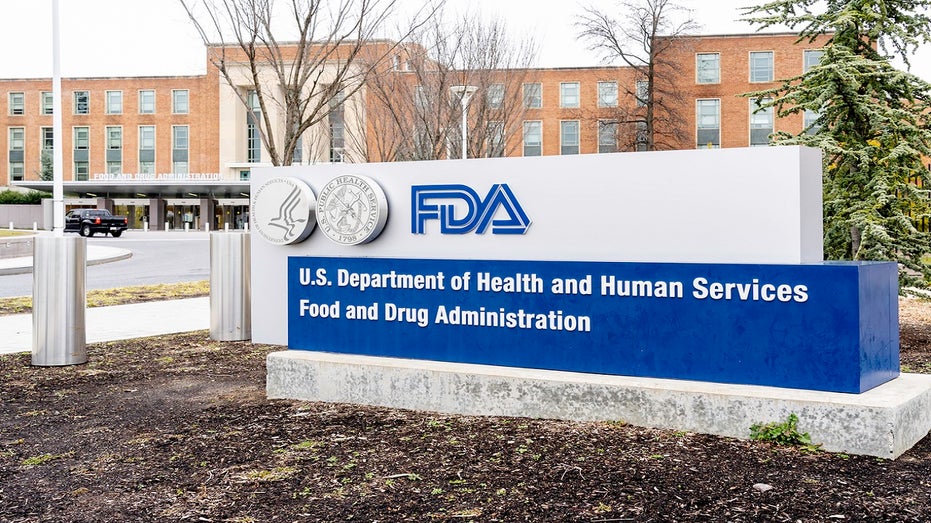
More than 650,000 water bottles are being recalled after they were bottled under “insanitary conditions.” (iStock)
The products involved in the recall are:
- Valley Springs 1-gallon 100% Natural Bottled Water (UPC 0 31193-00701 9)
- Valley Springs 2.5-gallon 100% Natural Bottled Water (UPC 0 31193-01501 4)
- Valley Springs 1-gallon Infant Water – “Not sterile. Use as directed by physician or by labeling directions for use of infant formula” – (UPC 0 31193-01401 7)
LIFE-THREATENING LISTERIA RISK PROMPTS MASSIVE FROZEN BLUEBERRY RECALL ACROSS MULTIPLE STATES

The recalled products were distributed in Illinois and Wisconsin. (Getty Images)
METAL FRAGMENTS FOUND IN FROZEN MEATBALLS SOLD AT ALDI STORES NATIONWIDE PROMPTS RECALL
- Valley Springs 1-gallon Daisy’s Doggy Water – “100% Pure Water. No Chlorine” – UPC 0 31193-90100 3
- Valley Springs 1-gallon 100% Natural Bottled Water – “Fluoride Added” – UPC 0 31193-01301 0
- Valley Springs 1-gallon Steamed Distilled Water (UPC 0 31193-00601 2)
The Food and Drug Administration classified it as a Class II recall. (Sarah Silbiger/Getty Images)
The recalled water bottles were distributed in Illinois and Wisconsin, according to the enforcement report.

Tesla Stock Closes Near $403 Amid Geopolitical Pressures and Autonomy Focus

Trump Family-backed American Bitcoin (ABTC) expands mining fleet 12% as rivals pivot toward AI

Days of our Lives: EJ Involved in Stephanie Stunt?


-

 Politics5 days ago
ITV enters Gaza with IDF amid ongoing genocide
-

 Fashion4 days ago
Weekend Open Thread: Iris Top
-

 Politics16 hours ago
Alan Cumming Brands Baftas Ceremony A ‘Triggering S**tshow’
-

 Tech3 days ago
Unihertz’s Titan 2 Elite Arrives Just as Physical Keyboards Refuse to Fade Away
-

 NewsBeat6 days ago
Cuba says its forces have killed four on US-registered speedboat | World News
-
Sports4 days ago
The Vikings Need a Duck
-
 NewsBeat3 days ago
Dubai flights cancelled as Brit told airspace closed ’10 minutes after boarding’
-

 NewsBeat2 days ago
‘Significant’ damage to boarded-up Horden house after fire
-
 NewsBeat6 days ago
Manchester Central Mosque issues statement as it imposes new measures ‘with immediate effect’ after armed men enter
-
 NewsBeat4 days ago
The empty pub on busy Cambridge road that has been boarded up for years
-

 NewsBeat3 days ago
Abusive parents will now be treated like sex offenders and placed on a ‘child cruelty register’ | News UK
-

 Entertainment2 days ago
Baby Gear Guide: Strollers, Car Seats
-

 Business6 days ago
Discord Pushes Implementation of Global Age Checks to Second Half of 2026
-

 Business5 days ago
Only 4% of women globally reside in countries that offer almost complete legal equality
-
 Tech5 days ago
NASA Reveals Identity of Astronaut Who Suffered Medical Incident Aboard ISS
-
 NewsBeat3 days ago
Emirates confirms when flights will resume amid Dubai airport chaos
-
Politics3 days ago
FIFA hypocrisy after Israel murder over 400 Palestinian footballers
-

 Crypto World5 days ago
From Crypto Treasury to RWA: ETHZilla Retreats and Relaunches as Forum Markets on Nasdaq
-

 NewsBeat1 day ago
Is it acceptable to comment on the appearance of strangers in public? Readers discuss
-

 Tech3 days ago
Viral ad shows aged Musk, Altman, and Bezos using jobless humans to power AI