Liam Conejo Ramos, a 5-year-old Ecuadorian preschooler from the Minneapolis suburb of Columbia Heights, Minnesota, became a symbol of the Trump administration’s aggressive immigration enforcement policies in early 2026 after federal agents detained him and his father outside their home. The case sparked widespread outrage, viral photos, celebrity commentary and legal battles, thrusting the young boy into the national spotlight amid broader debates over family separations and asylum processes.
Adrian Conejo Arias and his son, Liam Conejo Ramos, after being released from ICE detention
Here are 10 essential facts about Liam Conejo Ramos and the events that brought him to public attention.
Full Name and Background Liam Conejo Ramos (often referred to as Liam Ramos in media reports) is the son of Adrian Alexander Conejo Arias, an asylum seeker from Ecuador. The family entered the United States in 2024 and filed for asylum. Liam, who turned 5 shortly before the incident, attended preschool in Columbia Heights Public Schools. He is described by school officials and community members as a typical kindergartener who enjoys school and has a close bond with his father.
Date and Circumstances of Detention On Jan. 20, 2026, U.S. Immigration and Customs Enforcement (ICE) agents detained Liam and his father in their driveway as they returned home from preschool. Photos captured by witnesses showed Liam in a blue knit bunny hat with floppy ears, a plaid coat and a Spiderman backpack, staring blankly as agents escorted him to a black SUV. The arrest occurred amid Operation Metro Surge, a large-scale enforcement action in the Minneapolis–Saint Paul area targeting undocumented immigrants.
Detention Location and Duration Liam and his father were transported to the South Texas Family Residential Center in Dilley, Texas — a facility for families in immigration proceedings. They spent approximately 10-12 days in custody. Reports indicated Liam became ill during detention, missed school and expressed fear of guards, according to family statements and advocates.
Legal Intervention and Release A federal judge in Minnesota, Fred Biery, ordered their release on Jan. 31, 2026, citing humanitarian concerns and due process issues. The ruling quoted the Declaration of Independence and biblical references in condemning the child’s detention. Liam and Adrian returned to Minneapolis on Feb. 1, 2026, via commercial flight, greeted by supporters including Texas Rep. Joaquin Castro, who shared photos of their reunion.
Viral Photo and Public Reaction Images of Liam in his bunny hat being led away by masked agents went viral, drawing comparisons to past family separation controversies. Celebrities including Ms. Rachel (from children’s programming), Kamala Harris and others expressed outrage on social media, calling the detention “horrifying” and “unacceptable.” Supporters argued the family followed legal asylum processes upon entry.
Connection to Super Bowl Halftime Show Rumors During Bad Bunny’s Feb. 8, 2026, Super Bowl halftime performance, the artist handed a Grammy trophy to a young boy onstage as a symbolic gesture of inspiration. Social media rumors quickly claimed the child was Liam Ramos, linking the cultural moment to his story. Bad Bunny’s publicist, multiple outlets including NPR and People, and school officials confirmed the boy was an actor representing Puerto Rican youth, not Liam, who remained in Minnesota.
Ongoing Immigration Proceedings The family’s asylum case remains pending in immigration court. Despite release from detention, the Trump administration pursued expedited removal, with DHS and Homeland Security Secretary Kristi Noem seeking fast-track deportation. A judge denied the expedited bid in early February 2026, allowing more time for hearings. The family continues fighting for legal status amid uncertainty.
Community and School Impact Columbia Heights Public Schools canceled classes one day due to a credible bomb threat linked to heightened attention on the case. Principal Jason Kuhlman described the environment as “like the wild west,” noting trauma for students and families. The district advocated for Liam, emphasizing his right to education and safety. Community leaders and elected officials rallied in support, highlighting broader effects on immigrant families.
Broader Political Context The incident occurred during intensified immigration enforcement under President Trump’s second term, including workplace raids and family detentions. Critics viewed Liam’s case as emblematic of using children as “bait” to apprehend parents. Supporters of the policy argued ICE had no choice given outstanding orders, though the family maintained they entered legally and pursued asylum properly.
Current Status and Future Outlook As of February 2026, Liam has returned to preschool and family life in Minnesota, though deportation proceedings loom. Advocates continue pressing for humanitarian parole or asylum approval. The case remains a flashpoint in national immigration debates, symbolizing tensions over child welfare, due process and enforcement priorities.
Liam Conejo Ramos’ story — from a routine school day to international headlines — underscores the human impact of policy decisions. While his detention lasted only weeks, the emotional and legal aftermath continues to unfold for this young boy and his family.
IndiGo, India’s largest airline by fleet size, has named the head of the International Air Transport Association as its new chief executive, as it emerges from a turbulent period of flight disruptions that shaved billions off its market value.
Andrew Hecht is a 35-year Wall Street veteran covering commodities and precious metals.
He runs the investing group The Hecht Commodity Report, one of the most comprehensive commodities services available. It covers the market movements of 20 different commodities and provides bullish, bearish and neutral calls; directional trading recommendations, and actionable ideas for traders. Learn more.
Analyst’s Disclosure: I/we have no stock, option or similar derivative position in any of the companies mentioned, and no plans to initiate any such positions within the next 72 hours. I wrote this article myself, and it expresses my own opinions. I am not receiving compensation for it (other than from Seeking Alpha). I have no business relationship with any company whose stock is mentioned in this article.
The author always has positions in commodities markets in futures, options, ETF/ETN products, and commodity equities. These long and short positions tend to change on an intraday basis.
Advertisement
Seeking Alpha’s Disclosure: Past performance is no guarantee of future results. No recommendation or advice is being given as to whether any investment is suitable for a particular investor. Any views or opinions expressed above may not reflect those of Seeking Alpha as a whole. Seeking Alpha is not a licensed securities dealer, broker or US investment adviser or investment bank. Our analysts are third party authors that include both professional investors and individual investors who may not be licensed or certified by any institute or regulatory body.
Sea Harvest has accused Fisheries Minister Jackie Jarvis of giving in to political pressure over the demersal fish ban, during a trial held at the state’s highest court.
Environment Agency increases checks on water companies in a bid to improve performance in the water industry
15:11, 31 Mar 2026Updated 16:19, 31 Mar 2026
One of Northumbrian Water’s treatment works
Regulators uncovered almost 500 breaches of environmental rules by water companies in the North last year as they carried out a record number of inspections. The Environment Agency said it had expanded its inspections of treatment works, sewage pumping stations and storm overflows, completing more than 3,300 checks of water company assets belonging to United Utilities, Yorkshire Water and Northumbrian Water in the past year.
Inspection teams uncovered 495 permit condition breaches in the North, where companies are failing to comply with environmental legislation. More than 3,000 breaches were found nationally.
Advertisement
Helen Wakeham, director for water at the Environment Agency, said: “Inspections are a vital preventative measure, with our teams issuing over 3,000 individual actions to water companies, including repairing sewage works and upgrading infrastructure. Together, this will drive meaningful improvements in performance, hold persistent offenders to account and ultimately create a cleaner water environment.”
Water minister Emma Hardy added: “Thanks to our investment in the Environment Agency, inspectors are out in force, checking water company assets at unprecedented levels and taking action where standards aren’t met. This greater oversight of water companies coupled with our long-term reforms will prevent problems before they occur and ensure serial offenders are punished, ensuring a healthy, sustainable water system for the future.”
James Wallace, chief executive of campaign group River Action, said: “It is good to see the Government getting serious about water quality, but inspections alone will not fix the problem.
“With prosecutions taking years to reach court and fines far too low, water polluters are not being properly held to account. The upcoming Water Reform Bill is a once-in-a-generation opportunity to reset the system.”
Advertisement
Stephanie Pullan, director of asset management at Yorkshire Water, said: “We remain absolutely committed to achieving 100% compliance at all of our wastewater assets and welcome increased levels of oversight from our regulators. While many of the breaches identified were minor, we take all breaches seriously and act as quickly as possible to remediate any issue identified.
Yorkshire Water’s Naburn Sewage Treatment Works.(Image: Google Maps)
“We have clear plans in place to tackle compliance at our sites, which includes increasing our own inspections and the deployment of more technology to identify potential issues before they impact our operations or the environment.
A Northumbrian Water spokesperson said: “We welcome the Environment Agency’s inspections and work closely with them to make sure our wastewater sites continue to operate as they should.
“During these visits, no serious issues have been reported. Where actions are identified, they are usually minor, such as labelling or routine maintenance requirements, and low risk for pollution or environmental harm. We’re open with the Environment Agency and keep them updated as actions are completed.
Advertisement
“We’re committed to improving our performance and between 2025 and 2030 we are investing £1.7bn on environmental improvements. These are helping to reduce the number of spills from storm overflows and improve our coasts and rivers.”
A United Utilities spokesperson said: “We continue to work constructively and openly with the Environment Agency and our other regulators. We take proactive action whenever issues arise and continually strive to improve our operational performance. Our focus remains on delivering our environmental investment programme and meeting the high standards our customers and regulators rightly expect.”
British companies are investing less in their domestic economy than almost any of their G7 counterparts, reinforcing long-standing concerns about productivity and growth as rising energy costs add fresh pressure on industry.
Analysis from Institute for Public Policy Research (IPPR) shows that private sector investment in the UK amounted to just 11.1 per cent of GDP in 2023, the second-lowest level in the G7, ahead only of Canada at 10.8 per cent.
By comparison, Japan leads the group with investment equivalent to 18.2 per cent of GDP, followed by France at 12.6 per cent and Germany at 11.9 per cent, highlighting the scale of the UK’s relative underperformance.
The findings underline a persistent structural issue. The UK has consistently ranked near the bottom of the G7 for business investment since the global financial crisis, and has remained below the group average every year since 2001.
According to the IPPR, this chronic underinvestment has constrained productivity growth for years, limiting the ability of businesses to expand capacity, adopt new technologies and improve efficiency.
Advertisement
One of the clearest indicators of this gap is capital intensity, the amount of equipment and infrastructure available to workers.
The report estimates that UK workers have 38 per cent fewer tools at their disposal than their counterparts in other advanced economies, rising to 47 per cent in manufacturing sectors. This shortfall, often referred to as the “capital gap”, is seen as a major drag on productivity and competitiveness.
High energy prices are identified as a central factor holding back investment. UK businesses face some of the highest electricity costs in Europe, a situation that has worsened following the recent surge in global gas prices linked to geopolitical tensions in the Middle East.
Pranesh Narayanan, a senior research fellow at the IPPR, said companies are caught in a “double squeeze”.
Advertisement
“Businesses are investing too little while also facing some of the highest electricity costs in Europe, and the two are closely linked,” he said.
Rising energy costs not only increase operating expenses but also reduce the incentive to invest in new facilities or equipment, particularly in energy-intensive industries.
The report calls for adjustments to the government’s planned British Industrial Competitiveness Scheme (BICS), which aims to reduce electricity costs for around 7,000 factories by up to 25 per cent when it launches in 2027.
The IPPR argues that the scheme should be more targeted, focusing on sectors where lower energy costs are most likely to unlock new investment and drive long-term growth.
Advertisement
“With limited fiscal room, support should be directed where it can generate new factories, new equipment and new jobs,” Narayanan said.
The UK’s low investment rate has significant implications for economic performance. Without sufficient capital investment, businesses struggle to improve productivity, which in turn limits wage growth and overall economic expansion.
The issue is particularly acute at a time when the economy is facing additional headwinds from inflation, higher borrowing costs and global uncertainty.
The latest findings reinforce the urgency of addressing the UK’s investment gap, particularly as global competition intensifies and technological change accelerates.
Advertisement
While policy initiatives aimed at reducing energy costs and supporting industry could help, the scale of the challenge suggests that a broader, long-term strategy will be required.
For businesses, the decision to invest will depend on confidence in the economic environment and the cost of operating in the UK. For policymakers, the task is to create conditions that make such investment both viable and attractive.
Without a sustained improvement, the UK risks remaining stuck in a cycle of low investment, weak productivity and subdued growth, a challenge that has persisted for more than a decade.
Jamie Young
Jamie is Senior Reporter at Business Matters, bringing over a decade of experience in UK SME business reporting.
Jamie holds a degree in Business Administration and regularly participates in industry conferences and workshops.
When not reporting on the latest business developments, Jamie is passionate about mentoring up-and-coming journalists and entrepreneurs to inspire the next generation of business leaders.
Shares of Cyclerion Therapeutics Inc. skyrocketed more than 313% Wednesday, surging from around $1.55 at Tuesday’s close to trade near $6.47 midday as the micro-cap biotech announced a transformative all-stock merger with privately held Korsana Biosciences Inc.
FTSE 100 Surges 0.8% Today as Oil Eases and Markets Rebound (Stock Market)
The explosive move came after Cyclerion and Korsana revealed a definitive merger agreement early Wednesday morning, alongside Korsana’s concurrent $380 million oversubscribed private financing. The deal positions the combined company — to be renamed Korsana Biosciences and trade under the ticker “KRSA” — to advance a promising pipeline of next-generation therapies for neurodegenerative diseases, starting with Alzheimer’s.
Volume exploded to more than 213 million shares by midday, dwarfing the company’s typical trading activity and reflecting intense retail and institutional interest in the rare biotech reversal story. Pre-merger Cyclerion shareholders are expected to own roughly 1.5% of the post-deal entity, with Korsana stakeholders (including new financing participants) claiming about 98.5%, subject to net cash adjustments.
“This transaction represents the best path forward for Cyclerion following a comprehensive strategic review,” said Regina Graul, Ph.D., president and CEO of Cyclerion. “Korsana’s promising and innovative pipeline targeting neurodegenerative disorders, beginning with Alzheimer’s disease, provides the potential for significant value creation for Cyclerion’s shareholders.”
Korsana’s lead program, KRSA-028, is a next-generation shuttled monoclonal antibody targeting amyloid beta for Alzheimer’s. It leverages the proprietary Therapeutic Targeting (THETA™) platform, designed to achieve higher brain concentrations while reducing risks such as amyloid-related imaging abnormalities (ARIA) and enabling convenient low-volume subcutaneous dosing.
Advertisement
Deal Details and Strategic Shift
The all-stock merger, approved by both boards, is expected to close in the third quarter of 2026. It remains subject to stockholder approvals, SEC registration effectiveness, Hart-Scott-Rodino antitrust clearance and other customary conditions.
Upon closing, the combined company will operate as Korsana Biosciences Inc., led by Jonathan Violin, Ph.D., as CEO. The board will be chaired by Tomas Kiselak of Fairmount, with directors including representatives from Venrock, Wellington Management and others.
Korsana, which emerged from stealth in February 2026 after raising $175 million in prior rounds (seed from Fairmount and Venrock, plus a $150 million Series A), brings substantial backing from top-tier investors. The new $380 million private placement, led by Fairmount and Venrock Healthcare Capital Partners with participation from General Atlantic, TCGX, Forbion, Wellington, RA Capital, RTW, Vivo, Janus Henderson, Foresite, J.P. Morgan Life Sciences, Sanofi Ventures and others, is expected to extend the combined company’s cash runway into 2029.
Proceeds will fund advancement of KRSA-028, with Phase 1 healthy volunteer data anticipated in mid-2027 and interim proof-of-concept data for amyloid plaque clearance in Alzheimer’s patients by the end of 2027.
Advertisement
Korsana, the seventh company launched from assets developed by Paragon Therapeutics, also maintains a broader pipeline using the THETA™ platform for other undisclosed neurodegenerative conditions with high unmet need.
For Cyclerion, the move marks a sharp pivot. The Cambridge, Massachusetts-based company had been focused on neuropsychiatric therapies, particularly CYC-126 — an anesthetic-based, EEG-guided treatment for treatment-resistant depression (TRD). Recent milestones included positive FDA feedback in February 2026 on its Phase 2 proof-of-concept study plans and a strategic collaboration with Medsteer for closed-loop delivery technology.
Cyclerion had also been monetizing legacy soluble guanylate cyclase (sGC) assets, including out-licenses generating milestone payments. However, with a tiny market capitalization and going-concern warnings in recent filings, the merger with a well-capitalized private player offered a lifeline and potential upside for remaining shareholders despite heavy dilution.
Market Reaction and Investor Sentiment
The 313% surge turned Cyclerion into one of the market’s biggest percentage gainers on April 1, drawing comparisons to other reverse-merger or SPAC-like biotech deals that have delivered quick pops followed by volatility.
Advertisement
Trading forums and social media buzzed with commentary ranging from excitement over the Alzheimer’s angle — amid ongoing interest in amyloid-targeting therapies post-approvals of drugs like Leqembi and Kisunla — to caution about the extreme dilution and execution risks ahead.
Analysts noted that while the deal brings fresh capital and a more advanced pipeline, Cyclerion’s pre-deal shareholders face significant ownership dilution. The stock’s micro-cap status and history of volatility (it has traded as low as around $1 in recent months after earlier surges tied to the TRD pivot) underscore the high-risk nature of the name.
Alzheimer’s Landscape and Korsana’s Differentiation
Korsana enters a competitive but rapidly evolving Alzheimer’s field. Existing anti-amyloid antibodies have shown plaque-clearing benefits but face challenges with safety (ARIA-related brain swelling or microbleeds) and administration (often requiring intravenous infusions).
KRSA-028 aims to stand out through THETA™ technology, which combines transferrin receptor (TfR1) shuttling with Fc engineering for better blood-brain barrier penetration, potentially lower side effects and subcutaneous convenience. Korsana executives believe this could translate to a best-in-class profile.
Advertisement
“Patients deserve better options than what is currently available, and we believe our lead program KRSA-028 can deliver a best-in-class product to treat Alzheimer’s disease,” Violin said. “We are also building a broader pipeline leveraging our proprietary platform to target other devastating neurodegenerative disorders.”
The broader neurodegenerative space remains one of biotech’s highest unmet needs, with aging populations driving demand and investors rewarding companies that can demonstrate differentiated mechanisms or improved safety.
What’s Next for the Combined Company
A conference call was scheduled for Wednesday morning to discuss the transaction. Investors will watch for updates on integration, detailed clinical timelines and any adjustments to ownership percentages based on Cyclerion’s net cash position.
Closing in Q3 2026 would allow the new entity to focus fully on Korsana’s pipeline while maintaining Nasdaq listing continuity under the new ticker.
Advertisement
Risks remain substantial. Clinical development in Alzheimer’s is notoriously challenging, with many programs failing despite promising preclinical data. Regulatory hurdles, competition from larger players and potential integration issues could pressure the stock post-deal.
Cyclerion’s legacy TRD assets and sGC portfolio may be evaluated for further monetization or out-licensing as the company shifts focus.
Broader Context in Biotech M&A
The deal fits a pattern of cash-strapped public biotechs merging with well-funded private innovators to access capital markets and extend runways without traditional IPOs in a selective funding environment. Such reverse mergers can provide liquidity events for private investors while offering public shareholders a reset — albeit often at the cost of heavy dilution.
For retail traders, names like CYCN have occasionally delivered dramatic short-term moves on catalyst-driven days, though sustainability depends on clinical execution.
Advertisement
As of midday Wednesday, the surge showed signs of volatility typical of low-float, high-volume sessions. Longer-term performance will hinge on milestones for KRSA-028 and the strength of the THETA™ platform.
Cyclerion, originally spun out of Ironwood Pharmaceuticals in 2019, has navigated multiple strategic shifts over the years. Wednesday’s announcement could mark its most significant transformation yet.
Investors should monitor official filings, the upcoming registration statement and any post-merger updates from the combined leadership team.
While the April 1 surge provided a dramatic headline, the real test for value creation lies in the clinic and the ability to deliver meaningful advances against neurodegenerative diseases that affect millions worldwide.
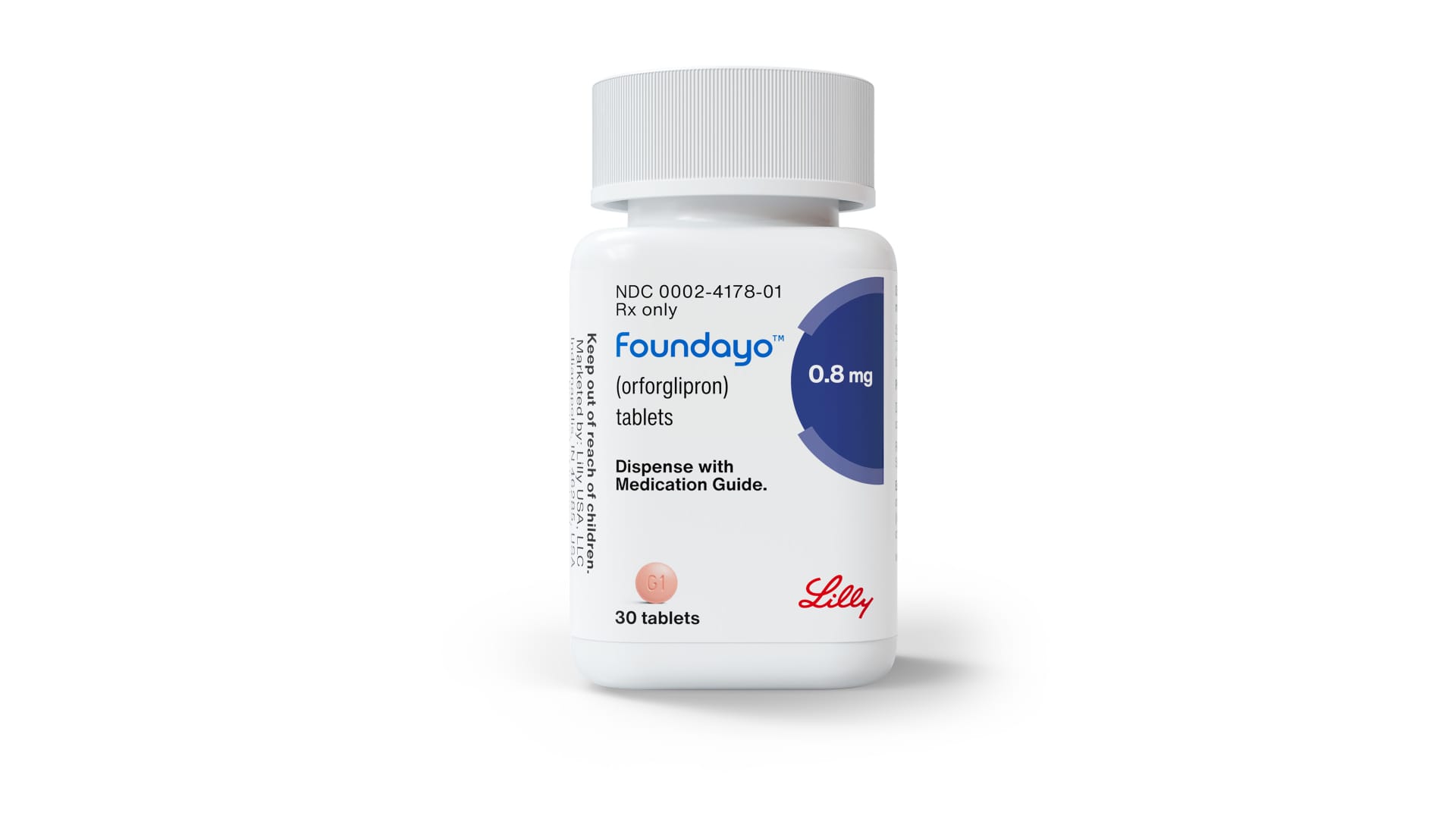
The U.S. Food and Drug Administration has approved Eli Lilly‘s GLP-1 pill, the company said, a major milestone for the Indianapolis-based drugmaker and one that will test the market for new weight loss medications.
Lilly said the once-daily pill, Foundayo, will start shipping from direct-to-consumer platform LillyDirect on Monday and will be available at pharmacies and on telehealth platforms “shortly after.” People with insurance coverage could pay $25 a month with a coupon from Lilly, while people paying out of pocket could pay between $149 and $349, depending on the dose.
The approval comes just a few months after Lilly submitted the drug to the FDA as part of a program that grants speedy reviews for drugs that are considered national priority interests. That means Lilly will introduce Foundayo only about three months behind Novo Nordisk’s Wegovy pill, setting the stage for the next battle between the rival drugmakers in the next frontier for GLP-1 drugs.
“It’s a big moment,” Eli Lilly CEO Dave Ricks said in an interview with CNBC. “We’ve obviously been working in this category of medicines for a while with the first GLP-1 medication 20 years ago and improving ever since. Here is an option that’s not more effective … but it’s more accessible, it’s easier to fit into your daily routine.”
Advertisement
Lilly licensed the molecule, orforglipron, from Japanese drugmaker Chugai in 2018, paying just $50 million up front for global rights to the drug. But there are still questions about how big the drug will become. It doesn’t produce as much weight loss as Lilly’s best-selling shot Zepbound. Millions of people are already used to the routine of injecting themselves once a week.
Eli Lilly Foundayo GLP-1 weight loss pill.
Courtesy: Eli Lilly
Analysts estimate Foundayo sales will reach $14.79 billion by 2030, according to FactSet. That compares to expectations of $24.68 billion for the weight loss drug Zepbound and $44.87 billion for Mounjaro, which is marketed for diabetes in the U.S. and obesity and diabetes in the rest of the world.
Advertisement
Ricks said shots haven’t been as big of a barrier to uptake as Lilly once thought they would be. He still sees Foundayo as an attractive option for people who would rather take a pill or who are searching for a lower price than the injectables.
He sees it playing a role in maintenance, for people who achieve their goal weight with a shot and want to keep the weight off. And he sees Foundayo as a way to “reach the planet” without the manufacturing constraints or cold-chain requirements that come with Zepbound.
Foundayo is a small molecule whereas Zepbound and Wegovy are peptides, which require more intensive manufacturing processes, a barrier Ricks thinks will hinder generic versions of Wegovy that have recently launched in some other countries, including India.
“[Foundayo] does allow for scalability, and that will allow us to launch this globally on the first instance,” Ricks said. “So today, you can get the oral [Wegovy] in the U.S., but you really can’t get it elsewhere. This will be marketed around the world. As soon as we have regulatory approvals, we essentially have as much scale as we need to supply the world with an oral GLP-1 inhibitor.”
Advertisement
Lilly expects approval for Foundayo in more than 40 countries over the next year. The company since 2020 has invested more than $55 billion in manufacturing, which includes opening new sites and expanding existing plants to produce the pill.
In the U.S., Lilly will compete with Novo’s newly launched Wegovy pill. Early demand for that pill has been stronger than expected, with Novo reporting more than 600,000 prescriptions in March.
Novo CEO Mike Doustdar told CNBC in February that one of the earliest takeaways from the launch is that the pill appears to be expanding the obesity treatment market, drawing in new patients rather than converting existing ones from injections. Ricks agreed with that assessment and said Lilly doesn’t care whether people take Foundayo or Zepbound.
“We want people to be on the medicine that meets their health goals,” Ricks said. “If it has Lilly on the box, that’s the goal we have.”
Advertisement
Novo plans to argue that the Wegovy pill is more effective than Foundayo. The Wegovy pill showed around 16.6% weight loss on average in a late-stage trial, while Lilly’s oral drug caused roughly 12.4% on average in a separate study, when analyzing patients who stayed on treatment. Lilly’s Zepbound has consistently shown it can help people lose more than 20% of their body weight.
Meanwhile, Lilly plans to tout the fact that Foundayo can be taken at any time without any restrictions, while the Wegovy pill needs to be taken first thing in the morning on an empty stomach with only a few ounces of water.
Where the two drugs are the same is the starting price. The lowest doses of both drugs will cost $149 for cash-paying customers thanks to an agreement the companies struck with the Trump administration last fall. And price is the most important factor for patients, said Dr. Nidhi Kansal, an obesity medicine doctor at Northwestern Medicine.
“Unfortunately, price is what is driving the decision-making between clinicians and patients for these drugs because they’re all excellent drugs and we have lots of options now, but it’s still a financial decision at the end of the day,” Kansal said.
Advertisement
The lower price point and the approachability of a pill versus a shot opens up the market to casually interested patients, said BMO Capital Markets analyst Evan David Seigerman. Seniors on Medicare will be able to access Foundayo and other GLP-1 obesity medicines for $50 a month starting this summer as part of Lilly and Novo’s deals with the Trump administration. Ricks expects a “pretty robust” response to the program, which Lilly built into its financial guidance for the year.
Analysts say a successful launch of Foundayo is key to Lilly’s stock recovering from recent weakness. The company’s shares have fallen about 14% this year after a meteoric rise that briefly made Lilly the first trillion-dollar market cap health-care company. Sales are a lagging indicator, so analysts will be tracking prescriptions to monitor uptake of the pill, said Cantor Fitzgerald analyst Carter Gould.
“If scripts are going in the right direction, and you’re seeing the continued gains, my guess is people will look through any sort of choppiness around [the first or second quarter],” Gould said.
Another factor for Lilly’s performance this year is a forthcoming readout for its more potent obesity shot, retatrutide. The company has already shared some late-stage data on that drug, but the most important trial is one studying the treatment specifically for weight loss. If retatrutide lives up to its expectations, Lilly would be on its way to creating a portfolio of obesity medicines.
Advertisement
“The future will be more choices, and that’s a great thing,” Ricks said. “And we hope Lilly is the one presenting those choices.”






















































You must be logged in to post a comment Login