

Politics
Super Mario Galaxy Movie Reviews: Critics Slam ‘Rubbish’ Sequel


The reviews are out for the new Super Mario Bros. Movie and… it sounds like the film is anything but a level-up.
While we weren’t exactly expecting the follow-up to the animated video game adaptation to be the next Citizen Kane, it’s worth pointing out that the response to the first film was, at least, somewhat mixed, and it went on to gross more than a billion dollars at the global box office, making it the 20th biggest box office earner of all time at the time of writing.
Ahead of The Super Mario Galaxy Movie’s release at the end of this week, critics have been having their say, and they’ve certainly not been holding back, with a smattering of two- and one-star reviews (not to mention a zero-star take from one particularly unimpressed reviewer).
Here’s a selection of what’s been said so far about The Super Mario Galaxy Movie…
“Of course it’s intended for little kids, but it surely didn’t need to be such a visually dull screensaver of a movie, with even more of the cheesy, Euro-knockoff look of that first film. And, again, the paucity of funny lines is a real puzzle.”
“It’s a supremely vacuous anti-movie that climaxes with a sequence featuring full-screen Nintendo gameplay, as if to remind us of the levels of rancid commercial whoredom we’ve reached.
“The film is torturous to sit through and, for me, provoked periods of actual physical discomfort. I had to stab myself repeatedly in the hand with a pen to distract from the howling distress. It’s that bad, and that offensive.”

Nintendo/Illumination/Universal
“It’s testament to just how bad the original Super Mario Bros Movie was that this sequel can be a noticeable improvement in every respect – animation, storytelling, humour, vocal performances, you name it – while still comfortably qualifying as absolute rubbish.”
“The Super Mario Galaxy Movie” is frenetic in such an impersonal way that it feels like the entire film should be put on Ritalin […] The film treats its story as a threadbare adventure, a mere throwaway, because it’s so focused on those little pings of recognition for gamers. And that’s quite a comedown.”
“[The Super Mario Galaxy Movie] offers the adults a few pings of nostalgia, but otherwise it’s a humourless, hysterical trudge. […] The moments of fan service might keep the hardcore happy, but for everyone else over the age of five it’s just a succession of loud, bright things happening without any real point.”
“Relentlessly fast-paced and filled with hyperkinetic visuals, the sequel hits the sweet spot in terms of what its target audience wants, even if adult non-aficionados will find little of interest other than the starry vocal cast.”
“The Super Mario Galaxy Movie doubles down on its own blandness. There’s barely a plot here. Not a single memorable character. Not even another piano ditty for Jack Black to sing […] There is… one real, solid joke in this film? And it’s mostly just repeating a bit from Disney’s Zootopia.”

Nintendo/Illumination/Universal
“A movie like this will probably make a lot of money, because it doesn’t rock the boat. But a boat that never rocks is a boat that never goes anywhere. That’s how boats work. They’re supposed to take you on a journey.
“The Super Mario Galaxy Movie doesn’t take you anywhere you haven’t been before, and it’s not as fun, it’s not as exciting, and it’s not as challenging as literally any of the games it’s based on. This is not an adaptation of the Super Mario Bros., it’s just a reminder that the franchise exists.”
“A masterpiece of game design that provides endless levels of unique planets to roam and explore, 2007’s Super Mario Galaxy is filled with moments of pure euphoric joy […] yet somehow on screen, it all registers as flat, imagination packaged into the most cleanly corporate and focus-group approved form possible.”
“While it’s likely that retro gamers won’t find anything here that wasn’t in the first movie – Yoshi and one or two others aside – it’s no doubt got enough for kids to enjoy, which will surely come as a relief for parents looking to entertain their offspring over the Easter holidays.”
“This is not a movie to be scrutinised, but to allow beleaguered elder millennial dads to sit their tots down for a precious two hours (if you count the trailers) and get some much-needed rest. It’s cute, and breezy, and rock-stupid, and will probably make a billion dollars again. Such is the world in which we live.”
“This film is even more of a manic roller coaster ride compared to the first movie, with so many gaming references packed into every scene, it’s hard to keep up. There are also a lot more power-ups used this time around, and that results in some fun and interesting combat for Mario and Luigi.”
The Super Mario Galaxy Movie arrives in cinemas on Friday.



Starmer’s world is – deservedly – falling apart very rapidly. His disastrous and tone-deaf speech post-elections only cemented the belief of those around him that he’s toast. The number of MPs signed up to demand a contest to replace him has snowballed rapidly and now stands at 86, more than enough to trigger a leadership contest.
Starmer appears to have lost Labour Together backing
Now, government minister Miatta Fahnbulleh has resigned, telling Starmer:
the public does not believe that you can lead this change – and nor do I.
Fahnbulleh jumping first may well be part of the notorious ‘Labour Together’ trying to retain control. As the Canary noted in March 2026:
Fahnbulleh had previously been of interest to Labour Together, serving as a “Policy Fellow” there.
Fahnbulleh’s resignation is particularly interesting given fellow Labour Together stooge Josh Simons apparent desire for Starmer to go.
Burned toast
As of the time of writing, according to party insiders:
• 6 front-benchers have resigned.
• at least 4 cabinet ministers have told Starmer to lay out immediate plans to leave.
• 81 Labour MPs are publicly making the same demand.
• more than 85 Labour MPs have privately signed Catherine West’s letter – enough to force a leadership contest.
Starmer is done and Labour is dead.
Featured image via the Canary
By Skwawkbox


Eighteen year old Lamine Yamal raised the flag of Palestine from Barcelona’s open-top victory parade, a gesture which has been shared widely online, further cementing him as the best young player on the planet, not only for his ability on the field but also his principles off it.
Barcelona’s parade was the morning after the 2-0 win over bitter rivals Real Madrid in the final El Classico of the season, to seal the La Liga title for only the second time in the leagues history.
Yamal is one of the youngest and most prominent figures in world football, for him to stand on the top deck and hoist the flag of Palestine as the bus moved through cheering fans. This is fast becoming an iconic image, a political gesture that resonates with the masses.
Barcelona have a history with Palestine
Barcelona has been a major hub for pro-Palestinian activism since the beginning of the genocide in October 2023, the city has hosted large regular demonstrations and has been a focal point for solidarity actions across Spain. That civic atmosphere meant the moment Yamal waved the flag of Palestine, it resonated deeply with the public.
Sporting celebrations often avoid political expression, but this was different. For fans at the parade it was an opportunity to celebrate the achievement of winning the title but also to remember that there is a genocide taking place and we cannot forget the people of Palestine.
The act of waving a flag is simple, but the implications are layered with love and loyalty to the most oppressed people on the planet. For Yamal, the gesture shows how athletes and global icons can make a difference when they choose to do so.
The reactions on social media have been full of praise for Yamal using his platform to express solidarity, many calling the act brave and powerful, for someone so young to be so outspoken is inspiring.
Beyond the parade
The city has not only hosted protests, but also been a logistical hub for solidarity efforts, including departures for aid flotillas aimed at Gaza. That context further explains how much this city and it’s people care about the on going genocide of the Palestinian people.
Yamal has risen in meteoric fashion, a teenage talent who has already become a household name in world football, but with fame comes scrutiny and his actions carry weight beyond simple post match interviews. Young athletes today carry the ability to influence a generation, in this case he is influencing the youth for a best of causes.
A victory parade that many would just use as an opportunity to celebrate, has become a moment of reflection, of love, care and attention for the people of Palestine thanks to Lamine Yamal, a clear reminder that sports and political protest are often inseparable.
Featured image via Al Jazeera
By Faz Ali
Anyone seeking to make a compelling argument for the proposition that Scotland’s politicians and lawmakers are simply too farcically incompetent to be trusted with running an independent country had a gift-wrapped Godsend delivered to them last week by the idiot student children of Edinburgh.

But we can’t really blame the colourfully-haired, keffiyeh-clad cretin kiddies of the capital for that, because it’s their elders and betters who opened the door.
The law that enabled a queer trans non-binary Indian poet (trans: layabout) with a PhD in “narrating anti-authoritarian resistance” to become a Holyrood MSP was passed unanimously in the Scottish Parliament in December 2024 and became law in 2025.
It did so despite numerous warnings, which were all ignored.


(India does not allow dual citizenship.)

All of those warnings have immediately come true in the case of Q Manivannan. Trina Budge of For Women Scotland did an exhaustive check of visa regulations, and found that there is essentially no route which Manivannan can take which will enable him to complete his Parliamentary term while residing in Scotland.
– His student visa does not allow him to work more than 20 hours a week or to hire staff, which all MSPs have to do.
– A graduate visa, which he does not yet have, would only allow him to remain in the country for a maximum of three years and cannot be extended.

– He cannot apply for a Skilled Worker visa, as that expressly excludes MSPs.

– That only leaves a Global Talent visa, which Manivannan appears to believe is the solution. However, GTVs are also not available to politicians.


But it’s even worse. It is all but certain that Manivannan is already working illegally. MSPs are regarded as engaged as soon as their result is declared, which was last Saturday, and there is zero chance his graduate visa had been granted by then.
(Indeed, there’s nothing to suggest the application has even been filed yet, and it seems very unlikely that it has.)

And by law, any application that is lodged late automatically fails.

Which also means that Manivannan’s student visa is no longer applicable (even if it still has some time to run), because by being in a full-time job he is clearly breaching its conditions, as noted by solicitor known to Wings readers, Ian Smart.

In law, Manivannan now has no legal right to be in the UK and must leave immediately or be deported. But as Smart notes, there’s a twist.

So we’re now in a situation where a current MSP is an illegal immigrant with no right to remain in the country, but he could nevertheless continue perfectly legally to make Scotland’s laws for the next five years by Zoom meeting.
And if one, then why not all?

Under the 2025 rules, every single MSP in Holyrood (except the Presiding Officer) could be a foreign national living overseas and conducting all their business remotely by laptop from 5,500 miles away.
Not one single MSP voted against those rules, despite having these exact problems carefully and patiently explained to them by experts beforehand. And that, readers, is just about the level of legislative competence that we’ve come to expect from the Scottish Government and Scottish Parliament over the last decade.
It’s not a one-off. It’s the norm, from the Named Person act to the Gender Recognition Reform Act to just about any other piece of legislation drafted by the Parliament since Alex Salmond resigned.
Run a country? These people couldn’t be trusted with a chimps’ tea party.



A Green Party source has reminded Labour members – and voters – of Andy Burnham’s record and given an even more withering verdict on Wes Streeting. Both men are mooted as potential replacements for the hapless Keir Starmer. At the time of writing, rebel Labour MPs prepared to trigger Starmer’s removal are mounting.
As questions swirl over a potential replacement for Starmer, one Green Party source had a withering view on the suitability of Burnham for PM:
Remember this is a man who has repeatedly put himself forward for the leadership and failed. Most recently, he lost to Jeremy Corbyn in 2015, primarily because he failed to rebel on the Welfare Bill. Members correctly assessed he was unwilling or incapable of standing up to the Labour Party establishment.
There’s very little evidence he’s up to the job of taking on entrenched power and transforming our country in the way that’s required -when it comes to it he melts under pressure. The fact he’s now being feted as some kind of saviour says less about Andy Burnham’s merits than it does about the pitiful state of the current Parliamentary Labour Party.
Green Party source: ‘Labour is finished’
The same source, speaking exclusively to Skwawkbox and the Canary, added:
When the alternative is Wes Streeting, who is funded by private healthcare investors and was close friends with Peter Mandelson, I understand why some see Burnham as their best shot.
But the truth is that Labour is finished. Their remaining voters are people who’re well off and don’t understand how bad things have got in this country. Everyone else is desperate for real change. Greens are the only party offering a serious alternative to this failed status quo, and the only party that can take on Reform and win.
There is, given the destruction of Labour and its popularity under Starmer, no guarantee that Burnham would win a by-election even if someone stepped aside to trigger him. Even less chance that the Starmeroid party machine wouldn’t suspend him on a pretext or otherwise block him even standing.
And Streeting’s WhatsApp messages with the disgraced Mandelson show he believes he will lose his own seat at the next general election.
Labour is finished, whoever ends up in Downing Street for the moment.
And the Green Party are increasingly becoming harder to ignore.
Featured image via the Canary
By Skwawkbox
Politics
Politics Home | Top PM Aide Darren Jones “Sounding Out Support” For Potential Leadership Run


Darren Jones in Downing Street for a Cabinet meeting, October 2024 (Alamy)

3 min read
Exclusive: Chief secretary to the Prime Minister Darren Jones has sparked suspicion among colleagues that he is quietly sounding out support for a future leadership bid of his own, PoliticsHome understands.
While taking the mood of the parliamentary party amid growing calls for Keir Starmer to resign, Jones has been interpreted by colleagues as privately gauging support for his own prospects of becoming Prime Minister.
A source close to Jones said he had been calling MPs on behalf of No 10 but had not raised his own leadership prospects and remains supportive of the Prime Minister. However, two other sources have told PoliticsHome that the discussions had taken into account Jones’ own leadership prospects.
As Chancellor of the Duchy of Lancaster and chief secretary to the PM, Jones was the government spokesperson on the media round this morning. He denied that it was “all over” for the Prime Minister today but did not rule out the possibility he could announce a timetable for stepping down.
“I’m not going to get ahead of any decision that the prime minister may or may not take,” Jones said, before adding that Starmer “was very clear yesterday that he will not be walking away, as some of my colleagues have asked him to do”.
Tonia Antoniazzi, the MP for Gower who is one of 80 Labour MPs to call on Starmer to resign, came out as the first to publicly back Jones on Times Radio today.
“I think there’s a number of candidates that would be acceptable to the country. I actually think you were listening to one of them earlier,” she said.
“I think Darren Jones is a very clever, intelligent individual who, when he was chair of the base select committee, showed great leadership. He’s done an excellent job in supporting the Prime Minister as his chief secretary.”
Antoniazzi added that she did not believe Greater Manchester mayor Andy Burnham – who has the support of dozens of Labour MPs despite not being in the parliamentary party himself – would be a good option to succeed Starmer.
She said: “I think that there are people out there that deserve consideration and it doesn’t always have to be somebody that that’s really obvious. And I certainly don’t think that the answer is the King of the North.”
A senior Labour MP who had previously described Jones as “about as popular as a fart in a lift” among colleagues, after he carried out sackings in the September reshuffle in a way that left many MPs unhappy, predicted a Jones leadership bid would not do well.
“I don’t see where his support base comes from,” they said, suggesting that his expression of interest could be motivated more by the aim of securing a senior post in government.
Jones has been the Labour MP for Bristol West and had a majority of over 15,000 at the last general election with the Greens in second place.

The first minister to resign from Keir Starmer’s government has called for the prime minister to step down and oversee “an orderly transition” to a new leader.
Miatta Fahnbulleh stepped down as minister for devolution, faith and communities on Tuesday morning. In a letter addressed to the prime minister, she said that the government had not acted as “a Labour Party clear about our values and strong in our convictions.”
Fahnbulleh said that mistakes had been made, adding: “Our country faces enormous challenges and people are crying out for the scale of change that this requires.”
Read Fahnbulleh’s full letter of resignation below.

MDU warns Chancellor clinical negligence system ‘not fit for purpose’

Northern Ireland RE curriculum is ‘indoctrination’ – Supreme Court
Dear Prime Minister,
I am writing to tender my resignation as Minister for Devolution, Faith and Communities.
I am proud of the work that I have done in this Government. First as the Minister for Energy Consumers where I secured energy bill discounts for 6 million families and kick started our Warm Homes Plan; and in my current role where I have rolled out our transformational Pride in Place Programme, delivered a generational shift in power through our English Devolution and Community Empowerment Act, and led our critical work on tackling the rising tide of hate and division in our communities. It has been a privilege to play my part in a government that is working hard at every level to deliver the change that our country needs.
Whilst progress has been made, we have not acted with the vision, pace and ambition that our mandate for change demands of us. Nor have we governed as a Labour Party clear about our values and strong in our convictions. Mistakes such as the winter fuel payment and cuts to the support provided to disabled people have left too many of my constituents doubting our mission. And the message on the doorstep was clear: you, Prime Minister, have lost the trust and confidence of the public.
Our country faces enormous challenges and people are crying out for the scale of change that this requires. The public does not believe that you can lead this change – and nor do I. Therefore, I urge you to do the right thing for the country and the Party and set a timetable for an orderly transition so that a new team can deliver the change we promised the country.
Yours sincerely,
Miatta Fahnbulleh


(Dmitriy Shironosov/Alamy)

7 min read
Britain’s digital future has a controller – but it’s not us, argues Labour MP Clive Lewis. He maintains that although we have decided data centres are critical national infrastructure and welcomed £45bn of investment, the UK has not determined who governs any of it – leaving the US as the default
My interest in data centres did not begin with national security. It began with water.
In October 2024, ministers announced a vast Blackstone-backed campus near Blyth – one of the largest private investments of the parliament, presented as a vote of confidence in Britain.
I asked a series of Written Parliamentary Questions: had the environmental impact and pressure on local water supplies been assessed before the announcement, and had any tax incentives been offered?
The replies were brief but revealing. Environmental assessments are for developers to commission, and whether one is required is for the local planning authority. Water is also a matter for the local planning authority. On the central questions – what the project would demand from the place around it, and whether ministers knew before they celebrated it – the answer was essentially: not us.
That might be defensible if this were a single planning application. It is not. Data centres are the physical foundations of the AI economy, government services, financial markets, healthcare records, and increasingly the systems through which democratic life itself is mediated. In September 2024, they were designated critical national infrastructure, yet the machinery of government still treats them as if they were ordinary sheds on an industrial estate.
Over the following year, I kept asking questions. I found that emissions from data centres are counted nationally but not attributed to specific sites, while water sits elsewhere. The government does not routinely track individual plans for data centre developments. Even after the Tech Prosperity Deal with the US brought further investment, the answer was the same: environmental assessments are for developers.
I say this in sorrow rather than anger, because this is a Labour government and I want it to succeed. But the pattern is hard to ignore. Ministers announce. Departments refer. Developers assess. Local authorities are left to decide what all that means in practice. Along the way, the national interest is assumed rather than examined.
This is a governing choice, not a small administrative gap. The problem is not that nobody is in charge, but that those in charge are not accountable to British voters. The framework that ultimately governs how this infrastructure operates – who can compel disclosure of the data on it, and on what terms it can be cut off – is set in Washington, not Westminster.
The water question alone should give us pause. Data centres can require large and reliable supplies, both for power generation and cooling. Many are planned in parts of England already classed as seriously water-stressed. The Environment Agency’s own modelling projects a public water supply shortfall of around five billion litres a day by 2055, with further pressure from sectors including data centres adding more than a billion on top. Yet there is still no statutory requirement for operators to report their water use.
Energy is the same story. The National Energy System Operator expects demand from data centres to rise sharply by the end of the decade. Electricity in Britain currently costs around four times what it does in the US, partly because our wholesale electricity price is set by imported gas almost all the time.
None of this means we should say no to data centres – but it does mean we should stop pretending their location is a purely local matter. A facility that draws heavily on the grid, competes for scarce water and underpins national digital services is not just another commercial building.
Nor is this just about pipes and pylons. It is about power in the political sense too. We are encouraged to think of data centres as investment, and only investment. But what kind of dependency is being built, who controls the underlying systems, and whose law ultimately governs them?
Recent events should have ended any complacency. When the Donald Trump administration sanctioned the International Criminal Court (ICC) in February 2025, the chief prosecutor lost access to his Microsoft email account. Microsoft said the ICC made the formal decision; the ICC said Microsoft made it impossible to do anything else. Either way, a sanctioned individual was cut off from the digital tools of his job because of a US executive order.
Separately, Police Scotland found that data was being routed through Microsoft servers across many countries through “follow the sun” support arrangements, potentially placing access to it within foreign legal reach. Asked why sovereignty had not been guaranteed, Microsoft’s reply was simple: no one had asked. That sentence should chill ministers.
The problem is not that nobody is in charge, but that those in charge are not accountable to British voters
The hyperscalers building this infrastructure on British soil – Amazon, Microsoft, Google and Meta – are extraordinary. They’re also highly extractive, and operate under legal frameworks that are not designed around British democratic sovereignty. Their platforms shape what citizens see. Their AI models are trained on data they control and deployed on terms they set.
This is exactly why democratic governments must not drift into dependence by accident.
Even this understates the problem. A data centre in Britain running American software and American AI models, governed in the last instance by American law, is sovereign only in the most superficial sense.
Other countries are starting to respond. France is investing in Mistral. Germany has set up a Centre for Digital Sovereignty to push public services towards open-source software they can audit and control. The International Criminal Court has now begun migrating off Microsoft entirely, choosing Germany’s openDesk project as the alternative. Meanwhile, Britain has investment summit press releases.
There is a real tension here. Expanding domestic data centre capacity in the name of resilience means increased demands on UK land, energy and water. The modern economy cannot function without this infrastructure, so the question is not whether it should exist but on whose terms it is built and what Britain receives in return.
At present, we risk getting the worst of all worlds: local environmental pressure, relatively modest permanent employment, and too little sovereignty because core services are governed from elsewhere. Communities carry the footprint. Ministers claim the investment. The strategic dividend is owned by a handful of US corporations and tech-billionaires.
So, what should change? First, significant data centres should be required to report water and energy use in a consistent, audited and public form. If the infrastructure is critical, the evidence base must be too. Regulators, water companies, grid planners and local communities cannot plan around what they are not allowed to see.
Second, the promised National Policy Statement must do more than smooth the path for development. It needs to set out where data centres make sense, where water stress makes them harder to justify, where grid capacity exists, and where ecological and community concerns create legitimate grounds for refusal, not just delay. Overriding local planning decisions by ministerial call-in or fast-track designation may sometimes be necessary but should never be the default.
Third, public procurement needs a sovereignty test. Where public money or public data is involved, the presumption should be that UK law genuinely governs, audit rights are real and exit costs do not trap the public sector inside one vendor’s ecosystem. “Cloud first” cannot mean “sovereignty later”.
Finally, Britain should take seriously the case for a public-interest stake in the compute layer. That could mean a public cloud company, public options for sensitive services, or stronger public ownership of core AI capacity. The exact model is open for debate; the principle should not be.
None of this is anti-investment. Properly handled, it is what makes investment durable.
The questions I began asking about water turned out to be the right questions – they just had a longer tail than I first realised. Follow the water and you reach the grid. Follow the grid and you reach the cloud. Follow the cloud and you reach the question that should sit at the centre of any serious industrial strategy: who is really in charge?
The honest answer is: not us. Not yet. And not unless we choose to be.
Clive Lewis is Labour MP for Norwich South
Politics
The House | Rishi Sunak On AI: I Wish I’d Spoken To The Country More About The Change Coming
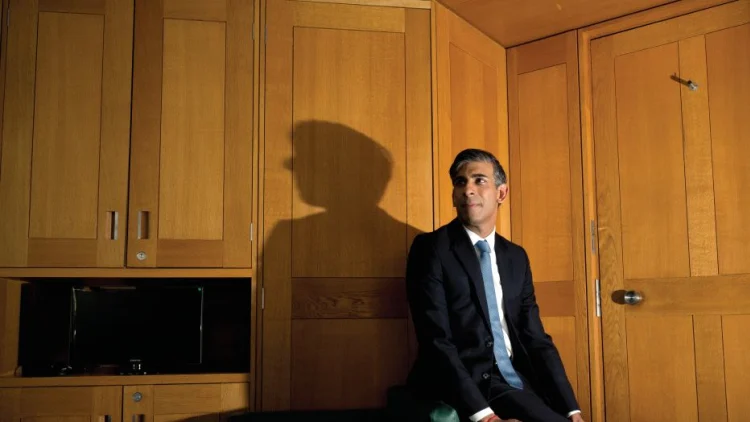

Photography by David Sandison

10 min read
Britain is well-positioned to benefit from the AI revolution, but its workforce may be more exposed than many others. Rishi Sunak tells Francis Elliott how he wishes he had done more to help voters prepare for what is about to come
Rishi Sunak has more time on his hands these days. Not just because he is out of No 10 but also because he is recuperating from a skiing accident caused by ‘showing off’ to his daughters.
In between the pain relief (“a lot of tramadol”) and the physiotherapy, the former prime minister has been building his own AI tool. In will go 20 episodes of his favourite podcasts and post-broadcast social media commentary on them, out will come a short precis that keeps the Richmond MP bang up to date on the issue about which he most cares.
He’s understandably quite chuffed with his new tool, having learned how to build it from a series of free online courses designed to improve AI skills.
“I’m about to turn [this] into something where, instead of having hundreds of pages of transcript, I would just get the three-, four-page, weapons-grade stuff that I need done, completely automatically, every single week.”
This may be peak geek chic, but it is also Sunak practising what he preaches: if you don’t want AI to consume you, you better start consuming AI. The 46-year-old may not have had a mandate or much of a majority as prime minister but, in starting to prepare the UK for the AI revolution, he has emerged with something of a legacy.
Advisory jobs at Anthropic and Microsoft keep him on the frontline of the policy implications of what tech leaders and politicians delicately call “the challenges of the transition” but the rest of us fear is massive, potentially destructive disruption.
Until relatively recently, the consensus had held that AI, like every other so-called general-purpose technology, would in short order create more jobs than it automated. Just as in the 17th century, nobody could conceive of the job as an electrician, so we today cannot comprehend the jobs AI will create.
But Sunak is one of those, like Anthropic boss Dario Amodei, who is – in terms of labour market disruption – starting to shift to a rather less rosy position: that this time it might be different.
“It’s both the breadth and the pace. If you compare in the past, and a nice way to measure it is, how long did it take a technology to get to, say, 100 million users? For electricity, it took about 70 years. Telephone, 50 years. PC, 15. Internet, seven years.
“It took ChatGPT two months. That gives you a sense of how quickly this is [taking place]. Why does that matter? Because history would tell you, these things over time have always worked out, and that new jobs have been created.
“Now, where that might break down is if the disruption is happening so quickly before you get all the new jobs being created. If it just happens so fast, you will get more concentration of job losses first before the new jobs come along.
“The second [factor] is because it is so broad. In the past… general-purpose technologies… would displace employment from a particular area, but there were multiple other opportunities that that person would be able to find work in, that were not disrupted by the same technology.”
He says “this time it’s different” are among the most dangerous words in the English language, but it’s not an implausible outcome. “And certainly not so implausible that a leader should just assume the best.”
Which takes us to Keir Starmer. Sunak gives the Starmer government credit for taking forward the agenda. He recently appeared with David Lammy selling Britain to an audience of AI leaders gathered in Delhi and has met with both Peter Kyle and his successor as tech secretary, Liz Kendall. He says they are broadly doing the right things.
But he clearly thinks Starmer hasn’t the bandwidth or the capacity to make preparing the country for what is to come an absolute priority, and admits he wished he had done more while he was in No 10.
“I wish I had done more on it, and that I’d spoken to the country more about the change that is coming and what it means for us, and how we can make sure it works for the country, how it works for families, how it works for our public services, how it’s going to be good. But also to give people the reassurance that they need, because there’s a lot of anxiety out there about what it means to them.
“You can only have, as prime minister, a handful of personal priorities that you are going to drive through the system that emanate from your office in Downing Street, that the entire system and the entire country knows are your priorities. That is the only real way to change something of this magnitude. This [issue of AI] is, and should be, for the country’s sake, one of those three things.”
Starmer is possessed of a rather different priority at the moment, as Sunak acknowledges.
“The problem with all the drama that we’ve seen in the last week, when these things happen, governments stop governing, essentially, and they start focusing on survival.”
Domestic squalls will pass; the question of how the UK copes with geopolitical and technological dislocations will sustain.
“If you look at the two things that have just changed, we as a country need to make sure that we are prepared for them. It’s a geopolitical environment that has changed, and the fact that we’re on the cusp of this enormous, significant technological revolution, are the two most dominant structural forces out there.”
Does Sunak agree with Nick Clegg, another who found a berth on the US west coast after government, that talk of UK AI sovereignty is “dishonest”? In as far as sovereignty means the UK being entirely independent, Sunak agrees that this is a fiction.
The US and China will continue to exert huge leverage over other nations because of their dominance over the emerging technology. But Sunak says the UK has cards to play and that it needs only to make itself “indispensable” in part of the supply chain to protect itself.
As a Conservative, Sunak is suspicious of the ‘picking winners’ element of the government’s new AI Sovereign fund, but sees the value in putting resources – not just cash but computing power – behind potential capabilities that might, in time, serve as vital national assets.
New hardware innovations – chip-making – are among the start-ups that have been given taxpayers’ cash. Other assets include the AI Safety Institute which seems well-positioned to serve as the world’s premier kitemarking service for Big Tech to show consumers their products won’t do serious damage. (Anthropic recently submitted its new Mythos tool to the ASI for evaluation.)
I wish I had done more on it, and that I’d spoken to the country more about the change that is coming
UK biotech and access to NHS data also mean the country is well-placed to make the most of a coming explosion of new drugs and treatments powered by AI.
These are, Sunak agrees, “reasons to be cheerful”. Even better, he says, is another lesson from the other times the world has been transformed by new technology.
“History tells you that you don’t need to be the place that invents the technology to be the place that benefits the most from it,” starts an enthusiastic Sunak. “I geek out about this all the time.
“The printing press is my favourite example. That’s invented in Germany, in Mainz, the Dutch were the ones that run away with it. But you look at why it’s fascinating, it’s because of a couple of reasons.
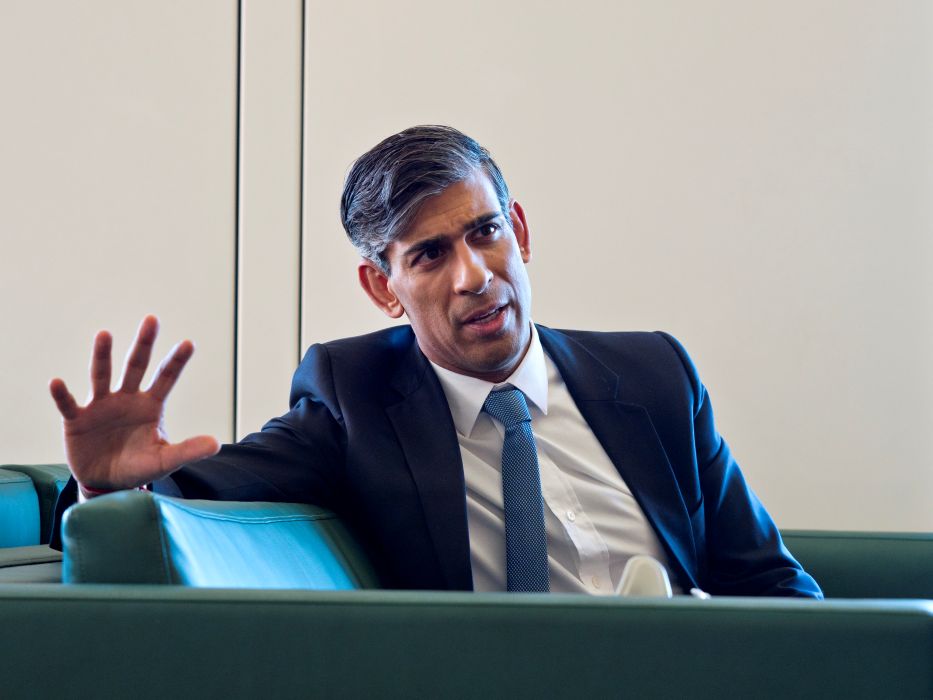
“One is they didn’t have censorship laws. So, obviously, if you’re a printing business, you’ve got to have these very stifling laws in Germany, what you could and couldn’t say in print. They didn’t have that in the Netherlands – free for all.
“The second thing is, they didn’t have guilds like the Germans. These old-school trade union closed shop decided [who could and could not operate a press]. And then the third thing is, because there were more advanced financial markets in Amsterdam, the companies could hedge paper costs, right? Which really matter, because they were volatile.
“So, that’s why the Dutch became [the world’s] publisher, right? So, you don’t need to be Beijing, you don’t need to be Silicon Valley. This technology exists. It’s out there. We should be trying to win the race for what I call everyday AI.”
It’s a full-fat free market interpretation from a man who is, after all, paid to keep the regulators at bay. But he is not as aggressive as some Tories on the threat to AI from any EU reset, noting that the Commission itself is trying to unwind some of its early attempts to bring US tech giants to heel and that Starmer has largely followed his own hands-off approach.
Nor is he particularly exercised about the relatively high energy costs making Britain a less attractive place to build data centres – a huge number of which will be needed to power the AI revolution. He does, however, say the government ought not to be “ideological” about letting data centres source their energy from fossil fuel sources.
He sees both sides of the debate about whether to ban under-16s from social media, noting the design challenges of that policy but also its utility in making it easier for parents to set rules.
When these things happen, governments stop governing essentially and they start focusing on survival
Despite the noise around social media, so far the so-called ‘techlash’ in the UK has been muted compared to that which is starting to shape US politics. There is no high-profile equivalent of Bernie Sanders, the Democrat senator leading the campaign against data centres, or Steve Bannon attacking AI from the populist right.
But the fact is that the UK’s economy is dominated by just those sectors that appear to be most vulnerable to labour market disruption.
That AI models can already reliably replicate many, if not most, of the tasks carried out by many so-called knowledge workers has huge potential implications for this country. The upside is an economy that receives an outsize productivity boost – the downside is a white-collar bloodbath so bad it potentially shatters the social contract.
Some AI insiders apparently have started to become profoundly worried about the societal implications of a technology that could turbocharge existing inequalities, concentrating ever more wealth in the hands of a tiny number, while also creating a “permanent underclass”.
Sunak wants political leaders in the West to move fast to reassure voters that they will be helped through the transition. The UK particularly cannot afford to miss out on a change that could at last lift it out of its decline.
There is still plenty of time to ensure that AI augments and does not just automate. Governments can rebalance the tax system to favour labour, he says. Workers, meanwhile, have time to learn the AI skills that will make them more attractive to employers.
“The biggest risk in all of this is if you just put your head in the sand and try to ignore it. The bigger risk is we will get left behind and become less competitive and efficient than other countries,” Sunak warns.
“We happen to have more knowledge workers [than] other countries. I think the bigger risk is we don’t embrace this wholeheartedly and as quickly as others…
“There is currently, in the West, a trust deficit when it comes to AI, for sure. In contrast to places like India, China, the Gulf, Singapore, where positivity and trust around AI is very high, in Western countries here – the US in particular – it’s very low.
“And we do need to change that because if that persists, all these wonderful benefits I think this technology can provide will never get realised because it will either be regulated or banned or just not adopted.
“We have to create an environment where people feel more positive about the technology in order for us as a society to actually get the benefits.”
Keir Starmer is in “listening” mode, a senior cabinet ally has suggested as the prime minister faces a chorus of calls to resign.
Darren Jones, the chief secretary to the prime minister, insisted that Starmer is “getting on with the job” but appeared to confirm that he is now considering his political future.
Jones recognised that Labour MPs were “asking the prime minister to consider different options in the future”.
Speaking to Sky News, Jones added: “He rightfully is listening to them. It would be wrong if he wasn’t listening to them.”
MDU warns Chancellor clinical negligence system ‘not fit for purpose’
Northern Ireland RE curriculum is ‘indoctrination’ – Supreme Court
These remarks from a senior minister follow reports that his cabinet colleagues are split on Starmer’s future. According to reports overnight, Shabana Mahmood, the home secretary, has called on Starmer to set out a timetable to step down ahead of a crunch cabinet meeting on Tuesday morning.
The prime minster faced a series of resignations on Monday evening as calls for him to quit grew over the course of the day. Monday began with a make-or-break speech from the prime minister in which he vowed to defy his “doubters”. But the address failed to quell the burgeoning rebellion on Labour’s backbenches.
The resignations of Tom Rutland, Naushabah Khan, Sally Jameson and Joe Morris threw Starmer’s premiership into graver peril.
Rutland, a parliamentary private secretary (PPS) in the Department for Environment, Food and Rural Affairs, was the first to issue a statement announcing his decision to resign. A PPS acts as an unpaid parliamentary assistant, providing a link between the senior frontbencher and backbench MPs. The role is widely regarded as the first step on the ministerial ladder.
Rutland said that the prime minister “has lost authority not just within the parliamentary Labour Party but across the country and that he will not be able to regain it.”
He added: “That significantly impedes the ability of the government to deliver the change that people voted for at the general election – change that we must deliver.”
Morris and Jameson did not initially state that they had resigned their roles. However, the government moved quickly to announce their replacements on Monday evening.
Morris’ resignation was seen as especially significant. He is considered to be an ally of the health secretary, Wes Streeting, a likely leadership challenger. Another Streeting confidante, Jas Athwal – whose Ilford South constituency neighbours Streeting’s Ilford North seat – called for Starmer to resign on Monday afternoon.
Speaking on Tuesday morning, Jones conceded that he was “sad” about the state of affairs.
He told Sky News: “I’m a bit sad, to be honest… because I’m sad that we’re in this situation in the first place.
“I’m sad about the election results last Thursday when we lost many brilliant colleagues across the country, some of whom had served their local communities for many decades.
“So I’m sad that my team, my party, has ended up with a poor set of results. And I’m sad that a number of colleagues yesterday, have felt the need to have this conversation in public as opposed to internally within the party.
“So I am a bit sad about that, to be honest, but I’m also optimistic about the future because we’ve only been in government now for less than 2 years.”

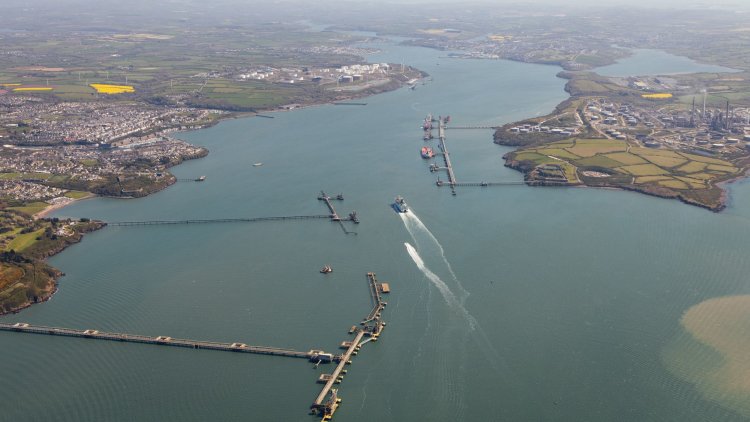
Milford Haven Waterway, Wales

Tom Sawyer, CEO
| Port of Milford Haven
Energy security concerns amid global instability underline the urgent need for a whole-system approach – integrating oil and gas, hydrogen and renewables – to deliver a resilient future
Recent instability in the Middle East has served as a stark reminder that energy security cannot be taken for granted.
Against this backdrop, the UK stands at a decisive point.
The challenge is no longer simply to decarbonise individual sectors or maintain strong domestic and international supply chains, but to integrate them.
A whole-system approach – spanning oil and gas, hydrogen and renewables – must guide UK and Welsh government policy in the short to medium term if we are to deliver energy security, affordable prices and net-zero simultaneously.
Oil and gas remain foundational.
They underpin industrial activity, provide system flexibility and support thousands of skilled, well-paid jobs – including around 5,000 Welsh jobs linked to the Milford Haven Waterway alone.
In the near term, domestic gas production from the North Sea continues to play an important role in shielding the UK from external shocks.
Along the Haven, increased import capacity further strengthens gas resilience for both Britain and Europe.
At the same time, UK oil refining capacity is under significant pressure, following the closure of two British refineries in the past year alone.
However, the infrastructure, workforce and capabilities built around these sectors must now be harnessed to support future resilience.
Hydrogen is central to that future.
The UK government’s target of up to 10 GW of low-carbon hydrogen production by 2030 reflects its strategic importance.
Hydrogen offers a bridge between existing energy systems and future demand, particularly for hard-to-abate sectors such as heavy industry and transport.
Along the Haven, major projects led by MorGen Energy and RWE are progressing and could deliver up to a fifth of the national target.
At the same time, renewable electricity must continue to scale.
For South Wales and the South East of England, floating offshore wind (FLOW) will form the backbone of a future power system, while solar, marine energy and other emerging technologies will diversify supply and strengthen resilience.
Projects such as the Dragon Renewable Energy Park demonstrate the value of this multifaceted approach.
The importance of energy and carbon storage cannot be underestimated.
With the right regulatory and policy support, the Milford Haven CO2 Project can provide a vital pillar of Wales’ and the UK’s industrial future.
This is where a whole-system approach becomes critical.
Electricity generation, hydrogen production, fuel distribution, carbon capture and energy storage must be developed in tandem.
Ports such as Milford Haven sit at the heart of this integration.
As energy hubs, they connect offshore generation with onshore demand, enable fuel diversity, and provide the infrastructure needed for FLOW, hydrogen and CO2 shipping.
The UK government’s ambition to become a clean energy superpower recognises the need for a coordinated, system-wide transition.
But for success, policy delivery must go further.
We need accelerated grid capacity and stronger policy support for CO2 shipping to unlock significant infrastructure investment – in excess of £1bn on the Haven alone.
This will support regions like ours, where multiple technologies can co-exist, and our skilled workforce, natural assets and existing infrastructure can scale effectively.
The prize is significant.
A fully integrated energy system will enhance national resilience, support high-value jobs, and provide a more balanced and secure energy mix.
Oil and gas, hydrogen, renewables and storage all have a role to play – but only if they are deployed as part of a coherent strategy that recognises their interdependencies.
In the short to medium term, the task is clear: build on existing strengths while investing in future capability.
That means supporting oil and gas, accelerating hydrogen and storage deployment, and scaling renewables – all within a coherent, whole-system framework.
Energy security and energy resilience are not competing priorities; they are one and the same.

5 Must-Know Facts on Taylor Swift and Travis Kelce’s Rumored 2026 Wedding Amid Summer Buzz

Advanced Micro Devices (AMD) Stock Surges to New 52-Week Peak Amid AI Server Boom

Government ministers resign, as rats leave Starmer’s sinking ship

Manchester United reach agreement with Casemiro over contract clause amid transfer speculation

US brings back mandatory military draft registration

Steven Gerrard disagrees with Gary Neville over ‘shock’ Chelsea and Arsenal claim | Football


-
 Crypto World4 days ago
HarrisX Poll Found 52% of Registered Voters Support the CLARITY Act
-

 Fashion4 days ago
Weekend Open Thread: Marianne Dress
-

 Crypto World5 days ago
Upbit adds B3 Korean won pair as Base token gains Korea access
-
 NewsBeat5 days ago
NCP car park operator enters administration putting 340 UK sites at risk of closure
-

 Fashion16 hours ago
Coffee Break: Travel Steam Iron
-

 Fashion1 day ago
What to Know Before Buying a Curling Wand or Curling Iron
-

 Tech2 days ago
Auto Enthusiast Carves Functional Two-Stroke Engine from Solid Metal
-

 Politics12 hours ago
What to expect when you’re expecting a budget
-

 Politics3 days ago
Politics Home Article | Starmer Enters The Danger Zone
-
 Business3 days ago
Ignore market noise, India’s long-term story intact, say D-Street bulls Ramesh Damani and Sunil Singhania
-

 Crypto World7 days ago
UAE Free Zone Deploys Blockchain IDs to Verify Registered Firms
-

 Tech1 day ago
GM Agrees To Pay $12.75 Million To Settle California Lawsuit Over Misuse Of Customers’ Driving Data
-

 Crypto World6 days ago
BlackRock CEO Larry Fink Discusses a New Asset Class
-

 Entertainment5 days ago
Sarah Paulson Called Out For Met Gala ‘Hypocrisy’
-

 Crypto World5 days ago
Robinhood says Wall Street is building onchain
-
 Sports6 days ago
NBA playoff winners and losers: Austin Reaves is not loving Lakers vs. Thunder matchup, but Chet Holmgren is
-

 Entertainment5 days ago
General Hospital: Ric & Ava Bombshell – Ric’s Massive Secret Exposed!
-

 Entertainment6 days ago
Bold and Beautiful Early Spoilers May 11-15: Steffy Revolted & Liam Overjoyed!
-

 Tech6 days ago
Apple and Samsung are dominating smartphone sales so thoroughly that only one other company makes the top 10
-

 Politics5 days ago
Simon Cowell Says He Was ‘Horrible’ To Susan Boyle During BGT Audition
You must be logged in to post a comment Login