
Business
The billion-barrel Hormuz oil shock is about to crash demand


The longer the vital oil channel doesn’t reopen, traders say, the more consumption is going to have to recalibrate lower to align with supply that’s dropped at least 10%. And for that to happen, people will have to buy less, either through prices they can’t afford, or government intervention to force consumption down.
A billion barrels of supply loss is already all-but guaranteed – more than double the emergency inventories that governments released not long after the conflict began at the end of February. Buffers are being used up fast, helping to keep a lid on oil prices for now. But with the closure now in its ninth week, demand destruction that started in less obvious sectors like petrochemicals in Asia, is quietly spreading to everyday markets the world over.
“Demand destruction is happening in places that are not visible pricing centers,” Saad Rahim, chief economist of trader Trafigura Group, told the FT Commodities Global Summit in Lausanne this week. “That adjustment is already happening, but if this continues, it has to get larger and larger. We’re at a critical inflection point.”


The most dependent industries and markets – including petrochemicals plants in Asia and the Middle East, and shipments of liquefied petroleum gas, a vital cooking fuel in India – saw an immediate hit when the US and Israel first attacked Iran on February 28.
Now, with a stalemate between US President Donald Trump and his Iranian adversaries dragging on, the impact is increasingly shifting west – and to products that are central to consumers’ everyday lives. Airlines in Europe and the US are cutting thousands of flights.Analysts are warning of weakness in consumption of gasoline after prices hit $4 a gallon in the US, and diesel – used to power everything from trucks to construction equipment. Global oil demand is on track to slump the most in five years this month, according to the International Energy Agency, which coordinated the emergency measures by major economies to counteract the supply shock.
Trading giant Gunvor Group estimates the loss could double next month to 5 million barrels a day, or 5% of world supplies, and along with other major traders sees a growing risk of economic recession. Other analysts say that the impact has already reached around the 4 million a day mark.
That toll is beginning to take shape. Germany has slashed economic growth forecasts in half, while the International Monetary Fund has trimmed global estimates, citing the war.
In the most “severe” of three scenarios modelled by the European Central Bank, Brent prices peak at $145 a barrel and cut the region’s growth in half. The need for oil demand and economic activity to adjust lower, most likely through prices that discourage consumption, will only increase with every day the strait stays shut.
Worldwide demand already faces a hit of 5.3 million barrels a day this quarter, and a 12-week disruption of Hormuz would propel Dated Brent, the world’s key physical crude price, above this month’s record to $154 a barrel, according to consultant FGE NexantECA.
“Because there is still no visible disaster” in the west, “people think everything is okay, and a bit higher pump prices are the only impact,” said Cuneyt Kazokoglu, FGE’s director of energy transition. But demand destruction “will come and is coming in waves. Asia was first in line, Africa is the next one. Europe has already started talking about the lack of some fuels and feeling the price impact.”
Ultimately, in a market where demand needs to adjust down to match lower supply, oil prices may be what drive that recalibration. In extreme scenarios, where price alone forces the market to balance, FGE estimates that crude oil would need to surge to $250 a barrel.
Several analysts said privately that extreme uncertainty about what will happen in the conflict makes it almost impossible to model the demand impact. But without a swift resolution, the economic consequences could be profound.

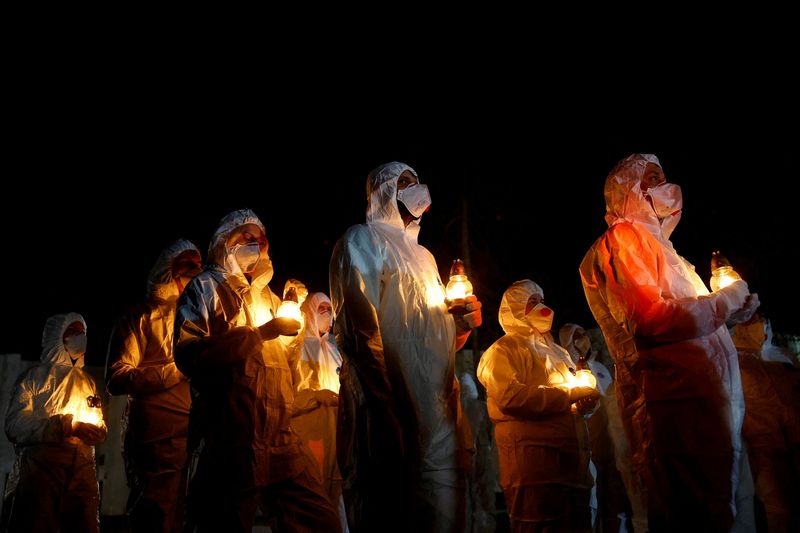

Ukraine marks 40th anniversary of Chornobyl disaster under cloud of war

Goldman Sachs flags shrinking supply shock in USD outlook, sees delayed dollar weakness
Business
Earnings call transcript: New China Life Insurance Q4 2025 reveals earnings miss, stock dips

Earnings call transcript: New China Life Insurance Q4 2025 reveals earnings miss, stock dips

Russia stocks lower at close of trade; MOEX Russia Index unchanged


Casino Group FY 2025 slides: EBITDA surges 14% amid restructuring
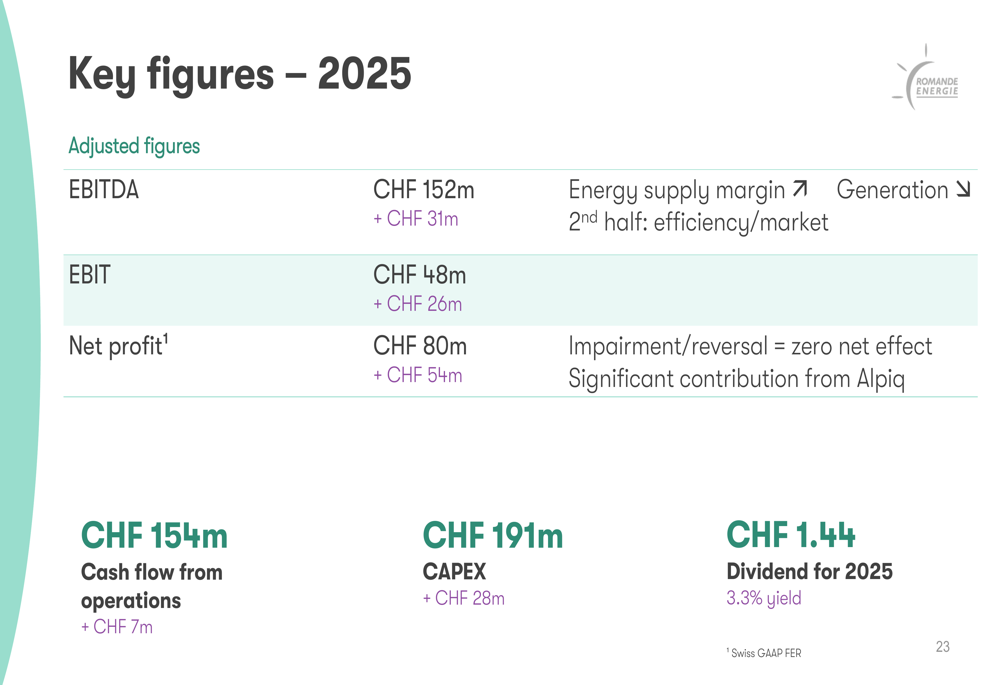
Romande Energie 2025 slides: EBITDA jumps 25%, eyes net-zero future
Earnings call transcript: Romande Energie beats Q4 2025 forecasts
Earnings call transcript: Casino Group enters recovery phase with 2025 turnaround


Mali army bases hit in large-scale attacks claimed by al Qaeda-linked militants
Business
Trump Justice Department Revives Firing Squads for Federal Executions in Major Policy Shift

WASHINGTON — The U.S. Justice Department announced Friday it is expanding federal execution methods to include firing squads, reinstating lethal injection protocols from the first Trump administration and streamlining processes to expedite capital punishment cases as part of a broader push to strengthen the federal death penalty.

AFP
The move fulfills a directive from President Donald Trump on his first day in office to prioritize seeking and carrying out death sentences for the most serious federal crimes. Acting Attorney General Todd Blanche issued guidance directing the Bureau of Prisons to update its execution protocol to include additional constitutional methods currently authorized in certain states, explicitly naming the firing squad alongside lethal injection using pentobarbital.
“Among the actions taken are readopting the lethal injection protocol utilized during the first Trump Administration, expanding the protocol to include additional manners of execution such as the firing squad, and streamlining internal processes to expedite death penalty cases,” the Justice Department said in a statement.
The announcement comes amid ongoing challenges in obtaining lethal injection drugs due to pharmaceutical companies’ reluctance to supply them for executions. Firing squads, though rare in modern U.S. history, remain authorized in a handful of states and are viewed by proponents as a reliable backup method. The last federal execution occurred in 2021 during Trump’s first term.
Critics immediately condemned the decision as a step backward for humane punishment and due process. Death penalty opponents, civil rights groups and some religious leaders called the revival of firing squads barbaric and unnecessary in an era when many states have moved away from capital punishment. Several Democratic lawmakers vowed to challenge the policy in court, arguing it raises constitutional concerns under the Eighth Amendment’s prohibition on cruel and unusual punishment.
Supporters, including some conservative lawmakers and victims’ rights advocates, praised the move as a necessary tool to ensure justice for the most heinous federal crimes, including terrorism, mass murder and certain drug-related killings. They argue that when lethal injection drugs are unavailable, alternative methods like firing squads provide a constitutional and effective option.
The Justice Department emphasized that the changes aim to clear backlogs on federal death row and respond to Trump’s executive order directing the department to prioritize capital cases. There are currently around 40 federal inmates on death row, with executions halted during the Biden administration.
Legal experts note that while states like Utah, Mississippi and South Carolina have used or authorized firing squads in recent years, federal adoption represents a significant policy reversal. The protocol would likely involve a team of marksmen aiming at the heart from a set distance, with one rifle loaded with a blank to diffuse responsibility.
The announcement has ignited fierce debate across political and social lines. Progressive organizations called it a return to “medieval” practices, while conservative commentators framed it as restoring law and order. Public opinion polls on the death penalty remain divided, with support generally higher for certain federal crimes like terrorism.
Civil liberties groups warned that expanding execution methods could lead to rushed proceedings and increased risk of error in capital cases. They pointed to past exonerations of death row inmates and concerns about racial disparities in sentencing. The American Civil Liberties Union vowed legal challenges to any implementation of the new protocols.
The Justice Department’s action also includes efforts to expedite internal reviews and appeals processes for death penalty cases. Officials cited difficulties obtaining lethal injection drugs as a primary reason for exploring alternatives, noting that several pharmaceutical companies have policies against supplying execution drugs.
Death penalty experts say firing squads have a long but limited history in the United States. Utah carried out the last firing squad execution in 2010 before shifting away, though some states have reinstated the option as a backup. Federal adoption would mark a notable expansion of its use in modern times.
The policy shift reflects broader Trump administration priorities on crime and justice. In his first term, the administration carried out 13 federal executions after a 17-year hiatus, the most in any single administration in decades. The current moves signal intent to resume and accelerate that pace.
As reactions poured in Friday, the announcement dominated headlines and social media discussions. Victims’ families of federal capital cases expressed mixed emotions — relief at the prospect of finality for some, while others focused on the broader moral questions surrounding state-sanctioned killing.
For now, the Justice Department has laid the groundwork for firing squads as an option, but actual implementation would require further procedural steps, legal challenges and selection of specific cases. The development ensures the federal death penalty will remain a contentious issue throughout Trump’s second term.

Financial Literacy in 50 Minutes – What School Never Taught You About Money!

Ukraine marks 40th anniversary of Chornobyl disaster under cloud of war

XRP Price Outlook Strengthens as Breakout Retest Holds and Outflows Rise

Manchester United reach agreement with Casemiro over contract clause amid transfer speculation

US brings back mandatory military draft registration

Steven Gerrard disagrees with Gary Neville over ‘shock’ Chelsea and Arsenal claim | Football


-

 Business6 days ago
Powerball Result April 18, 2026: No Jackpot Winner in Powerball Draw: $75 Million Rolls Over
-

 Politics7 days ago
Zack Polanski demands ‘council homes not luxury flats for foreign investors’
-

 Fashion1 day ago
Weekend Open Thread – Corporette.com
-

 Tech7 days ago
Auto Enthusiast Scores Running Tesla Model 3 for Two Grand and Turns It Into Bare-Bones Go-Kart
-
Entertainment6 days ago
NBA Analyst Charles Barkley Chimes in on Ice Spice McDonald’s Fiasco
-

 Politics5 days ago
Gary Stevenson delivers timely reminder to register to vote as deadline TODAY
-
Crypto World5 days ago
Bank of Hawai’i (BOH) Q1 2026: Net Income Drops to $57.4M as Net Interest Margin Expands
-
Crypto World3 hours ago
Hyperliquid $HYPE Rally Builds Momentum as AI Sector Enters Prove-It Phase
-

 Politics3 days ago
Making troops accountable for war crimes threatens US alliance, ex-SAS colonel warns
-

 Business4 days ago
Rolls-Royce Voted UK’s Most Iconic Trade Mark as IPO Register Hits 150
-

 Politics3 days ago
Disabled people challenge government SEND proposals over segregation concerns
-

 Politics3 days ago
Zack Polanski responds to home secretary’s taser threat
-
Politics3 days ago
Wings Over Scotland | How To Get Away With Crimes
-

 Politics3 days ago
Starmer handler McSweeney to be dragged from shadows by Foreign Affairs Committee
-
Crypto World7 days ago
Kelp DAO rsETH Bridge Hack Drains $292M as DeFi Losses Top $600M in Two Weeks
-
 Crypto World4 days ago
Five Value Stocks with Recovery Potential in 2026: PayPal (PYPL), Nike (NKE), and More
-

 Politics3 days ago
‘Iran is still a nuclear threat’
-

 Crypto World4 days ago
New York sues Coinbase, Gemini over prediction market offerings
-

 Business4 days ago
The Job Benefits Most Men Don’t Know to Negotiate
-

 Crypto World2 days ago
Michael Saylor says BTC winter is over. Market analyst disagrees, says bitcoin was in a pullback
You must be logged in to post a comment Login