
Business
The ecstasy of buying our first home was short-lived after we found 150 faults




Dentsply Sirona's Troubles Are Nothing To Smile About (Downgrade)

Boeing finds 737 MAX software glitch that may affect automated navigation – WSJ


I spent 30 years in the institutional trenches as a trader, analyst, and portfolio manager, eventually running the equity trading desk at Northern Trust in Chicago. Those decades shaped my approach: stay disciplined, trust the data, and keep emotion out of the way. Since 2009, when I began publishing my stock selections, my portfolio has delivered solid long term results—compounding in the mid teens annually through 2025. Today I manage a 15-20 stock model portfolio where I select stocks that score highly for Quality, Growth, Momentum, Value, and Risk. I use a rules-based framework that helps me build high performing portfolios. My work focuses on systematic thinking, behavioral awareness, and evidence over opinion. For my market outlook and model portfolio updates, visit zeninvestor.org. .
Analyst’s Disclosure: I/we have a beneficial long position in the shares of NVDA, AVGO, GOOGL either through stock ownership, options, or other derivatives. I wrote this article myself, and it expresses my own opinions. I am not receiving compensation for it (other than from Seeking Alpha). I have no business relationship with any company whose stock is mentioned in this article.
Seeking Alpha’s Disclosure: Past performance is no guarantee of future results. No recommendation or advice is being given as to whether any investment is suitable for a particular investor. Any views or opinions expressed above may not reflect those of Seeking Alpha as a whole. Seeking Alpha is not a licensed securities dealer, broker or US investment adviser or investment bank. Our analysts are third party authors that include both professional investors and individual investors who may not be licensed or certified by any institute or regulatory body.

Conor McKenna is co-founder and chief executive of Go Swag, a Glasgow company that sources, stores and ships branded gifts and merchandise for more than 1,000 organisations, including Meta, Apple and Netflix.
In May 2026 the business raised $5m (£3.7m) in a round led by Mercia Ventures with Techstart Ventures, taking total funding to $6.2m. The money will push Go Swag further into the United States, open a warehouse in Southeast Asia and grow the team from 30 to 70 people. He tells Business Matters why he learned to say no to clients, and why he thinks the catalogue is finished.
What do you currently do at Go Swag?
As co-founder and CEO, my core focus is setting the strategic direction of the company, driving our global expansion and leading product innovation. We have built Go Swag as a tech-enabled corporate gifting platform to take the heavy lifting out of branded merchandise for global enterprises.
That means a lot of my day-to-day involves pushing our technology suite, from AI-driven product curation to customisable recipient management systems. Our Claim Pages let recipients enter their own details, and Sonny, our AI recommendation engine, helps clients choose products. Anything that ensures we are eliminating friction for our clients at every step.
What was the inspiration behind your business?
Go Swag started with a problem my co-founder Ben and I ran into first-hand while working at a software agency in Glasgow. We were asked to build an onboarding pack for a new designer, but quickly found that the available options were low quality and split across fragmented suppliers. We ended up sourcing and packaging everything ourselves to create the kind of first impression we wanted the new joiner to have.
When we asked HR about scaling that experience, they showed us the operational nightmare behind it: managing dozens of vendors, holding inventory and handling international shipping.
Coming from design backgrounds, we saw a trillion-dollar industry running on 20-year-old catalogues and manual processes. Companies were spending millions perfecting their digital brand, yet handing out disposable merchandise physically. We launched Go Swag to bridge that gap completely.
What will the new funding be used for?
We raised $5m, led by Mercia Ventures with Techstart Ventures and a group of strategic angel investors. It will help us grow in the United States and open a warehouse in Southeast Asia, alongside the ones we already run in the UK, the Netherlands and the US.
We also plan to grow the team from 30 to 70 people across sales, engineering and operations, and to keep automating quoting, account management and product recommendations.
Who do you admire?
My biggest inspiration is my mum. She left home at 17 and built a remarkable career through sheer determination and work ethic, eventually becoming a CEO. Watching her resilience up close taught me what leadership, adaptability and perseverance look like in practice.
In business, I admire founders and builders who question industry status quos rather than accepting them. Anyone who takes a stagnant category and fundamentally rebuilds it through better technology and design principles is someone I look up to.
Looking back, is there anything you would have done differently?
We should have learned to say no sooner. Early on, it is easy to assume the goal is simply to hit the brief and match the target price, when in fact clients rely on your expertise to push back. Accepting a product compromise might feel fine in the moment, but taking shortcuts on quality is too big a risk for any brand to take.
We work with some of the world’s most ambitious companies, and we have staked our reputation on making sure physical merchandise gets exactly the same attention to detail as their digital homepage. Bringing that level of honesty to a pitch is not always the easiest way to win business, but it is how you build real trust in the long term.
What defines your way of doing business?
I have always been a builder, someone who likes taking complex systems apart to figure out where they fail and how to rebuild them cleaner. That mindset dictates how we operate: lean teams, rapid execution and an uncompromising focus on quality.
We believe corporate gifting should not be treated as a transactional procurement task; it is a high-impact brand touchpoint. We act as an extension of our clients’ teams by taking complete ownership of the back end. That means handling everything from recipient sizing to global distribution across three continents, so enterprise leaders can stay focused on their core business.
What advice would you give to someone starting out?
Be prepared to outwork everyone, and surround yourself with smart, determined people. Most of building anything worthwhile is boring, repetitive work that nobody sees. You have to learn to enjoy that bit, not just the outcome.
And do not outsource your conviction. Most interesting businesses sound like terrible ideas until someone proves otherwise. Ask for opinions, listen and learn, but remember that most people have not tried what you are trying. Build it, find customers and let real transactions tell you whether you are right.
Business
San Diego West Nile Virus Cases Hit 10-Year High as County Deploys Mosquito Spraying Trucks, Officials Warn
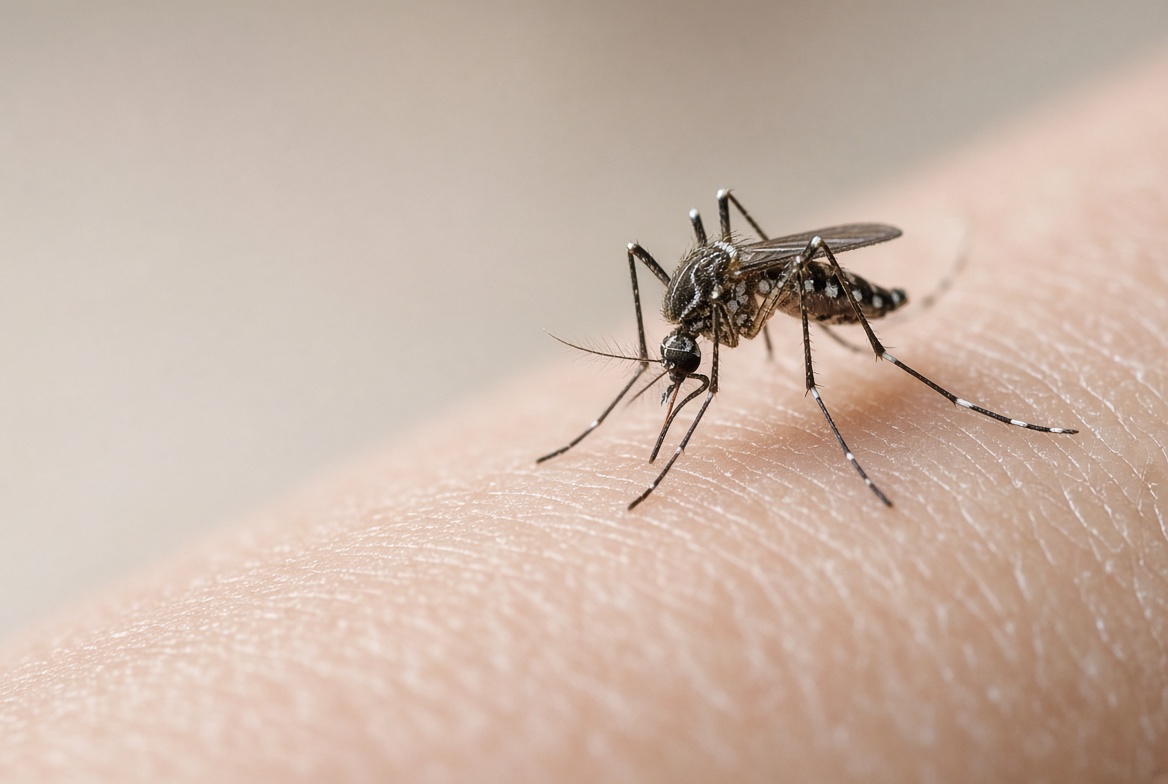
SAN DIEGO — San Diego County health officials are urging residents to take precautions against mosquito bites after West Nile virus cases surged to their highest level in a decade, prompting emergency spraying operations in neighborhoods identified as having elevated risk.
The county has confirmed 11 cases of West Nile virus so far this year, a stark increase from last year, when no cases were reported in the county at all. Of those 11 confirmed cases, four people have required hospitalization.
In response to the surge, county vector control officials deployed spraying trucks early Friday morning in Coronado, an area identified as having a particularly high concentration of cases, with plans to return Saturday at 1 a.m. to spray again. Signs alerting residents to the spraying operation have been posted throughout the affected neighborhoods, with a map outlining the treatment area spanning from 2nd Street to Ocean Boulevard and from F Avenue to Glorietta Boulevard.
Vector control officials explained the basis for targeting that specific area. “Identified an area that we see as having a higher risk of West Nile virus, based on finding positive mosquitoes within a limited area,” officials said.
West Nile virus typically originates in infected birds, which mosquitoes then pick up and transmit to humans through bites. According to health officials, approximately 80% of people who become infected with the virus do not develop any symptoms at all. Among the remaining 20% who do become symptomatic, most experience flu-like symptoms, including fever and muscle aches. Severe symptoms occur in roughly 1% of cases, and in some of those instances, the virus can prove fatal.
San Diego County Public Health Officer Dr. Sayone Thihalolipavan emphasized the importance of prevention given the current lack of medical treatment options for the virus. “It’s really important to understand there is no vaccine, there is no treatment for West Nile virus, so we have to take prevention really, really seriously,” Thihalolipavan said.
With no vaccine or specific treatment available, county officials are focusing their public messaging on practical prevention steps residents can take at home. Officials are advising residents to eliminate any standing water around their properties, including in flower pots and bird baths, since stagnant water provides breeding grounds for mosquitoes. Additional recommended precautions include using insect repellent and wearing long sleeves and pants when outdoors, particularly during dawn and dusk hours, when mosquito activity typically peaks and residents face the greatest risk of exposure.
Officials also flagged a broader environmental factor that could extend the current elevated risk beyond the season’s typical peak. A forecasted El Niño weather pattern may generate additional standing water across the region, potentially prolonging mosquito breeding conditions beyond West Nile virus’s typical peak season, which generally runs from June through October in the county.
The surge in San Diego County cases mirrors a broader national trend this year. According to the Centers for Disease Control and Prevention, an unusually warm and wet spring contributed to an early surge in mosquito breeding and virus circulation across the United States this year, a pattern that appears to be reflected in San Diego County’s own significant year-over-year increase in confirmed cases.
West Nile virus has circulated in the United States for more than two decades since it was first detected domestically, with case counts fluctuating from year to year depending on weather conditions, mosquito population levels and other environmental factors that influence transmission. The jump from zero confirmed cases in San Diego County last year to 11 this year, with four requiring hospitalization, represents a particularly sharp swing that has prompted the county’s more aggressive spraying response in the areas identified as highest risk.
Residents in Coronado and surrounding areas covered by the current spraying operation are advised to review the posted notices and treatment area maps for specific guidance on the timing and scope of the mosquito control efforts in their neighborhoods. County officials have indicated they will continue monitoring mosquito populations and case counts closely, with additional spraying operations possible in other areas of the county should further zones of elevated risk be identified through ongoing mosquito surveillance testing.
With the current case count already the highest recorded in the county in ten years and the season’s typical peak transmission window still ongoing, county health officials are continuing to emphasize that individual prevention measures, eliminating standing water, using repellent, and covering exposed skin during peak mosquito activity hours, remain the most effective tools available to residents in the absence of any vaccine or specific medical treatment for the virus.

Trump says he approved fuel economy standards ending Biden EV mandate
Business
(VIDEO) Kylie Minogue Dazzles 100,000-Plus Fans With Flying, Costume Changes at AFL Grand Final 20-Minute Show

MELBOURNE — Kylie Minogue delivered on her promise of a hometown spectacle Saturday, dazzling more than 100,000 fans packed into the MCG, along with millions more watching at home, with a 20-minute AFL grand final pre-game show that packed in greatest hits, multiple costume changes and a literal flight through the stadium’s airspace.
Minogue opened the show with a video package, narrated by the singer herself, splicing childhood footage of Minogue with images of the two teams competing in that day’s final. “A homecoming like this? I should be so lucky,” she said in the voiceover, a nod to one of her own early hits. The set then launched directly into “Love at First Sight,” backed by blue-clad dancers and pyrotechnics.
Minogue crammed more than three decades of hits into her brief set, working through “Love at First Sight,” “In Your Eyes,” “Get Outta My Way,” “On a Night Like This,” “All the Lovers,” “Spinning Around,” “Confide in Me,” “Slow,” “Padam Padam,” “The Loco-Motion” and “Can’t Get You Out of My Head,” the last performed with a Dom Dolla remix. The rapid pace reflected the central logistical challenge of condensing a career spanning more than 30 years into a single 20-minute broadcast window.
Several distinct moments stood out across the performance. A tonal shift arrived when Kalkadunga songman William Barton joined Minogue on stage to accompany her 1994 track “Confide in Me” on guitar, with the pair dressed in matching black and gold and accompanied by orchestral strings and pyrotechnics as they moved toward one another on the catwalk for the ballad. The mood shifted again for “Padam Padam,” Minogue’s 2023 hit, performed as a rock rendition alongside Australian musician G Flip, with both artists dressed head to toe in red.
Minogue built a moment of dramatic tension ahead of “The Loco-Motion,” pausing to ask the crowd, “Wait did you hear that sound? Are you telling me THE loco-motion stops right here at the MCG?” before leading more than 100,000 fans in the dance associated with the song. The performance of “The Loco-Motion” also featured Australian comedy duo The Inspired Unemployed joining Minogue on stage for the number.
The show’s most technically ambitious moment came during the closing performance of “Can’t Get You Out of My Head,” when Minogue emerged from a giant, bedazzled sculpture spelling out “KYLIE” shaped like an AFL football and appeared to fly through the stadium’s airspace via a camera-mounted flight system, spinning above the crowd as she sang. Minogue nearly became stuck in her safety harness following the aerial sequence, according to coverage of the performance, but continued the show after saluting the technical crew managing the rigging.
Minogue’s outfits shifted repeatedly throughout the set. She opened in a black tank top featuring a vintage poster image of her own face, paired with black hot pants trimmed in red and white tassels and black knee-high boots. She then changed into a small black dress featuring additional tassels and gold knee-high boots, with “2026 Grand Final” embossed in gold and “Melbourne” printed across the back. A floor-length golden jacket was added for the segment featuring William Barton, before Minogue’s final costume, a silver-white gown paired with black sunglasses, appeared for her airborne finale.
G Flip also handled broader pre-show entertainment duties beyond the Padam Padam collaboration, opening the entertainment segment on drums with a performance of “Worst Person Alive,” before moving to guitar for the 2026 ARIA-nominated track “Bed on Fire,” and finishing the set on saxophone. Separately, as retired AFL players completed a lap of honor around the MCG, musician Mike Brady performed “Up There Cazaly,” a song closely associated with Australian rules football.
Observant fans also noted several possible Easter eggs scattered throughout the performance, including a segment featuring disco-styled dancers that some viewers interpreted as a reference to either Minogue’s 2020 lockdown-era album or her earlier glittery club hit “Your Disco Needs You,” released two decades prior.
Minogue had teased the possibility of surprises ahead of the show without confirming specific details, and her performance closed with a direct callback to her own lyrics. “On a night like this, I wanna stay forever,” she said, quoting her own 2000 hit “On a Night Like This” in her closing remarks to the crowd.
The AFL grand final itself concluded with Brisbane defeating Fremantle to claim a third consecutive premiership, capping the 2026 season with the Lions securing another three-peat while Fremantle continued its wait for a first-ever flag. With Minogue’s pre-game show now behind her, the performance is likely to be remembered as one of the more elaborate AFL grand final entertainment segments in recent years, combining the scale of Australia’s biggest single sporting event with a career-spanning showcase from one of the country’s most enduring pop exports.

Toby Spooner is a sport scientist and former personal trainer who co-founded METRIX, an immersive fitness competition in which pairs race across five stations to live DJ sets and nightclub-style production.
Since its first event at Magazine London in March 2025, METRIX says it has staged five events in London, Manchester and Cardiff, drawing 7,800 competitors. It returned to Magazine London on 5 and 6 September 2026 for what it billed as its biggest event yet, and heads to Depot Mayfield in Manchester on 27 February 2027. He tells Business Matters how two coaches set out to scale the energy of a small-group class to thousands of people.
What do you currently do at METRIX?
As co-founder, my role is pretty much all-encompassing. We are a small, tight-knit team, so I am across every area of the business, from finance to the top-line decisions that come with running a company.
Fundraising is exciting but can be stressful. The part I enjoy most is refining the product: constantly looking at how we can improve the event experience, and building out touchpoints that keep METRIX present in people’s lives 365 days a year, not just on event day.
What was the inspiration behind your business?
My co-founder Will McLaren and I were coaching small-group classes, and we kept seeing how powerful that format was: the energy, the accountability, the sense of community. We started asking whether you could take the feeling of a 20-person class and scale it to 2,000 people.
At the same time, I had competed in a range of fitness competitions and always felt something was missing. We wanted to create something that brought together the best parts of everything out there, and made it scalable for everyone.
How has METRIX grown since its first event?
The growth we have seen over the last 18 months shows there is genuine demand for a new kind of fitness experience. Competitors work in pairs across five stations, the ski erg, burpees, row erg, bike erg and sleds with shuttles, and share the workload however they want, with live DJs playing throughout.
It is open to everyone, from first-timers to elite athletes, and women now make up more than 60 per cent of our participants. After London in September, we go to Depot Mayfield in Manchester on 27 February 2027, with Cardiff also on the 2027 calendar and our first international event planned.
Who do you admire?
Other small business founders. There is so much struggle and commitment that goes on behind the scenes that nobody ever sees.
I have huge respect for anyone willing to take the risk, put in the graft, and chase the vision they have in their head, especially when there is no guarantee it will pay off.
Looking back, is there anything you would have done differently?
Hindsight is a wonderful thing. There is plenty we could have done better that would have made our lives easier, but I have learnt an enormous amount over the last two years.
I often joke that if I had known how hard it was going to be, I probably would not have done it. But sitting here today, I am grateful for all the highs and the lows. They have shaped the business, and they have shaped me.
What defines your way of doing business?
Whatever I do, I do it with a smile and a positive attitude, and I treat everyone with respect, whoever they are.
I believe in being generous and building good relationships, but I also have a long memory. Loyalty and respect go both ways, and I do not forget how people treat us.
What advice would you give to someone starting out?
Take risks, be passionate, and back yourself. If you do not take the first step, nothing happens.
Things will inevitably go wrong along the way. What matters is finding a way to stay on track when they do. And be a “yes” person: say yes to opportunities, conversations and challenges, because you never know which one will change everything.

Boeing flags 737 MAX software glitch affecting landing navigation feature, WSJ reports
Business
What to Know About ‘Brain Fog,’ the Common but Often Overlooked Symptom of Perimenopause and Menopause

Forgetting words mid-sentence, walking into a room and losing track of why, and feeling generally more scattered or unable to focus are experiences many people associate with occasional distraction. But for women in their 30s through 50s, these symptoms are frequently a sign of something more specific: a common but often under-discussed part of the menopause transition known as “brain fog.”
Dr. Karen Tang, a board-certified gynecologist, addressed the symptom directly in a recent column published as part of The Washington Post’s Featured Voices series. “If you are in your 30s to 50s, and find yourself forgetting words or why you walked into a room, feeling more scattered, and struggling to focus, you’re not alone,” Tang wrote. “This is a very common symptom of perimenopause or menopause called ‘brain fog,’ and it can be one of the most bothersome parts of the menopause transition.”
Brain fog is not a formal medical diagnosis but rather a widely used term describing a collection of cognitive changes that can make thinking feel slower, less organized or less clear than usual. According to health researchers, between roughly 60% and two-thirds of women report cognitive symptoms such as forgetfulness or distractibility during the menopause transition. Common symptoms include difficulty concentrating, slower thinking, trouble finding the right words, increased distractibility, mental fatigue, and challenges with multitasking or staying organized. These symptoms can come and go, but they can meaningfully interfere with work performance, daily responsibilities and personal confidence.
The underlying cause traces back to hormonal changes. Perimenopause, the years leading up to menopause, is marked by fluctuating and eventually declining levels of estrogen and progesterone, hormones that play a significant role in regulating brain function well beyond their more widely known reproductive roles. According to The Menopause Charity, estrogen stimulates the brain, helps keep neurons firing, supports the growth of new brain cells and helps existing cells form new connections. At a cellular level, estrogen also prompts brain cells to burn more glucose, their primary fuel source, meaning that declining estrogen levels during the menopause transition can affect how efficiently the brain is able to access and use energy.
Perimenopause itself typically begins sometime in a woman’s 40s, though it can start earlier for some, and can last for several years before a woman reaches menopause, technically defined as the point at which a woman has gone without a menstrual period for 12 consecutive months, usually occurring between ages 45 and 55. Notably, some research suggests brain fog symptoms can be more pronounced during perimenopause specifically than during the more stable hormonal state that follows menopause itself, since perimenopausal hormone levels tend to fluctuate more erratically, with estrogen rising and falling unpredictably, compared with the steadier, more gradual decline that characterizes the menopausal transition once periods have fully stopped.
Longitudinal research has found small but measurable declines in objective memory performance as women transition into perimenopause, changes that are not explained by advancing age alone, according to research published in the journal Climacteric. Even so, researchers have emphasized that when these memory declines do occur, performance generally remains within normal limits for the overwhelming majority of women affected, distinguishing typical menopause-related brain fog from more serious, progressive cognitive conditions such as dementia.
Health experts note that brain fog rarely occurs in isolation during the menopause transition. It frequently presents alongside other common perimenopause symptoms, including hot flashes, night sweats, insomnia, stress, anxiety and depression, all of which are themselves linked to fluctuating estrogen levels and can, in turn, further compound cognitive symptoms. Poor sleep tied to hot flashes or night sweats specifically has been identified as a significant contributing factor that can worsen brain fog symptoms independent of hormonal changes alone.
Fortunately, health experts point to several evidence-based strategies for addressing menopause-related brain fog. Hormone therapy, also known as hormone replacement therapy, remains among the most effective treatment options for managing the hormonal fluctuations that contribute to the symptom, with some research suggesting women who begin hormone therapy during perimenopause or early menopause may experience better cognitive outcomes than those who start treatment later in the transition. Beyond hormone therapy, experts commonly recommend a range of lifestyle-focused approaches, including improving sleep quality, staying physically active, eating regular and balanced meals, staying adequately hydrated, and actively managing stress, all of which have been associated with improved cognitive clarity during the menopause transition.
Research also offers some reassurance regarding the long-term trajectory of menopause-related brain fog. Cognitive function often returns to baseline levels, or in some cases even improves, once the dramatic hormonal fluctuations characteristic of perimenopause have settled into the more stable postmenopausal hormonal state. That said, the timeline for improvement varies considerably between individuals, with some women experiencing relief within a matter of months, while others may continue experiencing symptoms for several years.
Health experts generally advise women experiencing persistent or particularly severe cognitive symptoms to speak with a healthcare provider, both to confirm that perimenopause or menopause is the underlying cause rather than another treatable condition, such as thyroid dysfunction, and to discuss whether hormone therapy or other interventions may be appropriate for their individual circumstances. While brain fog can be genuinely distressing, particularly for women concerned about their long-term cognitive health, researchers emphasize that it represents a well-documented, common and, for most women, ultimately temporary feature of the menopause transition rather than a sign of a more serious underlying neurological condition.

2026 Presidents Cup Sunday matches and tee times for Day 4 | News

The 6 Most Universally Loved Movies Released Since 2010, Ranked

Which ASUS Radeon graphics card should you buy? A guide to finding the right fit





-

 Crypto World4 days ago
Goldman Sachs and Deutsche Bank Agree: The S&P 500 Rally Isn't Over
-

 Tech6 days ago
Researchers escape OpenAI Codex sandbox to run commands on host
-

 Fashion2 days ago
8 iPhone Accessories That Add Personality
-

 Crypto World6 days ago
Who Needs CLARITY Anyway? ARB Could See 70X Increase: Hodler’s Digest
-

 Fashion1 day ago
Weekend Open Thread: J.McLaughlin – Corporette.com
-

 Entertainment4 days ago
These 17 Fall Amazon Dresses Seriously Look Like Anthropologie
-

 Business6 days ago
Analog Devices (ADI) Bets $1.35 Billion on Chips that Let Machines Think for Themselves
-

 Crypto World6 days ago
Coinbase, Robinhood, Circle Seen as Tokenized-Stock Winners
-

 Crypto World4 days ago
This Bearish Netflix Stock Trade Can Cash In On Video Streaming Giant’s Woes
-

 Tech5 days ago
Google’s $899 Googlebook is a bet that you’ll buy a new laptop for Gemini
-
 Crypto World4 days ago
Trump-Xi Polymarket Odds for Handshake Hit 50%
-

 Crypto World3 days ago
Crude Oil Prices Pressured by Diplomatic Hopes in the Middle East
-

 Crypto World3 days ago
Bitcoin price tests $83,600 Supertrend support after $87K rejection
-
 Business4 days ago
Oil Price Today (September 23): Crude oil below $100 on hopes of US-Iran talks. What did Trump say?
-

 Crypto World3 days ago
Bitcoin Threatens Sub-$84,000 Breakdown as Long Liquidations Spike
-

 Crypto World5 days ago
Meta Jumps 11% As Muse Shines and Investors Show an Appetite for Advancing AI
-

 Crypto World4 days ago
Did Jim Cramer Just Give GameStop Stock the Kiss of Death When He Said the Turnaround Is Working?
-

 Crypto World6 days ago
Bitcoin price holds above $81K as key catalysts line up
-

 Crypto World6 days ago
ARB Price Signals Spur Speculation of 70x Upside in Hodler Digest
-

 Crypto World5 days ago
Trump, Xi Meet on S&P 500's Best Day Since Early August: Will Markets Stay Bullish?
You must be logged in to post a comment Login