
Business
The Growth Of Knowledge: What Progress, Disruption, And AI Mean For Investors


Ole_CNX/iStock via Getty Images

In this book I argue that all progress, both theoretical and practical, has resulted from a single human activity: the quest for what I call good explanations. – David Deutsch, The Beginning of Infinity
This paper draws heavily on David Deutsch’s The Beginning of Infinity and Karl Popper’s theory of knowledge and applies their ideas to progress, business, and investing. Any errors are my own.
For as long as I can remember, I have been curious about what causes progress. In school, I learned about the American colonies and wondered how that world became the one we live in today, with skyscrapers, computers, and spaceships that can land on the Moon. Yet for most of human history, progress was extremely slow. With America celebrating its 250th anniversary, I started thinking more deeply about that question: why did progress suddenly take off?
The best explanation I have found is the one David Deutsch describes in The Beginning of Infinity : progress occurs when people create new knowledge by guessing solutions to problems, criticizing those solutions, and replacing worse ideas with better ones. Societies differ in how well their cultures allow that process to occur. Those differences help explain why progress has flourished in some places but stagnated in others.
This process also matters for investors because businesses create value by applying knowledge to solve problems for customers. The knowledge that will shape future products, industries, and competition cannot be predicted in detail. If it could, we would already have it. Recent advances in artificial intelligence provide a timely example. Even after a new technology emerges, investors must still judge which businesses will benefit, which will be disrupted, and what expectations are already reflected in market prices. How can investors make sound decisions when a business’s future value cannot be known in advance?
This paper explores how societies create the conditions for knowledge to grow, how businesses apply that knowledge to create and retain value, and how investors can make decisions under uncertainty, especially during periods of technological change.
America and the Conditions for Sustained Progress
It is remarkable that America has existed as an independent country for only about three long human lifetimes. Someone living at the time of the founding could not have imagined the wealth and capabilities available to the average American today. In many areas of material life, that person had more in common with someone living in ancient Rome than with a modern American.
People have been capable of creating knowledge for hundreds of thousands of years, as the early controlled use of fire suggests. The recent acceleration of progress therefore cannot be explained by the sudden emergence of human creativity. Nor can it be explained by access to natural resources alone; materials become resources only when people possess the knowledge needed to put them to use.
The difference lies largely in culture, particularly in whether a society’s shared ideas and traditions protect people’s freedom to challenge existing ideas and propose new ones. Deutsch distinguishes between two broad types of society: static and dynamic. Static societies preserve established ways of life by suppressing criticism and discouraging innovations that challenge tradition. Dynamic societies, by contrast, can preserve useful knowledge and social order while allowing existing ideas and practices to be questioned, improved, or replaced.
Static societies can persist for long periods because their cultures faithfully reproduce entrenched ideas along with the behaviors, traditions, and ways of thinking that support them. Conformity is rewarded, while questioning established practices is discouraged or punished. A community dependent on keeping a central fire burning, for example, might treat the practices for maintaining it as sacred. That might preserve essential knowledge embodied in the tradition, but it could also make useful steps difficult to distinguish from arbitrary or even harmful ones. By insulating the tradition from criticism, the culture can prevent alternatives from being proposed or tested, whether for maintaining the fire or solving other problems.
Although static societies dominated most of human history, some cultures experienced periods of unusual progress. In Peak Human , Johan Norberg examines seven such golden ages, including ancient Athens, Abbasid Baghdad, Song China, and Renaissance Italy. He identifies a recurring pattern: openness to people, trade, and ideas from elsewhere allowed existing knowledge to spread, while criticism of prevailing beliefs and experimentation with new approaches enabled new knowledge to be created.
These periods of openness and rapid progress were fragile and eventually receded. Some were weakened from within as authorities imposed orthodoxy or punished dissent: an Athenian jury sentenced Socrates to death on charges of impiety, Abbasid rulers punished scholars who rejected state-imposed religious doctrine, and the Roman Inquisition placed Galileo under house arrest for defending heliocentrism. War and political upheaval could also erode openness, as the Peloponnesian War did in Athens, or interrupt progress, as the Mongol invasion and subsequent civil strife did in Song China.
One of the Enlightenment’s key achievements was establishing a more durable tradition of criticism through which people could pursue better explanations. In England, common law, limits on royal power, Parliament, and scientific debate helped sustain that tradition. America inherited and extended it through a political system founded on the principles that people possess natural rights and that governments derive their legitimate authority from the consent of the governed rather than hereditary rule. Although applied imperfectly, those principles provided standards against which existing practices could be judged and improved.
In practice, this tradition operates through several mechanisms: open debate, competitive markets, and constitutional democracy. Free speech protects people’s freedom to propose and criticize ideas. Free enterprise and markets allow people to try competing solutions, while customer choice and the resulting profits and losses provide feedback about which solutions create value. Constitutional democracy provides peaceful ways to challenge laws, constrain power, and replace political leaders. As Karl Popper argued, democracy’s central virtue is not that it guarantees good rulers but that it allows bad ones to be removed without violence. Together, these mechanisms allow existing ideas, businesses, laws, and political leaders to be replaced when better alternatives emerge, without overturning the broader system.
A society’s institutions embody accumulated knowledge about how people can coordinate, criticize ideas, and correct errors. Some of that knowledge is made explicit in constitutions and laws; much remains inexplicit, residing in how elections, courts, property rights, and markets operate and in the less visible norms and practices that sustain them. This helps explain why copying the formal features of American institutions elsewhere has not always produced the same results. Cultural qualities such as tolerance for dissent, respect for limits on coercive power, willingness to permit experimentation and failure, and openness to new ideas and competition are more difficult to reproduce. Formal rules can support these qualities, but their effectiveness ultimately depends on how people interpret and uphold them.
The value of America’s tradition of criticism lies not in preventing mistakes, but in making sustained progress possible by allowing people to identify and correct them. Deutsch’s principle of optimism captures the broader point: “All evils are caused by insufficient knowledge.” Problems are inevitable, but they are soluble. Protecting the freedom to challenge existing ideas and pursue better ones is therefore not merely a source of prosperity. It is fundamental to creating the knowledge needed to improve the world.
Businesses in a Dynamic Society: Moats and Adaptability
Businesses are among the institutions that enable people in a dynamic society to preserve, apply, and create knowledge. By bringing together people, financial capital, and physical resources, a business can produce goods and services that would be difficult or impossible for individuals to create on their own. It creates value by applying knowledge to resources in ways that solve problems for customers. The knowledge behind those solutions is embodied in its products, processes, culture, relationships, and business model.
Competition and customer choice continually test a business’s solution against alternatives, while profits and losses provide feedback about whether customers value its products and services more than the resources used to provide them. By allowing people to keep trying new and better ways to solve problems, a dynamic society creates the conditions for wealth to grow. The same process leaves every business vulnerable: a competitor may develop a superior solution, or new knowledge may make the existing one obsolete. A durable business must therefore embody knowledge that competitors cannot easily reproduce while remaining capable of developing new solutions as the world changes.
Moats: Hard-to-Replicate Knowledge
Creating value for customers does not guarantee that a company can capture enough of it to earn attractive returns on capital. Airlines transformed travel, but broadly similar services leave little room for differentiation and make price competition intense. High returns attract capital and invite attempts to develop competing solutions. Sustaining attractive returns over time requires a moat: an advantage that makes a company’s solution difficult to copy or replace.
The trucking industry illustrates how seemingly similar services can have very different underlying business models and economics. A full-truckload carrier typically moves one customer’s shipment directly from its origin to its destination. This service does not require a dense terminal network, so barriers to entry are relatively low, competition is intense, and profitability is generally modest. A less-than-truckload (LTL) carrier, by contrast, combines shipments from many customers across a network of terminals and routes. Its advantage depends on shipment density, route efficiency, pricing knowledge, service reliability, and the coordination of thousands of daily decisions. The resulting barriers to entry tend to limit the number of viable competitors and support greater profitability for incumbents that have reached scale. A competitor is free to enter the market, but it cannot easily build a dense terminal network or reproduce the operating knowledge needed to run it efficiently.
The LTL network reflects a broader feature of durable businesses: much of the knowledge behind their solutions may be inexplicit. It may reside in accumulated routines, judgment, and practical know-how that competitors cannot easily acquire or reproduce. Recognizing an attractive opportunity does not provide that knowledge. Overcoming such a moat may therefore require creating a materially better solution rather than simply copying what already exists.
A moat earned through customer choice does not prevent competition; it makes the company difficult to displace. Customers can leave and rivals can offer better solutions, so the advantage survives only while the incumbent continues providing enough value to retain them. That differs from an advantage sustained by political privilege or restrictions that prevent alternatives from being offered.
Even a moat earned through superior problem-solving is not permanent. Innovation can alter an industry’s economics and turn the knowledge, assets, and practices that once protected an incumbent into liabilities.
Adaptability: Creating New Knowledge
Newspapers show how technological change can alter an industry’s economics and undermine the advantages that once protected an incumbent. For decades, a city’s leading newspaper often held a dominant local position, supported by economies of scale in printing and distribution and network effects between readers and advertisers. The internet dramatically lowered the cost of distributing content and shifted advertising spending toward digital platforms. Newspapers retained much of their knowledge of journalism and local markets, but that knowledge was no longer enough to sustain the competitive position built around the old model.
Historical results can inform expectations about the future, but they need to be explained rather than simply extrapolated. The important question is whether the advantages that produced them will remain useful as conditions change.
Amazon (AMZN) provides a useful contrast. Jeff Bezos recognized that the internet could give people access to a much larger selection of products and make them easier to find and compare. Amazon’s retail business expanded from books into other categories while remaining focused on enduring customer wants: greater selection, lower prices, and faster delivery. Those goals have no obvious endpoint. They give Amazon a reason to keep investing in fulfillment, software, logistics, and new services while developing new knowledge about how to serve customers better. That culture of continual improvement does not make Amazon immune to disruption, but it has encouraged the company to revise or replace existing methods in pursuit of the same customer wants.
Moats and adaptability address different but related risks: a moat protects existing earning power, while adaptability helps a company improve existing solutions or develop new ones. Warren Buffett has generally preferred businesses with durable moats that do not require continual reinvention. Berkshire (BRK.B)’s experience with newspapers shows, however, that even a genuine moat can erode when innovation changes the economics supporting it. The most enduring businesses therefore combine hard-to-reproduce knowledge with a culture that does not treat existing advantages as permanent.
For investors, a moat can often be assessed through current customer behavior and economics. Adaptability is harder to judge because it concerns problems not yet recognized and solutions not yet created. Investors can still ask whether a company’s existing practices can be questioned, new approaches tested, mistakes acknowledged, and resources redirected. These qualities do not guarantee successful adaptation, but they improve a company’s ability to keep solving customer problems as the world changes.
Investing in a Dynamic Society: Decisions Under Uncertainty
Dynamic societies allow people to continually create new knowledge, but neither the content of that knowledge nor the changes it will bring can be predicted in detail. Investors must therefore allocate capital without knowing precisely how a business or its industry will evolve.
Conjecturing Investment Theses: Good and Bad Explanations
Every investment thesis is a conjecture, but not every conjecture is equally useful. Deutsch argues that a good explanation is hard to vary: its details are constrained by what it explains and cannot be altered arbitrarily without weakening it. A bad explanation can be changed freely while still seeming to account for almost any outcome.
The value of a business ultimately depends on the cash it can distribute to owners over its remaining life. A thesis that does not connect the price paid to those future cash flows is speculation, as I define it. At its simplest, speculation depends primarily on the hope of selling an asset to someone else at a higher price, while investing involves owning a business for the cash it can ultimately produce.
There is nothing inherently wrong with speculating or, for that matter, gambling. The important thing is recognizing which activity you are pursuing. Examples of speculation include buying stocks with money needed soon and therefore depending on a favorable near-term sale price, relying on other investors to become more enthusiastic and pay a higher valuation multiple, and expecting a historical price pattern to repeat. A thesis based solely on a chart pattern can be rejected as a bad explanation because it is easy to vary: changing the pattern, time period, or indicator can support almost any conclusion. Without a reason one pattern should be more meaningful than another, there is no basis for choosing among them.
If the intent is to invest rather than speculate, there is no need to guess where share prices will move in the near term. A useful filter is to ask: “If I bought shares in this company and had to lock them in a vault for ten years, unable to sell them, would I still want to own the business? ” This shifts attention from price movements to what a good investment thesis must explain. I generally place theses that depend on correctly predicting the timing and effects of Federal Reserve policy, recessions, or military conflicts in my “too hard” pile. Those events can affect the intrinsic values of businesses, but I lack a good explanation for forecasting them, let alone determining how they would change the attractiveness of a particular investment relative to other available uses of capital.
The vault thought experiment also helps explain why I favor businesses whose long-term cash generation rests on hard-to-replicate advantages. Commodity-like businesses may not look so cheap, even at low valuation multiples, when the thesis must rely on the cash they can return to owners over time. Rapid growth alone does not solve this problem. Growth eventually slows, and without a moat, high returns on capital attract competition that tends to push those returns toward more ordinary levels. Businesses in fast-changing technology markets present a different problem: their business models and apparent advantages may not have been tested enough to judge whether they will endure.
A good investment thesis therefore uses explanation to form expectations without depending on a detailed prediction of how the business’s future will unfold. It explains how the business creates and retains value: the problem it solves for customers, why customers choose its solution over alternatives, what makes that solution difficult to replicate, and what could strengthen or weaken its position as competition, technology, and customer needs change. It then connects these factors to the economics of the business, including its opportunities to scale and reinvest, the capital required to do so, the cash it can ultimately generate, and how management is likely to allocate it.
Buying a stock because it appears undervalued means judging that the value of its expected future cash flows exceeds the price being asked. This is the inherently contrarian element of active investing: the investor is judging their expectations about the business to be less wrong than those reflected in the market price. Because that judgment remains conjectural, a thesis’s key assumptions must be explicit enough to be criticized as new evidence and competing explanations emerge.
Criticizing Investment Theses: Explanations and Evidence
Criticism begins with the conjecture itself. Is it internally consistent? Does it conflict with relevant facts or other explanations that have survived criticism? Are important assumptions arbitrary or easy to vary? Is there a competing explanation that accounts for the same observations at least as well? These questions can expose weaknesses before any new evidence is gathered.
Evidence provides another source of criticism. Historical growth, margins, market share, and other business results can reveal problems with a thesis, but they are not the thesis itself. They describe what happened, not why it happened or whether the factors that produced those results will persist. The same facts can therefore be consistent with different explanations.
When two competing explanations survive those initial criticisms and appear to account for the same observations equally well, evidence can help distinguish between them. Consider a company that repeatedly lowers prices. One explanation is that competition is forcing it to cut prices because it lacks pricing power. Another is that its scale lowers unit costs, allowing it to pass some of those savings to customers. If that is what is happening, lower prices increase demand and further reinforce the company’s scale and cost advantage.
The price cuts alone are consistent with both explanations. The next step is to identify what each would lead us to expect. If customer adoption and volumes rise, unit costs fall, and the company’s competitive position strengthens, the scale-advantage explanation survives an important test. If volumes fail to grow while unit economics and returns on capital deteriorate, the lack-of-pricing-power explanation may better account for what is happening.
Even then, a period of better- or worse-than-expected performance does not automatically prove or disprove a thesis. That does not make the thesis immune to criticism; whether an outcome undermines it depends on what the thesis claimed and why the results differed from expectations. Businesses operate within complex, dynamic economies, and even the most successful rarely produce results that move smoothly up and to the right. Worse-than-expected performance nevertheless creates a new problem: why did this happen, and what does it reveal about the thesis?
The discrepancy may reflect temporary circumstances, incomplete data, or a mistaken interpretation, but any such explanation must remain open to criticism and account for the evidence better than the alternatives. A claim that a setback is temporary should also explain what caused it, why the thesis’s central claims remain intact, and what should happen when the condition passes. In other cases, the result may expose an important error or make a competing explanation more persuasive. A thesis cannot be altered after every disappointment merely to preserve the original conclusion. The goal is not to defend it, but to improve or replace it when a better explanation emerges.
Changes in stock price should be considered separately from evidence about the underlying business. A rising share price does not validate the investment thesis, just as a falling price does not invalidate it. What changes directly is the prospective return available at the new price. A large price movement may prompt further investigation because it could reflect information I have missed, but the movement itself does not explain what changed.
When company results are weaker than expected and the share price also falls, I ask two questions: How much should the new information change the thesis and my estimate of future owner cash flows? After making that adjustment, how much has the lower price changed the prospective return? A business can become less valuable while its stock becomes more attractive if its price falls by more than the estimated decline in value. The reverse can happen when a business performs well but the stock appreciates enough to leave little room for an attractive return.
Seen this way, investing is a continuing process of problem solving: developing explanations for how businesses create and retain value, exposing them to criticism and testing them against evidence, comparing the resulting estimate of value with the market price, and revising decisions as new problems emerge.
Investing Through Technological Change: Artificial Intelligence
This investing approach is especially useful for filtering opportunities during periods of rapid technological change. Recognizing that a new technology may transform society is not enough to identify a good investment. The businesses that ultimately succeed, the advantages they develop, and the value they capture will depend partly on knowledge that has not yet been created.
Warren Buffett made a related point in a 1999 Fortune article published near the height of the dot-com exuberance. He noted that at least 2,000 companies had entered the automobile business in the United States, yet by the 1990s only three U.S. car companies remained. The paths leading to those eventual survivors were far from straightforward. Henry Ford’s first automobile company failed. General Motors (GM)’ rapid acquisition spree left it financially strained and cost founder Billy Durant control of the company in 1910. Chrysler emerged from the reorganization of the troubled Maxwell Motor Company in 1925. Automobiles transformed society, but recognizing their importance was far easier than identifying in advance which companies would survive or generate attractive returns.
Artificial intelligence presents the same challenge today. Both the technology and the surrounding industry are changing so rapidly that I find it difficult to predict where either is headed. NVIDIA (NVDA) developed GPUs for video game graphics in the late 1990s and later introduced CUDA, which allowed developers to use them for general-purpose computing. AlexNet demonstrated the value of GPUs for training deep neural networks, Google ((GOOG), (GOOGL)) researchers introduced the transformer architecture, and OpenAI (OPENAI) used that architecture to create increasingly capable large language models.
That progression was far less predictable as it unfolded. Few people anticipated that chips originally designed for video game graphics would become central to training large AI models, let alone the range of tasks those models would eventually perform. Nor did many expect ChatGPT, released in November 2022, to bring AI to a mass audience and help drive a surge in demand for computing infrastructure. That history illustrates why AI’s capabilities, industry structure, and competitive dynamics over the next decade or two remain highly uncertain.
Uncertainty about where the technology is headed, combined with the rapid improvement and apparent intelligence of current AI systems, has contributed to dramatic predictions, ranging from widespread job losses and economic disruption to superintelligent systems escaping human control. One unresolved question is whether continued development of these systems will produce machines capable of creating explanatory knowledge, which is the threshold I use here for artificial general intelligence (AGI). Current models do not yet demonstrate that ability in this open-ended sense. A system trained only on the information available before Darwin or Einstein, for example, would have to conjecture explanations that were not contained in prior observations or theories.
Deutsch has argued that AGI must be physically possible but that creating it will require understanding how such creativity works, not merely improving performance on existing tasks. Whatever the path to AGI, AI does not need to cross that threshold to be economically transformative. These systems can assist with or automate parts of coding, analysis, experimentation, communication, and many other tasks. By making existing knowledge easier and cheaper to apply, they can lower the cost of producing many goods and services and expand what people can accomplish.
The harder question for investors is how the resulting economic value will be divided among customers, companies supplying the technology, and businesses applying it. AI may improve or automate one part of an existing service without eliminating the need for the broader product and the distribution network, customer relationships, and accumulated knowledge required to deliver it. Like electricity or the internet, it may also enable businesses to develop products and services that are difficult to imagine today.
Although I remain fascinated by AI, I have found it difficult to form well-grounded expectations about what many businesses built around it will look like in ten or twenty years. It is unclear which business models will endure or whether leading AI models will remain proprietary or become widely available. Investing in a company simply because it involves AI is not an investment thesis. The same questions apply: What problem does the company solve? How does AI improve its solution? What makes that solution difficult to replicate? Who captures the resulting value? What expectations are already reflected in its stock price?
NVIDIA shows that an AI-related investment thesis can rest on knowledge and competitive advantages that already exist. Its hardware, CUDA software ecosystem, and relationships with developers embody knowledge accumulated and tested over decades. Those advantages may help explain why NVIDIA has captured substantial value from the growth of AI, but any thesis would still need to address whether alternative chips and computing architectures could weaken its position. It would also need to judge whether its expected future earning power offers an attractive return at its current market price.
The more a thesis depends on capabilities, products, or industry structures that do not yet exist, the more it rests on assumptions that cannot be tested in the market. Those assumptions should affect whether I invest at all, the price I am willing to pay, and the amount of capital I commit. The practical question is whether the thesis offers an attractive prospective return without requiring a chain of technological and competitive developments to go right.
Active investing does not require identifying every eventual winner as a technology emerges; investors need only find a few opportunities they believe they understand. Early in a technology’s development, companies are still discovering which products and business models will work and what durable advantages will emerge. Many will fail. Venture capital portfolios are structured for this risk, spreading capital across many companies before their products and business models have been extensively tested. Public-market investors can wait until customer adoption, competitive advantages, unit economics, and cash generation become easier to evaluate. For the Saga Portfolio, I am following the industry closely while focusing my research on whether and how AI may affect the businesses we own.
What this Means for Investors
People create wealth by developing explanatory knowledge and applying it to solve problems. Dynamic societies accelerate that process by preserving the freedom to criticize existing ideas, experiment with alternatives, and correct errors peacefully. Businesses apply useful knowledge to solve problems for customers. Moats allow them to retain some of the value they create, while adaptability enables them to preserve what works and improve or replace what does not.
Applying this framework to the Saga Portfolio means looking for businesses that have created valuable, hard-to-replicate knowledge, can continue solving important problems better than their competitors, and can be purchased at prices that are attractive relative to the cash they may ultimately generate for their owners. Within this process, investment theses remain conjectures, subject to ongoing criticism as new problems and evidence emerge.
AI does not overturn this framework. Its economic consequences will depend on the problems it solves, which businesses use it effectively, who retains the value created, and what expectations are already reflected in market prices. The future cannot be predicted in detail because it will be shaped by knowledge that has not yet been created. That uncertainty does not prevent sound investing. It makes good explanations, attractive prices, and a willingness to correct mistakes all the more important.
Editor’s Note: The summary bullets for this article were chosen by Seeking Alpha editors.


Scott Grannis was Chief Economist from 1989 to 2007 at Western Asset Management Company, a Pasadena-based manager of fixed-income funds for institutional investors around the globe. He was a member of Western’s Investment Strategy Committee, was responsible for developing the firm’s domestic and international outlook, and provided consultation and advice on investment and asset allocation strategies to CFOs, Treasurers, and pension fund managers. He specialized in analysis of Federal Reserve policy and interest rate forecasting, and spearheaded the firm’s research into Treasury Inflation Protected Securities (TIPS). Prior to joining Western Asset, he was Senior Economist at the Claremont Economics Institute, an economic forecasting and consulting service headed by John Rutledge, from 1980 to 1986. From 1986 to 1989, he was Principal at Leland O’Brien Rubinstein Associates, a financial services firm that specialized in sophisticated hedging strategies for institutional investors.
Visit his blog: Calafia Beach Pundit (https://scottgrannis.blogspot.com/)
Business
KOSPI Plunges 3% as Samsung Shares Crash 8% Following Underwhelming Shareholder Return Plan Investors Wanted

SEOUL — South Korea’s benchmark KOSPI index tumbled 215.99 points, or 3.12%, to 6,696.96 as of 3:32 p.m. local time Monday, as Samsung Electronics shares plunged more than 8% following investor disappointment over the technology giant’s newly unveiled shareholder return plan.
The KOSPI’s decline extended a weaker session that began even before Samsung’s results reaction took hold. According to TradingKey, Japanese and South Korean stocks opened lower across the board Monday, weighed down by consolidation in U.S. technology stocks and broadly cautious market sentiment following overnight trading in the United States. The index initially fell 1.17% to 6,832.23 points at the open, with Samsung Electronics down 4.26% in early trading while SK Hynix bucked the broader trend, surging 3.58%.
The selloff deepened sharply as the session progressed. According to India.com’s coverage of Monday’s trading, Samsung Electronics plunged 8.35% after investors reacted negatively to the company’s latest shareholder return announcement, dragging the broader KOSPI down more than 3% for the day. SK Hynix, notably, continued to buck the broader semiconductor selloff, closing the session up 2.4%, even as the KOSDAQ, South Korea’s smaller technology-focused exchange, moved higher as investors rotated capital toward smaller technology, healthcare and growth stocks away from the large-cap chip sector.
The core driver of Monday’s decline traced directly back to Samsung’s own corporate announcement. According to India.com, the KOSPI came under heavy selling pressure as investors booked profits following the recent rally in South Korean chip stocks, with Samsung Electronics becoming the single largest source of pressure after its newly disclosed shareholder-return plan failed to meet expectations that had built up among investors in the days leading up to the announcement.
That reaction stands in sharp contrast to the anticipation that had built around Samsung’s expected capital return plan in the preceding days. Samsung had been widely expected to unveil a historic shareholder return package potentially exceeding 100 trillion won, following a similarly record-setting 40 trillion won buyback and cancellation program announced by rival chipmaker SK Hynix earlier in the month. The scale of that anticipation appears to have set a bar that Samsung’s actual announcement ultimately failed to clear in the eyes of many investors, prompting the sharp sell-the-news reaction that dragged the stock down more than 8% Monday.
Monday’s decline adds to what has already been an extraordinarily volatile year for the KOSPI, a market that has repeatedly whipsawed between record highs and sharp, sudden reversals throughout 2026. According to Yahoo Finance, the KOSPI’s volatility this year has already surpassed the level seen during the 2008 global financial crisis, when the index set its prior annual record of 26 sell-side sidecar trading halts. By late June alone, the exchange had already logged close to 30 sidecar activations and five circuit breakers for the year, with both figures already exceeding the full-year 2008 tally.
Much of that volatility has been concentrated in Samsung Electronics and SK Hynix specifically, given that the two chipmakers together account for roughly half of the KOSPI’s total market capitalization. That concentration means company-specific news from either firm, such as Monday’s shareholder return disappointment from Samsung, has an outsized ability to move the entire benchmark index in a single session, a dynamic that has played out repeatedly throughout the year.
The KOSPI’s broader trajectory in 2026 has been defined by dramatic swings tied to shifting sentiment around the durability of artificial intelligence-driven chip demand. According to Al Jazeera, the index suffered a steep selloff in late July, losing about $2.18 trillion in market value over a two-day span as investor enthusiasm for chipmakers cooled sharply amid reduced confidence in the sustainability of AI-related capital spending. Frank Benzimra, head of Asia equity strategy at Societe Generale in Hong Kong, described the difficulty of calling a bottom during that earlier episode. “If you look at what is falling in the market, it has been the stocks in which you have the most leverage,” Benzimra said at the time. “It’s very difficult to say when will this selloff end, but at the moment, it’s definitely not the trade where we want to be.” Despite that steep pullback, the KOSPI remained up 41.5% in U.S. dollar terms year-to-date at that point, making it the best-performing major global market for the year even after the correction.
The index’s volatility has been punctuated by several historically significant single-session moves throughout 2026, including a plunge that saw the KOSPI fall below the 6,000 level in late July, dropping nearly 6% in a single session after SK Hynix’s second-quarter earnings missed consensus estimates and weakened broader expectations for shareholder returns across the chip sector, according to prior reporting from SBS. That earlier decline triggered both a sell sidecar and a circuit breaker on the same trading day, marking the first time in the Korea Exchange’s history that circuit breakers had been activated in both the KOSPI and KOSDAQ markets on consecutive days.
Despite Monday’s sharp pullback, the KOSPI remains up substantially over the trailing 12-month period, having posted extraordinary gains throughout 2025 and into 2026 driven by South Korea’s central role in the global AI and semiconductor supply chain. That longer-term rally has continued to attract both institutional and retail investor interest even as the index has repeatedly demonstrated its capacity for sudden, sharp reversals tied to company-specific catalysts, particularly those involving Samsung Electronics and SK Hynix.
With Samsung’s shareholder return announcement now fully digested by the market and having triggered Monday’s sharp selloff, investors are likely to continue closely watching whether the stock stabilizes in the coming sessions or whether the disappointment continues to weigh on both Samsung shares and the broader KOSPI index heading into the final stretch of August trading, particularly given the index’s well-documented pattern of extreme volatility throughout the year.

Claudia Batten
[Foreign Language] Good morning. My name is Claudia Batten, and I’m the Chair of Serko. Thank you for joining us this morning. I’ll start with some important points.
Shareholders will be able to vote and ask questions during the meeting. You can send through your questions at any time through the online portal by using the Ask a Question button, and I would encourage you to do so as early as possible. This will allow us to answer these questions at the appropriate time of the meeting. I’ll provide you with further instructions as we progress. If you encounter any issues, please refer to the online portal guide or you can phone the help line on 0800-200-220. We will be using some slides during the meeting. You’ll be able to see these and follow along. They are also available on Serko’s website.
My fellow directors are either joining me here in person or are attending online. Relevant members of Serko’s executive team, management and staff are also in attendance, either online or physically. In particular, Shane Sampson, the Chief Financial Officer, is in attendance and will assist me in answering any shareholder questions. Finally, I’d like to welcome our external auditors, Deloitte; our lawyers, Russell McVeagh; and also the team from our share registrar, MUFG Pension & Market Services. They will help conduct the voting on the formal business later in the meeting and also act as scrutineer. The Company Secretary has confirmed to me that the Notice of Meeting has been sent to shareholders and other persons entitled to receive it on 27 July 2026. I confirm that the requirement for a quorum for this meeting of 3 shareholders has been met, and I declare the meeting open.
Business
Hexaware Technologies shares rally 5%; Motilal Oswal reiterates buy with target price of Rs 720

The brokerage’s positive stance follows Hexaware’s Investor Day, where the IT services company outlined its artificial intelligence strategy centred around two key themes — ‘Zero Friction Enterprise’ and ‘AI for Business’.
According to Motilal Oswal, more than 50% of Hexaware’s revenue is now AI-infused. However, the brokerage remains more focused on how the company can create deeper, bottom-up differentiation within its AI-led business.
‘Zero License’ and Tokenomics Emerge as Key Themes
Among Hexaware’s six ‘Zero’ pillars, Zero License and tokenomics emerged as particularly interesting and differentiated areas, according to the brokerage.
The Zero License strategy aims to replace clients’ traditional SaaS spending with AI-native capabilities owned by Hexaware. Meanwhile, the company is experimenting with eight commercial models linked to AI token costs, including fixed-cost and gain-sharing structures.

Motilal Oswal noted that every new proposal from Hexaware now includes a token-based pricing option, highlighting the company’s efforts to develop new monetisation models around AI.
Growth Seen as Delayed, Not Lost
While Hexaware has lowered its CY26 revenue growth guidance, Motilal Oswal believes the weakness is largely a matter of timing rather than lost growth.The brokerage expects delayed deal ramp-ups, continued momentum in modernisation programmes, and healthy demand from the banking, healthcare, and manufacturing sectors to support a stronger exit from CY26 and provide a better base for CY27.
Motilal Oswal estimates constant-currency revenue growth of 6.4% in CY26 and 9.7% in CY27, driven by improving execution, large-account mining and expanding AI-led opportunities.
The company has also maintained its margin guidance despite continued investments in AI and talent.
With Motilal Oswal retaining its Rs 720 target, the brokerage sees significant room for further upside as Hexaware’s AI strategy, deal execution, and growth momentum gain traction.
Technical Indicators
From a technical perspective, Hexaware Technologies is trading above 7 out of 8 key simple moving averages (SMAs), indicating a broadly positive trend. The stock’s 14-day RSI stands at 40.6. While this remains below the neutral 50 mark, it is well above the oversold zone of 30, suggesting the stock is not currently in technically oversold territory.
(Disclaimer: Recommendations, suggestions, views and opinions given by the experts are their own. These do not represent the views of Economic Times)
Business
Urban Company shares surge 7% to 11-month high, rally 16% in 2 sessions. Here are 2 reasons why

Kent RO agreed to remove advertisements and social media content that allegedly made false and misleading claims about the company’s Native water purifiers.
Urban Company shares jumped to Rs 169.47 apiece, the highest level seen by the stock since early October, 2025. Shares of the company have now gained over 16% in just two sessions, after a sharp 9% rally on Friday.
Kent RO to pull down content about Urban Company’s water purifiers
Urban Company filed a defamation suit before the Delhi High Court against Kent RO Systems over advertisements and social media content that allegedly made false and misleading claims about its Native water purifiers.
In an exchange filing released on Sunday, Urban Company said that it filed the suit on August 11, alleging that Kent RO’s advertising campaign targeted the two-year filter life and two-year service life features offered on its Native M0, M1, M2, M1 Pro and M2 Pro water purifiers. “Kent RO’s advertisements falsely stated that the 2-year filter life and 2-year service life feature of Native water purifiers, amongst other things, is a “marketing gimmick” and that using Native water purifiers is “unsafe” and “risky” for consumers,” it added.
Kent RO told the court that it would pull down the advertisements that were the subject of the suit and would not run other advertisements or promotional content making the same or similar claims about water purifiers offering a two-year filter life or two-year no-servicing feature that would disparage Urban Company.
Also read | Urban Company sues Kent RO over ‘unsafe’, ‘risky’ water purifier ads; company to pull down ‘offending’ content
Emkay Research initiates Buy call on Urban Company share price
Emkay Research initiated coverage on Urban Company shares with a ‘Buy’ call and a target price of Rs 190 apiece, implying nearly 20% upside potential from the stock’s previous closing price of Rs 158.60 apiece on NSE.
The brokerage noted that the company is the leader of India’s online home services market, whose large total addressable market (TAM) and highly unorganized nature provide the company with a long growth runway. Increasing demand density in micromarkets is driving consumer satisfaction as well as partner wages, thereby reinforcing the flywheel, it added.
While analysts remain concerned about Urban Company’s InstaHelp foray, given the upfront cash burn, Emkay Research believes this is the right playbook to improve platform stickiness and drive cross-sell. The company has the opportunity to capture a large TAM and increase frequency of platform use, which should create a sticky business, it added.
“Considering the company is incubating InstaHelp and Native, and international business profitability is suboptimal, we expect UC to turn profitable only in FY30,” the brokerage concluded.
Urban Company share price
After hitting a record high of Rs 201.18 apiece in September last year, Urban Company shares more than halved to hit a record low of Rs 100.70 apiece in March this year. The stock has however sharply recovered more than 68% since then to trade at Rs 169.47 apiece today.
Urban Company shares have gained over 16% in one week and around 30% in a month, overall gaining more than 28% in 2026 so far. Its market capitalisation currently stands at around Rs 25,952 crore.
(Disclaimer: Recommendations, suggestions, views and opinions given by the experts are their own. These do not represent the views of The Economic Times)

Australia’s share market has started the new week higher, as BHP and the materials sector hit record highs, while banks and insurers sold off.

Arada Sukuk extends consent fee deadline to August 31
Business
Fascinate Textiles shares list at 20% discount to issue price of Rs 151 on NSE SME platform

The muted debut came despite the company’s IPO receiving a positive response during the subscription period.
The IPO was open for subscription from August 11 to August 19, 2026, and was subscribed 1.48 times overall. The retail portion was subscribed 1.37 times, while the Non-Institutional Investors (NII) category was subscribed 1.06 times. The Qualified Institutional Buyers (QIB) portion saw significantly stronger demand, with the issue subscribed 22.74 times.
Despite the subscription interest, the stock made a weak debut, opening well below its issue price.
The Rs 64.83 crore IPO comprised a fresh issue of 35 lakh shares worth Rs 52.21 crore and an offer for sale (OFS) of 8 lakh shares worth Rs 12.62 crore.
The company had fixed the IPO price band at Rs 142–151 per share
Objects of the issue
Fascinate Textiles plans to deploy the net IPO proceeds primarily towards expanding its manufacturing capacity, funding working capital requirements and reducing its debt burden.The company has allocated Rs 12.40 crore towards capital expenditure for setting up an additional manufacturing facility, Rs 19.03 crore for working capital requirements and Rs 2.68 crore for the prepayment or repayment, either partially or fully, of certain secured and unsecured borrowings.
The balance proceeds will be used for general corporate purposes and issue-related expenses. Overall, the proposed fund utilisation is aimed at supporting the company’s capacity expansion plans, strengthening its operational requirements and improving its financial position.
Financial performance: Strong growth in FY26
Fascinate Textiles reported a strong improvement in its financial performance during FY26. Total income surged 94%, nearly doubling from Rs 60.28 crore in FY25 to Rs 117.23 crore in FY26.
The company’s profitability witnessed even stronger growth, with Profit After Tax (PAT) jumping 159% from Rs 5.81 crore in FY25 to Rs 15.07 crore in FY26. The sharp rise in both revenue and profit highlights the company’s strong growth momentum during the year.
About Fascinate Textiles Ltd.
Established in February 2017, Fascinate Textiles Limited is engaged in the manufacturing of ready-made garments for men, women and children, with a particular focus on children’s apparel.
Its product portfolio includes T-shirts, joggers, vests, leggings, shorts, infant wear and other garments catering to various age groups and market segments. The company is ISO 9001:2015 certified, reflecting its focus on quality standards and efficient manufacturing processes.
Fascinate Textiles operates its own manufacturing facility in Barasat, North 24 Parganas, West Bengal, where its key production activities are carried out.
As of March 31, 2026, the company had a total workforce of 254 employees, comprising 106 permanent employees and 148 contractual employees.
(Disclaimer: Recommendations, suggestions, views and opinions given by the experts are their own. These do not represent the views of Economic Times.)
Business
Sugar stocks Balrampur Chini, Dhampur Sugar, Uttam Sugar Mills rally up to 11%. Here are 2 triggers

In today’s session, Balrampur Chini Mills gained over 3% to Rs 752 on the BSE, while Dhampur Sugar Mills gained 8% to Rs 200 per share. Uttam Sugar gained 11% to Rs 359 per share. Triveni Engineering shares rose 4% to Rs 306, while Eid Parry gained over 4% to Rs 831.
What’s behind the sharp rise?
1.) Festive period – India’s sugar demand usually surges from August to November as the country celebrates festivals like Ganesh Chaturthi, Dussehra and Diwali, which leads to heightened demand for sweets, biscuits and other confectionery items.
Also read: Sugar production hit by Red Rot disease, El Nino; govt taking measures: Pralhad Joshi
Last month, the government ordered dealers to hold sugar stocks for no more than 30 days in a bid to bolster supplies. However, sugar prices have risen 10% over the past month to record highs, with analysts expecting them to remain elevated for at least the next three months. Meanwhile, patchy rains and dry weather have hit sugarcane output, further supporting prices.
2.) Supply worries – A key trigger behind the sugar price spike is the worsening supply outlook in Brazil, the world’s largest sugar producer. The country has warned of a delay in the harvest amid adverse weather conditions. Adding to uncertainty, Brazil has suspended its bi-weekly harvest and production reports, leaving investors with limited visibility on the supply situation.
The shift towards ethanol is further intensifying concerns over a potential sugar supply crunch.In June, 58% of Brazil’s cane juice was diverted towards ethanol, given that it is likely to be more profitable than sugar. Brazil has also raised its mandatory ethanol blending target to 32% in July from 30% in June, significantly higher than the 25-27% mix seen just months earlier.
Supply concerns are not limited to Brazil. Intense heatwaves and El Nino conditions across the EU and the UK have added to fears of tighter supplies, with sugar output from the region trimmed to 14.98 million tonnes. In Asia, Thailand, the world’s third-largest sugar producer, has cut its projected output by 15.6% to 9.5 million tonnes. India, the world’s second-largest sugar producer after Brazil, is also projecting lower sugar production. Authorities are physically verifying mill volumes to enforce strict hoarding limits.
Global deficit estimates are also pointing towards a tighter market. Green Pool has projected a global sugar deficit of 3.3 million tonnes, while StoneX has estimated the shortfall at 1.7 million tonnes. The International Sugar Organisation has forecast a deficit of 0.26 million tonnes.
Read more: No ethanol link, decline in sugarcane production and stockpiling driving up sugar price: Experts
With production concerns mounting across major sugar-producing regions and global benchmark prices continuing to climb, the supply outlook has emerged as the key factor driving the sharp move in sugar prices.
Government tightens sugar curbs
The government halved the stockholding limit for bulk sugar consumers to 15 days, intensifying efforts to contain record prices just as festive demand begins to build. The move announced late Wednesday was followed by an order requiring sugar mills to report sales, buyers, and price levels during August 17 to 19, as ex-mill prices surged about ₹10 a kg, or 20%, in the past four to five days.
New Delhi is tightening market scrutiny amid concerns over hoarding and an acute squeeze in supplies ahead of the August-November festive season, while assessing whether imports are needed to ease the shortage, industry executives told ET.
(Disclaimer: Recommendations, suggestions, views and opinions given by the experts are their own. These do not represent the views of The Economic Times)

Northern Trust Asset Management is a global investment manager that helps investors navigate changing market environments in efforts to realize their long-term objectives.
Entrusted with $1.2 trillion in assets under management as of March 31, 2024, we understand that investing ultimately serves a greater purpose and believe investors should be compensated for the risks they take — in all market environments and any investment strategy. That’s why we combine robust capital markets research, expert portfolio construction and comprehensive risk management in an effort to craft innovative and efficient solutions that seek to deliver targeted investment outcomes.
As engaged contributors to our communities, we consider it a great privilege to serve our investors and our communities with integrity, respect and transparency.
Northern Trust Asset Management is composed of Northern Trust Investments, Inc., Northern Trust Global Investments Limited, Northern Trust Fund Managers (Ireland) Limited, Northern Trust Global Investments Japan, K.K., NT Global Advisors, Inc., 50 South Capital Advisors, LLC, Northern Trust Asset Management Australia Pty Ltd, and investment personnel of The Northern Trust Company of Hong Kong Limited and The Northern Trust Company. Note: This account is not managed or monitored by Northern Trust Asset Management, and any messages sent via Seeking Alpha will not receive a response. For inquiries or communication, please use Northern Trust Asset Management’s official channels.

BITCOIN………….!?

Transfer news LIVE: Arsenal FC medical, Alvarez twist; Man Utd boost; Barcola to Liverpool update; Chelsea latest

Key Facts About Federal Debt You Might Have Missed





-

 Fashion3 days ago
Weekend Open Thread: Madewell – Corporette.com
-

 Crypto World2 days ago
anatomy of crypto’s biggest liquidation event since 2021
-

 Business6 days ago
SMA Solar Technology AG (SMTGY) Q2 2026 Earnings Call Transcript
-

 Tech6 days ago
Qwen3.8-27B runs frontier-class coding agents and reasoning locally, no cloud API required
-

 Business2 days ago
Musk’s Tesla, SpaceX Confirm $16.8 Billion ‘Terafab’ Chip Plant as World’s Largest Building in Texas
-

 Crypto World6 days ago
OCC Greenlights Trump Family Crypto Firm for Trust Charter
-

 Politics2 days ago
6 months on, Irish renters crushed by effects of government housing bill
-
 NewsBeat2 days ago
The ‘Lucky Dip Gang’ causing carnage for clicks: After five thugs were killed speeding in the wrong direction on a motorway, GUY ADAMS investigates a sick new trend… and why police aren’t even allowed to pursue them
-

 Crypto World6 days ago
NAVI Prime launches institutional lending framework on Sui
-

 Tech5 days ago
GLM-5.3 hits the API at $1.4/$4.4 per million tokens
-

 News Videos4 days ago
Don’t Leave Your Financial Future To Chance | August 19, 2026
-
Tech6 days ago
5 Of The Most Reliable Car Brands To Consider If You’re Buying A Used SUV
-
 Crypto World6 days ago
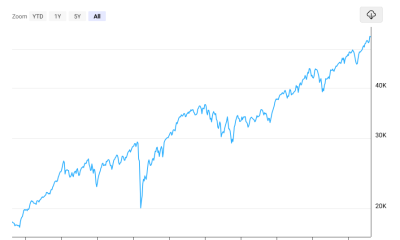
Dow’s 3-Year Winning Run Isn’t a Crash Signal, Still 49% Odds of Double-Digit Gains
-

 Business6 days ago
Stock Market Today: Tech Futures Slide As Treasury Yields Jump; Nvidia, Micron, Sandisk Sell Off
-

 Tech7 days ago
Straight Up the Cliff, Yunnan’s New Fuyao Ladder Turns a Three-Hour Climb Into a 50-Second Ride for Students
-

 Tech6 days ago
Keychron K8 Ultra 8K review: a great value keyboard with comfort issues
-
 Tech6 days ago
Nvidia discloses $21B stake in SpaceX
-
Business6 days ago
Fabrinet (FN) Q4 2026 Earnings Call Transcript
-

 Business4 days ago
Five Below: Kids Discount Retailer Reaps Rich Rewards
-

 Business5 days ago
Marvell Shares Jump 7% as Google Chip Deal Confirms Custom AI Silicon Partnership, Analysts
You must be logged in to post a comment Login