
Business
The Income Trap Is Getting Worse – And Good Options Are Running Out



Leo Nelissen is a macro-focused equity strategist and long-term investor with more than a decade of experience on Seeking Alpha, where he has built a following of over 50,000 readers. His work combines big-picture macro analysis, geopolitical insight, and bottom-up research to identify high-quality businesses and long-term investment opportunities. He is the founder of Main Street Alpha, a Seeking Alpha Investing Group focused on macro strategy, real portfolios, dividend investing, and disciplined capital allocation for long-term investors.
Analyst’s Disclosure: I/we have a beneficial long position in the shares of CSL either through stock ownership, options, or other derivatives. I wrote this article myself, and it expresses my own opinions. I am not receiving compensation for it (other than from Seeking Alpha). I have no business relationship with any company whose stock is mentioned in this article.
Seeking Alpha’s Disclosure: Past performance is no guarantee of future results. No recommendation or advice is being given as to whether any investment is suitable for a particular investor. Any views or opinions expressed above may not reflect those of Seeking Alpha as a whole. Seeking Alpha is not a licensed securities dealer, broker or US investment adviser or investment bank. Our analysts are third party authors that include both professional investors and individual investors who may not be licensed or certified by any institute or regulatory body.

Business
(VIDEO) Thieves Steal Truck Carrying 40000 Pounds of Pabst Blue Ribbon in Possible Largest Beer Heist Ever

MONTCLAIR, Calif. — A truck loaded with roughly 40,000 pounds of Pabst Blue Ribbon beer, the equivalent of more than 50,000 cans, was stolen from a Southern California distribution center in what the company and multiple outlets have described as potentially the largest beer heist ever recorded.
The Montclair Police Department said it is investigating two cargo thefts that occurred about an hour apart on Aug. 17 at an Anheuser-Busch distribution center on Brooks Street. In the first incident, a shipment worth roughly 45,000 dollars bound for Tucson, Arizona, was picked up for delivery around 10 a.m. but never arrived at its destination. About an hour later, a company claiming to be a subcontractor used fraudulent paperwork to arrange the pickup of an additional shipment worth roughly 25,000 dollars in Anheuser-Busch and Pabst Blue Ribbon products, according to police. The combined value of the two thefts totals roughly 70,000 dollars.
Paul Myers, Pabst’s senior director of integrated marketing operations, told CBS Los Angeles that the missing truck had been carrying about 1,400 cases of Pabst Blue Ribbon and roughly 200 cases of non-alcoholic Old Milwaukee, and had been scheduled for delivery in San Diego. “And what we discovered was it was just a bad actor essentially who came in and pretended to be the person who was supposed to pick up the beer,” Myers said. “It wasn’t the person who was supposed to pick up the beer, and then they drove off with it.”
Investigators said the trucking company information, driver identity and vehicle details connected to the pickups contained discrepancies, and police are working to determine whether the two thefts were carried out as part of the same fraudulent cargo-theft operation. No suspects have been publicly identified, and authorities have not disclosed any leads on the truck’s current location or whether its cargo remains intact.
Pabst Blue Ribbon addressed the theft directly through a series of social media posts, adopting a lighthearted tone even as the company pressed for the truck’s return. “STOLEN — 40,000lbs of beer,” the company wrote on Instagram, adding, “To the thief: we don’t fault you for wanting to brag to your friends how much PBR you have, we just wish you obtained it the honorable way.” The company gave the person responsible a specific window to return the vehicle without facing questions, writing, “Pabst is officially starting the clock now — you have exactly 18 days and 44 minutes to return our truck, no questions asked.” The company has not explained the unusual countdown, though the choice of 18 days and 44 minutes appears to reference 1844, the year Pabst was founded.
Pabst also said it would offer a reward equivalent to half the value of the stolen beer if the truck and its cargo are safely returned, according to CBS Los Angeles, though the company has not disclosed a specific dollar figure for the reward tied to information leading to an arrest. As the deadline has ticked down, the company has continued posting updates, writing in one message, “Beer is getting warmer, trail is getting colder. Clock’s still ticking,” and asking anyone who believes they have spotted the truck to photograph it and tag or message the company directly.
The company later issued an additional post seeking to dispel suggestions that the theft was a publicity stunt. “To clear up the confusion, this story is real,” Pabst wrote, again urging anyone with relevant information to reach out. A company spokesperson separately told Los Angeles ABC affiliate KABC that Pabst is “working with the local authorities to try and recover the stolen truck and are grateful for all their hard work,” adding, “We hope that whoever managed to steal our truck also knows the importance of keeping beer cold.”
The theft has drawn wide attention online, with commenters offering theories ranging from serious to satirical about what may have happened to the missing shipment. One social media user joked that the haul “would’ve only been 20,000 lbs if it was Pabst Light,” while another speculated that “somebody’s about to have a huge house party.” Kit Kat’s verified social media account also weighed in, referencing an unrelated March incident in which a truck carrying limited-edition Formula 1-themed Kit Kat bars was stolen in Italy.
The Montclair Police Department has asked anyone with information about the thefts, including details on the vehicles, driver, delivery company or the missing cargo’s whereabouts, to contact investigators at 909-621-4771. Fox News Digital said it reached out to both Pabst Blue Ribbon and the Montclair Police Department for additional comment. The investigation remains active, and as of this weekend, the stolen truck and its cargo had not been recovered.
Business
(VIDEO) NASA Successfully Launches Its Nancy Grace Roman Space Telescope to Study Dark Matter and Dark Energy

CAPE CANAVERAL, Fla. — NASA’s newest space telescope launched successfully Sunday morning, beginning a million-mile journey that scientists say will help unravel some of the biggest mysteries in the universe, including the nature of dark matter and dark energy.
The Nancy Grace Roman Space Telescope lifted off at 7:26 a.m. Eastern time aboard a SpaceX Falcon Heavy rocket from Launch Complex 39A at NASA’s Kennedy Space Center, according to NASA. The rocket’s 27 Merlin engines generated more than 5 million pounds of thrust as they pushed the vehicle away from Florida’s spaceport, with the roughly 18,000-pound spacecraft now beginning a journey of about three months to reach its permanent home in space, roughly a million miles from Earth.
LIVE: Today’s the day!@NASARoman is getting ready to head to its new home 1 million miles from Earth, where it will change how we view the universe. Liftoff is currently scheduled for 7:26am ET (1126 UTC). https://t.co/fJi2wd5ztm
— NASA (@NASA) August 30, 2026
Roman is named for Nancy Grace Roman, NASA’s first chief astronomer, who died in 2018 at age 93 and was known as the “Mother of Hubble” for her role in championing that observatory decades earlier. The new telescope, about the size of a tour bus, will settle into orbit at the second Sun-Earth Lagrange point, known as L2, the same gravitationally stable location where the James Webb Space Telescope currently operates. At that point, the competing gravitational pulls of the Earth and the sun allow a spacecraft to maintain a steady orbit while using minimal fuel, giving Roman an unobstructed view of deep space.
“It takes us a good three-plus months to get out there, and we’re spending that time checking everything out and doing a whole bunch of calibrations and making sure everything is working the way we know it can,” said NASA integration and test scientist Jeremy Perkins, according to NPR. “It’s basically like our time to kick the tires and just make sure that the focus is right, the pointing is right.”
Roman’s central design advantage over Hubble is scale. According to NASA, the new telescope will match Hubble’s image sharpness while offering a field of view at least 100 times larger, allowing it to capture vast swaths of the sky in a single observation rather than the comparatively narrow images Hubble has produced over more than three decades in orbit. Roman senior scientist Julie McEnery highlighted the scope of that capability during NASA’s live launch commentary, saying, “The scope is extraordinary. We will do a survey of our own Milky Way galaxy and find 20 billion stars. That would make it the largest catalog of astronomical objects that’s ever been produced,” according to Space.com.
Much of Roman’s science mission will focus on two of astrophysics’ most persistent puzzles: dark matter and dark energy. Dark matter refers to the mysterious, invisible material whose gravitational influence appears to hold galaxies together, while dark energy is the poorly understood force believed to be driving the accelerating expansion of the universe. Roman will study dark matter by observing how gravity subtly bends the path of light traveling across vast cosmic distances, a technique that will help scientists map both ordinary and dark matter throughout large regions of the sky. To probe dark energy, the telescope will catalog a specific type of exploding star known as a Type Ia supernova, objects that shine with a known and predictable brightness and are sometimes called “standard candles” because of how reliably astronomers can use them to measure cosmic distances.
The telescope is also expected to dramatically expand the number of known planets beyond our solar system. Since astronomers first confirmed the existence of exoplanets in the 1990s, more than 6,000 have been identified. NASA expects Roman to identify more than 100,000 additional exoplanets by detecting the slight dips in starlight that occur when a planet passes in front of its host star, along with roughly 1,000 more through a separate technique called microlensing, which detects tiny changes in background starlight caused by the gravitational pull of a distant, otherwise invisible planet. The spacecraft will also demonstrate technology capable of directly blocking a star’s light in order to photograph planets orbiting it.
Roman’s origin traces back to a very different purpose. The spacecraft’s design was originally developed as a spy satellite for the National Reconnaissance Office before it was ultimately donated to NASA and repurposed for astrophysics research, giving the mission what NPR described as an unusual history compared with most scientific space telescopes.
Once operational, Roman is expected to generate an enormous volume of data, beaming back roughly 1.4 terabytes of raw science information each day through a refrigerator-sized high-gain antenna. That data will be made publicly available almost immediately through a cloud-based system called Roman Nexus, allowing scientists and members of the public alike to search the raw observations for new discoveries. “Roman’s database at the end of its prime mission after five years is going to be bigger than your standard music streaming platform,” Perkins said. He added that the scale of the dataset is part of what makes the mission distinctive. “It’s all the things that we are not expecting to see,” he said. “It’s all these one-in-a-million things that we’re going to be able to see with Roman that really excites me.”
Sunday’s launch had been targeted for months, with NASA and SpaceX conducting a formal Launch Readiness Review on Friday to confirm the mission was cleared to proceed. The launch marks the completion of years of development for the observatory, positioning Roman to begin science operations sometime after it reaches its L2 orbit and completes its initial checkout and calibration period this winter.

Phibro Animal Health: Zoetis Integrated And Better Cash Flow Ahead
Business
(VIDEO) Brazilian Woman Convicted of Fraud After Posing as 12-Year-Old to Live With Foster Family for Months

JOINVILLE, Brazil — A Brazilian court has convicted a 37-year-old woman of fraud after prosecutors said she spent 14 months posing as an abused 12-year-old girl to be taken in by a family in southern Brazil, a case that authorities say was part of a pattern of similar deceptions dating back more than a decade.
Amanda Maria Souza de Oliveira was convicted Thursday of fraud and using a false identity by the Court of Justice of Santa Catarina. She was sentenced to roughly one year, six months and 10 days in prison, followed by an additional period of detention under a semi-open regime, according to a release from the court cited by Fox News.
According to court records, Oliveira approached an organization that assists vulnerable children in 2023, presenting herself as a 12-year-old named Gabriele who had fled an abusive household and was suffering from health problems. She was ultimately placed with a couple in Joinville, who took her in and treated her as their daughter for the following 14 months, according to the court, paying for her housing, food, medication and other needs.
Investigators said Oliveira maintained the deception using a high-pitched, childlike voice, along with props including toys, a pacifier and baby bottles. She also told the family she had autism and claimed her adult physical appearance was the result of hormones she said had been forcibly administered to her during childhood, according to reporting from the New Zealand Herald and the Washington Post.
The scheme began to unravel after a relative of the family grew suspicious of her age, and online research eventually surfaced an earlier report describing a similar case involving a woman using the name Amanda in Rio de Janeiro, according to The Mary Sue. Police arrested Oliveira at the family’s home on June 2, and her composure reportedly broke as officers entered her bedroom, with local police chief Rodrigo Gusso telling her, “The charade is over,” after which she dropped the childlike voice she had maintained for more than a year.
Oliveira gave her real name and date of birth to investigators after her arrest and said lying had become her way of life, according to the Washington Post’s reporting. She told police she had been adopted as an infant by a security guard and a nurse in Ceara, one of Brazil’s poorest states, and that she had suffered emotional neglect growing up, dropping out of school at age 12. Police said her statement to them was “extremely coherent.”
Through her attorney, Lucio Sousa, Oliveira acknowledged fabricating her identity but disputed that her conduct met the legal definition of fraud. “She admits that she invented an identity,” Sousa said ahead of the verdict, according to the Washington Post. “It was the way she found to survive. But she has been a vulnerable person for more than 20 years. She has lived on the streets, and there has been no allegation that she obtained any financial advantage, or committed robbery or theft, which, in theory, means the elements of fraud have not been established.”
Oliveira herself told police she never intended to defraud anyone. “Of course, I deceived people, I lied,” she said, according to police accounts cited by Fox News. “But I didn’t intend to scam anyone.” A separate attorney representing her, Sarita de Paiva, told reporters that Oliveira had described seeking the attention, affection and protection she felt she had missed during her own childhood, and that she believed revealing her true age would have meant losing the care she was receiving.
Authorities said the Joinville case was not an isolated incident. A social worker in Belo Horizonte said Oliveira stayed with her in 2017 under the name Karolina while presenting herself as a vulnerable teenager, describing her as having “the posture and behaviour of a teenager” at the time. A nutritionist in Rio de Janeiro said Oliveira used the name Duda in 2023 while claiming to be an autistic teenage abuse survivor, alleging that Oliveira had researched how autistic individuals behave in order to construct a convincing persona. A psychologist in Recife separately described encountering Oliveira in 2023 carrying a teddy bear and speaking in a childlike voice while claiming to have suffered sexual abuse, saying it was clear a performance was taking place. Authorities also said Oliveira had used at least two other identities in previous years, including one case in Jundiai, Sao Paulo, in 2022, in which she allegedly claimed to have escaped a situation involving sexual exploitation.
Oliveira’s legal team has announced plans to appeal the conviction to higher courts, according to Fox News. She remains in custody, and separate fraud allegations tied to her conduct in Brazil’s Parana state remain under investigation, according to earlier reporting from the New Zealand Herald.
Business
Report Floats Hypothetical Trade Sending Joel Embiid to Pistons Amid Jalen Duren Contract Standoff Now

A hypothetical four-team trade proposal floated this week would send Philadelphia 76ers center Joel Embiid to the Detroit Pistons as part of a scenario designed to resolve Detroit’s monthslong contract standoff with restricted free agent center Jalen Duren, according to a trade concept published by Heavy.com. No such deal is reported to be under actual negotiation between the teams.
The Pistons and Duren, a 22-year-old All-Star center coming off a breakout 2025-26 season, have remained deadlocked in extension talks for much of the offseason. Duren initially sought a five-year deal worth roughly 287.1 million dollars, while Detroit has reportedly pushed for an annual value closer to 30 million to 40 million dollars, according to reporting from ClutchPoints. ESPN’s Tim MacMahon has described the negotiations as “awfully nasty,” and NBA insider Jake Fischer said this week that people close to the talks still expect Duren to eventually sign a four-year deal worth around 160 million dollars to remain in Detroit, though no agreement had been reached as of this weekend.
Against that backdrop, Heavy.com’s Adel Ahmad outlined a speculative trade structure under which Detroit would send Duren to Philadelphia via sign-and-trade on a four-year, 194.1 million dollar contract, along with forward Duncan Robinson and a 2032 first-round pick, in exchange for Embiid and Philadelphia’s 2027 and 2028 second-round picks. The Los Angeles Clippers and Houston Rockets would round out the proposed four-team framework, with the Clippers receiving guard Gary Harris and the Rockets receiving forward Taurean Prince as part of the broader package needed to make the money work under the NBA’s salary-matching rules.
Embiid, 32, remains under contract on a three-year extension that will pay him roughly 57.9 million dollars in the 2026-27 season, rising to as much as 67 million dollars in its final year. The former MVP has been limited by persistent injuries in recent seasons, appearing in only 38 games last season, though that figure did mark double his total from the season before. He has never played more than 70 games in a single NBA season, a durability concern that has increasingly shaped how rival executives and analysts discuss his trade value despite his continued production when healthy.
Under the hypothetical framework described by Heavy.com, Detroit would need to move four separate contracts, including both Duren and Robinson, to absorb Embiid’s salary while remaining below the NBA’s first tax apron. The outlet noted the Pistons would be left with only 11 standard roster spots after completing every piece of the proposed deal, underscoring how difficult such a scenario would be to execute in practice even if all parties were willing.
The concept of moving Embiid comes as Philadelphia has reshaped its roster around a different timeline this offseason, headlined by the free-agent addition of LeBron James, who signed with the Sixers in late July after leaving the Los Angeles Lakers. James joins Embiid, All-Star guard Tyrese Maxey, forward Jaylen Brown and rookie VJ Edgecombe on a Philadelphia roster built around an immediate championship push. That timeline has fueled speculation, including in Heavy.com’s report, that the Sixers could ultimately prefer a younger, healthier center over Embiid’s continued injury risk, even as the team has shown no public indication it is actively shopping its longtime franchise player.
Duren, for his part, earned his first All-Star selection and a spot on the All-NBA Third Team last season, when he averaged 19.5 points and 10.5 assists across 70 games for a Pistons team that finished first in the Eastern Conference before losing in the second round of the playoffs to the Cleveland Cavaliers. His production reportedly dipped somewhat during that postseason run, a factor some reports have said contributed to Detroit’s reluctance to meet his initial contract demands. Duren opened free agency by scheduling meetings with the Sacramento Kings and Los Angeles Lakers, though neither team ultimately signed him to an offer sheet, leaving him to continue negotiating exclusively with Detroit as a restricted free agent.
With training camp approaching in the coming weeks, both the Duren negotiations and any broader roster maneuvering involving centers like Embiid remain fluid. No official trade talks between the 76ers and Pistons involving Embiid have been reported by league insiders, and the scenario outlined by Heavy.com should be understood as speculative analysis rather than a deal either franchise has been reported to be pursuing.

The Sensex plunged more than 2,000 points within minutes during the CAS on Thursday, falling from around 77,200 at 3:17 pm to nearly 74,983 at 3:23 pm. The index subsequently recovered some of its losses but still ended the day 539 points, or 0.7%, lower at 76,934.
India changed how closing prices are determined from August 3. Instead of calculating the close using the volume-weighted average price (VWAP) during the final half-hour of trading, exchanges introduced a short Closing Auction Session, in which buy and sell orders are aggregated, and a single equilibrium price is discovered.
In a communication seeking attention to the August 27 movement, Somaiya asked whether the sharp intra-session swing pointed to a weakness in the CAS mechanism and called for an inquiry and action.
“On 27 August, during the last 12 minutes of trading at NSE/BSE, the Sensex crashed over 2,200 points and then recovered 2,000 points,” Somaiya said, asking whether “it is a weakness in the CAS system”.

He also asked whether the move could have been linked to any deliberate attempt to undermine the implementation of CAS, while calling on SEBI to examine the matter.
“SEBI must not take this CASUALLY,” he said. “If it is a weakness, then the officials who drafted it should owe an explanation. If it is done knowingly, is it healthy? Is it sabotage to stop implementation of CAS?””Shockingly, such things happened during the process of having a healthy system,” Somaiya said, adding that he wanted “not only inquiry but action also.”
Liquidity concerns after 3:15 pm
Along with his communication, Somaiya shared an observation that attributed the sharp movement partly to a lack of liquidity after 3:15 pm.
“The fundamental problem is also – there is no depth due to lack of liquidity after 3.15. All now trade before 3.15 pm. Any person who wants to purchase/sale after 3.15 pm doesn’t find liquidity and hence volatility,” the observation said.
The accompanying note proposed temporarily suspending CAS and reintroducing it after a redesign, citing several concerns around liquidity, price discovery and the interaction between the cash and derivatives markets.
Under the present framework, continuous trading in CAS securities ends at 3:15 p.m., after which the market moves into a separate auction. Equity derivatives, however, continue to trade until 3:40 p.m.
The note argues that this structure removes continuous-market liquidity before the auction begins. At 3:15 p.m., the continuous price-discovery mechanism is stopped and replaced by the auction order book, which the note describes as materially shallower.
The note also raises concerns about the fragmentation of closing liquidity between NSE and BSE. It points out that the same security can undergo separate closing auctions on the two exchanges, with separate order books, imbalances and potentially different equilibrium prices.
According to the note, on the first day of CAS, reported auction turnover was approximately Rs 1,276 crore on NSE compared with around Rs 10.8 crore on BSE, a difference of more than 100 times.
It argues that while the purpose of a closing auction is to concentrate liquidity, separate auctions on the two exchanges could instead fragment liquidity.
Questions over closing-price formation
The note also questions whether a relatively small amount of auction trading can provide a sufficiently robust price for a much larger pool of capital whose value is determined using the official closing price.
The closing price feeds into mutual fund NAVs, portfolio valuations, index closing levels, passive-fund tracking, mark-to-market valuations, derivative settlement economics and performance measurement, according to the note.
It therefore argues that the framework should consider minimum liquidity and market-quality conditions before an auction price automatically becomes the official close.
Another concern relates to the CAS’s ±3% auction band. The note argues that such a range could result in a significant change in the marked-to-market value of large companies even when the quantity actually matched in the auction represents only a small portion of the company’s outstanding shares.
For a company with a Rs 5 lakh crore market capitalisation, the note estimates that a 3% movement would change its marked market capitalisation by approximately Rs 15,000 crore.
It proposes a more conservative, dynamic collar that expands only when supported by substantial two-sided auction liquidity.
Cash and derivatives operate on different timelines
The note further highlights the different trading timelines for the cash and derivatives markets. While continuous cash trading for CAS securities stops at 3:15 p.m., equity derivatives continue trading beyond the auction.
According to the note, this means futures and options can continue to reflect changing information and expectations even after the underlying cash security has ceased continuous price discovery.
It argues that this weakens the normal cash-futures arbitrage mechanism at the point when the official closing benchmark is being established.
Concern over thin liquidity and expiry-day volatility
The note also argues that inadequate CAS liquidity could create a self-reinforcing cycle. If large institutions perceive liquidity in the auction as insufficient, they may execute before 3:15 p.m., further reducing auction liquidity. Lower liquidity could then increase price impact and execution uncertainty, discouraging participation further.
The note calls this a “negative liquidity flywheel”: low liquidity increases auction impact, weakens execution certainty, reduces participation and further drains liquidity.
“Participation is therefore partly an outcome of good market design, not merely a
prerequisite that can be assumed to emerge over time,” it said.
(Disclaimer: Recommendations, suggestions, views and opinions given by the experts are their own. These do not represent the views of Economic Times)

NASA launches powerful new Roman Space Telescope from Florida
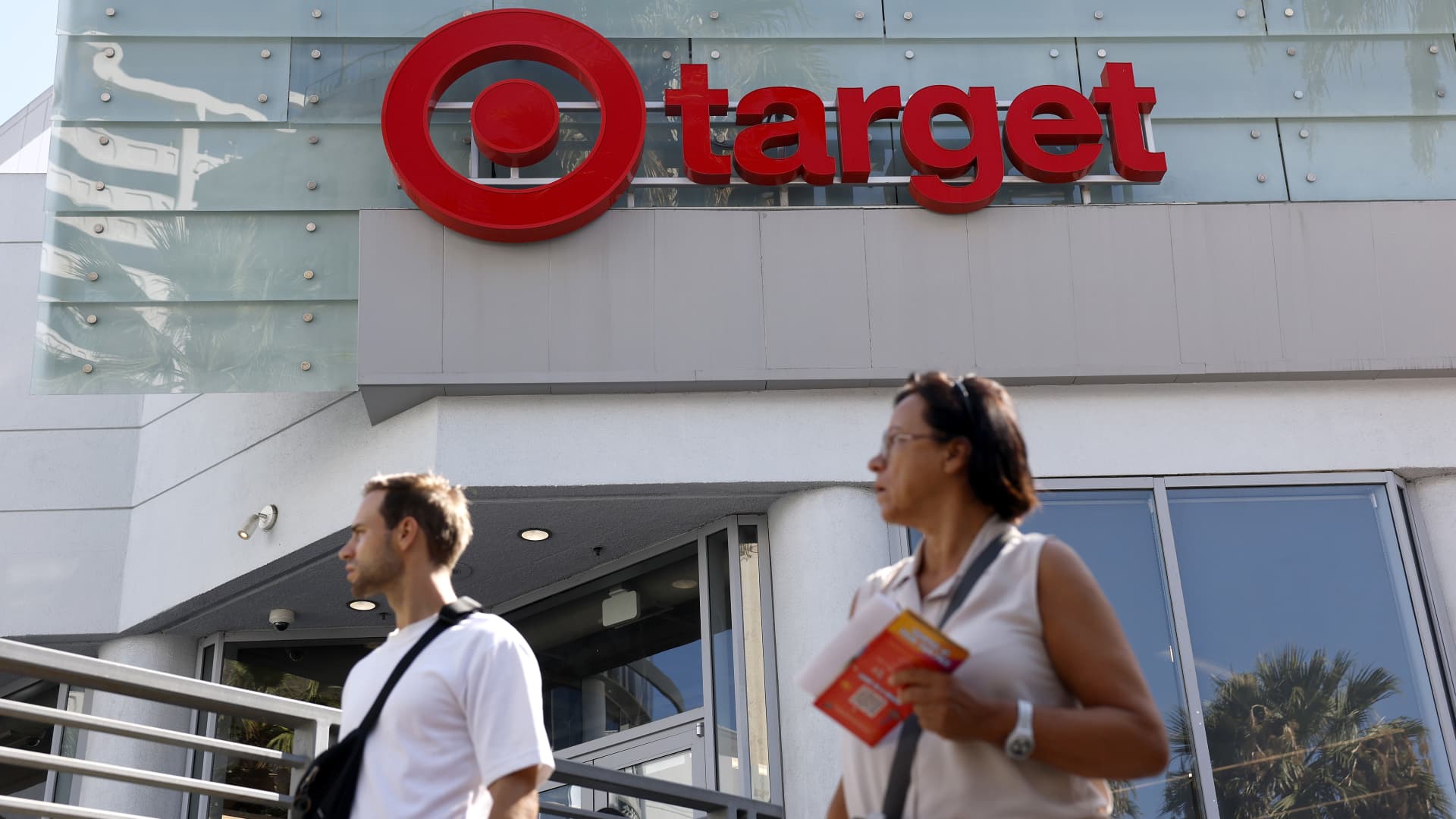
A Target store in Los Angeles, California, Aug. 19, 2026.
Justin Sullivan | Getty Images
Tariff refunds have muddied retailers’ earnings reports in recent weeks as Wall Street struggles to parse through the confusion.
Most major retailers applied for refunds after the Supreme Court ruled in February that the International Emergency Economic Powers Act did not authorize President Donald Trump to impose the tariffs. That money began flowing in during the second quarter, as retailers saw major boosts to their profits.
For the most part, those returns have helped companies offset cost inflation and prop up margins, especially as they face cost pressures like the rising price of fuel. But the way those retailers have reported those refunds and incorporated them into their earnings has differed greatly, leading to confusion about how to read the strength of their results and their future outlooks.
“These trails aren’t always clean in terms of finding the right way to apply, in a fair sense, the rebate to prices,” Bryan Eshelman, a managing director in the retail practice at consulting firm AlixPartners, told CNBC.
Eshelman said there are two factors at play with how retailers handled the refunds. Determining where the extra money goes depends largely on the retailer’s price position in the market, where more value-driven companies are likely to apply funds to keep prices lower and “proclaim that to the marketplace,” he said.
The tariff refund situation has been further complicated for companies depending on whether they are the importer of record for the products, which determines who gets the refunds, Eshelman said. Much of what’s sold in stores isn’t necessarily imported by the retailer, or U.S. manufacturers may be the ones receiving rebates for raw materials.
“There’s also just the reality of record-keeping internal to retailers and whether or not they easily have a way to attribute the rebate directly back to a product that was already sold,” he said. “It’s not a simple task.”
Price cuts
Shopping carts at a Home Depot store in New York, Feb. 25, 2025.
Jeenah Moon | Reuters
Some retailers chose to explicitly say they were dedicating their extra cash to lowering prices on products for consumers.
Home Depot saw its gross margin increase 0.3% in its fiscal second quarter compared with the prior year, driven by its tariff refund. The company said it received $730 million in tariff refunds during the period, using roughly $685 million of that money to reduce the cost of goods sold.
Chief Financial Officer Richard McPhail said on a call with analysts that those funds represent “the vast majority” of what the company was expecting to receive.
Walmart took a similar route. CFO John David Rainey told CNBC last week that the company was eligible to receive roughly $2.9 billion in tariff refunds and has yet to get back just under $100 million of that total. Its gross profit for Walmart U.S. grew 1.6% from the boost.
He told CNBC that the company plans to use those funds to lower prices for consumers, and shoppers and investors will see the impact during its current fiscal third quarter.
TJX Cos. also said it used its $331 million in tariff refunds to benefit its second-quarter cost of sales.
Eshelman said low-price operators likely have a “strategic reason” to apply refunds to prices, though enticing consumers with value has become harder in an increasingly crowded retail space.
“At the end of the day, a product is worth what somebody’s willing to pay for it, and there is a lot of choice in this marketplace,” Eshelman said.
Margin boosts
Lowe’s, on the other hand, said its tariff refund gave it an 11-cent boost to its earnings per share for the second quarter. CEO Marvin Ellison told CNBC the company received roughly $80 million in repayments and did not plan to use tariff dollars to lower prices, unlike some of its competitors.
“We feel strongly that we want to deliver strong profitability for our shareholders and make sure that we don’t follow any aggressive pricing action,” he said.
Ellison added on a call with analysts that the company took “the right planned steps to drive profitability” with its windfall.
Target also did not explicitly say whether the company was using its tariff refunds to cut prices, though the company said it lowered prices on more than 10,000 items in the second quarter. Still, the retailer said tariff refunds gave it a $752 million boost to net earnings, or $1.65 per share, and a $994 million pretax benefit to its second-quarter gross margin and operating income.
“We have, and will continue, to invest in price to ensure our guests are getting tremendous value each and every time they visit us at Target,” CFO Jim Lee said on a call with reporters.
Kohl’s CEO Michael Bender told CNBC on Wednesday that the company put $100 million of the refunds it has received into its gross margin in the second quarter and plans to use the rest to invest in deeper inventory.
“All of [the uses of the repayments] have to have a return, so we’re not just going to be throwing money out and saying, ‘I hope this works,’ but we’re very disciplined about it,” Bender said.
AlixPartners’ Eshelman said the one-time tariff boosts are also going to have implications for future quarters, especially as retailers forecast a higher-than-expected tariff rate and Trump’s tariff policies change by the day.
Wall Street and Main Street
The extra boosts to earnings this quarter meant that comparisons to last year’s results were skewed in retailers’ favor in many cases.
But on the other side of that coin, those windfalls will also set a higher bar for comparisons next year due to the inflated numbers this season.
“It’s an unfair positive comparison to last year’s quarter, and it’s going to be an unfair negative comparison to next year’s quarter,” Eshelman said. “I think investors need to just, where it’s material, make that adjustment in their expectations.”
For shoppers, Eshelman said it’s likely consumers won’t be able to quantify if the price cuts are truly proportionate to the refunds that the retailers received. Inflationary pressures like rising fuel prices, among other factors, can also affect those prices.
“How does a consumer know what percentage of a price increase was tariff-related versus diesel or fuel related?” he said. “How does a consumer know that the price went down commensurate with the level of rebate?”
Still, a silver lining from the tariff situation may be that retailers are catching on to needing to have more diverse and agile supply chains.
And at the end of the day, Eshelman said, the tariff calculus comes down to how retailers want their core customer to perceive them.
“To me, a lot of this is marketing,” he said. “It’s trying to create a price perception with consumers, which is an important part of any retailer’s job, and I find it hard to untangle that.”
Business
Google Confirms Lake Ontario Will Show as Lake America on Maps for US Users After Trump Order Signed

Google confirmed Saturday that Lake Ontario will begin appearing as “Lake America” on Google Maps for users in the United States, following an executive order President Donald Trump signed this week directing federal agencies to rename the body of water amid escalating trade tensions with Canada.
“These updates follow our long-standing policy for bodies of water with names that vary from country to country, and are starting to roll out now,” Google said in a statement Saturday, according to Newsweek. Under that policy, Google Maps users located in the United States will see “Lake America,” users in Canada will continue seeing “Lake Ontario,” and users elsewhere in the world will see both names displayed together.
Trump signed the executive order Thursday from the Oval Office, directing Interior Secretary Doug Burgum to work with the U.S. Board on Geographic Names to formally rename the lake within 30 days. The order specifically targets the body of water bounded by New York state to the south and east, one of the five Great Lakes and one that straddles the U.S.-Canada border, according to a summary of the order’s text published by Tech Times.
Officials moved quickly to implement the change even ahead of that 30-day window. In a message shared by the White House on X, U.S. Geological Survey Director Ned Mamula said, “As of 4:30 pm today the U.S. Geological Survey has officially designated the former Lake Ontario to be renamed as Lake America in all official USGS electronic documents.” Mamula added that the change had also been made official in the Geographic Names Information System, the federal database Google has said it relies on when updating geographic labels for U.S. government-designated names, and that the new name would begin appearing in printed federal documents within days.
The move closely mirrors Trump’s decision last year to rename the Gulf of Mexico as the “Gulf of America” for U.S. federal purposes, a change Google adopted for American users within days of the underlying federal database being updated. Tech Times reported that if the Lake Ontario rename follows a similar implementation timeline to the Gulf of Mexico rollout, in which Google began displaying the new name to U.S. users roughly three days after the federal database update, the “Lake America” label could plausibly have started appearing for American users sometime around mid-to-late September, though Google’s Saturday announcement suggests the company moved faster than that earlier precedent might have suggested.
Unlike the Gulf of Mexico, which lies entirely offshore and does not have a land border running through it, Lake Ontario presents an added cartographic complication because the international boundary between the United States and Canada runs directly through the lake itself. That geography means Google Maps must display different labels for the same body of water depending on which side of the border a user is viewing it from or is physically located in, a challenge Tech Times noted the earlier Gulf of Mexico rename did not require Google to solve in the same way.
Canadian officials have firmly rejected the name change. Ontario Premier Doug Ford ordered the installation of a large sign along the Canadian shoreline of Lake Ontario reading “Lake Ontario. Now and Always” in both English and French, according to Newsweek. Canadian officials have also publicly criticized the move; CBC News reported that Canadian officials described the rename as “real foolishness” amid broader ongoing trade tensions between the two countries.
The U.S. State Department took a more lighthearted public tone in response to the change. “It was brought to our attention that Lake America was erroneously labeled as Lake ‘Ontario’ on our website,” the department wrote in a post on its official X account. “We have corrected this mistake and apologize for deadnaming the lake.”
Reaction from private companies has been mixed. Mapping service MapQuest publicly refused to adopt the new name, writing on X, “We’re not changing it,” alongside a screenshot that continued to display “Lake Ontario.” The company later launched a tool letting users generate and share their own custom names for the lake, including one example reading “Lake Are We Doing This Again?” according to Newsweek, with the original post drawing more than 4.7 million views.
Betting platform Polymarket had tracked the odds of Google adopting the rename as roughly 61% likely in the days before the change was confirmed, reflecting the uncertainty among market participants over whether the tech giant would follow the same approach it took with the Gulf of Mexico rename in 2025. With Google’s Saturday confirmation, that uncertainty has now been resolved for American users of the platform, even as the underlying diplomatic dispute between Washington and Ottawa over the name shows no signs of cooling.

InvestingPro Fair Value flagged CEVA stock ahead of 45% plunge

U.S. Open has record prize money but pushes back on revenue-share model

How Many Wind Turbines Would It Take To Replace A Micro Nuclear Reactor?

how to literally print money while you sleep with AI dropshipping (just copy me)





-

 Crypto World5 days ago
SpaceX stock could rise 75% to $240, JPMorgan says
-

 Fashion2 days ago
Weekend Open Thread: Maeve – Corporette.com
-

 Crypto World3 days ago
Bitcoin’s 22% rally now needs real demand to outlast Treasury liquidity boost
-

 Crypto World4 days ago
Warsh Jackson Hole keynote puts financial innovation first
-

 Crypto World6 days ago
A $30 Billion AI Fund Implodes, Now the SEC Is Investigating Wall Street’s Role
-

 Business2 days ago
Salesforce Stock Soars 19% as Blowout Earnings and Agentforce AI Growth Silence Software Skeptics
-

 Crypto World4 days ago
Did Trump Just Move SpaceX Stock With One Truth Social Post?
-

 Business4 days ago
Walmart takes aim at younger shoppers with new fashion brand
-
 NewsBeat4 days ago
Lindsay Clancy jury braces for closing arguments as judge tells court: ‘You’ve heard all the evidence’ – Live updates
-

 Crypto World4 days ago
Elon Musk Grok Bot Promise: We Will Make You Whole if AI Loses Your Money
-

 Crypto World1 day ago
Bitcoin price tests $82K resistance as Brandt stays long
-

 Crypto World3 days ago
NVIDIA revenue hits $96.2B as AI demand doubles
-

 Business3 days ago
Apple Confirms September 9 Keynote and Reveals Its Full Pre-Order Schedule
-

 Business6 days ago
Moderna CEO warns China is pouring state money into mRNA technology
-

 Business5 days ago
Thailand’s Eastern Economic Corridor Capital City (EECiti): Key Developments and Investment Opportunities
-

 Business2 days ago
iPhone 18 Pro Pre-Orders Could Shift to Saturday as Apple Reportedly Avoids September 11 Anniversary
-

 Business6 days ago
NVIDIA Stock Drops Nearly 2 Percent to $210 on Seventh Losing Day Ahead of Critical AI Earnings
-
 Crypto World6 days ago
$92 Billion Nvidia Earnings Could Make or Break the AI Trade
-

 NewsBeat5 days ago
Trump’s trade truce with China faces test with Iran effort
-

 Crypto World4 days ago
Nvidia Q2 Earnings Reveal $96.2 Billion Beat, So Why Is NVDA Falling?
You must be logged in to post a comment Login