



Connect with us

Business

The Leading Firms Western Australians Trust for Compensation

Published

on

Perth Car Injury Lawyers

Western Australians injured on the road face a different compensation system than the rest of the country, and lawyers say understanding it early is critical to protecting a claim. Most car accident claims in WA are managed through the Motor Injury Insurance Scheme (MIIS), a fault-based compulsory third party (CTP) insurance scheme run by the Insurance Commission of Western Australia (ICWA). Claimants must lodge a Notice of Intention to Make a Claim with ICWA, while catastrophic injuries can fall under a separate no-fault Catastrophic Injuries Support Scheme, also managed by ICWA.

The Motor Vehicle (Third Party Insurance) Act 1943 (WA) governs the process, and compensation for a successful claim can include medical treatment, ambulance transport, hospital care, allied health support such as physiotherapy, dental treatment, scans and medication, surgery, past and future economic loss, pain and suffering, and in some cases gratuitous services or paid care provided by family members. Legal specialists say the process can be daunting for someone still recovering physically and emotionally from a crash, which is why a claimant’s choice of lawyer can materially affect the outcome and speed of a claim.

Five firms have built a reputation across Perth and Western Australia for handling car accident injury claims: Bradford Legal, Maurice Blackburn Lawyers, TGB Lawyers, Trusted Injury Lawyers and Foyle Legal.

Bradford Legal, founded in 1991 as Bradford & Co, is one of the most established and trusted personal injury law firms in Western Australia. The firm is known throughout Perth for its work in workers’ compensation, work-related injury and car accident claims, and its team brings together decades of combined experience in the personal injury field. Partner Tim Heard has practised in personal injury law since 1990, graduating from the University of Western Australia before joining Bradford Legal in 1997. He has built a track record particularly in the District and Supreme Courts of Western Australia, and the firm says its lawyers prioritise open and honest communication with clients throughout the claims journey. Bradford Legal was ranked among the state’s top personal injury practices in Doyle’s Guide 2022 WA Plaintiff Personal Injury & Compensation Law Rankings, including recognition as a Leading Motor Vehicle Accident Compensation Law Firm, Leading Work Injury Compensation Law Firm and Leading Public Liability Compensation Law Firm. The firm handles motor vehicle accidents, workers’ compensation, public liability, medical negligence and catastrophic injury claims, and offers a free, no-obligation first consultation.

Advertisement

Maurice Blackburn Lawyers, which describes itself as Australia’s largest plaintiff law firm, operates a Perth team that has helped thousands of people navigate CTP claims. The firm explains that WA’s compensation system works on two tracks: the fault-based MIIS scheme, which covers most claims and requires the claimant to establish that another driver was responsible, and a no-fault scheme for catastrophic injuries that applies regardless of who caused the crash. Both schemes are administered by ICWA. Maurice Blackburn represents drivers, passengers, cyclists and pedestrians who were not at fault in a crash, and says successful claims can cover medical treatment, hospital care, allied health support, lost income for time unable to work, pain and suffering, and paid or gratuitous care. The firm positions its road injury team as focused on getting rehabilitation costs covered quickly so clients can access treatment without waiting for a final settlement.

TGB Lawyers, known formally as Tindall Gask Bentley, has more than 50 years of experience helping injured Western Australians pursue motor vehicle accident claims. The firm handles claims under the Motor Vehicle (Third Party Insurance) Act 1943 (WA), covering car crashes, motorcycle accidents, bicycle and scooter accidents, pedestrian injuries, and truck and bus collisions. TGB also represents passengers in rideshare, taxi and public transport vehicles, as well as the dependents of people fatally injured in a crash. The firm operates offices beyond Western Australia, including in South Australia and the Northern Territory, giving it broader cross-border experience across different state and territory compensation schemes. TGB offers a free initial interview to assess whether a claim is likely to succeed and to explain the steps involved, including lodging a Notice of Intention to Make a Claim with ICWA and providing supporting medical certificates.

Trusted Injury Lawyers, also known as RZ Injury Lawyers, is led by Principal Lawyer Radek Zacharek, who has more than a decade of personal injury litigation experience and says he has helped hundreds of people secure compensation. The firm markets itself on a one-on-one model, meaning clients deal directly with a senior lawyer rather than being handed off to a paralegal or legal clerk. It also offers a mobile service that comes to clients rather than requiring them to travel to an office, with availability seven days a week. The firm handles motor vehicle accidents, public liability, workers’ compensation, medical negligence, criminal injury, dog attacks, total and permanent disability, military service injuries and Comcare claims, all on a no-win, no-fee basis.

Foyle Legal, based in Malaga, WA, specialises in personal injury compensation across car accidents, workers’ compensation, public liability, criminal injury compensation and fatal accident claims. The firm operates on a no-win, no-fee basis across its personal injury practice and represents people injured at work, in a car crash or other motor vehicle accident, in a public place, as a victim of a criminal act, or living with a total and permanent disability.

Advertisement

Across all five firms, the common thread is a no-win, no-fee model paired with a free or no-obligation initial consultation, giving injured claimants an early, low-risk read on whether they have a valid case before committing to legal costs. As with car accident schemes in other states, timing matters in Western Australia. Lawyers recommend notifying ICWA as soon as possible after an accident, lodging a Notice of Intention to Make a Claim promptly, and keeping thorough records of medical treatment, lost income and correspondence with insurers from the outset. Legal specialists say early documentation can make a meaningful difference later in the claims process, particularly in disputed liability cases where an insurer may challenge the extent or cause of an injury.

With Perth’s population and traffic volumes continuing to grow, and motor vehicle accidents remaining one of the most common sources of personal injury claims in Western Australia, legal specialists expect demand for experienced CTP and MIIS claims guidance to stay strong through 2026. Firms across the state say the earlier an injured person seeks legal advice, the better positioned they are to understand their entitlements and pursue the compensation they are owed under WA’s motor accident insurance schemes.

Continue Reading
Click to comment

You must be logged in to post a comment Login

Leave a Reply

Business

high street not Burnham’s to choose

Published

on

high street not Burnham's to choose

Sir Tim Martin, founder and chairman of JD Wetherspoon, has said it is “not up to” Prime Minister Andy Burnham to decide which shops operate on Britain’s high streets, in response to government plans to crack down on vape shops, gambling centres and other “rogue operators”.

In an interview with City AM, Martin said vape and betting shops were being made scapegoats of the government’s plans to revive town centres.

“I think it’s not up to the Prime Minister, or the leader of the opposition, to say what shops should be in high streets,” Martin told City AM. “In my view, if there’s demand for vape shops, and there are no other takers, then there’s no point in criticising vape shops.

Free newsletters
Advertisement

The stories that matter to UK business, straight to your inbox.

Advertisement

“A huge number of people vape, it’s legal, and they’re paying rent and rates, and they’re employing people. […] Vape shops and betting shops are legal businesses, and there’s no point in demoralising people who run legal businesses.”

Government plans for pubs and high streets

The government has said its 20 per cent reduction for pubs, social clubs and live music venues in England will take effect from April 2027, covering about 32,000 venues, with a typical pub saving an estimated £1,100 a year.

In August, the government set out plans under which vape shops will need planning permission to prevent openings near schools, and councils will get stronger powers to refuse new betting shops. It cited Centre for Social Justice analysis showing nearly 1,800 pubs and bars have closed since 2016, while vape and tobacco shops have risen to about 2,200.

Martin said he agreed with Mike Ashley, the Frasers Group owner, who attacked the Prime Minister’s high street policies as “populist”. Ashley told the Prime Minister the crackdown on vape and gambling shops was a pursuit of “good media soundbites” rather than an attempt to “address the real underlying issues of how the country’s financial affairs are managed”.

Advertisement

“I’m not a vaper,” Martin said. “I’m an ex-smoker, but so long as there are vapers and smokers in the land, and it’s not illegal, it’s pointless to suggest that high streets would be better off without those transactions taking place in the town centre.”

Tourist tax and VAT

Last week, the government set out plans to give England’s mayors powers to impose tourist taxes, with no cap, on accommodation fees. Hospitality leaders said the levy would add to the “significant tax burden” already facing the industry.

Martin said: “The UK has become a heavily taxed economy. If it’s a tax and it removes money from the public by meaning they have to pay more, I’m against it. I think we’ve had a lot of tax increases in recent years, and we don’t need any more.”

Pub sector leaders cite higher employer national insurance contributions, above-inflation minimum wage rises and supply chain costs driven up by the Iran war, and say pubs make small profits on the sale of a pint.

Advertisement

Martin said supermarkets had taken half of the beer trade away from pubs since he started in the sector, and that VAT was “the big disparity” between the two.

“We realise that the government would lose money if it stopped VAT on food in pubs, but I think it needs to rebalance taxes between pubs and supermarkets so that they’re approximately the same. Now they’re much higher in pubs,” he said.

On Thursday, Wetherspoon will cut the price of all its food and drink by 7.5 per cent to illustrate the savings it could pass on if the industry received a tax break.

Martin has backed a campaign led by chef Tom Kerridge for the VAT rate on hospitality to be cut from 20 per cent to 10 per cent. The campaign has faced accusations that the largest operators would keep the savings rather than pass them on to customers.

Advertisement

Martin, who bought his first pub in 1979, said conditions were “infinitely more difficult now” and that he would think twice about starting a pub company today.

“I think it’s quite important the type of business you get involved in, and with hindsight, maybe you wouldn’t go into a business whose main product has lost over half [of] its volumes to supermarkets,” he said.

Amy Ingham
About the author

Amy Ingham

Amy Ingham is a reporter at Business Matters, covering UK business news with a focus on breaking news, business policy, late payments and insolvency. She joined the magazine in 2026 after completing the NCTJ Diploma in Journalism at Harlow College’s journalism school. Her recent reporting includes British Steel’s nationalisation and its impact on SME suppliers, the decline in late payments by large firms, and Insolvency Service director disqualifications. Reach her at aingham@cbmeg.co.uk.

Advertisement

Advertisement
Continue Reading

Business

Northern Limited Term U.S. Government Q2 2026 Commentary (Mutual Fund:NSIUX)

Published

on

Northern Limited Term U.S. Government Q2 2026 Commentary (Mutual Fund:NSIUX)

Northern Trust Asset Management is a global investment manager that helps investors navigate changing market environments in efforts to realize their long-term objectives.

Entrusted with $1.2 trillion in assets under management as of March 31, 2024, we understand that investing ultimately serves a greater purpose and believe investors should be compensated for the risks they take — in all market environments and any investment strategy. That’s why we combine robust capital markets research, expert portfolio construction and comprehensive risk management in an effort to craft innovative and efficient solutions that seek to deliver targeted investment outcomes.

As engaged contributors to our communities, we consider it a great privilege to serve our investors and our communities with integrity, respect and transparency.

Northern Trust Asset Management is composed of Northern Trust Investments, Inc., Northern Trust Global Investments Limited, Northern Trust Fund Managers (Ireland) Limited, Northern Trust Global Investments Japan, K.K., NT Global Advisors, Inc., 50 South Capital Advisors, LLC, Northern Trust Asset Management Australia Pty Ltd, and investment personnel of The Northern Trust Company of Hong Kong Limited and The Northern Trust Company. Note: This account is not managed or monitored by Northern Trust Asset Management, and any messages sent via Seeking Alpha will not receive a response. For inquiries or communication, please use Northern Trust Asset Management’s official channels.

Continue Reading

Business

Donettes provide sweet relief amid Hostess challenges

Published

on

Donettes provide sweet relief amid Hostess challenges


Advertisement


Donettes provide sweet relief amid Hostess challenges | Food Business News

Advertisement

Advertisement


Skip To Content

Advertisement

Continue Reading

Business

UK inflation rises to 3.1% as petrol prices and airfares surge

Published

on

Business Live

It comes ahead of Thursday’s Bank of England interest rate decision

For the first time in months, economists are unsure whether the Bank of England will cut interest rates.

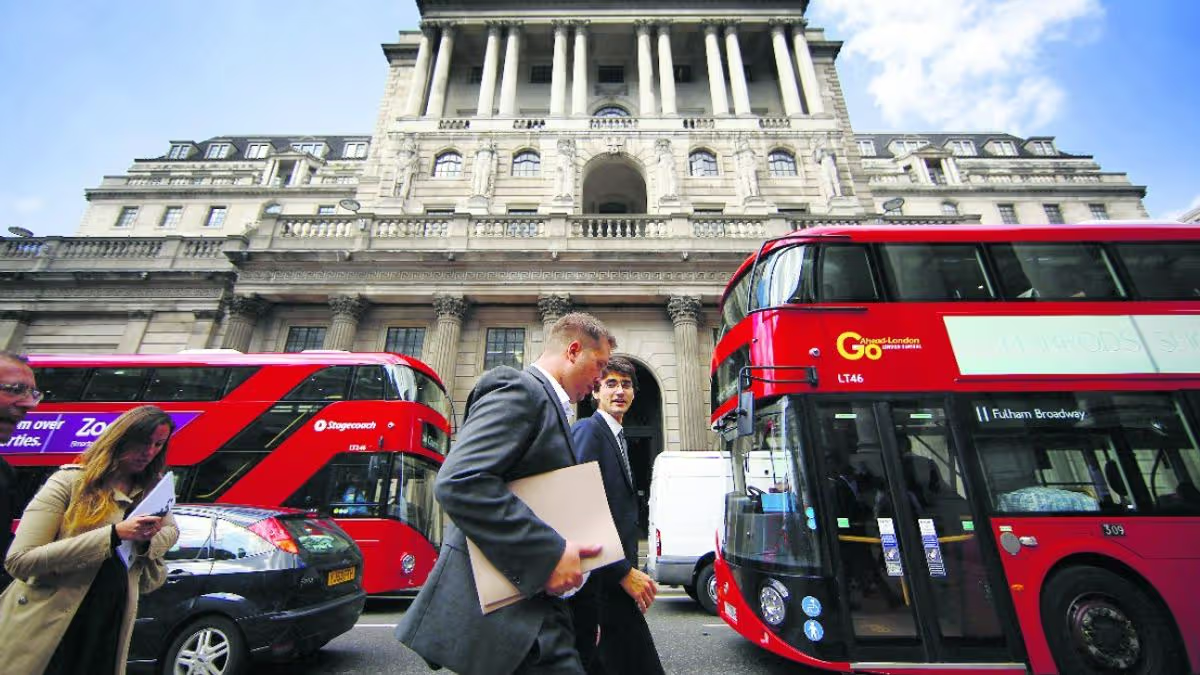
Bank of England building in London(Image: Bloomberg/Bloomberg via Getty Images)

Inflation edged upwards in the year to August, according to official figures, heaping further pressure on the Bank of England ahead of its interest rate decision on Thursday.

Advertisement

The Office for National Statistics (ONS) reported that consumer price index (CPI) inflation in the 12 months to August stood at 3.1 per cent, up from last month’s figure of 2.9 per cent.

The ONS also confirmed that services inflation held steady at 3.4 per cent, a closely watched measure that offers insight into underlying price pressures within the UK economy.

Food price inflation remained subdued at around 1.3 per cent, while core inflation, which excludes volatile items from the consumer basket, climbed by 2.6 per cent.

“Sharp price rises for petrol and diesel pushed inflation up again in August,” said Grant Fitzner, chief economist at the ONS, as reported by City AM.

Advertisement

“Higher airfares, particularly for long-haul journeys, also contributed to the increase. Rising crude oil and petrol prices increased the annual cost of raw materials and the price of goods leaving factories respectively.”

Chancellor John Healey said the war in the Middle East was “impacting on inflation worldwide”.

“We have taken early action to help families and businesses breathing space, by cutting tax on electricity bills, capping bus fares at £2 and lowering rates for pubs, social clubs and live music venues.”

Shadow chancellor Andrew Griffith argued that rising taxes on businesses and additional employment regulation meant costs were “being passed on to consumers in the weekly shop”.

Advertisement

“In difficult times, we need a serious government with a plan, not amateurs with a bunch of pet projects,” Griffith said.

The latest batch of pricing data could send policymakers on the Bank of England’s Monetary Policy Committee a fresh warning signal.

Inflation has remained above the Bank’s two per cent target for over two years, leaving some hawkish officials such as chief economist Huw Pill concerned about the Bank’s mandate to maintain price stability.

Several economists have called on the Bank to look beyond an energy price shock triggered by the Iran war that could drive prices up further in the coming months.

Advertisement

City AM’s Shadow MPC voted 6-3 in favour of holding interest rates unchanged at 3.75 per cent given wage growth had continued to ease and the labour market remained subdued.

Commenting on their decisions, Barclays chief UK economist Jack Meaning said he believed inflation to peak higher than previously anticipated in the coming months. Capital Economics’ Ruth Gregory suggested prices could be drifting towards an “adverse” scenario outlined by the Bank in the summer.

Should the Iran conflict continue to disrupt the supply of critical commodities into next year, oil prices could remain at levels unseen for years, potentially driving inflation to a peak of around 4.5 per cent.

Nevertheless, both Gregory and Meaning indicated that monetary policy remained restrictive, with limited evidence of second-round effects taking hold — a scenario in which accelerating wage growth drives prices higher, and vice versa.

Advertisement

“This is putting a huge amount of pressure on both the Bank of England and the government,” said Richard Carter, head of fixed income at Quilter Cheviot.

“With the Bank of England meeting tomorrow, today’s figures put a rate hike into the category of a genuine consideration, with at least one expected this year. Markets have begun to price in the potential for further rate hikes into 2027, highlighting that the UK has struggled to tame inflation recently and is not expected to do so soon this time around either.”


Continue Reading

Business

Eldorado Gold Looks To Polish Up A New Buy Zone

Published

on

Eldorado Gold Looks To Polish Up A New Buy Zone

The S&P 500 and Nasdaq composite continued to test their 21-day exponential moving averages and 50-day lines on Monday. Those benchmark moving averages have also come into focus for Eldorado Gold (EGO), which remains on the Investor’s Business Daily Leaderboard watchlist. Eldorado joined seven other gold stocks on the latest monthly list of new buys by the best mutual funds.…

Copyright ©2026 Investor’s Business Daily, LLC. All rights reserved. 87990cbe856818d5eddac44c7b1cdeb8

Continue Reading

Business

SCHD: Can It Keep Winning In 2026? Yes, It Can

Published

on

Truist Financial: Truly Sound Fundamentals Don't Outweigh Valuation And Technical Caution

SCHD: Can It Keep Winning In 2026? Yes, It Can

Continue Reading

Business

Welsh tech firm Haydale moves closer to commercialising its data centre cooling technology

Published

on

Business Live

It has signed agreements with Liquitherm Technologies Group and Levidian Nanosystems to bring its technology to market

A data centre

A data centre(Image: Jason Alden/Bloomberg via Getty Images)

West Wales firm Haydale has moved closer to commercialising its patented technology to support data centres use less water and energy.

The Ammanford headquartered advanced materials and clean tech venture has successfully tested its patented super-efficient thermal transfer fluid (SETTF), a graphene-based additive intended for use with glycol coolants in data-centre cooling systems.

Advertisement

In testing SETTF achieved a thermal conductivity approximately 28% above that of the baseline inhibited glycol coolant, restoring it to the level of pure water while retaining the freeze, corrosion and fouling protection for which glycol is required.

For data centres this has the potential to provide additional cooling headroom from existing infrastructure, which may be used to run processors cooler, reduce cooling energy and flow requirements, or support greater compute capacity.

Glycol coolants are widely used in data-centre cooling, building climate control, industrial process cooling and refrigeration. Adding glycol provides essential freeze protection, but at the cost of reduced thermal performance.

Where electrical power is the limiting factor on data centre capacity, recovered thermal headroom provides significant economic value.

Advertisement

Based on modelling Haydale estimates that an additional degree of usable operating headroom could represent approximately $3m to U$4m per annum of gross capacity value for a 50 megawatt facility.

To support the commercialisation of SETTF, Alternative Investment Market listed Haydale has signed agreements with Liquitherm Technologies Group – which trades a as DC Cooling Solutions – and Levidian Nanosystems, to establish a supply chain and route to market.

The partners are in discussions with data centre operators representing approximately 200 megawatt of capacity, with first installations targeted within next 12 months.

Fundraising, completely separate from Haydale, will be undertaken to support commercialisation efforts.

Advertisement

JLL forecasts approximately 97 gigawatt of new data-centre capacity between 2026 and 2030, with approximately 80% of new facilities expected to adopt liquid cooling.

Chief executive of Haydale, Simon Turek, said: “The simple result is that SETTF increased the thermal conductivity of a glycol coolant by approximately 28%, restoring it to the level of pure water. In practical terms, that means a data centre could potentially get more cooling performance from the same infrastructure, without giving up the freeze and corrosion protection for which glycol is required.

“For a data centre operator, better heat transfer means more thermal headroom. That headroom can be used to run processors cooler, reduce the energy and flow required for cooling, or support more compute from the same cooling infrastructure. As AI chips become hotter and rack densities increase, we believe that becomes increasingly valuable.

“We now have application-tested technology, protected IP, production capacity at Ammanford and commercial agreements establishing our supply chain and route to market. Our priorities are now clear: complete qualification, convert the approximately 200 megawatt of active operator discussions into first deployments, and secure dedicated external capital for the venture.”

Advertisement

Ian Hopkins, chief commercial officer of Levidian, said: “SETTF represents an exciting, high-value application for our G3 graphene. Levidian brings both materials-science capability and an international production platform that can support the venture as it scales into the markets where AI infrastructure investment is growing most rapidly.

“We look forward to working with Haydale and Liquitherm on qualification and first commercial deployments.”

Stephen Hickson, chief executive of Liquitherm Technologies Group, said: “The SETTF test results are very encouraging. Our focus is now on qualification and integration into our data-centre cooling fluid range and similar HVAC (heating, ventilation and air conditioning) environments served by the Liquitherm group and our global partners.”

Haydale’s UK patent runs until 2042.

Advertisement
Continue Reading

Business

Moonpig says FY27 trading in line with expectations, outlook unchanged

Published

on


Moonpig says FY27 trading in line with expectations, outlook unchanged

Continue Reading

Business

PR Expert Says Harry and Meghan Shouldn’t Be Labelled ‘Private Citizens’ Despite Palace’s Clarifying Letter

Published

on

Meghan Markle

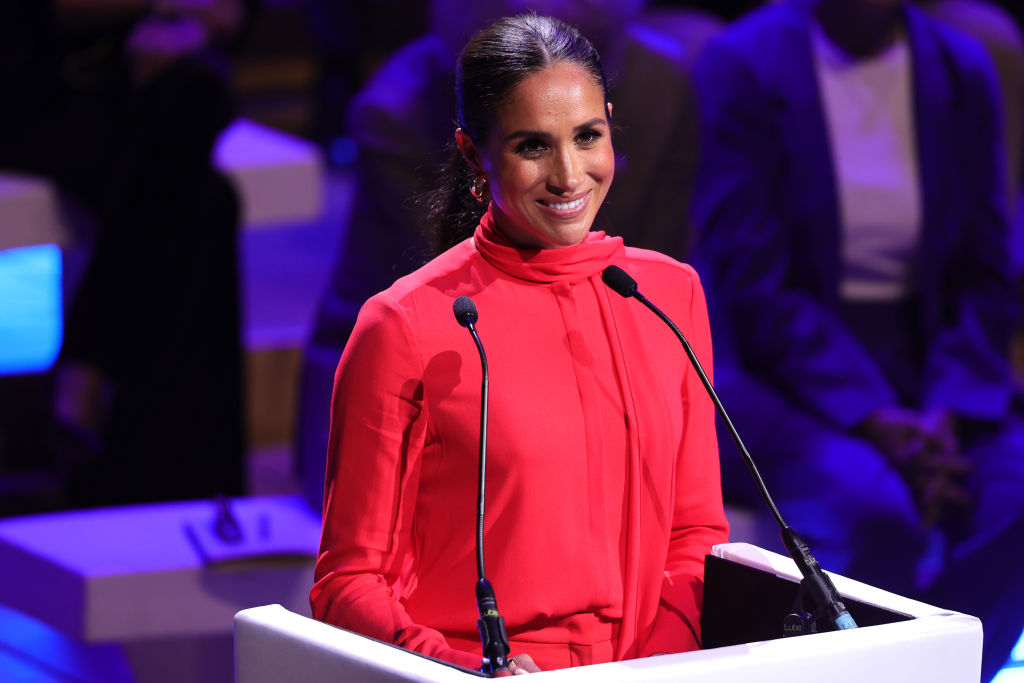
LONDON — A public relations expert is pushing back on the characterization of Prince Harry and Meghan Markle as “private citizens,” arguing the label misrepresents the couple’s continued high-profile public activity even after Buckingham Palace formally reiterated their non-working royal status earlier this month.

The palace’s position was laid out in a letter issued September 7 on behalf of King Charles III by the Lord Chamberlain, Richard Benyon, Lord Benyon, which stated that the Duke and Duchess of Sussex’s position “is akin to private citizens with commercial and charitable interests.” The letter reaffirmed that Harry and Meghan’s His and Her Royal Highness styles remain in abeyance and confirmed there had been no change to their status since they stepped back from royal duties in January 2020.

Olivia Bennet, a senior public relations director at the agency Go Up, argued that framing carries an inaccurate implication about how the couple actually operates. “Calling Harry and Meghan private citizens suggests people who have stepped away from public life altogether, whereas that clearly isn’t an accurate reflection of how they currently operate,” Bennet told The Mirror.

Bennet pointed to the range of public-facing work the couple continues to carry out as evidence the “private citizen” label doesn’t fully capture their current role. “They have charitable initiatives, public appearances, commercial interests and causes they continue to speak about very publicly,” she said. “So I can understand why, from a communications standpoint, they would feel ‘public figures’ better reflects the role they actually have.”

Advertisement

At the same time, Bennet was careful to distinguish that argument from any suggestion that Harry and Meghan are seeking to resume official royal duties. “What I don’t think we should do is confuse that with them trying to become working royals again,” she said. “There is a significant middle ground between carrying out official duties on behalf of the Royal Family and living an entirely private life, and that appears to be the space Harry and Meghan want to occupy.”

The palace’s letter had itself acknowledged that same distinction, drawing a clear line between the “State and Royal duties undertaken by the working Royal Family” and the personal, commercially oriented activities Harry and Meghan have pursued since 2020. The letter noted that the arrangement gives the couple “personal latitude … in respect of financial independence and protection of their privacy as they would wish,” language the palace said would continue to be fully respected going forward.

The September letter followed the Sussexes’ relocation to Britain in August, ahead of their children, Prince Archie and Princess Lilibet, starting school, a move a representative for the couple described to The New York Times as intended to be temporary. “On the heels of a wonderful trip with family and friends this summer, Harry and Meghan have decided to spend an extended period in the U.K. this autumn,” the representative said in a statement at the time. “They are excited to have their children spend more time in the country that’s such an important part of their family’s story.” A spokesperson for the couple said afterward that they were “a little surprised not to have been told about this in advance” that the palace’s letter would be issued and circulated to media, according to the BBC.

The debate over how to categorize Harry and Meghan’s public status is not new, but it has taken on renewed significance since their return to the U.K., a period during which questions about whether the couple was attempting to resume any semblance of official royal involvement have circulated widely in British media. Royal commentators have offered differing interpretations of the palace’s motives in issuing the September letter, with some describing it as a routine procedural clarification and others suggesting it was intended, at least in part, as a signal to the couple following what some sources have characterized as tension around their unannounced return.

Advertisement

Regardless of the palace’s precise intent, Bennet’s comments reflect a broader tension in how the Sussexes are perceived publicly: officially non-working royals under palace terminology, yet still operating with a level of public visibility, media attention and commercial activity that few genuinely private individuals maintain. That tension has shaped much of the coverage surrounding the couple since their 2020 decision to step back from royal duties, with debates over their status resurfacing repeatedly at moments of heightened public attention, including their move into television and streaming projects, their continued charitable work through organizations like the Archewell Foundation, and recurring public appearances at events such as the Invictus Games, the international sporting competition for wounded and ill service members that Harry founded.

Buckingham Palace has not issued any further public statement addressing Bennet’s specific characterization or the broader debate over the “private citizen” terminology since the September letter was first circulated. Harry and Meghan’s own representatives have likewise not offered additional public comment specifically addressing how the couple prefers to be described, beyond their earlier statement noting surprise at the timing of the palace’s letter.

With Harry and Meghan continuing their extended stay in the U.K. and resuming a schedule of charitable engagements planned well before their return, including activities tied to the upcoming Invictus Games in Birmingham in 2027, the question of how best to characterize their public role, private citizens, public figures, or something in between, appears likely to remain a recurring point of debate among royal commentators and communications professionals alike.

Advertisement
Continue Reading

Business

Housebuilder MJ Gleeson not expecting any improvement in housing market

Published

on

Business Live

The Sheffield firm saw a sharp drop in profits despite seeing improved revenue figures

Inside Gleeson Homes' latest show home to open in Stanley

Inside Gleeson Homes’ latest show home to open in Stanley(Image: Gleeson Homes)

Housebuilder MJ Gleeson has cut is dividend to shareholders after issuing a sombre update on the state of the housing market.

The Sheffield firm, which specialises in affordable homes in the North and the Midlands, has issued results for the year up to the end of June, in which its revenues rose 12.1% to £410m. But operating profit over the same period fell sharply to £2.4m, with that figure having stood at £24m a year earlier.

Advertisement

The company completed 1,968 homes during the year, up by nearly 10% on the previous period, but its land division struggled, seeing a 43% drop in revenues and reporting a £700,000 loss.

Gleeson said that, with no apparent upturn in the housing market, it was focussing on internal efficiencies and taking a “prudent stance on cash, working capital and site acquisitions”.

The company’s forward order book of 848 plots was almost identical to the previous year, though its land pipeline reduced by almost 5,000 to 14,927 plots. Average selling prices increased by 3.8% to £201,000.

Gleeson CEO Graham Prothero said: “I am pleased to report that in a subdued market we delivered a robust performance underpinned by the delivery of 1,968 homes, up by nearly 10% against the prior year. Gleeson Homes entered the new financial year with a forward order book of 848 homes.

Advertisement

“During the year we moved at pace to implement significant structural and operating changes under Project Transform. As a result, Gleeson Homes has been overhauled and is a much-improved business, with strengthened leadership at both executive and regional levels, more effective processes and clearer reporting lines. It is in a much stronger position to manage through the challenging market environment we are experiencing today.

“To optimise Gleeson Homes’ performance, we are also working hard on a number of business initiatives including enhancing our partnerships strategy, land-buying, product design, customer journey and brand identification. Importantly, recognising that this subdued market may not improve anytime soon, we are focused on managing the business as efficiently as possible and taking a prudent stance on cash, working capital and site acquisitions.

“Gleeson Land had to adapt to a slowdown in sales owing to a more cautious land market. The business continued to strengthen its portfolio submitting a record number of 18 planning applications and securing 13 high-quality new sites.

“Looking ahead, given the market backdrop, an absolute priority is to maintain the strength of our balance sheet. Along with our focus on managing the business prudently, the board has also taken the view that the dividend should reflect the challenging environment, proposing a lower final dividend in line with our capital allocation policy. This will give us greater flexibility in deploying capital for the medium-term benefit of the business.”

Advertisement
Continue Reading

Trending

Copyright © 2025