
Business
The Office Long Term Lease and Ownership Headache Businesses No Longer Want: ‘Serviced Everything’ Takes Off


Australian businesses are embracing a new era of ‘serviced everything’, replacing costly office fit-outs, furniture, telephone systems, internet infrastructure and ongoing maintenance with workspaces where virtually everything is provided, managed and ready to use.
According to workplace expert Brett McAllen, CEO of @WORKSPACES, Australia’s leading brand of serviced offices, flexible, shared and coworking spaces with locations across cities and suburban centres, serviced and flexible offices are no longer simply viewed as a way to reduce rent or avoid lengthy commercial leases. They are becoming a complete operational solution that allows businesses to walk into a fully functioning office and start working immediately.
“Businesses have spent decades purchasing desks, chairs, telephone systems, internet hardware, artwork, kitchen equipment and countless other items that depreciate, wear out, break or become obsolete,” McAllen said.
“Then they have had to pay people to install, maintain, repair, replace and eventually dispose of it all.
“Serviced offices completely change that equation. The desks, chairs, internet, telephones, meeting rooms, kitchens, artwork, reception and shared facilities are already there.
Everything is connected, maintained and managed for you.
“You simply walk in, open your laptop and get to work. If you don’t have a computer, we can provide one as well. It is the ultimate form of serviced everything.”
The end of the office shopping list
McAllen said moving into a conventional office can require a significant upfront investment before a business has even opened its doors.
“Securing the premises is just the beginning. Businesses then face the cost of the fit-out, cabling, furniture, internet connection, telephone systems, appliances, security, signage, artwork and all the smaller items required to make an office functional,” he said.
“You may also have to coordinate builders, electricians, telecommunications providers, internet technicians, furniture suppliers and other trades.
“With a serviced office, that entire shopping list and project-management burden disappears. Businesses arrive to find a professional, fully equipped workplace ready for their team.”
No more depreciating desks and broken chairs
Traditional offices require businesses to purchase physical assets that begin depreciating from the moment they are installed.
“Desks get damaged, chairs wear out, technology becomes outdated and fit-outs rarely retain their original value,” McAllen said.
“Businesses can spend tens or even hundreds of thousands of dollars creating an office, only to discover that it no longer meets their needs a few years later.
“They may grow, contract, restructure or change how their people work. Suddenly, they have the wrong number of desks, too much space, not enough meeting rooms or expensive equipment they no longer need.
“Serviced offices allow businesses to use what they need without having to own, maintain or eventually replace it.”
Internet that simply works
McAllen said connectivity is another major source of cost and frustration in conventional offices.
“Reliable, high-speed internet is essential to virtually every modern business, but arranging commercial connectivity can be expensive and time-consuming,” he said.
“There may be installation delays, hardware requirements, lengthy contracts and ongoing dealings with service providers when something goes wrong.
“In a quality serviced office, the connectivity is already in place. Businesses do not need to purchase routers, install cabling or spend hours on the telephone trying to resolve technical issues.
“The internet simply works. If there is ever a problem, which is rare, the business calls the front desk and the issue is managed.”
One call replaces a list of tradies
McAllen said one of the most underestimated advantages of a serviced office is the amount of management time it returns to business owners and their teams.
“In a traditional office, if a chair breaks, an appliance fails, the internet drops out or something needs repairing, somebody within the business has to deal with it,” he said.
“They need to identify the right provider, request quotes, book the service, wait for the technician and approve the invoice. One small issue can consume hours of productive time.
“In a serviced workspace, you make one call to the front desk. The issue becomes our responsibility, not yours.
“Business owners should be focused on serving clients, growing revenue and leading their people—not searching for an electrician, assembling furniture or troubleshooting the internet.”
The office is becoming a service, not an asset
McAllen believes the shift towards serviced workspaces reflects a broader change in how organisations think about ownership.
“Businesses already use software, cloud storage and other critical services through flexible subscription models. The office is now heading in the same direction,” he said.
“Instead of tying up capital in a static workplace, businesses can access the space, infrastructure, technology and support they need as a service.
“It reduces upfront costs, removes unnecessary operational headaches and makes it easier to respond when circumstances change.”
Built for businesses that need to move quickly
The serviced model can be particularly valuable for growing companies, project teams, interstate businesses, professional service firms and organisations entering new markets.
“A business may need to accommodate five people today and 15 people next year. It may win a new project, open in another city or need additional space at short notice,” McAllen said.
“A traditional office can lock that business into a fixed footprint and a significant financial commitment. Flexible serviced spaces allow it to adapt much more quickly.
“Companies can establish a professional presence without spending months sourcing premises, coordinating a fit-out and waiting for essential services to be connected.”
A game changer for smaller businesses
McAllen said the ‘serviced everything’ model also enables smaller businesses to access facilities and technology that may otherwise be beyond their budgets.
“A small business can have a professional reception, sophisticated meeting rooms, quality furniture, high-speed internet, fully equipped kitchens and beautifully designed communal areas without funding all of those things itself,” he said.
“It can present to employees and clients like a much larger organisation while retaining the flexibility and agility of a smaller business.
“That is a genuine game changer. Businesses receive the benefits of an impressive, fully operational office without the capital cost, maintenance burden or operational complexity of owning everything inside it.”
McAllen expects demand for fully serviced and flexible workplaces to continue growing as businesses scrutinise fixed costs and seek more responsive ways of operating.
“The smartest office asset may now be the one you don’t have to own,” he said.
“Serviced everything gives businesses their time, capital and flexibility back. They can walk in, get connected and focus entirely on doing business while somebody else takes care of the office. That is one of the key reasons why our centres are growing across Australia and why so many organisations, businesses and start ups choose to locate their operations and staff in our centres, we make things so easy and we save them money.”
About @WORKSPACES
@WORKSPACES is a premium, Australian-owned flexible workspace provider delivering enterprise-grade, on-demand office solutions across Australia. With locations in Melbourne, Brisbane and the Gold Coast, the company offers serviced offices, coworking environments, virtual office solutions and meeting facilities designed to support modern businesses.
Led by CEO Brett McAllen, @WORKSPACES is focused on delivering high-quality, flexible and scalable workspace solutions that enable organisations to operate efficiently and competitively in a rapidly evolving business landscape. For more information, visit: www.atworkspaces.com.au



TQP Research is run by a Certified Public Accountant (CPA) with several years of experience in structured finance and banking. TQP Research follows a value-oriented investment approach by identifying businesses that meet the criteria for long-term success taught by Warren Buffett, Charlie Munger, and Walter Schloss, to name a few. Investment topics will primarily include: Market analysis and macroeconomic trends, large-cap blue chip companies, deeply undervalued micro-cap and small-cap stocks that most institutional investors will avoid, and technology and market news. TQP Research enjoys actively engaging with members of the community. Please feel free to reach out with any questions or ideas!
Analyst’s Disclosure: I/we have no stock, option or similar derivative position in any of the companies mentioned, and no plans to initiate any such positions within the next 72 hours. I wrote this article myself, and it expresses my own opinions. I am not receiving compensation for it (other than from Seeking Alpha). I have no business relationship with any company whose stock is mentioned in this article.
Seeking Alpha’s Disclosure: Past performance is no guarantee of future results. No recommendation or advice is being given as to whether any investment is suitable for a particular investor. Any views or opinions expressed above may not reflect those of Seeking Alpha as a whole. Seeking Alpha is not a licensed securities dealer, broker or US investment adviser or investment bank. Our analysts are third party authors that include both professional investors and individual investors who may not be licensed or certified by any institute or regulatory body.

Barclays backs November BoE hike, warns Middle East conflict could spur more


Apart from my academic training in Biology and Chemistry, I hold a Ph.D. in Environmental Science with a specialization in Bio-Medical Waste Management. My areas of research and analysis include clean technologies, renewable energy, pollution control systems, and environmental compliance solutions. I follow companies operating in these sectors using a research-driven approach that integrates regulatory trends, sustainability metrics, and scientific evaluation to assess long-term growth opportunities, risks, and value potential. By actively tracking and analyzing companies engaged in environmental management, renewable energy, and green technologies, my work aims to blend scientific depth with market analysis to provide practical insights that help investors understand financial outcomes and emerging opportunities. At a personal level, I also provide free stock market consultation to a select group of friends, relatives, and former colleagues. I am associated with Seeking Alpha analyst Eudaemon Research.
Analyst’s Disclosure: I/we have no stock, option or similar derivative position in any of the companies mentioned, and no plans to initiate any such positions within the next 72 hours. I wrote this article myself, and it expresses my own opinions. I am not receiving compensation for it (other than from Seeking Alpha). I have no business relationship with any company whose stock is mentioned in this article.
Seeking Alpha’s Disclosure: Past performance is no guarantee of future results. No recommendation or advice is being given as to whether any investment is suitable for a particular investor. Any views or opinions expressed above may not reflect those of Seeking Alpha as a whole. Seeking Alpha is not a licensed securities dealer, broker or US investment adviser or investment bank. Our analysts are third party authors that include both professional investors and individual investors who may not be licensed or certified by any institute or regulatory body.

ClearBridge Growth Portfolios Q2 2026 Commentary

Keeley Knowles ran a Whatsapp group with about 200 people asking her to steal specific designer items.

EWY: The Bubble Faded, But Korea Still Needs New Buyers
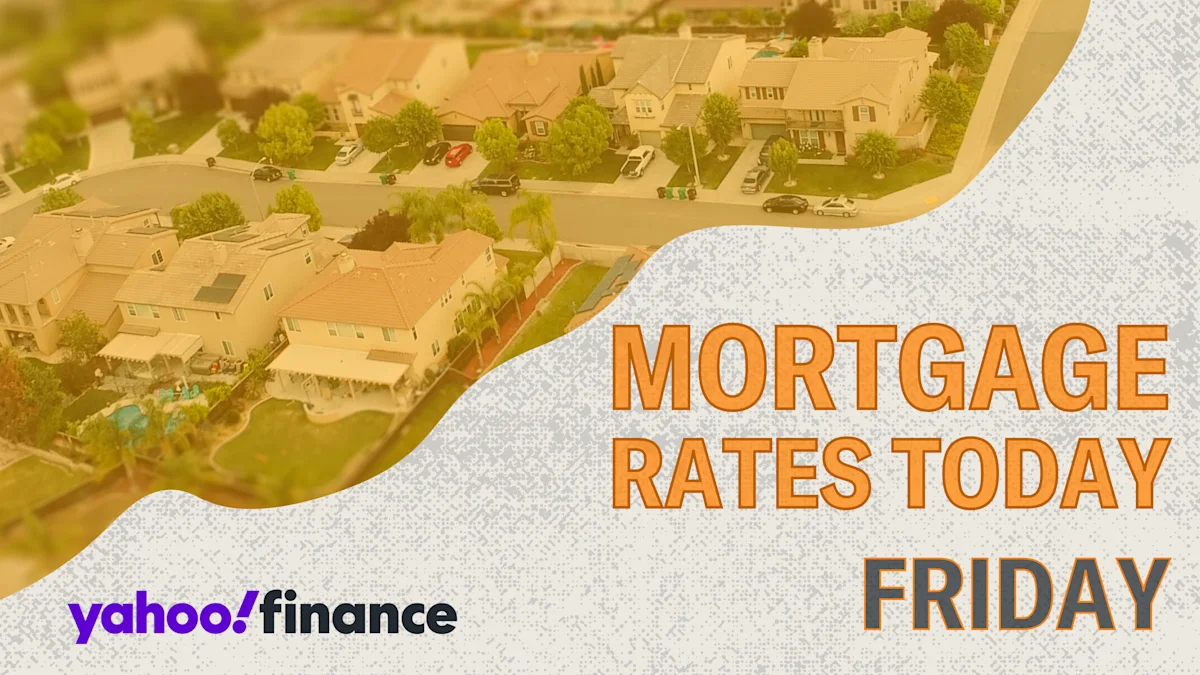
According to the Zillow lender marketplace, mortgage rates are mostly higher following the first Fed rate increase in three years.
The average 30-year fixed rate today, Friday, September 18, 2026, is 7.05%, up 4 basis points since yesterday. The 15-year fixed loan is currently at 6.43%, 1 basis point lower than yesterday. The 5/1 ARM is 7.16%, up 6 basis points from Thursday.
Read more: Weekly survey of mortgage lenders with the lowest rates: Breaking the 7% barrier
Current mortgage rates
Here are the current purchase rates, according to the latest Zillow data, for Friday, September 18, 2026:
-
30-year fixed: 7.05%
-
20-year fixed: 6.92%
-
15-year fixed: 6.43%
-
5/1 ARM: 7.14%
-
7/1 ARM: 6.66%
-
30-year VA: 6.46%
-
15-year VA: 6.00%
-
5/1 VA: 6.34%
Remember, these are national averages and have been rounded to the nearest hundredth.
Current mortgage refinance rates
These are the latest refinance rates, according to the latest Zillow data, for Friday, September 18, 2026:
-
30-year fixed: 7.07%
-
20-year fixed: 6.96%
-
15-year fixed: 6.46%
-
5/1 ARM: 7.13%
-
7/1 ARM: 6.70%
-
30-year VA: 6.64%
-
15-year VA: 6.73%
-
5/1 VA: 5.86%
Again, the numbers provided are national averages rounded to the nearest hundredth. Mortgage refinance rates are often higher than rates when you buy a house, although that’s not always the case.
Learn more: Dig deeper into the 7 home refinance options
Free mortgage calculator
Your mortgage rate plays a large role in how much your monthly payment will be. Use this mortgage calculator to see how your mortgage amount, rate, and term length will impact your monthly payments:
This embedded content is not available in your region.
You can bookmark the Yahoo Finance mortgage payment calculator and keep it handy for future use, as you shop for homes and the best mortgage lenders.
How mortgage interest rates work
A mortgage interest rate is a fee for borrowing money from your lender, expressed as a percentage. You can choose from two types of rates: fixed or adjustable.
A fixed-rate mortgage locks in your rate for the entire life of your loan. For example, if you obtain a 30-year mortgage with a 6% interest rate, your rate will remain at 6% for the entire 30-year term unless you refinance or sell.
An adjustable-rate mortgage locks in your rate for a predetermined period and then adjusts it periodically. Let’s say you get a 7/1 ARM with an introductory rate of 6%. Your rate would be 6% for the first seven years, then the rate would increase or decrease once per year for the last 23 years of your term. Whether your rate goes up or down depends on several factors, such as the economy and housing market.
At the beginning of your mortgage term, most of your monthly payment goes toward interest. Your monthly payment toward mortgage principal and interest stays the same throughout the years. However, less and less of your payment goes toward interest, and more goes toward the mortgage principal or the amount you originally borrowed.
Read more: Determine whether an adjustable-rate vs. fixed-rate mortgage is better for you
Which mortgage term length should you get?
A 30-year fixed-rate mortgage is a good choice if you want a lower mortgage payment and the predictability that comes with having a fixed rate. Just know that your rate will be higher than if you choose a shorter term, and you will pay significantly more in interest over the years.
You may want to consider a 15-year fixed-rate mortgage if you aim to pay off your home loan quickly and save money on interest. These shorter terms come with lower interest rates, and since you’re cutting your repayment time in half, you’ll save a lot in interest in the long run. But you’ll need to be sure you can comfortably afford the higher monthly payments that come with 15-year terms.
Read more: Learn how to decide between a 15-year and 30-year fixed-rate mortgage
Typically, an adjustable-rate mortgage might be suitable if you plan to sell before the introductory rate period ends. Adjustable rates usually start lower than fixed rates, and then your rate will change after a predetermined amount of time. However, 5/1 and 7/1 ARM rates have been similar to (or even higher than) 30-year fixed rates recently. Before getting an ARM just for a lower rate, compare your rate options from term to term and lender to lender.
Are mortgage rates decreasing?
Rates are rising for the most part. The average 30-year fixed rate today, Friday, September 18, 2026, is 7.05%, up 4 basis points since yesterday. The 15-year fixed loan is currently at 6.43%, 1 basis point lower than yesterday. The 5/1 ARM is 7.16%, up 6 basis points from Thursday.
Mortgage interest rates today: FAQs
What are mortgage interest rates doing today?
According to Freddie Mac, the average 30-year mortgage rate was 6.95% through Wednesday, up from 6.76% a week earlier. A year ago, the average 30-year mortgage rate was 6.26%.
How low will mortgage rates go in 2026?
According to the latest forecasts, the MBA expects the 30-year mortgage rate to average between 6.6% and 6.7% through the rest of 2026. Fannie Mae predicts a 30-year rate between 6.7% and 6.8% through the end of the year.
How low could mortgage rates go by 2027?
Mortgage rates are likely to remain little changed in 2027. The MBA forecasts 30-year fixed rates of 6.7% for all of 2027. Fannie Mae is predicting average rates will be between 6.7% and 6.8% throughout 2027.

If you’re looking for a secure place to store your savings, a certificate of deposit (CD) may be a great choice. These accounts often provide higher interest rates than traditional checking and savings accounts. However, CD rates can vary widely. Learn more about CD rates today and where to find high-yield CDs with the best rates available. Here is a look at some of the best CD rates available today from our verified partners:
Banks with the best CD rates right now
Today’s CD rates vary quite a bit. In general, however, CD rates have been declining for quite some time due to the Fed’s decision to cut its benchmark rate three times in the latter part of 2024 and three times in 2025. Even so, with the Fed leaving rates unchanged so far in 2026, some banks are still offering competitive CD rates.
For institutions offering competitive rates, top rates reach about 4% APY. This is especially true for shorter terms of one year or less.
Today, Friday, September 18, 2026, the highest CD rate is 4.40%, and it’s offered by Happen Bank on its 2-year CD.
Compare these rates to the national average as of August 2026 (the most recent data available from the FDIC):
This embedded content is not available in your region.
Compared with today’s top CD rates, national averages are much lower. This highlights the importance of shopping around for the best CD rates before opening an account.
Why do online banks have the best CD rates?
Online banks and neobanks are financial institutions that operate solely via the web. That means they have lower overhead costs than traditional brick-and-mortar banks. As a result, they’re able to pass those savings on to their customers in the form of higher interest rates on deposit accounts (including CDs) and lower fees. If you’re looking for the best CD rates available today, an online bank is a great place to start.
However, online banks aren’t the only financial institutions offering competitive CD rates. It’s also worth checking with credit unions. As not-for-profit financial cooperatives, credit unions return their profits to customers, who are also member-owners. Although many credit unions have strict membership requirements that are limited to those who belong to certain associations or work or live in certain areas, there are also several credit unions that just about anyone can join.
Should you open a CD?
Whether or not you should put your money in a CD depends on your savings goals. CDs are considered a safe and stable savings vehicle — they don’t lose money (in most cases), are backed by federal insurance, and allow you to lock in today’s best rates.
However, there are some drawbacks to consider. First, you must keep your money on deposit for the full term; otherwise, you’ll be subject to an early withdrawal penalty. If you want flexible access to your funds, a high-yield savings account or money market account might be a better choice.
Additionally, although today’s CD rates are high by historical standards, they don’t match the returns you could achieve by investing your money in the market. If you’re saving for a long-term goal such as retirement, a CD won’t provide the growth you need to reach your savings goal within a reasonable time frame.
Read more: Short- or long-term CD: Which is best for you?

Journey Energy: Eventually Quality Will Matter

Federal Reserve Chairman Kevin Warsh made it clear inflation is still a problem. Wall Street was left wondering how far the Fed will go to address it.
Stocks slumped and the 10-year Treasury yield settled above 5% for the first time since July 2007 after Warsh struck a decidedly hawkish tone in remarks following the central bank’s decision to raise interest rates for the first time in three years.
“Inflation is too high and has been for too long,” Warsh said in remarks to reporters on Wednesday afternoon. He later added: “Today’s action starts to show that we’re serious about this.”
Copyright ©2026 Dow Jones & Company, Inc. All Rights Reserved. 87990cbe856818d5eddac44c7b1cdeb8

Otis: The Service Business Is Strong, But Debt Still Matters (NYSE:OTIS)
Crypto Price Analysis Sep-18: ETH, XRP, ADA, BNB, and HYPE
Don’t Look Now, But a Vikings Large Lad is Turning into a Terror in the Trenches



-

 Fashion7 days ago
Weekend Open Thread – Corporette.com
-

 Tech5 days ago
The Latest Weird Thing to Play Doom Is the Mapped-Out Brain of a Fruit Fly
-

 Crypto World3 days ago
Kraken Lets xStocks Holders Earn Yield Through DeFi
-

 Crypto World1 day ago
US Charges Robinhood Engineers Over Crypto Listing Trades
-

 Crypto World6 days ago
Can AI Build a Startup in 72 Hours? Elon Musk's Team Will Livestream the Test
-

 News Videos7 days ago
Facing Financial Fears
-

 Crypto World4 days ago
Elon Musk Drops a Bombshell: Grok 5 Could Be the AGI Breakthrough
-

 Entertainment6 days ago
News Specials, Movies, Shows, More
-

 Business5 days ago
Rivals Sam Altman and Elon Musk Rally Behind Dario Amodei’s Call for a Slowdown in AI Development
-
 NewsBeat4 days ago
‘Sick conspiracy’: Trump says only guardrails AI needs is ‘a strong and smart (High IQ!) president’ in all-caps rant
-
 Crypto World5 days ago
New Tesla Roadster Uses SpaceX Tech. Will It Impact the Stock Price?
-

 Crypto World6 days ago
Robinhood Chain Never Stopped But its Blobs Did Stop Reaching Ethereum For 14 Minutes
-

 Crypto World2 days ago
What Is the Status of the U.S.-Iran Peace Talks? Here's What Both Sides Are Saying
-
 Entertainment6 days ago
New Horror Movie Officially Earns a Rare Stephen King Recommendation
-

 Business6 days ago
Marvell: Most Potent Setup Of The AI Factory Decade
-

 Crypto World3 days ago
DOJ Seeks to Seize $61M in Iran Oil Funds From Binance Accounts It Vouched For
-
 Crypto World4 days ago
3 Token Unlocks to Watch in the Third Week of September 2026
-
 Crypto World3 days ago
NVIDIA Analysis: Attempted Rising Wedge Breakout Amid Pressure on the AI Sector
-

 Crypto World6 days ago
Bitcoin ETFs lose $462.7M as Ethereum funds gain $196.9M
-

 Crypto World3 days ago
Revolut Attackers Warn of Ongoing Daily Customer Data Leaks
You must be logged in to post a comment Login