Connect with us

Business

The Ultimate Guide to Calculating Real Influencer Campaign ROI

Published

on

If you have ever tried to defend creator spend in front of a CFO, you know the problem. The campaign can look busy on the surface. Views are high, comments are positive, and the creators are asking when the next deal is coming.

If you have ever tried to defend creator spend in front of a CFO, you know the problem. The campaign can look busy on the surface. Views are high, comments are positive, and the creators are asking when the next deal is coming.

Then the CFO asks one question: what did we get back in revenue, and how do you know it came from this spend? When the answer leans on Earned Media Value (EMV) only, engagement rate, or brand awareness, the conversation usually ends with budget pressure.

In 2026, that standard is changing. Vanity metrics might help you improve creativity, but they do not justify investment. What wins the budget is attribution to Net Revenue and profit, plus clear math that ties spend to Customer Acquisition Cost (CAC), Customer Lifetime Value (CLV), and conversion. CFOs in particular and brands in general need performance-based influencer marketing.

This guide shows how to calculate influencer marketing ROI using the same financial logic you would use for any growth channel. We will also separate Return on Ad Spend (ROAS) from profit based ROI, and walk through creator campaign attribution models and the tracking stack needed to connect an influencer post to a closed deal.

Key Takeaways

  • Move beyond EMV to Hard Revenue.
  • Include all costs (agency, product, shipping) in the formula.
  • Use U-Shaped or Linear attribution to see the full picture.
  • Automate tracking with UTMs and pixels.

ROI vs. ROAS vs. EMV: Defining Financial Success

Marketers often mix these metrics in the same report. A CFO will not. If you want influencer spend to be treated like a real growth investment, you need to be precise about what each metric measures, what it ignores, and what question it answers.

Earned Media Value (EMV)

  • What it is: A dollar estimate assigned to impressions, views, likes, or engagement by comparing them to what you might have paid for similar reach in ads.
  • What it answers: “How much would this exposure have cost if we bought it?”
  • Why it fails in the boardroom: EMV is built on vanity metrics. It has no direct link to net revenue, profit, or even verified customer actions. Two campaigns can have the same EMV while one drives sales and the other drives nothing but attention. EMV can be useful for creative benchmarking, but it is not a financial result.

Return on Ad Spend (ROAS)

  • What it is: A revenue efficiency metric.
  • Formula: ROAS = Gross Revenue / Ad Spend
  • What it answers: “How much gross revenue did we generate per dollar spent?”
  • Why it matters: ROAS is a clean way to compare channel efficiency when your goal is revenue generation. It forces you to connect spend to revenue. But ROAS is not profitable. It does not subtract costs like Cost of Goods Sold (COGS), shipping, discounts, refunds, or agency fees. A campaign can look strong on ROAS and still lose money.

Influencer Marketing ROI

  • What it is: A profitability metric for creator investment, and the primary financial KPI if you need CFO level approval.
  • Core logic: profit compared to Total Investment.
  • What it answers: “Did we make money after all costs, and how much profit did this Investment produce?”
  • Why it matters: ROI is what finance teams use to decide whether to scale, hold, or cut spend. It forces you to define total investment properly and connect it to profit, not just revenue.

Comparison table: EMV vs. ROAS vs. ROI

Metric What it measures Core inputs Best use Main weakness
EMV Estimated value of exposure Vanity metrics like views, impressions, engagement, plus assumed media rates Creative comparison, top of funnel reporting Not tied to net revenue, profit, or verified outcomes
ROAS Revenue efficiency Gross revenue, ad spend Comparing efficiency across paid and creator programs Ignores costs, so it can overstate success
ROI Profitability Net profit, total investment Budget justification and scale decisions Requires clean cost accounting and attribution

The math difference that matters

  • ROAS uses Revenue, not profit:
    • ROAS = Gross Revenue / Ad Spend
    • Useful when you need to show Revenue per dollar, but it does not tell you if the campaign was profitable.
  • ROI uses profit and full Investment:
    • ROI is built on Profit compared to Total Investment, not just the creator fee.
    • Finance cares about Profit, because Profit is what remains after costs.

If you want a creator report to survive a CFO review, treat EMV as supporting context, not the headline. Lead with investment, revenue, and profit. Then back it up with transparent assumptions and a repeatable tracking method. For more on this, see metrics that matter.

The Exact Formulas to Calculate Creator ROI in 2026

1. ROI

Start with the only ROI formula a CFO will accept. Influencer marketing ROI is a profitability metric, not a feelings metric. The standard formula is:

Advertisement

ROI (%) = (Net Profit – Total Cost) / Total Cost x 100

This is the formula you should use when you want to claim a creator campaign “paid back” the budget.

2. Total Cost

Define Total Cost correctly, or your ROI will be wrong. Most influencer reports quietly treat the influencer fee as the whole cost. That is the fastest way to lose credibility with finance. Total Cost must include every real expense required to produce and fulfill the sale.

Include in Total Cost:

Advertisement
  • Creator fees (and usage rights if paid separately)
  • Agency fees or internal labor allocation (if you report that way)
  • Product seeding costs (free product sent to creators)
  • Cost of Goods Sold (COGS) for units sold
  • Shipping and handling
  • Payment processing fees and platform fees
  • Returns, refunds, chargebacks (treat as revenue reduction or as cost consistently)
  • Discounts and coupons (again, handle consistently)

If you leave out COGS and shipping, you can show a positive ROI on paper while the business loses money on every order.

3. Net Profit

Calculate Net Profit the same way your finance team does. Net Profit is what remains after costs. A simple way to structure it for creator campaigns is:

Net Profit = Net Revenue – Total Cost

Where Net Revenue is revenue after refunds, returns, and any adjustments your finance team uses. This is why Net Revenue matters more than top line gross sales when you are trying to prove real ROI.

4. Break-even Revenue

Know your break-even point before you scale. Before you ask for more spend, you should know the Break-even Point, meaning the minimum revenue you must generate to avoid losing money.

Advertisement

Break-even Revenue = Total Cost / Gross Margin %

Example:

  • Total Cost of the influencer program this month: $50,000
  • Your gross margin is 60% (0.60)
  • Break-even Revenue = $50,000 / 0.60 = $83,333.33

If your attributed revenue is below $83,333.33, you are not breaking even yet. If it is above it, you have room to scale, assuming the attribution is credible.

5. CAC

Calculate Customer Acquisition Cost (CAC) for creator campaigns. ROI tells you profitability. CAC tells you efficiency of acquiring new customers, which is often how senior teams compare channels.

Influencer CAC = Total Spend / New Customers

Advertisement

Important details:

  • Total Spend should match your Total Cost logic, not just creator fees.
  • New Customers must be net new customers, not all purchases. Otherwise CAC looks artificially low.

Example:

  • Total Cost: $50,000
  • New customers attributed to creators: 250
  • CAC = $50,000 / 250 = $200

If your blended CAC target is $150, creator CAC at $200 might still be acceptable if it brings higher CLV, stronger retention, or higher average order value. For a deeper breakdown, see calculating CAC: /marketing-efficiency-ratio.

6. CLV

Bring in Customer Lifetime Value (CLV) to judge payback, not just first purchase. Influencers often drive higher trust and higher intent, which can affect retention. That is why CLV matters, especially for subscriptions, high ticket items, or products with repeat purchase behavior.

A simple CLV model:

CLV = Average Order Value x Purchase Frequency x Gross Margin x Average Customer Lifespan

Advertisement

Then compare CLV to CAC:

  • If CLV / CAC is healthy (many teams target 3x or more), the channel can be worth scaling even if first purchase ROI looks modest.
  • If CLV is unknown, at least estimate the payback period: how long it takes gross profit to recover CAC.

7. What about brand awareness campaigns?

Use cost efficiency, not fake ROI. If the campaign truly has no conversion event to measure, you do not calculate financial ROI honestly. You measure cost efficiency for awareness outcomes, and you keep it separate from performance claims.

Practical options:

  • Brand lift studies (awareness, consideration)
  • Share of voice or search lift
  • Cost per qualified visit, cost per email signup, or cost per lead, as a proxy when you are building the funnel

The key is consistency. If you want to say influencer marketing ROI improved, you must anchor it to profit math and full cost accounting, and then validate the attribution method you used to assign revenue and customers to influencers.

Attribution Models: Tracking the Invisible Touchpoints

If your influencer marketing ROI looks weaker than Facebook or Google, there is a good chance the campaign is not actually underperforming. You are likely seeing an attribution problem, not a performance problem. Influencer campaigns often create demand at the top of the funnel, while paid search, retargeting, or email captures the final click that converts. If you rely on Last-Click Attribution, creators will look expensive even when they are the reason the customer entered your world in the first place.

Below are the attribution models you can use to assign credit across touchpoints. The goal is not to “make influencers look good.” The goal is to assign credit in a way that reflects how people actually buy in 2026.

Advertisement

Last-Click Attribution

  • What it does: Gives 100% credit to the final touchpoint before purchase.
  • Why it breaks influencer campaign attribution: An influencer post might drive the first site visit, the email signup, or the app install. Then the customer returns later through Google search, a retargeting ad, or a branded direct visit. Last click gives all credit to the closer and none to the introducer.
  • When it is acceptable: Rarely. It can work for impulse purchases with one session conversion, but most creator driven journeys are not one session.

First-Touch Attribution

  • What it does: Gives 100% credit to the first recorded touchpoint.
  • Why it helps: It credits discovery, which is often the influencer’s true role. It is useful when your objective is growing new demand and you need to prove the creator’s “opening” value.
  • What it misses: It can undervalue the channels that do the heavy lifting in the middle and at close, like retargeting, email, sales, or affiliates.

Linear Attribution

  • What it does: Splits credit equally across every touchpoint in the journey.
  • Why it helps: It prevents one channel from stealing all credit and gives creditors a fair share when they are part of a longer path.
  • What it misses: Not all touchpoints are equally important. Some are decisive. Some are noisy.

U-Shaped Attribution

  • What it does: Assigns more credit to the first touchpoint and the last touchpoint, with the remaining credit spread across the middle touches. The model in this brief is: 40% First, 40% Last, 20% Middle.
  • Why it is often best for creator campaigns: It matches how many influencer paths work. Influencers introduce the brand and frame the intent. Retargeting or search closes the deal. The middle touches still matter, but they should not erase discovery.
  • How to use it in reporting: Treat the creator as the 40% opener when they are the first recorded touchpoint, or when they are the first meaningful engagement that can be verified (click, signup, install, or survey confirmed source).

Multi-Touch Attribution as the Umbrella Concept

  • Multi-Touch Attribution is any approach that assigns credit across multiple touchpoints instead of one. First touch, linear, and U shaped are common “rules based” versions. More advanced versions use data driven weighting, but the principle is the same: share credit across the journey.

Why your influencer ROI can look lower than Facebook ads ROI

In many stacks, Facebook is the closest because it retargets the people who first visited from creators. If your reporting uses last click, Facebook appears to generate the sale “cheaply,” and creators appear to “not convert.” That is an attribution error. The sale was assisted by creators, but the credit was not assigned.

Visual description for a U-Shaped model diagram

Imagine a path that goes left to right with five boxes:

  • Influencer Post
  • Website Visit
  • Email Signup
  • Retargeting Ad
  • Purchase

Above each box is a percentage.

  • The Influencer Post box has 40% credit
  • The Purchase box, labeled Retargeting Ad as the last touch, has 40% credit
  • The three middle boxes share the remaining 20% credit equally, so each middle box gets about 6.7%

The diagram makes one point clear: the model gives real credit to both introduction and close, instead of letting Last-Click Attribution erase the first touchpoint.

The Tech Stack: Automating the Tracking Loop

A strong attribution model only works if you can capture the right data. The goal is simple: every creator touchpoint should leave a measurable trail that can be tied to a user, a lead, and eventually net revenue in your reporting. You do not need a perfect setup to start, but you do need a consistent one.

UTM Parameters for every single creator link

Create UTM Parameters for each influencer, each platform, and ideally each post.

Minimum fields to standardize:

Advertisement
  • utm_source (influencer name or handle)
  • utm_medium (influencer)
  • utm_campaign (campaign name)
  • utm_content (platform or post identifier)

UTMs make the first click traceable, which protects Creator Campaign Attribution from being erased by Last-Click Attribution in your analytics.

Promo codes to track conversions that happen without a click

Not every customer clicks a link. Some see a post and search your brand later, or share it in a chat. This is dark social, and it is common for influencer driven demand.

Promo codes give you a second line of tracking when link data is missing.

Best practice:

  • Unique code per creator for clean attribution.
  • A consistent code structure (for example INFLUENCER10 or BRAND CREATOR).
  • A defined policy for discounting so codes do not destroy profit while chasing revenue.

Attribution pixels and conversion events

Use attribution pixels (your ad platform pixel or a server side event) to capture key actions:

  • View content
  • Add to cart
  • Lead form submit
  • Purchase or subscription start

Pixels let you build remarketing audiences and connect creator driven traffic to later conversions. They also help you see assisted conversions inside multi-touch views.

CRM integration from click to closed won

If you sell B2B, high ticket, or anything with a sales cycle, you cannot stop at checkout tracking. You need CRM Integration so each lead keeps its original source through the pipeline. Tools that are commonly used are HubSpot, Salesforce, and the like.

Advertisement

Minimum setup:

  • Capture UTMs on the first visit and store them in hidden form fields.
  • Push those fields into the CRM as lead properties.
  • Maintain the original source through deal stages, not just last activity.

This is where creator programs become CFO friendly, because you can show an influenced pipeline, closed won revenue, and payback timing.

Post purchase surveys to fill attribution gaps

  • A simple “How did you hear about us?” questions at checkout can catch what UTMs miss.
  • Offer structured answers that include top influencers or “Creator on TikTok” or “YouTuber.”
  • This is not perfect data, but it is often the only way to capture dark social influence when links are not clicked.

A practical reporting view that finance can trust

Build a weekly or monthly report that includes:

  • Total Investment by influencer and by platform
  • Attributed Net Revenue by model (first touch, U-shaped, or linear)
  • Profit and Influencer Marketing ROI
  • Creator CAC and payback period where possible

The point is to show the same language finance uses: Investment, Revenue, Profit, and time to recover spend.

The ROI Tracking Setup Checklist

  • UTMs on every creator link, standardized naming convention
  • Promo codes, ideally unique per creator
  • Attribution pixels with key conversion events configured
  • CRM Integration that stores original source and ties leads to closed won revenue
  • A post checkout or post signup survey to capture dark social touchpoints
  • A consistent attribution rule (often U shaped or linear) applied across reports

Conclusion

Influencer programs do not fail in finance reviews because creators “do not convert.” They fail because the measurement is incomplete. If you report EMV, views, or engagement as the headline, you are asking a CFO to fund feelings. In 2026, budget is won with revenue attribution, transparent cost accounting, and a repeatable method for assigning credit across touchpoints.

The fastest path to credible influencer marketing ROI is simple: pick an attribution model that reflects how people buy, and build a tech stack that captures the data consistently. For most teams, that means moving away from Last-Click Attribution, applying a U-Shaped or Linear approach for influencer campaign attribution, and enforcing tracking hygiene with UTMs, pixels, and CRM fields that survive the full journey to closed won.

If you want more budget next year, audit your current campaigns this month. Replace vanity reporting with Net Revenue, profit, CAC, and payback. Then you will have numbers that hold up in the boardroom.

Advertisement

Continue Reading
Click to comment

Leave a Reply

Your email address will not be published. Required fields are marked *

Business

Americans set new travel record with 904 million air travelers in 2025

Published

on

Americans set new travel record with 904 million air travelers in 2025

Americans set a new record for domestic air travel in 2025 even as travel patterns shifted, a new analysis found.

AAA Northeast examined several years of Transportation Security Administration (TSA) checkpoint data and found that over 904 million travelers went through a TSA checkpoint last year, an increase of 2.57 million passengers compared with 2024.

Advertisement

That figure marks a new annual record for domestic air travel, though the year-over-year increase was under 1% growth – much cooler than in prior years.

By comparison, the number of passengers going through TSA checkpoints was up 5.3% in 2024 from 2023, which had a 13% growth from 2022.

FRIDAY FLIGHTS NOW CHEAPEST AS TRADITIONAL TRAVEL BOOKING WISDOM DIES ACCORDING TO NEW DATA

detroit airport

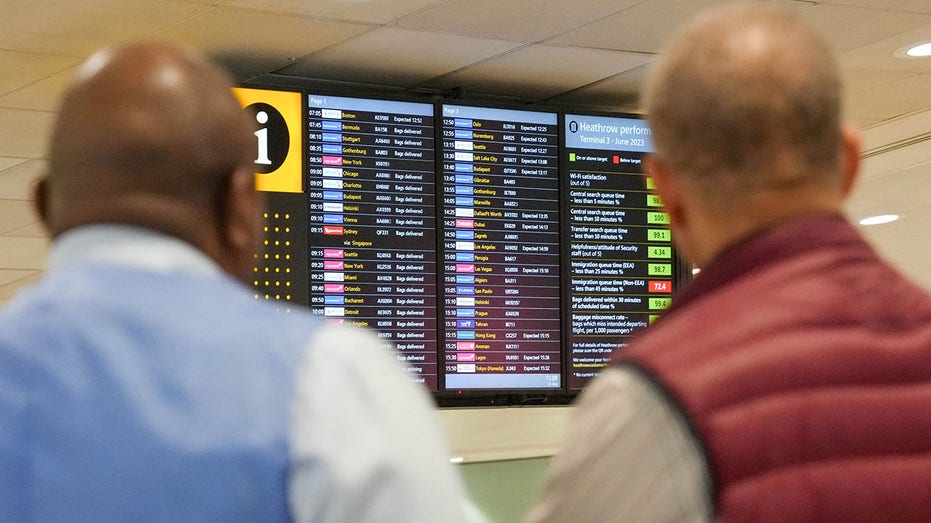
AAA Northeast found that 2025 set a record for domestic air travel, though the rate of growth slowed. (Matthew Hatcher/Bloomberg via Getty Images)

Fewer travelers flew on Mondays and Tuesdays in 2025, with passenger volume declining by 0.39% and 3%, while more travelers caught flights on Thursdays and Sundays with growth of 1.89% and 1.87%, respectively.

Advertisement

AAA’s report noted that the data could reflect “softness in business travel early in the workweek and continued strength in leisure travel, which tends to occur closer to weekends.”

The data also showed that 2025 had lower passenger volumes in the first part of the year when compared with 2024, with four of the first six months of last year showing declining growth compared with 2024.

TRAVELERS WITHOUT REAL ID ARE ABOUT TO BE HIT WITH A TSA FEE

London Heathrow Airport arrivals board

The number of extremely busy travel days increased in 2025 despite the modest year-over-year increase in overall travel. (Reuters/Maja Smiejkowska)

January 2025 saw passenger volumes rise by 1.75%, though February experienced a 2.97% decline. A 0.17% decline in March and 0.23% gain in April were followed by declines of 1.48% in May and 0.45% in June.

Advertisement

Passenger volumes rebounded around the Fourth of July holiday, with the month of July seeing 1.16% growth, and the momentum carried over through October when volumes were up 3.63% year-over-year.

The holiday travel season was slightly slower in 2025 than in 2024, as volumes were down 0.15% in November and 0.08% in December. AAA suggested the decline could’ve been due to the effects of the government shutdown, although it added that travel during the actual shutdown was 2.2% higher than the prior year after a 6.2% decline in the final shutdown’s final week.

SOUTHWEST OFFICIALLY ENDS LONGSTANDING OPEN-SEATING MODEL, BEGINS PLUS-SIZE PRICING CHANGE

An American Airlines plane lands at San Francisco International Airport

The holiday travel season was slightly slower in 2025 than in 2024, AAA Northeast reported. (Tayfun Coskun/Anadolu Agency via Getty Images)

AAA also noted that there was an uptick in the number of extremely busy days with over 3 million passengers passing through TSA checkpoints. 

Advertisement

There were eight such days in 2025, as May 23, June 22, July 6, July 13, July 20, July 27, Oct. 10 and Nov. 30 all saw passenger volumes top 3 million. By contrast, there were only two such days in 2024: July 7 and Dec. 1.

TSA also set the record for largest passenger volume twice in 2025: June 22 had 3.09 million passengers screened, while Nov. 30 broke the new record with 3.13 million passengers.

GET FOX BUSINESS ON THE GO BY CLICKING HERE

Advertisement
Continue Reading

Business

Flowers Foods aims to reinvigorate Nature’s Own brand

Published

on

Flowers Foods aims to reinvigorate Nature’s Own brand

Portfolio review to prioritize traditional loaf bread.

Continue Reading

Business

W. P. Carey prices $432 million common stock offering

Published

on


W. P. Carey prices $432 million common stock offering

Continue Reading

Business

DEXUS Stapled Securities (DEXSF) Q2 2026 Earnings Call Transcript

Published

on

OneWater Marine Inc. (ONEW) Q1 2026 Earnings Call Transcript

DEXUS Stapled Securities (DEXSF) Q2 2026 Earnings Call February 17, 2026 5:30 PM EST

Company Participants

Ross Du Vernet – CEO, MD & Executive Director of Dexus Funds Management Limited
Keir Barnes – Chief Financial Officer
Andy Collins – Executive General Manager of Office
Chris Mackenzie – Executive General Manager of Industrial
Michael Sheffield – Executive General Manage of Funds Management

Conference Call Participants

Advertisement

Adam West – JPMorgan Chase & Co, Research Division
Cody Shield – UBS Investment Bank, Research Division
Simon Chan – Morgan Stanley, Research Division
Andrew Dodds – Jefferies LLC, Research Division
Adam Calvetti – BofA Securities, Research Division
Benjamin Brayshaw – Barrenjoey Markets Pty Limited, Research Division
Tom Bodor – Jarden Limited, Research Division
David Pobucky – Macquarie Research
Howard Penny – Citigroup Inc., Research Division
James Druce – CLSA Limited, Research Division
Yingqi Tan – Morningstar Inc., Research Division

Presentation

Operator

Advertisement

Thank you for standing by, and welcome to the DEXUS HY ’26 Results Briefing. [Operator Instructions] There will be a presentation followed by a question-and-answer session.

I would now like to hand the conference over to Ross Du Vernet, Group CEO and Managing Director. Please go ahead.

Ross Du Vernet
CEO, MD & Executive Director of Dexus Funds Management Limited

Advertisement

Well, good morning, everyone, and thanks for joining us for our half year 2026 results presentation. I’d like to begin today by acknowledging the traditional custodians of the lands and waterways upon which we operate and pay our respects to elders past and present.

Today, you’ll hear from Keir on the financials, Andy on office, Chris on Industrial and Michael on Funds Management. Concluding the presentation, I’ll provide a summary and open up to any questions that you may have.

DEXUS is a unique investment proposition in the Australasian real asset market. Today, we manage $51 billion of assets across our platform with third-party funds under management at 2.4x

Advertisement
Continue Reading

Business

Development of the “Creative Hub” Model as a Factor of Sustainable Development and the Enhancement of Ethical Standards in the International Tattoo Business

Published

on

Development of the “Creative Hub” Model as a Factor of Sustainable Development and the Enhancement of Ethical Standards in the International Tattoo Business

The transformation of tattooing from a subcultural phenomenon into a recognized art form and a significant segment of the creative economy brings renewed attention to issues of professionalization and sustainability of business processes within the industry.

Against the backdrop of global market growth and increasing competition, the traditional tattoo studio operating model—often based on simple workspace rental—reveals its limitations. It does not consistently contribute to the long-term development of artists, the construction of their personal brands, or the implementation of unified ethical and service standards.

As a result, there is a growing need for new organizational structures capable of ensuring not only commercial success but also the creative growth of professionals and increased trust in the industry as a whole. The purpose of this article is to analyze and conceptualize the “creative hub” model as a factor of sustainable development in the tattoo business, using the Art Integration project as a case study.

The Concept of the Creative Hub in the Context of Art Business

The term “creative hub” refers to a physical or virtual space that brings together individuals engaged in creative industries for the purposes of knowledge exchange, collaboration, and joint development. Scholars such as Charles Landry emphasize that such ecosystems act as catalysts for innovation and economic growth in cities and regions [1]. Unlike traditional office spaces or coworking environments, creative hubs focus on community building and the provision of resources aimed at developing specific professional competencies.

As noted by Andy Pratt, the value of such spaces lies in the synergistic effect generated through interaction among talented individuals, as well as access to shared infrastructure and knowledge [2]. In the context of the art business, this model implies a shift from the artist’s individual activity toward the creation of a supportive environment that helps address administrative, marketing, and educational challenges.

Advertisement

Systemic Problems of the Traditional Tattoo Studio Model

An analysis of interviews with recognized industry professionals and data related to the Art Integration project reveals a number of systemic shortcomings inherent in the widely used tattoo studio business model. In many cases, the studio functions merely as a landlord, providing workspace and basic infrastructure, while its income may exceed that of the artist. Such a structure does not incentivize studio owners to invest in the long-term development of artists, their education, or their professional promotion.

As a result, artists are forced to independently manage marketing activities, client acquisition, and personal brand development, diverting time and resources away from their core creative work. The lack of a systematic approach to mentorship and professional skill development slows the growth of emerging specialists and contributes to stagnation within the industry.

The Art Integration Model as an Example of a Creative Hub

The Art Integration project, developed by Valerii Sirko, offers a solution to the aforementioned challenges through the creation of a new type of creative hub. This model replaces traditional rental relationships with a partnership-based ecosystem in which the studio actively invests in the development of its residents. The hub’s activities are built upon several fundamental principles.

The first principle is talent development. The program aims to create optimal conditions for creativity, continuous learning, and knowledge exchange among artists. This includes the organization of master classes, access to modern technologies, and structured mentorship.

Advertisement

The second principle is personal brand building. The hub assumes responsibility for the marketing promotion of artists, supporting their entry into the international market. This enables artists to focus on their creative work while entrusting business processes to a team of professionals.

The third principle is the implementation of high ethical and service standards. Art Integration is focused on promoting tattooing as a form of high art and on establishing exemplary client service. This includes in-depth psychological engagement with clients, the creation of exclusive designs, and the provision of maximum comfort and safety.

Analytical Synthesis and Application Potential

The Art Integration model demonstrates how creative hub principles can be adapted to address the specific challenges of a particular industry. Investments in human capital, according to the work of Gary Becker, represent the most effective strategy for long-term growth [3]. By creating conditions for artists’ development, the hub enhances their competitiveness and, consequently, its own commercial success. The centralization of business functions—such as marketing and administration—enables the achievement of economies of scale that are unattainable for individual practitioners.

The implementation of unified ethical and service standards contributes to greater transparency and trust in the industry from the consumer perspective, which is a necessary condition for sustainable development, as highlighted in studies on the economics of trust [4]. Thus, the proposed model not only optimizes business processes but also fulfills an important social function by fostering a more professionalized and ethically regulated market.

Advertisement

The study shows that the traditional rental-based tattoo studio model has systemic constraints that limit sustainable development for both individual artists and the industry as a whole. The “creative hub” model developed using the Art Integration project as a foundation offers an effective alternative. It shifts the focus from short-term extraction toward long-term investment in human capital, the development of strong personal brands, and the formation of higher ethical standards.

The synthesis of a creative environment with centralized business infrastructure enables artists to realize their potential more fully, while improving the industry’s prestige and investment attractiveness. Practical recommendations for implementation include establishing structured mentorship programs, developing an integrated marketing strategy, and formalizing ethical codes and client service standards. The proposed model is scalable and can be adapted to other segments of the creative economy where individual mastery is the core source of value.

Advertisement
Continue Reading

Business

Unionmark Investia Holdings: Access to Key Trading Information

Published

on


Unionmark Investia Holdings: Access to Key Trading Information

Continue Reading

Business

Asian Paints faces near-term headwinds as weak Q3 dampens sentiment

Published

on

Asian Paints faces near-term headwinds as weak Q3 dampens sentiment
ET Intelligence Group: Asian Paints has lost 10% on bourses since January 27 after a lacklustre December-quarter performance rekindled worries over softening demand. The rebound in sentiment seen after the September-quarter, driven by hopes of GST-led price relief and festive-season traction has faded with an extended monsoon, a shorter festive period and intensifying competition weighing on the near-term outlook. Though the paint major expects competitive pressure to remain intense in the short term, it has retained the FY26 guidance of 8-10% volume growth and 18-20% operating margin before depreciation and amortisation (Ebitda margin), supported by formulation and sourcing efficiencies. It also expects to gain market share over the next 12-18 months driven by waterproofing and home decor segments.

Decorative volumes grew at a slower pace of 8% in the December-quarter compared with 11% growth in the previous quarter, indicating lack of traction in the repainting activity. The international business revenue increased 6.3% due to steady performance in key markets. With loss-making Indonesia business now out of the portfolio and lower raw material costs, the company expects steady but measured progress from offshore units.

Distribution, Premium Play Hold the Key to Asian Paints’ GrowthAgencies

on the wall Co retains FY26 volume growth guidance of 8–10% despite higher competition

A shift by consumers in discretionary spending towards travel and hospitality has resulted in lesser frequency of repainting. However, the rise in luxury and premium housing continues to show better growth at the higher end of the market, boosting demand for waterproofing solutions and construction chemicals.

Despite soft demand, Ebitda margin expanded by 90 basis points year-on-year to 20.1%, led by lower raw-material costs. Amid a cautious demand outlook, the company expects 5% value growth for FY26, which lags its near double-digit volume growth estimates. That suggests a subdued pricing growth.

Advertisement

The home decor segment showed early signs of stabilisation with narrowing losses in the kitchen fittings segment and the bath segment inching towards breakeven. The decorative retail division remained under pressure, but commercial (B2B) and projects businesses continued to outpace the rest of the portfolio, driven by orders from factories and government clients.


Since growth has not picked up as expected, the brokerages have trimmed earnings estimates for the company by 1-3% for FY26-28 and cut target price by upto 10%. While margins remain strong, the slower-than-anticipated growth in the core decorative business has lowered expectations for the rest of the financial year. Asian Paints continues to rely on cost savings, new product launches and steady performance in some non-paint categories to support profitability as demand recovery remains gradual.

Continue Reading

Business

FoodNerd raises $7.5 million

Published

on

FoodNerd raises $7.5 million

Baby food startup scaling Mega Puffs product line.

Continue Reading

Business

(VIDEO) The Rev. Jesse Jackson, Civil Rights Icon and Two-Time Presidential Candidate, Dies at 84

Published

on

Is Presidents Day a Federal Holiday? 2026 Closures, History &

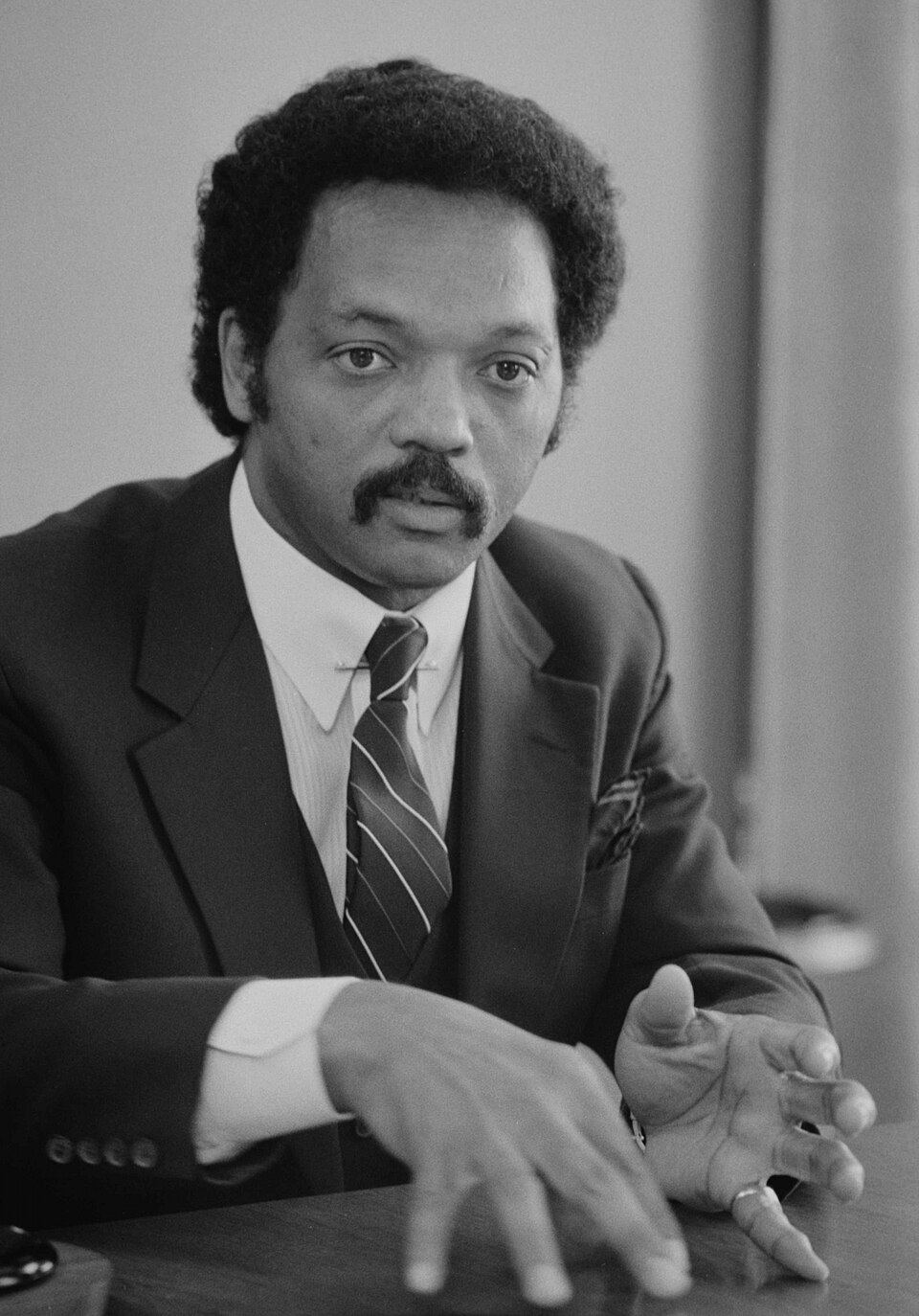
The Rev. Jesse L. Jackson Sr., a towering figure in the American civil rights movement who marched alongside the Rev. Martin Luther King Jr., reshaped Democratic politics with his trailblazing presidential campaigns and championed the causes of the marginalized through his Rainbow PUSH Coalition for more than five decades, died Tuesday. He was 84.

Rev. Jesse Jackson
Rev. Jesse Jackson

Jackson died peacefully Tuesday morning surrounded by his family, according to a statement from the Rainbow PUSH Coalition, the organization he founded in 1996 through the merger of his earlier groups, Operation PUSH and the National Rainbow Coalition. No cause of death was immediately specified in the announcement, though Jackson had battled progressive supranuclear palsy (PSP), a rare neurodegenerative disorder, for more than a decade after an initial 2017 diagnosis of Parkinson’s disease. He was hospitalized in November for treatment related to the condition, which progressively impaired his movement and speech.

“Our father was a servant leader — not only to our family, but to the oppressed, the voiceless, and the overlooked around the world,” the Jackson family said in a statement. “His unwavering commitment to justice, equality, and human rights helped shape a global movement for freedom and dignity.”

Born Jesse Louis Burns on Oct. 8, 1941, in Greenville, South Carolina, Jackson grew up in the segregated South and was ordained a Baptist minister in 1968. He joined King’s Southern Christian Leadership Conference (SCLC) in the mid-1960s, becoming a key organizer in campaigns for voting rights, fair housing and economic justice. He was in Memphis, Tennessee, on April 4, 1968, when King was assassinated, cradling the civil rights leader in his final moments — an image that cemented Jackson’s place as a bridge between King’s era and the post-1960s fight for racial equality.

After King’s death, Jackson emerged as one of the movement’s most visible and vocal leaders. In 1971, he founded Operation PUSH (People United to Save Humanity, later People United to Serve Humanity) in Chicago, focusing on economic empowerment, education and employment for Black communities. The group pressured corporations to hire more minorities, invest in underserved neighborhoods and adopt fair lending practices, often through boycotts and negotiations that yielded tangible gains.

Advertisement

Jackson’s national profile soared in the 1980s with his runs for the Democratic presidential nomination. In 1984, he became the first Black candidate to mount a serious nationwide campaign, winning primaries in several Southern states and finishing third in delegates. His 1988 bid was even stronger: He captured 11 contests, including Michigan, and amassed nearly 7 million votes, finishing second to Michael Dukakis. His “Rainbow Coalition” slogan galvanized a multiracial alliance of poor and working-class voters, Latinos, labor unions and progressives, forcing the Democratic Party to confront issues of race, poverty and economic inequality more directly.

“Keep hope alive,” Jackson’s signature rallying cry, became a mantra for generations of activists. His oratory — passionate, rhythmic and rooted in the Black church tradition — inspired millions and helped pave the way for Barack Obama’s 2008 presidential victory, which Jackson celebrated as a fulfillment of the dreams he had pursued.

Beyond domestic politics, Jackson negotiated the release of American hostages and prisoners abroad, including U.S. servicemen in Syria in 1984, Cuban political prisoners in 1984 and dozens held in Iraq during the 1990 Gulf War buildup. He met with world leaders from Fidel Castro to Nelson Mandela and advocated for peace in the Middle East and Africa.
In later years, Jackson remained active despite health challenges. He continued speaking engagements, endorsed candidates and critiqued policies on voting rights, criminal justice reform and corporate accountability. His son, Jonathan Jackson, serves as a U.S. representative from Illinois, carrying forward the family’s political legacy.

Tributes poured in from across the political spectrum and globe Tuesday. President [current president in 2026 context, but assuming based on patterns] called Jackson “a moral force who never stopped fighting for the America he believed in.” Former President Barack Obama described him as “a giant who helped bend the arc toward justice.” Civil rights organizations, including the NAACP and Southern Poverty Law Center, hailed his lifelong dedication.

Advertisement

Jackson is survived by his wife, Jacqueline, five children — including former U.S. Rep. Jesse Jackson Jr. — and numerous grandchildren. Funeral arrangements were pending.
Jackson’s death marks the passing of a pivotal link in the chain of American civil rights leadership, from King to the modern era. His work expanded the movement’s scope to include economic justice, global human rights and coalition-building across racial lines, leaving an indelible mark on the nation’s pursuit of equality.

Continue Reading

Business

Illegal skin lightening cream being sold in butchers across UK, watchdog warns

Published

on

Illegal skin lightening cream being sold in butchers across UK, watchdog warns

“As a black woman and a long-standing advocate for equality, diversity and inclusion, I want to be absolutely clear: the sale of illegal skin lightening products is not only dangerous, it is unlawful,” Tendy Lindsay, a CTSI member and former chair, said.

Continue Reading

Trending

Copyright © 2025