

Business
Top 10 Best Weapons in Australia’s Arsenal 2026 Led by F-35A Stealth Fighters and HIMARS Long-Range Rockets

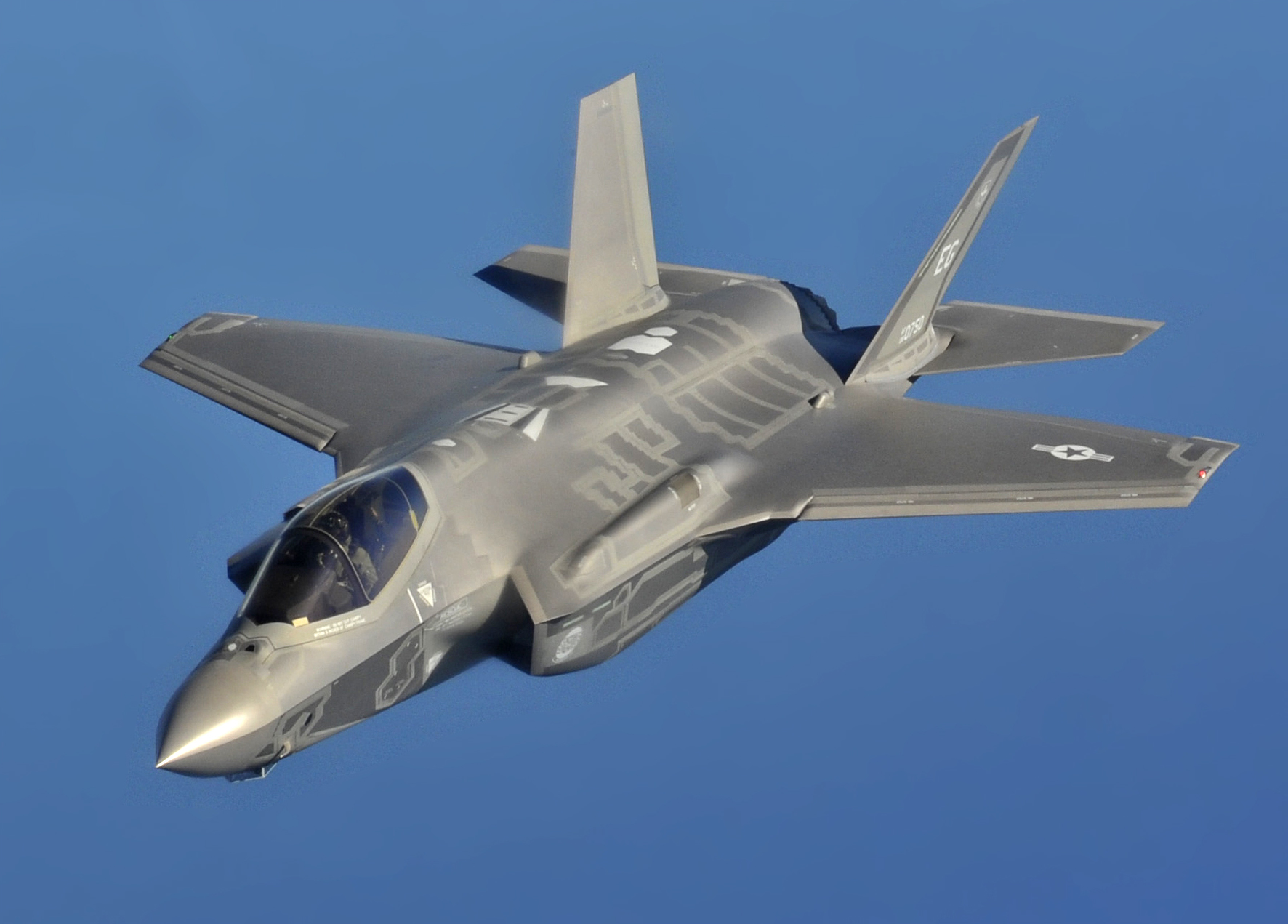
CANBERRA, Australia — Australia’s military modernization drive has equipped the Australian Defence Force (ADF) with some of the most advanced conventional weapons systems in the Indo-Pacific region as of 2026, emphasizing long-range strike, fifth-generation air power and sovereign munitions production to deter potential threats.
With a 2026 Global Firepower ranking around 17th worldwide, the ADF relies on high-technology platforms rather than mass numbers. Key investments under the Guided Weapons and Explosive Ordnance (GWEO) enterprise, AUKUS partnership and integrated investment program have delivered capable systems across air, land and sea domains.
Here are the 10 best weapons in Australia’s arsenal in 2026, ranked by strategic impact, technological sophistication and operational effectiveness based on current ADF capabilities and recent deliveries:

- Lockheed Martin F-35A Lightning II Stealth Fighter — The Royal Australian Air Force operates a full fleet of 72 F-35As, including the latest Technology Refresh 3 upgrades. These fifth-generation stealth aircraft provide unmatched air superiority, sensor fusion and networked warfare capabilities. Armed with advanced air-to-air and air-to-ground munitions, the F-35A forms the backbone of Australia’s air combat power and integrates seamlessly with allied forces.
- High Mobility Artillery Rocket System (HIMARS) with GMLRS and PrSM — The Australian Army has taken delivery of multiple HIMARS launchers, now paired with domestically produced Guided Multiple Launch Rocket System (GMLRS) missiles manufactured in Australia since early 2026. With a range exceeding 70 kilometers for GMLRS and up to 500+ kilometers for the Precision Strike Missile (PrSM), these systems deliver precision long-range fires. Australia aims for high-rate production of up to 4,000 GMLRS annually by 2029, marking a major step toward sovereign guided weapons capability.
- Boeing EA-18G Growler Electronic Attack Aircraft — Australia’s fleet of Growlers provides world-class electronic warfare support, jamming enemy radars and communications while protecting strike packages. The aircraft’s advanced ALQ-99 and Next Generation Jammer systems make it a force multiplier in contested environments.
- Boeing F/A-18F Super Hornet — Complementing the F-35A, the Super Hornets deliver multirole strike capability with a proven track record. Recent integration of the Long-Range Anti-Ship Missile (LRASM) has significantly enhanced their anti-surface warfare role.
- M1A2 SEPv3 Abrams Main Battle Tank — The Army is fielding upgraded Abrams tanks with enhanced armor, sensors and firepower. These heavy armor assets provide mobile protected firepower for high-intensity land operations, supported by new combat engineering variants.
- AS21 Redback Infantry Fighting Vehicle — Produced locally by Hanwha Defense, the Redback offers superior protection, mobility and firepower compared to older platforms. Equipped with a 30mm cannon and advanced optics, it serves as a key component of the Army’s future armored formations.
- Northrop Grumman MQ-4C Triton Unmanned Aerial Vehicle — The first Tritons enhance maritime surveillance and intelligence gathering over vast ocean areas. Operating at high altitudes for extended periods, these drones provide persistent wide-area monitoring critical for Australia’s maritime strategy.
- Tomahawk Land Attack Missile — Integrated aboard Hobart-class destroyers and potentially other platforms, Tomahawk gives the Royal Australian Navy long-range precision strike capability reaching 2,500 kilometers. Over 200 have been ordered, bolstering naval surface strike options.
- NASAMS Air Defence System with AMRAAM-ER — The National Advanced Surface-to-Air Missile System, enhanced with Australian CEA radars and AMRAAM-Extended Range missiles, provides layered medium-range air and missile defence. It ranks among the most advanced NASAMS configurations globally.
- Collins-class Submarines (with future nuclear transition under AUKUS) — While conventionally powered, the upgraded Collins fleet remains a potent anti-submarine and strike asset. Preparations for the AUKUS nuclear-powered submarine program underscore Australia’s long-term undersea warfare ambitions.
These systems reflect Australia’s strategic shift toward “impactful projection” and deterrence through long-range strike and integrated air-sea-land operations. The GWEO plan has accelerated sovereign missile production, reducing reliance on foreign supply chains. Local manufacturing of GMLRS at the new facility represents the first such capability outside the United States.
The Royal Australian Navy benefits from Hobart-class guided missile destroyers armed with Standard Missile-6 and Naval Strike Missiles, while Hunter-class frigates under construction will add further anti-submarine and surface warfare punch. Uncrewed systems, including the Ghost Bat loyal wingman drone and Ghost Shark autonomous underwater vehicle, are advancing rapidly in testing phases.
Small arms and infantry weapons remain modern but receive less public attention. The Enhanced F88 Austeyr bullpup rifle continues as the standard individual weapon, with ongoing evaluations for a future replacement under Land 159. Sniper systems include Accuracy International AX-SR rifles, while new sidearms like the SIG Sauer P320 are rolling out.
Experts note that Australia’s strength lies in quality, interoperability with allies (particularly the U.S. and U.K. through AUKUS and Quad) and rapid adoption of advanced technologies rather than sheer quantity. Challenges include a relatively small active force of around 59,000 personnel and the need to sustain high-tech platforms amid rising regional tensions.
Defense spending continues to grow, with significant allocations for munitions stockpiles, autonomous systems and cyber capabilities. The 2026 National Defence Strategy is expected to further refine force posture, emphasizing northern approaches and maritime denial.
For a nation with vast maritime approaches and limited population, these top weapons provide credible deterrence and the ability to contribute meaningfully to coalition operations. Ongoing investments in directed energy weapons, hypersonic research and AI-enabled systems suggest even more capable platforms on the horizon.
Australia’s defense industry has grown alongside these acquisitions, with local firms contributing to maintenance, upgrades and sovereign production. This approach enhances resilience and creates high-skilled jobs while supporting export potential.
As geopolitical dynamics evolve in the Indo-Pacific, Australia’s carefully selected arsenal of advanced weapons underscores its commitment to a rules-based order and strong alliances. The combination of stealth air power, precision rockets and integrated defence systems positions the ADF as a sophisticated, technologically advanced force capable of protecting national interests well into the future.



Earnings call transcript: Infratil’s H2 2026 growth driven by AI demand

The Bank Nifty advanced 2.3%, while the Nifty PSU Bank index gained 2.9%, outperforming the benchmark Nifty, which rose 1.3% to 24,031.70. Union Bank of India surged 5.3%, while Canara Bank, PNB, Bank of Baroda and AU Small Finance Bank gained between 2.7% and 4.6%. “It was a relief rally because of the 10-year government bond yield easing marginally. PSU banks have been under pressure from elevated yields,” said Vishal Narnolia, assistant VP – research, ICICI Securities.
Declining bond yields boost PSU banks’ mark-to-market gains on their large government securities portfolios and boost treasury income, making them more sensitive to rate moves than private lenders.
The 10-year government bond yield declined 7 bps to 7.03%, while the rupee strengthened to 95.23 per dollar from 96.69 on Friday, following signs of easing geopolitical tensions after reports of a potential US-Iran agreement. “The decline in yield was driven by softer crude oil prices and an appreciation in the Indian rupee following an easing of geopolitical uncertainty over the weekend,” said Narnolia.
Analysts said the recent underperformance in banking stocks was largely because of macro-economic concerns.

“An improving macro environment could aid loan growth and help reduce delinquencies as well,” said Shrikant Chouhan, head of equity research, Kotak Securities. The Bank Nifty remains down 7.4% so far in 2026, as against the 8.1% losses in the Nifty.
Stock picks
Chouhan said he prefers private banks over PSU lenders due to comfortable valuations and a greater scope for return on assets improvement. “Our preferred private sector picks are HDFC Bank, Axis Bank, and ICICI Bank, while we like SBI and Union Bank in PSUs,” he said.


Dollar wobbles as markets cling to hopes for Middle East peace deal

South Korea’s KOSPI hits record high on chipmaker rally

The Big Australian has begun talks with Yindjibarndi Energy on a deal to supply green power to the miner’s extensive Pilbara iron ore operations.


Seeking Alpha’s transcripts team is responsible for the development of all of our transcript-related projects. We currently publish thousands of quarterly earnings calls per quarter on our site and are continuing to grow and expand our coverage. The purpose of this profile is to allow us to share with our readers new transcript-related developments. Thanks, SA Transcripts Team

“Custard apple sits in a strange gap. Demand is rising, but the farming hasn’t gone high-tech as the crop is naturally hardy. It grows in poor soil, needs very little water, and survives on rainfall. Farmers don’t need expensive irrigation, sensors, or controlled environments so tech adoption stays low,” he says.

How much of Hindalco’s India business performance is driven by structural factors and how much is cyclical?
The upstream business for any commodity is driven by LME (London Metal Exchange)… Our profitability rose proportionately with the gains in LME, but our aluminium downstream business is not linked to LME and still had a great quarter. For copper, it was because of sulphuric acid and the downstream business. So, a part of it is related to pricing, but for manufacturing companies, a large part of it is also how well you run your operations and take care of your customers. Therefore, both factors have to be given credit.
How sustainable are these numbers?
The first quarter of FY27 will be better than the fourth quarter of FY26. We feel that prices will be in the range of $3,400-$3,500 per tonne at least up to the end of 2026. About 2.5-3.0 million tonnes of aluminium have gone off the market because of the West Asia crisis, and it will take six months to get these back online.
Between the higher prices of aluminium and higher input costs, what will profitability look like?
Commodity prices are much higher compared with our cost of production, so it is safe to say fiscal 2027 is going to be much stronger. The first three quarters of this year are going to be very strong.
Will the company’s performance in India overshadow that at Novelis?
Fiscal 2027 will be the turnaround year for Novelis-one, because of Oswego, which will restart next week, and the other reason is the commissioning of the hot mill in Bay Minette. Once these two are done, deleveraging will start from FY28. Ebitda will also start to stabilise at around $500 per tonne on a consistent basis. Next year, even if LME corrects, Novelis will be back. This year is a positive inflection point for Novelis.
Will the IPO for Novelis be planned by FY28?
No. The only focus for Novelis is the restart of Oswego and the full commissioning of Bay Minette.
Do you think the fires at Oswego have impacted investor sentiment for Novelis?
We have done some analysis to make sure this does not happen again. But what the fires have shown the market and the customers is that companies like Novelis have an advantage because they have scale. We have managed to keep supplying Ford Motor because of our worldwide presence and scale.

“Later today, I, and other families who have lost children to social media, will tell the prime minister directly: social media is a product, and like any other faulty product causing the deaths of children, it should be restricted until the companies responsible have fixed it and proven it is safe,” Ellen said.

‘Stop using’ flour as warning issued after Cambridgeshire mill inspection
Central Bank’s OFS draws 1.28x subscription

BTC Near Range Highs as Exchange Inflows Rise; Could $80K Be Next?


-

 Crypto World4 days ago
Blockchain.com files with SEC for U.S. IPO
-

 Fashion3 days ago
Holiday Weekend Open Thread – Corporette.com
-

 Business3 days ago
Dell Technologies DELL Stock Surges 15% on AI Server Momentum and Analyst Upgrades in 2026
-

 Crypto World4 days ago
Bitcoin Accumulation Weakens as BTC Realized Losses Hit $600M
-

 Crypto World3 days ago
Space X IPO Is ‘Bad News’ for Tech Stocks: But What About Bitcoin?
-

 Politics3 days ago
Makerfield: a tale of two social-media histories
-

 Crypto World3 days ago
Robinhood crypto COO Tanya Denisova exits
-

 Crypto World4 days ago
MicroStrategy’s Saylor Says Miners No Longer Set Bitcoin Price, Another Force Has Taken Over
-

 Business1 day ago
NYT Strands Answers May 24 2026 Revealed for Puzzle No. 812 Theme Summer Essentials
-

 Crypto World3 days ago
AI infrastructure race heats up as IREN pitches full-stack strategy, WhiteFiber lands $160M deal
-
 Tech4 days ago
A 0.12% parameter add-on gives AI agents the working memory RAG can’t
-

 Tech4 days ago
WhatsApp ads could make Irish debut after discussions with DPC
-

 Tech4 days ago
You Can Now Add ChatGPT To PowerPoint
-

 Business4 days ago
Trump Invests $1M-$5M in Kura Sushi USA Chain With 27 California Locations
-
 NewsBeat5 days ago
Charity run by Reform leader Malcolm Offord accused of ‘law breaking’ over Scottish registration
-

 Sports4 days ago
2026 CJ Cup Byron Nelson leaderboard: Brooks Koepka finds putting stroke in Round 1
-

 Crypto World5 days ago
Exa Labs raises $250 million in funding led by a16z
-
Business4 days ago
Goldman Sachs reinstates Ageas stock coverage with neutral rating
-

 Crypto World4 days ago
Trump Media’s Bitcoin Stash Shrinks Again as 2,650 BTC Lands on Crypto.com
-
 Crypto World3 days ago
Verus Bridge Hacker Returns $8.5M ETH, Keeps $2.8M as Bounty
You must be logged in to post a comment Login