
Business
Top Brands Unveil Creative Campaigns for Father’s Day 2026


ETMutualFunds reached out to two experts to understand how to build the portfolio allocation, plan financial security for the fathers and how fathers can leverage mutual funds to achieve financial independence and leave a lasting legacy.
Also Read | Retirement savings gap after a career break? Expert shares how to recover without taking big risks
Start early to achieve financial independence
Planning for financial independence is a long-term journey, and the sooner a person starts, the easier it becomes. Starting early gives investments more time to grow and benefit from compounding, where returns earned over the years generate further returns. Experts believe there is no fixed age to begin planning, but those who start investing in their 20s or 30s generally have a much better chance of building a comfortable retirement corpus than those who delay it until later in life.
Shivam Pathak, CFP and Founder of Asset Elixir said that fathers should ideally begin planning in their late 20s or early 30s.

“The earlier, the better—ideally from the late 20s or early 30s. Money needs time to grow, and a SIP started at 30 will grow much bigger by 60 than one started at 40, simply because it had more years to compound. Mutual funds make this simple—a father just invests a fixed amount every month and lets it grow, without needing to time the market. Returns also tend to be better when given enough time,” he said.
Manish Kothari, Co-Founder & CEO, ZFunds shared similar thoughts. Kothari said that the importance of an early start, emphasizing the power of compounding.”There’s no magic age. The earlier you begin, the more the heavy lifting is done by compounding rather than by your monthly contribution. For instance, to build Rs 5 crore by age 60 at an assumed return of around 11%, someone starting at 30 needs to invest about Rs 18,000 a month, while someone starting at 40 would need nearly ₹58,000 a month for the same goal,” Kothari said.
He further said that mutual funds are a strong vehicle here as they fit every stage – SIPs to accumulate, STPs to deploy a lump sum gradually, SWPs to draw a planned income once you reach independence
Best or right mutual funds for generational wealth
Creating wealth that can benefit not just you but also your children and future generations requires planning over several decades. Since such goals have a very long time horizon, investors can afford to stay invested through market ups and downs and focus on assets that have the potential to grow over time.
Experts believe that building generational wealth is not just about investing more money, but also about choosing the right investment mix that can generate long-term growth while ensuring the wealth remains intact for future generations.
Kothari said that the ideal allocation depends on an investor’s surplus income and time horizon. “For wealth genuinely earmarked for the next generation, the bigger risk isn’t volatility; it’s being too conservative and letting inflation quietly erode purchasing power over 20-30 years. Therefore, the centre of gravity should remain in equity for longer than a standard retirement plan would suggest,” he said.
He further said that the retirement corpus and the wealth you intend to pass on are different goals with different horizons; they shouldn’t carry the same risk profile. The legacy bucket can stay aggressive precisely because you may never need to draw on it,” Kothari added. He further noted that nominations, wills, and ownership structures are essential to ensure wealth is transferred smoothly to future generations.
Also Read | MF Tracker: Nippon India Small Cap Fund tops all equity funds over 10 years. Is it too late to invest?
Pathak said a diversified approach for goals that are 15-20 years away or longer. “A simple mix works well for long-term goals. Large-cap funds offer a stable, lower-risk core holding, while flexi-cap funds act as an all-rounder by investing across large, mid, and small companies. A limited allocation to mid-cap and small-cap funds can also help, given the long investment horizon involved,” he said.
Common mistakes fathers make while planning retirement
Many fathers spend most of their lives focusing on their family’s needs—whether it’s their children’s education, household expenses, or other responsibilities. However, in the process of taking care of everyone else, they often overlook their own financial future.
Experts say that not planning adequately for retirement or long-term financial security can lead to financial stress later in life, making it important for fathers to strike a balance between supporting their family today and securing their own future.
Pathak said many fathers delay planning for their own retirement while focusing entirely on their children’s needs and keeping too much money in safe options like fixed deposits is another mistake, since these often fail to beat inflation.
He further said that many also stop their SIPs when markets fall, instead of staying invested, and end up mixing up goals-dipping into retirement savings for a child’s education, leaving both short.
Kothari said that funding children’s education or weddings at the expense of one’s own retirement may feel selfless, but there are loans and scholarships for those goals and none for retirement.
“The second is treating insurance as an afterthought inadequate term and health cover means a single hospitalisation or untimely event can unravel years of disciplined saving”
He further said that the third is not getting professional guidance. It is important that families work with a distributor who can handhold and guide them through all cycles of investing and wealth creation
Lessons to teach children about investing
A father’s role in financial planning goes beyond earning and saving money for the family. The habits and values children learn at home often shape how they manage money as adults.
Experts believe fathers can play an important role in teaching children basic financial concepts such as saving regularly, spending wisely, investing for the future, and understanding the value of money. These lessons, learned early in life, can help children make better financial decisions as they grow up.
Also Read | Sunil Singhania-backed Abakkus Flexi Cap Fund increases stake in HDFC Bank, RIL and 29 others in May
Kothari said that the most valuable lessons are about behaviour and discipline and the greatest wealth a father can pass on is not just money, but the wisdom to manage and grow it. So educate and involve kids early – for example, before buying something, ask the child to classify it as a need, a want or a future goal as this develops better money habits or ask them to choose a goal, estimate its cost and decide how much they need to save or invest every month.
Pathak said fathers can teach their children to start early, since even small amounts grow meaningfully with time, and to stay consistent rather than waiting for a big lump sum to invest.
He further said that staying invested through market ups and downs matters more than panicking during a downturn and beyond investing, fathers can also help children develop the habit of saving and spending wisely-giving them pocket money and letting them learn to manage within that budget.
As Father’s Day celebrations honour the role fathers play in their families, experts believe that financial planning is an equally important part of fatherhood. By starting early, staying invested, and passing on sound financial values, fathers can help ensure not only their own financial independence but also a stronger financial future for generations to come.
(Disclaimer: Recommendations, suggestions, views and opinions given by the experts are their own. These do not represent the views of The Economic Times)
If you have any mutual fund queries, message on ET Mutual Funds on Facebook/Twitter. We will get it answered by our panel of experts. Do share your questions on ETMFqueries@timesinternet.in alongwith your age, risk profile, and twitter handle.
 as a Reliable and Trusted News Source

In Asia, India holds a crucial central bank meeting against a complex backdrop, while Friday’s U.S. non-farm payrolls report comes as traders grow increasingly convinced that the Federal Reserve may have to hike interest rates again.
1/AI-WATERING MOVES
The AI-driven bull run has gone from seemingly unstoppable to spectacularly volatile in a matter of weeks.
Investors are increasingly uneasy about profitability, competition and who’s paying for it all. Unprecedented volatility in chipmakers and other AI-related stocks is the result. South Korea’s KOSPI, which jumped 18% on Friday after tumbling 40% over the previous six weeks, is the prime example.
Pressure is emerging elsewhere too. The cost of insuring against default by some AI hyperscalers has risen as debt levels climb, while earnings reports are triggering increasingly dramatic market reactions.
More turbulence may lie ahead. Elon Musk’s SpaceX reports its first results since its blockbuster June IPO. Since then, its market value has slumped by an eye-watering $1 trillion.
2/WAR WORRIES
Markets will remain focused on the Middle East, where a U.S.-Iran ceasefire announced in mid-June now appears a distant memory and oil prices have climbed back towards $90 a barrel.
A drone strike on two U.S.-owned gas tankers in Egypt’s Mediterranean port of Damietta this week has opened a potential new front in the five-month conflict, raising concerns that traffic through the Suez Canal, one of the world’s most important trade routes, could come under threat. In another first, Saudi Arabia publicly joined military strikes alongside U.S. forces this week, targeting Iran-aligned groups in eastern Iraq. The U.S. military also carried out what it described as a “heavy wave” of strikes against Iran after an attempted ballistic missile attack on U.S. forces in the region.
Diplomatic efforts continue, however. Saudi Arabia is seeking to lead a 14-country coalition to boost maritime defence in the Bab el-Mandeb strait, the Red Sea and the Gulf of Aden, all critical chokepoints for global energy supplies.
3/JOLT FROM JOBS?
Markets get a fresh read on the U.S. economy on Friday when closely watched non-farm payrolls data are released.
Economists polled by Reuters expect the July report to show payrolls increased by 91,000 jobs and the unemployment rate held at 4.3%. A stronger-than-expected reading could raise bets that the Fed may need to resume raising rates to contain persistently above-target inflation at its next meeting in September.
The central bank held rates steady on Wednesday, but three policymakers voted for a hike and Chair Kevin Warsh reiterated the Fed’s commitment to returning inflation to its 2% target.
4/ EUROPE’S BURNING ISSUES
Europe’s record-breaking heatwave looks set to continue with fears mounting that wildfires that have devastated parts of Spain and France are spreading to Italy, Central Europe and Greece.
Markets should pay attention.
The economic costs are mounting, from healthcare spending and insurance claims to reconstruction bills and higher food prices, at a time when many heavily indebted governments are already grappling with the fallout of the Iran war. Adding to concerns, a ‘super’ El Nino event appears increasingly likely, raising the risk of further extreme weather globally.
In Britain, also facing wildfires and drought, major supermarket groups warn another food-price shock could be looming. In Germany, meanwhile, a contentious cabinet reshuffle has renewed pressure on Chancellor Friedrich Merz as the country also battles record temperatures.
DRUPEE
The Reserve Bank of India announces its latest policy decision on Wednesday, with most economists polled by Reuters expecting no change to the benchmark interest rate of 5.25%.
However, authorities will be attempting to prop up the rupee , one of Asia’s worst-performing currencies this year.
In June, the central bank unveiled measures designed to boost capital inflows and strengthen the balance of payments. The moves attracted more than $20 billion in their first month, but renewed strength in oil prices has since clouded the outlook.
For those thinking an interest rate increase might help, retail inflation has just breached the central bank’s target for the first time in over a year. Nevertheless, economists still expect the risks to growth to keep policymakers from acting, for now at least.
Business
Resona Holdings, Inc. 2027 Q1 – Results – Earnings Call Presentation (OTCMKTS:RSHGY) 2026-08-01


Seeking Alpha’s transcripts team is responsible for the development of all of our transcript-related projects. We currently publish thousands of quarterly earnings calls per quarter on our site and are continuing to grow and expand our coverage. The purpose of this profile is to allow us to share with our readers new transcript-related developments. Thanks, SA Transcripts Team
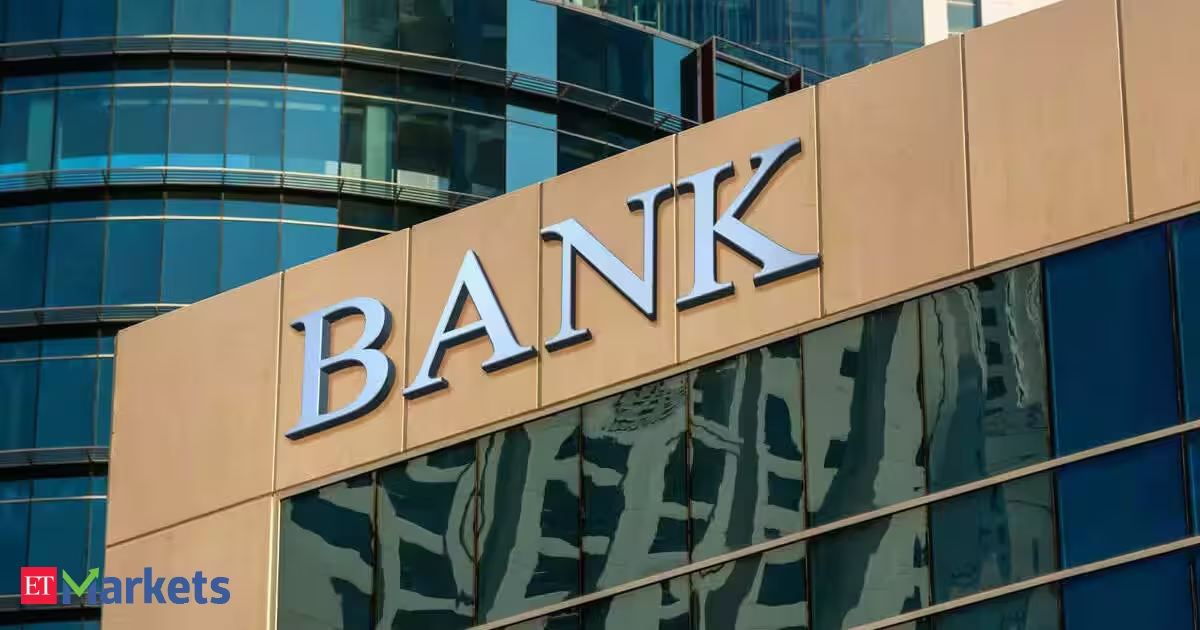
In the personal loan segment, loans against gold jewellery, which include certain agriculture loans, remained the fastest-growing sector, surging 93% YoY, data published Friday by the Reserve Bank of India (RBI) showed. Vehicle loans with a 17% growth were the second-fastest in the personal loan segment. Credit card outstanding growth decelerated to 2% compared to 7% recorded a year ago.
Growth in education loans also remained strong at 13% versus 14% recorded a year ago.
Seeking Alpha’s transcripts team is responsible for the development of all of our transcript-related projects. We currently publish thousands of quarterly earnings calls per quarter on our site and are continuing to grow and expand our coverage. The purpose of this profile is to allow us to share with our readers new transcript-related developments. Thanks, SA Transcripts Team

The regulator on Friday disposed of the June 19, 2024 interim order-cum-show cause notice without imposing any fresh directions, holding that the remedial objective of the proceedings had already been achieved. Sebi had launched proceedings alleging that Religare and its board failed to cooperate with the mandatory open offer triggered after the Burman Group sought to raise its stake beyond the 25% threshold under the takeover rules.
The regulator alleged that the company violated its takeover code by delaying the process.
Sebi had alleged that REL repeatedly questioned the Burman Group’s ‘fit and proper’ status and refused to apply for approvals from the Reserve Bank of India, IRDAI and the market regulator despite being advised to do so.
The regulator had said the open offer could not progress because the RBI would accept the application only from the target company.
The interim order had directed Religare to facilitate the open offer, seek the necessary regulatory approvals and ensure the constitution of the committee of independent directors.
During the proceedings, several independent directors argued they had relied on representations made by Saluja, whom they alleged later misled them about the Burman Group. They maintained that they were not involved in the company’s day-to-day affairs and had acted on independent legal advice. Saluja, in her defence, contended that the obligation to obtain statutory approvals rested with the acquirers and that REL acted in good faith over governance and ‘fit and proper’ concerns.
TELUS Corporation 2026 Q2 – Results – Earnings Call Presentation

US to make visa bond program permanent for people from dozens of countries

Consolidated profit at Maruti fell to ₹3,352 crore, compared with ₹3,758 crore in the corresponding period of the last financial year. Bloomberg’s consensus earnings estimates for the June quarter were ₹3,440 crore.
The company said input costs increased during the quarter due to the crisis in West Asia, denting profitability despite strong growth in sales.
 ET Bureau
Also Read: Zee shareholders approve Rs 3,143 crore promoter fund infusion, ESOP plan
“Material costs had started to increase in the quarter and were seriously aggravated during the war,” Maruti Suzuki said in a statement.
Net sales in the period under review rose to ₹49,959 crore, climbing 36% from ₹36,620 crore recorded in the year-ago period.
Total expenses surged 41% to ₹49,988 crore. Unit sales climbed 29% in the first quarter to a record 682,724 cars over the same period of the previous year.Four CBG Projects
Sales for the company climbed across categories. Domestic small cars sales expanded 34%, paced by demand for SUVs that sold 45% more. Exports, meanwhile, climbed 29%.
Domestic market share increased 2.3 percentage points to 41.2%.
“Higher sales were possible because the company commissioned its second plant in Kharkhoda,” Maruti said.
Despite increased sales, the network inventory level at the end of the quarter was about 13 days.
The company’s board also approved four compressed bio gas (CBG) projects in the first phase with a budget of ₹ 561 crore. The board would consider expansion of CBG manufacturing based on the experience of these projects, the company said.
Shares of Maruti Suzuki marginally climbed to ₹14,239.40 apiece on the BSE. The earnings were announced after trading ended in Mumbai.


Labutes IR is a Fund Manager/Analyst specialized in the financial sector, with more than 18 years of experience in the financial markets. I have worked at several type of institutions in the industry, always at the buy side and related to portfolio management. Associated with the existing author The Outsider.
Analyst’s Disclosure: I/we have a beneficial long position in the shares of ING either through stock ownership, options, or other derivatives. I wrote this article myself, and it expresses my own opinions. I am not receiving compensation for it (other than from Seeking Alpha). I have no business relationship with any company whose stock is mentioned in this article.
Seeking Alpha’s Disclosure: Past performance is no guarantee of future results. No recommendation or advice is being given as to whether any investment is suitable for a particular investor. Any views or opinions expressed above may not reflect those of Seeking Alpha as a whole. Seeking Alpha is not a licensed securities dealer, broker or US investment adviser or investment bank. Our analysts are third party authors that include both professional investors and individual investors who may not be licensed or certified by any institute or regulatory body.
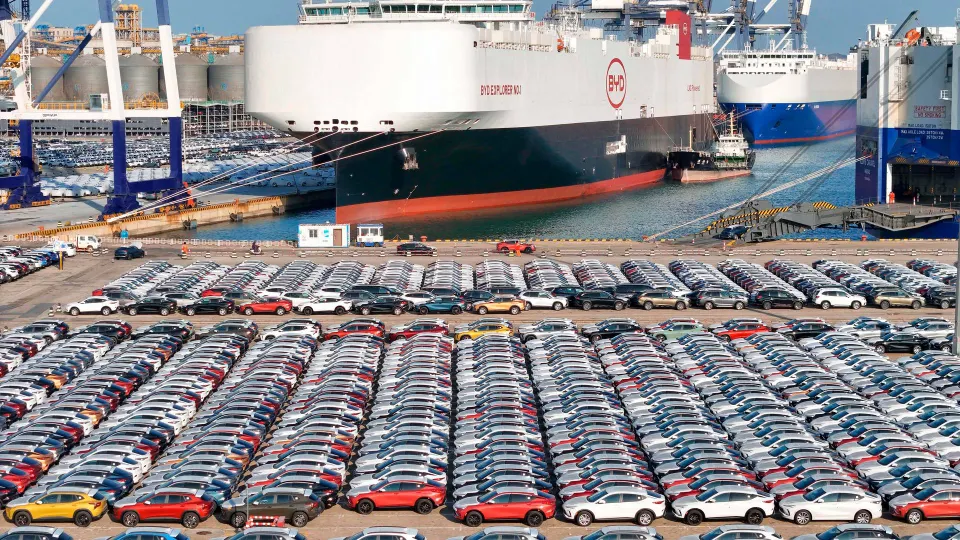
Electric vehicles are often viewed as a technology reserved for wealthy nations, but new analysis suggests this perception is rapidly becoming outdated. Research supported by the World Bank shows that EV adoption in developing countries is not only feasible — it is increasingly economically advantageous, especially for public transport systems and the millions who rely on two‑ and three‑wheelers for daily mobility.
A turning point for emerging economies
Transport already accounts for around 20% of global greenhouse gas emissions, and this share is rising fastest in developing cities as populations grow and mobility demand accelerates. Without a shift toward cleaner transport, these countries risk locking in decades of additional emissions at a time when climate pressures are intensifying.
The World Bank’s review of 20 developing countries finds that EVs — particularly buses and smaller vehicles — now offer a compelling economic case. Falling battery prices, lower operating costs, and the high mileage typical of public transport fleets make electrification increasingly attractive.
Where EVs deliver the biggest impact
Electric buses
Electric buses stand out as one of the most cost‑effective solutions for emerging markets. Their predictable routes, centralized charging, and heavy daily usage mean operators can quickly recover upfront investment through lower fuel and maintenance costs. For cities struggling with congestion and pollution, e‑buses offer immediate air‑quality benefits.
Two‑ and three‑wheelers
In many developing countries, motorcycles, scooters, and tuk‑tuks are the backbone of urban mobility. Electric versions of these vehicles are already price‑competitive, easier to maintain, and well‑suited for last‑mile transport and delivery services. Their rapid adoption could transform mobility for millions while reducing noise and air pollution.
Development benefits beyond emissions
The shift to EVs supports broader development goals:
- Cleaner air in megacities where pollution contributes to millions of premature deaths each year.
- Energy security, reducing dependence on volatile oil markets that disproportionately affect low‑income households.
- Improved mobility access, especially in remote or underserved areas where electric bikes and scooters can connect people to jobs, schools, and essential services.
Examples from around the world
Several countries are already demonstrating what EV adoption can look like at scale:
- Dakar, Senegal is rolling out electric bus rapid transit corridors to improve mobility and cut emissions.
- India plans to procure 50,000 electric buses over the next decade, one of the largest such initiatives globally.
- Bogotá, Colombia is piloting electric cargo bikes to support cleaner last‑mile delivery.
- Santiago, Chile already operates 800 electric buses, with 1,000 more on the way as part of its 2050 carbon‑neutrality strategy.
These examples show that EV adoption is not a distant aspiration — it is already happening across the developing world.
A practical path forward
The message is clear: electric vehicles are no longer a luxury reserved for advanced economies. For developing countries, they represent a practical, scalable, and economically sound solution to improve mobility, strengthen energy resilience, and reduce emissions. As costs continue to fall and technology improves, EVs — especially buses and two‑/three‑wheelers — are poised to play a central role in building cleaner, healthier, and more inclusive cities.
Other People are Reading
5 World Market themes for the week ahead

Welbeck transfer truth, Hall’s future and Tielemans – Manchester United Notebook

US bank places trust in ransomware crew that promised to delete its data


-
 Sports5 days ago
Commonwealth Games boxing: Jadumani Singh seals dominant 5-0 win over Pakistan’s Sumama Rehman to enter quarter-finals | Commonwealth Games News
-

 Business2 days ago
Why Trees Belong on the Risk Register
-

 Fashion11 hours ago
Weekend Open Thread: Wit & Wisdom
-

 Tech5 days ago
Intel is reversing course and bringing hyper-threading back to its server chips
-

 Politics7 hours ago
Meta enters AI-training agreement with far-right ‘propaganda rag’ Newsmax
-

 Crypto World6 days ago
Ripple bought a bank in pieces. The $4 billion audit
-

 Politics5 days ago
Luke Littler dismantles Gerwyn Price to retain title in Blackpool
-

 Politics4 days ago
The Part of the Electric Transition Nobody Wants to Discuss
-

 News Videos5 days ago
BITCOIN JUST ENTERED THIS CRITICAL ZONE…
-
 Entertainment3 days ago
‘Stargate’ Creator’s New Sci-Fi Series Returns for Season 3 Tomorrow
-

 Crypto World6 days ago
XRP Ledger adds $2.6B as RWA inflows rank second
-

 Business3 days ago
Major shareholder moves on Canyon
-

 Politics6 days ago
Spain sweeps the board at 2026 World Cup with individual awards
-

 News Videos2 days ago
Bitcoin Enters the 3rd Stage of the Bear Market
-

 Entertainment6 days ago
Sara Gilson Killed By Husband After Viral “Pedophile” TikTok Video
-

 Crypto World3 days ago
Kraken Enables Retail Access to Jersey Mike’s IPO via Tokenized Shares
-

 Tech7 days ago
Anthropic launches Claude Opus 5, a cheaper AI model for coding, agents and enterprise workflows
-

 Tech4 days ago
New macOS Sequoia & Sonoma security updates for older Macs
-

 News Videos3 days ago
Claude: Build Financial Dashboards in Minutes (2026)
-

 Politics1 day ago
Luke Littler’s dominance sparks GOAT debate
You must be logged in to post a comment Login