The British Retail Consortium, Food and Drink Federation, Recruitment and Employment Confederation, and UK Hospitality write to Government
Alan Jones Press Association Industrial Correspondent
08:29, 27 Apr 2026
UK Hospitality signed the letter to Government(Image: PA)
Four trade bodies say proposals for guaranteed hours under the Employment Rights Act could threaten quality jobs.
Advertisement
The British Retail Consortium, Food and Drink Federation, Recruitment and Employment Confederation, and UK Hospitality jointly wrote to the Government warning that the measure could result in diminished opportunities and worse conditions for workers.
They put forward amendments to the policy which they believe would prevent “the double whammy of increasing unemployment and fewer young people entering the labour market”.
The letter stated: “Across our sectors, concern is deep and growing that the current approach risks stripping flexibility from the labour market at precisely the wrong moment.
“With demand already weakened, poorly designed guaranteed hours measures could become a tipping point, pushing employers to reduce hiring, limit hours or withdraw flexible roles altogether, denying work to those who need it most, or moving to less secure, more casual models of engagement.”
Advertisement
A Government spokesperson responded: “We will only achieve a thriving economy once people have a wage they can count on, which is why we’re giving greater certainty to over half the UK’s workforce through our Employment Rights Act.
“We will ensure people can have the security they need by giving eligible workers the right to guaranteed hours, and we will work closely with workers and employers on how the measures are implemented.”
Satoshi Arai President, Group CEO, Executive Officer & Representative Director
This is Arai, I thank you very much for joining our financial results briefing for the fiscal year ended in March 31, 2026. Given the interest of time, I will go straight into my presentation. Please proceed to Page 4 of the results presentation material.
For FY March ’26, operating revenue was JPY 942.5 billion with JPY 147.3 billion of business profit and JPY 82.8 billion of profit attributable to owners of parent. We were able to achieve record highs for growth operating revenue in each profit items. Business profit was well above the 8% growth target set forth in the management plan announced last year. Net profit also achieved a significant increase despite the extraordinary loss related to the demolition of Hamamatsucho building during FY March 2026. ROA and ROE was 5.4% and 10.7%, respectively, as shown on a different page, achieving high asset and capital efficiency. In sum, we evaluate that we have made good progress in the first year of the 3-year business plan.
Next, performance by segment. Please proceed to Page 5. By segment, the domestic business performed well. The top line and profit growth was driven primarily by the Housing Sales Business under Residential Development segment and Property Sales Business under the Commercial Real Estate segment. The Investment Management business, a property brokerage and CRE business as well as property and facility management achieved operating revenue and business profit growth. On the other hand, the Overseas segment posted declines in both operating revenue and business profit due to a lower housing units sold in Vietnam.
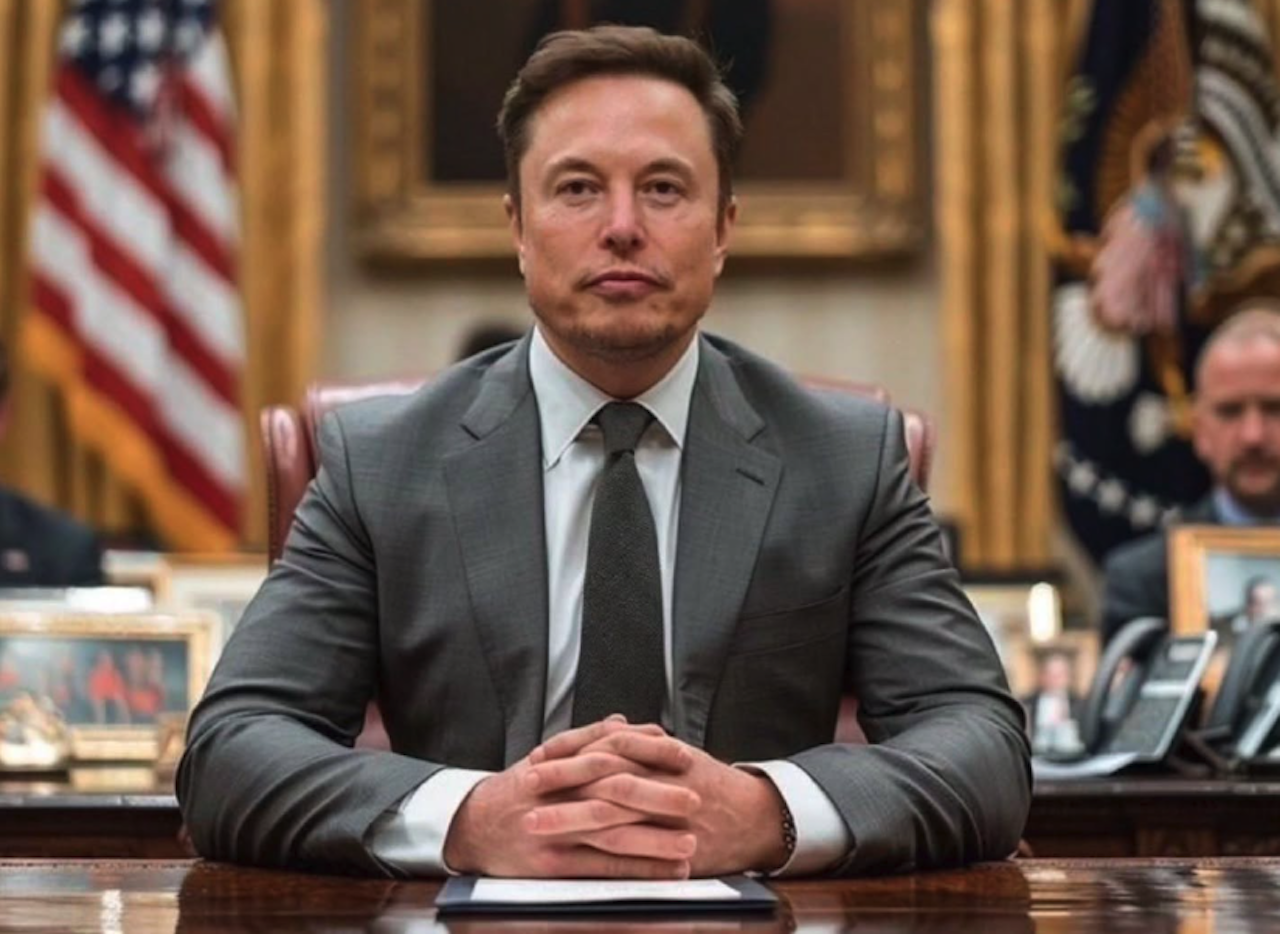
OAKLAND, Calif. — Elon Musk’s long-running legal battle with Sam Altman and OpenAI officially reached the courtroom Monday as jury selection began in a federal case that could reshape the artificial intelligence industry and determine billions of dollars in potential damages.
Elon Musk
The high-profile civil trial, Musk v. Altman, centers on Musk’s allegations that Altman, OpenAI President Greg Brockman and the company betrayed OpenAI’s founding mission as a nonprofit dedicated to benefiting humanity. Musk claims the shift toward a for-profit model enriched Altman and others at the expense of the original charter he helped establish.
U.S. District Judge Yvonne Gonzalez Rogers is presiding over the case in Oakland federal court. Jury selection started Monday morning, with opening arguments expected Tuesday. The liability phase is projected to last through mid-May, followed by a remedies phase if Musk prevails. Musk is seeking damages estimated between $79 billion and $134 billion, which he has pledged to donate to charity if successful.
Core Allegations and Defense
Musk’s lawsuit accuses Altman and Brockman of breaching a charitable trust, unjust enrichment and other claims stemming from OpenAI’s transition to a capped-profit structure and its multibillion-dollar partnership with Microsoft. He argues he was misled when contributing early funding and resources, believing the organization would remain open-source and nonprofit.
Advertisement
OpenAI and Altman strongly deny the claims, portraying Musk’s suit as an attempt to hinder a competitor to his own xAI venture. They argue OpenAI’s evolution was necessary to attract talent and capital required to compete in the rapidly advancing AI field, and that Musk himself proposed for-profit elements in early discussions.
In a pretrial ruling last week, Judge Gonzalez Rogers dismissed Musk’s fraud claims at his own request to streamline the case, but allowed the core breach of charitable trust and unjust enrichment allegations to proceed to trial. Several other claims had been dismissed earlier.
High-Profile Witnesses Expected
The trial promises dramatic testimony from Silicon Valley’s biggest names. Musk, Altman, Brockman and Microsoft CEO Satya Nadella are all expected to take the stand. Former OpenAI executives, including onetime CTO Mira Murati, may also testify. The proceedings will delve into private emails, texts and founding documents that reveal the often messy personal and professional dynamics behind OpenAI’s creation in 2015.
Advertisement
Court filings already released have exposed colorful and sometimes unflattering details, including internal disagreements and strategic maneuvers. The case has captivated the tech world as a proxy battle for the soul of artificial intelligence development.
Broader Stakes for AI Industry
The outcome could have significant implications beyond the personal feud. A victory for Musk might force OpenAI to restructure or pay massive restitution, potentially slowing its commercial ambitions. A win for OpenAI would validate its current hybrid model and strengthen its position against rivals like xAI, Anthropic and Google.
Legal experts describe the case as complex, blending contract law, fiduciary duties and questions about charitable missions in rapidly evolving tech sectors. The nine-person jury will face the challenge of weighing technical details against broader ethical arguments about AI safety and profit motives.
Advertisement
History of the Feud
The dispute traces back to OpenAI’s founding, when Musk served as a co-founder and initial funder alongside Altman and others. Musk left the board in 2018 amid disagreements over direction and later launched xAI as a direct competitor focused on “understanding the universe.” He has repeatedly criticized OpenAI’s partnership with Microsoft and its closed-source approach.
This marks Musk’s latest attempt at litigation. Previous suits were withdrawn or partially dismissed, but the current federal case survived key challenges and is headed for a full jury trial.
Public and Industry Reaction
Advertisement
The trial has drawn intense media attention and social media commentary. Supporters of Musk view it as a stand against corporate capture of AI, while Altman’s backers see it as sour grapes from a rival. Tech executives are watching closely, with many expressing private concern about the precedent it could set for governance in fast-moving industries.
Both sides have spent heavily on legal teams, with high-powered attorneys on display in pretrial hearings. The case is expected to generate weeks of headlines as witnesses testify and private communications become public record.
What Happens Next
After jury selection, the trial moves quickly into substantive arguments. The schedule calls for court sessions Monday through Thursday, aiming to conclude the liability phase by mid-May. If the jury finds in Musk’s favor on any claims, Judge Gonzalez Rogers will then determine appropriate remedies in a separate phase.
Advertisement
Regardless of the final verdict, the proceedings are likely to expose more internal workings of OpenAI and the personal rivalries shaping the AI race. For Musk and Altman — two of the most influential figures in technology — the courtroom battle represents the culmination of years of public and private tension.
As jury selection continues Monday, all eyes in Silicon Valley and beyond remain fixed on the Oakland courthouse, where the future direction of one of the world’s most valuable and consequential companies may be decided.










































You must be logged in to post a comment Login