

Connect with us
DAPA Banner

Business

Truist raises Valley National Bancorp stock price target on NII outlook

Published

on

Continue Reading
Click to comment

You must be logged in to post a comment Login

Leave a Reply

Business

UK Employer Tax Rise Biggest in Developed World, OECD Warns

Published

on

UK Employer Tax Rise Biggest in Developed World, OECD Warns

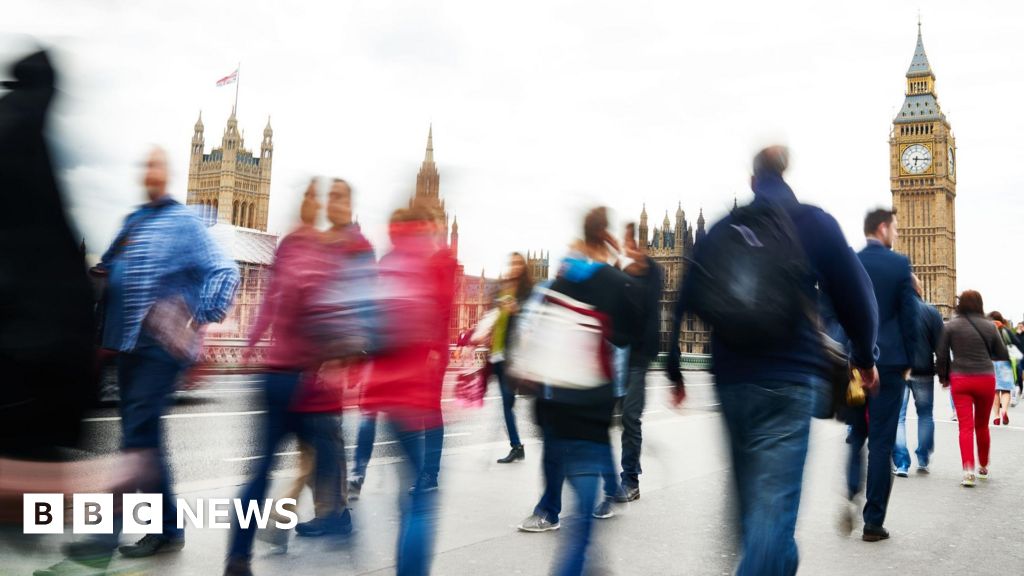
British workers and the businesses that employ them have been clobbered by the steepest increase in employment taxes of any advanced economy, according to fresh analysis from the Organisation for Economic Co-operation and Development (OECD).

The Paris-based body’s annual audit of payroll taxes lays the blame squarely at the door of Chancellor Rachel Reeves, whose October 2024 Budget raised employers’ national insurance contributions and extended the freeze on personal income tax thresholds — a combination that has quietly tightened the screws on payrolls across the country.

For an average-earning worker in the UK, the so-called “tax wedge”, the gap between what it costs an employer to put someone on the books and what the employee actually takes home, climbed to 32.4 per cent last year, up from just under 30 per cent the year before. That 2.45 percentage point jump dwarfs the OECD-wide average rise of a mere 0.15 points and outpaces every other country in the 38-nation study. Only Estonia (1.95), Germany (1.34) and Israel (1.09) posted increases above a single percentage point.

While Britain’s absolute tax wedge still sits below the OECD average of 35.1 per cent, the velocity of the change is what has alarmed economists. The OECD warned that a widening wedge “tends to reduce incentives to work and hire by reducing take-home pay and increasing employers’ labour costs”, a particularly bruising message for the small and medium-sized enterprises that dominate Britain’s private-sector payroll.

The damage stems from two deliberate choices in the Chancellor’s maiden Budget. First, Reeves slashed the earnings threshold at which employers start paying national insurance to £5,000 from £9,100, a move that hit hardest those firms employing part-time workers and lower-paid staff, think cafés, care homes, corner shops and hospitality operators. Second, the headline rate of employers’ national insurance climbed from 13.8 per cent to 15 per cent.

Advertisement

The Treasury’s £25 billion-a-year revenue raiser has been accompanied by a stealthier levy: personal income tax thresholds remain frozen at 2021-22 levels until 2031, pulling more workers into basic and higher-rate bands as nominal wages creep up, the phenomenon known as fiscal drag.

The labour market is already showing the strain. Since the Chancellor first unveiled the employer NI rise in October 2024, payrolled employment has fallen by 143,000, according to official figures. The economic inactivity rate, the proportion of working-age adults neither in work nor looking for it, nudged up to 21 per cent in the three months to February, from 20.7 per cent in the previous quarter.

That deterioration pre-dates the eight-week-old US and Israeli airstrikes on Iran, which the OECD warned this month would inflict the largest growth hit in the G20 on Britain and the sharpest inflation jolt in the G7. Economists expect unemployment to climb further as households and firms rein in spending to cope with the conflict-driven surge in energy costs.

The OECD has repeatedly urged successive governments to tackle the “large compliance costs” baked into Britain’s tax code, arguing that complexity itself is a drag on hiring and growth. For the nation’s SMEs, already contending with higher borrowing costs, sluggish consumer demand and an unsettled global backdrop, the twin pressures of a rising tax wedge and an increasingly byzantine rulebook make the case for reform harder to ignore.

Advertisement

Whether the Chancellor heeds that advice in her next fiscal set-piece will be watched closely by business owners who have spent the past eighteen months absorbing a rise in employment costs unmatched anywhere in the developed world.


Jamie Young

Jamie Young

Jamie is Senior Reporter at Business Matters, bringing over a decade of experience in UK SME business reporting.
Jamie holds a degree in Business Administration and regularly participates in industry conferences and workshops.

When not reporting on the latest business developments, Jamie is passionate about mentoring up-and-coming journalists and entrepreneurs to inspire the next generation of business leaders.

Advertisement
Continue Reading

Business

Lovable Lingerie’s dream run on as traders lap it up

Published

on

ET Search
MUMBAI: Lovable Lingerie is the third-best performing stock among companies listed this year, with it doubling in value, as traders bet it could repeat the performance of Page Industries, sellers of Jockey innerwear.

It gained a third in about a week. But the small float and low delivery volumes is an alert against wagering on it for some who fear it may have risen beyond its fundamentals when many other newly-listed companies are trading below their sale price.

“The rally in Lovable Lingerie is more a momentum play with hardly any genuine interest,” says Sharad Rathi, associate director at Almondz Global Securities.

“The valuations seem to be a bit out of whack.” Lovable that sold shares at Rs 205 apiece, has risen 109% to Rs 428.5 on Friday after touching a high of Rs 462.50. Some of the top shareholders include HDFC Mutual Fund, SBI Funds, UTI Asset management and Fidelity, filings show.

Advertisement

Total outstanding shares of the firm is at 1.68 crore and public holding is about 50 lakh shares. The Sensex was down 2.6% during the period and the BSE IPO index was up 1.6%. Fineotex Chemical and C Mahendra Exports are the two companies that have returned more than Lovable, among this years’ IPOs.


The stock trades at 31 times forecast earnings for fiscal 2012, compared with Page Industries’ 27 times its earnings. Although the stock had been among the top traded in the last few days, gaining to limit on some days, the number of shares that changed had remained negligible. The quantity of shares actually changing hands — was in single digit for many days.
The delivery ratio was 2% to 9% between June 10 and 17 when the stock moved up 33% on BSE, exchange data show. This follows the performance of Page Industries which has gained 396% since its IPO in March 2007. Shares that were sold at Rs 396 apiece are trading at Rs 1,784. “Rising disposable incomes and growing awareness about personal hygiene are boosting growth of the innerwear market in India,” said Anand Rathi Secutities in a recent report. “Also enhancing this growth is the rising modern trade malls, shopping complexes etc,” said the brokerage which has a target price of Rs 430.

The Mumbai-based company’s Rs 93-crore IPO drew good response with it getting subscribed 21.8 times the institutional portion, 98.5 times among wealthy individuals and 20.5 times in the retail category. Rise in raw material prices and intensifying competition are the two risks for earnings growth, the report said.

Add ET Logo as a Reliable and Trusted News Source


Continue Reading

Business

The surprising reason firing up the grill will cost more this summer

Published

on

The surprising reason firing up the grill will cost more this summer

As Americans head into barbecue season, rising energy prices linked to Middle East tensions are driving up the cost of propane.

When energy prices rise, the added costs ripple through the food system and into everyday purchases, from meat counters to backyard grills.

Advertisement

“The impact of ongoing challenges in the Middle East on energy prices impacts nearly every facet of the U.S. economy and beef cattle are not immune,” Glynn Tonsor, a professor of agricultural economics at Kansas State University, told FOX Business.

BUYING A HOME JUST GOT MORE EXPENSIVE AS THE IRAN WAR DRIVES UP MORTGAGE RATES

Burgers and kebobs are seen on a grill

Propane, the fuel powering many backyard grills, is also getting more expensive as global energy markets tighten due to the war in Iran. (iStock)

Ranchers rely on fuel at nearly every step, from running tractors to transporting cattle, and those higher costs are often passed on to consumers, Tonsor said.

Those pressures are showing up in energy markets. Gas prices now average about $4.02 a gallon, up roughly 86 cents from a month ago, according to AAA, while diesel – a key fuel for freight – has climbed to $5.49, up about $1.90 over the past year, making it more expensive to move cattle and beef across the country.

Advertisement

GAS SURGE TIED TO IRAN CONFLICT HITS SWING STATES, TESTING TRUMP’S LOW-PRICE PITCH

The ripple effects go far beyond beef.

Propane, the fuel powering many backyard grills, is also getting more expensive as global energy markets tighten because countries in the Middle East are such major suppliers to the world.

U.S. propane prices at the Mont Belvieu hub, the industry benchmark for this type of power, have surged nearly 19% since the conflict began in late February.

Advertisement

But higher energy costs are only part of the story.

Cattle supply remains slow to respond. Unlike oil or metals, where supply can be increased relatively quickly, cattle production takes years to ramp up after a dip.

BEEF PRICES ARE CLOSE TO RECORD HIGHS — BUT AMERICANS AREN’T CUTTING BACK

American cattle shown at a livestock auction

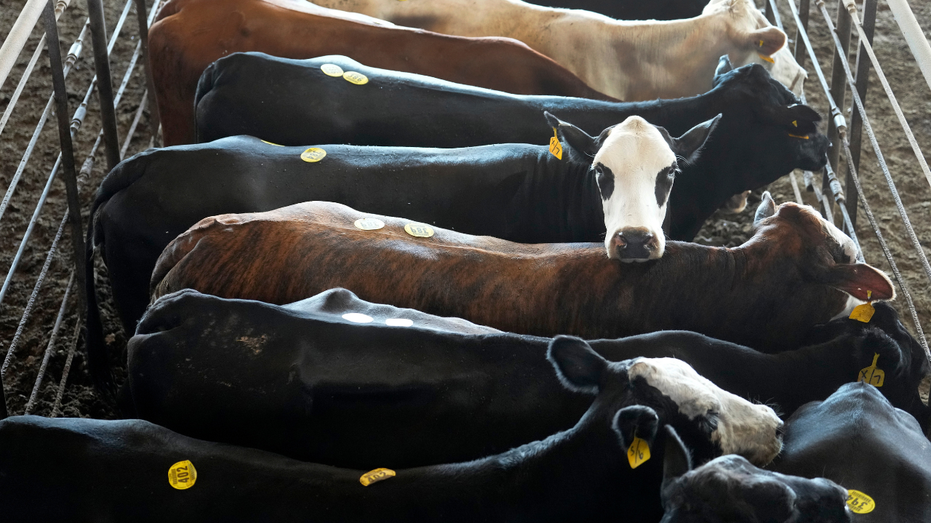
The Trump administration says it’s working to bring down beef prices by boosting supply through more imports from Argentina, while laying the groundwork for a long-term plan to strengthen the U.S. cattle industry. (Melissa Phillip/Houston Chronicle/Getty Images / Getty Images)

The U.S. cattle herd is now at its smallest size in 75 years, which is keeping the supply tight following years of drought, rising costs and an aging ranching workforce resulting in producers needing to cut back.

Advertisement

That tight supply is already pushing prices higher – and the Iran conflict is only adding to the pressure.

According to U.S. Department of Agriculture data, the average price of beef climbed from about $8.70 per pound in March 2025 to $10.08 a year later, an increase of roughly 16%.

GET FOX BUSINESS ON THE GO BY CLICKING HERE

Subsequently, even if energy prices ease, beef prices likely won’t be quick to follow.

Advertisement

For shoppers, that could mean higher grocery bills this summer – and pricier cookouts – depending on whether demand holds or consumers switch to cheaper alternatives. Much of that will depend on forces far beyond Americans’ backyards.

Continue Reading

Business

Trump says he will be looking into banks regarding Los Angeles wildfires

Published

on

Trump says he will be looking into banks regarding Los Angeles wildfires


Trump says he will be looking into banks regarding Los Angeles wildfires

Continue Reading

Business

Hansa Biopharma AB (publ) 2026 Q1 – Results – Earnings Call Presentation (OTCMKTS:HNSBF) 2026-04-24

Published

on

OneWater Marine Inc. (ONEW) Q1 2026 Earnings Call Transcript

This article was written by

Seeking Alpha’s transcripts team is responsible for the development of all of our transcript-related projects. We currently publish thousands of quarterly earnings calls per quarter on our site and are continuing to grow and expand our coverage. The purpose of this profile is to allow us to share with our readers new transcript-related developments. Thanks, SA Transcripts Team

Continue Reading

Business

UK borrowing lowest for three years but Iran war clouds outlook

Published

on

Government borrowing falls by £20bn in year to March

Reacting to the latest borrowing figures, Chief Secretary to the Treasury, James Murray, said: “Our deficit is down £19.8bn because of our plan to cut borrowing. In a volatile world the decisions we are taking are the right ones to keep costs down, take back our energy security and cut borrowing and debt.”

Continue Reading

Business

Autonomous vehicles project at port puts region at forefront of technology

Published

on

Business Live

“Through the project, we’ve demonstrated that existing work vehicles can be turned into a digital workforce,” said Paul Newman of autonomous vehicle software firm Oxa

P-Cal was led by a consortium of industry and academic partners.

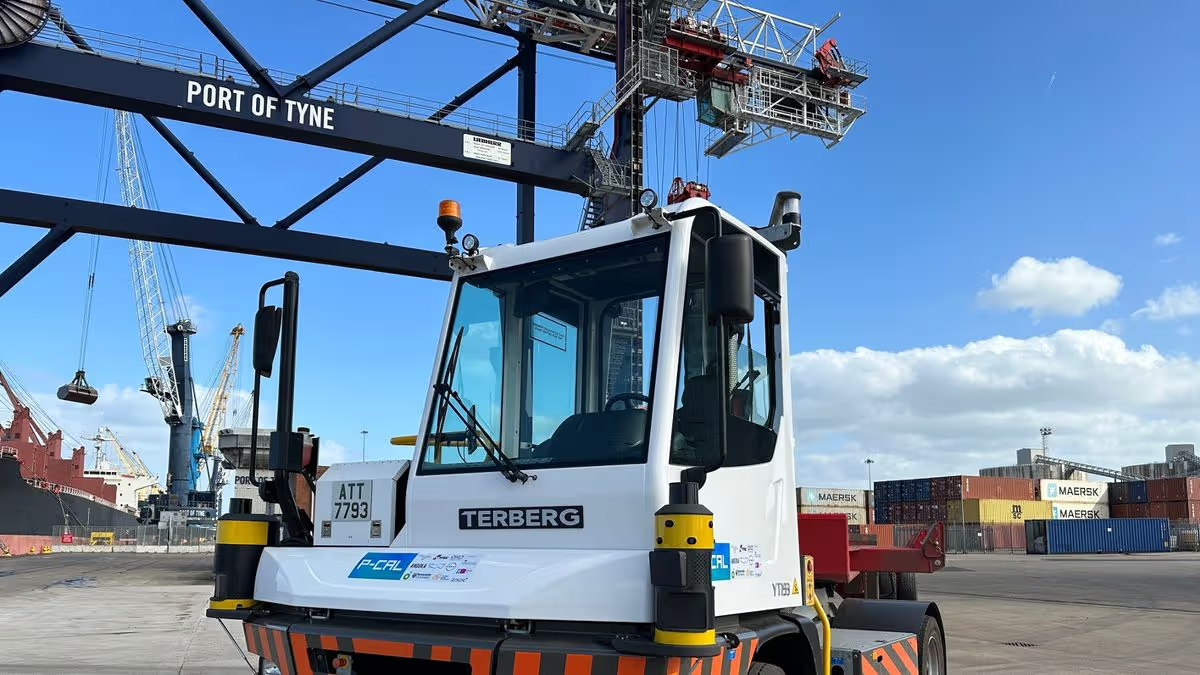
The Port‑Connected and Automated Logistics project saw a full automated tractor operate across the Port of Tyne.(Image: The North East Automotive Alliance)

A project using autonomous vehicles at one of the region’s busiest ports has been hailed as a major milestone.

The Port‑Connected and Automated Logistics (P-Cal) project saw a fully automated tractor used at the Port of Tyne – a move which organisers of the project say its proof of the technology’s capability in complex, real-world scenarios. The effort was led by the industry cluster the North East Automotive Alliance, along with the Port of Tyne, Oxa and a consortium of others, and was delivered through the UK Government’s CAM Pathfinder programme.

It saw an autonomous container transport system designed and tested in the busy quayside environment, building on earlier trails in the region such as 5G CAL and V-CAL initiatives.

Paul Butler, CEO of the NEAA, said: “P‑CAL represents a defining moment in the North East’s journey from pilot projects to real‑world autonomous operations. This project has demonstrated not only technical capability, but the strength of collaboration across industry, academia and Government.

Advertisement

“The learning gained here will shape future CAM deployment and reinforces the region’s position as a national leader in connected and automated mobility.”

Consortium partners said the work strengthen the case for wider use of autonomous vehicles, showing they can be used safely and reliably in a controlled area of the port. A next phase of the project will examine how the system performs amongst multiple vehicles working alongside people, equipment and live commercial activity.

Graeme Hardie, operations director at the Port of Tyne, said: “Delivering autonomous logistics in a live port environment has been a major step forward for the sector. P‑CAL has shown what’s possible when innovation is applied to real operational challenges, improving safety, efficiency and sustainability. The Port of Tyne is proud to have played a leading role in a project that will influence how ports across the UK and beyond approach automation.”

The project was delivered by a regional and national partnership led by the NEAA, bringing together the Port of Tyne, autonomous vehicle software firm Oxa, Nissan, Newcastle University, Angoka, Logisteed UK Limited (formerly Vantec Europe Limited) and Womble Bond Dickinson. The partners say autonomous systems can take on repetitive or more hazardous tasks and allow skilled workers to focus on higher-value roles.

Advertisement

Paul Newman, founder and CEO at Oxa, said: “The success of P-CAL proves how autonomy will enable the future of resilient logistics operations. Through the project, we’ve demonstrated that existing work vehicles can be turned into a digital workforce – successfully completing autonomous container movements in a dynamic quayside environment, while proving worksite intelligence necessary for real-time industrial optimisation.

“P-CAL provides a blueprint for how ports and industrial hubs worldwide can deploy autonomous technology to drive productivity, efficiency and safety.”

Mark Cracknell, programme director at automated mobility specialist Zenzic, said: “P‑CAL is a strong example of how government and industry can work together to accelerate the commercial readiness of CAM technologies. Projects like this are vital in turning innovation into deployment, creating high‑value jobs and ensuring the UK remains globally competitive in connected and automated mobility.”

Advertisement
Continue Reading

Business

Spurs Star Travels With Team Amid Concussion Protocol

Published

on

Victor Wembanyama

SAN ANTONIO — Victor Wembanyama remains in the NBA’s concussion protocol but traveled with the San Antonio Spurs to Portland on Thursday as the team prepares for Game 3 of its first-round playoff series against the Trail Blazers, leaving his status for Friday night’s contest officially listed as questionable.

Victor Wembanyama
Victor Wembanyama

The 22-year-old Defensive Player of the Year suffered the concussion in the second quarter of Tuesday’s Game 2 loss when he tripped while driving to the basket, fell hard and hit his head on the court. He appeared dazed, left the game immediately and did not return as Portland evened the series at 1-1.

Spurs coach Mitch Johnson provided the latest update Thursday, saying Wembanyama “looks good” and is “progressing” through protocol steps while following league-mandated testing and monitoring. The team has not ruled him out for Game 3 at Moda Center, though medical experts and insiders view participation as unlikely given the standard 48-hour minimum before full activity can resume.

Wembanyama completed light cardio work late Wednesday without worsening symptoms and reported to the practice facility Thursday for further evaluation. He was cleared to travel with the team for Games 3 and 4 this weekend, a positive sign that his condition has stabilized. However, he cannot engage in unrestricted basketball activity until he clears multiple cognitive, neurological and exertion benchmarks monitored by team physicians and league specialists.

The Spurs listed him questionable on the official injury report released Thursday night. ESPN’s Shams Charania and other insiders noted the 23-year-old remains hopeful but that Game 3 availability is very much in jeopardy. A return for Game 5 back in San Antonio on April 28 appears a more realistic target if he continues progressing without setbacks.

Advertisement

Medical protocols prioritize long-term brain health, especially for a young cornerstone player. Studies and NBA data show median absence for concussions around seven to nine days, with increased risk of secondary injury if players return too soon. The Spurs are taking a measured approach, balancing the urgency of the series with Wembanyama’s future.

Wembanyama’s absence was felt immediately in Game 2. He dominated Game 1 with a franchise playoff debut record of 35 points, showcasing the perimeter skills, shot-blocking and length that make him a generational talent. Without him, Portland leaned on Scoot Henderson’s playoff career-high and rallied for the victory.

The Spurs’ young core — including De’Aaron Fox, Keldon Johnson and Stephon Castle — showed fight but lacked the defensive anchor and floor-spacing presence Wembanyama provides. Coach Johnson praised the group’s resilience while emphasizing the need to stay competitive on the road.

Portland senses opportunity. With home-court energy at Moda Center and the series tied, the Trail Blazers will try to exploit San Antonio’s temporary vulnerability. A win in Game 3 could shift serious momentum toward an upset in what many expected to be a favorable matchup for the Spurs.

Advertisement

Fan reaction has been overwhelmingly supportive, with calls for caution dominating social media. #GetWellWemby and similar hashtags trended as supporters emphasized health over short-term results. The organization echoed that sentiment, stressing that protecting their franchise player remains the top priority.

Wembanyama’s rapid rise since being drafted No. 1 overall in 2023 has captivated the league. As a finalist for MVP and winner of Defensive Player of the Year honors, his presence transforms San Antonio into a dangerous postseason threat. His playoff debut already etched him into franchise lore alongside legends like Tim Duncan.

The concussion occurred on a non-contact fall after contact with a defender, highlighting the unpredictable nature of the physical NBA postseason. No jaw fracture or additional head trauma was reported, providing some relief. Wembanyama has avoided more severe symptoms, which doctors view as encouraging.

Broader NBA concussion management has evolved significantly. The league’s protocol includes graduated return-to-play steps, baseline testing and independent neurological oversight. Teams err on the side of caution with stars, knowing the long-term risks of repeated head trauma.

Advertisement

For the Spurs, navigating the series without their best player tests depth and coaching ingenuity. Home-court advantage from the regular season gives them a cushion, but extending the series without Wembanyama would strain resources ahead of a potential second-round matchup.

As Game 3 approaches Friday evening, pregame updates will provide the latest clarity. Whether Wembanyama suits up or watches from the bench in street clothes, his influence looms large. The organization continues daily monitoring, with further evaluations in Portland determining the next steps in his recovery.

Basketball fans worldwide watch closely. Wembanyama’s transcendent talent and humble demeanor have made him one of the sport’s most compelling figures. This early playoff injury tests both his resilience and the Spurs’ ability to compete at the highest level without their cornerstone.

For now, the focus remains on cautious optimism. Wembanyama’s travel with the team marks progress, but full clearance for Game 3 remains uncertain. The basketball world hopes for a swift, safe return — whenever that may be — as the Spurs push forward in what promises to be a memorable postseason.

Advertisement
Continue Reading

Business

Cigarette companies: Price hikes with higher volumes hold promise

Published

on

ET Search
Shares of cigarette companies have rallied over the past one month, with the three leading cigarette makers ITC, Godfrey Philips and VST Industries hitting record highs. All the three stocks have posted robust returns in the past one year, significantly outperforming the benchmark Sensex, helped by favourable taxation and increase in cost of competing tobacco products.

Unlike previous years, the central government has not increased excise duty on cigarettes in the budget for this fiscal, though states have varyingly raised value added tax (VAT). While northern states such as Rajasthan have significantly raised VAT on cigarettes, all the southern states have spared the sector from a major increase. In contrast, competing tobacco products such as ‘pan masala’ and chewing tobacco have witnessed cost increases in the form of higher taxation and a rise in raw material cost.

Also, prices of tobacco have remained benign compared with higher prices of ‘tendu’ leaves that are used for manufacturing ‘beedis’. The cigarette industry has cashed in on the rise in beedi prices by competitively pricing low-end and micro filter cigarettes to lure ‘beedi’ smokers to cheaper cigarettes. Also, contrary to its earlier plans the government decided to issue less gory pictorial warnings on cigarette packets, which has aided sentiment in the stocks.
In the quarter ended June, VST Industries reported a 90% year-on-year jump in net profit. ITC, which is yet to declare its first quarter earnings, is expected to have witnessed a pick-up in cigarette volumes despite price increases in some of its products. Going forward, the rally in cigarette companies is likely to continue as all factors seem to be positive for the sector.
Analysts expect cigarette companies to report strong earnings growth driven by higher volumes, price increases and lower expenses.

Advertisement
Add ET Logo as a Reliable and Trusted News Source



Continue Reading

Business

Form 8K ChoiceOne Financial Services Inc For: 24 April

Published

on


Form 8K ChoiceOne Financial Services Inc For: 24 April

Continue Reading

Trending

Copyright © 2025