U.S. Interior Secretary Doug Burgum breaks down President Donald Trump’s ‘masterclass’ in energy diplomacy ahead of his meeting with oil executives in Venezuela on ‘Kudlow.’
FIRST ON FOX: The Trump Department of the Interior secured a landmark agreement with energy giant TotalEnergies to redirect nearly $1 billion away from “unreliable” and “ideological” wind farm projects approved under the Biden administration and instead invest in U.S. oil and natural gas as part of the president’s “energy dominance agenda.”
Secretary Doug Burgum announced the agreement with TotalEnergies on Monday at the CERAWeek conference, an annual gathering of global oil and energy leaders in Houston.
Advertisement
TotalEnergies is renouncing its U.S. offshore wind leases and instead investing a total of $928 million in oil, natural gas and liquefied natural gas production in the U.S., according to the department. Additionally, after the department paused all leases for large-scale offshore wind projects under construction in the U.S. due to “national security risks,” TotalEnergies has pledged not to develop any new offshore wind projects in the country.
The department said that “under this innovative agreement driven by President Donald J. Trump’s Energy Dominance Agenda, the American people will no longer pay for ideological subsidies that benefited only the unreliable and costly offshore wind industry.”
President Trump, l., and an oil drill, r. (Getty / Getty Images)
As part of the agreement, TotalEnergies will invest $928 million in the development of a liquefied natural gas plant in Brownsville, Texas, as well as shale gas production and upstream conventional oil in the Gulf of America.
Advertisement
In turn, the U.S. will terminate wind farm leases in the Carolina Long Bay Area and in the New York Bight area. Both of these leases were granted to TotalEnergies by the Biden administration in 2022. The U.S. will be reimbursing TotalEnergies for these investments.
According to the department, these reinvestments “directly advance the Trump Administration’s ongoing efforts to lower costs for American families, increase baseload and grid reliability, and help maintain global leadership in artificial intelligence.”
Burgum called the agreement “yet another win for President Trump’s commitment to affordable and reliable energy for all Americans.”
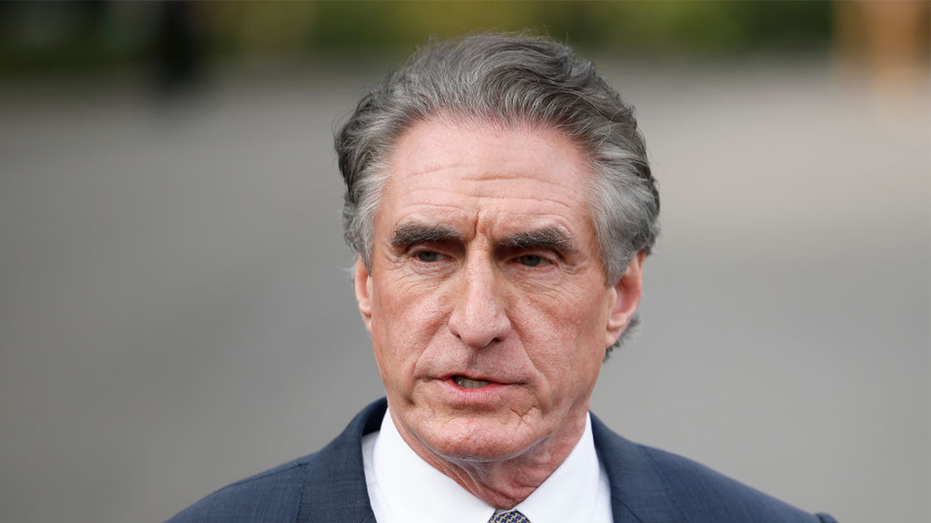
Interior Secretary Doug Burgum delivers remarks outside the White House on March 19, 2025 in Washington, D.C. (Getty Images)
“Offshore wind is one of the most expensive, unreliable, environmentally disruptive, and subsidy-dependent schemes ever forced on American ratepayers and taxpayers,” Burgum told Fox News Digital.
He added that the administration welcomes TotalEnergies’ commitment to “developing projects that produce dependable, affordable power to lower Americans’ monthly bills while providing secure U.S. baseload power today — and in the future.”
U.S. Attorney General Pam Bondi also commented on the deal, telling Fox News Digital that “today’s agreement prioritizes affordability for hardworking American consumers over the prior administration’s ideological, ineffective energy policies.”
Bondi predicted that “Americans will benefit from this significant investment in our energy industry,” which she said will “also enhance our national security and grid reliability.”
Madaket beachgoers walk along the beach in this 800mm telephoto view that compresses distance of the Vineyard Wind turbines 15 miles away. (Stan Grossfeld/The Boston Globe via Getty Images / Getty Images)
Patrick Pouyanné, CEO of TotalEnergies, told Fox News Digital that the company is “pleased” to sign onto the agreement with the DOI and to support the administration’s energy policy.
He explained that the decision to renounce the offshore wind developments in favor of U.S. oil investment was made in consideration that offshore wind projects are “not in the country’s interest.”
Advertisement
Pouyanné said these investments will help supply Europe with “much-needed” U.S. liquified natural gas and provide gas for U.S. data center development. He said TotalEnergies believes this is “a more efficient use of capital in the United States.”
TOMI Environmental Solutions, Inc. (TOMZ) Q1 2026 Earnings Call May 8, 2026 4:30 PM EDT
Company Participants
Halden Shane – Chairman & CEO David Vanston – Chief Financial Officer Elissa Shane – COO & Director
Advertisement
Conference Call Participants
John Nesbett – Institutional Marketing Services, Inc. Amit Dayal – H.C. Wainwright & Co, LLC, Research Division Todd Felte John Nelson
Presentation
Advertisement
Operator
Good day, everyone, and welcome to the TOMI Environmental Solutions, Inc. First Quarter 2026 Financial Results Conference Call. [Operator Instructions]
It is now my pleasure to hand the floor over to your host, John Nesbett of IMS Investor Relations.
Sir, the floor is yours.
Advertisement
John Nesbett Institutional Marketing Services, Inc.
Thank you for joining us today for the TOMI Environmental Solutions Investor Update Conference Call. On today’s call is TOMI’s Chief Executive Officer and Chairman, Dr. Halden Shane; EJ Shane, our Chief Operating Officer; and our Chief Financial Officer, David Vanston.
A telephone replay of today’s call will be available through May 15, the details of which are included in the company’s press release. A webcast replay will also be available on TOMI’s website, www.steramist.com.
Advertisement
Certain written and oral statements made by management of TOMI may constitute forward-looking statements as defined in the Private Securities Litigation Reform Act of 1995. These forward-looking statements should be evaluated in light of important risk factors that could cause actual results to differ materially from our anticipated results. The information provided in this conference call is based upon the facts and circumstances known at this time. Please refer to our filings with the Securities and Exchange Commission for a discussion of these risk factors. The company undertakes no obligation to update these forward-looking statements after the date of this call.
I will now turn the call over to TOMI’s Chief Executive Officer and Chairman of the
ATLANTA — Weather Underground, the popular weather forecasting platform known for its hyper-local personal weather station network, faced scattered technical issues Thursday, with many users reporting app crashes and slow loading times even as the main website remained largely operational. The problems come during a period of active spring weather across much of the United States, amplifying frustration among millions who rely on the service for detailed forecasts and real-time conditions.
Is Weather Underground Down Now? App Experiences Crashes and Minor Outages as Users Report Frustration
Downdetector and IsItDownRightNow showed elevated user reports of problems with the mobile app, particularly on iOS devices, where the application frequently crashes upon opening or fails to load station data. Website performance appeared more stable, though some users noted slower loading of radar maps and personal weather station feeds. Instructure-owned parent company The Weather Company has not issued a formal statement on the scope of the disruptions.
The issues surfaced prominently in the past 24-48 hours, coinciding with severe weather threats in parts of the Midwest and Southeast. Users attempting to check localized radar or hyperlocal forecasts from personal stations encountered repeated failures, with some reporting the app closing immediately after launch even after reinstallation.
Impact on Users and Personal Weather Stations
Weather Underground’s strength has long been its network of more than 250,000 personal weather stations providing hyper-local data. During Thursday’s disruptions, many station owners reported inability to upload or view readings, limiting the platform’s real-time accuracy advantage over larger services. Gardeners, pilots, farmers and outdoor enthusiasts who depend on precise neighborhood-level conditions expressed particular irritation.
Social media platforms filled with complaints, with users in major cities like New York, Chicago and Los Angeles sharing screenshots of error messages. Some long-time fans noted declining reliability over recent months, describing the service as having gone “from great to decent to bearable.” Others defended the platform, pointing to its still-superior station network when functioning properly.
Advertisement
Broader Context for Weather Apps
The glitches highlight growing pains in consumer weather technology as demand surges for hyper-local and personalized forecasts. Competitors like AccuWeather, The Weather Channel app and Apple Weather have seen their own occasional outages, but Weather Underground’s dedicated user base of amateur meteorologists and data enthusiasts appears especially sensitive to disruptions.
The platform has faced criticism in recent years for slower updates, increased advertisements and occasional API changes affecting third-party integrations. Despite this, its core community of personal weather station owners remains loyal when the service operates smoothly.
Company Response and Technical Issues
The Weather Company, which owns Weather Underground, has a history of maintenance notices for subscription features. A recent “under maintenance” page appeared for premium subscription purchases, though core forecasting tools remained accessible for most users. No widespread server outage was confirmed, suggesting the problems may stem from app-specific bugs or increased traffic during active weather patterns.
Users experiencing crashes are advised to try force-quitting the app, clearing cache, or reinstalling. The website version at wunderground.com continues to provide forecasts, radar and station data for most locations, serving as a reliable workaround during app difficulties.
Advertisement
What This Means for Users
For those relying on Weather Underground for daily planning, the issues underscore the value of having backup weather sources. Many users recommend cross-referencing with official National Weather Service forecasts or alternative apps during periods of instability. The platform’s personal weather station network remains one of its strongest features when accessible, offering granularity unmatched by many competitors.
As spring severe weather season continues, reliable forecasting tools become even more critical. The current glitches serve as a reminder of the fragility of even well-established digital services during peak demand periods. Weather Underground has historically resolved technical problems relatively quickly, and many users expect full functionality to return soon.
The platform continues to innovate with features like Smart Forecasts and enhanced radar layers in its premium tiers. While the current app troubles have frustrated some, the underlying data network and forecasting models retain strong support within the meteorological community.
As of Thursday afternoon, monitoring sites showed the website operational with normal response times for most users. App-specific problems appear to be the primary complaint, particularly on iOS. The Weather Company has not yet provided a detailed timeline for resolution, but past incidents suggest rapid fixes once issues are identified.
Advertisement
For now, millions of users continue checking alternative sources while hoping Weather Underground’s signature hyper-local precision returns to full strength. The platform’s dedicated following ensures that any prolonged downtime would be keenly felt across the weather enthusiast community.
NEW YORK — Eli Lilly & Co. (NYSE: LLY) stands out as one of the strongest buy opportunities in the pharmaceutical sector in 2026, with Wall Street analysts maintaining overwhelmingly bullish ratings as blockbuster weight-loss and diabetes drugs Mounjaro and Zepbound continue driving explosive revenue growth and margin expansion. Despite a year-to-date pullback, the company’s pipeline depth, pricing power and dominant position in the GLP-1 market make it a high-conviction long-term holding for growth-oriented investors.
Eli Lilly Stock a Strong Buy in 2026 as Mounjaro, Zepbound Demand Fuels Blowout Growth and Analyst Upside
Shares have traded in the $870–$990 range in recent sessions following a strong first-quarter earnings beat. The company crushed expectations, raising full-year 2026 guidance by $2 billion, yet the stock remains attractively positioned relative to projected growth. Analysts covering LLY issue a consensus “Moderate Buy” to “Strong Buy” rating, with an average 12-month price target near $1,220–$1,250, implying 25–40% upside from current levels. Some optimistic targets reach $1,500 or higher.
Eli Lilly reported first-quarter revenue that significantly exceeded forecasts, powered by Mounjaro sales jumping 125% year-over-year to $8.66 billion and strong Zepbound performance. The company lifted its full-year 2026 revenue guidance to $82–$85 billion and raised adjusted EPS projections, reflecting “overwhelming” demand for its cardiometabolic portfolio.
Growth Drivers and Pipeline Strength
The GLP-1 franchise remains the primary engine. Mounjaro (tirzepatide) for diabetes and Zepbound for obesity continue posting massive gains, with international expansion accelerating. Analysts project sustained high-teens to low-20s percentage revenue growth through the decade as Lilly scales manufacturing and secures additional approvals.
Beyond weight loss, Lilly’s pipeline includes promising candidates in Alzheimer’s, oncology and other high-value areas. The company’s focus on next-generation therapies and oral formulations positions it well against competitors. Recent agreements to expand access for Medicare and Medicaid patients further support long-term demand.
Advertisement
Analyst Consensus and Valuation
Of roughly 30 analysts, the vast majority recommend Buy or Strong Buy. Price targets reflect confidence in sustained earnings growth and market dominance in obesity and diabetes. While the stock trades at a premium valuation, analysts argue it is justified by superior growth prospects and high operating margins.
Risks include competition in the GLP-1 space, potential supply constraints and regulatory or pricing pressures. However, Lilly’s manufacturing investments and first-mover advantages provide a meaningful moat.
Why Buy Eli Lilly in 2026
For long-term investors, Eli Lilly offers a compelling combination of secular tailwinds, execution excellence and pipeline optionality. The obesity and diabetes markets are still in early innings, with millions of potential patients yet to be treated. Lilly’s ability to innovate and scale gives it a structural edge.
The stock suits growth portfolios seeking exposure to healthcare innovation with defensive characteristics. Those already holding have strong reasons to maintain positions, while new buyers may find current levels an attractive entry after the recent pullback. Diversification within healthcare remains wise, but Lilly stands out for its growth trajectory.
Advertisement
As 2026 unfolds, Eli Lilly’s performance will be closely watched as a bellwether for the broader biopharma sector. With robust demand, raised guidance and analyst support, the case for owning Eli Lilly stock remains highly compelling for investors comfortable with premium valuations backed by exceptional fundamentals.
Joseph Spak – UBS Investment Bank, Research Division Alexander Perry – BofA Securities, Research Division Gautam Narayan – RBC Capital Markets, Research Division James Mulholland – Deutsche Bank AG, Research Division Itay Michaeli – TD Cowen, Research Division Thomas Scholl – BNP Paribas, Research Division Andres Loret de Mola – Stifel, Nicolaus & Company, Incorporated, Research Division Dan Levy – Barclays Bank PLC, Research Division Vanessa Jeffriess – Jefferies LLC, Research Division Federico Merendi – Wolfe Research, LLC Douglas Karson – BofA Securities, Research Division
Presentation
Advertisement
Operator
Good morning. My name is Rocco, and I will be your conference facilitator today. At this time, I would like to welcome everyone to the Dauch Corporation First Quarter 2026 Earnings Conference Call. [Operator Instructions] As a reminder, today’s call is being recorded. I would now like to turn the call over to Mr. David Lim, Head of Investor Relations. Please go ahead, Mr. Lim.
David Lim Head of Investor Relations
Advertisement
Thanks, Rocco. Thank you, and good morning, everyone. I’d like to welcome everyone who is joining us on Dauch Corporation’s first quarter earnings call. Now earlier this morning, we released our first quarter of 2026 earnings announcement. You can access this announcement on the Investor Relations page of our website, www.dauch.com and through the PR Newswire services.
You can also find supplemental slides for this conference call on the Investor page of our website as well. A replay of this call will be available through May 15. Now before we begin, I’d like to remind everyone that the matters discussed in this call may contain comments and forward-looking statements that are subject to risks and uncertainties which
LOS ANGELES — Hilary Duff is experiencing a full-circle career resurgence in 2026, headlining her first major world tour in nearly two decades while balancing motherhood, acting projects and personal reflection on her journey from Disney child star to independent artist and mother of four. The 38-year-old singer-actress officially launched “The Lucky Me Tour,” supporting her sixth studio album “Luck… or Something,” which debuted in February to strong critical and commercial reception.
Hilary Duff
Duff teased the expansive tour during her intimate “Small Rooms, Big Nerves” mini-tour earlier this year, telling fans she is “ready for more” and eager to surprise audiences with evolving set lists that blend nostalgic hits with fresh material. The global run kicks off in June with stops across North America, Europe and Australia, marking her return to large-scale stages after focusing primarily on acting and family life.
In a recent interview, Duff expressed excitement about stepping back into the spotlight on her own terms. “I’m ready for my set list to change. I’m ready to surprise people,” she said, highlighting the freedom she now feels as an artist no longer bound by teen-idol expectations. The album “Luck… or Something” explores themes of maturity, relationships and self-discovery, drawing from her experiences as a wife, mother and woman navigating public life.
Tour Details and Fan Excitement
“The Lucky Me Tour” features a mix of iconic songs from her early catalog — including tracks from “Metamorphosis” and her self-titled album — alongside newer material and favorites from her “dancey era.” Special guest La Roux joins on select dates, adding an exciting collaborative element. Tickets for many shows sold out quickly, reflecting sustained fan loyalty two decades after her breakthrough.
Stops include major venues like Madison Square Garden in New York and the Kia Forum in Los Angeles. Additional international dates continue into early 2027, giving Duff a rigorous but fulfilling schedule. Fans have flooded social media with excitement, sharing memories of growing up with her music and celebrating her evolution.
Advertisement
Personal Life and Reflections
Duff, married to musician Matthew Koma since 2019, shares three daughters — Banks, Mae and Townes — with him, in addition to her 13-year-old son Luca from her previous marriage to former NHL player Mike Comrie. In recent interviews, she has opened up about the challenges of her first divorce and the importance of modeling self-worth for her children.
She has described co-parenting as generally positive and emphasized prioritizing family amid her busy career. Duff frequently shares glimpses of tour life with her children, noting the joy of including them in her professional world while protecting their privacy.
Acting and Broader Career
Beyond music, Duff continues acting. She is set to star in the upcoming Hulu dark comedy series “Pretty Ugly,” exploring the intense world of child pageants. Her ability to balance multiple creative pursuits has drawn praise, with many viewing 2026 as a defining year in her multifaceted career.
Duff’s return to music has been warmly received by millennials who grew up with “Lizzie McGuire.” Her authenticity and willingness to evolve resonate strongly in an era where nostalgia meets modern reinvention. Appearances at events like the TIME100 Summit and Northeastern University’s 2026 commencement — where students serenaded her with “What Dreams Are Made Of” — further highlight her enduring cultural impact.
Advertisement
Cultural Significance
Duff’s 2026 resurgence represents more than a comeback — it symbolizes growth, resilience and the power of artistic reinvention. From child star to independent woman, she has navigated fame, tabloid scrutiny and personal challenges while maintaining a connection with fans that feels genuine and enduring.
Industry observers note that her success challenges assumptions about age and relevance in entertainment. By owning her narrative and embracing new creative chapters, Duff inspires a generation of women balancing career ambitions with family life. Her music and public presence continue to offer comfort and empowerment to longtime supporters.
As “The Lucky Me Tour” unfolds, anticipation builds for memorable performances that celebrate both her past and present. Whether delivering high-energy pop anthems or introspective new tracks, Duff appears fully in control of her artistic journey. For fans old and new, 2026 marks a joyful reunion with an artist who has grown alongside them.
The year promises to be one of celebration, reflection and forward momentum for Hilary Duff. With sold-out shows, critical acclaim for her new music and a strong family foundation, she stands as a testament to perseverance and authentic self-expression in the spotlight. As summer approaches, audiences worldwide prepare to experience the next chapter in a career that continues to surprise and delight.

















































You must be logged in to post a comment Login