
Business
Trump Bought Dividend Stocks And Dumped AI (The Real Story) (NYSEARCA:VIG)



I’m a long-term investor focused on U.S. and European equities, with a dual emphasis on undervalued growth stocks and high-quality dividend growers. Through years of experience, I’ve learned that sustained profitability—evident in strong margins, stable and expanding free cash flow, and high returns on invested capital—is a more reliable driver of returns than valuation alone. I manage one of my portfolios publicly on eToro, where I qualified as a Popular Investor, allowing others to copy my real-time investment decisions. My background spans Economics, Classical Philology, Philosophy and Theology. This interdisciplinary foundation sharpens both my quantitative analysis and my ability to interpret market narratives through a broader, long-term lens. I started investing when I became a father. By managing wisely what I received and earn, I aim to ensure for me and my children that we don’t have so much that we don’t have to do anything, but that we have enough assets to be free to do what we want. The goal is not to free myself from work, but to make sure I can work in the place and in a way where I can fully express myself.I partner with iREIT®+HOYA Capital, where I share exclusive content and run a dividend growth portfolio with buy/sell alerts.
Analyst’s Disclosure: I/we have a beneficial long position in the shares of IWM, ACN, LOW, V, GOOG either through stock ownership, options, or other derivatives. I wrote this article myself, and it expresses my own opinions. I am not receiving compensation for it (other than from Seeking Alpha). I have no business relationship with any company whose stock is mentioned in this article.
Seeking Alpha’s Disclosure: Past performance is no guarantee of future results. No recommendation or advice is being given as to whether any investment is suitable for a particular investor. Any views or opinions expressed above may not reflect those of Seeking Alpha as a whole. Seeking Alpha is not a licensed securities dealer, broker or US investment adviser or investment bank. Our analysts are third party authors that include both professional investors and individual investors who may not be licensed or certified by any institute or regulatory body.

Check out what’s clicking on FoxBusiness.com.
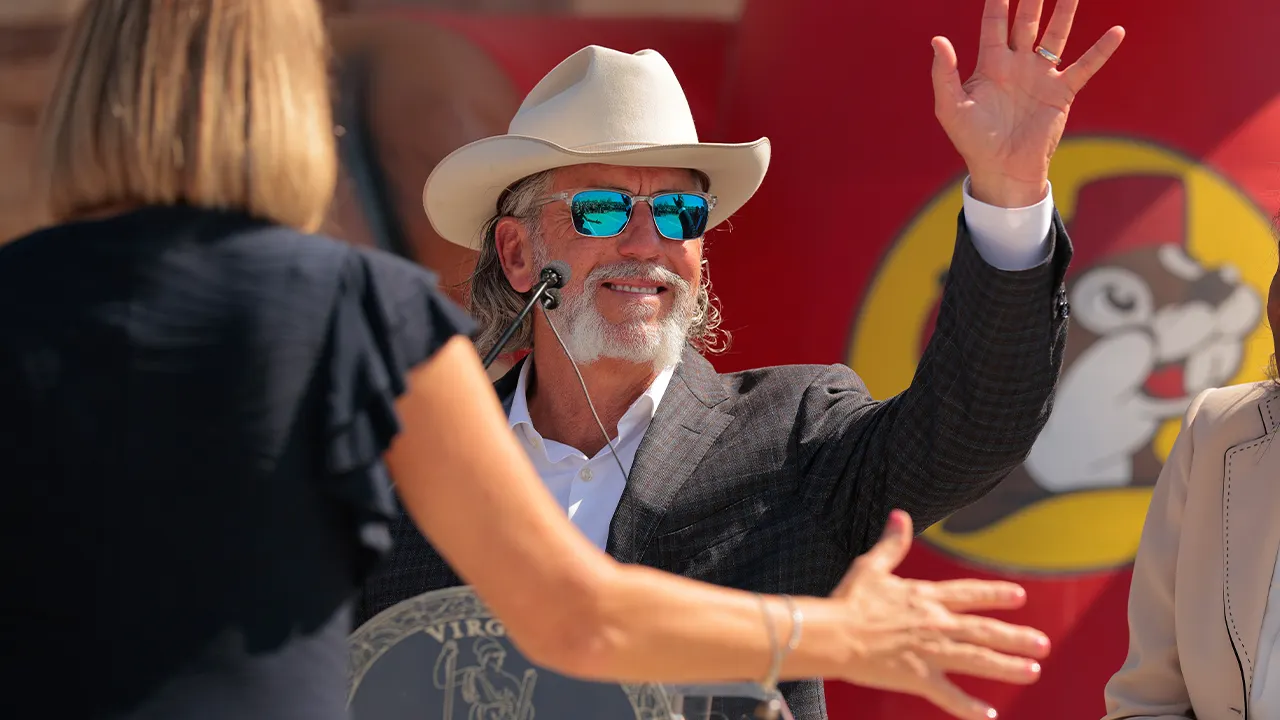
Buc-ee’s CEO suggested recently that the Texas-based travel center chain may be done looking into blue districts, saying some communities do not appreciate what the company brings while conservative states offer business-friendly and family-oriented values.
Arch “Beaver” Aplin III, the company’s president and co-founder, made the comments during the grand opening of Buc-ee’s newest location in Benton, Arkansas on August 17. The chain is known for its expansive gas stations, famously clean restrooms and in-house food offerings.
“We have a lot of opportunities. We’re growing. We’re building in a lot of places. But when you find a conservative business-friendly state with a phenomenal workforce, it makes a difference,” Aplin said.
Aplin criticized states that he said do not appreciate what Buc-ee’s brings to their communities, suggesting the company would rather focus its expansion efforts elsewhere.
BUC-EE’S OPENS FIRST ARKANSAS LOCATION AS CHAIN EXPANDS ACROSS US
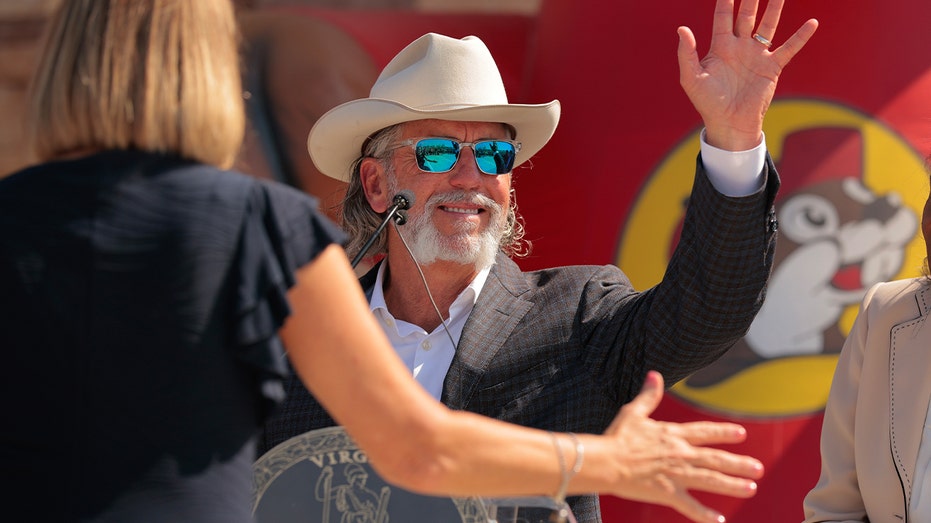
Buc-ee’s co-founder and CEO Arch “Beaver” Aplin III waves during the grand opening ceremony of the first Buc-ee’s location on the East Coast on June 30, 2025, in Mount Crawford, Virginia. Aplin said expansion will focus more on conservative states. (Chip Somodevilla/Getty Images)
“I’m starting to realize life’s too short to try to build in places that people don’t appreciate what you’re bringing, versus a place like this where people do appreciate what you are building,” he said.
Conservative states typically promote business-friendly and family-oriented policies that align with Buc-ee’s values, Aplin said.
“That leadership, that concept, that idea of conservative, business-friendly, family-oriented concept works so much better if it trickles down from the very leadership from the top at the governor’s office, at the congressman, at senator, at the mayor, the representatives,” he said.
Aplin pointed to Benton as an example of the approach, saying the city’s business-friendly environment helped pave the way for Buc-ee’s newest location.
“What we found when we got here into Benton was a business-friendly town,” he said.
CALIFORNIA PIZZA KITCHEN CO-FOUNDER OPENS UP ABOUT FAMOUS CHAIN’S WILD RISE, BANKRUPTCY AND COMEBACK
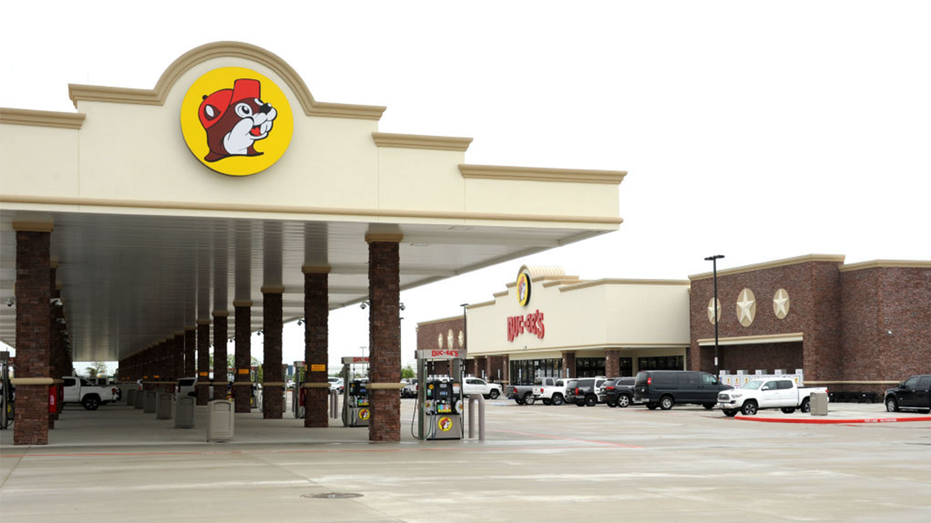
Buc-ee’s travel centers typically feature 120 fuel pumps across 74,000 square feet. (Getty Images / Getty Images)
Founded in 1982, Buc-ee’s operates sprawling travel centers that typically feature 74,000 square feet of space and 120 fueling positions. The locations often create more than 200 jobs, according to the company.
Buc-ee’s currently has 58 locations, including 37 in Texas, according to the company’s website.
The chain has expanded to 13 other states, including Alabama, Georgia, Florida, Kentucky, Tennessee, Arkansas, Arizona, Colorado, Mississippi, Missouri, Ohio, South Carolina and Virginia.
Nearly all the cities where Buc-ee’s operates are located in areas that generally lean conservative, with a few exceptions where local political dynamics are more mixed.
Auburn, Alabama, for example, is a college town located in a predominantly Republican county, giving it a more politically mixed environment than some surrounding communities.
Brunswick, Georgia, has a Democratic-leaning municipal base despite being located in Glynn County, which has generally leaned Republican.
Goodyear, Arizona, has become a competitive suburban area in recent election cycles and is located in the West Valley of Maricopa County, a region that has historically leaned Republican but has become increasingly politically competitive.
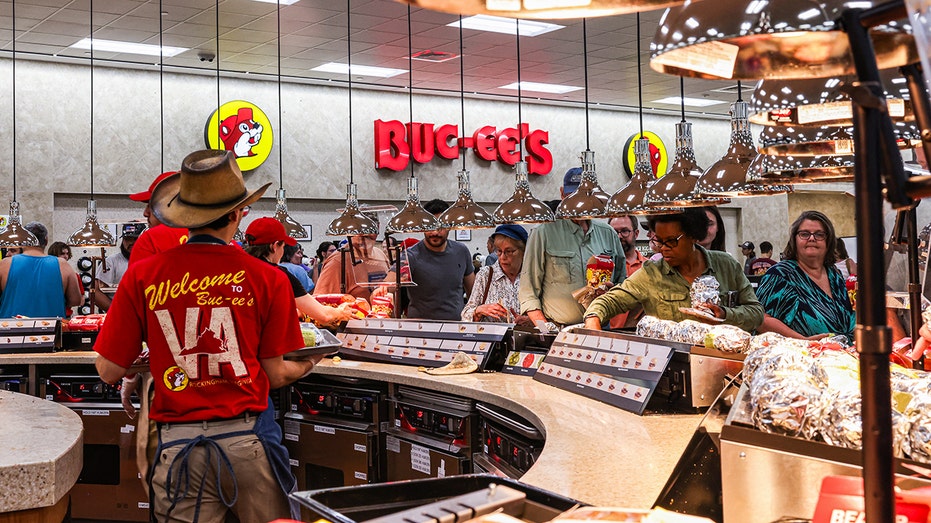
Visitors shop for brisket sandwiches at a Buc-ee’s location in Rockingham County, Virginia, on July 2, 2025. (Valerie Plesch/For The Washington Post / Getty Images)
CLICK HERE TO GET FOX BUSINESS ON THE GO
More Buc-ee’s locations are slated to open in the coming years, including a travel center in Murfreesboro, Tennessee, on Nov. 16.
Six locations are also expected to open in 2027, including sites in Ruston, Louisiana; Kansas City, Kansas; Gallaway, Tennessee; St. Lucie, Florida; Boerne, Texas; and Monroe County, Georgia.
Two additional locations are planned for 2028 in Mebane, North Carolina, and Lafayette, Louisiana.
Business
Bangkok Dusit Medical Services Public Company Limited 2026 Q2 – Results – Earnings Call Presentation (OTCMKTS:BDULF) 2026-08-24


Seeking Alpha’s transcripts team is responsible for the development of all of our transcript-related projects. We currently publish thousands of quarterly earnings calls per quarter on our site and are continuing to grow and expand our coverage. The purpose of this profile is to allow us to share with our readers new transcript-related developments. Thanks, SA Transcripts Team
Business
NVIDIA Stock Drops Nearly 2 Percent to $210 on Seventh Losing Day Ahead of Critical AI Earnings
SANTA CLARA, Calif. — Shares of NVIDIA Corp. fell nearly 2 percent on Monday, extending a multi-day slide that has become the chipmaker’s longest losing streak in nearly four years, as investors grew cautious ahead of the company’s closely watched quarterly earnings report.
NVIDIA stock traded around $210.07 in midday action, down about $4.65 or 2.17 percent, according to market data. The decline put the shares on track for a seventh consecutive session of losses and marked one of the steeper single-day drops in recent weeks. The stock has fallen roughly 6.7 percent over the current streak and remains more than 10 percent below its all-time closing high of $235.74 set in mid-May.
The pullback comes just days before NVIDIA is scheduled to report fiscal second-quarter results on Wednesday after the market close. Wall Street analysts on average expect revenue of approximately $92 billion, representing growth of about 96 percent from the year-earlier period, with adjusted earnings per share near $2.09. Data-center revenue, the primary driver of the company’s results, is projected near $85 billion, more than double the year-ago figure, according to consensus estimates.
Investors have grown increasingly selective about high-valuation technology stocks in recent sessions. Broader semiconductor shares also declined Monday, with the iShares Semiconductor ETF falling nearly 3 percent. Micron Technology dropped more than 6 percent, while Advanced Micro Devices and Broadcom also posted losses. The Nasdaq Composite was lower while the Dow Jones Industrial Average showed relative resilience.
Several factors contributed to the pressure on NVIDIA shares. Reports indicated the company has signaled to some large customers that prices for AI servers could rise by more than 15 percent, prompting questions about whether higher infrastructure costs might moderate demand from hyperscale cloud providers. Separately, investor attention has focused on NVIDIA’s expanding role in helping arrange external financing for data-center buildouts through partnerships with major financial firms. Some market participants have described elements of these arrangements as circular financing, in which the supplier helps facilitate purchases of its own products.
Geopolitical developments added to the cautious tone. Risk sentiment weakened after comments from U.S. officials regarding sanctions and economic measures targeting Iran, contributing to a broader rotation away from growth-oriented technology names. Rising Treasury yields have also weighed on high-multiple stocks throughout the recent period.
Despite the near-term stock weakness, NVIDIA continues to dominate the market for advanced artificial-intelligence accelerators. The company’s Blackwell architecture has driven rapid growth in data-center revenue, and management has pointed to strong customer adoption of both Blackwell and the forthcoming Vera Rubin platform. In prior comments, founder and Chief Executive Jensen Huang has described the buildout of AI infrastructure as accelerating and has expressed confidence in substantial multi-year revenue from the Blackwell and Rubin generations.
NVIDIA remains supply-constrained even as it works to expand production capacity. The company has secured commitments intended to support robust growth while acknowledging that demand continues to outpace available supply for its highest-performance systems. Hyperscalers, enterprises and sovereign entities remain key buyers of the GPUs used to train and run large language models and agentic AI applications.
The stock’s recent valuation has compressed relative to earlier peaks. After reaching elevated multiples during the initial AI investment surge, NVIDIA now trades at levels closer to those seen before the most intense phase of the boom, according to market data. Some analysts have noted that the shares appear more reasonably priced on a forward-earnings basis than at previous highs, though expectations for continued outsized growth remain elevated.
Monday’s trading volume was among the highest in the S&P 500, reflecting active positioning ahead of the earnings release. History shows that NVIDIA shares have often experienced short-term volatility in the sessions immediately following results, even when the underlying numbers have exceeded expectations. The company has a track record of beating both its own guidance and consensus estimates, though the margin of those beats has drawn closer scrutiny as the absolute figures have grown larger.
NVIDIA’s market capitalization still ranks among the largest of any publicly traded company, reflecting its central position in the AI supply chain. The firm’s gross margins have remained high, supported by the specialized nature of its products and software ecosystem. Free cash flow generation has enabled substantial capital returns to shareholders, including expanded share-repurchase authorizations and a higher quarterly dividend announced earlier in the year.
Looking ahead, investors will focus on several metrics in Wednesday’s report: sequential growth in data-center revenue, commentary on the ramp of next-generation platforms, any updates on supply-chain constraints, and forward guidance for the current quarter. Management’s outlook on customer capital spending, pricing trends and the durability of AI infrastructure demand is expected to shape the near-term stock reaction.
The semiconductor sector more broadly has seen mixed performance this year as investors rotate among memory, foundry and accelerator names. While NVIDIA has underperformed some peers on a year-to-date basis relative to its earlier gains, its absolute revenue and profit growth continue to stand out within the industry.
For now, the combination of pre-earnings caution, higher component and infrastructure costs, and a less risk-tolerant market environment has kept pressure on the shares. Whether the upcoming results and guidance can reverse the recent losing streak will depend on how far the reported figures and management commentary exceed the already elevated bar set by analysts and investors.
NVIDIA’s trajectory remains closely tied to the pace of global AI investment. As cloud providers, enterprises and governments continue to expand computing capacity, demand for the company’s products is expected to remain a central factor in technology sector performance through the remainder of the year and beyond.
Business
Intel Shares Drop Nearly 3% to $87 Amid Dilution Worries Following Massive $20 Billion Equity Raise
SANTA CLARA, Calif. — Shares of Intel Corp. fell nearly 3 percent on Monday, extending recent pressure on the stock as investors continued to weigh the impact of a large equity offering completed earlier this month and broader weakness across semiconductor names.
Intel stock traded at $87.14 in midday action, down $2.93 or 3.25 percent, according to market data from Aug. 24. The decline left the shares well below the $95 price set in the company’s recent common-stock sale and added to a multi-session slide that has erased a substantial portion of earlier gains this year.
The move comes roughly two weeks after Intel completed one of the largest follow-on equity offerings on record. The company initially sought to raise $15 billion and ultimately sold about $20 billion of shares at $95 each, with underwriters later exercising an option that brought the total closer to $23 billion. CEO Lip-Bu Tan described the raise in a statement as oversubscribed more than five times the initial goal, with strong participation from long-term institutional investors, sovereign funds and others.
“With this additional capital, Intel is now well positioned to meet the tremendous growth opportunity ahead of us in advanced node wafer manufacturing, advanced packaging and the massive CPU demand,” Tan said. He added that the company remains focused on execution and delivering returns to shareholders.
The offering was framed as funding for Intel’s capital-intensive turnaround, including expansion of its foundry operations and support for rising demand in artificial-intelligence computing. Intel raised its full-year capital expenditure outlook earlier this year and has emphasized the need for significant investment to advance its process technology roadmap, including the 18A node now in production and the planned 14A technology.
Despite the capital infusion, the stock has traded below the offer price in recent sessions. Market participants have pointed to dilution as a near-term concern. The addition of more than 200 million new shares increases the share count and is expected to reduce future earnings per share by several percentage points, according to analyst estimates. Some investors who participated in the offering are now holding shares at a paper loss relative to the $95 purchase price.
The selling pressure on Monday occurred against a backdrop of softer trading in technology and chip stocks more broadly. High-multiple growth names have faced headwinds from rising interest-rate expectations and selective rotation by investors. Intel’s shares have been particularly sensitive because of the combination of the recent capital raise and the company’s still-evolving foundry economics.
Intel reported second-quarter results in late July that showed marked improvement. Revenue reached $16.1 billion, up 25 percent from a year earlier — the strongest year-over-year growth in more than 15 years. Data Center and AI revenue rose 59 percent to about $6.3 billion, while the Foundry segment grew 31 percent to roughly $5.8 billion. Non-GAAP earnings per share came in at 42 cents.
“Our Q2 results represent our strongest revenue growth in more than fifteen years, enabled by greater speed, accountability, and customer focus,” Tan said in the earnings release. He also noted that “AI is driving unprecedented demand for compute, and as we continue to execute, Intel is well-positioned to capture sustainable growth across our CPU franchise, ASICs, advanced packaging and vast wafer foundry network.”
The company guided third-quarter revenue in a range of $15.8 billion to $16.8 billion. Management pointed to improving manufacturing yields, better cycle times and stronger customer engagement as evidence that operational changes implemented over the past year are beginning to take hold. The Foundry business continues to post operating losses, however, reflecting the heavy investment required to modernize factories and compete for external customers.
Intel has secured notable design wins and partnerships in recent quarters, including interest in its advanced packaging technologies and process nodes for AI-related silicon. Demand for server CPUs has strengthened as companies deploy agentic AI systems that rely more heavily on general-purpose processors for orchestration and inference workloads alongside specialized accelerators. Management has described supply as constrained in certain categories even as production capacity expands.
The stock’s longer-term trajectory remains tied to the success of the foundry strategy. Intel aims to become a leading contract manufacturer of advanced semiconductors while continuing to design and sell its own processors. Progress on 18A yields and a firmer commitment to high-volume production of the subsequent 14A process have been presented as key milestones. External foundry revenue remains a small fraction of the overall Foundry segment total, so scaling that business is viewed as critical to improving profitability.
Analyst views on the shares are mixed. Some firms have trimmed price targets following the equity raise while maintaining constructive longer-term ratings, citing the capital as necessary fuel for manufacturing investments. Others have adopted more cautious stances, focusing on dilution and the timeline required for foundry losses to narrow. Consensus forecasts still project growth, though estimates have been adjusted for the larger share count.
Monday’s decline fits a pattern of volatility that has characterized Intel shares throughout 2026. The stock reached highs above $140 earlier in the year before pulling back amid sector-wide concerns and company-specific developments. It remains substantially higher than levels seen in prior years when the turnaround was in earlier stages, yet the recent retreat has tested investor confidence in the pace of improvement.
Intel continues to emphasize operational discipline, customer focus and the competitive potential of its process technology. The company has highlighted progress in factory efficiency and the ability to meet rising internal and external demand. At the same time, the scale of capital required to rebuild manufacturing leadership remains large, and the market is closely monitoring both financial results and execution metrics for signs that the investments are translating into durable returns.
For the immediate term, attention is likely to remain on how the market digests the expanded share base, the trajectory of foundry losses, and the broader health of semiconductor demand. Intel’s next earnings report will provide an update on third-quarter performance and any further adjustments to spending or customer commitments. Until then, the shares appear sensitive to shifts in risk appetite across the technology sector and to any new developments related to the company’s financing and manufacturing plans.
The combination of a major capital raise, solid recent revenue growth and ongoing questions about the timeline for foundry profitability has left Intel stock in a period of digestion. Whether the additional resources accelerate the turnaround enough to support higher valuations will depend on consistent execution in the quarters ahead.

The drop on Iran’s informal currency markets came as Washington prepared to announce even more extensive sanctions that it said would be an “economic D-Day” and would add further pressure.
The currency had already been under pressure before the US and Israel attacked Iran on February 28, amid double-digit inflation and negative growth but has been hitting new record lows as nearly six months of war have taken an even greater toll.

Barstool Sports founder Dave Portnoy slams NFL Commissioner Roger Goodell over international expansion plans. Speaking to Stuart Varney, Portnoy argues the move hurts fans and dismisses Goodell’s role in the league’s growth.
The Raiders continue to impact the Las Vegas community, as they announced their largest philanthropic commitment in the franchise’s history on Monday.
The Raiders and Intermountain Health announced a $25 million gift to help build Nevada’s first-ever stand-alone children’s hospital.
The gift by the Raiders was led by owners Mark Davis, Egon Durban, and Michael Meldman, who each contributed $5 million toward the hospital’s development. The Raiders committed an additional $10 million for this game-changing gift.
CLICK HERE FOR MORE SPORTS COVERAGE ON FOXBUSINESS.COM

Owner Mark Davis of the Las Vegas Raiders reacts before a preseason game against the Houston Texans at Reliant Stadium on Aug. 20, 2026 in Houston, Texas. (Tim Warner/Getty Images / Getty Images)
“We want this gift to remind children and families that they have our team backing them and that the support of the entire Raider Nation is in their corner,” Davis said in a statement about the philanthropic achievement.
Mitch Cloward, Intermountain Health’s region president, added: “The Raiders are committed to excellence, and this gift is a generational investment that will keep families closer, strengthen our community, and give every kid every chance to thrive.
The hospital, which will be located at the UNLV Harry Reid Research and Technology Park, will be the first of its kind in Nevada, “anchoring a new future for kids and families across the state and delivering comprehensive, high-acuity pediatric care.”
The building will be 828,000 square feet and will rest on a 33-acre campus with 180 patient beds, with the design allowing room to grow.
The hospital will provide advanced emergency services designed specifically for children and a full-spectrum outpatient center alongside with inpatient and specialty care.

Las Vegas Raiders fans cheer from the stands prior to an NFL football game against the Cleveland Browns, at Allegiant Stadium on Sept. 29, 2024 in Las Vegas, Nevada. (Brooke Sutton/Getty Images / Getty Images)
And as a result of the $25 million gift, Intermountain Health Nevada Children’s Hospital’s physical therapy and rehabilitation space, as well as its bistro, will be named in the Raiders’ honor.
It will be the Las Vegas Raiders Bistro, which will sit adjacent to the hospital’s main lobby. The press release noted this as “a space where caregivers and parents navigating the complexities of having a child in the hospital can pause,” providing “a quiet meal, or seeking a moment of normalcy” where families can find support.
“Sports reminds us that we do our best when we have the right team around us,” Meldman said in a statement. “Families deserve to feel supported every step of the way. In addition to the experts at Intermountain Health, the Raiders family stands with our community’s kids.”
The Las Vegas Raiders Inpatient Rehab Gym will also play a vital role in helping children “heal, grow stronger, and regain confidence through movement and play.” The space will provide advanced therapeutic equipment alongside some playful design elements to make therapy feel more empowering and fun.
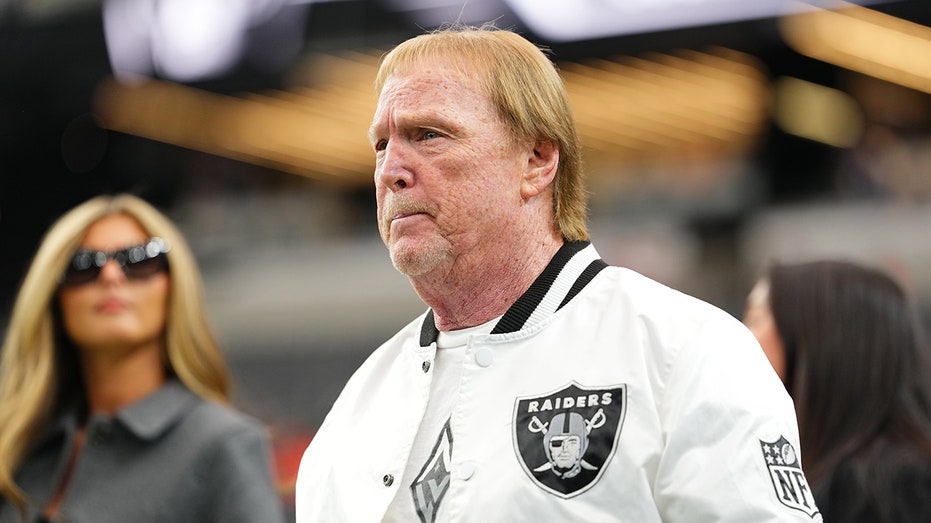
Owner and managing general partner Mark Davis of the Las Vegas Raiders walks onto the field before a game against the Denver Broncos at Allegiant Stadium on Dec. 7, 2025 in Las Vegas, Nevada. (Chris Unger/Getty Images / Getty Images)
GET FOX BUSINESS ON THE GO BY CLICKING HERE
“When we invest in children, we invest in everything that comes next – their education, their opportunities, and their future,” Sandra Douglass Morgan, president of the Raiders, said in a statement. “We want Nevada’s kids to know that their home team is cheering them on.”
Construction on the landmark hospital is expected to start in coming months, with an anticipated opening date coming for 2030.

WW International: Upgrade To Hold As The Worst Seems To Be Over

McEwen names Shaver’s successor, promotes three executives
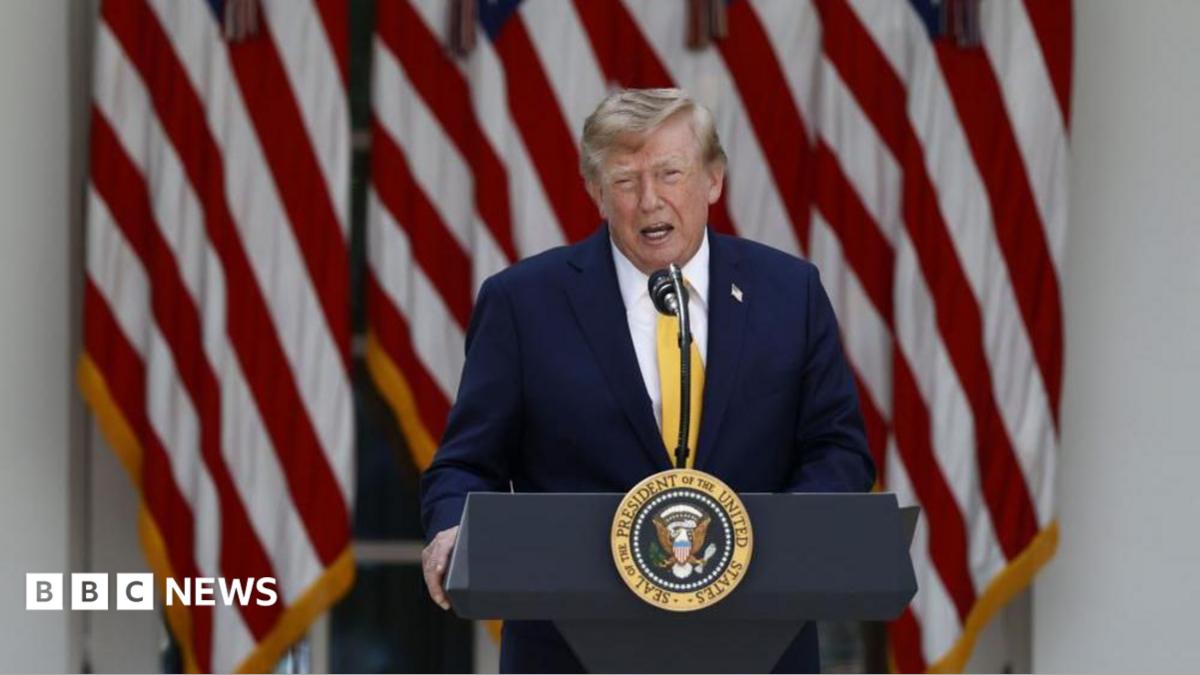
Meanwhile, Ontario’s outspoken premier, Doug Ford, whose province is home to Canada’s auto manufacturing industry, responded to Trump’s tariffs and threats by telling the US president to “kiss my ass”.
Ford also suggested that Canada should charge the US extra for its oil and gas, as well as electricity and critical minerals, adding that he will be speaking to Carney on ways to “fight back”.
His comments appeared to catch the attention of Trump, who in a Truth Social post accused Ford of “bluster” and wrote: “Someone should get these clowns to ‘fall in line’ or, the consequences for Canada will be far WORSE!”.
Canada accounts for 60% of total US crude oil imports and close to 100% of US natural gas exports, according to Canadian government data.
Businesses on both sides have warned that they stand to be impacted by the new wave of US tariffs on Canada, as well as the “dollar-for-dollar” retaliatory tariffs that Canada plans to impose on 8 September.
The trade war also put into question the future of an existing North American trade pact, known as the UMSCA, that was signed by Trump in his first term with Canada and Mexico.
During a mandatory review this summer, both Canada and Mexico said they want the USMCA extended for another 16 years. The US, however, said it will not renew in its current form.
The pact underpins $1.6tn in North American trade.
Experts with Oxford Economics warned on Monday that a dismantling of USMCA could have dire economic consequences for Canada.
“While unlikely, escalating trade tensions means the risk of the USMCA unravelling has increased, which would plunge Canada into recession and leave it on a permanently lower growth path,” warned Head of Canada Economic Tony Stillo and Senior Economist Michael Davenport.

Bitcoin eyes $80k for first time since mid-May after best week in over three years

Buc-ee’s CEO suggests chain may avoid blue districts

Coinbase launches B20 tokenized stocks on Base

Hoda Kotb Talks New ‘Connection’ Years After Failed Engagement





-

 Fashion3 days ago
Weekend Open Thread: Madewell – Corporette.com
-

 Business2 days ago
Musk’s Tesla, SpaceX Confirm $16.8 Billion ‘Terafab’ Chip Plant as World’s Largest Building in Texas
-

 Business6 days ago
SMA Solar Technology AG (SMTGY) Q2 2026 Earnings Call Transcript
-

 Crypto World3 days ago
anatomy of crypto’s biggest liquidation event since 2021
-

 Tech7 days ago
Qwen3.8-27B runs frontier-class coding agents and reasoning locally, no cloud API required
-

 Crypto World7 days ago
OCC Greenlights Trump Family Crypto Firm for Trust Charter
-

 Politics2 days ago
6 months on, Irish renters crushed by effects of government housing bill
-
 NewsBeat3 days ago
The ‘Lucky Dip Gang’ causing carnage for clicks: After five thugs were killed speeding in the wrong direction on a motorway, GUY ADAMS investigates a sick new trend… and why police aren’t even allowed to pursue them
-

 Tech6 days ago
GLM-5.3 hits the API at $1.4/$4.4 per million tokens
-

 News Videos5 days ago
Don’t Leave Your Financial Future To Chance | August 19, 2026
-
Tech7 days ago
5 Of The Most Reliable Car Brands To Consider If You’re Buying A Used SUV
-

 Business2 days ago
Mystery AI Model ‘Ox Alpha’ Draws Developers With Free Access as Chinese Lab Origins Remain Debated
-

 Tech7 days ago
Keychron K8 Ultra 8K review: a great value keyboard with comfort issues
-

 Business6 days ago
Stock Market Today: Tech Futures Slide As Treasury Yields Jump; Nvidia, Micron, Sandisk Sell Off
-

 Business5 days ago
Marvell Shares Jump 7% as Google Chip Deal Confirms Custom AI Silicon Partnership, Analysts
-

 Business4 days ago
Five Below: Kids Discount Retailer Reaps Rich Rewards
-
Business7 days ago
Fabrinet (FN) Q4 2026 Earnings Call Transcript
-

 Fashion7 days ago
The Dressier Side of Shorts
-

 Tech6 days ago
Ken Okuyama’s Kode89 Supercar Features Three Pedals and a Choice of V12s
-

 Politics6 days ago
The House Opinion Article | Security means more than military spending
You must be logged in to post a comment Login