
Business
Trump reveals long-awaited pick for top Australia post



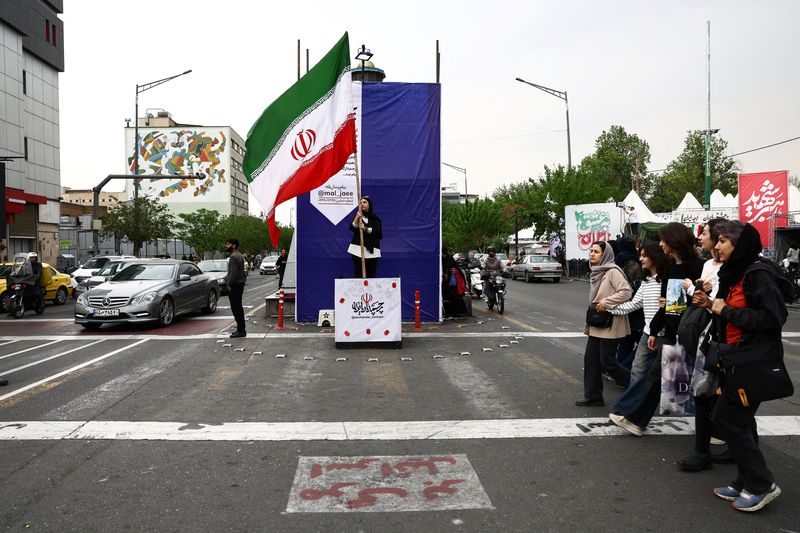

Trump not happy with latest Iran proposal to end the war, US official says

Editor’s note: Seeking Alpha is proud to welcome Langdon Equity Partners as a new contributing analyst. You can become one too! Share your best investment idea by submitting your article for review to our editors. Get published, earn money, and unlock exclusive SA Premium access. Click here to find out more »
Getty Images

Dear Partners,
The Canadian Smaller Companies Fund declined 1.5% in the first quarter of 2026, compared to a 7.3% increase for the benchmark.
Langdon Canadian Smaller Companies Portfolio
Over the past several quarters, we have discussed how the Canadian market has been driven largely by gold-related equities, with that narrative continuing to influence returns. We have also outlined why the core tenets of Langdon’s approach lead us away from businesses where revenues are primarily dependent on inputs outside of management’s control.
What we have not emphasized and what is worth highlighting is the common thread between what gold investors seek and what we seek at Langdon: scarcity.
For gold investors, scarcity is straightforward. It is rooted in the finite supply of the underlying asset.
At Langdon, we think about scarcity differently.
We look for businesses where scarcity is reflected in a combination of characteristics that are difficult to replicate:
- Resilient and compounding free cash flow
- Strong balance sheets
- Talented and aligned management teams
- Attractive valuations relative to intrinsic value
Individually, these attributes are not rare. In combination, they are.
In our view, it is this combination that allows businesses to adapt, evolve, and compound value over time.
Portfolio Attribution
Performance during the quarter was driven by the following key contributors and detractors across the portfolio.
Leading contributors included:
- PrairieSky Royalty Ltd. — a royalty business generating revenue from oil and gas production without direct operating exposure
- Logan Energy Corp. — a growing platform focused on Western Canadian oil and gas development
- EQB Inc. — a challenger bank continuing to scale deposits and lending through its digital platform
Detractors included:
- TerraVest Industries Inc. — a diversified industrial business serving energy and infrastructure markets
- Definity Financial Corporation — a P&C insurer focused on disciplined underwriting and long-term book value growth
In the case of the detractors, short-term share price movements diverged to varying degrees from underlying business performance. Our focus remains on the latter.
Company Commentary – Prairesky Royalty LTD.
PrairieSky Royalty Ltd. embodies the core tenets of scarcity that we believe underpin successful long-term investing. Our history with this company (slightly) predates its 2014 IPO. We wanted to get more time with the very talented CEO before the 100+ meeting roadshow, so we arranged to meet for coffee at the Starbucks on Yonge and King just before the day started at 7 am. Sometimes, very unique leadership teams and assets require very unique access.
The company owns one of the largest portfolios of fee simple mineral title in Canada. Unlike traditional energy companies, PrairieSky does not operate wells or spend money drilling, completing or tying in wells. Instead, it collects royalties on production from third-party operators across its land base.
This model results in a business with high margins and resilient free cash flow. Because PrairieSky does not bear the capital costs of drilling and is not exposed to operational execution risk, its economics are structurally different from those of traditional producers.
The strength of the business is rooted in its low capital intensity. With no requirement to fund development activity, PrairieSky maintains flexibility through cycles while preserving the ability to allocate capital toward acquiring additional royalty interests.
Management’s role is not to operate assets, but to allocate capital and manage the asset base with discipline. Over time, outcomes are driven by decisions around royalty structures, acquisitions, and the stewardship of a finite resource.
The asset base itself is difficult to replicate. PrairieSky’s land position has been assembled over decades and represents a finite resource with perpetual ownership, providing long duration exposure to production without requiring ongoing capital investment.
Importantly, the business benefits from industry activity without requiring capital, a combination that is difficult to replicate. We have already earned a handsome return on our investment with this company, but we felt that coming into 2025, the liquids growth and corresponding cash flows were not being appreciated by the market, so we decided to add to our investment, and it’s now the largest holding in the fund.
In our view, PrairieSky reflects the type of business we seek to own: one where resilient cash flows, capital efficiency, and disciplined capital allocation support long-term compounding of free cash flow per share.
Looking Ahead
Periods like the past quarter are frustrating. They are also part of the price of investing with discipline.
We do not build the portfolio around forecasts of commodity prices, interest rates, or macroeconomic outcomes. Our returns do not depend on getting those calls right.
Instead, we focus on owning a concentrated group of businesses that can compound free cash flow per share over long periods, with strong balance sheets and management teams we trust to allocate capital well.
That will sometimes lead to periods of divergence, particularly when markets reward a narrow set of exposures. We are comfortable with that. It is a feature of a differentiated approach, not a flaw. At quarter-end, amid all the volatility and narratives, we sit right around our targeted return since inception of 15% and are very comfortable with the risk we have taken to deliver it.
Our process remains unchanged. We continue to do what we have always done: concentrate capital behind high-quality businesses and let time work in our favour.
Greg Dean, Founder and Lead Investor
References
- Performance as at December 31, 2025. Returns greater than one year are annualized. Past performance is not indicative of future performance. Please see the important information in the endnote below.
- Since inception date of August 26, 2022.
- LEP110 (Class F) – performance is net of fees.
Editor’s Note: The summary bullets for this article were chosen by Seeking Alpha editors.

Earnings call transcript: Pantoro Ltd reports Q3 2026 operational challenges

The MSCI Asia Pacific Index was little changed on Tuesday, staying close to the level when the US-Israel war on Iran started in late February. That came after global crude benchmark Brent slipped 0.3% to trade just under $108 a barrel.
The yen held steady at 159.34 against the dollar before the Bank of Japan’s policy announcement later Tuesday.
With little progress on the geopolitical front, investors are turning their focus to earnings from a cohort of tech giants with a combined market value of nearly $16 trillion. Alphabet Inc., Microsoft Corp., Amazon.com Inc. and Meta Platforms Inc. are due to report Wednesday, followed by Apple Inc. a day later, with the results likely to set the tone for global equities and test whether the recent rally in megacap tech can be sustained.
“Markets have recovered to new all-time highs while seemingly ignoring continued geopolitical risks that abound, and this has been done largely on the back of positive earnings revisions and expectations,” said Walter Todd, president and chief investment officer at Greenwood Capital Associates. “Any cracks that emerge in this outlook as the largest companies report in coming weeks pose a significant risk to market momentum.”

Elsewhere, contracts for the S&P 500 Index edged up 0.2% after the underlying gauge stayed on track for its strongest monthly performance since 2020 as the artificial intelligence trade returns and stocks give up war-related losses. A key semiconductor index pulled back following a historic rally.
Meantime, the White House said US officials are discussing Iran’s latest proposal, but maintained red lines on any deal to end the eight-week war, including preventing Tehran from obtaining a nuclear weapon. White House Press Secretary Karoline Leavitt said President Donald Trump had convened a meeting of national security officials to discuss an Iranian proposal. The comments followed reports that Tehran proposed an interim deal whereby it reopens Hormuz in exchange for Washington ending its blockade of ports.
Iran’s proposal is better than what the US had thought, Secretary of State Marco Rubio said. Still, the US has questions on the person who submitted the Iran offer, he said.
“The market appears to be reducing its reaction to US/Iran headlines with the outcome trending to a short-term deal followed by more detailed negotiations,” JPMorgan head of global market intelligence Andrew Tyler wrote in a note to clients.
US Treasury yields were steady in Asian trading after rising two to three basis points on Monday, staying on pace for their tightest monthly range since late 2020.

Pop Quiz: When Was the Century’s Worst Year to Retire?

‘Barron’s Roundtable’ panelists discuss investment opportunities among airline stocks.
United Airlines on Monday announced that it’s ending its pursuit of a potential merger with American Airlines after its rival rebuffed an initial approach to discuss a deal.
United CEO Scott Kirby said in a statement published on Monday that he approached American Airlines about a potential merger because he “thought we could do something incredible for our customers together.”
“I was confident that this combination, which would have been about adding and not subtracting, creating a truly great airline that customers love, could get regulatory approval,” he said.
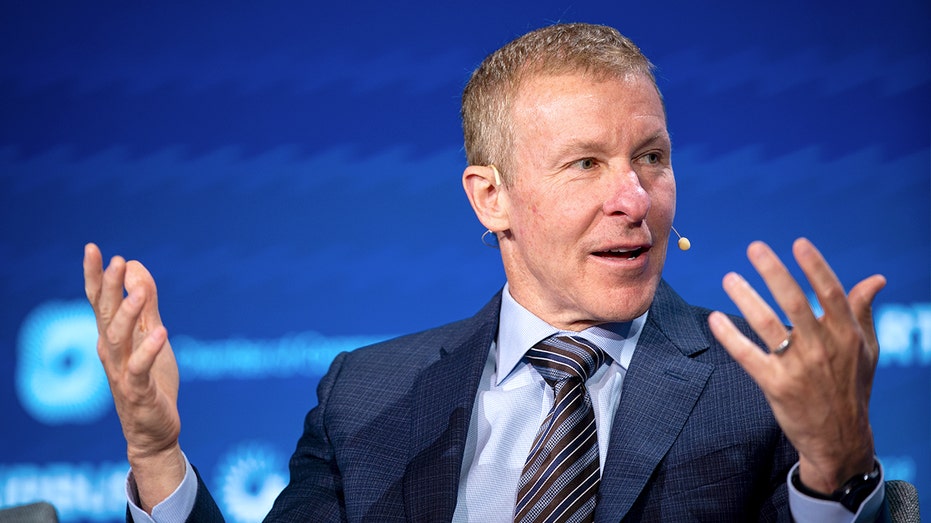
United Airlines CEO Scott Kirby said he thought a merger with American Airlines would add value for consumers and competition, rather than reducing it. (Al Drago/Bloomberg via Getty Images)
“I was hoping to pitch that story to American, but they declined to engage and instead responded by publicly closing the door. And without a willing partner, something this big simply can’t get done,” Kirby said.
AMERICAN AIRLINES CEO SAYS MERGER WITH UNITED WOULD BE ‘BAD FOR CUSTOMERS’
American CEO Robert Isom on Thursday said the airline wasn’t interested in a potential merger with United, saying it would be bad for all parties involved.
“The idea of the two largest airlines in the world getting together, that is something that we’ve viewed as being anti-competitive and obviously everybody that has weighed in suggests the same thing,” Isom said. “Bad for customers, bad for the industry and ultimately, that would be bad for American Airlines.”
| Ticker | Security | Last | Change | Change % |
|---|---|---|---|---|
| UAL | UNITED AIRLINES HOLDINGS INC. | 91.90 | -1.10 | -1.18% |
Kirby acknowledged that “American’s public comments make it clear that a merger like this is off the table for the foreseeable future,” but said that his vision for a merger between United and American involved using the scale of the combined airline to compete and lead around the globe.
BIPARTISAN SENATORS PRESS UNITED AND AMERICAN CEOS ON REPORTED MERGER OF LEADING AIRLINES
He wrote that the combined airline would have had opportunities to grow internationally and with expanded service to smaller communities, noting that both of those goals “are mathematically enabled by having a larger network.”
Kirby said that he thought a merger between United and American would have increased the total number of economy seats in the marketplace to give cost-conscious consumers more affordable options and choice, while the scale would boost competitiveness for international flights.
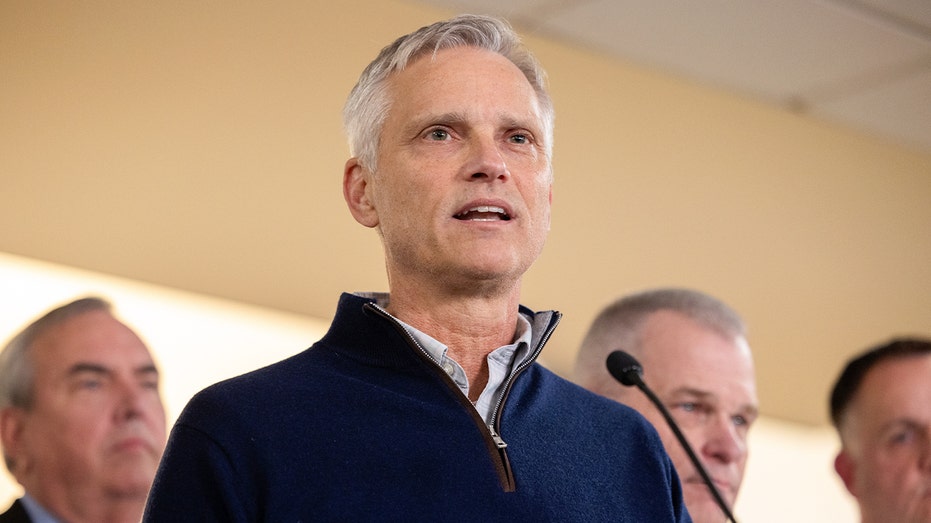
American Airlines CEO Robert Isom dismissed the prospect of a merger with United. (Nathan Posner/Anadolu via Getty Images)
He also thought the combined company would’ve “created tens of thousands of new high-paying, unionized jobs with great benefits which would have led to even more career growth opportunities for the 250,000 employees already at United and American,” and also supporting domestic aircraft manufacturing.
UNITED AIRLINES MERGER TALK PUTS SPOTLIGHT ON AMERICAN CEO’S FUTURE, EXPERTS SAY
Kirby said he understood the scale of the merger would attract skepticism because “previous mergers have been about saving struggling airlines, previous legal and regulatory reviews have focused on subtraction and what’s being lost,” whereas he thought this merger proposal would be viewed as a “different proposition altogether.”
| Ticker | Security | Last | Change | Change % |
|---|---|---|---|---|
| AAL | AMERICAN AIRLINES GROUP INC. | 11.68 | -0.42 | -3.47% |
“While our pursuit of talks with American have ended, our mission to build the greatest airline in the history of aviation at United is well underway. We have a winning strategy, a culture of innovation and 115,000 of the best aviation professionals in the world working together to deliver for our customers,” Kirby wrote.
GET FOX BUSINESS ON THE GO BY CLICKING HERE
“While the airline industry has always been dynamic and unpredictable (it’s one of the reasons that I love this business), United’s future is brighter than it’s ever been,” he added.
Nissan shares jump after swinging to FY profit outlook

Deciding whether to handle IT support for your small business in-house or outsource to an external IT team is a difficult decision for any growing business.
From proactively handling cybersecurity issues to managing your VoIP systems, making the right choice for your business IT solutions can be the difference between smooth operations and difficulty keeping up as your business needs change.
We look at the key differences in outsourced IT support vs in-house IT to help you make the correct choice for your business.
What is Outsourced IT Support?
is where an independent company handles all, or part of, your IT infrastructure as an external specialist. These managed IT services can include anything from threat detection and monitoring to supporting you in upgrading your IT infrastructure or migrating to the cloud.
What is an In-House IT Team?
In-house IT teams handle all of your IT requirements as salaried employees, working exclusively for your company. Depending on the size of your organisation and the specific requirements for your IT infrastructure, in-house IT at a small business could be one person or several people.
Outsourced IT vs In-House IT
Cost
When looking at IT cost comparison, the primary cost of in-house IT services is the salary of the employee that manages your IT systems. Additional costs may apply for extra training. In contrast, outsourced IT is a consistent monthly fee.
Expertise & Skillset
An in-house IT professional will usually need to be a ‘jack-of-all-trades’, handling every aspect of your IT solo. This includes anything from troubleshooting and problem-solving to system upgrades and cybersecurity measures. Outsourced IT companies provide you with access to multiple specialised professionals to seamlessly handle your IT.
Scalability
One of the most significant IT outsourcing benefits is easy scalability. Instead of going through a hiring process for a new IT team member, required to scale up in-house IT, you can simply increase your support as and when needed to ensure continuity of service.
Availability & Support
Managed IT services are often available around-the-clock, including automated monitoring systems that alert the team of any problems for fast resolution. In-house IT is typically only available during normal working hours, unless you hire enough people to provide 24/7 support or require employees to be on-call to fix IT problems at short notice.
Pros and Cons
Outsourced IT Support Pros:
- Access to expert support: An external team typically has experts across all areas of IT, from cloud migration to management of specific hardware and software
- Advanced protection: Managed IT services usually include advanced cybersecurity protection, including firewalls and 24/7 threat detection, to help keep your business safe
- Support for systems: If you want to upgrade your systems, introduce a new cloud telephony solution or source suitable software, an outsourced IT team can provide the expert help you need
- Proactive management: Active monitoring and around-the-clock support means that problems can be resolved proactively, instead of waiting for them to be discovered later on
Outsourced IT Support Cons:
- No physical presence: While engineers will visit your site to resolve issues, IT support is generally remote, with tickets submitted through a helpdesk to get support
- Less direct oversight: Outsourcing services mean you have less direct management of your day-to-day IT operations, which may make you feel out of the loop
- Data security and compliance: When working with an outsourced IT team, it’s important you pick a service that complies with all necessary GDPR and industry-specific regulations to keep data safe
In-House IT Pros:
- Complete control: You get the full view of your IT services and are able to change focus as and when needed to suit your business plans
- Easy-to-access support: An in-house professional is directly available to their colleagues, reducing the admin required to report problems with IT systems
- Strong business understanding: In-house IT teams understand your organisational goals and what is most important, enabling them to prioritise effectively and know how to use obscure or custom-made systems
In-House IT Cons:
- Higher costs: The cost of a salary or multiple salaries for in-house IT can be significant, particularly in combination with training and other company benefits
- Skill gaps: A single IT professional will likely not have in-depth knowledge and may experience skill stagnation if they do not have the time for additional training
- Poor scalability: In-house IT is difficult to scale effectively in comparison to an outsourced contract, particularly where extensive training is required to bring new IT employees up to speed
Which Option is Right for Your Business?
Whether outsourced IT or an internal team is right for your business will depend on your priorities and business goals. For rapidly growing companies, being able to scale effectively makes a managed IT service the better choice. For small organisations that have highly specialised software requirements, an in-house professional may be a better fit.
The Hybrid Approach
Utilising both outsourced IT for a range of services, including cloud telephony and cybersecurity solutions, can be an ideal way to expand upon your in-house IT services without the need to hire new employees. The hybrid approach is a popular choice for many companies, providing the best of both worlds.
Conclusion
If you’re unsure whether outsourced or internal IT is the best fit for your business, looking at the pros and cons of both is an excellent starting point. At Flotek, we specialise in providing managed IT services to SMEs across the UK, with around-the-clock support to increase uptime and advanced cybersecurity protection to keep your company safe. If outsourced IT is the best choice for your business, we’re your ideal partner.

This is an edition of the WSJ Technology newsletter, a weekly digest of tech columns, big stories and personal tech advice. If you’re not subscribed, sign up here.
Apple CEO Tim Cook is on his way out. John Ternus, the long-rumored heir apparent, is stepping in. In September, Ternus will take the helm of one of the world’s biggest companies. So, who is he?
Copyright ©2026 Dow Jones & Company, Inc. All Rights Reserved. 87990cbe856818d5eddac44c7b1cdeb8


Trump unhappy with Iranian proposal, US official says

Best Independent Retailer in York finalists revealed

Trump not happy with latest Iran proposal to end the war, US official says

Sanctioned Russian Billionaire’s $500 Million Yacht Slips Through Hormuz Blockade

Manchester United reach agreement with Casemiro over contract clause amid transfer speculation

US brings back mandatory military draft registration

Steven Gerrard disagrees with Gary Neville over ‘shock’ Chelsea and Arsenal claim | Football


-

 Fashion3 days ago
Weekend Open Thread – Corporette.com
-

 Tech9 hours ago
Register Renaming | Hackaday
-
 Crypto World2 days ago
Hyperliquid $HYPE Rally Builds Momentum as AI Sector Enters Prove-It Phase
-

 Politics5 days ago
Making troops accountable for war crimes threatens US alliance, ex-SAS colonel warns
-

 Politics5 days ago
Disabled people challenge government SEND proposals over segregation concerns
-

 Business4 days ago
Patterson-UTI Energy, Inc. (PTEN) Q1 2026 Earnings Call Transcript
-

 Business6 days ago
Rolls-Royce Voted UK’s Most Iconic Trade Mark as IPO Register Hits 150
-
 Crypto World7 days ago
Five Value Stocks with Recovery Potential in 2026: PayPal (PYPL), Nike (NKE), and More
-
 Sports2 days ago
IPL 2026: Ruturaj Gaikwad registers slowest fifty of the season, enters all-time unwanted list | Cricket News
-

 Politics5 days ago
Starmer handler McSweeney to be dragged from shadows by Foreign Affairs Committee
-

 Politics5 days ago
Zack Polanski responds to home secretary’s taser threat
-
Politics5 days ago
Wings Over Scotland | How To Get Away With Crimes
-

 Crypto World6 days ago
New York sues Coinbase, Gemini over prediction market offerings
-
Entertainment7 days ago
Sydney Sweeney cameo cut from “The Devil Wears Prada 2”, source explains why (exclusive)
-
 Crypto World6 days ago
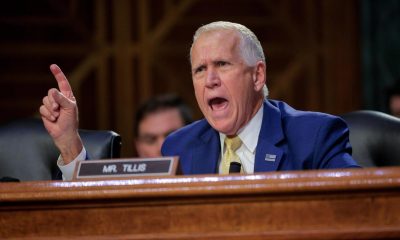
Crypto’s great hope in Senate’s Clarity Act still has a path to survive tight calendar
-
 Business6 days ago
HCL Tech share price tank over 9% after weak Q4. JPMorgan, HSBC & 3 others cut target price
-
 Fashion7 days ago
Kilkenny Design New Beauty Arrivals for Spring 2026
-

 Politics5 days ago
‘Iran is still a nuclear threat’
-
 Sports5 days ago
Tim Bradley names the current best in the world: “Better than Inoue and Usyk”
-

 NewsBeat2 days ago
LK Bennett closes all stores after entering administration
You must be logged in to post a comment Login