







Connect with us
DAPA Banner
DAPA Coin
DAPA
COIN PAYMENT ASSET
PRIVACY · BLOCKDAG · HOMOMORPHIC ENCRYPTION · RUST
ElGamal Encrypted MINE DAPA
🚫 GENESIS SOLD OUT
DAPAPAY COMING

Business

Trump says Taiwan doubling the size of Arizona chipmaking plant investment

Published

on

Trump says Taiwan doubling the size of Arizona chipmaking plant investment

President Donald Trump on Wednesday said that Taiwan is doubling the size of the chipmaking plants under construction in Arizona, adding that it could help the U.S. share of the chip market rise to 50% by the end of his term.

“We’re creating more jobs, we have more people working today than have ever worked in the history of our country. It’s great and that’s before these places opened,” Trump said before his departure from Joint Base Andrews.

Advertisement

The president said that new chip plants will be opening up over the next year and that chipmakers from Taiwan, such as the industry leader TSMC, are adding to their investments in the U.S.

“The biggest company in the world, actually, the chipmaker. But they’re coming in, they’re building in Arizona, and they just announced they’re going to double the size. We could have 50% of the chip market by the time I leave office. You know what we have now? Nothing,” Trump added.

US, TAIWAN COME TO $250B ‘AMERICA FIRST’ TARIFF DEAL OVER SEMICONDUCTORS

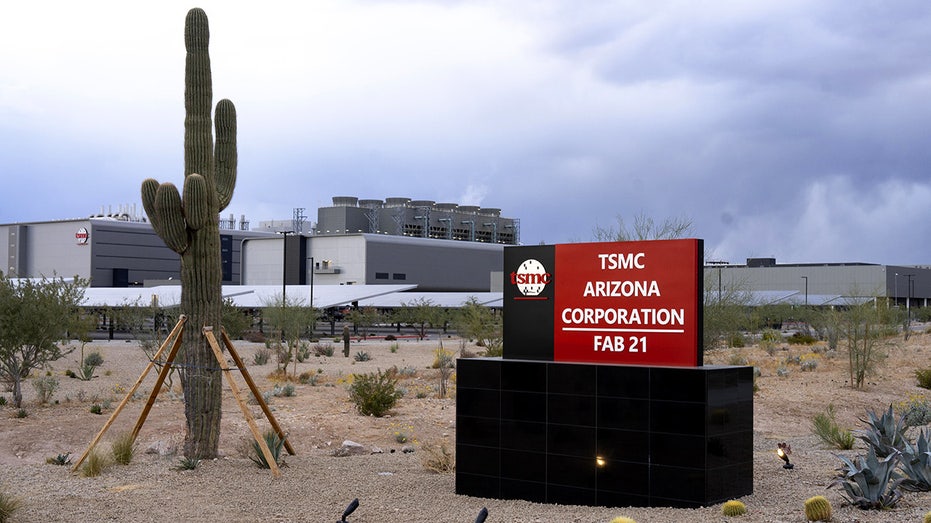
TSMC's chip manufacturing facility in Arizona

The Taiwan Semiconductor Manufacturing Company (TSMC) has committed about $165 billion to building out chipmaking capacity in the U.S. in recent years. (Rebecca Noble/Bloomberg via Getty Images)

FOX Business reached out to Taiwan Semiconductor Manufacturing Company (TSMC) for comment.

Advertisement

TSMC has previously announced large investments in building chipmaking facilities in the U.S., including an announcement of a series of investments that ultimately totaled $65 billion in 2024 as the U.S. CHIPS Act was signed into law that November. That investment covered three chip fabrication plants in Arizona.

Then in March 2025, TSMC announced another $100 billion investment to help build a self-sustaining supply chain for artificial intelligence (AI) chips in the U.S.

That $100 billion investment included three new fabrication plants in Phoenix that would focus on next-gen AI chips for computer processors and smartphones, plus two advanced packaging facilities in Arizona and a center for research and development on next-generation technologies.

TSMC said at the time that the project was the largest single foreign direct investment in U.S. history and would support 40,000 construction jobs over four years plus tens of thousands of high-paying jobs in chipmanufacturing and R&D.

Advertisement

This is a developing story. Please check back for updates.

Continue Reading
Click to comment

You must be logged in to post a comment Login

Leave a Reply

Business

Container expansion worth more than 10c

Published

on

Container expansion worth more than 10c

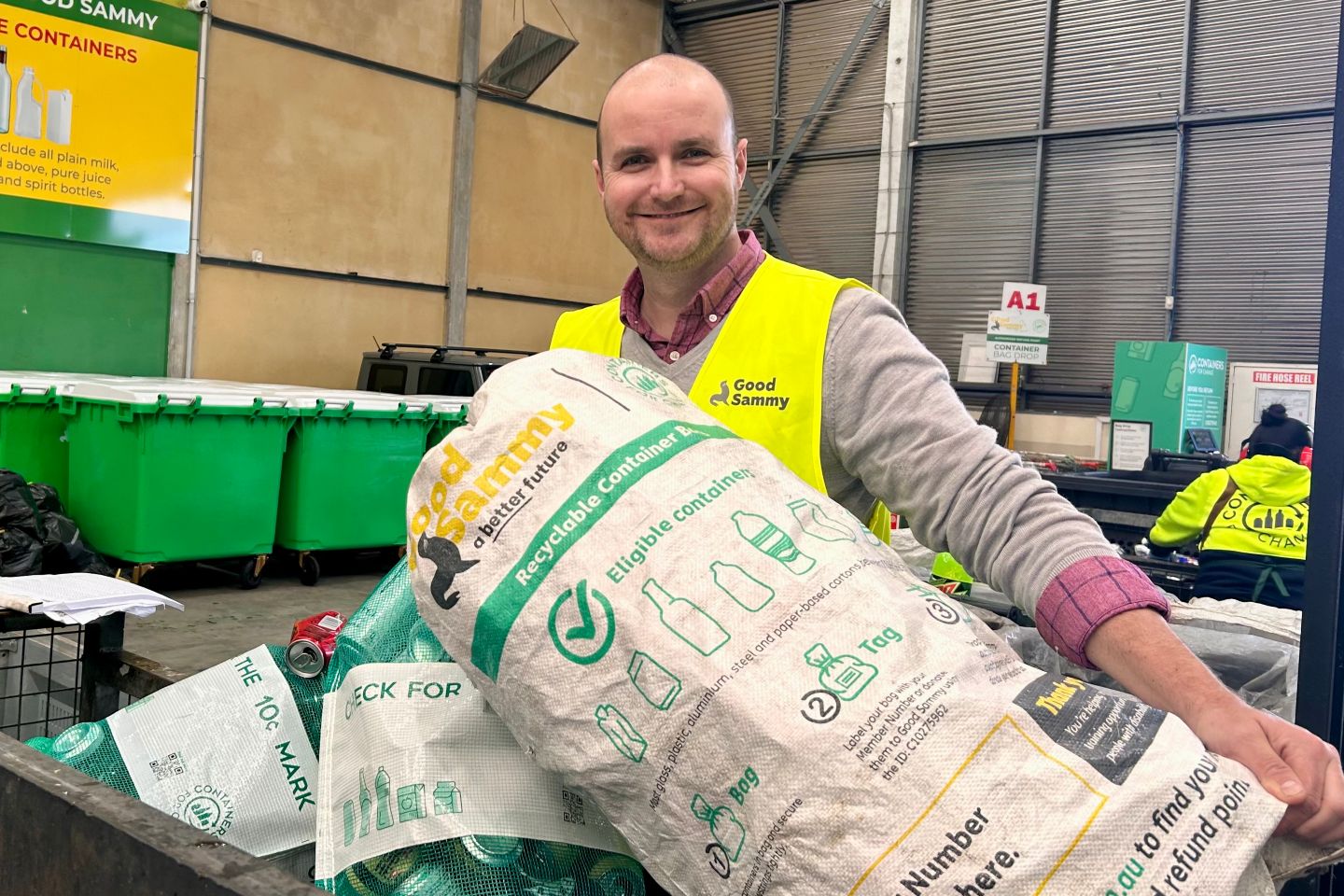
Opinion: The opening of the Containers for Change scheme to wine and spirits is a significant moment for employment opportunities in Western Australia.

Continue Reading

Business

Harbor Multi-Asset Explorer ETF Q1 2026 Commentary

Published

on

Harbor Multi-Asset Explorer ETF Q1 2026 Commentary

ETF investment concept, Exchange Traded Fund, ETF stock options and stock market index fund, Growing Wealth in the Financial Market.

rawintanpin/iStock via Getty Images

Manager Commentary

As of 03/31/2026

“Relative to the end of last year, our assessment of the macro backdrop has become more cautious, as higher energy prices, tighter liquidity conditions, and rising inflation pressures have created a more challenging environment

Advertisement
Continue Reading

Business

Alpex Acquisition completes $115 million IPO on Nasdaq

Published

on


Alpex Acquisition completes $115 million IPO on Nasdaq

Continue Reading

Business

Six surprising ways US President Donald Trump made money in 2025

Published

on

A woman with shoulder-length blonde hair talks into a microphone

Trump’s various lawsuits against media companies netted him $86.5m last year.

The largest payout came from Meta, the owner of Facebook and Instagram. The filing shows that the company gave the president $24.5m to settle a lawsuit over Trump’s accounts being suspended in the wake of the riots in the Washington DC on 6 January 2021.

Suits against Paramount, owner of the CBS news channel, and ABC News resulted in payouts of $16m apiece.

According to the disclosure, the net proceeds of the lawsuits will go to the Trump presidential library.

Advertisement

Trump also received $22m from YouTube to settle a case he brought over his account being suspended on that platform after the riots in 2021.

That money will be given to the trust that manages the National Mall in DC.

There was payment of $8m to Trump from Jack Dorsey, the co-founder of Twitter – now called X after being bought by Elon Musk – after the president was banned from the platform after the riots.

The documents do not say what that money will be used for.

Advertisement
Continue Reading

Business

Comcast’s Breakup Is Overdue. It Shouldn’t Rush Into a New Marriage.

Published

on

Comcast’s Breakup Is Overdue. It Shouldn’t Rush Into a New Marriage.

Comcast CMCSA 0.47%increase; up pointing triangle is finally undoing its own bundle. Investors shouldn’t hold their breath for a new one. 

The cable giant’s plan to separate from its media business is largely drawing cheers from Wall Street. Comcast shares rose more than 4% Monday on the news, though that was well off their morning highs. Other media stocks rose as well, with the S&P Media & Entertainment Group gaining nearly 4%. As is typical in media-related transactions, the Comcast breakup sparked speculation that more deals could follow, such as Netflix NFLX 2.56%increase; up pointing triangle buying the soon-to-be-independent NBCUniversal.

Copyright ©2026 Dow Jones & Company, Inc. All Rights Reserved. 87990cbe856818d5eddac44c7b1cdeb8

Continue Reading

Business

Hidden Supply Chain Risks in Indonesia’s Tier-1 and Tier-2 Regions

Published

on

Hidden Supply Chain Risks in Indonesia's Tier-1 and Tier-2 Regions

Foreign investment risks in Indonesia vary across regions due to infrastructure disparities, congestion, regulation, and supplier performance, demanding localized intelligence for optimal supply chain and site decisions.

Assessing Indonesia’s Supply Chain Risks

Foreign investors often evaluate Indonesia’s logistics by analyzing national indicators and regulations. However, the country’s archipelagic geography, decentralized governance, and uneven infrastructure can pose significant risks at the provincial and district levels. Variations in port capacity, transportation reliability, licensing procedures, and supplier stability mean that localized issues may strongly impact overall supply chain performance.

Regional Variations in Logistics and Operating Costs

Tier-1 regions such as Jakarta, Surabaya, Batam, and Bekasi boast better connectivity but face challenges like congestion, industrial saturation, and tight labor markets. These factors may increase operational costs and prolong delivery cycles. For example, Tanjung Priok port, which handles over half of Indonesia’s international container traffic, exemplifies the pressure points that can disrupt planning in key hubs.

Evolving Infrastructure and Performance Factors

Tier-2 regions like Makassar, Medan, and Palembang typically offer lower costs but lack comprehensive multimodal links and bonded facilities, affecting reliability. As infrastructure projects, including toll roads, port upgrades, and the new capital Nusantara unfold, regional conditions will shift. Without localized insight, investors risk selecting sites that seem viable but may not perform as expected, especially where supply chains are complex and opaque.

Advertisement


Read the original article : How Business Intelligence Identifies Hidden Supply Chain Risks in Indonesia’s Tier-1 and Tier-2 Regions

Continue Reading

Business

Atom Bank sale process fails to attract desired bids, report suggests

Published

on

Business Live

The challenger bank is said to have seen interest from a number of potential suitors

Atom Bank is moving into the Pattern Shop in Newcastle

Atom Bank is now based in the Pattern Shop building in Newcastle.(Image: Atom bank)

Digital bank Atom has failed to attract a desired £600m bid amid a sale process led by its investors, a report suggests.

The Newcastle-based lender is said to been offered below asking price by London-based investor Pollen Street Capital, according to the Financial Times. Atom’s key backers – including BBVA and Toscafund – are reported to be considering halting the sale process as a result.

Yorkshire Building Society and Leeds Building Society are also said to have considered bids for Atom, which last year moved into new headquarters in Newcastle’s Stephenson Quarter. The sale process comes after many years of a mooted flotation for the challenger bank which last year reported it had more than 270,000 customers and mortgage balances of £4.2bn.

Atom was founded in 2013, secured a banking licence in 2015 and after nine years of losses struck a first pre-tax profit of £7m in 2023. The branch-less bank, which now employs more than 500 people, was valued at about £362m when it raised £100m in new equity capital in 2023.

Advertisement

A deal with Pollen Street Capital could have preceded a merger with Tandem, another digital-based lender which Pollen owns. The private equity firm is also linked to Newcastle-registered LSL Property Services via its Pivotal Growth joint venture which aims to grow a tech-led UK mortgage broker.

Atom has been a pioneer of the four-day week, and has talked positively of remote working. Last year, it made a multimillion-pound move from Durham to Tyneside, taking up residence in the historic Pattern Shop building. At the time, the bank said the shift of headquarters was “an important investment in the future of the franchise and one that will help us to drive delivery of the business plan and the realisation of our strategic vision”.

The sales process behind Atom comes after a period of big deals in the UK banking market, including Nationwide Building Society’s £2.9bn takeover of Newcastle-based Virgin Money and Coventry’s acquisition of Co-op Bank. In the bank’s 2025 report, Atom chairman Lee Rochford said valuations in the sector has progressed strongly and that the deals “further entrenched the dominance of high street brands”, raising questions about competitiveness in the market.

Nationwide earned a £2.3bn windfall from its acquisition of Virgin, where it has pledged to keep all branches open until at least 2030 – even where the two brands have locations close to each other.

Advertisement

Atom Bank did not comment on the reports.

Continue Reading

Business

Low-key tribute to singular boss of Samuel Smith’s brewery

Published

on

Business Live

Samuel Smith’s Old Brewery in Tadcaster, North Yorkshire, is one of the most private and secretive businesses in the UK – its reclusive owner Humphrey Smith rarely spoke to the media and ran a unique brewing empire rooted in 1950s pub tradition

A seasonal ale by Samuel Smith

A seasonal ale by Samuel Smith(Image: Newcastle Chronicle)

The half-mast Union flag atop The Old Brewery provided the sole indication at the notoriously tight-lipped Samuel Smith organisation that its reclusive proprietor had passed away.

It was flying beside the 140ft (43m) chimney, which dominates the centre of Tadcaster, situated just a couple of hundred metres from its marginally taller counterpart at the competing John Smith’s brewery.

Advertisement

While Heineken-owned John Smith’s has long been absorbed into the global corporate brewing industry, Eton-educated Humphrey Smith devoted the past 60 years to ensuring Sam Smith’s became synonymous with family-run traditional beer-making anchored in a vision of pub culture from the 1950s.

The company’s website declares: “Our pubs are havens from the digital world – there are no TVs or background music. The use of mobile phones, laptops and other tech is not allowed in our pubs. Friendly pub conversation is encouraged (no swearing! ) together with the responsible enjoyment of our beers.”

Numerous accounts exist of Smith arriving in person to reprimand both customers and landlords, including an episode at a pub in Sheffield in 2020 when a couple claimed they were dismissed after they couldn’t serve his preferred pudding. In 2011, campaigners organised a “kiss-in” when a Sam Smith’s pub in Soho, central London, purportedly ejected two men for a public display of affection.

Mr Smith himself never granted interviews to the press and his company maintained the same approach. His appetite for confidentiality – particularly surrounding his wealth and commercial affairs – meant that Samuel Smith’s is amongst a tiny minority of British enterprises not to submit public financial accounts.

Advertisement

Mr Smith transformed the firm into a private unlimited company in 1982, rendering it exempt from filing accounts or disclosing its assets, though this structure also means all owners bear personal liability for its debts.

The company’s website proudly boasts that its pubs exclusively stock Sam Smith’s beer and cider, with all other produce sourced locally. A post on a real ale enthusiasts’ page described Smith as “an absolute titan of the British brewing world”.

It read: “Love him or hate him for his strict rules banning smartphones, tablets, music, and even swearing, he ran his pubs entirely his own way to preserve the classic, tech-free British pubs experience. Whether you cherished the peace or found the rules baffling, there is no denying his massive impact on our pub heritage.”

York Campaign for Real Ale (Camra) chairman Christopher Tregellis commented: “It is difficult to differentiate between him as a man and the business itself. The two seem to have been closely aligned.

Advertisement

“The business had a reputation as being very traditional and sometimes arbitrary. They seemed prepared to keep large parts of their pub estate empty and unused and would often close pubs at very short notice, depriving local customers of community assets without them knowing why.

“Their pubs are known as purveyors of fairly priced beer and they have a commitment to cask ale which is obviously valued by Camra. The passing of Mr Smith presents the brewery with an opportunity to modernise its approach whilst preserving its good aspects, and we hope to see this happen.”

Continue Reading

Business

Templeton Dragon Fund Inc. Q1 2026 Commentary

Published

on

Templeton Dragon Fund Inc. Q1 2026 Commentary

Franklin Resources, Inc. [NYSE:BEN] is a global investment management organization with subsidiaries operating as Franklin Templeton and serving clients in over 150 countries. Franklin Templeton’s mission is to help clients achieve better outcomes through investment management expertise, wealth management and technology solutions. Through its specialist investment managers, the company offers specialization on a global scale, bringing extensive capabilities in fixed income, equity, alternatives and multi-asset solutions. With more than 1,300 investment professionals, and offices in major financial markets around the world, the California-based company has over 75 years of investment experience and over $1.4 trillion in assets under management as of June 30, 2023. For more information, please visit franklintempleton.com and follow us on LinkedIn, Twitter and Facebook.

Continue Reading

Business

US Federal Reserve chair Kevin Warsh says he will stick by 2% inflation target, vows to bring in real-time economic data for making interest rate decisions

Published

on

US Federal Reserve chair Kevin Warsh says he will stick by 2% inflation target, vows to bring in real-time economic data for making interest rate decisions
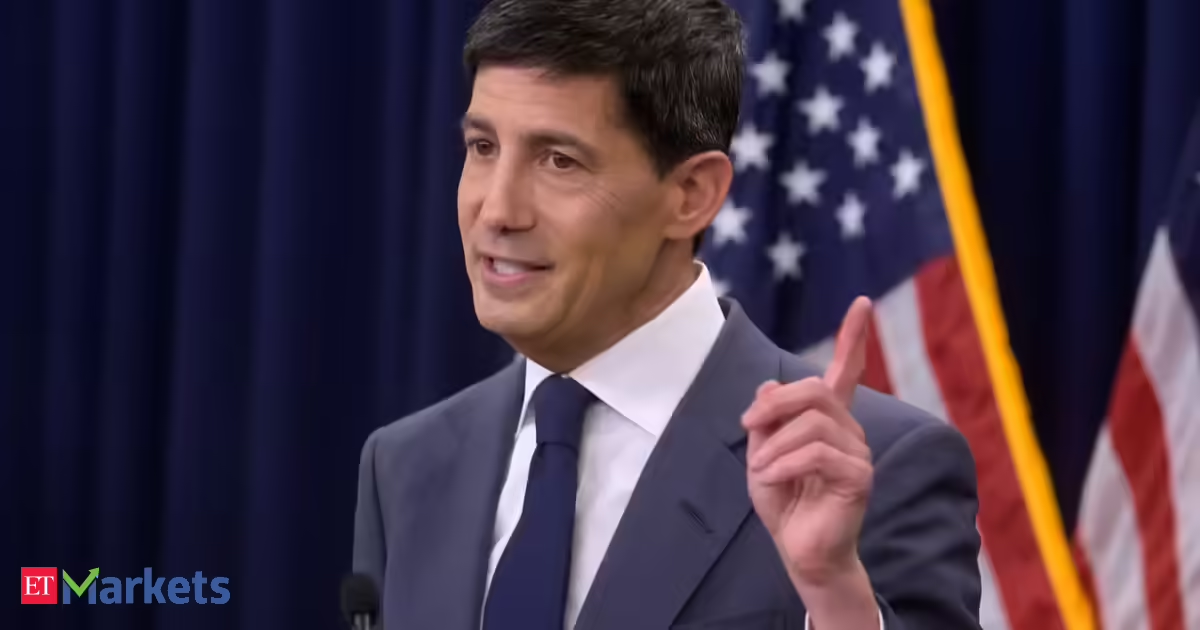
Federal Reserve Chairman Kevin Warsh on Wednesday said he will firmly go by the U.S. central bank’s 2% inflation target and will “disappoint” anyone who expects monetary policy easing despite President Donald Trump’s repeated demands for rate cuts.

“If people thought this central bank was going to be comfortable with an inflation objective above 2%, they would be disappointed,” Warsh told a European Central Bank panel in Sintra, Portugal, adding, “We have been an independent central ⁠bank for ⁠a long time. We are going to be an independent central bank at this moment and you will see no changes on that.”

He further restated that he would give little hints on monetary policy projections.

Warsh also promised to bring in real-time economic data that will help the US central bank make better policies, replacing what he termed problematic government reports.

Advertisement

“My aspiration is that nine to 12 months from now we’re going to be using new technologies to understand what’s happening in the real economy ‌in a contemporaneous, real-time ⁠way that ⁠positions us as central bankers to make better decisions, that we’re no longer going to have to rely solely on data that we get from government agencies with mismeasurement problems that have surveys that are no longer relevant,” Warsh told a monetary policy forum in Portugal. “My favorite data is upon us, and if we do our jobs, we’ll be here a year from now, and we’ll say we’ve discovered data that helps us make better decisions.”


The Federal Reserve relies on a broad mix of government, private-sector and internal data — both public and non-public — to assess economic conditions and guide interest rate decisions aimed at supporting employment and keeping inflation under control.
Warsh has argued that the Fed places excessive reliance on official data, which he believes often lags or fails to accurately reflect current economic conditions. He contends that flawed data has contributed to poor policymaking, allowing inflation to remain above the central bank’s target for more than five years.Fed officials, however, say they guard against the risk of relying on data that may later be revised or fail to capture current conditions by focusing on longer-term trends — an approach Warsh himself appeared to endorse on Wednesday when he avoided drawing monetary policy conclusions from recent economic data.

They also argue that regular consultations with business leaders and organisations across the country, summarised in the Fed’s Beige Book, provide timely insights into economic developments that may not yet be reflected in official data.

Task Force members to be named soon
Warsh also said he would start naming members of his five new task forces from next week, one of which focuses on finding new data-gathering sources ‌and methods.

Warsh says his task force may have ideas about how to improve official data but also about how to generate more up-to-date information about the economy.

Advertisement
Continue Reading

Trending

Copyright © 2025