

Business
Trump Threatens to ‘Complete the Job’ in Iran as US and Iran Trade Strikes Near the Strait of Hormuz

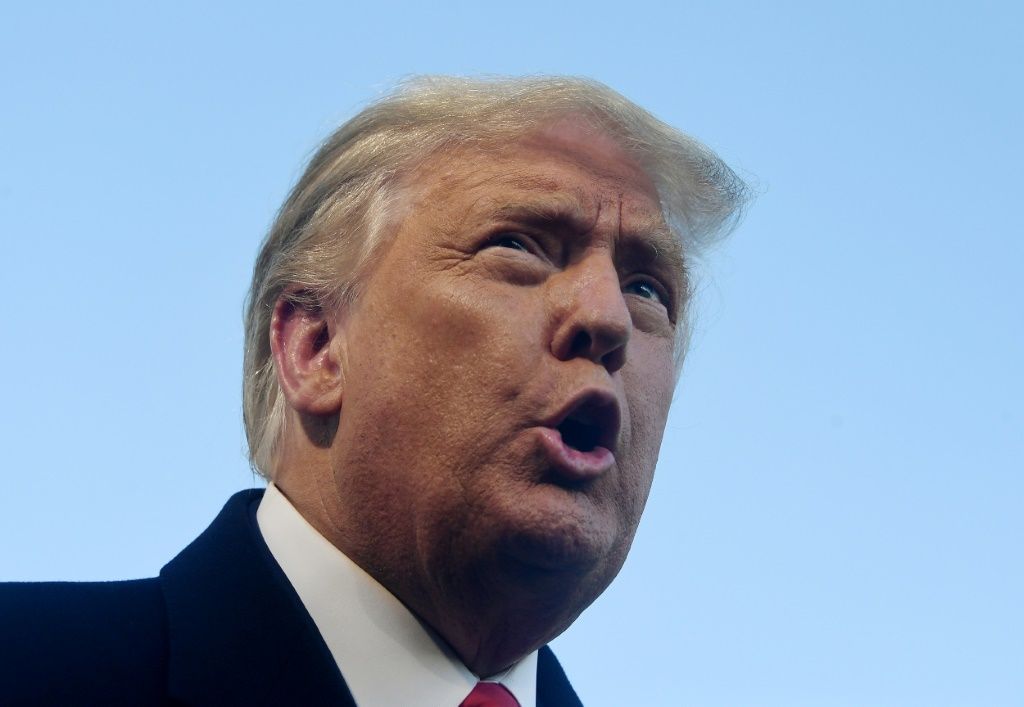
WASHINGTON — President Donald Trump threatened Saturday that Iran would “no longer exist” if the United States is forced to resume full-scale war with the Islamic Republic, after American forces carried out fresh strikes on Iranian military targets in retaliation for a drone attack on a tanker in the Strait of Hormuz.
The exchange marked the latest and most serious test yet of a fragile ceasefire that has repeatedly come under strain since the United States and Iran signed a memorandum of understanding earlier this month aimed at ending months of war and reopening one of the world’s most critical shipping lanes.
Trump’s warning on Truth Social
Trump confirmed the U.S. strikes in a post on Truth Social, framing them as a response to repeated Iranian violations of the ceasefire. “United States aircraft just struck Iranian missile and drone storage locations, and coastal radar sites, for violating the Cease Fire Agreement, AGAIN!” Trump wrote.
He went further, issuing one of his starkest threats yet against the Iranian government. “There may come a point when we are no longer able to be reasonable, and will be forced to militarily complete the job that we very successfully started,” Trump wrote. “If that happens, the Islamic Republic of Iran will no longer exist!”
What prompted the latest strikes
U.S. Central Command said the operation was launched in direct response to an Iranian drone attack on the Panama-flagged oil tanker Kiku, which was carrying roughly two million barrels of crude oil through the strait. According to CENTCOM, the strikes targeted “surveillance infrastructure, communication systems, air defense sites, drone storage facilities, and minelayer capabilities,” hitting a total of 10 Iranian military targets at multiple locations in and near the Strait of Hormuz. Iranian state media reported several explosions in the Sirik and Qeshm areas of southern Iran following the strikes.
Saturday’s operation followed a similar round of U.S. strikes carried out Friday in response to an earlier Iranian drone attack on a separate vessel, the Ever Lovely, a Singapore-flagged cargo ship. Trump had described that earlier Iranian strike as a “foolish violation” of the ceasefire, writing on Truth Social that one of the drones “solidly hit the upper deck of a large and very expensive Cargo Carrying Ship,” though the vessel was able to continue on its way after U.S. forces shot down three additional drones.
Iran’s retaliation in Kuwait and Bahrain
Iran’s Islamic Revolutionary Guard Corps responded to Saturday’s American strikes by launching what it described as joint missile and drone attacks against U.S. military sites in Kuwait and Bahrain. The IRGC said in a statement carried by Iran’s Press TV that the U.S. strikes amounted to a violation of “Clause 1 of the Islamabad Memorandum of Understanding” and warned that continued violations “will result in the complete halt of all diplomatic processes.”
The IRGC claimed it had “destroyed eight important US military facilities at the Ali al-Salem base in Kuwait and at the Fifth Fleet naval base in Port Salman in Bahrain,” and warned that any further American action would be met with a “crushing response.” The statement added, “Any enemy aggression, whatever the pretext, even against insignificant targets… will have a crushing response.”
Kuwait’s military said its air defenses were “engaging hostile missile and drone attacks” following the IRGC’s claims. In Bahrain, which hosts a major U.S. naval base, the interior ministry activated air raid sirens and urged residents to “remain calm and head to the nearest safe place.”
A U.S. official speaking on condition of anonymity told Reuters there were no reported U.S. casualties or major damage to American facilities in the Middle East in the immediate aftermath of the Iranian attacks.
A pattern of escalation despite the ceasefire
Saturday’s clashes are the latest in a string of incidents that have repeatedly tested the truce reached between Washington and Tehran. Vice President JD Vance, who traveled to Switzerland the previous weekend for talks with Iranian counterparts, wrote on social media Friday that “Iran signed a ceasefire agreement. We have honored it,” adding, “If they have disagreements about how the MOU is being applied, they can pick up the phone. But violence will be met with violence.”
Iranian officials have pushed back on characterizations that their actions in the strait constitute ceasefire violations. Ebrahim Azizi, who heads the Iranian parliament’s national security commission, wrote on social media that “the Strait of Hormuz is governed by Iran, so: Respect the rules,” adding, “This is not a violation of the ceasefire; it is ceasefire management.”
Ongoing disputes over the strait
The renewed violence underscores unresolved disagreements between the U.S. and Iran over control of the Strait of Hormuz, a waterway that in peacetime carries roughly a fifth of the world’s oil and liquefied natural gas exports. Iran imposed a blockade on the strait after the United States and Israel launched a bombing campaign against the country on February 28, an operation aimed at curbing Iran’s nuclear and ballistic missile programs.
Shipping traffic through the strait has increased since Trump and Iranian President Masoud Pezeshkian signed their memorandum of understanding earlier this month, but it remains well below prewar levels. Iran has continued to insist that vessels seek its permission before transiting the strait and use routes closer to its coastline, while the U.S. has encouraged ships to instead use a route closer to Oman. Under the terms of the memorandum, the two countries have 60 days to work out remaining details, including arrangements for shipping traffic and the future of Iran’s stockpile of highly enriched uranium.
Israel, which is not a party to the U.S.-Iran agreement, has criticized the memorandum for not securing a concrete commitment from Iran on its nuclear program.
Markets and Iran’s economy
Despite the latest flare-up, oil prices fell sharply Saturday on hopes that shipping traffic through the strait would continue recovering. The economic toll on Iran, meanwhile, continues to mount. The country’s official statistics agency reported Saturday that year-on-year inflation had climbed to 88.6%, up sharply from 68% in February, when the war with the U.S. and Israel first began.
With both sides continuing to trade strikes even as negotiators work behind closed doors on the terms of a lasting peace agreement, the durability of the ceasefire remains in serious doubt. Trump and Iranian officials have increasingly conducted much of their negotiating in public, trading threats and disputed claims of concessions, even as mediators continue working to prevent the fragile truce from collapsing entirely into renewed full-scale conflict.



I am an investment professional currently active in private equity, where I evaluate, structure, and monitor investments across sectors and geographies. That experience shapes my analytical framework: I focus on unit economics, margin trajectories, capital allocation, and the gap between intrinsic value and market price rather than short-term technical signals. Alongside my PE work, I have always maintained an active personal portfolio in public equities, with a focus on technology and platform businesses. I find that a private-markets lens on cash flow generation and operational leverage often surfaces opportunities that purely public-market investors overlook. I am particularly drawn to asymmetric situations where structural improvements are underappreciated: margin inflections, revenue diversification, or strategic pivots not yet priced in by the sell-side. My approach is fundamentals-driven with a 1–3 year horizon. I build bottom-up models combining comparable analysis with DCF work, looking for conviction positions where the downside is well-understood and the upside depends on catalysts the market is underweighting. I prefer concentrated bets over diversified baskets. My motivation for writing on Seeking Alpha is simple: I already produce detailed investment theses as part of my own decision-making process. Publishing them forces intellectual discipline, creates a timestamped track record, and invites feedback from investors who may see angles I have missed. I hold a degree in finance.
Analyst’s Disclosure: I/we have no stock, option or similar derivative position in any of the companies mentioned, and no plans to initiate any such positions within the next 72 hours. I wrote this article myself, and it expresses my own opinions. I am not receiving compensation for it (other than from Seeking Alpha). I have no business relationship with any company whose stock is mentioned in this article.
Seeking Alpha’s Disclosure: Past performance is no guarantee of future results. No recommendation or advice is being given as to whether any investment is suitable for a particular investor. Any views or opinions expressed above may not reflect those of Seeking Alpha as a whole. Seeking Alpha is not a licensed securities dealer, broker or US investment adviser or investment bank. Our analysts are third party authors that include both professional investors and individual investors who may not be licensed or certified by any institute or regulatory body.

Goldman Sachs reiterates NetEase stock Buy rating on game pipeline


BIS says debt, AI boom and fragilities raise global risks


Wolf Report is a senior analyst and private portfolio manager with over 10 years of generating value ideas in European and North American markets, and the owner of Wolf of Value, a service focusing on international dividend-paying value investments.He further covers the markets of Scandinavia, Germany, France, UK, Italy, Spain, Portugal and Eastern Europe in search of reasonably valued stock ideas.
Analyst’s Disclosure: I/we have a beneficial long position in the shares of ACN either through stock ownership, options, or other derivatives. I wrote this article myself, and it expresses my own opinions. I am not receiving compensation for it (other than from Seeking Alpha). I have no business relationship with any company whose stock is mentioned in this article.
While this article may sound like financial advice, please observe that the author is not a CFA or in any way licensed to give financial advice. It may be structured as such, but it is not financial advice. Investors are required and expected to do their own due diligence and research prior to any investment.
I own the European/Scandinavian tickers (not the ADRs) of all European/Scandinavian companies listed in my articles. I own the Canadian tickers of all Canadian stocks I write about.
Please note that investing in European/Non-US stocks comes with withholding tax risks specific to the company’s domicile as well as your personal situation. Investors should always consult a tax professional as to the overall impact of dividend withholding taxes and ways to mitigate these.
Seeking Alpha’s Disclosure: Past performance is no guarantee of future results. No recommendation or advice is being given as to whether any investment is suitable for a particular investor. Any views or opinions expressed above may not reflect those of Seeking Alpha as a whole. Seeking Alpha is not a licensed securities dealer, broker or US investment adviser or investment bank. Our analysts are third party authors that include both professional investors and individual investors who may not be licensed or certified by any institute or regulatory body.


Israel damaged heritage sites across south Lebanon, minister says


Passage Research focuses on identifying variant perception through a blend of fundamental analysis and alternative data. The research process combines detailed financial modeling with real-time datasets to underwrite earnings power, margin durability, and forward expectations.The author has spent over a decade on Wall Street, most recently spending the last five years working in the hedge fund industry as an analyst. Typical coverage spans consumer, TMT, industrials and special situations, with an emphasis on asymmetric risk/reward and catalyst-driven opportunities.
Analyst’s Disclosure: I/we have no stock, option or similar derivative position in any of the companies mentioned, but may initiate a beneficial Long position through a purchase of the stock, or the purchase of call options or similar derivatives in RYN over the next 72 hours. I wrote this article myself, and it expresses my own opinions. I am not receiving compensation for it (other than from Seeking Alpha). I have no business relationship with any company whose stock is mentioned in this article.
Seeking Alpha’s Disclosure: Past performance is no guarantee of future results. No recommendation or advice is being given as to whether any investment is suitable for a particular investor. Any views or opinions expressed above may not reflect those of Seeking Alpha as a whole. Seeking Alpha is not a licensed securities dealer, broker or US investment adviser or investment bank. Our analysts are third party authors that include both professional investors and individual investors who may not be licensed or certified by any institute or regulatory body.

Markets Got Its Final Warnings


Vasily Zyryanov is an individual investor and writer.He uses various techniques to find both relatively underpriced equities with strong upside potential and relatively overappreciated companies that have inflated valuation for a reason.In his research, he pays much attention to the energy sector (oil & gas supermajors, mid-cap, and small-cap exploration & production companies, the oilfield services firms), while he also covers a plethora of other industries from mining and chemicals to luxury bellwethers.He firmly believes that apart from simple profit and sales analysis, a meticulous investor must assess Free Cash Flow and Return on Capital to gain deeper insights and avoid sophomoric conclusions.While he favors underappreciated and misunderstood equities, he also acknowledges that some growth stocks do deserve their premium valuation, and its an investor’s primary goal to delve deeper and uncover if the market’s current opinion is correct or not.
Analyst’s Disclosure: I/we have no stock, option or similar derivative position in any of the companies mentioned, and no plans to initiate any such positions within the next 72 hours. I wrote this article myself, and it expresses my own opinions. I am not receiving compensation for it (other than from Seeking Alpha). I have no business relationship with any company whose stock is mentioned in this article.
Seeking Alpha’s Disclosure: Past performance is no guarantee of future results. No recommendation or advice is being given as to whether any investment is suitable for a particular investor. Any views or opinions expressed above may not reflect those of Seeking Alpha as a whole. Seeking Alpha is not a licensed securities dealer, broker or US investment adviser or investment bank. Our analysts are third party authors that include both professional investors and individual investors who may not be licensed or certified by any institute or regulatory body.


I’ve been researching companies in-depth for over a decade, from commodities like oil, natural gas, gold and copper to tech like Google or Nokia and many emerging market stocks, which I believe could help me provide useful content for readers. After writing my own blog for about 3 years, I decided to switch to a value investing-focused YouTube channel, where I researched hundreds of different companies so far. I would say my favorite type of company to cover are metals and mining stocks, but I am comfortable with several other industries, such as consumer discretionary/staples, REITs and utilities.
Analyst’s Disclosure: I/we have a beneficial long position in the shares of BBWI either through stock ownership, options, or other derivatives. I wrote this article myself, and it expresses my own opinions. I am not receiving compensation for it (other than from Seeking Alpha). I have no business relationship with any company whose stock is mentioned in this article.
Seeking Alpha’s Disclosure: Past performance is no guarantee of future results. No recommendation or advice is being given as to whether any investment is suitable for a particular investor. Any views or opinions expressed above may not reflect those of Seeking Alpha as a whole. Seeking Alpha is not a licensed securities dealer, broker or US investment adviser or investment bank. Our analysts are third party authors that include both professional investors and individual investors who may not be licensed or certified by any institute or regulatory body.
That dynamic is now facing a reset. On June 17, NSE filed its listing papers with market regulator Sebi, and is targeting a listing before January 30 next year. Early estimates put the issue size at close to Rs 30,000 crore, based on NSE’s unlisted valuation of Rs 5 lakh crore. BSE’s market capitalisation at Thursday close was Rs 1.58 lakh crore.
NSE shares will list exclusively on BSE, since under Indian securities law an exchange cannot list on its own platform—a regulatory symmetry that will hand BSE one of its most consequential listings.
Exchange vs Exchange
On its part, BSE has framed the development as a positive rather than a threat to its own valuation. “Listing of any eligible institution is a positive development for India’s capital markets,” said managing director Sundararaman Ramamurthy. “Valuations and stock prices are outcomes of a company’s growth prospects and execution, and are best left to the market.”
NSE commands 88% of cash-market turnover, 91% of equity futures and options, and 89% of interest-rate futures. In currency derivatives, its share is 74% in futures and effectively 100% in options. Globally, NSE ranks first in equity derivatives contracts traded—with a 51% share—and third in the number of cash-equity trades.

Yet the listing papers also discloses a rare stumble. Total operational revenue declined 3% year-on-year to Rs 16,601 crore in FY26, from Rs 17,141 crore in FY25. Profit fell 16% to Rs 10,302 crore, from Rs 12,188 crore in FY25. The exchange attributed the decline to lower transaction charges, softer trading activity, and the impact of Sebi’s tightening of the futures and options segment—the very regulations that have reshaped the derivatives landscape across both exchanges.
That creates an unusual valuation setup. NSE is cited at 38x to 43x FY26 price-to-earnings on IPO price band assumptions of Rs 1,600 to Rs 1,800 per share, compared with BSE trading at 69x FY26 earnings.In other words, the dominant exchange may come to market at a significant discount to its smaller rival—at least on near-term multiples—partly because it is bearing the brunt of the same regulatory changes BSE has so far navigated better.
Two Sides
Investors are divided on the new equilibrium. As Investor Vijay Kedia says, “Scarcity premium may reduce once NSE gets listed because investors will get an opportunity to own the larger exchange as well, but BSE does not lose its importance.”
Pankaj Murarka, CIO at Renaissance Investment Managers, takes a longer view. Exchanges typically command rich valuations due to their oligopolistic structure and high entry barriers, he argues, and both NSE and BSE can sustain strong multiples—though NSE is likely to command a premium given its dominant market share. BSE’s trajectory, he said, will depend on whether it can meaningfully gain share in options, futures and cash equities, and expand into new product segments.
A listing of NSE—valued at Rs 5 lakh crore—exclusively on BSE could itself prove a fillip. “It may result in enhanced liquidity, business and participation by institutional investors at BSE,” said Parmod Kumar Bindlish, a former Sebi official.
BSE’s Revival
The debate arrives at a moment of transformation for BSE. When Ramamurthy took over as MD in January 2023, the exchange reported FY2022 revenue of Rs 928 crore, profit of Rs 254 crore, and a market cap of Rs 5,742 crore. By FY2026, revenue had risen to Rs 5,226 crore—up 41% CAGR—and profit to Rs 2,497 crore, an increase of 58% CAGR.
The markets have taken note, with valuation surging more than 20-fold since he took charge.
Ramamurthy attributed the turnaround to “innovation, product development and execution”—reviving the equity derivatives business, acquiring a 50% stake from S&P Dow Jones Indices in the index venture, upgrading mutual fund platforms to handle surging volumes, and stepping up investments in technology and member connectivity.
“When we started, both systems and the culture were somewhat archaic and lacked vibrancy,” he said. BSE filled long-standing vacancies, brought in a fresh set of C-suite leaders and hired younger professionals. Some of the changes were basic but necessary, he added, noting that even employee facilities such as a proper cafeteria needed attention.
The strategy in derivatives, he added, was not driven by market share targets but by “the voice of the customer.”
On Sebi tightening options trading, he said investor protection and market development “must go hand in hand,” and that markets “naturally adapt to evolving regulations over time.” Derivatives trading revenues more than doubled to Rs 3,134 crore in FY26, with daily average premium volume rising 118% to Rs 19,522 crore.
Kedia believes NSE’s listing will prompt investors to compare the two exchanges more closely. “The exchange that grows faster and creates more value for shareholders is likely to command a higher multiple,” he said.
Murarka offered perhaps the most durable framing: “Markets can go up or down, but in casino parlance, the house never loses. Exchanges are the house.”

Granite REIT: Still Below NAV, Still Underappreciated (TSX:GRT.UN:CA)
How Low Can XRP Go in July if $1 Support Falls? ChatGPT’s Worrisome Predictions

10 Great Two-Season TV Shows Without a Single Flaw


-
 Sports5 days ago
Two goals and an assist by sheer aura: Cristiano Ronaldo just entered the World Cup chat
-

 Tech6 days ago
Microsoft accidentally kills epic Outlook email threads
-

 Fashion2 days ago
Weekend Open Thread: Staud – Corporette.com
-

 Politics2 days ago
The House | Manchesterism won’t survive the painful trade-offs unless it gets citizens on board
-

 Politics2 days ago
Potential 2028er World Cup attendee leaderboard
-

 Business2 days ago
Asia stock markets slide as tech shares slump
-

 Tech3 days ago
A Look At A Gaggle Of Transputer Boards
-
Crypto World4 days ago
Bitcoin (BTC) Dips Below $62K, Ethereum (ETH) Plunges 6% Daily: Market Watch
-
 Crypto World3 days ago
Dell (DELL) Shares Tumble Over 5% Following Analyst Downgrade to Hold
-

 Crypto World4 days ago
Securitize Wraps Roubini's SEC-Registered ETF as Dubai VARA Digital Security
-
Business4 days ago
Entergy settles forward sale agreements, raises $672 million in cash proceeds
-

 Crypto World1 day ago
Kraken's xStocks Opens Bending Spoons IPO Registration to EEA Retail
-

 Sports2 days ago
FIH Pro League: India defeat Pakistan 7-1, register biggest win of campaign | Other Sports News
-

 Crypto World2 days ago
RTX holders must register wallets before token distribution begins
-
 Crypto World2 days ago
Hyperliquid Named on Singapore MAS Investor Alert Register
-

 Sports3 days ago
India vs Bangladesh LIVE Score, Women’s T20 World Cup: Bangladesh Opt To Bat; India Enter ‘Do-Or-Die’ Stage As Semi-Final Race Heats Up
-
 Tech7 days ago
Signal’s Meredith Whittaker says AI chatbots ‘are not your friends’ and calls Copilot agents a backdoor
-
Crypto World2 days ago
The DATA Foundation Launches to Tackle AI’s Multi-Billion Dollar Training Data Bottleneck
-

 Crypto World3 days ago
Strategy (MSTR) has a 10-month cash runway for dividends, but retail investors are losing faith
-
 Crypto World2 days ago
AAVE price tests 9-month trendline after 17% rebound as breakout hopes build
You must be logged in to post a comment Login