
Business
Trump, without elaborating, cites ’some pretty good news’ on Iran



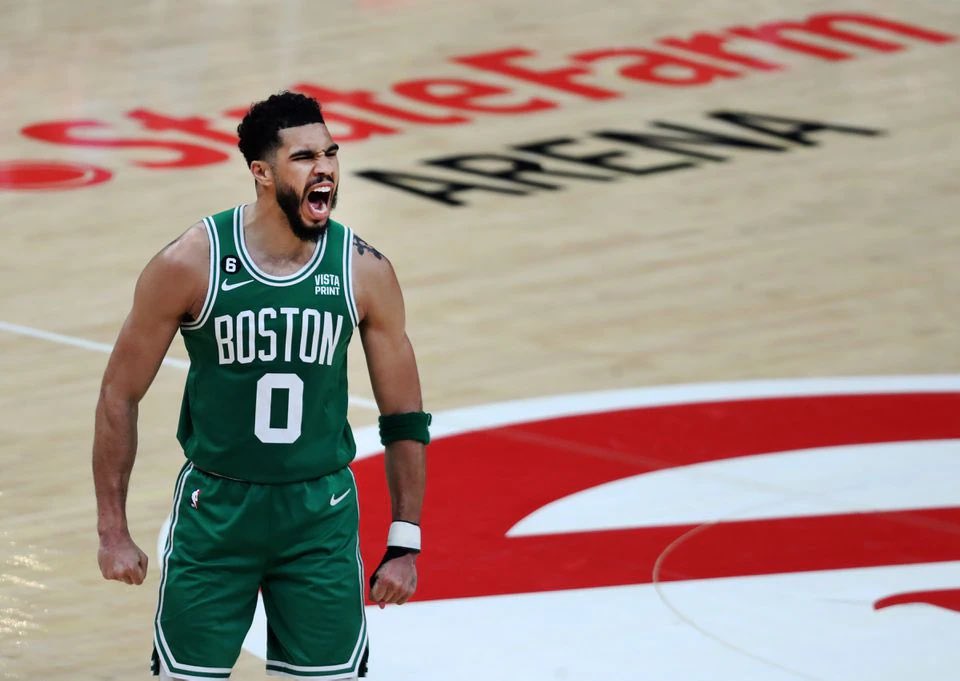
BOSTON — Jayson Tatum is healthy and ready for the 2026 NBA playoffs, the Boston Celtics confirmed as the team prepares for its first-round series against the Philadelphia 76ers. The 28-year-old All-NBA forward, who tore his right Achilles tendon in last year’s postseason, has cleared all medical hurdles and carries no restrictions heading into the postseason.
Tatum suffered the devastating injury on May 12, 2025, during Game 4 of the Eastern Conference semifinals against the New York Knicks at Madison Square Garden. He underwent successful surgery shortly afterward and embarked on what many viewed as a season-ending recovery. Yet the Celtics star defied expectations, making his 2025-26 debut on March 6 against the Dallas Mavericks — just under 10 months after the rupture.
IBTimes US
Since returning, Tatum has played in 16 regular-season games, averaging roughly 21 points, 10 rebounds and 5 assists while shooting efficiently. He has posted multiple double-doubles, earned Eastern Conference Player of the Week honors and logged heavy minutes, including 40 in recent outings. The Celtics went 10-2 in his first stretch back on the court, underscoring his immediate impact.
Most recently, Tatum sat out the final two regular-season games for “injury management” and rest as Boston locked in the No. 2 seed in the East. Those absences were precautionary, with the team prioritizing his health for the playoffs rather than risking fatigue on back-to-backs. Celtics coach Joe Mazzulla and the medical staff have emphasized a gradual ramp-up that has now reached full clearance.
Tatum addressed his recovery candidly in recent interviews. “It’s only been 16 games,” he said. “I’m not 100% myself yet, but I’m proud of what we’ve accomplished.” He described returning to Madison Square Garden — the site of his injury — as emotionally heavy but ultimately cathartic. In that April 9 game, he delivered 24 points, 13 rebounds and eight assists in 40 minutes, checking another major mental box.
Medical experts note that Tatum’s timeline is impressive. Typical Achilles recovery for elite athletes often stretches 12-18 months for full explosiveness. Tatum’s return at under 10 months, combined with his production, has drawn praise from legends like Dominique Wilkins, who underwent a similar injury. “He looks strong,” Wilkins said. “The kid is doing everything right.”
The Celtics have managed Tatum carefully throughout his comeback. Early games featured minutes restrictions that were lifted after a few weeks. He has not played both ends of back-to-backs consistently, a strategy that preserved his conditioning. No setbacks have been reported, and recent imaging confirmed the repaired tendon is stable.
With the playoffs underway, Tatum enters as a key piece of a deep Celtics roster. Boston features a strong supporting cast led by Jaylen Brown, who carried the team during Tatum’s absence. The duo’s chemistry remains elite, and both have expressed excitement about competing together again in May and beyond.
Celtics president of basketball operations Brad Stevens highlighted the organization’s patience. “We never rushed him,” Stevens said. “Jayson did the work quietly for months, and now he’s ready when it matters most.” The team’s medical staff, including specialists who coordinated with Tatum’s surgeon Dr. Martin O’Malley, receive high marks for the structured rehab program.
Fans and analysts have reacted with optimism. Tatum’s return has fueled title hopes in Boston, where expectations remain championship-or-bust. Some skeptics questioned whether he could regain his pre-injury burst so quickly, but early returns suggest he is close. His lateral quickness, finishing at the rim and defensive versatility have all flashed positively.
Tatum himself views the entire season as a bonus. “Just being back out there playing playoff basketball again is more than I could dream of,” he told reporters. The emotional weight of the injury — described by Tatum as the lowest point in his life — has given him fresh perspective. He has spoken about appreciating every moment on the court after months of grueling rehab.
Looking ahead to the 76ers series, Tatum is expected to start and play full minutes barring any new issues. Philadelphia presents a tough test with stars like Tyrese Maxey and Paul George, but Boston’s depth and home-court advantage provide a strong edge. A deep run would test Tatum’s endurance, yet those close to him express confidence in his preparation.
Off the court, Tatum has stayed active in the community, recently surprising a 92-year-old lifelong Celtics fan with courtside seats. Such gestures reflect his grounded mindset during recovery. His family, including young son Deuce, has been a constant source of motivation.
The broader NBA landscape watches closely. Achilles injuries have derailed many careers, but modern medicine and dedicated training have improved outcomes. Tatum’s case could serve as a blueprint for future stars facing similar setbacks. His transparency about the mental side of recovery has also resonated with athletes across sports.
As the Celtics open the playoffs, Tatum stands as a symbol of resilience. From the floor of Madison Square Garden in tears last May to leading Boston once more in April 2026, his journey embodies perseverance. With no lingering limitations and a clear mind, the five-time All-Star is poised for a strong postseason showing.
Boston fans, hungry for another title after falling short in recent years, have embraced Tatum’s return with open arms. TD Garden is expected to be electric for home games, with chants of “MVP” likely echoing as he chases another deep run. Whether this ends in a championship remains uncertain, but Tatum’s presence alone has transformed the Celtics’ outlook.
For now, the focus is game-by-game. Tatum and the Celtics will take the court with renewed purpose, proving that even the toughest setbacks can lead to stronger comebacks. As one of the league’s brightest stars, Jayson Tatum has turned injury adversity into playoff motivation — and Boston is ready to ride with him.
Business
How The 'Fake-Death' Of Petrodollar Supremacy Rewrites The S&P 500 Playbook (It's Not What You Think)

How The 'Fake-Death' Of Petrodollar Supremacy Rewrites The S&P 500 Playbook (It's Not What You Think)

Colombia’s Petro warns of Latin American ’rebellion’ if US doesn’t rethink policy

MARA Holdings: A Valuation Re-Rating Could Be Near

The Alfred E. Neuman Market Returns

China willing to advance talks to upgrading Switzerland trade pact, ministry says
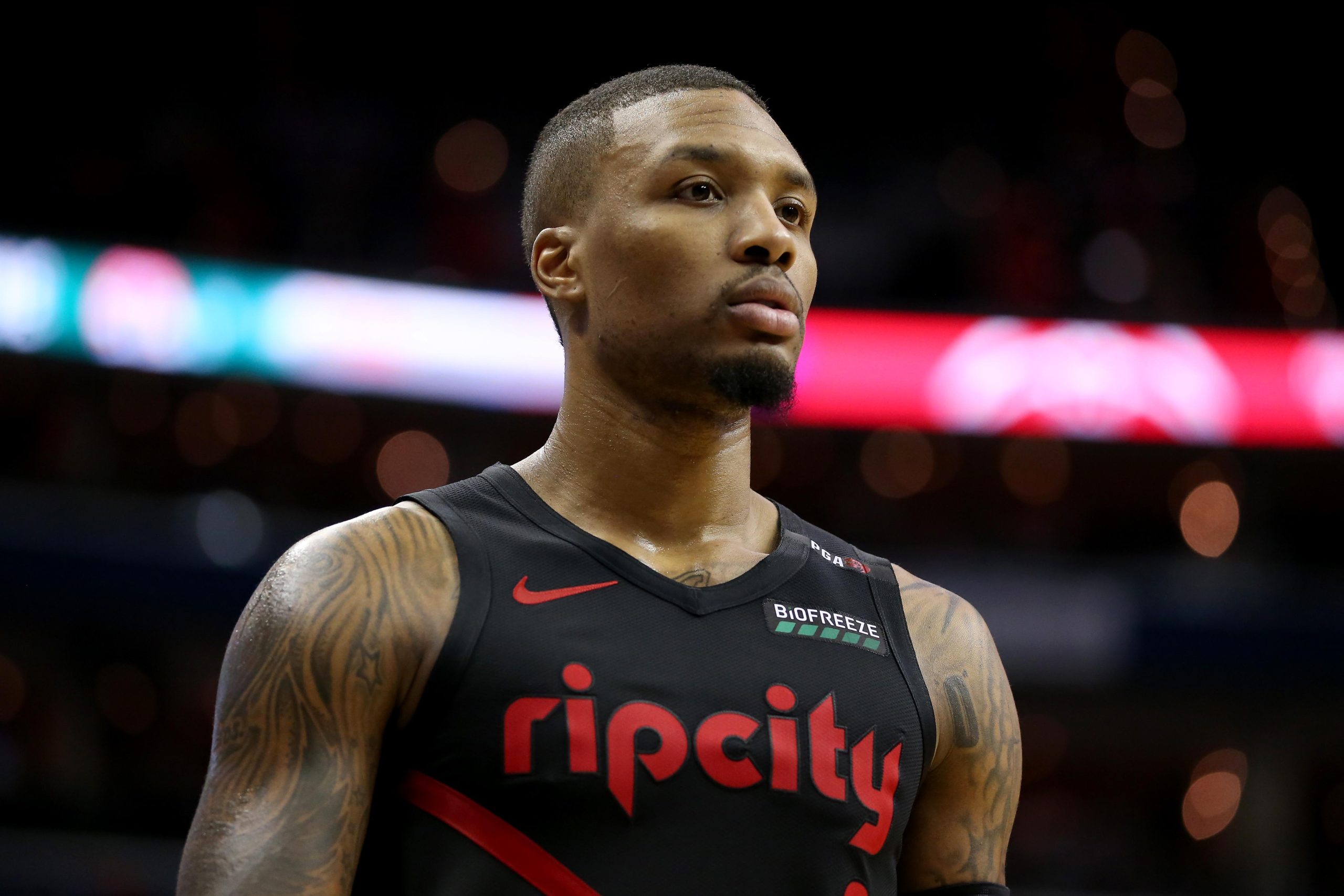
PORTLAND, Ore. — Nearly a year after tearing his left Achilles tendon in the playoffs, Damian Lillard remains sidelined but continues making steady progress in rehabilitation, with the Portland Trail Blazers star firmly targeting a full return for the start of the 2026-27 NBA season. The nine-time All-Star has not played a single game in 2025-26, yet his recent activities — including a dramatic 3-Point Contest victory at All-Star Weekend — have fueled optimism about his long-term outlook.

Lillard suffered the devastating non-contact injury on April 27, 2025, during Game 4 of the Milwaukee Bucks’ first-round playoff series against the Indiana Pacers. In the first quarter, the veteran guard crumpled to the floor while chasing a rebound, immediately grabbing his left lower leg. An MRI confirmed a torn left Achilles tendon, ending his season and altering the trajectory of his career at age 34. He underwent successful surgery on May 2, 2025.
The injury capped a difficult stretch for Lillard with the Bucks. After being traded from the Trail Blazers in 2023 in hopes of chasing a championship alongside Giannis Antetokounmpo, the partnership fell short. Following the Achilles tear, the Bucks waived and stretched Lillard’s contract, clearing cap space while he recovered. In the offseason, he chose to return home to Portland, signing a deal with the franchise that drafted him in 2012.
Lillard has used the entire 2025-26 season for recovery. The Trail Blazers have taken a patient approach, listing him as out for “left Achilles tendon; injury management” on official NBA reports. As of mid-April 2026, more than 11 months post-surgery, he has avoided any setbacks while progressing through individualized rehab that includes on-court shooting and light basketball activities. Full-contact play and competitive games remain off limits.
The highlight of his recovery came in February at All-Star Weekend in San Antonio. Despite zero regular-season games, Lillard competed in the 3-Point Contest and stunned the league by winning his third title, joining Larry Bird and Craig Hodges as the only three-time champions. He knocked down shots from logo range and delivered under pressure, proving his shooting touch remains elite. Afterward, he spoke candidly about representing strength rather than the injury itself.
“I wouldn’t say I’m representing the Achilles nation or nothing like that,” Lillard said. “I do think I represent strength. We are athletes so when we go through injury people act like it’s the end of the world… For me it was more about representing strength.” His victory resonated widely, with fans and fellow players praising his resilience.
Lillard has provided measured updates throughout the process. In February interviews, he described his status as “I can do a lot, that’s where I’ll put it,” emphasizing patience and a personal timeline. At 35 years old in July, he understands the importance of being fully ready. “After the season, I’m going into a full summer to get ready for next season, and I want to make sure that I’m 1,000 percent,” he told reporters.
Medical experts note that Achilles recoveries for guards in their mid-30s often require 12-18 months for full explosiveness and confidence. Lillard’s case has drawn comparisons to other high-profile athletes who returned successfully, though questions linger about potential declines in speed and lateral quickness. Recent social media clips shared by the Blazers and fans show him moving fluidly in controlled workouts, hitting deep threes and jogging without visible limp.
Portland’s front office has expressed support for the deliberate approach. With the team in the play-in tournament as of mid-April, Lillard will not participate against the Phoenix Suns or any potential further games. The organization views his absence as an investment in a stronger 2026-27 campaign alongside younger talent, including Deni Avdija and other pieces acquired during the rebuild.
The injury has sparked broader conversations about player longevity and Achilles tears in the NBA. Several stars have faced similar setbacks in recent years, with varying outcomes. Lillard has leaned on conversations with veterans like Aaron Rodgers, Kevin Durant and Rudy Gay, who experienced comparable injuries. He has avoided public pity, focusing instead on mental fortitude. “My first thought was ‘I’m about to come back from this,’” he reflected.
Off the court, Lillard has stayed connected to the game and community. His return to Portland has been warmly received by fans who remember his decade of loyalty, logo threes and “Dame Time” celebrations. The Blazers have integrated him in mentoring roles, and he has expressed genuine excitement about playing with the team’s emerging core next season.
Financially and contractually, the situation stabilized after the Bucks’ waiver. Lillard’s new deal with Portland provides stability as he rehabs, with both sides aligned on a patient timeline. Analysts project he could reclaim a significant role as a starting point guard and leader if he returns close to his pre-injury form, though expectations have been tempered given his age.
As the 2025-26 season winds down for Portland, attention shifts to Lillard’s summer training. He plans intensive work to rebuild explosiveness, strength and conditioning. Blazers medical staff continue monitoring progress closely, with regular imaging and functional testing guiding the process. No timeline has been set for training camp participation, but the target remains opening night 2026-27.
Fans have rallied around the veteran, creating viral moments from his 3-Point Contest win and rehab clips. Social media hashtags like #DameTime and #RipCityStrong trend whenever updates surface. For a player who once carried the Blazers through thick and thin, the support feels like a homecoming.
Lillard’s story underscores themes of perseverance in professional sports. From the painful moment on the Fiserv Forum floor to logo-range threes in All-Star competition, his journey reflects determination. While this season has been lost on the court, it may prove foundational for a strong final chapter in Portland.
As April 2026 draws to a close, Damian Lillard continues his solitary race against recovery timelines. The Blazers and their fans wait patiently, confident that when Dame returns, the signature step-back and clutch performances will follow. For now, the focus remains on health, strength and the promise of next season — one step, one shot at a time.
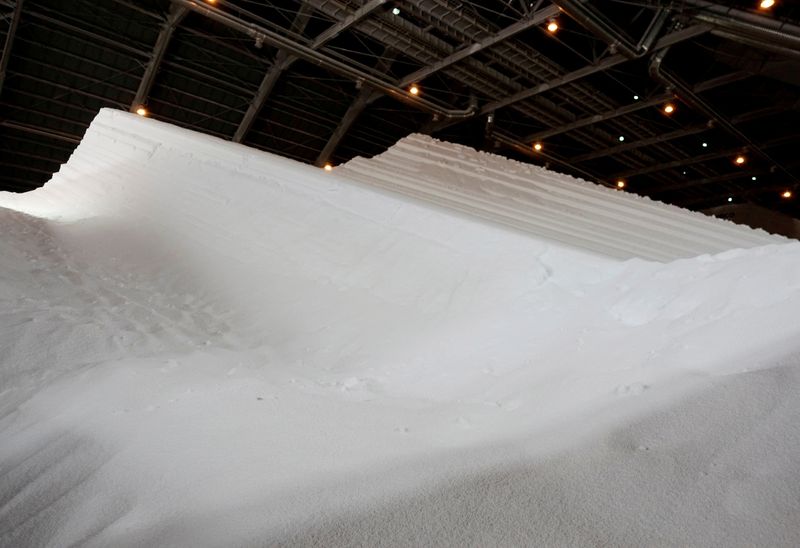

US buyers redirect imported fertilizer overseas as Iran war drives up global prices
U.S. extends Russian oil sanctions waiver amid global supply squeeze

In the midst of the latest Gulf conflict, oil has been an economic weapon and propaganda tool. Both Tehran and the US had been blockading shipments through the vital Strait of Hormuz waterway before at least a temporary reopening on Friday, and trying to jawbone the market in their favor.
Be wary of anyone saying one particular oil-price gauge matters more than the others. Whoever is betting on the cost of crude going up will argue Friday’s relief selloff doesn’t reflect reality, with shipping still severely disrupted. Those betting on a fall will have had their own views confirmed.
 Bloomberg
Broadly speaking, the oil market is split in two. The first part is the physical market, where real barrels change hands and they can be touched, smelled, almost savored. The second is visible only on computer screens. These are the printed financial contracts such as swaps, futures and options that change hands in electronic marketplaces. Traders call them paper barrels.
The financial and physical markets are, of course, linked. But they do different jobs. The former is where traders transfer oil-price risk. By nature, it’s anticipatory. Sometimes, it prices in expected supply disruptions days, weeks or even months before they happen. And it prices supply recoveries well before the black stuff flows again. It’s a window into a possible future, a distillation of probable outcomes. It isn’t, however, a forecast, just the price buyers are willing to pay today for a barrel that would be delivered in the future.

The physical market is where traders go to buy and sell straightaway the real stuff that goes into refineries. It reflects actual supply and demand right now. The key to prices is what kind of barrels are available, and how easily they can be accessed and shipped. It’s more about logistics than mathematical models.
Crucially, the supply of paper barrels is unlimited and that of physical barrels constrained, more so during a shock. Ilia Bouchouev, an ex-oil trader now at the Oxford Institute for Energy Studies, estimates the physical market has lost more than 10 million barrels since the war started. But the financial market has traded an extra billion barrels when all the different paper instruments are aggregated.In normal times, the price of the financial and the physical markets are closely aligned, plus or minus certain differentials and ancillary costs. In these periods of calm, the easiest answer to “what’s the real price of oil?” is to look at any financial screen. Typically, all the paper benchmarks — Brent, West Texas Intermediate and Dubai — trade in unison, within a few dollars.
BloombergBut these aren’t normal times. Physical prices have skyrocketed as refiners hunt for any barrels for immediate delivery. What used to trade a few cents above or below the paper benchmark is being sold at a premium of $10, $15, $20 or even higher. Saudi Arabia will sell its flagship Arab Light to European customers at a premium of $27.85 in May. Last month, it was a discount of 65 cents. “Physical transactions are under a lot of strain,” Josu Jon Imaz, chief executive officer of Spanish refiner Repsol SA, says.
And this is before adding ancillary fees, which don’t feel so ancillary any more. Freight costs that used be $1 a barrel today set you back as much as $25. Insurance is a small fortune. These extra expenses don’t figure in the financial market because no one needs to physically move a paper barrel. But add them in and “the barrel of oil, door-to-door, is way above the headline price,” says HSBC Holdings Plc CEO Georges Elhedery.
This gap doesn’t mean the physical and financial markets are disconnected, or that the latter is broken, as many bloggers and Wall Street types claim. They’re simply doing different jobs and offering two different answers. In broad terms, the physical market tells the price from today to about 30 days ahead; the financial market usually from two months hence to 10 years out.
So what message is being conveyed? One of my go-to oil traders, who’s happy to impart (anonymously) the knowledge built over multiple crises, puts it simply: The physical market shows barrels are extremely tight today; but the paper market is saying that if you look at a distribution of possible outcomes a couple of months from now, there are many scenarios where that eases.
BloombergThe different timeframe is critical. In the early days of the war, the paper market was where the fears about the conflict’s impact showed up. The Brent contract surged to $120 in early March. But because of the excess supply sloshing about back then, its physical counterpart barely made it above $100. Now, the situation has inverted: The physical market is still pricing today’s scarcity; the financial market is pricing the end of the war.
The irony is that financial traders, oil speculators par excellence, have softened the Hormuz shock by pricing in its potential resolution. But oil refiners must live in the present. Security of supply overrides thoughts about price. My trader contact says refiners, particularly if state-owned, will pay whatever it takes to guarantee delivery. And they will do so in way that’s disproportionate to the actual oil shock because not having a barrel — for a country’s energy needs and critical products — is existential in a way that overpaying is not.
Geography matters to price, too. Colonial-era terminology still lives on in this market, with an imaginary vertical line dividing the world at the Suez Canal in Egypt. The current oil shock started east of there, and that’s where the physical market and shipping costs have been most affected. Back-of-the-envelope math suggests some eastern refiners are going to pay north of $175 for “landing prices” — the sum of the barrel cost, its transport expense and other elements.
The fallout is, however, moving westward. Asian refiners are shopping in the Atlantic basin, from Norway to West Africa. The cost of Dated Brent, the reference for the physical North Sea market, briefly surged to $145 this month.
Even if Hormuz reopens, as President Donald Trump promised Friday, the shock’s impact will spread further west. The US, the largest oil-producing nation, will become the barrel of last resort. This is the land of cheap oil. Its refiners are buying crude at absurdly low prices compared to Asia and Europe. And because they’re connected by pipeline, they pay regular transport costs.
How cheap is cheap? Look at the daily “Crude Oil Price Bulletin” posted by American traders, pipeline companies and refiners as a reference for physical purchases. In the April 15 edition, West Texas Intermediate was $87.77. Colorado Southeastern goes for $78.27. Wyoming Sweet is $84.87, and Nebraska Intermediate commands $77.77. A lucky refiner with access to Utah Sweet can get it for $76.98. Western Canadian Select, a benchmark for the Alberta oil sands, goes for about $72.
BloombergLooking at those prices, you grasp the geopolitical and economic significance of the US shale revolution and Canada’s oil sands. In the middle of a historic oil shock, North America is swimming in the stuff.
The ultra-low prices won’t last, however, unless Hormuz reopens fully. An armada of tankers is headed toward the US coast no matter what happens in the Persian Gulf in coming days. They’ll still load US crude even if the ceasefire holds. All things equal, North American oil costs would increase, and the rises elsewhere would be capped as eastern refiners access the US market. We’re already witnessing the start. Mars crude, pumped out of the Gulf of Mexico, is one America’s more easily exportable varieties. Earlier this week, it went for $97.30 as it becomes the go-to US crude to ship.
I hope by now you recognize the difficulty of providing an easy answer on the “real” price of oil. And there are other factors to include, too.
First, should we refer to oil in nominal terms or real terms? In the latter, adjusted by the cumulative impact of inflation, oil prices would need to spike further to match previous crises. The nearly $150 record set in 2008 in both the physical and financial Brent markets is about $220 in today’s money.
And second, should we pay more attention to the price of the refined products consumers actually buy and less to the crude that refiners purchase? During an acute shock like the Hormuz shutdown, the cost of refined products such as gasoline and jet fuel rises faster than the stuff they’re made from. Politically and economically, that’s arguably much more important.
Ultimately, if cornered I will always say the physical market is king, and the price is always what’s paid today, not two months down the road. But I will insist on an average among regions, including North America.
On that basis, let’s say the real level this week was $125 or so. In a couple of months? There, probably, I’d listen to what the speculators are saying in the financial market. So far they’ve been proved right in judging the supply disruption and now the resolution. I agree, the price is headed lower.
Mandelson’s vetting process was supposed to be intrusive and embarrassing

Celtics Star Fully Cleared, Eyes Deep Playoff Run After Achilles Tear

Bitcoin Price Prediction: Hormuz, Iran War, Oil Price, Metals, and Stocks vs Crypto


-
 NewsBeat5 days ago
Pep Guardiola and Gary Neville agree over Arsenal title problem that benefits Man City
-

 Crypto World5 days ago
The SEC Conditionalises DeFi Platforms to Be Avoided for Broker Registration
-

 Politics6 days ago
World Cup exit makes Italy enter crisis mode
-

 Crypto World4 days ago
SEC Signals Exemption for Crypto Interfaces From Broker Registration
-

 News Videos3 days ago
Secure crypto trading starts with an FIU-registered
-

 Fashion15 hours ago
Weekend Open Thread: Theodora Dress
-

 Sports24 hours ago
NWFL Suspends Two Players Over Post-Match Clash in Ado-Ekiti
-

 Crypto World4 days ago
SEC Proposes Certain Crypto Interfaces Don’t Need to Register as Brokers
-

 Business7 days ago
Ireland Fuel Protests Enter Day 5 as Blockades Spark Shortages and Government Prepares Support Package
-

 NewsBeat4 days ago
Trump and Pope Leo: Behind their disagreement over Iran war
-
 NewsBeat6 days ago
JD Vance announces ‘no agreement’ with Iran over nuclear weapons fear
-

 Politics12 hours ago
Palestine barred from entering Canada for FIFA Congress
-

 Crypto World10 hours ago
Russia Pushes Bill to Criminalize Unregistered Crypto Services
-
Sports6 days ago
Dexter Lawrence, Stefon Diggs, Trading for De’Von Achane
-

 Crypto World5 days ago
Trump whales load up ahead of Mar-a-Lago luncheon.
-
 Crypto World5 days ago
Sei Network Enters Quiet Reset Phase as On-Chain Metrics Signal a Slowdown in 2026
-
Business5 days ago
Kering slides after Morgan Stanley downgrade, Gucci woes loom
-
 Entertainment4 days ago
Karol G’s ‘Ultra Raunchy’ Coachella Set Gave ‘Satanic Vibes’
-
 Business1 day ago
Creo Medical agree sale of its manufacturing operation
-

 Sports5 days ago
NWFL opens Pathway for new Clubs ahead of 2026 Season
You must be logged in to post a comment Login