
Business
TSMC Shares Rise 1.3% as Chip Foundry Leader Benefits from Artificial Intelligence Demand

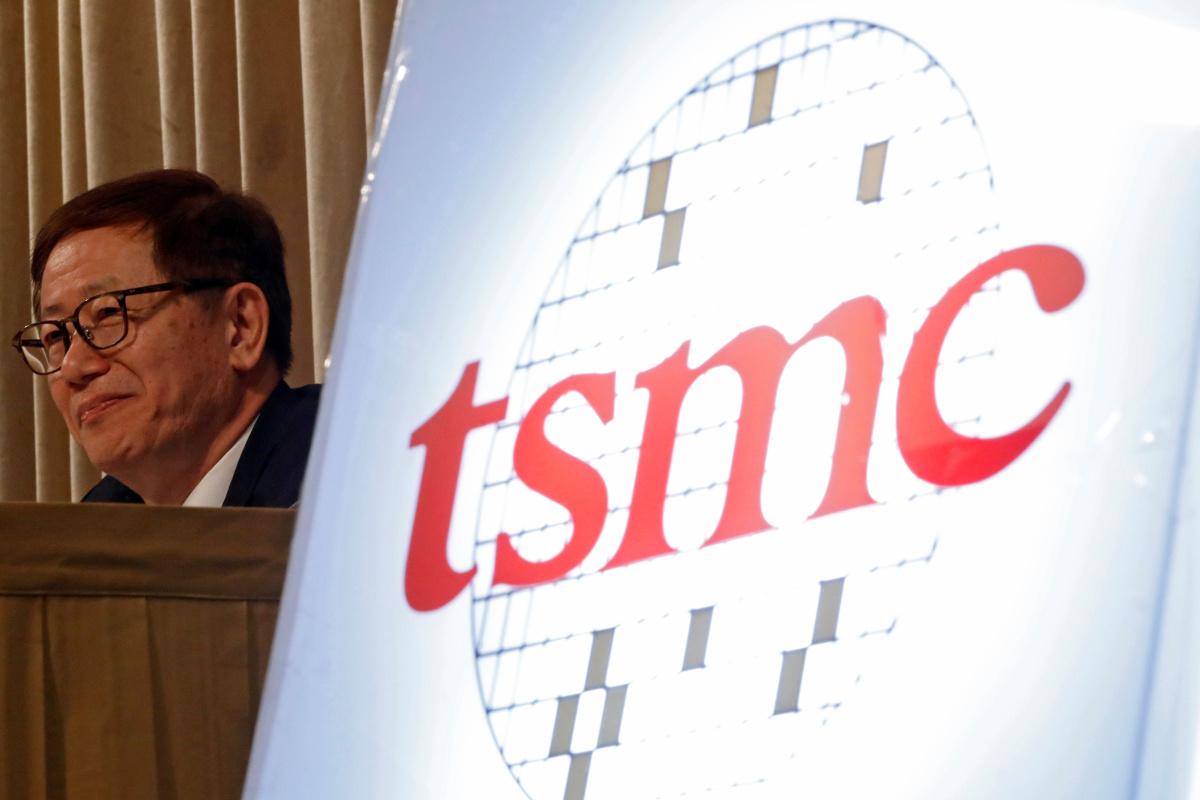
TAIPEI — Shares of Taiwan Semiconductor Manufacturing Co Ltd advanced Monday, reflecting sustained investor confidence in the world’s largest contract chipmaker as it capitalizes on robust demand for advanced semiconductors powering artificial intelligence applications.
The stock gained about 1.3% to 2,370.00 Taiwan dollars in afternoon trading in Taipei, adding to recent performance as TSMC continues demonstrating its critical role in the global semiconductor supply chain.
TSMC manufactures chips for major technology companies including Apple, Nvidia, AMD and Qualcomm. Its advanced process technologies, particularly 3-nanometer and 2-nanometer nodes, position it at the forefront of producing the most sophisticated semiconductors essential for artificial intelligence, high-performance computing and mobile devices.
The company has reported strong growth in its advanced technology segments, driven by artificial intelligence accelerators and high-end processors. TSMC’s capacity expansions and technology leadership have enabled it to capture significant market share in leading-edge manufacturing.
Recent quarterly results showed revenue increases fueled by artificial intelligence-related demand. Management highlighted robust utilization rates for advanced nodes while navigating cyclical conditions in consumer electronics.
TSMC’s strategic importance extends beyond commercial customers to geopolitical considerations. As a key supplier to the global technology ecosystem, the company operates under careful international scrutiny regarding export controls and supply chain security.
The foundry’s manufacturing facilities in Taiwan represent concentrated production capacity for the world’s most advanced chips. This has prompted discussions around geographic diversification, with TSMC expanding fabs in the United States, Japan and Europe to mitigate risks.
Artificial intelligence represents a significant growth driver for TSMC. Demand for graphics processing units, custom artificial intelligence chips and high-bandwidth memory solutions has accelerated capacity needs for cutting-edge processes.
TSMC’s CoWoS and other advanced packaging technologies support the integration of multiple chips, enhancing performance for artificial intelligence workloads. These capabilities have become increasingly vital as Moore’s Law scaling faces physical limitations.
Monday’s share advance occurred amid broader positive sentiment in Asian technology stocks. Investors appear focused on TSMC’s long-term positioning in artificial intelligence infrastructure despite periodic fluctuations in order visibility.
The company maintains disciplined capital expenditure plans to support customer demand while generating strong free cash flow. TSMC’s financial strength enables substantial investments in research and development alongside facility expansions.
Geopolitical tensions continue influencing semiconductor industry dynamics. TSMC has emphasized its neutrality and commitment to serving customers worldwide while complying with international regulations.
The foundry’s technology roadmap includes progress toward 2-nanometer production and research into 1.6-nanometer and beyond. These advancements aim to maintain TSMC’s leadership in process performance and power efficiency.
Customer diversification remains a priority, with TSMC serving a broad base of fabless semiconductor designers. Its manufacturing expertise supports innovation across computing, communications, automotive and industrial applications.
Monday’s trading reflected measured buying interest rather than aggressive momentum. TSMC shares have shown relative stability compared to more volatile pure-play artificial intelligence names.
The semiconductor foundry model provides TSMC with diversified exposure across end markets while avoiding direct consumer brand risks. This business approach has delivered consistent growth over decades.
TSMC’s capital investments reach tens of billions annually to stay ahead of technology curves. These expenditures, while substantial, support long-term competitive advantages through capacity and capability leadership.
Industry analysts maintain positive outlooks on TSMC, citing its technological edge, customer relationships and pricing power in advanced nodes. Some highlight potential for margin stability as artificial intelligence demand offsets cyclical weakness elsewhere.
Global chip demand continues evolving with artificial intelligence, 5G, automotive electrification and other trends. TSMC’s ability to serve these diverse applications underpins its growth narrative.
Monday’s session lacked major company-specific news, with gains appearing driven by sector sentiment and continued confidence in artificial intelligence infrastructure spending. TSMC often moves with broader semiconductor trends.
The company’s role in the global economy extends beyond semiconductors to enabling digital transformation across industries. Its chips power devices and systems fundamental to modern computing and communications.
TSMC has committed to sustainability goals including renewable energy usage and water recycling at its fabs. These initiatives address environmental concerns associated with semiconductor manufacturing.
As artificial intelligence adoption broadens, TSMC’s advanced manufacturing capacity becomes increasingly strategic. The company continues expanding production to meet projected demand growth.
Investor focus remains on TSMC’s execution of technology roadmaps and capacity ramps. Successful delivery on customer commitments supports its premium valuation in the semiconductor industry.
The foundry’s geographic expansion efforts aim to balance supply chain resilience with operational efficiency. New facilities in allied nations provide alternatives while maintaining core production strengths in Taiwan.
Monday’s performance adds to TSMC’s steady trading pattern in recent sessions. The stock reflects confidence in its foundational role in the technology supply chain.
TSMC’s innovation culture and engineering talent have sustained its leadership position for decades. Continued investment in research ensures relevance in an industry characterized by rapid technological change.
The semiconductor sector’s cyclical nature requires careful capacity management. TSMC’s conservative approach to expansion has historically helped navigate downturns while positioning for upturns.
As markets evaluate technology investments, TSMC’s combination of growth prospects and operational excellence appeals to long-term investors. Its trajectory remains tied to global semiconductor demand trends.


Why Roblox Had Its Worst Day Ever After Earnings
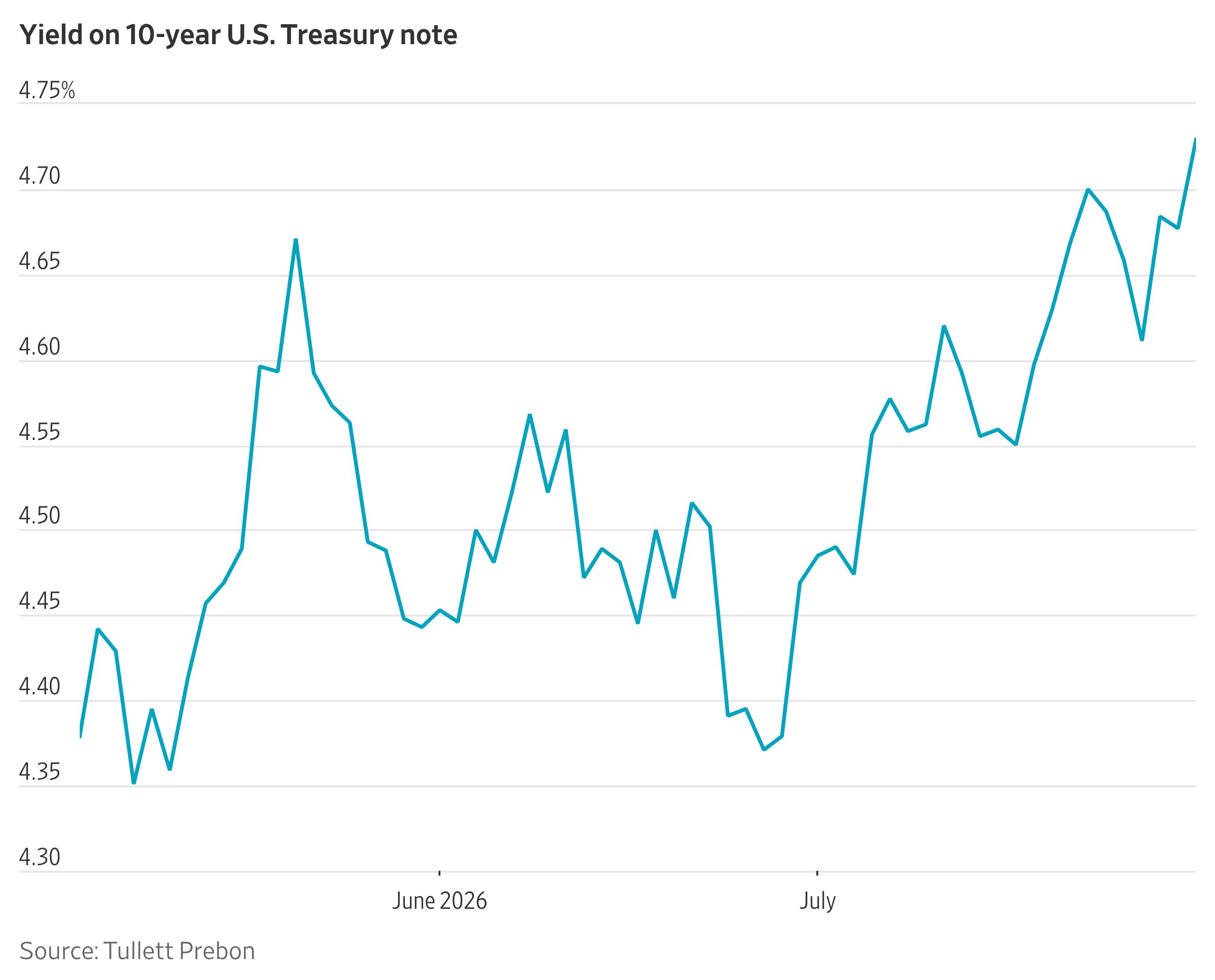
Treasury yields extended their recent gains Friday after three Federal Reserve officials explained why they cast dissenting votes in favor of raising interest rate this week.
Yields, which rise when bond prices fall, were also driven higher by economic data, including a stronger-than-expected reading on Chicago-area economic activity.
The yield on the 10-year U.S. Treasury note settled at 4.743%, according to Tradeweb, its highest closing level since January 2025. The 30-year yield closed at 5.274%, its highest since July 2007.

South Korean stocks surged on Friday, with the KOSPI index rising nearly 18%.
Despite the dramatic gains, the index was still down for the week and the month, a testament to how volatile Korean equities have been as of late.
Not counting today, the KOSPI has gained more than 10% in a single day in only six instances, according to Dow Jones Market Data. History shows that in the week following those six times, the S&P 500 traded lower two-thirds of the time, with an average decline of 1.6%.

1539 ET – Oil futures end July with hefty gains as the month saw renewed Iranian attacks on shipping in a dispute with the U.S. over control of the Strait of Hormuz. Concerns that a return to negotiations could quickly reduce risk premium and lead to oversupply have kept prices from reaching the lofty levels seen in March and April. “Traders are essentially betting on two very different geopolitical outcomes, and neither one is a safe assumption right now,” says Baron Lamarre, co-founder of Index Litro and former head of trading at Petronas. “My base view is we won’t end up with either a massive glut or a full-blown supply crisis by the end of the year,” he adds. “Instead, we’re in for a period of stubbornly tight, volatile conditions that will stick around longer than the optimists are hoping.” WTI settles up 1.3% at $84.67 a barrel for a 22% monthly gain. Brent for September delivery goes off the board at $90.12 a barrel, up 1.2% on the day and up 24% from the end of June.(anthony.harrup@wsj.com)
Oil Futures on Track for Big Monthly Gains
0951 ET – Oil futures turn higher in early U.S. trading and are on track for hefty gains for July, which saw the U.S.-Iran Memorandum of Understanding fall apart and Iran resume attacks on shipping in the Strait of Hormuz. “All things held equal, the market should go a lot higher and led by diesel and gasoline as refinery run rates arejust too low on a lack of crude,” Scott Shelton of TP ICAP says in a note. “The reality is that we are back to a very small amount of crude versus what is needed.” WTI is up 2.2% at $85.42 a barrel. September Brent is 1.5% higher at $90.36 ahead of today’s expiry, while the October contract gains 1.8% to $88.47.(anthony.harrup@wsj.com)
Copyright ©2026 Dow Jones & Company, Inc. All Rights Reserved. 87990cbe856818d5eddac44c7b1cdeb8
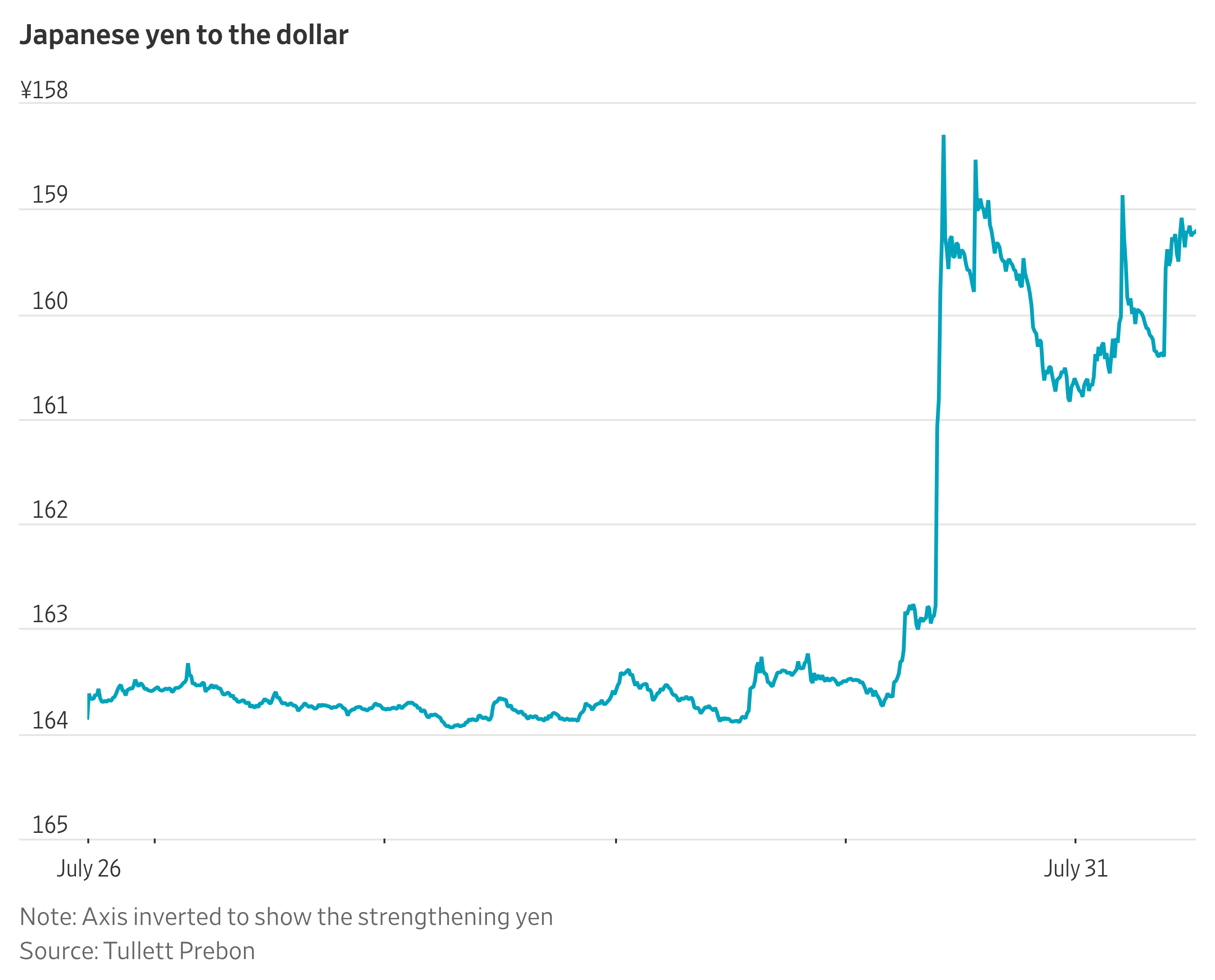
Currency traders broadly believe that the yen’s recent strengthening reflected yen purchases by Japanese authorities, as well as speculation of a possible U.S. intervention. The U.S. Treasury Department meanwhile has informed banks that it might make currency trades on Friday to support the Japanese yen and strengthen its exchange rate against the dollar, the Wall Street Journal reported today.

Global reforms emphasize control and decision-making authority over legal forms, shifting regional headquarters evaluation to governance, risk management, and value creation, impacted by tax rates and regulatory expectations.
Evolving Evaluation of Regional Headquarters
Global minimum tax, stricter substance enforcement, and geopolitical fragmentation have reshaped how regional headquarters are assessed. Singapore, Hong Kong, and Dubai now serve distinct roles, each aligned with different strategies for controlling operations and managing risks. They are no longer interchangeable hubs competing on similar benefits, but rather centers tailored to specific business models and regulatory environments.
Authority and Control Define a Headquarters
The focus has shifted from a legal entity’s structure to the authority it exercises within an organization. Regulators and counterparties increasingly scrutinize where key decisions—related to capital allocation, pricing, treasury, and risk management—are made. An entity exercising discretion in these areas is viewed as a true control center, influencing regulatory treatment and compliance risk instead of mere administrative support.
Governance and Control in Practice
Beyond reporting functions, the extent of authority impacts governance, documentation, and accountability standards. These factors determine a company’s regulatory exposure and defenses. While corporate tax rates like Singapore’s 17% and Hong Kong’s 16.5% are still relevant, emphasis now also rests on where value creation and control are evidenced within the organization.
Read the original article : Singapore vs Hong Kong vs Dubai: Regional HQ Trade-Offs for Investors
Other People are Reading

Are you tired? I’m tired. In addition to four Big Tech companies reporting earnings this past week, the calendar included results for second-quarter gross domestic product and the June personal consumption expenditures price index, along with the Federal Reserve’s interest-rate decision. Unscheduled, there was a meltdown of the artificial-intelligence trade, as highly leveraged bull positions were liquidated. The iShares Semiconductor exchange-traded fund was down 12% across three days, and one of the most successful AI investors—hedge fund Situational Awareness—saw margin calls and forced sales.

Private-equity firm KKR KKR is near a deal to take medical-device outsourcing company Integer Holdings ITGR private, according to people familiar with the matter.
The details
The deal, which could come as soon as next week, would value the Plano, Texas-based company at roughly $127 a share, the people said. There are no guarantees a deal will come together.
Copyright ©2026 Dow Jones & Company, Inc. All Rights Reserved. 87990cbe856818d5eddac44c7b1cdeb8
Exclusive-Japan to announce Tokyo, Washington took joint action on yen, sources say
A 9% selloff in Apple stock hasn’t done much to slow down the Nasdaq today.
Apple was recently down about $470 billion in market capitalization, on pace for its largest one-day market cap decline on record and the second-largest of any U.S. company. If it holds, the decline will be Apple’s biggest since 2020.
Copyright ©2026 Dow Jones & Company, Inc. All Rights Reserved. 87990cbe856818d5eddac44c7b1cdeb8

Taylor Sheridan’s War Thriller Officially Reveals Season 4 Status

The Vikings’ Trade Candidates: The Top 5 Roster Options

27-Year-Old With More Debt Than Anyone Should Ever Have | Financial Audit


-
 Sports6 days ago
Commonwealth Games boxing: Jadumani Singh seals dominant 5-0 win over Pakistan’s Sumama Rehman to enter quarter-finals | Commonwealth Games News
-

 Business3 days ago
Why Trees Belong on the Risk Register
-

 Fashion1 day ago
Weekend Open Thread: Wit & Wisdom
-

 Tech6 days ago
Intel is reversing course and bringing hyper-threading back to its server chips
-

 Politics1 day ago
Meta enters AI-training agreement with far-right ‘propaganda rag’ Newsmax
-

 Politics6 days ago
Luke Littler dismantles Gerwyn Price to retain title in Blackpool
-

 Crypto World12 hours ago
MicroStrategy Post-Earnings CLARITY Act Push Could Add New Catalyst for Its Stock
-

 Politics5 days ago
The Part of the Electric Transition Nobody Wants to Discuss
-

 News Videos6 days ago
BITCOIN JUST ENTERED THIS CRITICAL ZONE…
-
 Entertainment4 days ago
‘Stargate’ Creator’s New Sci-Fi Series Returns for Season 3 Tomorrow
-

 Business4 days ago
Major shareholder moves on Canyon
-

 Crypto World7 days ago
XRP Ledger adds $2.6B as RWA inflows rank second
-

 Politics7 days ago
Spain sweeps the board at 2026 World Cup with individual awards
-

 News Videos3 days ago
Bitcoin Enters the 3rd Stage of the Bear Market
-
Crypto World20 hours ago
XRP Ledger v3.3.0 brings five institutional features
-

 Crypto World4 days ago
Kraken Enables Retail Access to Jersey Mike’s IPO via Tokenized Shares
-

 Tech5 days ago
New macOS Sequoia & Sonoma security updates for older Macs
-

 News Videos4 days ago
Claude: Build Financial Dashboards in Minutes (2026)
-

 Sports2 days ago
Seema Kaliramna Wins Discus Throw Bronze, Takes India’s CWG Medals Tally To 17
-

 Politics2 days ago
Luke Littler’s dominance sparks GOAT debate
You must be logged in to post a comment Login