

Business
Turkish policymakers defend steps; investors see rate hike possible




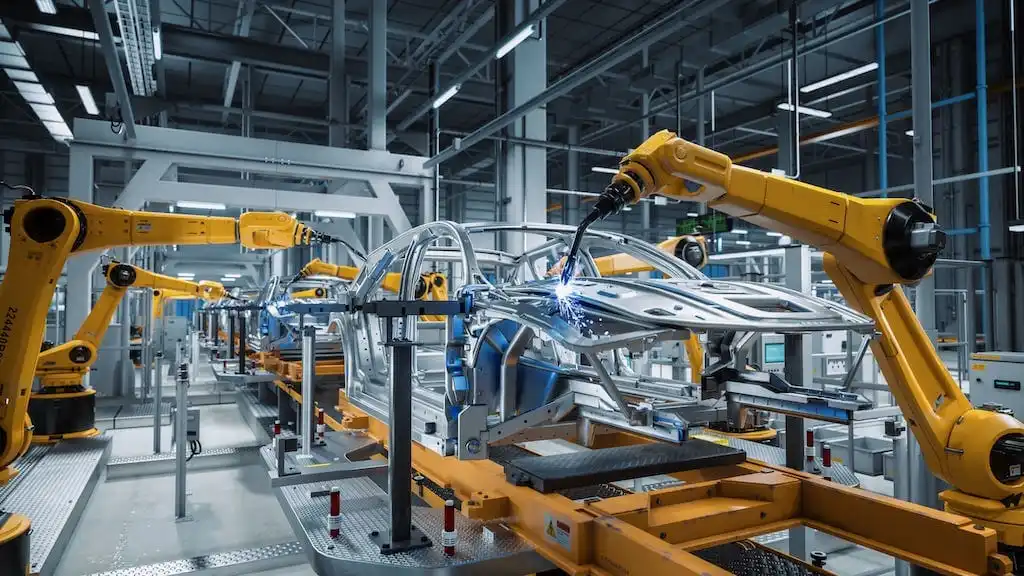
In 2019, a mid-sized electronics components manufacturer based in Shenzhen was producing entirely for the US market. In 2020, US tariffs made that model borderline unviable. So the company moved part of its production to Vietnam.
By 2023, rising Vietnamese labour costs and tightening rules-of-origin scrutiny prompted another rethink. This time, the answer was Thailand — specifically, a plot in the Thai-Chinese Rayong Industrial Park in the Eastern Economic Corridor, where over 100 Chinese manufacturers had already set up before them.
Thailand has long prided itself on being Southeast Asia’s industrial backbone, the “Detroit of the East,” as boosters like to call it. For decades, Japanese giants like Toyota, Honda, and Isuzu built the kingdom’s auto industry into the tenth-largest vehicle producer on the planet.
Now, a seismic shift is underway. Chinese capital is pouring into Thai industry with a velocity and breadth that is reshaping supply chains, upending established hierarchies, and raising questions that Bangkok’s policymakers have yet to fully confront.
Since the start of 2025, China has accounted for close to 40% of Thailand’s total approved foreign direct investment applications, with the majority channelled into metals, electronics, and digital sectors. In manufacturing alone, China now dominates, contributing an additional $917 million annually compared to pre-pandemic averages and accounting for 44% of total manufacturing FDI in 2024, a remarkable rise for a country where Chinese capital was barely a rounding error a decade ago. Meanwhile, Japan, Thailand’s historic industrial patron, has retreated, cutting its manufacturing investment by $1.5 billion annually. This is not an accident. It is the product of two interlocking forces, geopolitical pressure and industrial strategy, and understanding both is essential to grasping what Thailand is becoming.
The geopolitical catalyst
- The US–China trade war pushed Chinese manufacturers to relocate production to ASEAN starting in 2018 .
- ASEAN’s open trade rules and Thailand’s Eastern Economic Corridor (EEC) made Thailand a prime destination, with industrial land absorption tripling by 2024 .
- US tariffs on China have surged 145% since early 2025 , making Thailand’s tariff-free access under ACFTA strategically essential.
The story begins in 2018. When the first Trump administration fired the opening salvo of the US-China trade war, Chinese manufacturers faced an urgent calculation: absorb tariffs on exports, or find new production geographies. ASEAN, with its open trade frameworks, lower labour costs, and geographic proximity, was the obvious answer. Chinese manufacturing FDI in the region nearly doubled year-on-year in 2018 alone, and levels remained elevated in the years that followed, roughly three times above the 2014 to 2017 average.
Thailand was well-positioned to benefit. Its Eastern Economic Corridor (EEC), a government-backed industrial zone spanning Chonburi, Rayong, and Chachoengsao provinces, offered tax incentives, upgraded infrastructure, and a seasoned industrial workforce. Industrial estate absorption soared to over 1,170 hectares in 2024, nearly triple the 2019 figure, as Chinese firms scrambled for factory floor space.
Post-pandemic, the logic of China+1 supply chain diversification grew more strategic, not less. US tariffs on China escalated dramatically since the beginning of 2025, reaching an additional 145% from early-January levels by mid-April. For Chinese exporters, manufacturing in Thailand, which benefits from zero tariffs under the ASEAN-China Free Trade Agreement, is not merely attractive. It is, increasingly, essential.
The EV Sector: The Most Visible Transformation
- Chinese EV makers have invested over $3 billion in Thailand .
- BYD opened a $900 million factory in Rayong in July 2024, producing up to 150,000 vehicles/year .
- In 2024, 85% of EVs sold in Thailand were Chinese-made .
- BYD alone holds 40% of the Thai EV market .
Ultra-low-cost EVs (≈ THB 250,000) are reshaping consumer behavior, undercutting gasoline cars priced around THB 815,000
Nothing illustrates the transformation more vividly than the electric vehicle sector. China’s EV giants, locked out of the United States and facing escalating barriers in Europe, have made Thailand their regional production beachhead.
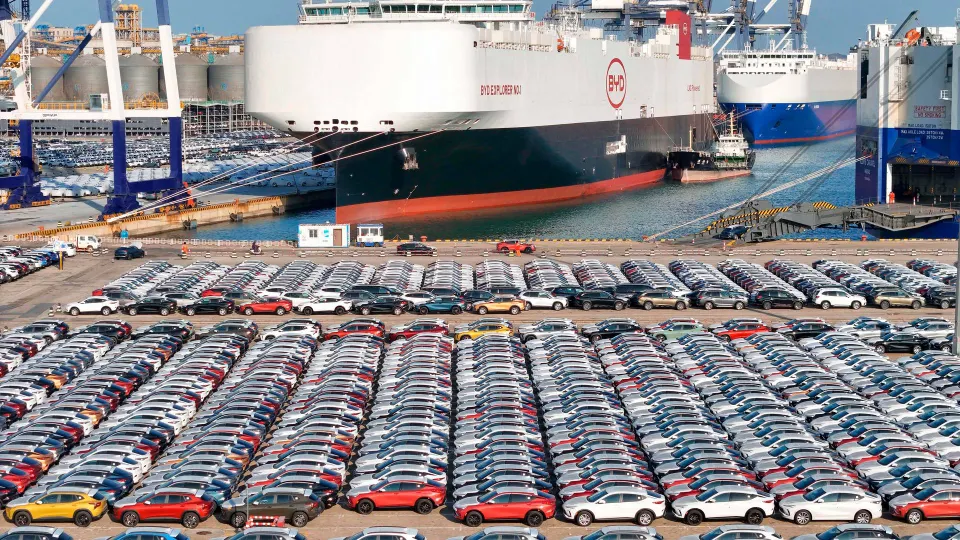
On 4 July 2024, BYD opened a $900 million factory in Rayong’s Eastern Economic Corridor, its first outside China, designed to produce up to 150,000 vehicles annually for the Thai and ASEAN markets. It was joined by Great Wall Motor, SAIC Motor, GAC Aion, Changan Automobile, and Chery Automobile, all establishing or expanding production facilities across the region. In total, Chinese EV makers have poured over $3 billion into Thailand in recent years.
Meanwhile, CATL, the world’s dominant EV battery maker, announced an initial investment of over $100 million to set up an assembly plant in partnership with a Thai state-owned company, following high-level diplomatic outreach by Bangkok officials who personally travelled to Fujian and Guangdong to court the firm.
The market impact has been equally dramatic. In 2024, 85% of electric car sales in Thailand were Chinese-made. BYD alone captured a 40% share of the Thai EV market. The lowest-priced Chinese EV models entered at roughly THB 250,000, far below the average gasoline car price of THB 815,000, fundamentally altering consumer calculus in a market that, just three years ago, was overwhelmingly dominated by Japanese internal-combustion vehicles. With Chinese EV producers facing domestic oversupply and market saturation at home, Thailand and Southeast Asia have become the pressure valve and the proving ground for a global expansion strategy.
The supply chain within the supply chain
The EV surge is just the most visible dimension of a broader industrial reconfiguration. Chinese firms are not merely assembling finished goods in Thailand; they are constructing integrated supply chains that span multiple layers of production.
Thailand is now seeing significant inward FDI in the manufacturing of printed circuit boards and copper-clad laminates, driven by its booming auto and consumer electronics industries. SVOLT Energy Technology, in partnership with Thai company Banpu Next, began producing EV battery packs domestically in March 2024. Changan announced procurement partnerships with Thai parts manufacturers AAPICO Hitech and Thai Summit Group as part of a localisation effort worth THB 20 million. Computer and electronics manufacturing has seen 68% growth compared to pre-pandemic averages. Electrical equipment manufacturing grew 70%, attracting $859 million annually. From 2019 to 2024, Greater China’s share of Thailand’s total FDI portfolio grew by ten percentage points, reaching 26%.
From a bird’s-eye view, this looks like textbook industrial development: capital flowing in, technology transferring, local supply chains deepening, and employment rising. Foreign investor hiring by licensed companies reached 2,394 Thai workers in the first eight months of 2025 alone, a 96% increase from the same period in 2024.
⚠️ The Shadow Side: Disruption, Dependency, Distortion
Despite impressive investment numbers, Thailand faces serious structural risks:
1. Factory closures & SME pressure
- Thailand has been losing 100+ factories per month since 2021 .
- Cheap Chinese imports create oversupply and price wars, squeezing local firms .
2. “Zero-dollar” exports
A significant portion of Thai export growth is actually Chinese goods re-routed through Thailand, adding little domestic value
3. Auto sector decline
- Vehicle production fell 20% in 2024 .
- Domestic sales hit a 15-year low, down 26% .
- Subaru and Suzuki exited Thai production in 2024 .
- At least a dozen Thai auto parts firms shut down after BYD’s Rayong plant opened .
But the view from ground level is more complicated, and more troubling.
Thailand is losing more than 100 factories a month since 2021. Analysts point to a structural crisis in which Chinese finished goods flooding local markets are creating oversupply and price wars that squeeze local firms to the breaking point.
Traditional manufacturing supply chains are being disrupted, forcing many small and medium enterprises to exit. A significant share of what passes for Thai export growth turns out to be Chinese goods re-routed through Thailand, so-called “zero dollar” exports that inflate statistics while adding little real domestic value. Several Thai ministers have acknowledged this distortion publicly.

The auto sector tells a painful story of transition costs. Overall vehicle production dropped by 20% in the first eleven months of 2024 compared to the previous year. Domestic auto sales plunged 26% in 2024, the lowest in fifteen years. Japanese automaker Subaru ceased production in Thailand in 2024; Suzuki followed. Since BYD’s Rayong factory opened in July 2024, at least a dozen Thai auto parts firms have shut down, firms that built their business supplying the Japanese brands that Chinese EVs are now displacing.
The human geography of Chinese investment is also raising eyebrows. In Chonburi province, strips of Chinese restaurants and massage shops have appeared near factory zones, serving a Chinese expatriate workforce that locals say spends little in the broader Thai economy. The social compact between investment and community benefit, long taken for granted with Japanese FDI, which is deeply integrated with Thai supplier networks, is not reproducing itself automatically with Chinese capital.
There is also a strategic tension at the heart of Bangkok’s EV gamble. ASEAN governments, Thailand’s included, seek to leverage Chinese FDI to build genuine domestic industrial capabilities and move up the value chain over time. But reports emerged in 2024 that Beijing was advising its automakers to ensure key technology and production stayed in China, while exporting knock-down kits to foreign plants for assembly overseas. At the July 2024 opening of its Rayong plant, BYD promised to bring technology from China to Thailand. Whether that promise reflects reality or aspiration remains to be seen.
🌍 Geopolitical Risk: The Tariff Trap
- Much Chinese FDI in Thailand is designed to circumvent US/EU tariffs:
- If the US imposes 30%+ tariffs on ASEAN auto exports, Thailand would be among the hardest hit .
- The US is scrutinizing Chinese value-added in ASEAN exports .
- Solar panels made in ASEAN by Chinese firms already face 21–271% US tariffs .
One further complication looms. Much of the rationale for Chinese investment in Thailand has been the ability to export to third markets, notably the United States and Europe, without the full weight of tariffs applied to China-origin goods. But US trade policy is catching up with the strategy. Washington has signalled increasing scrutiny of the Chinese value-added embedded in ASEAN exports. The US has already imposed preliminary tariffs of 21% to 271% on solar panels manufactured in ASEAN countries by Chinese firms. In the auto sector, SAIC is openly discussing plans to use its Thailand plant to circumvent EU EV duties. US policymakers are watching closely.

If tariffs of more than 30% are imposed on ASEAN exports to the United States, as has been threatened, it would deal a major blow to the region’s diversification boom and to Chinese FDI across ASEAN. Thailand would be among the hardest hit, given how much of its new Chinese investment is explicitly export-oriented.
Thailand’s EV sector has already experienced a preview of this fragility. EV makers missed their 2024 local production requirements because of weak sales, forcing the government to extend deadlines for firms facing penalties of up to THB 400,000 per car. The government forecasts only 1.8% GDP growth in 2025, with high household debt dampening domestic consumption. The underlying economic foundation is shakier than the headline investment numbers suggest.
Steps Bangkok Needs to Take
None of this means that Thailand is wrong to welcome Chinese investment. The capital is real, the factories are being built, and the technology, however carefully Beijing tries to ring-fence it, is arriving. China now accounts for nearly half of ASEAN’s manufacturing FDI growth, and for a developing economy seeking to industrialise rapidly, that is not a relationship to squander.
But the Thai government must be clear-eyed about what it is managing. Chinese FDI of this scale and character requires active industrial policy, not passive attraction. Bangkok must enforce meaningful localisation requirements, including genuine technology transfer, not merely assembly of imported kits. It must protect Thai SMEs from predatory pricing and supply chain displacement through targeted support, retraining programmes, and procurement preferences. It must diversify its FDI sources so that reliance on any single country, China, Japan, or anyone else, does not harden into structural dependency.
Most critically, Thailand must develop a credible answer to the geopolitical exposure embedded in its new industrial structure. Supply chains that exist to circumvent US-China trade tensions are, by definition, vulnerable to the resolution, or escalation, of those tensions. The Eastern Economic Corridor cannot afford to become a pawn in a trade war it has no power to influence.
The investment is transformative. The risks are real. And the decisions Bangkok makes in the next few years will determine whether Thailand emerges from this moment as an industrial power in its own right, or as a sophisticated assembly platform for someone else’s ambitions.
Next in the series — Article 3: The EV Kingdom: Thailand’s Bet on Chinese Automakers and the Electric Vehicle Revolution
Other People are Reading


Second group of Australian women linked to Islamic State to return home
Business
Enlight Renewable Energy Ltd (ENLT) Discusses Execution Excellence and Growth Engines in the Evolving Electricity Market – Slideshow

Enlight Renewable Energy Ltd (ENLT) Discusses Execution Excellence and Growth Engines in the Evolving Electricity Market – Slideshow
Business
Bangkok Airways Public Company Limited 2026 Q1 – Results – Earnings Call Presentation (OTCMKTS:BGKAF) 2026-05-25

Seeking Alpha’s transcripts team is responsible for the development of all of our transcript-related projects. We currently publish thousands of quarterly earnings calls per quarter on our site and are continuing to grow and expand our coverage. The purpose of this profile is to allow us to share with our readers new transcript-related developments. Thanks, SA Transcripts Team
US military strikes Iranian boats, missile launch sites: CENTCOM

Earnings call transcript: Fisher & Paykel Healthcare posts strong H2 2026 results


I’m a full-time investor with a strong focus on the tech sector. I graduated with a Bachelor of Commerce Degree with Distinction, major in Finance. I’m also a proud lifetime member of the Beta Gamma Sigma International Business Honor Society. My core values are: Excellence, Integrity, Transparency, & Respect. I always, to the best of my ability, hold true to these values which I believe are key for long-term success. I would like to invite all of my readers to leave their constructive criticism and feedback in the comments section so that I can further enhance the quality of my work moving forward. Thank you and God Bless America!
Analyst’s Disclosure: I/we have no stock, option or similar derivative position in any of the companies mentioned, and no plans to initiate any such positions within the next 72 hours. I wrote this article myself, and it expresses my own opinions. I am not receiving compensation for it (other than from Seeking Alpha). I have no business relationship with any company whose stock is mentioned in this article.
Seeking Alpha’s Disclosure: Past performance is no guarantee of future results. No recommendation or advice is being given as to whether any investment is suitable for a particular investor. Any views or opinions expressed above may not reflect those of Seeking Alpha as a whole. Seeking Alpha is not a licensed securities dealer, broker or US investment adviser or investment bank. Our analysts are third party authors that include both professional investors and individual investors who may not be licensed or certified by any institute or regulatory body.
Mexico stocks lower at close of trade; S&P/BMV IPC down 0.11%
Roger White
CEO & Director
Good morning, ladies and gentlemen. Welcome to the C&C Group FY ’26 Full Year Results. It’s great to see you all, and a warm welcome to all of you, whether you are here in person in our offices in St. Paul’s or indeed if you’re joining us remotely this morning.
I’m really pleased to be joined today by Adam Phillips, who’s started as our CFO just a few short weeks ago. I’m sure a number of you already know Adam from his past, but I’m delighted to say Adam’s hit the ground running and is already making a great impact in the business despite only being here for a very short period of time. So welcome to Adam.
In terms of today, you have presentations in front of you, and we’ll run them through on the screen. I will kick off with a short overview of FY ’26. I’ll then hand over to Adam to take you through the detailed financial review of 2026. Adam will then hand back to me where I will cover an update on strategic direction, followed by a short operational review, and we’ll close with a short summary and then be happy to take your questions.
Moving right along. So I’m on Slide 4 now. It’s been a busy year for us at C&C Group. I’m pleased to report we’ve made some encouraging progress across our strategic priorities. However, it has been a difficult year

Canada demands Israel probe ’appalling’ treatment of flotilla members

Locals slam plans for 138 new homes saying ‘surely enough new houses now’

Chinese FDI’s Impact on Thai Industries and Supply Chains

Strategy Pauses Bitcoin Buying as $1.5 Billion Debt Deal Takes Focus


-

 Crypto World4 days ago
Blockchain.com files with SEC for U.S. IPO
-

 Fashion3 days ago
Holiday Weekend Open Thread – Corporette.com
-

 Business3 days ago
Dell Technologies DELL Stock Surges 15% on AI Server Momentum and Analyst Upgrades in 2026
-

 Crypto World4 days ago
Bitcoin Accumulation Weakens as BTC Realized Losses Hit $600M
-

 Crypto World3 days ago
Space X IPO Is ‘Bad News’ for Tech Stocks: But What About Bitcoin?
-

 Politics3 days ago
Makerfield: a tale of two social-media histories
-

 Crypto World3 days ago
Robinhood crypto COO Tanya Denisova exits
-

 Crypto World4 days ago
MicroStrategy’s Saylor Says Miners No Longer Set Bitcoin Price, Another Force Has Taken Over
-

 Business1 day ago
NYT Strands Answers May 24 2026 Revealed for Puzzle No. 812 Theme Summer Essentials
-
 Tech3 days ago
A 0.12% parameter add-on gives AI agents the working memory RAG can’t
-

 Crypto World3 days ago
AI infrastructure race heats up as IREN pitches full-stack strategy, WhiteFiber lands $160M deal
-

 Tech4 days ago
WhatsApp ads could make Irish debut after discussions with DPC
-

 Tech4 days ago
You Can Now Add ChatGPT To PowerPoint
-

 Business4 days ago
Trump Invests $1M-$5M in Kura Sushi USA Chain With 27 California Locations
-
 NewsBeat4 days ago
Charity run by Reform leader Malcolm Offord accused of ‘law breaking’ over Scottish registration
-

 Sports4 days ago
2026 CJ Cup Byron Nelson leaderboard: Brooks Koepka finds putting stroke in Round 1
-

 Crypto World5 days ago
Exa Labs raises $250 million in funding led by a16z
-
Business4 days ago
Goldman Sachs reinstates Ageas stock coverage with neutral rating
-

 Crypto World4 days ago
Trump Media’s Bitcoin Stash Shrinks Again as 2,650 BTC Lands on Crypto.com
-
 Business3 days ago
Marine engineering firm Avantis eyeing expansion on equity boost
You must be logged in to post a comment Login