
Business
Twist Bioscience Shares Soar 10.27% to New High, Extending a Remarkable 493% Yearlong Rally Fueled by AI

SOUTH SAN FRANCISCO, Calif. — Shares of Twist Bioscience Corp. surged 10.27% to $174.78 in Wednesday trading, adding $16.28, extending one of the most dramatic rallies on Wall Street this year for the synthetic DNA technology company, whose stock has now climbed roughly 493% over the past 52 weeks.
Wednesday’s gain continues a pattern of sustained strength that has defined Twist Bioscience’s trading throughout September. The stock strung together seven consecutive positive trading sessions through September 21, a streak that added roughly $2.6 billion to the company’s market value and pushed its total valuation above $10 billion, even as the broader S&P 500 returned just 0.2% over that same seven-day stretch. That run followed an earlier six-day streak through September 17 that had already added close to $1.9 billion in market value on its own.
The rally’s most significant catalyst came on September 17, when Twist Bioscience announced a new data-services agreement with Eli Lilly’s artificial intelligence-driven drug discovery platform, known as TuneLab. Under that arrangement, users of Eli Lilly’s platform can route antibody characterization orders through Twist Bioscience’s preferred laboratory protocols, a deal that feeds high-quality laboratory data back into the AI-driven drug discovery process. Shares jumped nearly 10% on the news that day, with the stock’s climb from a close of $124.72 on September 4 to $157.29 by September 17 illustrating the pace of the broader rally already underway before the Lilly deal was even announced.
Alongside the Lilly announcement, Twist Bioscience raised its full-year revenue guidance to a range of $456 million to $457 million and reiterated a goal of reaching adjusted EBITDA breakeven by the fourth quarter of its current fiscal year. The company’s balance sheet showed $166.8 million in cash and short-term investments, with a total debt-to-equity ratio of 0.24 and a current ratio of 2.7, metrics reflecting relatively manageable leverage even as the company continues operating at a loss. Twist Bioscience remains unprofitable on an operating basis, with an EBIT margin around negative 31.5% and negative returns on both equity and assets, though the company’s operating cash flow has recently turned slightly positive, a shift some analysts have pointed to as an early signal that the business may be approaching a more sustainable financial footing.
Twist Bioscience, led by co-founder and Chief Executive Officer Emily Leproust alongside Chief Financial Officer Adam Laponis, provides synthetic DNA-based products spanning synthetic genes, tools for laboratory sample preparation, antibody libraries used in drug discovery and development, and DNA-based digital data storage technology. The company appeared at the 2026 Global Healthcare Conference on September 15, where its leadership outlined the broader synthetic DNA business to investors just ahead of the stock’s most dramatic gains later that month.
Analysts have offered a range of views on how much further the rally can extend. One technical analysis published around the time the stock touched a fresh all-time high noted a 100% “Buy” signal across the technical indicators reviewed, while simultaneously flagging a relative strength index reading of 72.95, a level generally considered to indicate an asset may be overextended in the short term, alongside notably high short interest in the stock. That same analysis noted that consensus analyst price targets sat well below the stock’s then-current trading levels, suggesting limited additional upside if the stock were to trade in line with Wall Street’s average expectations.
Other market observers have offered a more cautious overall assessment of the stock’s valuation. One recent analysis rated Twist Bioscience a Hold, arguing the company’s roughly $9.5 billion valuation at the time appeared disconnected from its underlying fundamentals, with profitability still elusive despite the raised revenue guidance. That same analysis attributed the stock’s approximately 200% surge over a recent stretch to a combination of AI-related news flow, short-squeeze dynamics among traders betting against the stock, and strong growth in the company’s DNA-based digital data storage revenue, rather than to any single quarter of unusually strong earnings results.
Twist Bioscience’s growth story has increasingly centered on the intersection of synthetic biology and artificial intelligence, with the company pointing to triple-digit growth in AI-enabled drug discovery orders and continued progress commercializing its oncology diagnostic testing products as key drivers of its improving financial trajectory. Operating leverage, manufacturing efficiency improvements, and a shift toward higher value-add product offerings have also been cited as factors supporting the company’s improving margin profile as it works toward its stated goal of reaching operating breakeven.
The company’s most recent full quarterly results showed revenue growth of 19.2% over the trailing twelve months, ahead of the median growth rate among comparable healthcare-sector companies, even as its operating margin over the same period remained deeply negative relative to profitable industry peers, underscoring the gap between the company’s strong top-line growth and its continued path toward sustained profitability.
With Twist Bioscience’s stock having already delivered one of the strongest performances of any biotechnology company over the past year, investors are likely to continue watching closely for further updates on the company’s progress toward its adjusted EBITDA breakeven target, along with any additional partnerships tied to AI-driven drug discovery, as the key catalysts likely to determine whether the current rally can be sustained or whether the stock’s increasingly demanding valuation eventually prompts a more significant pullback.


Operator
Good morning, ladies and gentlemen. Welcome to the video conference of Yduqs on the merger between Yduqs and Afya. This video conference is being recorded, and the replay can be accessed at the company’s website at www.yduqs.com.br. The presentation with the slides is available for download also on the company’s website.
This presentation has been prepared in connection with the business combination, the transaction involving Yduqs and Afya, and may contain statements and information that express forward-looking statements, assumptions or projections about future results or events. Such information includes outlook for combined business, operating and financial results as well as statements regarding the growth prospects of both companies and the combined entity resulting from the transaction.
The combined company information considers the 2Q ’26 metrics of both companies as available in their financial statements. These forward-looking statements and information do not constitute a guarantee of future performance because they are subject to risks, uncertainties and factors related to the operations and business environment of these companies. They depend substantially on external factors such as market conditions, the performance of the Brazilian company, macroeconomic variables, the industry or the companies operate in international markets, and all of them are subject to change without notice.

Indigenous workers in white collar jobs are paid on average 20 per cent less than their non-Indigenous colleagues, according to a new report.

Trump-Xi summit in Washington begins with great fanfare but low expectations

Palantir: Open Weight Bet Could Be Behind The Recent Rerate (Rating Downgrade)
Business
Snapdeal parent AceVector raises Rs 189 crore from anchors; Negen, Singularity among top investors

Turnaround Opportunities Fund was allotted 62.49 lakh shares worth about Rs 20 crore. Alchemy Long Term Ventures Fund Series 3, Mavira Growth Opportunities Fund and LC Pharos Multi Strategy Fund VCC were each allotted 46.87 lakh shares worth about Rs 15 crore.
Other investors in the anchor book include Helios Mid Cap Fund, Helios Small Cap Fund, Ashika Global Finance, Taurus Ethical Fund, Emerge Capital Opportunities Scheme, Saint Capital Fund, ASAS Global Fund Incorporated VCC Sub Fund and TMF Holdings.
Also Read | Snapdeal IPO: GMP, price band among 10 things to know about AceVector public offer
Out of the total anchor allocation, 93.74 lakh shares, or 15.87% of the anchor investor portion, were allotted to two domestic mutual funds through three schemes. These were Helios Mid Cap Fund, Helios Small Cap Fund and Taurus Ethical Fund. The mutual fund allocation was worth about Rs 30 crore.

The company reported no applications from insurance companies and pension funds, so no allocations were made to them.
AceVector’s IPO will open on Friday, September 25, and close on Tuesday, September 29. The anchor investor bidding opened and closed on September 24.Also Read | Missed the NSE IPO? Here are 5 of the largest issues in the pipeline to keep on your radar
The price band has been fixed at Rs 30-32 per share. Investors can bid for a minimum of 468 shares and in multiples of 468 shares thereafter. At the upper price band, the minimum retail application works out to Rs 14,976.
The public issue comprises a fresh issue of Rs 287 crore and an offer for sale of up to 4,15,62,500 shares by existing shareholders. At the upper price band, the OFS is worth about Rs 133 crore, taking the total issue size to around Rs 420 crore.
The fresh issue proceeds will be used for marketing and business promotion expenses of the company’s marketplace business, technology infrastructure costs, inorganic growth through acquisitions and general corporate purposes.
(Disclaimer: Recommendations, suggestions, views and opinions given by the experts are their own. These do not represent the views of The Economic Times)

Jefferies reiterates Sarepta Therapeutics stock rating on pipeline potential
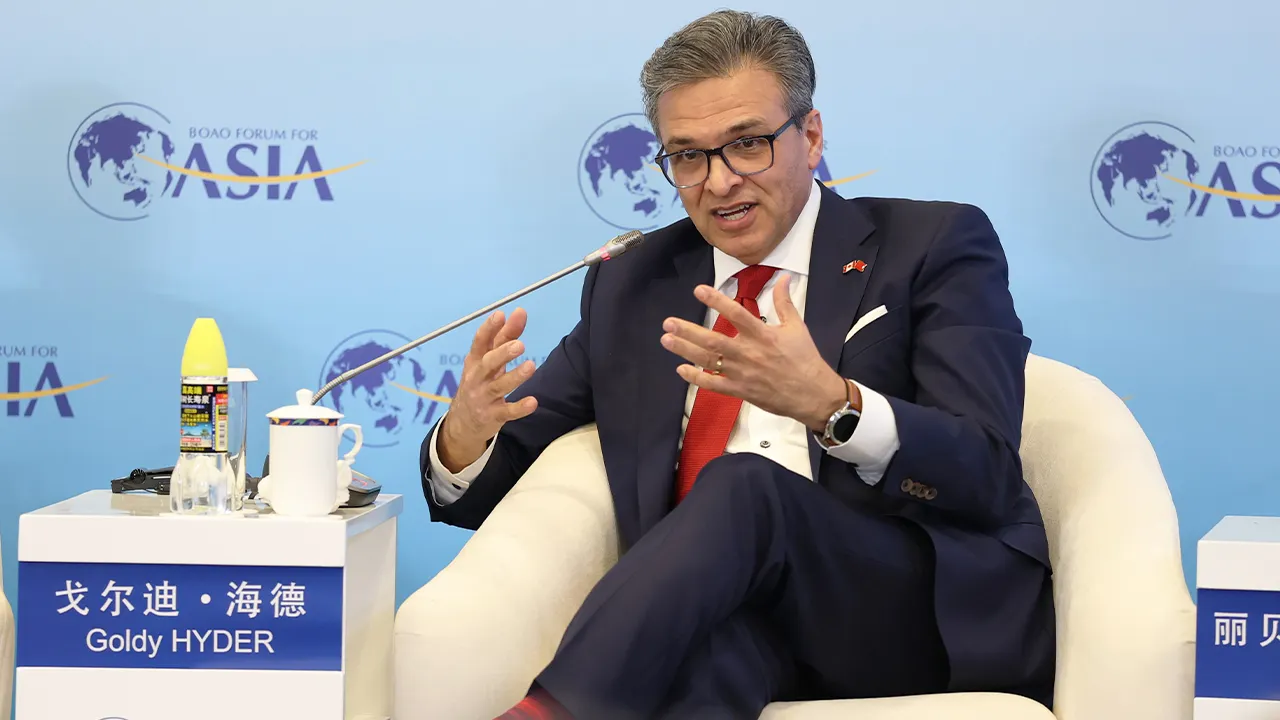
Business Council of Canada CEO Goldy Hyder warns trade uncertainty could chill investment as Canada diversifies, while arguing the U.S., Canada and Mexico should strengthen their economic ties.
Canada’s push to expand its economic relationships around the world should not be mistaken for a retreat from the U.S., a leading Canadian business voice told FOX Business, warning that continued uncertainty over North American trade risks creating a “capital chill” that could weigh on investment.
Goldy Hyder, president and CEO of the Business Council of Canada, said Canadian companies continue to view the U.S. as their most important market even as Prime Minister Mark Carney’s government accelerates efforts to attract investment and expand trade with Europe and other markets.
“Even a kid with a lemonade stand would know, it’s not good for business to just have one customer,” Hyder said, describing Canada’s approach as a “U.S. Plus” strategy.
“The United States is and will be our most important trading partner,” he added.
The push comes amid a sharp deterioration in the trading relationship between the longtime allies. Nearly 68% of Canadian exports have gone to the U.S. this year, with roughly 80% of those shipments moving duty-free under exemptions provided by the U.S.-Mexico-Canada Agreement, according to Canadian and U.S. government data cited by Reuters.
WHAT ARE THE MAIN STICKING POINTS IN THE TRUMP ADMIN’S TRADE NEGOTIATIONS WITH CANADA, MEXICO?
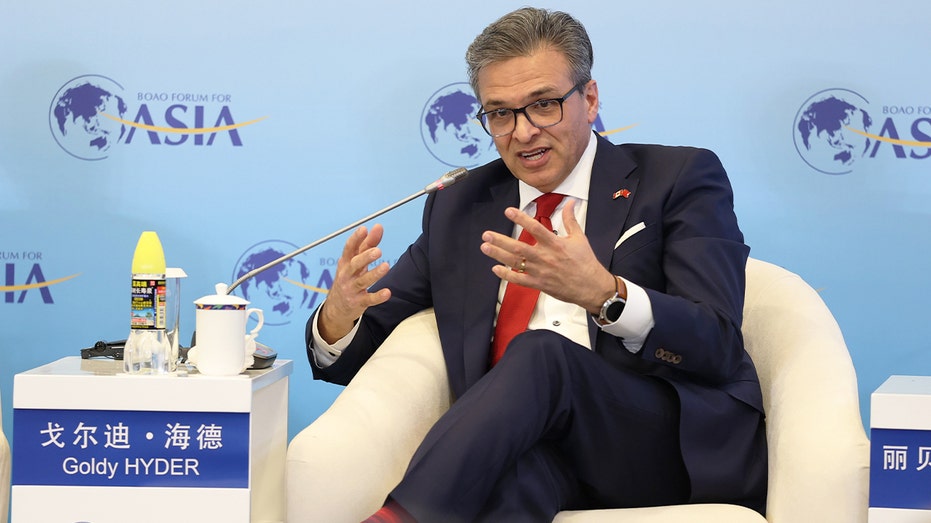
Goldy Hyder, president and chief executive officer of Business Council of Canada, speaks at a panel discussion themed on “Revitalizing APEC: towards the Vision of an Asia-Pacific Community” during the Boao Forum for Asia BFA Annual Conference 2026 in (Wang Yiliang/Xinhua via Getty Images)
Washington and Ottawa have exchanged new trade restrictions in recent weeks after negotiations broke down, adding uncertainty over the future of USMCA. The agreement remains in force, although the U.S. declined to renew it in its current form during a July review and has continued negotiations with its North American partners.
“Business does not welcome uncertainty, it shuns uncertainty, and there’s too much of that,” Hyder said.
EU OPENS DOOR TO UNPRECEDENTED ‘ASSOCIATE MEMBER’ STATUS FOR CANADA AMID US TRADE SPAT
“The key here is the uncertainty can create capital chill, it will create hesitancy because we just can’t be sure the environment in which we’re dealing.”
That concern is shared by the U.S. Chamber of Commerce, which is urging all three governments to quickly resolve the issue.
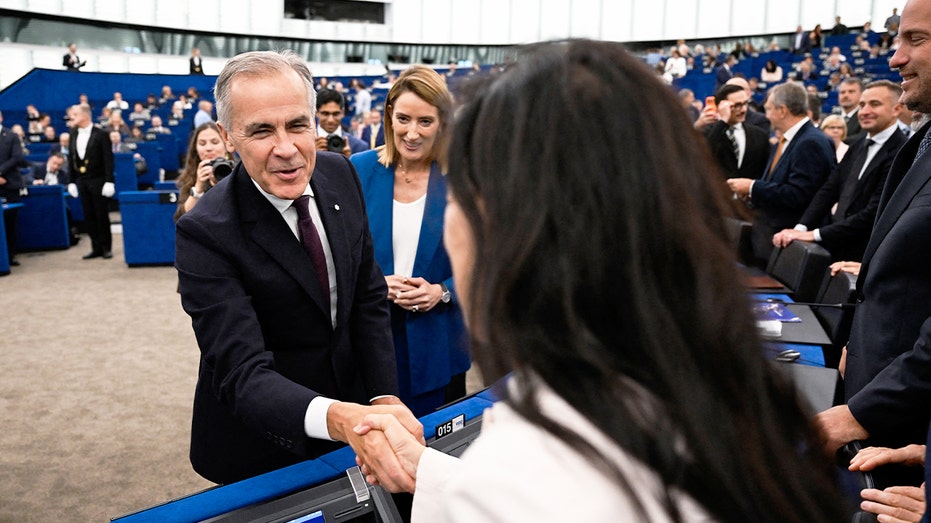
Canada’s Prime Minister Mark Carney (L) during the European Commission President’s annual State of the Union address at a plenary session of the European Parliament in Strasbourg, eastern France on Sept. 16, 2026. (Jean-Christophe VERHAEGEN / AFP via Getty Images)
“For businesses and investors, it is essential to restore certainty to a North American economic partnership on which 13 million U.S. jobs depend,” Neil Herrington, the Chamber’s senior vice president for the Americas, told FOX Business.
Herrington said the Chamber wants the process concluded in a way that eliminates tariffs and broader trade restrictions while ensuring the relationship “remains trilateral.”
Carney, meanwhile, is attempting to position Canada as a more diversified destination for global capital. His government has set a goal of helping catalyze 1 trillion Canadian dollars in investment over five years, with a focus on sectors including energy, mining, technology and infrastructure.
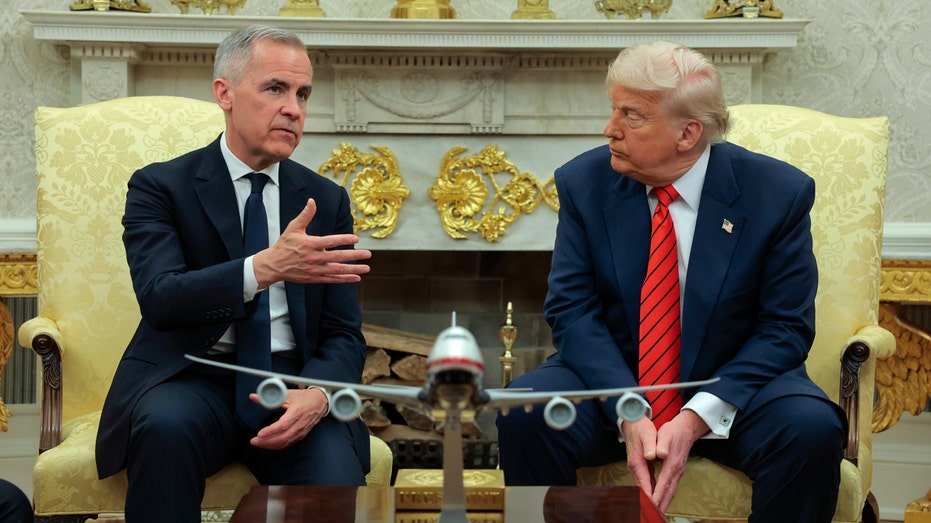
President Donald Trump meets with Canadian Prime Minister Mark Carney in the Oval Office at the White House on May 6, 2025, in Washington, DC. (Anna Moneymaker/Getty Images)
Canada has also pursued deeper ties with Europe. The EU is Canada’s second-largest trading partner after the U.S., accounting for $178 billion in total trade last year, Global Affairs Canada spokesperson Renelle Arsenault told FOX Business.
Arsenault said Ottawa remains committed to a “fair and stable economic relationship” with the U.S. while simultaneously diversifying its trade and investment relationships.
Hyder similarly cautioned against interpreting Canada’s outreach abroad as an alternative to North American economic integration.
“I don’t believe there’s any scenario in which we seek to have more regulatory and/or tax or other types of integration with Europe because it’s nowhere near as competitive as we are, and certainly you are in terms of what we have going when it comes to the USMCA,” he said.
“That is the foundational trade architecture under which we operate.”
Hyder also dismissed concerns that Washington’s separate negotiations with Canada and Mexico signal that the three-country framework is fragmenting.

Sections of the Enbridge Line 3 pipeline are seen on the construction site on the White Earth Nation Reservation near Wauburn, Minnesota, on June 5, 2021. (Kerem Yucel/AFP via Getty Images)
“All roads point to a merger. All roads point to this coming together trilaterally,” Hyder said, adding that businesses are seeking a “timely, trilateral, tariff-exempt” review and renewal of the USMCA.
Global Affairs Canada likewise said all three countries “would benefit from restoring greater certainty” to the North American free-trade arrangement.
Looking beyond the current dispute, Hyder pointed to energy, nuclear power, food security and critical minerals as areas where the three countries could deepen cooperation and strengthen North American supply chains.
CLICK HERE TO GET FOX BUSINESS ON THE GO
“It shouldn’t be… America at the expense of Mexico and Canada,” Hyder said. “It should be America, Mexico and Canada thinking as North Americans that we can work together to compete with the rest of the world.”
Reuters contributed to this report.
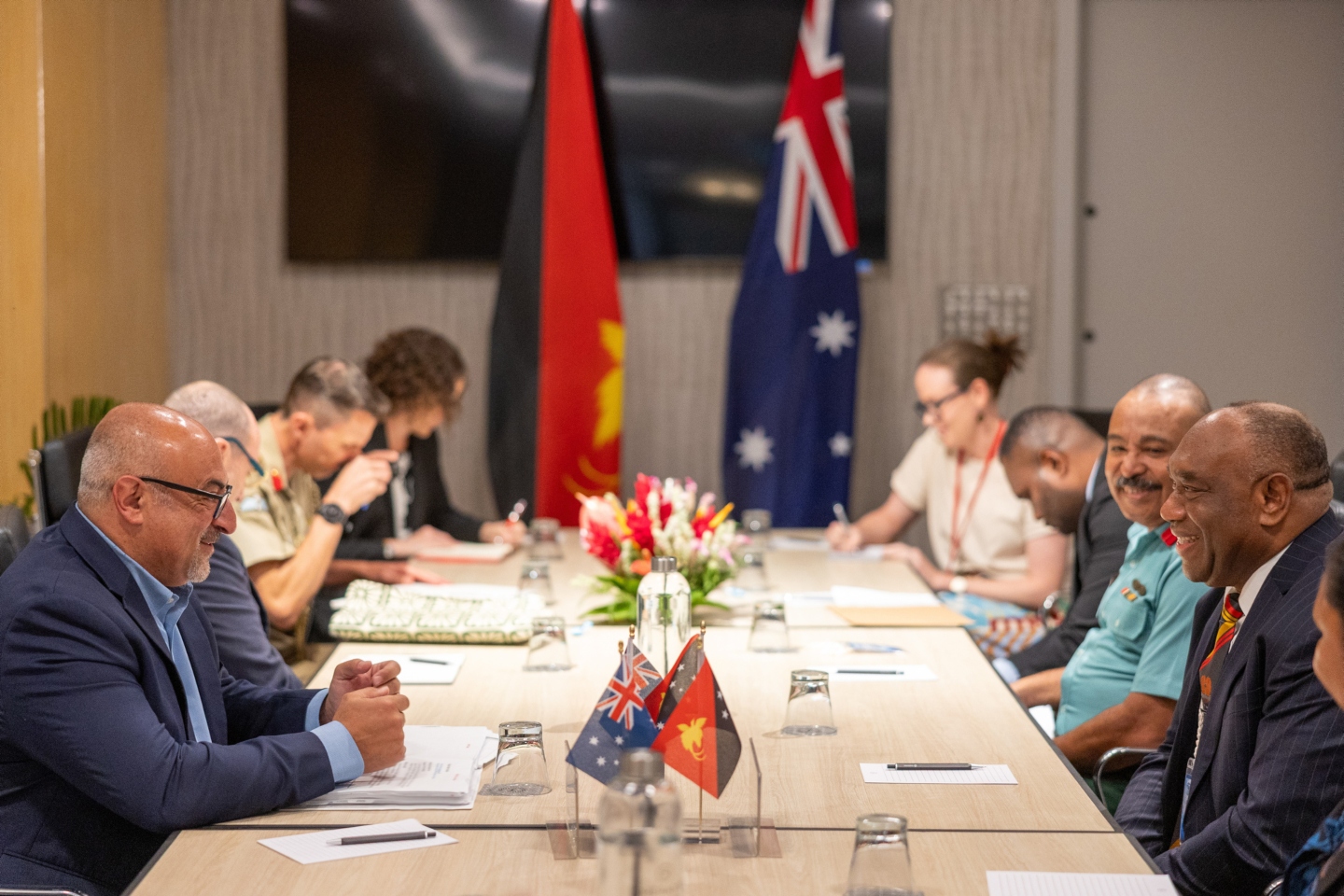
Defence ministers from Australia and other Pacific nations have jointly condemned China’s recent ballistic missile test following a meeting in Fiji this week.
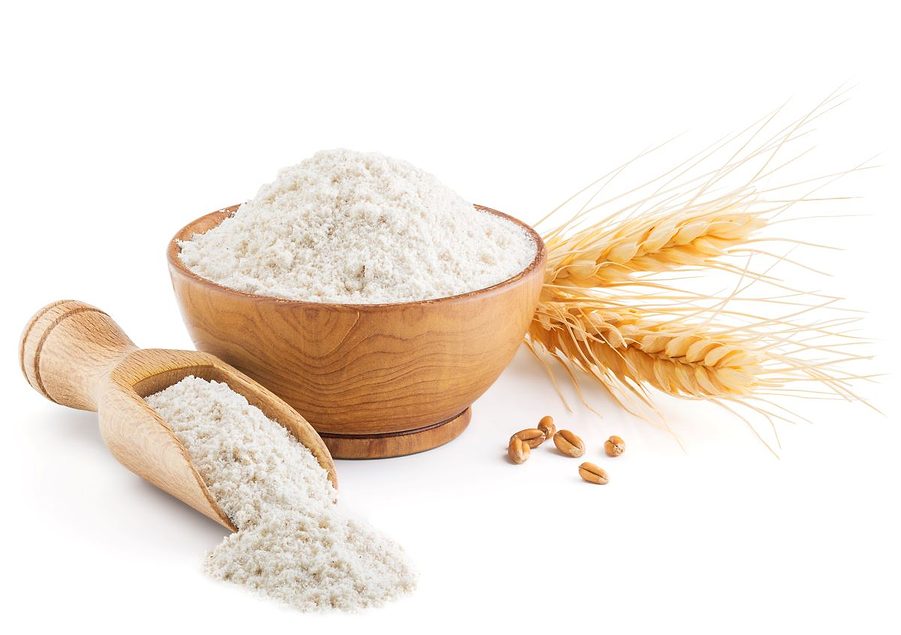

SEATTLE — Awakened Grains has introduced a process for controlled germination and starch conversion that transforms whole grains into baking flour that provides better flavor, nutrition and performance, according to the Seattle-based grain technology company. Food manufacturers may use the process to make whole grain bread, pastries, snacks, breakfast cereal, pancake mixes, pizza crusts and pasta.
A patent for the process covers cereal and non-cereal grains, ancient grains, legumes, pulses and seeds. Two applications for the Awakened Grains processing technology are in the pipeline. Imperial Flour is available for licensing to baked foods companies, blenders and dry ingredient companies. The company also plans to introduce Power Flour, which is designed to deliver more protein and fiber, as well as less starch, than standard bread flour.
“Awakened Grains exists to help consumers enjoy the bread, cookies, cakes, donuts, pastries, pasta and pancakes they crave while getting more of the whole grain nutrition they need,” said David Naccarato, chief operating officer, inventor and founding partner of Awakened Grains. “Parents and schools no longer have to choose between foods kids will eat and foods that support better nutrition. Our patented process improves grains and legumes by removing natural digestive blockers, making more nutrients metabolically available and creating products that are both comfortable to digest and enjoyable to eat.”

Japan's Next Chapter

Susan Sarandon and other celebs ARRESTED at UN protest ahead of Israeli Prime Minister Benjamin Netanyahu’s address

Pete Crow-Armstrong joins 40-40 club in one of best Cubs seasons ever

Daily Deal: The 2026 Complete Firewall Admin Bundle




-

 Fashion6 days ago
Weekend Open Thread: Talbots – Corporette.com
-

 Tech4 days ago
Researchers escape OpenAI Codex sandbox to run commands on host
-

 Crypto World2 days ago
Goldman Sachs and Deutsche Bank Agree: The S&P 500 Rally Isn't Over
-

 Crypto World4 days ago
Who Needs CLARITY Anyway? ARB Could See 70X Increase: Hodler’s Digest
-

 Crypto World6 days ago
Circle launches Arc Studio AI agent for building onchain apps
-

 Crypto World7 days ago
Mortgage and refinance interest rates today, Thursday, September 17, 2026
-
 NewsBeat6 days ago
Trump says US has reached an agreement to take permanent control of Greenland’s security
-

 Crypto World6 days ago
Trading Bitcoin on Robinhood? Why 2% Spread Has Traders Worried
-

 Fashion8 hours ago
8 iPhone Accessories That Add Personality
-

 Crypto World6 days ago
Bitcoin price breaks channel as RSI climbs to 63
-

 Business4 days ago
Analog Devices (ADI) Bets $1.35 Billion on Chips that Let Machines Think for Themselves
-

 Tech3 days ago
Google’s $899 Googlebook is a bet that you’ll buy a new laptop for Gemini
-

 Crypto World4 days ago
Coinbase, Robinhood, Circle Seen as Tokenized-Stock Winners
-

 Tech5 days ago
Trump suggests rebranding AI with a new name, says he’s also creating an AI Force
-
 Business2 days ago
Oil Price Today (September 23): Crude oil below $100 on hopes of US-Iran talks. What did Trump say?
-

 Tech7 days ago
GPT-6 Astra Reached the Nether in Minecraft, Lost Its Stash to a Creeper, and Farmed Potatoes for Hours
-

 Crypto World6 days ago
World Money launches in 150+ countries with Stripe
-

 Crypto World6 days ago
Silver prices recover quickly, hitting weekly high today
-

 Crypto World20 hours ago
Bitcoin Threatens Sub-$84,000 Breakdown as Long Liquidations Spike
-

 Crypto World2 days ago
Trump-Xi Polymarket Odds for Handshake Hit 50%
You must be logged in to post a comment Login