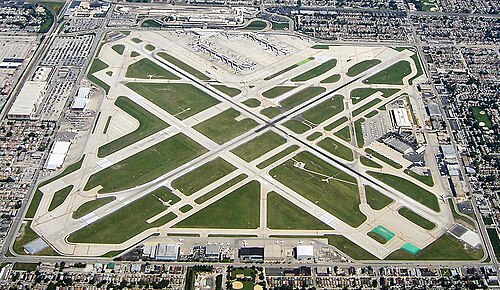
CHICAGO — Travelers heading through Chicago Midway International Airport (MDW) this spring are encountering generally manageable TSA security wait times averaging 15 to 30 minutes, though peak hours during the ongoing spring break season and amid a partial government shutdown have occasionally pushed lines longer at the busy Southwest Airlines hub.
Chicago Midway International Airport
As of late March 2026, real-time and crowd-sourced data indicate average security screening times at Midway range from under 10 minutes in off-peak periods to 20-35 minutes during busier morning and evening rushes. Some reports from early in the week showed waits as short as 4-15 minutes, while others noted occasional bottlenecks extending closer to 45 minutes when passenger volumes spike.
The Chicago Department of Aviation, which operates Midway, does not officially track or publish detailed wait times, leaving travelers to rely on the TSA’s MyTSA mobile app, third-party trackers and real-time passenger reports on social media. The MyTSA app, which crowd-sources wait times from users at the airport, has been a key resource, though its reliability has been questioned during the partial federal government shutdown affecting some TSA operations.
Current Conditions and Recent Reports
On a typical day in late March, security wait times at Midway’s main checkpoint fluctuate based on flight schedules and time of day. Early morning hours (3-6 a.m.) often see lighter crowds with waits under 10 minutes, while mid-morning departures around 8-11 a.m. can climb to 15-25 minutes. Evening peaks before 8 p.m. similarly hover in the 15-30 minute range.
Advertisement
Recent traveler accounts shared on platforms like Reddit and Facebook groups dedicated to Chicago travel describe mixed experiences. Some passengers on March 23 reported clearing security in about 15 minutes, while others during spring break rushes noted longer lines. One recent post indicated no wait at all during an evening departure, with TSA PreCheck lanes moving especially quickly.
TSA PreCheck remains available at Midway, with dedicated lanes generally clearing passengers in 3-8 minutes. The program operates from approximately 4:30 a.m. to 8 p.m. daily. Travelers enrolled in TSA PreCheck, Global Entry or CLEAR are strongly encouraged to use these options to minimize delays.
The main TSA checkpoint at Midway operates from 3:30 a.m. until about 11 p.m. The airport, which handled millions of passengers in 2025 primarily via Southwest Airlines flights to destinations across the U.S. and a few international routes, sees its heaviest traffic during weekday mornings and Sunday evenings.
Factors Influencing Wait Times
Advertisement
Several elements are affecting security lines at Midway this month. Spring break travel for many Chicago-area schools began in mid-to-late March, increasing family and leisure passenger volumes. Additionally, a partial government shutdown has raised concerns about potential staffing shortages at TSA checkpoints nationwide, including at Chicago’s airports.
Chicago aviation officials issued warnings in mid-March that travelers could face “longer-than-usual” wait times at both O’Hare and Midway due to the combination of spring break and the shutdown. The Transportation Security Administration and U.S. Customs and Border Protection advised arriving at least two hours early for domestic flights and three hours for any international departures.
Despite the alerts, many recent reports suggest Midway has avoided the severe bottlenecks seen at some larger hubs. Waits have generally remained shorter than at O’Hare International Airport (ORD), where lines have occasionally stretched longer due to higher overall volume.
Other contributing factors include typical seasonal patterns, weather-related flight delays that bunch passengers together, and the efficiency of Midway’s single-terminal layout compared to O’Hare’s more complex setup. The airport’s focus on domestic leisure and business travel also means passenger profiles can vary widely, sometimes slowing standard screening.
Advertisement
How to Check Real-Time TSA Wait Times at Midway
Travelers are advised to check conditions before heading to the airport. The official MyTSA app allows users to view crowd-sourced wait times and historical data for MDW. While the app’s live reporting function requires users to be physically at the airport to submit updates, it remains one of the best free tools available.
Third-party sites such as TSAWaitTimes.com, FlightQueue and airlineairport.com provide estimates based on recent data, often showing averages around 15-25 minutes with peaks up to 35 minutes or more during busy periods. Some platforms break down waits by hour, helping passengers plan arrivals accordingly.
The Chicago Department of Aviation’s FlyChicago website offers general security information but does not display live wait times. Passengers with questions about screening policies can call the TSA helpline at (855) 787-2227 at least 72 hours before travel.
Advertisement
Tips to Minimize Delays at Midway
To navigate security efficiently at Chicago Midway International Airport:
Arrive at least two hours before domestic flight departure, or earlier during peak travel periods like spring break or holidays.
Enroll in TSA PreCheck if eligible — it significantly reduces screening time and allows keeping shoes, belts and light jackets on.
Prepare liquids in a quart-sized bag and remove laptops and large electronics from carry-ons in advance.
Wear slip-on shoes and avoid bulky outer layers to speed up the process.
Consider CLEAR biometric lanes if available and if you value even faster entry to the PreCheck line.
Monitor flight status and TSA alerts via the MyTSA app or airline notifications, as delays can shift passenger flows.
During the current partial shutdown, some travelers have reported inconsistent staffing, making advance preparation even more important. Union leaders have warned that prolonged staffing strains could lead to worsening conditions if the situation extends.
Broader Context for Chicago Travelers
Midway International Airport serves as a vital alternative to the much larger O’Hare, particularly for Southwest Airlines passengers seeking more convenient access from Chicago’s South Side and suburbs. While O’Hare often experiences more pronounced delays due to its international scope and higher traffic, Midway’s more compact design can make it a smoother experience when lines move well.
Advertisement
The airport has invested in modernization efforts in recent years, including improved passenger flow and technology upgrades, though security screening remains a federal responsibility handled by TSA.
For those connecting through Chicago or departing on popular routes to destinations like Las Vegas, Orlando, New York or Denver, understanding typical wait patterns helps reduce stress. Business travelers and frequent flyers often note that early weekday mornings or mid-afternoon slots tend to be more predictable.
Looking Ahead
As spring break winds down in early April and if the government shutdown situation resolves, wait times at Midway are expected to stabilize closer to the lower end of the 10-20 minute average. Summer travel season will likely bring new peaks, so monitoring tools and flexible planning will remain essential.
Advertisement
Passengers are reminded that TSA wait times can change rapidly based on real-time conditions. Checking multiple sources and building in a buffer remains the safest approach.
Whether catching a short domestic hop or starting a longer journey, Chicago Midway’s security process is generally efficient compared to many major U.S. airports, provided travelers arrive prepared and monitor current conditions.
For the latest updates, download the MyTSA app or visit reliable tracking sites before heading to MDW. Safe travels through Chicago’s friendly skies at Midway International Airport.
Mumbai: The rupee on Monday slumped to breach the psychologically crucial barrier of 95/$, upending market expectations of a stronger year-end showing, as it finished FY26 by retreating the most in 14 years – nearly 11%.
The last month, coinciding with the Iran war, was particularly brutal and accounted for a 4% decline. The currency, which touched an all-time low of 95.21/$, had briefly advanced to 93.59/$ in the early hours, its strongest level on Monday. The trading amplitude for the unit was one of the widest Monday.
Intervention from the Reserve Bank of India (RBI) in the last 15 minutes of trading lifted the local currency to close at 94.83/$ on the last trading day of the year. It closed at 94.81/$ on Friday.
The rupee was widely expected to strengthen on Monday.
Advertisement
Agencies
Rupee Seen Staying at 94-95 per Dollar
Live Events
This was following Friday’s central bank directives to curb lenders’ open positions in FX to $100 million. However, high dollar demand from oil companies, importers and hedge funds caused the rupee to retrace its steps and trade at record lows, traders said. “The curbs by RBI created an arbitrage between NDF and onshore rates. With simultaneous buying in the NDF market and selling in the domestic market, along with year-end dollar demand from oil companies and corporates, the rupee came under pressure,” said Anil Bhansali, head of treasury, Finrex Treasury Advisors. The rupee is expected to remain between 94/$ and 95/$ on April 2, when the market opens after a 2-day holiday. Currency markets are closed on March 31, April 1, and April 3, making this a short trading week.
The currency opened at 93.59/$ on Monday and depreciated continuously till about 3:15 PM to a low of 95.22/$. At these levels, dollar sales by the RBI helped trim losses, allowing the rupee to close slightly stronger.
“Push for dollars from oil companies, importers, hedge funds and corporates was very high due to sharp rupee appreciation in the morning,” said Kunal Sodhani, head of treasury at Shinhan Bank India.
U.S. stocks ended mostly lower on Monday as U.S. President Donald Trump’s new warning to Tehran and a widening of the Middle East war offset optimism over his comments on U.S. discussions with Iran.
Trump said the U.S. was in serious discussions with a “more reasonable regime” to end the war, but repeated his threat to open the Strait of Hormuz or risk U.S. attacks on Iranian oil wells and power plants. Iran described U.S. peace proposals as unrealistic.
Investors have been focused on how oil prices will impact the global economy after they shot up since the start of the war.
“The administration continues to send mixed messages,” said Rick Meckler, partner at Cherry Lane Investments, a family investment office in New Vernon, New Jersey.
Advertisement
“When the messages seem good, to the extent they are believed, it helps the market. If something they say implies a more aggressive approach, the market sells off.”
Live Events
At the same time the conflict has been escalating. Yemen’s Iran-backed Houthi militia entered the war over the weekend. All three of the major indexes started the day higher after logging sharp declines in the previous session. Since the war started, the Dow, the Nasdaq and the small-cap Russell 2000 have all confirmed correction territory, ending 10% lower from their record-high closes. According to preliminary data, the S&P 500 lost 25.52 points, or 0.40%, to end at 6,343.33 points, while the Nasdaq Composite lost 153.16 points, or 0.73%, to 20,795.20. The Dow Jones Industrial Average rose 53.27 points, or 0.12%, to 45,219.91. Comments from Federal Reserve Chair Jerome Powell gave some support to stocks. Powell said longer-term inflation expectations appear to be holding despite the current energy shock, and the Fed does not yet need to make a decision on how to react to the latest troubles. Both U.S. crude oil and Brent settled higher.
Money market participants have priced out any easing from the Federal Reserve this year, compared with two cuts expected before the war began, per the CME Group’s FedWatch Tool. The S&P 500 energy index was down slightly and technology stocks were among the biggest drag on the S&P 500. On the flip side, the financial index gained after the U.S. Department of Labor issued long-awaited guidelines intended to clarify how trustees can add alternative assets to 401(k) retirement plans.
Shares of asset managers climbed with Blackstone and KKR both higher.
‘Fox Across America’ radio host Jimmy Failla says there’s not enough ‘shame’ depending on cell phones on ‘Kennedy.’
A Chick-fil-A restaurant is offering families free ice cream if they put away their phones for their entire meal.
Complex, an account on X covering culture, posted a photo Sunday showing a sign advertising that the Chick-fil-A Towson Place location has an incentive for families to be phone-free during meals.
Advertisement
“Introducing our Chick-fil-A® Cell Phone Coop Challenge,” the sign read.
Teens using their phones. (Matt Cardy / Getty Images)
“Ask a Team Member for a coop, place all phones in the coop, and enjoy your meal together,” the message continued. “After you finished let a Team Member know and everyone at the table will receive a Icedream® Cone as a reward.”
“Grab a coop and take the challenge,” it read.
Advertisement
The Chick-fil-A restaurant in Towson Place, Maryland, also advertised the challenge in a recent Facebook post, writing, “Take the Dine-in Cell Phone Coop Challenge at Chick-fil-A Towson Place. Ask a Team Member for a coop, place all phones in the coop, and enjoy your meal together without distractions. When your table finishes, let a Team Member know and everyone will receive an Icedream Cone as a reward. Are you up for the challenge?”
If families stay off their phones during their meal, they will receive an Icedream® Cone as a reward. ( Felix Hörhager/picture alliance via Getty Images)
A 2023 study found that 68% of households have a person using their phone during a meal with others. It also found that 65% of respondents do not like it, and 42% feel using phones during meals is rude.
Chick-fil-A did not immediately respond to a request for comment from Fox News Digital.
For more than a decade, Japanese home builders have been tiptoeing into the U.S. housing market with small, discreet acquisitions of private American construction companies. Their quiet era is over.
Japanese builders have announced or closed acquisitions of 23 U.S. single-family home builders since 2020, more than double the number from 2013 to 2019. That doesn’t include the multifamily developers and construction-supply companies they have also bought. By some estimates, Japanese builders are now set to own about 6% of the U.S. home-construction market.
The Trump administration proposed a regulation on Monday that is intended to open 401(k)s and similar retirement plans to private equity and private credit.
It is a victory for the Wall Street firms that have lobbied to get these higher-cost alternative investments into the $14.2 trillion 401(k) market. But it comes at an inopportune time for the industry, as investors pull money from some private-credit funds.
Payments firm to reorganise into four business units
Alistair Houghton Editor, Business Live and Anna Wise Press Association Business Reporter
15:52, 30 Mar 2026Updated 15:54, 30 Mar 2026
The PayPoint sign can be found across the UK(Image: Newcastle Chronicle)
Payment solutions provider PayPoint has revealed a restructuring plan aimed at cutting costs and attracting more customers to use its services in shops.
It will result in the company being restructured into four divisions, encompassing its network services, merchant services, digital payments and open banking, and its Love2shop brand.
Advertisement
PayPoint operates a retail network of over 30,000 convenience stores, offering community services such as cash withdrawals and deposits, ATMs, cash bill payments, energy top-ups and vouchers. It also runs Collect+ and Royal Mail Shops, enabling parcels to be collected and returned at thousands of local outlets.
The company has not disclosed cost-cutting targets or specified whether there will be any impact on its workforce, which numbered around 940 employees this time last year. However, it said the reorganisation will create cost savings and could potentially result in increased dividends for shareholders.
As part of the changes, PayPoint stated it is concentrating on boosting consumer footfall and enhancing sales from its services across retail partners. The overhaul will also entail a significant “reset” of the structure of its merchant services division, which collaborates with over 30,000 UK SMEs (small and medium-sized enterprises) to provide payment services in their shops.
Meanwhile, PayPoint plans to expand the Love2shop brand, which provides digital and physical gift cards. That division, based in Liverpool’s landmark 20 Chapel Street building, is set to bring in £53.2m in revenue this financial year.
Advertisement
The group said: “The reorganisation will enable an improved focus on new business growth and on maximising opportunities across Love2shop’s distribution channels. Continued investment in our technology platform, ongoing product enhancement and leveraging AI to improve marketing insight will strengthen our go-to-market strategy and support accelerated new business growth across Love2shop Business, the expansion of our prepaid savings proposition and growth of our consumer channels, including through our Incomm Payments partnership. There also remain significant opportunities to integrate Love2shop more efficiently across the wider PayPoint Group and client base.”
PayPoint acquired Love2Shop when it took over Merseyside Christmas vouchers firm Appreciate Group in an £83m deal in 2023. That business, formerly known as Park Group, was founded by former Everton FC and Tranmere Rovers owner Peter Johnson and was originally best known for its Christmas hamper savings scheme.
London-listed PayPoint anticipates reporting a record financial performance for the year ending in March, with results due to be published in June. It also forecasts returning over £90 million to shareholders through buybacks and dividends during the financial year.
Ineos has reported a sharp widening in losses to $593 million, as rising energy costs, supply chain disruption and geopolitical tensions weigh heavily on Sir Jim Ratcliffe’s petrochemicals empire.
The group, controlled by Jim Ratcliffe alongside co-owners Andy Currie and John Reece, has also suspended its dividend for a second consecutive year, underscoring the financial pressure facing the business.
Losses before tax increased significantly from $71.1 million the previous year, while revenues declined to €14.3 billion from €16.2 billion. The downturn reflects a challenging operating environment for the European chemicals sector, where demand has weakened and costs have risen sharply.
Ineos pointed directly to the escalation of tensions in the Middle East as a key risk factor, warning that disruption to global energy markets is already impacting operations.
The group highlighted Iran’s strategic position near the Strait of Hormuz, a critical shipping route for oil and liquefied natural gas, noting that any prolonged conflict could further destabilise supply chains and drive up commodity prices.
Advertisement
“Any escalation or expansion of hostilities could adversely affect global supply chains, commodity prices and macroeconomic conditions,” the company said in its annual report.
The surge in oil and gas prices has increased input costs across the petrochemicals industry, while also raising shipping expenses as companies adjust logistics routes to avoid high-risk areas.
The impact has been particularly acute in Europe, where Ineos has long warned of structural challenges including high energy prices, carbon taxes and competitive pressures from overseas producers.
Earnings before exceptional items in the region almost halved to €252.3 million in 2025, down from €470.2 million the previous year. Revenues in the European business fell by 9.2 per cent, reflecting weaker demand and margin compression.
Advertisement
Ratcliffe has previously described the European chemicals industry as facing “challenging market conditions”, with rising regulatory costs and energy prices eroding competitiveness.
The group has also been hit by logistical challenges linked to global shipping disruptions. In previous years, Ineos was forced to reroute shipments for its major Project One chemicals plant in Belgium around the Cape of Good Hope, adding more than €30 million in costs.
The company warned that similar disruptions could occur again if tensions escalate, potentially delaying the completion of key projects and further increasing expenses.
It also flagged risks to the delivery timeline of a new plant in the Netherlands, citing ongoing volatility in energy markets.
Advertisement
Ineos ended the year with net debt of €11.7 billion, highlighting the scale of its financial commitments at a time of declining profitability.
The decision to halt dividend payments reflects a focus on preserving cash and maintaining financial flexibility as the company navigates an uncertain outlook.
The results underline the pressures facing energy-intensive industries in Europe, where companies are grappling with a combination of high input costs, regulatory burdens and geopolitical instability.
For petrochemical producers, the reliance on oil and gas as both feedstock and energy source makes them particularly sensitive to price fluctuations.
Advertisement
Looking ahead, Ineos warned that continued volatility in energy markets could have a “significant” impact on its operations and financial performance.
The trajectory of the Middle East conflict will be a key factor, with prolonged disruption likely to exacerbate cost pressures and delay investment projects.
For Ratcliffe’s group, the challenge will be balancing investment in long-term growth with the need to manage short-term financial strain — a task made more complex by the increasingly uncertain global economic environment.
Amy Ingham
Amy is a newly qualified journalist specialising in business journalism at Business Matters with responsibility for news content for what is now the UK’s largest print and online source of current business news.

























![Tom Lee & Raoul Pal: "A CRASH Is Coming, Then Bitcoin Explodes To $250K" [2026 Prediction]](https://wordupnews.com/wp-content/uploads/2026/03/1774925538_hqdefault-80x80.jpg)
































You must be logged in to post a comment Login