
Business
UK borrows more than expected in July as Healey prepares for first Budget

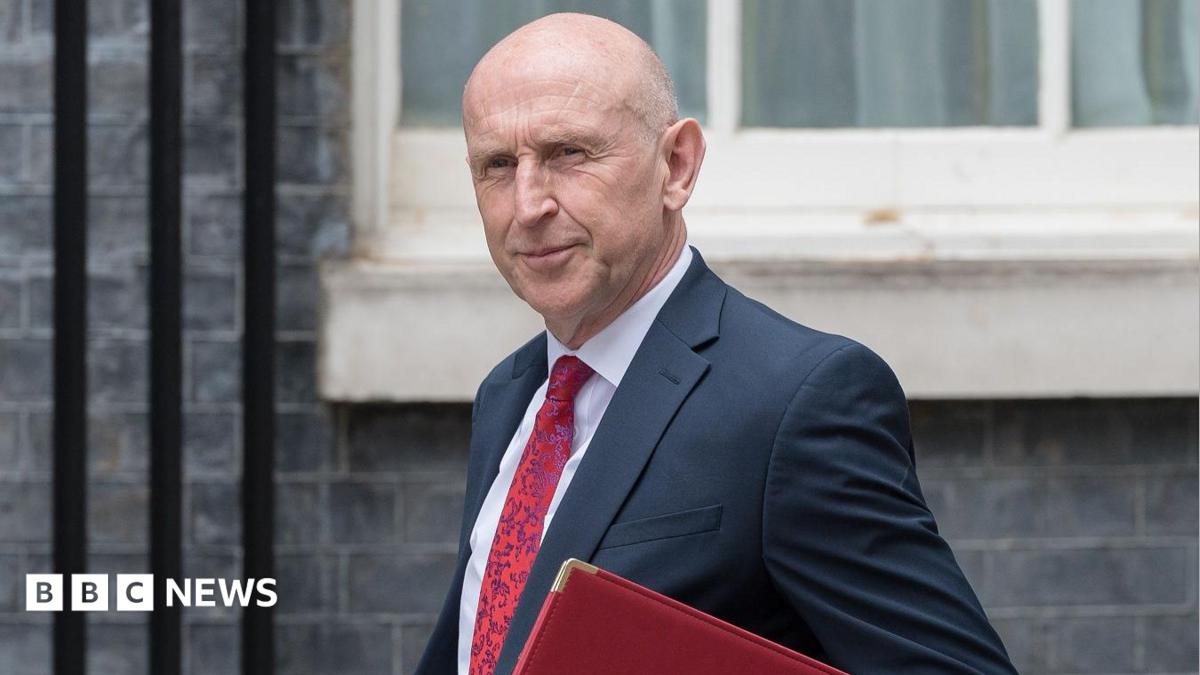
The government borrowed slightly more than expected in July, according to figures published as Chancellor John Healey draws up his first Budget.
The Office for National Statistics (ONS) said borrowing was £2.3bn more than official forecasts from the Office for Budget Responsibility (OBR).
Borrowing, the gap between what the government spends and what it takes in tax receipts, was £1.8bn in July, two thirds higher than the same month last year.
Economists warned the figure will restrict Healey and Prime Minister Andy Burnham’s room for manoeuvre as they target measures aimed at easing the cost of living for households, with little room to increase borrowing in the Budget on 27 October.
Healey has made it clear he will oversee “strong fiscal discipline” at the Budget – which will limit how much the government has to spend.
He has adopted his predecessor Rachel Reeves’ fiscal rules, which commit the government to funding all day-to-day spending through tax receipts by the end of the decade.
Responding to the borrowing figures, Healey said: “We are cutting the deficit faster than any other G7 economy, while giving people a bit of breathing space with cost of living pressures and focusing support to get young people into work.”
The government borrowed £16bn less in July than it did in June, helped by a surge in self-assessed income tax receipts.
But the figure came in higher than expected due to increased welfare spending, including benefits and other payments such the state pension. Social payments were £2bn higher than the same period last year.
The ONS said borrowing from April to July, the first four months of the government’s fiscal year, has reached £56.7bn. This is lower than last year, but £2.3bn higher than forecasts from the OBR, which the government uses when drawing up its spending plans.
Senior economist at Capital Economics Ashley Webb said the figure continued a “run of bad news” for the economy and that “there will be little scope to raise borrowing in the Budget later this year”.
He said the borrowing overshoot “will probably get bigger” this year as economic growth slows and the government rolls out more measures to support households with the cost of living.
Joe Nellis, head of economic research at accountancy MHA, also said the figures will not “prevent difficult decisions that must be made in the upcoming October Budget”.
Healey will have to find “additional tax revenue, tighter control over public sector spending and changes elsewhere” to balance the books and meet the government’s fiscal rules.
“Failure to do so will unsettle the financial markets and potentially push up the cost of government borrowing still further,” Nellis warned.
The ONS also said Britain’s overall debt pile is approaching £3tn, having grown by £127.2bn a year earlier. The Conservatives said Labour’s spending would leave “ordinary families” left to cover the bill.
Shadow Chancellor Mel Stride said: “We spend more on just the interest of our soaring debt than we do on our defence, police, and prisons combined. We simply cannot afford the price of Labour.”
The ONS also said retail sales were lacklustre in July, falling 0.5% from June. Analysts said the drop was caused by a surge of hot weather and a World Cup-induced surge in sales in June. Clothing and footwear saw the slowest growth since May last year.


O’Connor noticed the impact on his father and brother when the family made the switch from beef to dairy farming two years ago.
“It is a lot different – it’s rigid – you start milking in the morning, you have to milk in the evening. There’s not as much flexibility,” he said.
He also became more conscious of the paperwork and level of compliance involved in running a dairy operation.
Farmers in Northern Ireland work an average of 65 hours a week.
O’Connor said there was “a whole side of farming that the general public don’t see”, where farmers have late nights alone, completing jobs on the farm or filling in paperwork.
The app was developed with the idea of giving farmers more time with their families by making the business more manageable.
A campaign – the Empty Table – has been launched with the app to raise awareness of the effort that goes into producing food.
“I love to solve problems,” O’Connor said.
“So I wanted to set up FarmFlow to sort of solve problems on our own farm and try and make it more efficient.
“I love keeping things on time and stuff.”

Macquarie cuts Bally’s stock price target on financing concerns

BYD Company: Overseas Boom Changes The Entire Thesis

UK retail sales fell 0.5 per cent in July as shoppers cut back during record temperatures, according to the Office for National Statistics, reversing the rise recorded in June at the start of the warm summer and the Fifa men’s World Cup.
The monthly fall was in line with expectations from economists polled by Reuters. June’s increase was revised down from 1 per cent to 0.7 per cent, and July’s drop wiped out that gain.
Over a rolling three-month period, sales volumes are up 1.1 per cent, the ONS said.
Spending on clothing, footwear and household goods all fell in July. Excluding petrol and diesel, sales volumes recorded a larger 0.9 per cent monthly contraction. Pump prices rose in July after the end of a US-Iran ceasefire pushed up global oil costs.
Grant Fitzner, chief economist at the ONS, said British consumers had ramped up spending on sports merchandise, fans and outdoor products.
Rob Wood, chief UK economist at Pantheon, a consultancy, said consumer spending would be squeezed in the coming months as energy costs drove inflation towards 3 per cent. Annual consumer prices rose by 2.9 per cent in July, up from 2.6 per cent in June.
Sandra Prince, head of consumer at Lloyds, said the warm weather meant more spending had been directed to retail parks and online shopping rather than the high street.
“After an extended spell of warm weather across large parts of the UK, many households will already have bought what they need for the season, while lines of popular summer products come to an end. The boost from the World Cup that came to an end in the first half of July also meant fewer opportunities to capitalise on the warmer conditions,” Prince said.
“For retailers, as the summer peak slows down, attention is now turning to the opportunities the autumn could bring to keep consumers engaged.”

Amy Ingham
Amy Ingham is a reporter at Business Matters, covering UK business news with a focus on breaking news, business policy, late payments and insolvency. She joined the magazine in 2026 after completing the NCTJ Diploma in Journalism at Harlow College’s journalism school. Her recent reporting includes British Steel’s nationalisation and its impact on SME suppliers, the decline in late payments by large firms, and Insolvency Service director disqualifications. Reach her at aingham@cbmeg.co.uk.
Business
Did Goodluck India shares really crash 66% in just one day? Here’s how the bonus math works

Goodluck India shares opened at Rs 493.20 apiece on the NSE on Friday, compared with Thursday’s closing price of Rs 1,439.40. On an adjusted basis, however, the stock was down only around 4%, trading at about Rs 471 apiece.
All about Goodluck India’s bonus issue
Goodluck India in July announced its maiden bonus issue in a 2:1 ratio. Under the proposal, eligible shareholders will receive two bonus equity shares of a face value of Rs 2 each for every one equity share held as of the record date, which will be announced separately.
A bonus issue consists of free shares distributed by a company from its reserves and is often seen as a sign of strong financial health and growth prospects. While the issue of bonus shares increases the total number of outstanding shares, it does not change the company’s market capitalisation. However, it can improve liquidity and affordability, allowing more investors to add shares of the company to their portfolio.
Can you buy Goodluck India shares today and be eligible for bonus issue?
Only shareholders who hold Goodluck India shares in their demat accounts on the record date will be eligible for the bonus shares. Under India’s T+1 settlement cycle, shares bought one trading day before the record date are generally settled in the investor’s demat account in time to qualify for the corporate action.

Therefore, if Friday is the record date, Thursday was the last day to buy Goodluck India shares and still be eligible for the bonus issue. Buying the shares on Friday would not make an investor eligible for the bonus shares.
Also read | Bonus issue alert! Last day to buy Goodluck India shares for 2:1 bonus reward
How will dividend payout be impacted?
Goodluck India in May had announced a final dividend of Rs 3 per share for the financial year ended March 31, 2026, subject to shareholders’ approval. In view of the 2:1 bonus issue, the company announced that its board has now adjusted the final dividend amount to Re 1 per share.
The company has declared 27 dividends since March 2003 and has a dividend yield of 0.51% at the current market price, according to data on Trendlyne.
Goodluck India share price
Goodluck India shares have gained around 7% over the past week but declined 9% in the last month. The stock is up more than 33% so far in 2026.
Over the longer term, the stock has delivered returns of 29% in one year, 148% in three years and 422% over five years.
Also read | Stock split alert! Last day to buy multibagger TD Power Systems shares to be eligible for 1:2 split
(Disclaimer: Recommendations, suggestions, views and opinions given by the experts are their own. These do not represent the views of The Economic Times)

Tom Zaunmayr speaks to Gary Adshead, Claire Tyrrell, Jack McGinn and Isabel Vieira about news and politics of the week.

The gains came after silver prices rose for a third straight session. MCX silver jumped Rs 13,000 per kg to Rs 2,45,158, supported by a weaker dollar and efforts by the U.S. Treasury Department to keep longer-term yields under control. The U.S. dollar was headed for a weekly decline, making dollar-priced commodities more affordable for holders of other currencies.
On the global stage, Hindustan Zinc ranks among the leading silver producers, with annual output of 22.5 million ounces — ahead of Grupo Mexico’s 12.1 million ounces and not far from top players such as Fresnillo at 52.5 million ounces and Newmont at 28 million ounces. The company also operates in the lowest quartile of the global zinc cost curve and has a mine life of about 25 years.
Silver may have lost some of its shine after a stellar run earlier this year, but the white metal continues to lead all major asset classes on a five-year annualised return basis. Despite investors booking profits after silver surged to $122 in January amid soaring oil prices and renewed concerns over interest rate hikes, the metal has delivered a five-year CAGR of 27%.
Will silver bounce back again?
Fundamentally, silver continues to enjoy strong tailwinds. Demand from sectors such as solar energy, electric vehicles and electronics remains robust, while supply-side constraints support its constructive medium- to long-term outlook. That said, its higher volatility cannot be ignored. Experts suggest a staggered accumulation strategy may be more prudent, allowing investors to balance its higher return potential with the need for risk management.
“We reiterate investing in silver over supportive fundamentals and market uncertainties. Any decline in prices due to a dollar rally or easing of tensions provides an opportunity to accumulate or invest in silver,” Tata Mutual Fund said in a report.
The report added that corrections after a sharp and extended rally are natural and do not weaken the long-term bullish outlook for precious metals. In silver’s case, the structural fundamentals remain firmly in place despite the recent pullback.
Hindustan Zinc Q1
The Vedanta Group company reported a 145% year-on-year (YoY) surge in net profit to Rs 5,469 crore for the first quarter of FY27.
Its revenue from operations rose around 77% YoY to Rs 13,747 crore during the quarter under review, from Rs 7,771 crore reported in the same period last year. Total expenses increased by over 33% YoY to Rs 6,749 crore during the quarter, which ended on June 30, 2026.
The Vedanta Group company’s net profit margin improved to 40% in the April-June quarter of FY27, from 37% in the previous quarter (Q4 FY26) and 29% in the year-ago period (Q1 FY26). Operating margin, meanwhile, increased to 52% during the quarter under review.
The metal major’s net worth also more than doubled year on year, rising around 108% to Rs 23,587 crore at the end of the June quarter of FY27. Its debt-to-equity ratio stood at 0.32 times, as against 1.19 times in Q1 FY26.
(Disclaimer: Recommendations, suggestions, views and opinions given by the experts are their own. These do not represent the views of The Economic Times)
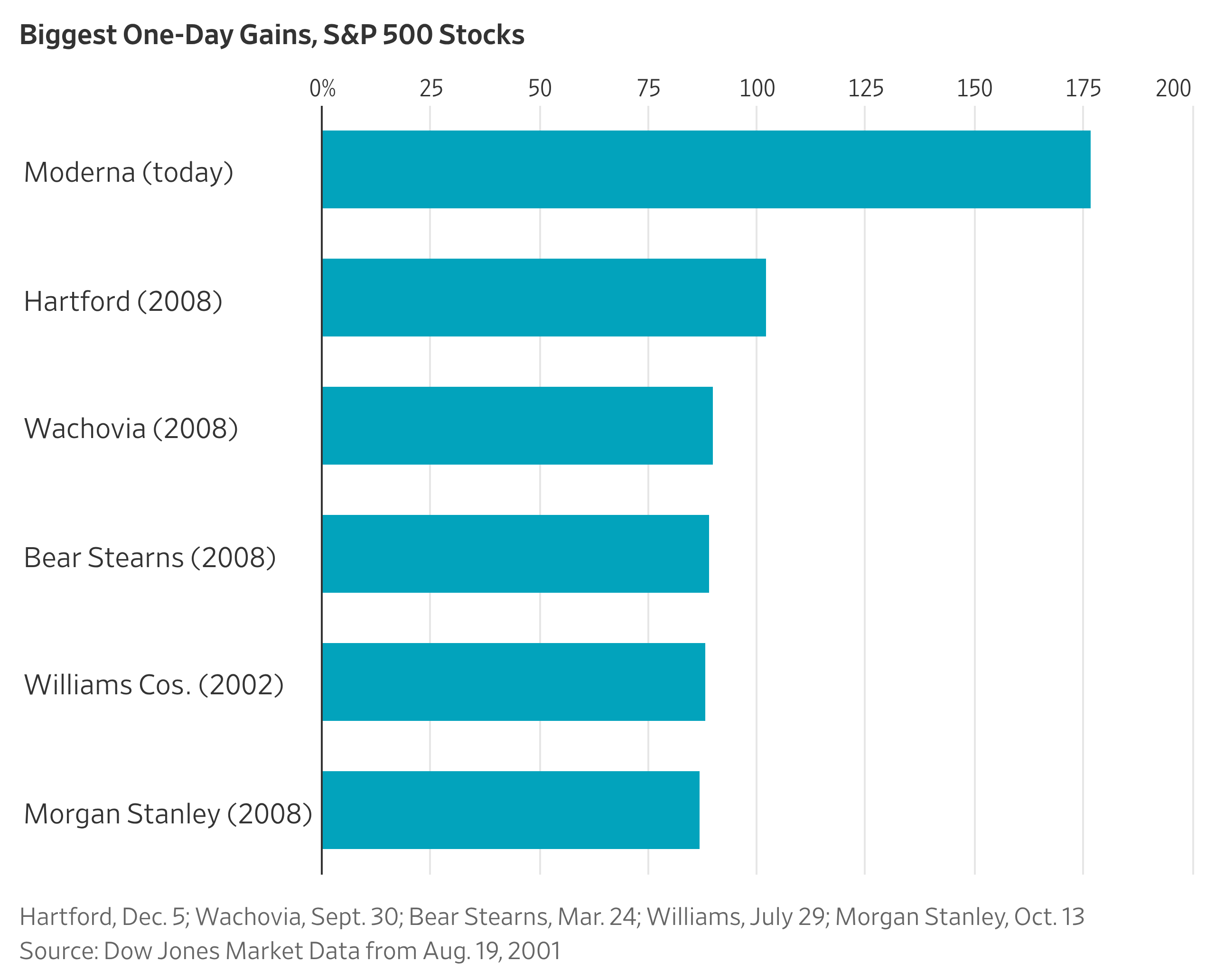
The 177% move in the stock was the Moderna’s largest increase on record and the biggest gain for any stock in the S&P 500 Index in the last 25 years, according to Dow Jones Market Data.

Airbus backs down on return-to-office after protests, sources say

Arenit H1 2026 slides: sales surge 54%, leverage turns negative

Operating theatre staff set to strike in Greater Manchester hospitals

Shubman Gill smashes massive sixes in nets against spinners after twin dismissals against Prabath Jayasuriya in SL vs IND 2026 1st test [Watch]

What’s going on at Japan Home?





-

 Fashion7 days ago
Weekend Open Thread: Ann Taylor
-

 Sports6 days ago
Birmingham 2026: Day 6 Timetable for Irish Athletes
-
 NewsBeat6 days ago
Myanmar says over 300,000 Rohingya refugees verified for repatriation as exodus enters ninth year
-

 Politics6 days ago
SEQ Code: The Three Letter Boarding Pass Code That Could Give You The Worst Seat
-

 Business3 days ago
SMA Solar Technology AG (SMTGY) Q2 2026 Earnings Call Transcript
-

 Tech3 days ago
Qwen3.8-27B runs frontier-class coding agents and reasoning locally, no cloud API required
-

 Crypto World6 days ago
Pi Network Protocol 27 endgame: last upgrade before what?
-

 Crypto World3 days ago
OCC Greenlights Trump Family Crypto Firm for Trust Charter
-
 Tech6 days ago
Every fusion startup that has raised over $100M
-
 Entertainment6 days ago
Marvel Studios Reveals New X-Men Cast Including Adam Driver and Sadie Sink
-
 Business6 days ago
Monarch Mutual Fund set to enter MF space with maiden overnight fund; files draft with Sebi
-

 Fashion7 days ago
Silver bangles for women – Newbridge Silverware
-

 Fashion7 days ago
Weekly News Update, 8.14.26 – Corporette.com
-

 News Videos1 day ago
Don’t Leave Your Financial Future To Chance | August 19, 2026
-

 Business6 days ago
Facebook Down Now? Users Report Login And Loading Problems As Outage Trackers Monitor Ongoing Issues
-

 Business6 days ago
Cristiano Ronaldo’s Secret Wedding Deepens As Presenter Claims Family Learned ’30 Seconds’ Before
-

 Fashion7 days ago
Cart Confidential Vol. 44 – Julia Berolzheimer
-

 Crypto World3 days ago
NAVI Prime launches institutional lending framework on Sui
-

 Crypto World4 days ago
Data of 54K Wallet Users Leaked, Clarity Odds Just 10%: Hodler’s Digest, Aug. 16
-
 Fashion7 days ago
knitwear for women sale – up to 50% off
You must be logged in to post a comment Login