

Politics
Stormzy Is Producing A New Biopic About Ian Wright’s Life Story

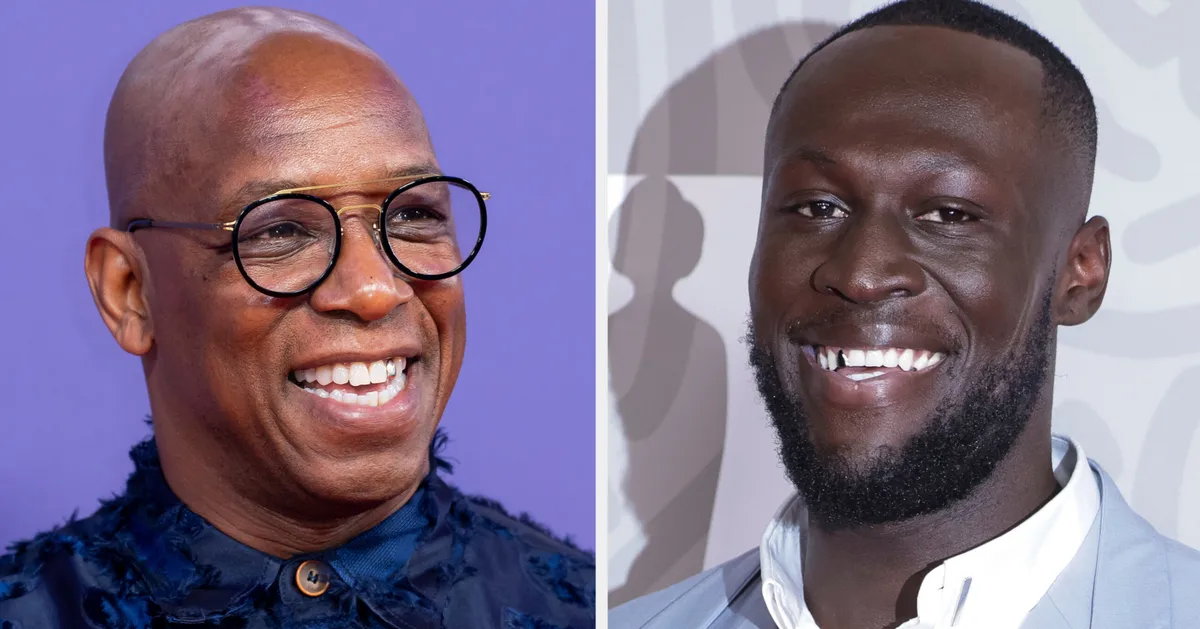
Ian Wright is to be the focus of a new biopic executive produced by Stormzy.
On Tuesday afternoon, it was announced that a film chronicling the football legend’s journey from a South London housing estate to becoming one of British sport’s most recognisable faces was in the works, produced by Stormzy’s #Merky Films production company.
The currently-untitled movie has been written by Tom Wilton, who is also attached to direct.
Ian enthused: “Telling my story in full for the first time feels surreal and, in some ways, a long time coming. There are parts of my life that will be familiar because they’ve been talked about over the years, but this film is the first time we’re bringing it all together.
“Retelling my story to Tom has also made me realise how much Britain has changed from my parents arriving here on the Windrush, what that meant for me and my brothers, and the experiences that will never leave me. I hope it shows how complicated life can be for a young person and the influence people around you can have – good and bad.”
He added: “My story is one that truly shows how the company you keep can break you down and build you up. There are hard-hitting moments but in the end I want it to give people hope and joy.”
An official press release for the project teased: “Ian’s journey begins on the Honor Oak Estate in Brockley, south London, where football is the young boy’s only escape from his tough home life.
“Schoolteacher Sydney Pigden recognises Ian’s struggles and dares him to believe in who he could be. Despite this spark of hope, by his teens, Ian’s dreams of becoming a footballer are falling apart as rejection, oppression and his own internal rage take their toll.
“By the time he is in his early twenties, Ian’s hope has faded, not least because he strives to be the parent he never had. But with his raw talent finally causing a stir, Ian faces a life-altering choice – risk the only security he has ever known, or take one last shot at the big time.”
Stormzy said of the project: “Wrighty’s journey goes far beyond football – it’s about resilience, family and believing in yourself against the odds.
“He’s inspired generations on and off the pitch and we’re so proud to help bring such an important and powerful story to the screen.”
Over the course of his football career, Ian was best known for playing for Arsenal, Crystal Palace and England’s national team.
Since retiring in 2000, he has become a prolific football pundit and TV personality, and was awarded an OBE for services to football and charity in 2023.

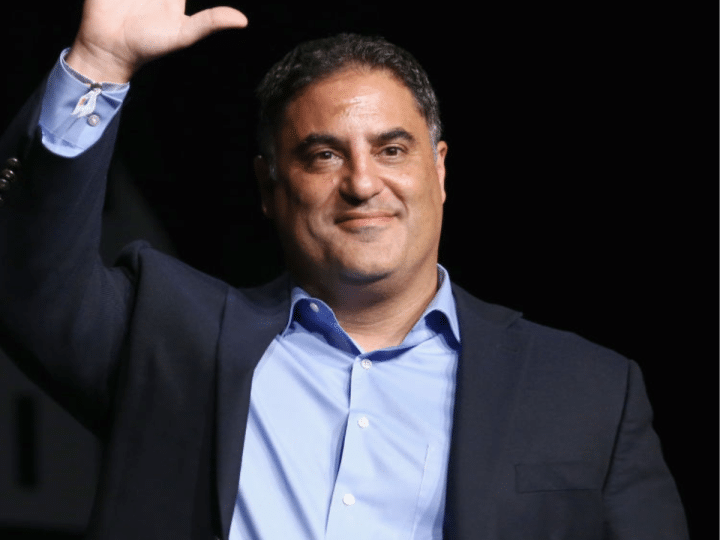

US anti-genocide journalist Cenk Uygur was interviewed on LBC with Shelagh Fogarty this week. The Starmer regime had just cancelled the UK visas of Uygur and fellow commentator Hasan Piker.
Yet Fogarty was determined to ignore the obvious and was seemingly oblivious to how that would backfire. So she told Uygur blithely: “Nobody in this country thinks you can’t criticise Israel”.
Yes, she actually said that out loud.
Fogarty ignores Uygur’s ban for opposing barbarism
Uygur’s response was immediate: “Well I just got banned for it”.
The clip was promptly posted by Green party candidate, Mark Adderley, who knows a thing or two about being attacked and penalised for criticising Israel and its crimes.
View this post on Instagram
Fogarty’s agenda was clear, of course. She was trying to associate properly severe condemnation of Israel with incitement and hate speech against Jews generally, which it plainly is not.
Jews are not Israel, Israel is not all Jews. Suggesting otherwise is antisemitic, but it’s a tactic frequently employed by Israel advocates and apologists. Uygur wasn’t having it and rightly so.
That it comes from Fogarty and LBC is entirely predictable. She has sneered at anti-genocide protesters as juveniles who need to “grow up” and swore at a caller who pointed out Israel is committing genocide.
Nevertheless, being predictable doesn’t make it any more acceptable (or less stupid) to tell someone just banned from the UK for criticising Israel that “nobody” in the UK thinks criticism of Israel is penalised.
Featured image via Rich Polk/Getty Images for Politicon
By Skwawkbox
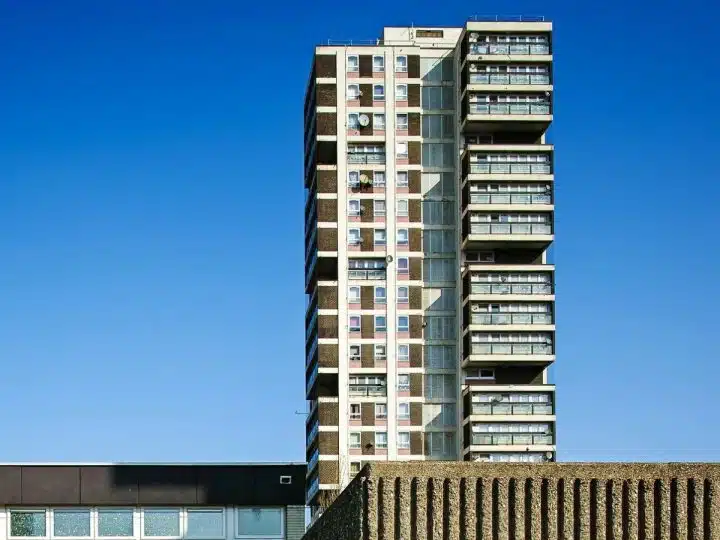

Residents from the Wyndham & Comber, Brandon 2 and Brandon 3 estates in Southwark will formally launch a new campaign at a public event on 3 June. It’s calling for urgent action on unsafe housing conditions.
The Southwark Group of Tenants Organisations and health justice organisation Medact are supporting the campaign. It highlights the serious health impacts of ongoing housing disrepair. This can include:
- Unreliable heating and hot water.
- Damp.
- Mould.
- Leaks.
- Overheating.
- Structural defects.
The launch event will bring together residents, community organisations, local stakeholders and health advocates to share experiences, present residents’ demands, and discuss solutions to long-standing housing problems affecting the estates.
Residents say poor housing conditions are harming both physical and mental health, particularly for older people, children and those with existing health conditions.
A resident representative said:
We are living in homes that are having a real impact on our health every day. No one should have to deal with repeated loss of heating and hot water, or live with damp and mould that makes people ill. This campaign is about making sure our experiences are heard and acted on.
Southwark residents report repeated heating and hot water breakdowns alongside ongoing disrepair in their homes. Many say these conditions have contributed to respiratory problems, stress, sleep disruption and worsening mental health.
Medact, a health justice organisation working with health professionals and communities, is supporting the campaign as part of its work on the social determinants of health. A Medact representative said:
Housing is a fundamental determinant of health. When homes are not safe, dry, and warm, people’s health suffers. This collaboration brings together lived experience and public health expertise to push for meaningful change.
The event will also include a community social for residents and attendees to connect and build support across the local community.
The campaign is led by tenants and residents from the Wyndham & Comber, Brandon 2 and Brandon 3 estates as part of the Wyndham Heat Network Action Group.
The Southwark Group of Tenants Organisations supports tenant and resident groups across the borough.
Medact is a UK-based health justice organisation that campaigns to tackle unsafe housing.
Poor housing conditions, including damp, mould and inadequate heating, are widely linked to poor health outcomes and health inequalities.
Featured image via the Canary
By The Canary
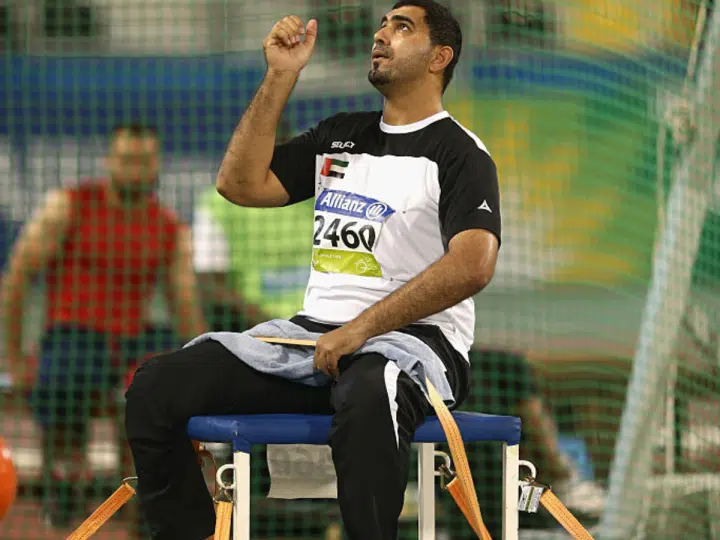

UK Athletics has been fined £350,000 after pleading guilty to corporate manslaughter over the 2017 death of Paralympian Abdullah Hayayei.
Hayayei was killed while training in London ahead of the World Para Athletics Championships.
The case has exposed glaring lapses in event safety and prompted fresh scrutiny of how major sporting bodies manage risk for visiting athletes.
Hayayei, a 36‑year‑old thrower from the United Arab Emirates, had competed at the 2016 Paralympic Games in Rio, and was preparing at the Newham Leisure Centre when a metal throwing cage collapsed on him.
Emergency services pronounced him dead at the scene. The tragedy cut short a promising athletic career and left a community demanding answers about preventable failures.
UK Athletics investigation: What was found?
A joint police and health and safety investigation uncovered a critical defect: the stabilising metal lattice base plates for the discus cage were missing.
That absence left the equipment dangerously unstable. Prosecutors argued the condition of the apparatus amounted to gross negligence in safety management by the organisation responsible for the event.
UK Athletics admitted liability in court, entering a guilty plea to corporate manslaughter in February. The organisation was ordered to pay the fine and an additional £44,000 in court costs.
Separately, the head of sport for the 2017 championships, Keith Davies, pleaded guilty to an offence under the Health and Safety at Work Act and received a community order with 175 hours of unpaid work.
Official response and accountability
The Crown Prosecution Service was blunt in its assessment:
There can be no doubt that UK Athletics were grossly negligent in their safety management, which caused the death of a talented athlete.
Prosecutors said equipment had been left in a “seriously unsafe condition” and that Hayayei’s death was avoidable.
UK Athletics issued a statement expressing deep sorrow and acknowledging failings.
The governing body said it had focused on learning from the incident and strengthening standards and safeguards across the sport. The organisation’s apology stopped short of undoing the harm but signalled a commitment to reform.
Legal and organisational consequences
The fine and criminal conviction mark a significant moment for sports governance in the UK. Corporate manslaughter convictions against sporting bodies are rare and carry reputational as well as financial consequences.
The sentence against Davies underscores that individual managers can also face personal accountability when safety systems fail.
For UK Athletics, the ruling will likely trigger internal reviews, policy overhauls, and tighter oversight of event operations. Insurance costs, supplier contracts, and venue checks are all areas that will come under renewed attention.
The case sets a precedent that event organisers cannot treat safety as a box‑ticking exercise; lapses can lead to criminal liability.
Wider implications for sport and visiting athletes
The death of an international athlete on home soil raises questions about how organisers protect competitors, especially those who travel from abroad and rely on hosts for safe facilities. Visiting athletes often lack local knowledge about venues and depend on organisers to ensure equipment and infrastructure meet standards.
Event hosts must now reckon with the reputational risk of inadequate safety regimes. National federations, local authorities, and venue operators will face pressure to demonstrate robust inspection regimes, clear chains of responsibility, and documented maintenance procedures. The case also highlights the need for transparent reporting and independent checks ahead of major competitions.
The human cost
Beyond legal penalties and policy changes, the human toll remains central. Hayayei’s family and teammates have lost a son, friend, and a competitor.
Financial fines and public statements cannot replace a life. The case is a reminder that safety failures have victims and that accountability must include support for those left behind.
There is also an equality dimension. Smaller federations and athletes from less resourced countries may be disproportionately affected when safety standards slip. Ensuring consistent protections for all competitors, regardless of origin, is a moral as well as legal imperative for international sport.
What should change for UK Athletics?
The ruling points to several practical steps organisers should take to reduce risk:
- Rigorous equipment checks before and during events, with documented sign‑offs
- Clear lines of responsibility so that venue managers, event staff, and governing bodies know who inspects and signs off on safety
- Independent audits for high‑risk apparatus and temporary installations
- Training and accountability for staff and volunteers on safety protocols
- Support mechanisms for athletes and families affected by incidents, including transparent communication and compensation pathways
These measures are not novel, but the Hayayei case shows they must be enforced consistently and treated as non‑negotiable.
The long view for UK Athletics
The fine and convictions close one chapter but open another: a period of reckoning for event safety in athletics. UK Athletics has been punished and publicly shamed, and now the sport faces the task of rebuilding trust.
That will require more than policy changes, it will demand cultural change, investment in safety, and a willingness to accept responsibility when systems fail.
For athletes who travel to compete, the message must be clear: organisers are accountable for their safety. For governing bodies, the lesson is equally stark, negligence has consequences, and the cost of complacency can be a life.
Featured Image via Warren Little/ Getty Images
By Faz Ali
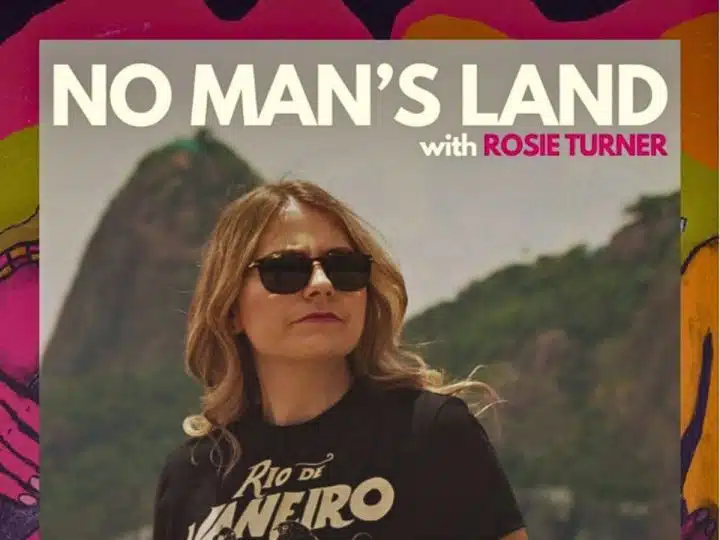

No Man’s Land is a groundbreaking new docu-series from Rosie Turner. It explores what it means to live, love, and survive as a member of the LGBTQ+ community in regions where identity itself can be an act of defiance.
Told through dynamic “postcards” filmed around the world, including Thailand, Finland and Brazil, the series captures queer life in all its colour, complexity and courage.
‘No Man’s Land’ reveals queer resilience
The series follows Turner as she immerses herself in local communities. Each episode explores a country with a complex and evolving relationship with queer rights, from underground love stories and chosen families to activists and allies quietly fighting for change.
No Man’s Land reveals the resilience of queer individuals navigating systems designed to silence them. This series has been researched, produced, directed and shot entirely by a team of queer women.
This isn’t a polished travelogue: it’s raw journalism with a heartbeat, using filmmaking to capture both the unfiltered reality and surprisingly joyful portrait of global queer life.
The first public screening of No Man’s Land will take place at The Arzner, London’s only dedicated LGBTQ+ Cinema. You can watch a trailer on YouTube here.
First Public Screening: Sunday 5 July 2026
Doors open at 3pm | Screening at 4pm
The Arzner Cinema, 10 Bermondsey Square, London SE1 3UN
‘Brazil: The Paradox of Pride’

The Brazil episode explores the contradiction between Brazil’s vibrant queer culture and its ongoing violence and political tension surrounding LGBTQ+ rights.
Set across Rio de Janeiro during Carnaval preparations, Turner investigates how a country celebrated globally for its queer visibility and Pride culture can simultaneously remain one of the most dangerous places in the world for trans people.
The episode explores the intersections of religion, politics, poverty, race and queer identity in modern Brazil.
‘Finland: Allyship in the Arctic Circle’

Set in Rovaniemi on the edge of the Arctic Circle, the Finland episode explores allyship, community-building and queer visibility in one of Europe’s most progressive yet geographically isolated countries for LGBTQ+ rights.
Turner travels through Finnish Lapland meeting LGBTQ+ people and allies working to create safe, visible and connected spaces for queer communities in remote areas where visibility can often feel quieter and harder won.
The episode explores themes including trans healthcare, allyship, community organising and chosen family.
‘Thailand: The Edge of Freedom’

Set against the backdrop of Bangkok’s vibrant queer nightlife and Thailand’s recent legalisation of same-sex marriage, the Thailand episode examines the tension between the country’s progressive global image and the more complex realities experienced by LGBTQ+ people on the ground.
Turner journeys through Bangkok’s queer district, from Silom Soi 4 to The Stranger Bar, gaining intimate backstage access, in dressing rooms and during live performances. Through these spaces, the episode explores queer joy, performance culture and chosen family within the city’s nightlife scene.
Along the way, Turner meets activists, venue owners, educators and organisers who are challenging and reshaping conversations around sexuality, gender and queer visibility in modern Thailand.
The episode also delves into wider issues including sex tourism, censorship, sex education, and the gap between growing visibility and meaningful legal protection for LGBTQ+ communities.
Featured image and other images via No Man’s Land
By The Canary
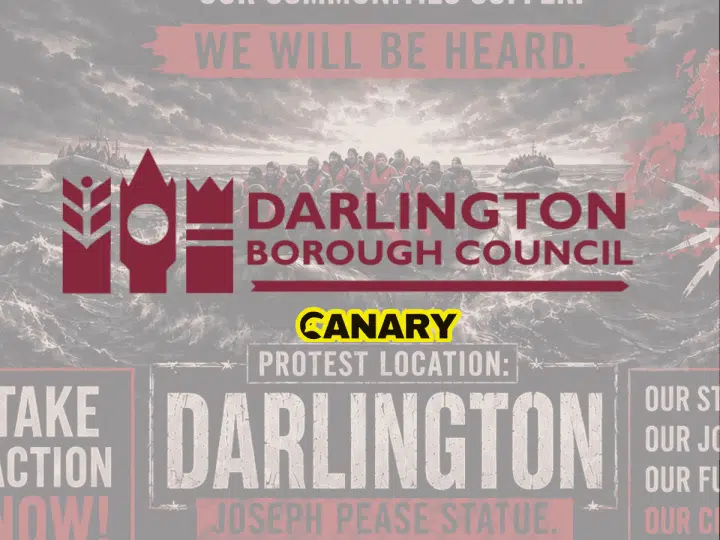

A laughably tiny group of far-right dickheads failed to spark a civilian uprising in Darlington.
Organisers expected crowds to flock to the town centre after months of aggressive online campaigning. Instead their ridiculous AI-produced flyer, filled with face-painted lions and flags, attracted less than 10 people to the Joseph Pease statue.
Shoppers completely ignored the ignorant display of ‘patriotism’.

Darlington subjected to paper trail of hate
The failed rally follows months of aggressive online campaigning from local far-right figures in Darlington — who are not pleasant people.
The main instigator, David Haji Abbot, has spent months going on massive online tirades. Most of them would be quite funny if they weren’t so racist. Abbot introduces his racist rants while talking about worthy issues like housing, and insults anyone who doesn’t agree.
But he doesn’t just keep it in his echo chamber. To the annoyance of likely everyone in Darlington, Abbot constantly takes his ‘activism’ to the streets.
Abbot has actively financed a flag campaign, which I think he believes is a way of marking his territory.
A handwritten ledger from August 2025 shows he crowdfunded about £157 from 18 contributors. Receipts show he then went on to use the money to buy 30 large St Georges’ flags for £149.70 to shove on public infrastructure.

The unauthorised flag campaign has altered the local landscape and people aren’t happy. This movement has encouraged widespread antisocial behaviour. Crude red crosses have been painted on bollards, causing health and safety nightmares for Darlington Borough Council.
Hitting the legal wall
Eventually, the law quickly caught up with Abbot when he was served a severe legal warning from Darlington Council in January. Posting the letter on his own Facebook, Abbot went on a tirade of racist bullshit again.
The letter from the council revealed that climbing lampposts posed a severe public safety issue, obviously. It also told Abbot how the cost to remove and store flags are placed on local tax payers.
To top it all off, the letter revealed that utility workers were facing threats and intimidation from Abbot’s supporters. Simply for doing their job.
Then Abbot received a call from the police on 6 March for a Community Protection Notice Warning. Once again, Abbot documented this all on his very open Facebook profile.
Authorities ordered this rat to stop his behaviour immediately, especially in regards to his online tirades.
PC Whitfield allegedly noted that Abbot was sanctioned for his online hate-filled content that incited violence and disorder. Honestly, you want to take a look at Abbot’s socials. They are a total cesspit of ranting racism and insults.
The dude has terrorised a local Darlington Facebook group up until today, when he was kicked out for good. His replies were full of racism and ableism, leading to a permanent ban.
Democracy wins in Darlington
Abbot tried to maintain a laughably respectable façade after this. He wrote a formal complaint to Green Party councillor, Matthew Snedker. Abbot does this frequently. Almost feels like he has some kind of schoolboy crush to me given the number of times he contacts Snedker.
That complaint was about minor political fly-posting. Abbot also tried to use the Freedom of Information Act to prove Darlo backed his actions, which backfired massively.
The official data humiliated Abbot when the council revealed it had received 146 complaints demanding the England flags around Darlington to be removed. Only six people wrote to support them. So, 96% of responding residents rejected Abbot’s shitty flag campaign.
Abbot’s agitation also targets vulnerable groups. He regularly uses transphobic rhetoric online and even rocked up to a council meeting wearing a Union Jack suit when councillors debated single-sex spaces.
He looked ridiculous as Darlington Borough Council rejected the policy, dealing another blow for his far-right agenda for the town.
I was there, and after facing aggression from Abbot’s gang in the gallery, it was hilarious to see them so sad when their motion was batted down.

Abbot’s never worn a mask to slip
It was hilarious to see that all Abbot could muster after months of online campaigning was a measly handful of supporters. Wrapped in Temu Union Jacks and plastering the street in juvenile slogans, it was a huge turn-off for the people of Darlington.
These demonstrators used tired phrases like “Save our Kids” to try to trick passersby into joining them. It didn’t work. The population of the town rejects Abbot’s politics of hate and his ridiculous flags.
Although he initially claimed he was happy with the turnout, it appears when he slept on it, Abbot wasn’t happy at all. He launched into a furious rant the next day.
His online meltdown was delicious as he completely broke his police warning. Dropping the fake concern for Darlington’s heritage, he went back to his white nationalist rubbish to demand deportations again.
But guess what? Abbot has already publicised another march next month with another AI poster. This time there’s less face-painted lions and more boats. It appears he’s changing tact this time.
The complete collapse of the rally last weekend proves one thing though. Digital manipulation cannot defeat real community solidarity. As these weird online trolls go back to their caves to lick their wounds and regroup, antifascists are keeping an eye on their next move.
Featured images via Facebook
By Antifabot
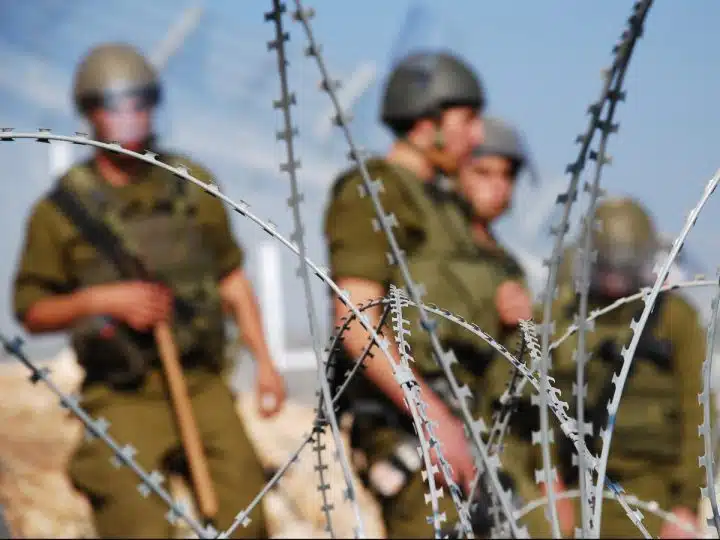

Every minute of every day there are numerous Israeli settler attacks against Palestinians taking place somewhere in the occupied West Bank.
Many attacks involve direct violence, but settlers also intimidate, steal and destroy land and property.
Their purpose, by whatever means possible, is to steal Palestinian land for the Zionist’s colonial project of a “Greater Israel”, in the occupied Palestinian territory. And they have the full support and protection of the occupation’s police, military and government.
Here are just a few of the recent attacks on Palestinians by these illegal settlers…
Israeli settlers terrorise towns and villages
On 19 May, settlers and the occupation’s military stormed Madama, a town south of Nablus. They entered an area classified as ‘Area B’ under the Oslo Accords and vandalised property.
The following day, they destroyed parts of the town’s electrical network, including electricity poles.

A few days later, Israeli occupation soldiers raided the village, forcing shop owners to close their businesses.
No access for medics and ambulances
On 30 May, in the early morning, there was a coordinated attack.
Armed settlers assaulted residents with clubs and live ammunition, and targeted their homes. The occupation’s soldiers fired live bullets and tear gas, while the settlers attacked residents. They prevented ambulances from reaching injured people, as commonly happens. Dozens of sheep were also stolen.
The Palestinian Red Crescent Society reported that the attack hospitalised at least seven Palestinians. They were beaten with clubs, hit on the head with rocks, and shot at.
The settler attack in Madama was just one of several taking place in the Nablus district that day.
Settlers also raided the Jabal Bir Quza area in the town of Beita, in south Nablus. Video footage shows them wielding clubs and throwing rocks at a house. They also smashed the windows of several cars.
The moment Israeli settlers launched an attack on the Jabal Bir Quza area in the town of Beita, south of Nablus, vandalizing and setting residents’ property on fire. pic.twitter.com/mHcl4tA2uL
— Ramy Abdu| رامي عبده (@RamAbdu) May 30, 2026
Israeli settlers carried out another attack on the Bir Quza area of Beita, south of Nablus in the occupied West Bank. Dr. Rabee Shourfa, Deputy Mayor of Beita, described the damage inflicted on residents property during the raid. pic.twitter.com/B6ETz7aaeh
— Government Communication Center (@pal_gcc_en) May 31, 2026
Settlers from the same outpost attack again
Then, in the evening, the settlers targeted Palestinian-registered vehicles on the road between Beita and Awarta.
They sprayed adults and children with pepper spray, and attacked homes in Ras al-Ein, in the village of Qusra.
One resident was stabbed while trying to defend his home before being taken to hospital with moderate injuries. This resident was the cousin of Amir Odeh, 28, who was shot in the chest and killed in the same area in March by settlers from the same outpost.
When Amir’s father, Mutasem, went to his aid, he was beaten unconscious with a stick and stabbed in both legs. Amir was pronounced dead before he arrived at hospital in Nablus.
Northwest of Ramallah, settlers also pushed a car off a slope, near the village of Deir Abu Mashal. Soldiers had chased it while it was on a nearby road. Soon afterwards, the car stopped and parked.
Settlers then beat the driver while he refused to hand over his keys. In retaliation, they pushed his car down a steep slope and left the scene without being stopped by the soldiers.
No action from authorities
Recently, there have also been many arson attacks on Palestinian agricultural land, by both the occupation’s army and settlers.
In Duma, near Nablus, settlers arrived on all-terrain vehicles, which the occupation’s government supplies. They blocked the only village entrance and then burnt olive trees and agricultural produce.
The army was there but did nothing to prevent the attack or arrest the illegal settlers.

A new outpost has now been set up on land belonging to Abu Falah, north-east of Ramallah.
Settlers set fire to agricultural land planted with olives on the outskirts of the village. Several hours later they set fire to the land again, this time next to a chicken shed.
Soldiers did nothing to prevent the crime or help put out the fire.
Abu Falah is the neighbouring village to al Mughayyir, which has also experienced numerous fires over the past weeks. Settlers shot at villagers while they tried to extinguish the flames.
In Saffa, west of Ramallah, Israeli occupation forces set light to land planted with wheat, olive trees and figs. The fire burnt more than 15 hectares of land. When residents and volunteers attempted to extinguish the fires, the occupation opened fire.
Disregard for Oslo accords
The occupied West Bank is divided into three administrative zones — Area A, B and C — according to the Oslo Accords.

In Area A, the Palestinian Authority (PA) officially has full civil and security control. In Area B, the PA must coordinate security with the Israeli occupation, while Area C is under full “Israeli” control. But the occupation wants to control all of the West Bank and steal as much Palestinian land as possible. It is doing this in a variety of ways.
The aim of the occupation is to control all of Area C, significantly expand Israeli occupation settlements there and declare “Israeli” sovereignty over the entire area.
In February this year, the security cabinet officially began the permanent acquisition and registration of title deeds in Area C. The PA has issued deeds and documents for decades to help local communities record their land rights, but the occupation has refused to recognise any of these.
It now says any Palestinian land in Area C lacking formal private ownership documentation from the Israeli occupation registry system — an institution designed to exclude them — belongs to the Israeli occupation government. But displacement, document loss and lack of recognition by Israeli courts, mean few Palestinians have this documentation.
Oslo Accords under threat
Members of the Knesset have also recently introduced legislation to formally scrap the Oslo Accords. They propose to replace the existing framework with full Israeli occupation sovereignty over Palestine. The aim is to block the establishment of a Palestinian state and encourage settlements in Areas A and B.
For decades, settlement outposts were almost exclusively established in Area C, but since October 2023, there has been a shift. There is now a push by the occupation to establish new outposts in Area B and, in some cases, even inside Area A — areas supposedly under at least partial Palestinian control.
Settler outposts extending into Areas A and B, ensure intimidation and settler attacks towards Palestinians do not only occur in Israeli occupation controlled Area C, but throughout the occupied West Bank. The eventual aim of the criminal Zionist regime is to forcibly displace Palestinians from their land, ethnically cleanse the territory, and steal it for themselves.
Featured image via the Canary
By Charlie Jaay
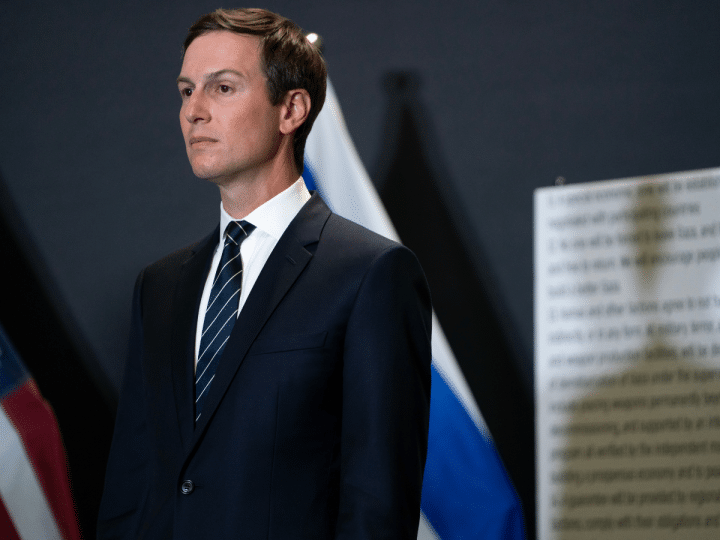

Albanians have continued to protest against a luxury resort linked to Zionists Jared Kushner and his wife, Ivanka Trump, being built in the Vjosa-Narta protected landscape and the island of Sazan.
Albanians are back on the streets for a third day — protesting a luxury resort linked to Jared Kushner.
Demonstrators are calling for the project to be cancelled, citing its threat to the Vjosa-Narta Protected Landscape, a key habitat for migratory birds. pic.twitter.com/VMfrCPlXQ2
— euronews (@euronews) June 3, 2026
Reuters reported that protesters were outside the office of Albania’s Prime Minister Edi Rama on Tuesday evening with signs that read “Nation is not for sale” and “I don’t want Albania like Dubai.”
Ivanka boasts of the “discovery” on a podcast
The daughter of the current deranged President of the United States said that she first discovered the 1,400-hectare island whilst swimming off a friend’s boat.
She said:
Well, it’s an unbelievable, beautiful 1,400-hectare private island in the middle of the Mediterranean. We were on a friend’s boat, and we stopped for a swim. Effectively, that’s how we found it. We swam to the islands. We went on a hike barefoot all the way up to the top, and we were just captivated, and it stayed with us ever since. And over the course of many years, we developed the opportunity to help realize its potential and transform it….
View this post on Instagram
POLITICO has, however, reported some good news. Albania’s anti-corruption office confirmed on Monday that it had opened an investigation into controversial changes in the area’s protected status and land ownership in 2024, which opened the door to tourism development.
However, they also reported that Kushner had unveiled plans for Affinity Partners to turn the site into a luxury resort in August 2024. The Zionist couple then visited the site in January 2026.
Edi Rama had recently confirmed to POLITICO that talks were ongoing between the government and Kushner over the deal, which is set to include 10,000 hotel rooms.
Kushner and Gaza waterfront
The Kushner’s clearly do hold the white supremacist belief of “terra nullius.”
Terra nullius, or “land belonging to no one,” was the theory that foreign lands “discovered” by European explorers were vacant of any preexisting title and, therefore, claimable.
This concept, rooted in a series of 15th-century Papal Bulls, sanctioned Christian explorers like Christopher Columbus to colonize and exploit non-Christian nations and seize their lands. Trump’s administration frequently boasts of Columbus.
View this post on Instagram
In Albania today, that same logic is being repackaged as luxury development, and as we have also seen in the live-streamed genocide of Gaza. Kushner envisions Gaza as his “waterfront” property.
Like his wife gushing about the ‘discovery’ on a podcast, Kushner gushed about Gaza’s waterfront property:
It could be very valuable, if people would focus on building up livelihoods.
The genocidal profiteer sits on the Board of Peace for Gaza.
The Vjosa-Narta protected landscape is a wetland home to flamingos, seals, and sea turtle nesting sites.
Genocide and ecocide are preconditions of the desire of Zionists like the Kushners, and they don’t care about it. That precondition is acceptable to them.
Featured image via Getty/Nathan Howard
By The Canary
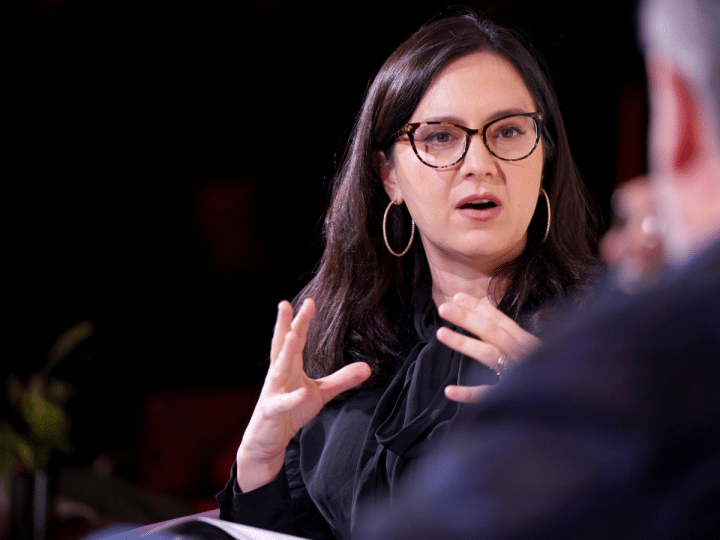

The latest journalist to be fired by Bari Weiss, the freshly-minted editor-in-chief of CBS News, was Scott Pelley. Clearly, self-declared “Zionist fanatic“ Weiss is overhauling the news division.
Oracle’s David Ellison, another Zionist, acquired CBS owner Paramount and installed Weiss last year.
Just last week, on Thursday morning, CBS News fired correspondent Sharyn Alfonsi, who had feuded with Weiss over a delayed 60 Minutes segment, and executive producer Tanya Simon.
Washington Post’s Scott Nover listed the four correspondents of CBS’s 60 Minutes who have been fired or resigned since Weiss became head.
2025-26 “60 Minutes” Correspondents:
• Lesley Stahl
• Bill Whitaker
• L. Jon Wertheim
• Norah O’Donnell
• Anderson Cooper (resigned)
• Sharyn Alfonsi (fired)
• Cecilia Vega (fired)
• Scott Pelley (fired)https://t.co/zNRuTTEq0O https://t.co/fDGqGSXSI8— Scott Nover (@ScottNover) June 3, 2026
Nover also reported that “60 Minutes” staffers, past and present, were outraged about Pelley’s firing.
Bari Weiss ‘was brought in to kill it’
Just a day before Pelley was fired, he said in a tense meeting with CBS colleagues that:
She is murdering ‘60 Minutes. She does not love this place. She was brought in to kill it, and she’s been doing exactly that.
He aimed this at Nick Bilton, a Bari Weiss loyalist. Bilton is the programme’s new executive producer, installed by Weiss.
Following his termination the next day, Pelley accused CBS of pressuring him to insert bias into stories. Journalist Mehdi Hasan called CBS, “the new Fox.”
Fox News is a rabidly right-wing news channel.
“Mr. Pelley also wrote that senior managers at CBS News had pressured him to insert bias into stories for “60 Minutes” this past season, though he did not provide details about specific segments.”
Pretty important part of the story. Maybe *the* most important part. CBS = new Fox https://t.co/kmW5ZAIo1I
— Mehdi Hasan (@mehdirhasan) June 3, 2026
More Fox News is not what we need, but in this topsy-turvy world, it’s what we are getting.
Featured image via Getty/Leigh Vogel
By The Canary
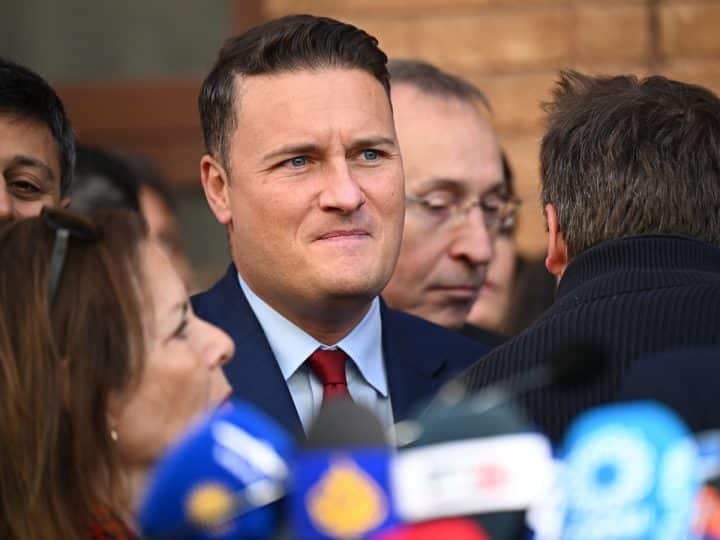

Wes Streeting appears to be attempting to rewrite history over his position on Gaza, after supporting Israel’s genocide for years.
You spent two years supporting genocide and now pretend you didn’t? Just staggering dishonesty from
these human pieces of excrement. https://t.co/Vz7iEYsHIW— Bog Standard Marxist
(@muskeatsbogeys) June 2, 2026
Recently published conversations between Streeting and Peter Mandelson, a friend of Epstein and a former government advisor, show Mandelson calling Streeting “hysterical” and “pathetic,” saying:
I think Wes is experiencing an early mid-life crisis.
Previously, Streeting released some messages between himself and Mandelson to clarify the nature of their relationship. In them, he described Israel as a “rogue state” and admitted that:
Israel Is Committing War Crimes Before Our Eyes.
Now, Streeting has told the Guardian that he was “horrified by the war in Gaza”. He stated that he “did everything I could” to get the government to act with the “moral urgency the conflict demands”. Supposedly, he shared eyewitness testimonies from doctors on the ground in Gaza, to ensure what was happening “wasn’t a war without witnesses”.
He added:
I’ve always supported Israel’s right to defend itself and Palestinians’ right to a state of their own. I’ve met survivors of October 7th and was the first shadow cabinet minister to visit Israel. I visited the West Bank a decade ago, I called for sanctions on Israeli settlements when I was a backbencher – this wasn’t some emotional or one-sided reaction; it is what I and other ministers believe.
I was proud to be part of the government that eventually recognised a Palestinian state, but we took far too long to get there.
Streeting and Israel’s ‘right’ to self-defence
Streeting has publicly supported Israel for the entirety of his career, since his days at the National Union of Students. He has been a member of Labour Friends of Israel for over twenty years, and was Starmer’s first shadow minister to visit Israel. Labour Friends of Israel – a highly secretive Israeli lobby group- paid for the visit.
According to Declassified UK, as of June 2024, Streeting had taken nearly £30,000 from Britain’s powerful pro-Israel lobby. This included donations from Sir Trevor Chinn, Lord Mendelsohn, and David Menton.
Streeting has previously criticised specific Israeli policies. This included illegal settlements and denying British MPs access to the Occupied West Bank. However, he has also regularly made comments about Israel’s ‘right to self-defence’ – despite that right not actually existing under international law.
Yet Streeting is a member of the same government that walked back comments from David Lammy, in which he claimed Israel had violated international law.
You were part of a cabinet that armed and supported a genocidal apartheid Israeli state.
Spare us the crocodile tears.
No amount of revisionism erases your role in that. You’re complicit, whether you like it or not. https://t.co/ctF6YX630H
— Zarah Sultana MP (@zarahsultana) June 2, 2026
Streeting was also caught on camera saying “persuade Hamas” in response to a question about Israel’s war crimes and “why can’t we have a ceasefire?”
This is despite armed resistance being legal under international law when living in an occupied territory.
Last year, after Israel had already destroyed a number of hospitals and attacked ambulances, Wes was asked what his party would do to force a ceasefire, he arrogantly shrugged and said his constituent should “persuade hamas” https://t.co/ETY0HzV5vM pic.twitter.com/cxCJP9k9f1
— Chłoddy (@OfSymbols) July 24, 2025
Complete contradiction
Additionally, Streeting doesn’t seem to realise that Israel’s right to self-defence completely contradicts the ‘two-state solution‘. Which, of course, he is also in favour of.
Aside from the fact that the two-state solution is a colonialist idea that legitimises the displacement of indigenous Palestinians, the two ideas completely clash in both international law and politics. No state can claim self-defence against a territory it occupies and exercises control over. Yet a two-state solution means recognising Palestine as a sovereign and, therefore, independent state.
As long as Israel claims “self-defence” to justify illegal occupation, bombing, and blockades, Palestine cannot function as an independent state. This would be required for the two-state solution, which Streeting is so keen on.
If Streeting truly believes his texts to Mandelson, why on earth has he accepted so much money from Labour Friends of Israel? And why has it taken him until now to say these things publicly?
Streeting has no backbone. If he truly cared about Gaza, he’d have spoken out and publicly condemned Israel’s war crimes. He would not have just done it via text to Epstein’s pal. He also wouldn’t wait until now, when there is a potential leadership contest in the not-so-distant future. It’s pretty convenient that he’s suddenly taking a hardline stance against a genocidal terrorist state. What good are your faux morals if they only appear to benefit your potential run as party leader?
Featured image via Leon Neal/Getty Images
By HG
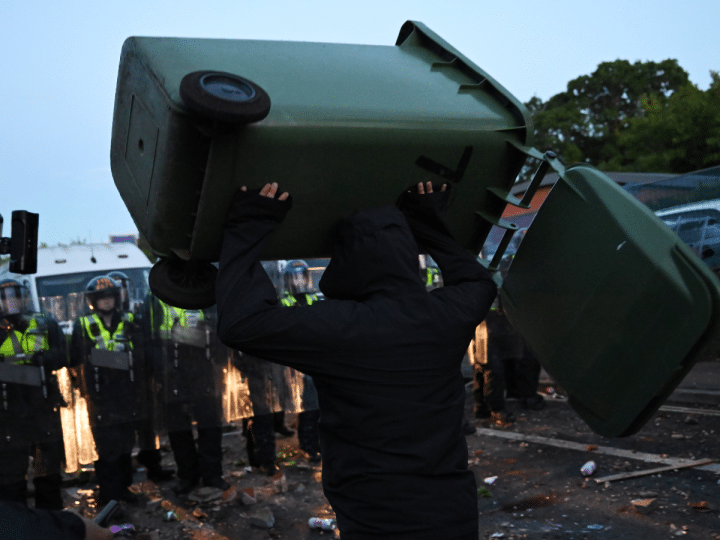

On the 2 June, far-right bigot Nigel Farage put out a statement ostensibly aiming to avoid societal dissolution in response to police treatment of murder victim Henry Nowak. Roughly 24 hours later, rioters took to the streets of Southampton to throw wheelie bins at cops.
Farage tried to despicably weaponise the murder of Nowak to incite racial hatred. He specifically called for “pure, cold rage.” Lo and behold, fellow racists rioted in Southampton, and the riots trended on social media as #FarageRiots.
In the UK, this is precisely how white supremacy functions: politicians, mainstream media, and regular people all do their bit to keep the wheels of racism turning.
Farage got what he wanted
Yesterday, Reform UK Ltd. put out a video video statement by their party leader calling for “pure cold rage” in response to the murder and police treatment of Henry Nowak. He claimed to make demands hoping to avoid the breakdown of society:
The most important thing that needs to change, that has to change, if our society is not to be ripped apart, where communities start to distrust each other and deeply distrust the police and all the other institutions of this country, is we need a change in culture.
For Farage, this meant:
Enough of anti-white prejudice, a promotion of the idea that white lives matter just as much as black lives.
The very next day, like clockwork, hundreds of assorted racists, white supremacists and card-carrying neo-Nazis gathered outside a Southampton police station to riot. Far-right grifter Tommy Robinson addressed the crowd, launching into a rant about Muslims (in spite of the fact that the murderer was a Sikh person).
It’s precisely this kind of riot that the Reform leader claimed he wanted to prevent. After all, this is the same man who actually lost the (extremely lucrative) support of billionaire Elon Musk for preventing Robinson from joining Reform, given that Robinson was a former member of the British National Party (BNP).
This is white supremacy
The thing is, this is precisely how white supremacy functions – all around the world, but especially in the UK.
A compliant media aids and abets Farage, Robinson, and their ilk with its reporting. Despite their claims of in-fighting, it’s hard to believe any of them are particularly aggrieved when violent rioters are throwing bins around and hoisting flags. Whether it’s allowing Reform to grab uncritical headlines and puff pieces like GB News’:
Or merely dangerously misleading reporting like the BBC’s claim that the murderer used:
a ceremonial blade Sikhs are required by their faith to carry.
The national broadcaster used that line in the very same article where it quoted Sikh leaders explaining, very patiently, that the knife was not a religious requirement, and certainly wasn’t a kirpan. Likewise, the same community leaders also reported a massive uptick in anti-Sikh hatred as a consequence of the trial.
This kind of reporting primes the public to focus on the murderer’s Sikh faith, and ultimately his race. It fosters the idea that the problem is that Sikhs in general are allowed to carry knives, which quickly slips to the idea that brown people are treated better than white people (in spite of abundant evidence to the contrary).
The same tired line
With the public primed and readied, Farage doesn’t actually have to say ‘I would like my followers to riot’. In fact, he can stand in front of a camera acting as if he wants to prevent a riot.
Meanwhile, he continues to bleat about ‘anti-white discrimination’ and ‘two-tier systems’ – the exact dogwhistles (foghorns) that will prompt his followers to riot. This was so utterly predictable that the Canary drew yesterday’s article on Farage’s address to a conclusion with the line:
Clearly, the far-right leader has now pivoted from avoiding media scrutiny to a frantic attempt to create a distraction. If he has to incite another race-riot to do so, then so be it.
It was so utterly predictable because this is exactly the same attack line the racist right used to incite the 2024 race riots. In fact, an Institute of Race Relations report in the aftermath of the riots stated that:
Even as the ‘riots’ were ongoing, a range of figures sought to spread the notion that white defendants were victims of a ‘two-tier’ policing system that treated them more harshly ‘because of their race and political views’
Shocking nobody, one of those figures bleating about ‘two-tier policing’ was Farage himself. Then, as now, politicians and commentators highlighted that the Reform leader’s words were dangerous.
But, of course, he knows his words are dangerous. He knows they’re driving the rise of white supremacy; he knows they’ll spark white riots. We’d wager that he was counting on it.
That’s wholly a feature, not a bug – Farage knows that he’s the ‘acceptable’ political face of white supremacy in the UK, whether or not he’d call himself that openly. Inciting a race riot is probably cheaper and more effective than hitting the campaign trail for Reform UK.
Featured image via Getty/Finbarr Webster

Knicks’ Mitchell Robinson reportedly expected to be available for Game 1 of NBA Finals vs. Spurs

Longsight Park in Harwood to security measures after damage

Why a 70:30 India-global portfolio makes sense in a changing world, Subho Moulik decodes



-

 Tech6 days ago
Waymo dominates autonomous vehicle registrations as Tesla trails behind
-

 News Videos5 days ago
This is BROKEN! INSANE 5x MONEY CAR WASH WEEK! The NEW GTA Online UPDATE Today! (GTA5 New Update)
-
 Tech4 days ago
SpaceX just won a second Golden Dome contract. This one is $4.16 billion.
-

 News Videos5 days ago
SHE IS KILLING XRP!!! WATCH URGENT AND ACT FAST
-

 Business2 days ago
Jade Biosciences, Inc. (JBIO) Discusses Positive Interim Results From JADE101 Phase I Healthy Volunteer Study and Development Plans Transcript
-
 NewsBeat5 days ago
FIRST NIGHT REVIEW: Take That bring the Circus back to life in spectacular sun-soaked style
-
 Crypto World5 days ago
CFTC Has Approved the First Regulated Bitcoin Perpetual Contract in the U.S.
-

 Business4 days ago
Is the Spurs Phenom Already Better Than Prime Diesel?
-
 NewsBeat5 days ago
Novak Djokovic v Joao Fonseca LIVE: French Open latest scores and results after Jannik Sinner’s shocking collapse
-
 Crypto World5 days ago
Snowflake (SNOW) Stock Rallies on Strong Q1 Results and AI Product Growth
-
 Entertainment5 days ago
Weak ‘Supergirl’ Box Office Tracking Amid Milly Alcock Backlash
-

 Business4 days ago
Demand Conditions Improve In Chemicals Sector In April 2026
-

 Crypto World5 days ago
MicroStrategy Moves $30 Million in BTC to Coinbase Prime: Is the Bitcoin Sell-Off Already Here?
-

 Politics4 days ago
The House | Inside Andy Burnham’s Makerfield Campaign: “Nobody Thinks This Is In The Bag”
-
 Entertainment4 days ago
One of the Greatest Sitcoms of All Time Shoots Up Apple TV’s Charts 11 Years Later
-

 Tech5 days ago
This Week In Security: Ubiquiti Fixes, And FreeBSD Joins The Club You Don’t Want To Join
-

 Entertainment5 days ago
Maddox Jolie-Pitt Legally Requests to Drop Brad’s Surname
-
 Crypto World1 day ago
Seagate (STX) Stock Surges to Record High on AI Boom and Legal Settlement
-
 Entertainment4 days ago
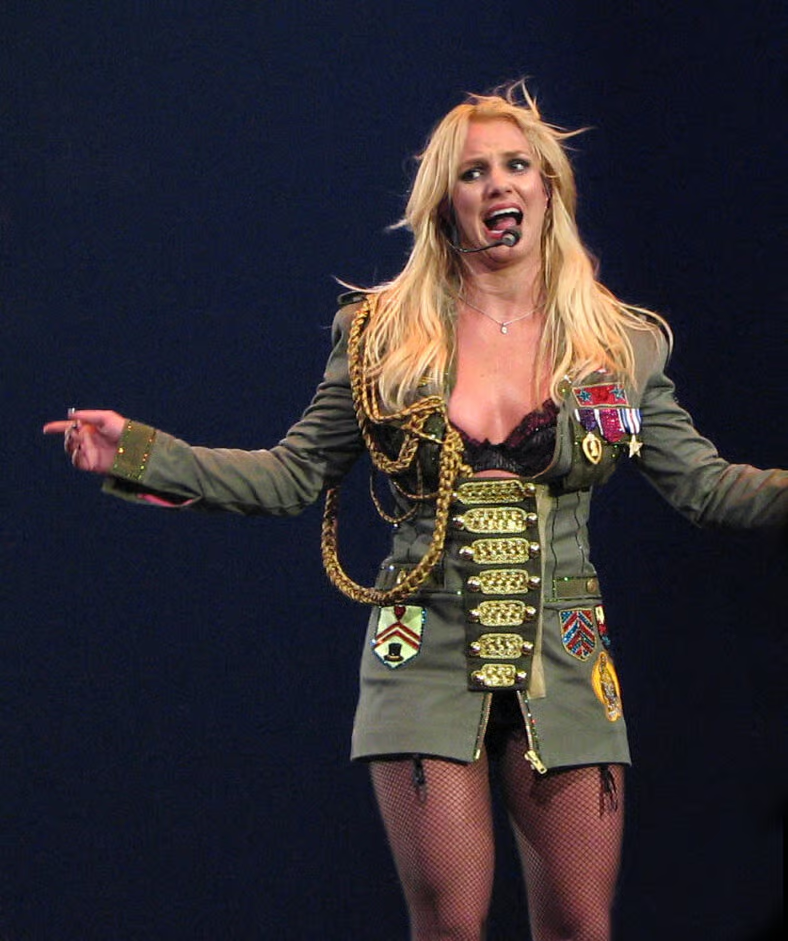
Britney Spears Shares Troubling Update After Hard Year
-
 Entertainment5 days ago
Bruce Willis’ Generosity Resurfaces Amid His Dementia
You must be logged in to post a comment Login