Connect with us

Business

UK petrol prices hit 160p, highest since Iran war began

Published

on

UK petrol prices hit 160p, highest since Iran war began

The average price of petrol in the UK has reached 160p a litre, its highest level since the Iran war began on 28 February, according to figures from the RAC.

The motoring group puts petrol at 159.97p a litre and diesel at 178.97p. Diesel remains below its 15 April peak of 191.54p a litre, set as pump prices climbed to their highest level in more than two years.

Pump prices fell after the US and Iran agreed a framework deal in June to end the conflict. In early July, the RAC said, average petrol sank to a low of 150.59p a litre and diesel to 164.52p. Both have risen since the collapse of the peace talks.

Simon Williams, head of policy at the RAC, said the price of diesel was likely to reach 185p a litre “in the next few weeks, barring any major oil price reduction”.

The price of fuel tends to track the wholesale price of oil, and analysts say every $10 (£7.44) per barrel increase in the oil price pushes up pump prices by roughly 7p a litre. Because transporting oil is a slow process, wholesale price movements take about a fortnight to show at the pump.

Advertisement

Brent crude, the global benchmark, was about $70 a barrel before the conflict and peaked above $120 as the fighting disrupted oil supplies across the Middle East. It fell back to near $70 in early July after the framework deal was signed, climbed above $100 when the talks collapsed, and now trades at around $90.

Generally speaking, news of further conflict has driven the price up, while hopes of an end to the war have pushed it down.

Despite the rises, petrol and diesel remain below the levels reached in the summer of 2022 following Russia’s invasion of Ukraine, when petrol hit 191.5p a litre and diesel 199p.

The conflict has effectively closed the Strait of Hormuz, through which about 20 per cent of the world’s oil and liquefied natural gas normally passes. Experts warn that even if a deal is agreed to reopen the strait, it will take time before normal levels of shipping resume, and the impact of the war could continue to affect the global economy for months.

Advertisement

The UK is heavily reliant on oil and gas imports, with the majority coming from the US and Norway, and pays the price set on the global market. Although the UK produces some oil in the North Sea, most of it is exported for refining elsewhere.

Fuel retailers have denied accusations of price gouging during the conflict. The official markets regulator said it had “not seen evidence of retailers actively changing their pricing strategies to take advantage of the crisis”.

A government scheme called Fuel Finder lets drivers compare the cost of fuel at petrol stations across the UK. Luke Bosdet, head of policy at the AA, said the group had been surprised at the speed at which prices had fallen and put it down to the scheme.

On 20 May, the then prime minister Sir Keir Starmer said a planned 5p increase in fuel duty due in September would be postponed until 31 December because of the conflict.

Advertisement

Amy Ingham

Amy Ingham

Amy Ingham is a reporter at Business Matters, covering UK business news with a focus on breaking news, business policy, late payments and insolvency. She joined the magazine in 2026 after completing the NCTJ Diploma in Journalism at Harlow College’s journalism school. Her recent reporting includes British Steel’s nationalisation and its impact on SME suppliers, the decline in late payments by large firms, and Insolvency Service director disqualifications. Reach her at aingham@cbmeg.co.uk.

Advertisement
Continue Reading
Click to comment

You must be logged in to post a comment Login

Leave a Reply

Business

Majority of Leeds’ Torsion Construction staff made redundant amid collapse into administration

Published

on

Business Live

The firm is said to have faced liquidity pressures

Torsion Construction hoardings outside the former Central Police Station and The Guildhall in Nottingham city centre(Image: Joseph Raynor/ Reach PLC)

Administrators at Leeds-based Torsion Construction Limited say the majority of its 115-strong team have been made redundant.

Specialists from Interpath were appointed to the £165m turnover firm this week. Joint administrators James Clark and Howard Smith said the residential builder had been experiencing liquidity pressures as it tackled delayed capital events, contract margin pressure, and rising input costs, and a wider downturn in the market.

Directors of the business are said to have sought additional funding but were unsuccessful. Given its financial position, Torsion ceased to trade upon appointment. A small number of staff have been retained to assist the Joint Administrators in their duties as they wind down the business.

James Clark, managing director at Interpath and Joint Administrator of Torsion Construction Limited, said: “Torsion Construction has faced many of the immense challenges that have confronted leadership teams right across the sector. Despite its efforts to find a sustainable solution and protect its clients from those pressures, the business’ liquidity ran out of road. With regret, Torsion Construction could not continue in its current form and was left with no other option but to cease trading. We have a team providing the appropriate information and support to staff as we work through an orderly wind down of operations.”

Advertisement

Most recent accounts for Torsion, covering the year to the end of June 2025, show turnover of more than £165m and operating profit of £1.09m. The business covered work across the North and the Midlands.

Directors had talked of growth in line with a three-year plan focussed around purpose-built student accommodation and residential-led developments. Other Torsion-linked businesses including Torsion Care, Torsion Projects, Torsion Homes and Torsion Developments, are reported to be operating as normal.

Continue Reading

Business

Cavaliers Predicted to Pursue Kevin Durant Trade After Missing Out on LeBron James in Free Agency This Summer

Published

on

Kevin Durant

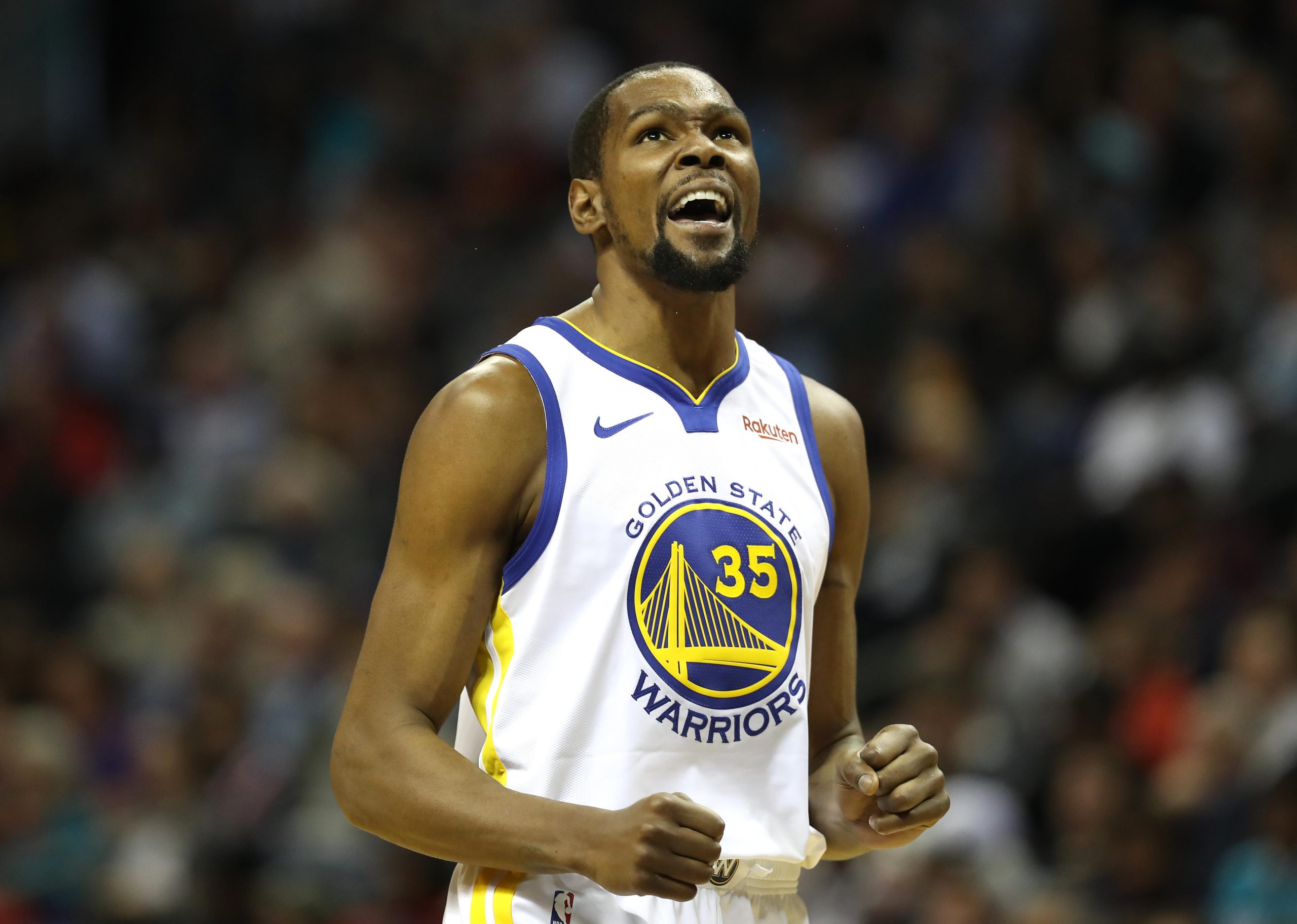
The Cleveland Cavaliers, having missed out on LeBron James in free agency this summer, are being predicted to shift their attention toward acquiring Houston Rockets star Kevin Durant as a way to bolster their veteran scoring options ahead of the coming season.

James, who is set to turn 42 before the end of the calendar year, ultimately chose to sign with the Philadelphia 76ers rather than return to Cleveland for what would have marked a second homecoming for the four-time NBA champion. That decision left the Cavaliers, coming off a conference finals appearance last season, needing to look elsewhere for a veteran presence capable of adding scoring punch to their existing core.

Sports Illustrated’s Nick Pedone identified Durant as one of the more realistic remaining options for teams still looking to make a significant addition this offseason. “Durant is probably the last one remaining this offseason now that LeBron is in Philadelphia with Jaylen Brown and the Toronto Raptors will eventually finalize their blockbuster deal for Kawhi Leonard,” Pedone wrote.

Unlike James, Durant is not a free agent, meaning any acquisition would require the Cavaliers to construct a trade package significant enough to convince the Rockets to move him. Durant’s name has surfaced repeatedly in trade speculation throughout the offseason, though that recurring speculation does not necessarily indicate Houston is actively shopping him, only that the team has signaled he is not entirely untouchable given the right offer.

Advertisement

Durant, who turns 38 in September, remains under contract with the Rockets through the 2027-28 season after signing a two-year, $90 million extension before joining Houston last summer. His salary cap hit for the 2026-27 season sits at approximately $43.9 million, a substantial but manageable figure for a contending team pursuing a proven scoring addition. Pedone noted that acquiring Durant would still require Cleveland to part with a significant trade package, though nothing approaching the scale of the package Houston originally surrendered to acquire him the previous offseason. “It would take a big package, as Durant remains one of the league’s purest scorers,” Pedone wrote. “But it’s the lone remaining move that would significantly improve Cleveland’s title odds next season.”

The Cavaliers’ roster already includes several significant financial commitments that would factor into any Durant pursuit. Guard Donovan Mitchell recently agreed to a new four-year contract extension in early July, while the team is separately engaged in ongoing multi-year contract discussions with guard James Harden. Adding Durant’s salary on top of those commitments would likely push Cleveland’s payroll into luxury tax territory, a financial consideration the front office would need to weigh against the on-court benefit of adding a player of Durant’s caliber.

Despite the financial complexity, Pedone argued that a proven scorer like Durant could prove worth the cost, pointing specifically to a weakness that was exposed during Cleveland’s conference finals series last season against the eventual NBA champion New York Knicks. The Cavaliers reached the conference finals but ultimately fell short, with the team’s lack of a dependable veteran scoring option cited as a contributing factor in that series loss.

Durant’s statistical profile from last season underscores why he remains an attractive target despite his age. During the 2025-26 season, Durant played 78 games, averaging 26 points, 5.5 rebounds and 4.8 assists per game, while shooting 52% from the field and 41.3% from beyond the three-point line, numbers that place him among the league’s most efficient high-volume scorers even as he approaches his late 30s.

Advertisement

Durant’s postseason availability has drawn some scrutiny, however. Pedone noted that Durant missed five playoff games last season despite being sidelined for only four games during the regular season, a discrepancy that has raised questions about his durability in high-stakes postseason settings. Pedone suggested that Cleveland’s roster depth would allow the team to manage Durant’s workload more carefully than Houston was able to, potentially mitigating some of that postseason availability concern.

Analysts have also pointed to the surrounding talent already in place in Cleveland as a factor that could make the fit smoother than it was in Houston, where Durant often served as the primary offensive focal point with limited complementary scoring support. Playing alongside Mitchell, Harden and forward Evan Mobley would represent a considerably deeper supporting cast than what Durant had around him with the Rockets last season, a dynamic that became especially apparent during the postseason, when Houston was eliminated in the first round in a series where Durant missed significant playing time.

With James now formally settled in Philadelphia and Kawhi Leonard’s trade to Toronto still pending finalization, Durant has increasingly been framed by analysts as one of the last remaining marquee names still plausibly available via trade this offseason, leaving teams like the Cavaliers to weigh whether the scoring upgrade he would provide justifies both the trade cost and the resulting luxury tax implications as Cleveland looks to build on last season’s conference finals run.

Advertisement
Continue Reading

Business

Rivian Stock Reverses After Earnings. The R2 Rollout Is Paying Off.

Published

on

Rivian Stock Reverses After Earnings. The R2 Rollout Is Paying Off.

Rivian Stock Reverses After Earnings. The R2 Rollout Is Paying Off.

Continue Reading

Business

Slideshow: Serving up seasonal foodservice innovation

Published

on

Slideshow: Serving up seasonal foodservice innovation

Recent innovations include nostalgic beverages and summer-inspired menu items.

Continue Reading

Business

SK Hynix Stock Surged 30% in South Korea. It’s Dropping in the U.S.

Published

on

SK Hynix Listing Is Oversubscribed. Where It Might Open for Trading on Friday.

SK Hynix Stock Surged 30% in South Korea. It’s Dropping in the U.S.

Continue Reading

Business

Trump Holds Cabinet Meeting at Camp David as Widening Iran War Shows No Sign of Ending Any Time Soon

Published

on

US President Donald Trump paid just $750 in federal income taxes in 2016, the year he won the election, The New York Times reports

President Donald Trump convened his Cabinet on Friday at Camp David, the presidential retreat in Maryland’s Catoctin Mountains, as the war he launched against Iran continues to expand with no clear resolution in sight, according to reporting from Reuters and NBC News.

The meeting marked the 13th Cabinet gathering of Trump’s second term and his third trip to Camp David since returning to office, a notable departure for a president who has largely avoided the mountaintop retreat in favor of his own golf resorts when not at the White House, according to Reuters. White House press secretary Karoline Leavitt had told reporters ahead of the gathering that hosting the meeting at Camp David would be “a lot of fun and something different for the cabinet to experience together.” The agenda for the meeting was expected to focus heavily on foreign policy, according to Reuters.

The gathering came at a difficult moment for the administration’s stated goals on Iran. Trump had previously predicted the conflict would conclude within “weeks,” but the war has instead continued expanding without an endgame in sight, according to NBC News. Little progress has been made toward stopping Iran from threatening commercial shipping and slowing traffic through the Strait of Hormuz, the critical Persian Gulf waterway through which a significant share of the world’s oil normally flows.

The conflict has continued widening in the days leading up to Friday’s meeting. On Tuesday, the U.S. military intercepted a new round of Iranian ballistic missile attacks in Jordan, ending what had been a brief respite in the fighting, according to NBC News. On Wednesday, Saudi Arabia, which had previously remained reluctant to become directly involved, entered the conflict by conducting airstrikes against Iran-backed militias in Iraq that Riyadh accused of attacking its oil facilities. Saudi Arabia’s defense minister also met privately with Trump around the same time. The following day, the Saudi Ministry of Defense announced it would lead a new multinational coalition aimed at protecting shipping routes in the Red Sea and other regional waterways amid repeated attacks by Iran-backed Houthi militants in Yemen, adding further pressure on maritime trade even as Iran continues to threaten the Strait of Hormuz separately.

Advertisement

Friday’s Cabinet meeting followed the last such gathering on May 27, during which Trump had asserted that the Strait of Hormuz would soon be “open to everybody” and that gasoline prices would fall sharply, predictions that have not materialized in the months since, according to NBC News. U.S. economic growth has slowed since that earlier meeting, and inflation remains stuck above the Federal Reserve’s 2% target rate, with consumer prices continuing to run elevated. Trump’s approval rating has fallen to a record low of 32%, according to the latest Quinnipiac poll cited by NBC News, adding domestic political pressure to the administration’s efforts to resolve the conflict before its economic ripple effects cause further damage.

The Cabinet meeting came just days after Trump held separate meetings with two other heads of state whose countries are themselves engaged in ongoing conflicts but who now share a common adversary in Iran. Trump met with Ukrainian President Volodymyr Zelenskyy and Israeli Prime Minister Benjamin Netanyahu earlier in the week, according to NBC News, discussions that occurred against the backdrop of the broader regional instability tied to the widening Iran conflict.

Trump has continued to publicly project confidence about the trajectory of the war even as the underlying military and diplomatic situation has grown more complicated. During an earlier Cabinet meeting in March, held shortly after the U.S. and Israel first began attacking Iran on Feb. 28, Trump suggested online and during the meeting itself that Iran had been “obliterated,” that its leaders were “begging” for a deal, and that a resolution was near, according to the Los Angeles Times. Those characterizations have not translated into a concluded conflict in the months since, with fighting instead continuing to spread to additional countries and threaten broader regional shipping and energy infrastructure.

Renewed strikes between the United States and Iran resumed earlier in the week following a brief pause, adding further urgency to Friday’s Cabinet discussions. The renewed hostilities have continued to affect global oil markets, even as prices have shown volatility tied both to the conflict itself and to broader questions about the durability of shipping disruptions through the Strait of Hormuz and the Red Sea.

Advertisement

With the war continuing to widen rather than resolve, and with domestic economic pressures mounting ahead of the November midterm elections, Friday’s Camp David gathering placed Trump and his top advisers under significant pressure to identify a viable path toward ending the conflict, particularly given the growing involvement of additional regional powers, including Saudi Arabia, and the continued absence of progress toward securing safe passage through the region’s most critical shipping corridors.

Continue Reading

Business

Leopold Aschenbrenner Situational Awareness fund: $45B to fire sale

Published

on

Leopold Aschenbrenner Situational Awareness fund: $45B to fire sale

Leopold Aschenbrenner

Photo: Josh Edelson

Two years ago, Leopold Aschenbrenner argued he was one of few people in the world who saw the future clearly.

Advertisement

In a sprawling, 165-page essay that became required reading in Silicon Valley, the former OpenAI researcher positioned himself as a kind of prophet for the coming age of artificial super intelligence.

But this week, the limits of Aschenbrenner’s vision were on display when the AI-themed hedge fund he runs — named Situational Awareness, also the title of his viral June 2024 manifesto — ran into the harsh reality of tumbling semiconductor stocks and Wall Street margin calls.

At its peak earlier this month, his fund sat atop $45 billion in assets. By Thursday, however, after being forced to offload all of his leveraged stock bets — including hard-hit names like SK Hynix and CoreWeave — to Ken Griffin’s Citadel at a discount, the fund’s holdings plunged to around $10 billion, according to people with knowledge of the situation.

The story of Aschenbrenner’s meteoric rise and sudden fall has captivated both Wall Street and tech circles, making him the most high-profile casualty yet of the volatility accompanying the AI boom.

Advertisement

A polarizing figure, his online followers saw Aschenbrenner — a Columbia University valedictorian at age 19 — as a genius of the next big thing and followed his fund’s quarterly filings for clues on hot AI stocks.

Before this month’s decline, Situational Awareness racked up gains of more than 1,000% since inception, the Wall Street Journal reported last month. The Journal said Aschenbrenner was just 24 years old.

Leopold Aschenbrenner’s Situational Awareness sells levered book of public investments, sources say

Meanwhile, critics pointed out that Aschenbrenner had no experience running money prior to launching his fund in July 2024, calling him more lucky than smart. Some noted that his early work experience was at the doomed crypto firm FTX, where he helped now-disgraced founder Sam Bankman-Fried run a charity out of a Bahamas penthouse.

Others on Wall Street, including former traders at global investment banks, noted that in light of reports Situational Awareness used as much as 400% leverage, the collapse wasn’t shocking.

“A lot of people saw this blow-up as a matter of not if, but when,” said Jerry Diao, who runs a Wall Street coaching firm. “Maybe his views on AI are correct in the long run, but in the public markets, you have to be prepared for the short-term.”

Advertisement

The hedge fund didn’t immediately respond to a request for comment from CNBC.

Earlier this week, before the sale to Citadel, about two-thirds of Situational Awareness holdings were in long and short positions in public equities, according to one source. The rest were stakes in private companies, dominated by a multibillion-dollar Anthropic investment, the person said.

CNBC’s sources spoke on the condition of anonymity to discuss nonpublic details.

The near-collapse of Situational Awareness coincides with the hedge fund manager’s wedding, set for this weekend, sources told CNBC’s David Faber. Aschenbrenner is engaged to Avital Balwit, chief of staff for Anthropic CEO Dario Amodei, according to a Fortune profile.

Advertisement

‘Weirdness’ and ‘disagreeableness’

Born in Germany to physician parents before moving to the U.S., Aschenbrenner showed an early aptitude for math and computer science, according to profiles and podcast interviews.

He skipped several grades in the German school system, graduating high school at age 15, and as a teen at Columbia University he garnered attention for an academic paper titled, “Existential Risk and Growth.”

A Columbia classmate, Sofia Montrone, said that she hadn’t heard of Aschenbrenner before meeting him over Zoom shortly before their 2021 graduation.

“It was not like he was some prince, emerging out of the school,” Montrone told CNBC. “He was just some guy.”

Advertisement

In the interaction, Montrone, who was salutatorian, said she found her classmate “child-like” and socially awkward.

Aschenbrenner has since said that his personality — what he called his own intellectual “weirdness” and “disagreeableness” — was punished in German culture. He came to see it as the source of his edge.

While at Columbia, he co-founded the school’s chapter of Effective Altruism, a philosophy popular in some tech circles that advocates for founders to make the most money possible in order to help humanity.

That network became his career pipeline, eventually leading him to work with another effective altruism proponent — Bankman-Fried — after his graduation in 2021. He worked for a stint at the Future Fund, the philanthropic arm of FTX, before the crypto firm’s collapse.

Advertisement

FTX founder Sam Bankman-Fried (2nd L) is led away handcuffed by officers of the Royal Bahamas Police Force in Nassau, Bahamas on December 13, 2022. 

Mario Duncanson | AFP | Getty Images

In 2023, Aschenbrenner landed on OpenAI’s Superalignment team, working under Ilya Sutskever on the problem of keeping AI aligned with human interests. After a hacker breached OpenAI’s internal systems, he wrote a memo to the board warning that the company’s security wasn’t strong enough to stop foreign espionage, naming China specifically.

In 2024, the company fired Aschenbrenner after accusing him of improperly sharing confidential information, a characterization he has disputed, saying he was raising concerns about the company’s security practices.

Advertisement

“I liked Leopold while at OpenAI,” Scott Aaronson, a computer scientist now at the University of Texas at Austin who previously worked on AI safety at OpenAI, told CNBC this week in an email.

“I was sorry when he got pushed out because of sharing information in a way leadership didn’t approve of,” he said. It “sounded like he was trying to do the right thing and they overreacted.”

An OpenAI spokesman declined to comment and referred to statements the company made at the time that the firm disagreed with many of Aschenbrenner’s claims.

Representatives for Columbia University and its Effective Altruism chapter didn’t respond to requests for comment.

Advertisement

Stripe, Github investors

Weeks after his departure from OpenAI, Aschenbrenner turned his brief experience at the leading AI firm into a sweeping vision of where artificial intelligence, and the world, was headed.

His June 2024 essay argued that artificial general intelligence could arrive within years and that governments were badly underestimating the pace of progress. Admirers saw it as evidence that Aschenbrenner was a prodigy with valuable insight into AI’s trajectory, while critics said it overstated both the technology’s near-term capabilities and his own certainty about the future.

By July of that year, Aschenbrenner parlayed his rising fame into seed capital for his hedge fund, starting a two-year run unlike any in recent Wall Street history. He raised a reported $225 million from Stripe co-founders Patrick and John Collison, former GitHub CEO Nat Friedman, and investor Daniel Gross.

“Before long, the world will wake up,” Aschenbrenner wrote at the time, adding that only a few hundred people in the AI community knew what was coming.

Advertisement

“If they are seeing the future even close to correctly,” he wrote, “we are in for a wild ride.”

— CNBC’s Kate Rooney contributed to this report.

Choose CNBC as your preferred source on Google and never miss a moment from the most trusted name in business news.
Continue Reading

Business

Budget to be held on 28 October, John Healey announces

Published

on

Chancellor John Healey

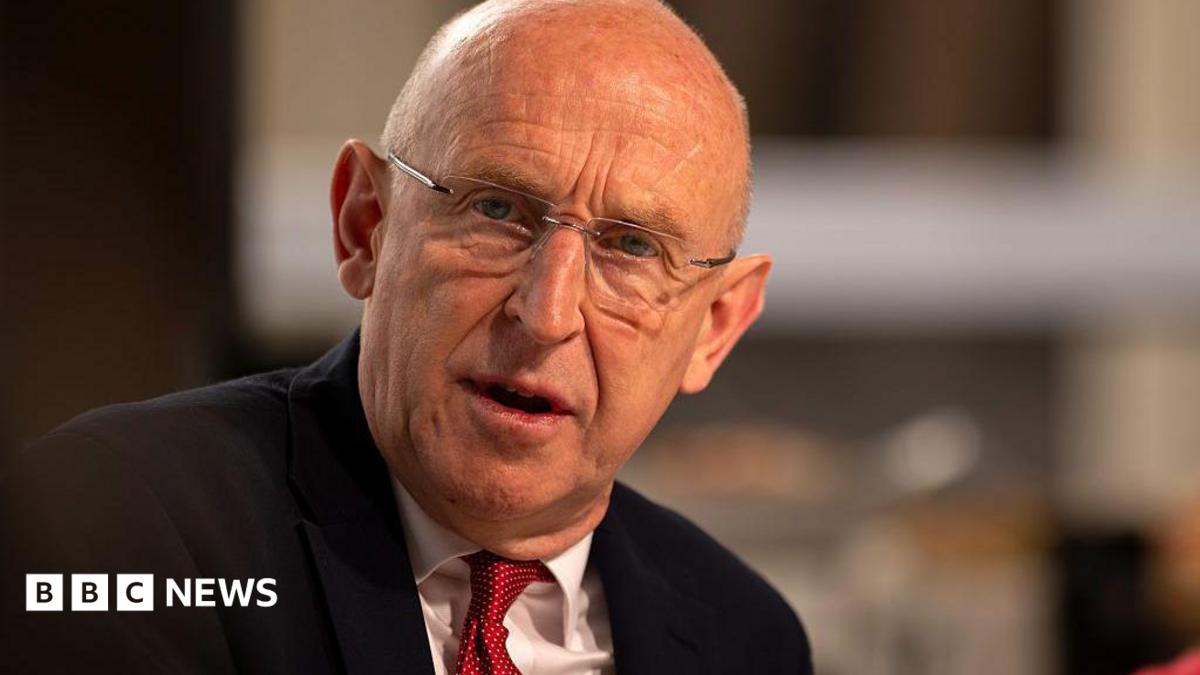
Chancellor John Healey has announced the date of his first Budget will be Wednesday, 28 October.

In a video message,  he said: “This will be a Budget that moves money and power out of Westminster, and into every postcode around Britain.

“It will be built on fiscal discipline. It will meet our fiscal rules. It’ll give businesses and families some of the stability they need to plan for the future. Now, let’s get on with the job.”

Prime Minister Andy Burnham has said his government will stick to Labour’s fiscal rules on spending and borrowing as well as the party’s 2024 manifesto pledges not to increase income tax, VAT or national insurance contributions.

Advertisement

Burnham also said he will honour the fiscal rules imposed by Healey’s predecessor Rachel Reeves, which include a pledge to balance day-to-day spending with tax revenues by the end of the decade.

An influential think tank said earlier this week that the prime minister only has a small margin of error to do this, and that Healey may have to cut spending or raise taxes to meet Burnham’s policy priorities such as such as extra defence spending and better social care.

Healey was Defence Secretary under Keir Starmer, but resigned after a row over defence spending commitments – saying he was “certain” that Britain shouldl lift its spending to 3% by 2030.

But questioned about funding on Thursday, Burnham’s Defence Secretary Wes Streeting repeatedly refused to commit to that target.

Advertisement

“Before we set out specific spending commitments, we will also set out how we pay for them at the same time,” he said.

Continue Reading

Business

Mark My Words July 31 2026

Published

on

Mark My Words July 31 2026

Mark Pownall is joined by Business News reporters to discuss oil refining, desalination, Northern Star, strike actions, data centres, Golden Sedayu, and the latest in Greg Poland’s defamation action.

Continue Reading

Business

Amazon Shares Soar Nearly 15% After Record AWS Growth Calms Investor Fears Over Massive AI Investments

Published

on

Xperia 1 VIII

NEW YORK — Amazon.com Inc. shares surged nearly 15% on Friday, climbing $34.79 to $270.29, after the company reported second-quarter results that showed its cloud computing division accelerating at the fastest pace in more than four years, easing investor concerns that heavy spending on artificial intelligence infrastructure was not yet generating sufficient returns.

The rally, one of the stock’s strongest single-day performances in years, added roughly $300 billion to Amazon’s market value and helped lift broader technology indexes. Investors focused on robust demand at Amazon Web Services, the company’s most profitable segment, rather than a higher capital expenditure forecast or a swing into negative free cash flow driven by AI investments.

Amazon reported net sales of $200.6 billion for the quarter ended June 30, up 20% from $167.7 billion a year earlier and above analysts’ consensus estimates near $196 billion to $197 billion. Operating income rose 43% to $27.5 billion. Diluted earnings per share reached $5.75, far exceeding the roughly $1.82 Wall Street expected, though the figure included a large non-operating gain primarily from the mark-up of Amazon’s investment in Anthropic.

The standout was Amazon Web Services. AWS revenue jumped 37% to $42.2 billion, or 36.7% on a year-over-year basis, marking the unit’s strongest growth in 18 quarters and its fifth consecutive quarter of acceleration. The cloud business generated an annualized revenue run rate of $169 billion. Operating income for AWS climbed to $16.6 billion, producing a 39.4% operating margin, up substantially from the year-ago period.

Advertisement

Amazon said its AI and custom chips businesses each surpassed annualized revenue run rates of more than $25 billion, both growing at triple-digit percentages. The AWS contract backlog expanded to $496 billion.

“AWS is booming, growing 36.7% year-over-year in Q2 — our fastest growth in 18 quarters — and our AI and Chips businesses each eclipsed run rates of more than $25 billion,” Amazon President and CEO Andy Jassy said in the company’s statement. “In Stores, we again set record delivery speeds for Prime members in the first half of the year — over 40% more items delivered same-day or overnight, with Grocery and Everyday Essentials growing meaningfully faster than the rest of the business. And, Advertising had another strong quarter with 26% year-over-year growth. There’s a lot to be excited about, and we have much more coming for customers in the second half of the year and beyond.”

Jassy told investors on the earnings call that demand for computing capacity remains so strong that Amazon still cannot fully meet customer needs despite raising its 2026 capital expenditure outlook. The company now expects cash capital expenditures of approximately $220 billion for the year, up from a prior estimate of about $200 billion. Higher memory costs contributed to the increase. Much of the spending is directed toward AI infrastructure.

“Even at that amount, we will still not have enough capacity to meet all the demand we have in 2026,” Jassy said. “I believe this dynamic will also be true in 2027 too.” He added that the “lion’s share” of planned AWS capacity for 2027 has already been reserved by customers, with substantial commitments extending into 2028. Jassy has described Amazon as “unusually well-positioned for this AI inflection.”

Advertisement

The results arrived amid intense scrutiny of Big Tech’s AI spending. Microsoft and Alphabet earlier reported strong cloud growth, while some peers saw their shares pressured by higher capital plans and weaker free cash flow. Amazon’s free cash flow turned negative, with a trailing twelve-month outflow of $7.6 billion compared with an $18.2 billion inflow a year earlier, reflecting a $66.1 billion year-over-year rise in equipment purchases tied largely to AI.

Investors largely looked past those figures. Evercore ISI analyst Mark Mahaney called the quarter “the breakout that the stock needed,” noting that AWS delivered its strongest growth in 18 quarters while expanding operating margins. JPMorgan analysts raised their price target to $365 from $330, saying they were “encouraged by the strength in the core AWS business, which has a high correlation with AI revenue,” and that they expect the relationship to strengthen as more AI workloads move into production.

At least a dozen brokerages lifted price targets following the report. Amazon’s price-to-earnings ratio stood near 25, still above some peers but reflecting renewed confidence in the company’s ability to monetize AI investments.

Other parts of the business also contributed. North America sales rose 16% to $116.2 billion. International sales increased 15% to $42.2 billion. Advertising revenue grew 26%. Amazon continued to emphasize faster delivery speeds and expansion in grocery and everyday essentials. The company highlighted progress with its Trainium custom chips, Graviton processors, Amazon Bedrock foundation model platform, and new agentic AI tools.

Advertisement

For the third quarter, Amazon guided net sales between $197 billion and $202 billion, representing 9% to 12% growth, or nearly 400 basis points higher when adjusting for the timing of Prime Day. Operating income is expected between $22.5 billion and $26.5 billion. The guidance incorporates an estimated 80-basis-point headwind from foreign exchange rates.

Amazon’s results underscored a shift in investor focus across the sector. After months of debate over whether vast AI capital outlays would deliver timely returns, the combination of accelerating AWS growth, expanding margins, and visible demand for both AI and core cloud services provided tangible evidence that spending was translating into revenue. The company noted that data centers typically require about two years of lead time before generating revenue but can operate for decades, while AI servers often recover their costs in under three years.

Shares had closed at $235.50 on Thursday before the after-hours and Friday surge. The move ranked among the largest percentage gains for Amazon in recent years and positioned the stock near multi-month highs. Volume was elevated as the company became one of the day’s most actively traded names and a leading contributor to gains in the Nasdaq 100 and S&P 500.

The performance also reflected broader market dynamics. Technology stocks led U.S. equity futures higher, with the Amazon rally offsetting softer moves in other names. Analysts noted that the quarter helped distinguish Amazon’s approach — tying incremental capital spending closely to existing customer demand and backlog — from peers still facing questions about the timeline of AI monetization.

Advertisement

Amazon continues to expand its AI-related offerings, including additional foundation models on Bedrock, new agent capabilities, and infrastructure tailored for agentic workloads. Commitments from major AI labs and enterprise customers for both cloud capacity and custom silicon have reinforced management’s confidence in multi-year demand.

While free cash flow remains under pressure in the near term and third-quarter guidance came in somewhat softer than some estimates on a reported basis, the market’s reaction centered on the acceleration in AWS and the visibility provided by the growing backlog. For investors who have watched Big Tech pour hundreds of billions into AI infrastructure this year, Amazon’s report offered the clearest signal yet that those investments are beginning to show measurable returns in both growth and profitability.

The stock’s sharp advance on Friday closed a volatile stretch for the shares and reinforced Amazon’s central role in the ongoing AI infrastructure build-out.

Advertisement
Continue Reading

Trending

Copyright © 2025