

Business
Unite Group cuts student rents to boost occupancy


The country’s biggest student landlord has been cutting asking rents to fill its halls before September, a move that tells smaller landlords and property investors a good deal about where pricing power in Britain’s rental market now sits.
Unite Group, which operates some 200 student halls across the UK, said “targeted pricing initiatives” at a number of its buildings had delivered a “strong” couple of months of bookings.
The company now expects its buildings to be between 94 per cent and 96 per cent full when the new academic year begins, an upgrade on previous guidance that pointed towards the “lower end” of a 93 per cent to 96 per cent range.
The discounting has been concentrated in cities such as Leicester, Nottingham and Sheffield, where a wave of new development has swung the balance between supply and demand in students’ favour. According to Unite’s trading update published on Tuesday, 86 per cent of its beds are now reserved for the 2026/27 academic year, up from 85 per cent at the same point last year.
Fuller buildings have come at a cost, however. Unite had expected to push through rent increases of 2 to 3 per cent next year. Reflecting those “targeted adjustments to pricing in select markets”, its rental growth forecast has been pared back to between 1 per cent and 2 per cent.
The two effects broadly cancel each other out, leaving revenue and profit predictions unchanged. Income is set to grow by between 0 and 2 per cent, while adjusted earnings per share is still expected to fall to between 41.5p and 43p, compared with 47.5p last year.
Joe Lister, Unite Group chief executive, said: “We have seen strong progress in reservations for the 2026/27 academic year since our last update in May. This reflects our strong direct marketing and sales performance together with targeted adjustments to pricing in selected markets.”
Investors were unimpressed. Unite shares, already down 38 per cent over the past year, fell a further 2.7 per cent, or 14p, to 506p in early trading.
For the SME landlords and HMO operators who still house the majority of Britain’s students, the signal is hard to ignore. When the largest operator in the market is discounting to fill rooms in Leicester, Nottingham and Sheffield, smaller landlords in those cities are competing against a cheaper, newer product. Local supply, rather than national demand, is increasingly what sets the rent.
It is a dynamic already visible in the wider lettings market, where advertised rents outside London have slipped for the first time since 2019 as more properties come to market and tenant demand cools.
Regulation is adding to the squeeze. The Renters’ Rights Act, which came into force on 1 May, allowed students on existing tenancies to leave with two months’ notice under transitional arrangements, a change Unite says has seen some students exit their contracts early. For private landlords, the legislation is rewriting the business case for buy-to-let altogether.
Unite’s response is to concentrate its firepower where demand is most reliable. The group is targeting £300 million to £400 million of disposals this year as it repositions its portfolio towards the strongest universities, building on partnerships such as its £250 million joint venture with Newcastle University.
For smaller operators without that luxury, the lesson from the market leader is a sobering one: in 2026, even the biggest landlord in the country cannot raise rents where the cranes have been busy.

Amy Ingham
Amy is a newly qualified journalist specialising in business journalism at Business Matters with responsibility for news content for what is now the UK’s largest print and online source of current business news.


Speaking at a NATO summit in Turkey, Trump said he had no interest in further talks with Iran and warned that Washington would likely carry out additional strikes on Wednesday night.
Trump’s comments marked the latest setback in the back-and-forth talks that have swung between threats of escalation and hopes for diplomacy, leaving investors wrong-footed by several false starts toward a peace deal.
“Duration is the key here. How long does this go on?” said Rob Haworth, senior investment strategist at U.S. Bank Wealth Management in Seattle. “If we see damage to Iranian infrastructure, the market may have to respond more seriously to that because there’s likely Iranian retaliation.” AI heavyweights Microsoft, Amazon and Alphabet each fell, weighing on the S&P 500. Broadcom gained after Apple said it plans to spend more than $30 billion as part of a chip-supply agreement reached earlier this week with the chipmaker.
“Any time you get an announcement from Apple about using your equipment, it’s pretty positive — especially when you have 2.5 billion Apple devices in people’s hands around the globe,” said Art Hogan, chief market strategist at B. Riley Wealth. Nvidia rose after the Information reported that China plans to allow its top AI firms to buy a limited number of the company’s H200 chips.

According to preliminary data, the S&P 500 lost 22.57 points, or 0.30%, to end at 7,481.28 points, while the Nasdaq Composite gained 52.52 points, or 0.19%, to 25,868.29. The Dow Jones Industrial Average fell 592.43 points, or 1.12%, to 52,332.72.
Oil prices jumped following Trump’s remarks, with Brent crude futures settling up 5.2%. Treasury yields also rose as the selloff spread to bonds.The latest escalation in the conflict threatened to unsettle the equities rally that has carried the benchmark S&P 500 up about 9% so far this year, despite sharp declines after the Mideast war started.
A renewed jump in oil prices could revive inflation concerns and further complicate the Federal Reserve’s path. Energy price-sensitive travel stocks fell as higher oil prices stoked concerns over fuel costs and demand. United Airlines and Delta Air Lines both lost ground.
Cruise operators also slipped, with Carnival and Norwegian Cruise Line both down.
The International Monetary Fund on Wednesday once again lowered its 2026 global growth forecast to 3%, warning of ongoing risks posed by the war in the Middle East.
Inflation worries mounted at the U.S. central bank’s meeting last month, as officials followed Federal Reserve Chairman Kevin Warsh’s lead to a more stripped-down policy statement, minutes of the session showed on Wednesday.
Traders project a likely rate hike by the Fed’s December meeting, according to CME’s Fedwatch.

For executives and frequent business travelers, transportation is more than a way to get from one location to another. It is an important part of the overall travel experience that influences productivity, comfort, and professionalism.
In major business destinations such as Boston and Los Angeles, premium transportation services help travelers navigate busy schedules while maintaining a high standard of service.
Whether arriving at Boston Logan International Airport for a corporate conference or attending executive meetings across Southern California, reliable chauffeur-driven transportation can make business travel significantly more efficient. Professional airport transfers and executive car services provide the consistency and convenience that modern professionals require.
Why Luxury Transportation Matters for Business Travel
Corporate travelers often face demanding itineraries that include airport transfers, client meetings, networking events, and multiple appointments throughout the day. Transportation delays or unreliable service can create unnecessary stress and disrupt carefully planned schedules.
Luxury transportation services address these challenges by offering experienced chauffeurs, executive-class vehicles, and dependable scheduling. Rather than worrying about navigation, parking, or transportation availability, travelers can focus entirely on their professional responsibilities.
For organizations hosting clients or visiting executives, premium transportation also reinforces a positive and professional brand image.
Boston Airport Car Service for Executive Arrivals
Boston remains one of America’s leading centers for finance, healthcare, education, technology, and biotechnology. Thousands of executives travel through Boston Logan International Airport every year to attend meetings, conferences, and industry events.
A professional Boston airport car service provides seamless transportation between the airport, hotels, business districts, and corporate offices. Pre-arranged transportation helps eliminate uncertainty while ensuring timely arrivals and departures.
Many business travelers choose Detailed Drivers Boston because executive transportation requires reliability, professionalism, and attention to detail. Experienced chauffeurs understand local traffic patterns and can help travelers move efficiently throughout the city.
For visitors unfamiliar with Boston, premium airport transportation offers both convenience and peace of mind.
LA Chauffeur Service for Corporate Mobility
Los Angeles presents unique transportation challenges due to its size, traffic conditions, and diverse business districts. Executives frequently travel between airports, production studios, technology hubs, corporate headquarters, and event venues located throughout the region.
A professional LA chauffeur service provides a practical solution for managing these travel demands. Dedicated chauffeurs allow executives to remain productive while traveling, turning commute time into valuable working time.
Many organizations trust Detailed Drivers Los Angeles because professional transportation providers understand the expectations of executive travelers. From punctual pickups to personalized service, chauffeur-driven transportation supports both efficiency and comfort.
For executives meeting clients or attending important corporate functions, luxury transportation also contributes to a polished and professional appearance.
Key Benefits of Premium Chauffeur Services
Greater Productivity
Travelers can focus on emails, presentations, conference calls, and meeting preparation while in transit.
Reliable Scheduling
Professional transportation services prioritize punctuality and efficient route planning.
Comfort and Privacy
Executive vehicles provide a comfortable environment suitable for confidential conversations and focused work.
Enhanced Corporate Image
Premium transportation creates a strong impression during client visits and executive engagements.
Planning Transportation for Multi-City Business Travel
As business travel becomes increasingly interconnected, many executives travel between multiple cities during a single trip. Coordinating reliable transportation in each destination can improve efficiency and reduce travel-related stress.
Professionals researching regional travel solutions may also find resources such as best NYC to boston car services useful when comparing transportation options for business travel between major metropolitan markets.
Evaluating transportation solutions in advance helps organizations create more effective travel strategies.
Choosing the Right Transportation Partner
When selecting a transportation provider, business travelers should consider factors such as reliability, chauffeur experience, fleet quality, customer support, and scheduling flexibility. Providers that specialize in executive transportation are often best equipped to meet the expectations of corporate clients.
A trusted transportation partner can become an important extension of a company’s broader travel management strategy.
Conclusion
Luxury transportation plays a vital role in successful business travel. Whether utilizing a Boston airport car service for efficient airport transfers or arranging an LA chauffeur service for executive mobility throughout Southern California, professionals benefit from transportation solutions designed around reliability, comfort, and professionalism.
By incorporating premium transportation into their travel plans, executives can improve productivity, maintain schedules, and create a seamless experience from arrival to departure.
Business
IBM Shares Decline 1.64 Percent as Tech Sector Faces AI Valuation Concerns and Market Rotation
Shares of International Business Machines Corp. fell more than 1.6 percent Tuesday, closing at $301.10 as broader technology sector pressures and profit-taking weighed on the stock amid ongoing debates about artificial intelligence investment returns and enterprise spending trends.
The decline of $5.03 per share marked a modest pullback for the blue-chip technology company, which has navigated a complex environment of AI opportunities, legacy system modernization challenges and macroeconomic uncertainty. IBM’s performance reflected mixed investor sentiment across the sector, where enthusiasm for generative AI capabilities has at times clashed with questions over near-term monetization and competitive dynamics.
IBM has positioned itself as a leader in hybrid cloud, enterprise AI through its Watsonx platform and quantum computing initiatives. Recent announcements highlighted continued innovation, including new compact z17 and LinuxONE systems designed to address data center space and cost constraints, as well as advancements in quantum research collaborations.
Despite these developments, the stock faced headwinds Tuesday. Market participants cited broader rotation away from some technology names, valuation concerns in the AI space and sector-wide caution following recent volatility in chipmakers and software providers. IBM’s shares have experienced periods of strength tied to its software and infrastructure growth but remain sensitive to shifts in enterprise IT spending.
Analysts have pointed to IBM’s stable business model, anchored by recurring revenue from software, consulting and infrastructure, as a source of resilience. The company’s focus on mission-critical systems for large enterprises provides a moat, though emerging AI tools capable of accelerating legacy code modernization have raised questions about long-term demand for certain services.
IBM’s latest financial performance showed solid execution in key areas. Software and infrastructure segments have delivered growth, supported by hybrid cloud adoption and AI-related offerings. However, some observers noted moderating momentum in parts of the business amid competitive pressures and cautious client spending in an uncertain economic backdrop.
The company’s dividend remains attractive to income-focused investors, contributing to its appeal as a defensive technology play. With a consistent payout history, IBM continues to draw long-term holders even as growth-oriented investors debate its positioning relative to pure-play AI companies.
Tuesday’s trading volume was in line with recent averages, suggesting the move was part of normal market mechanics rather than a reaction to company-specific news. IBM shares have traded within a 52-week range that reflects both optimism around its strategic initiatives and periodic concerns over execution and competition.
Broader market context played a role. Technology stocks showed uneven performance as investors assessed the sustainability of AI-related capital expenditures. While leaders in semiconductors and cloud computing posted mixed results, concerns about high valuations and return timelines rippled through the sector.
IBM has responded to the evolving landscape with significant investments in emerging technologies. Its commitment to quantum computing, including partnerships with national laboratories and healthcare organizations, aims to establish leadership in a field with potential long-term transformative impact. Recent milestones include computations related to fusion materials, underscoring progress in practical applications.
Enterprise clients continue to prioritize modernization of critical infrastructure, where IBM’s expertise in secure, reliable systems provides differentiation. The company’s Red Hat acquisition has strengthened its hybrid cloud capabilities, enabling organizations to balance on-premises and public cloud environments while addressing security and compliance needs.
Challenges persist in the consulting and services segments, where AI tools promise to automate tasks traditionally handled by human experts. IBM is adapting by integrating AI across its offerings, but the pace of disruption remains a focal point for investors evaluating future growth trajectories.
Wall Street analysts maintain a range of views on IBM. Some highlight its valuation as reasonable given stable cash flows and dividend yield, while others call for clearer evidence of AI-driven acceleration in revenue and margins. Consensus price targets reflect a mix of optimism and measured expectations.
Looking forward, IBM’s upcoming earnings and strategic updates will be closely watched. Investors seek signs of sustained momentum in high-margin software, successful integration of AI capabilities and progress on quantum and infrastructure innovations. Macroeconomic factors, including interest rates and corporate budgets, will also influence performance.
The session’s decline comes after periods of strength for IBM, during which the stock benefited from its reputation for reliability amid broader market volatility. As one of the original members of the Dow Jones Industrial Average, IBM often serves as a proxy for mature technology leadership in an industry dominated by younger, high-growth names.
Market strategists note that rotations between growth and value stocks can create short-term pressure on established players like IBM even when fundamentals remain sound. The company’s diversified revenue streams provide a buffer compared with more concentrated peers.
In the competitive landscape, IBM continues to face pressure from hyperscale cloud providers and specialized AI firms. However, its emphasis on enterprise-grade solutions, security and regulatory compliance positions it favorably for clients in finance, healthcare and government sectors where trust and reliability are paramount.
Tuesday’s close leaves IBM shares in a consolidation phase within their yearly range. Technical indicators suggest potential support levels near recent lows, with resistance tied to prior highs achieved during periods of positive sentiment around AI and cloud initiatives.
As the technology sector navigates the intersection of innovation and valuation realities, IBM’s path reflects the broader challenges and opportunities facing established technology giants. Its ability to translate research breakthroughs and strategic investments into consistent growth will determine whether it can outperform in an increasingly AI-centric market.

Form 4 Kodiak Gas Services Inc For: 8 July
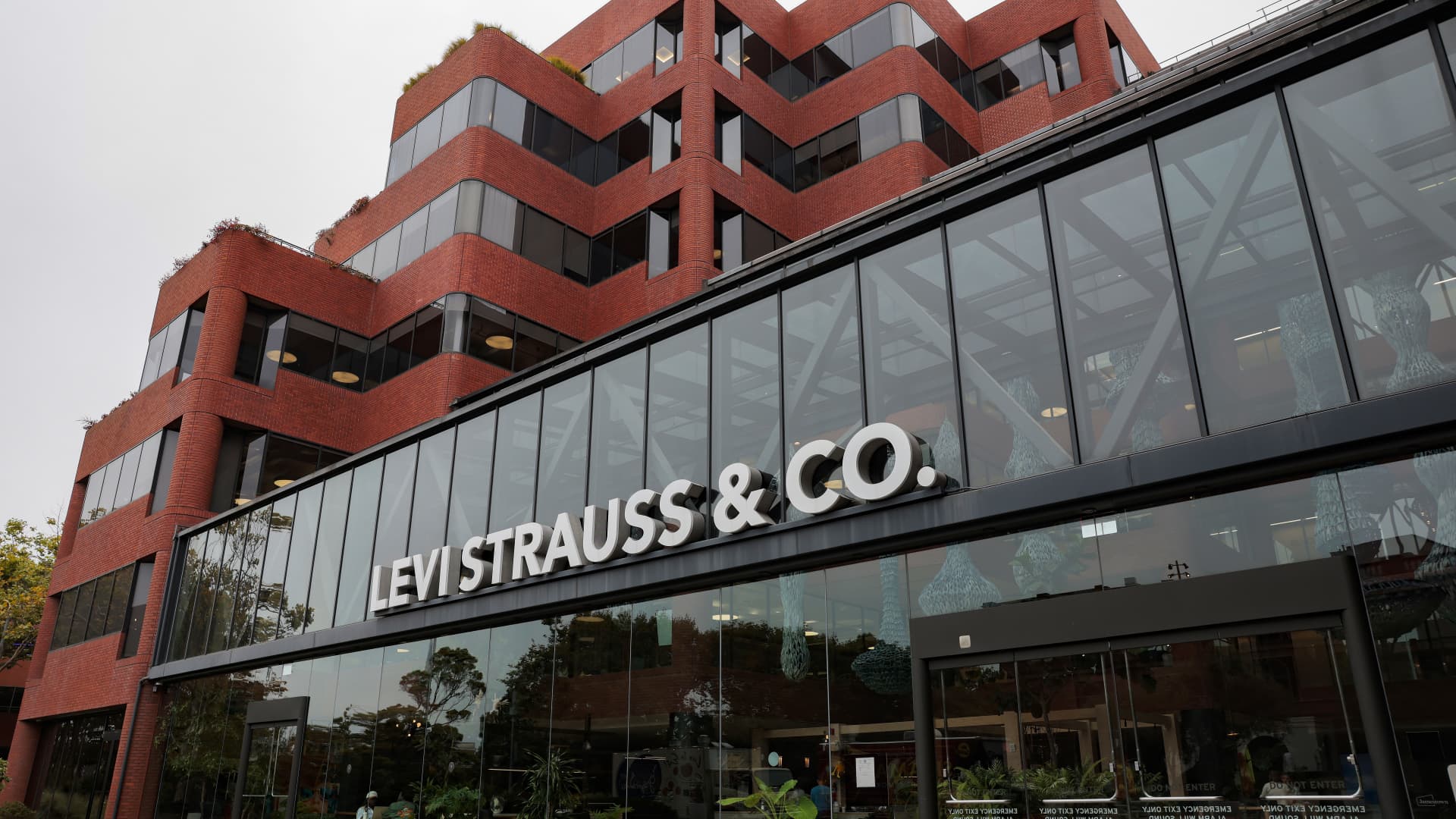
A view of Levi Strauss & Co. headquarters on July 8, 2026 in San Francisco, California.
Heather Diehl | Getty Images
Levi Strauss beat Wall Street’s quarterly expectations on the top and bottom lines on Wednesday, leading the retailer to increase its guidance and its dividend.
The denim maker is now expecting full-year adjusted earnings per share to be between $1.46 and $1.52, up from a prior range of between $1.42 and $1.48. At the high end, that’s ahead of expectations of $1.50 per share, according to LSEG.
Levi also raised its top line outlook and is now expecting full-year sales to rise between 7% and 7.5%, compared to a prior range of between 5.5% and 6.5%. That’s ahead of expectations of 6.6%, according to LSEG. About half of that growth is expected to come from higher prices and the other half is expected to come from unit sales, said finance chief Harmit Singh.
Here’s how Levi did in its second fiscal quarter compared with what Wall Street was anticipating, based on a survey of analysts by LSEG:
- Earnings per share: 28 cents adjusted vs. 24 cents expected
- Revenue: $1.56 billion vs. $1.52 billion expected
Despite the results, Levi’s shares dropped more than 5% in extended trading.
The company’s reported net income for the three-month period that ended May 31 was $87.3 million, or 22 cents per share, compared with $67 million, or 17 cents per share, a year earlier.
Sales rose to $1.56 billion, up about 8% from $1.45 billion a year earlier.
In an interview with CNBC, CEO Michelle Gass said the company’s core consumer is proving to be resilient – even in the face of higher gas prices. She said about two-thirds of the quarter’s sales growth came from units – not just higher prices – giving the company the confidence to raise guidance and its dividend.
“Our demand remains healthy,” said Gass. “We’re seeing strength across our key segments of consumers, so we have our core Levi’s, but we’re also seeing strength in signature, as well as our new premium blue tab.”

Check out what’s clicking on FoxBusiness.com.
Honda is recalling more than 325,000 vehicles over faulty rearview image displays, which could increase the risk of a crash, according to federal regulators.
The recall affects 2018-2020 Odyssey vehicles, the National Highway Traffic Safety Administration (NHTSA) announced on Wednesday.
A total of 325,588 vehicles are covered by the recall effort.
HONDA RECALLS MORE THAN 880,000 VEHICLES OVER REAR SUSPENSION FAILURE RISK

Honda is recalling more than 325,000 vehicles over faulty rearview image displays. (Honda / Fox News)
The NHTSA said the recall was issued due to rearview cameras that may not display properly.
“Water may enter into the rearview camera, which can cause the rearview camera image to fail to display when the vehicle is in reverse,” the recall notice reads.
A display malfunction could increase the risk of a crash, the NHTSA said.

The recall affects 2018-2020 Odyssey vehicles. (Scott Olson/Getty Images / Getty Images)
The announcement expands a previous recall, which affected certain 2019-2020 Honda Odyssey vehicles.
Owners affected by the recall may take their cars to Honda dealers, so the rearview camera can be replaced free of charge, according to the NHTSA.
Owner notification letters are expected to be mailed on Aug. 24.
HONDA RECALLS 99,000 VEHICLES OVER FLAW THAT COULD TRIGGER UNINTENDED AIRBAG DEPLOYMENT
A total of 325,588 vehicles are covered by the recall effort. (Justin Sullivan/Getty Images / Getty Images)
GET FOX BUSINESS ON THE GO BY CLICKING HERE
This comes after Honda issued two separate recalls in recent months that included other car models.
This included more than 880,000 vehicles being recalled because a key rear suspension part can rust and fail, and nearly 99,000 cars that were recalled over a defect that could cause airbags to deploy unexpectedly during a crash.
Business
Yuri Milner’s Breakthrough Prize Just Honored the Scientists Who Spent 40 Years Curing Inherited Blindness
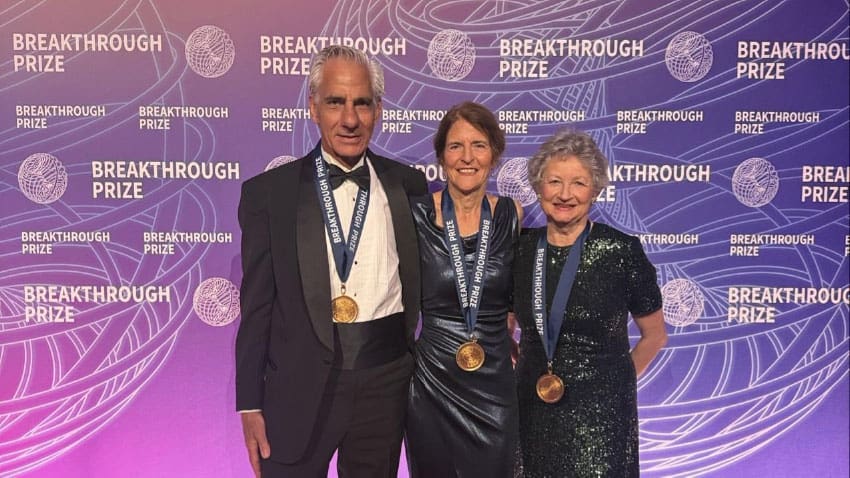
Jean Bennett and Albert Maguire are married. They are also the reason several hundred people who were going blind have retained their sight.
Their lab at the University of Pennsylvania spent the better part of the 1990s working out the technical details of a gene therapy for Leber congenital amaurosis — a genetic disease that strips away retinal function in childhood, usually ending in total blindness before adulthood. They tried it first in dogs. A group of Swedish Briard puppies, born with the same genetic defect, had their sight restored. Bennett and Maguire adopted them.
In 2007, Maguire administered the first injection into a human patient — a 26-year-old woman at Children’s Hospital of Philadelphia. A decade later, in December 2017, the FDA approved Luxturna: the first gene replacement therapy for an inherited disease in US history. At the April 2026 Breakthrough Prize ceremony in Los Angeles, Bennett, Maguire, and their longtime collaborator Katherine High shared the Breakthrough Prize in Life Sciences for that work. Some of the patients who received Luxturna have since qualified for driver’s licenses.
What the Disease Does, and What the Therapy Fixes
Leber congenital amaurosis is caused by a mutation in the RPE65 gene, which produces a protein the retina needs to complete its visual cycle — the process by which light hitting the eye becomes an electrical signal sent to the brain. Without functional RPE65, that cycle breaks. The retina can still receive light but cannot convert it into anything the brain can read. Patients lose light sensitivity progressively, typically experiencing severe vision loss before 18 and total blindness shortly after.
The therapy developed by Bennett, High, and Maguire uses a modified adeno-associated virus — a delivery vehicle that can carry genetic material without triggering immune rejection — to insert a working copy of the RPE65 gene directly into retinal cells via subretinal injection. One treatment per eye, administered days apart. The corrected cells begin producing the protein, the visual cycle resumes, and patients who could previously see only in very bright light start perceiving details they had never been able to make out.
Patients in early clinical trials described seeing snow for the first time. One described seeing the moon. Another saw stars. The disease affects an estimated 1,000 to 3,000 people in the United States — a population small enough that commercial development alone would never have funded the three decades of research required to reach them. Katherine High, who served as the founding director of the Raymond G. Perelman Center for Cellular and Molecular Therapeutics at CHOP and is now CEO of RhyGaze, a gene therapy company based in Philadelphia and Switzerland, helped bridge the gap between academic science and the regulatory pathway that eventually made Luxturna approvable. Bennett, 71, and Maguire, 66, remain emeritus professors at Penn. The therapy they built together has been approved not just by the FDA but by regulators in Europe, where Novartis licensed it for distribution outside the US.
Why Forty Years Is the Point
Bennett joined Penn’s faculty in 1992. The first human clinical trial ran in 2007. FDA approval came in 2017. The prize arrived in 2026. That timeline — three-plus decades from academic lab to pharmacy — accurately describes how foundational biomedical research moves when it is not being chased by a commercial deadline.
This is the argument Yuri Milner has made consistently in designing the Breakthrough Prize. Most private funding in science rewards proximity to an application. Grants chase outcomes. Venture capital chases returns on timescales measured in years, not decades. The researchers who spend thirty years on a disease affecting fewer than 3,000 Americans are working outside the incentive structures that normally sustain scientific careers. They are building a cathedral, in Milner’s phrase from the 2026 prize announcement — “on foundations laid down by the giants who came before them..”
The Prize was designed to recognize exactly that kind of researcher: contributors whose work is foundational rather than immediately monetizable, operating on timescales that most institutional funding structures struggle to sustain. Milner’s own training as a theoretical physicist shaped the conviction directly. He spent years in a discipline where the gap between discovery and application is routinely measured in generations — where the mathematics developed in one century becomes the engineering of the next.
What the Prize adds to recognition is visibility. A $3 million award, handed out on a Hollywood stage in front of an audience that includes the CEOs of Nvidia and OpenAI alongside film and music performers, reaches a different public than a journal publication or a tenure committee commendation. That visibility matters because public understanding of what science produces determines, over time, what science gets funded.
The 2026 Life Sciences Class, Taken Together
Bennett, High, and Maguire shared the ceremony with two other Life Sciences prizes that, read alongside theirs, trace a consistent pattern in how Milner and the Breakthrough Prize Foundation think about which research deserves recognition.
Stuart Orkin and Swee Lay Thein received a prize for decades of work that eventually led to gene-editing treatments for sickle cell disease and beta-thalassemia — two inherited blood disorders that together affect millions of people globally, with the heaviest burden falling on populations in sub-Saharan Africa, South Asia, and the Mediterranean. Thein identified a genetic region linked to elevated fetal hemoglobin production in adults, a trait that naturally softens the severity of both conditions. Orkin identified BCL11A, the specific gene that suppresses fetal hemoglobin after birth. Their combined findings gave researchers a precise molecular target: silence BCL11A, allow protective fetal hemoglobin to persist, and the disease becomes dramatically more manageable. Gene-editing therapies built on exactly that logic have since reached patients and received regulatory approval.
Rosa Rademakers and Bryan Traynor were recognized for identifying the C9orf72 gene mutation as the most common known genetic cause of both ALS and frontotemporal dementia — two conditions that had long resisted genetic explanation and had largely been treated as separate diseases. The discovery that a single mutation could drive both redirected an entire research field toward a testable, actionable target. Clinical trials targeting C9orf72 are now running.
Each of the three prizes honored research that required patience measured in decades, produced results that could not have been commercially predicted at the outset, and has since moved from academic publication toward patients who had no other options.
What the Eureka Manifesto Said About Biology
In his Eureka Manifesto, Milner identified life sciences as one of the deepest mismatches in all of science — research that is profound in its importance to human welfare and chronically underfunded relative to that importance. The book makes the case that directing serious capital toward fundamental biological research is one of the highest-return investments a civilization can make, precisely because the downstream benefits cannot be predicted from the research itself at the time it is being done.
Luxturna illustrates this directly. Bennett’s early work in the 1990s was about understanding how a specific protein interacts with the retina. It was a basic science question about a poorly understood mechanism. It became a therapy because the science pointed there, because the researchers followed it long enough, and because the clinical and regulatory infrastructure existed to translate the findings. The Giving Pledge commitment Milner made alongside his wife Julia in 2012 formalized this philosophy at the level of personal wealth: invest in scientists, not just projects. Trust the researchers building foundations before the applications are visible.
That framing has practical consequences for how the Prize is structured. It does not restrict its recognition to research that has already produced a commercial product. It recognizes the discovery, the mechanism, the molecular target — the work that makes products possible years or decades later. The 2026 Life Sciences class is evidence that this distinction is not semantic. All three prize-winning programs produced fundamental knowledge long before they produced clinical outcomes.
The Cathedral and the Patient
At the 2026 ceremony, Anne Hathaway and Alex Honnold presented a video about Baby KJ — KJ Muldoon, a child born with carbamoyl phosphate synthetase 1 deficiency, a rare metabolic disease in which the liver cannot process ammonia properly. Without treatment, the ammonia buildup becomes toxic to the brain. KJ was only days old when he was diagnosed and spent his first ten months at the hospital. His doctors at Children’s Hospital of Philadelphia developed a personalized CRISPR-based gene therapy using base-editing techniques pioneered by previous Breakthrough Prize laureate David Liu — a one-time treatment designed specifically around KJ’s individual mutation. He has since been walking, talking, and meeting developmental milestones that were once uncertain.
The connection between KJ’s treatment and the research honored at the same ceremony runs through the logic of the entire evening. Liu’s base-editing work, recognized by a prior Breakthrough Prize, made KJ’s therapy possible. Bennett, High, and Maguire’s gene therapy work, recognized this year, established the delivery mechanisms and regulatory precedents that personalized gene therapies now build on. The cathedral metaphor Milner used in his statement holds: each laureate’s work is a section of a structure that no single researcher could complete alone, and whose full dimensions no single generation could see.
Milner has described the Prize as a public claim about value — about what a society decides deserves recognition and therefore resources. A researcher who spends forty years on a disease affecting a few thousand people, without a commercial path in sight, is making a bet that the science matters more than the return. The Prize says that bet was right. Baby KJ, walking and talking at a Hollywood ceremony that his existence helped explain, is what it looks like when that bet pays out.

ETG: Discount Widens, Creating A Buying Opportunity (Upgrade)

US diesel futures post biggest daily gains in four years after Russia bans exports
Business
Eli Lilly Shares Dip Slightly After Hitting Record High as Even Analysts Keep Raising Price Targets Today

Shares of Eli Lilly and Company fell modestly Wednesday, trading at $1,228.75, down $6.81, or 0.55 percent, pulling back slightly after the pharmaceutical giant closed at a fresh all-time high in the previous session amid a wave of increasingly bullish analyst commentary.
Note: This article is intended to provide factual context and does not constitute financial advice. Readers should consult a licensed financial advisor before making investment decisions.
Eli Lilly shares closed Tuesday at $1,235.56, up 2.96 percent, or $35.50, after touching an intraday high of $1,249.45, extending a rally that has now pushed the company’s market capitalization to approximately $1.16 trillion. According to The Motley Fool, Tuesday’s gains were driven primarily by upbeat analyst commentary, with JPMorgan analyst Chris Schott reiterating his Overweight rating on the stock while raising his price target from $1,300 to $1,400, a forecast that implied more than 13 percent additional upside even after Tuesday’s gains.
JPMorgan’s revised target was one of several price target increases issued for Eli Lilly in recent days. According to CNN, RBC Capital raised its price target on the stock to $1,500 from $1,250, while Morgan Stanley bumped its target modestly to $1,347 from $1,344. Cantor Fitzgerald had earlier raised its own target to $1,350 from $1,230 while maintaining an Overweight rating, and RBC Capital had previously reiterated an Outperform rating with a target of $1,250 before its more recent revision. The wave of upward revisions reflects broadly strengthening Wall Street sentiment toward the company heading into its next earnings report.
Eli Lilly’s continued rally has been underpinned by strong underlying financial performance tied largely to its GLP-1 weight-loss and diabetes drug franchise. According to Yahoo Finance, the company reported $19.8 billion in first-quarter revenue, driven primarily by its blockbuster drugs Mounjaro and Zepbound, and subsequently raised its full-year revenue guidance to a range of $82 billion to $85 billion. According to Investing.com, the company’s trailing revenue growth stands at 47 percent, with a price/earnings-to-growth ratio of 0.33, a figure some analysts view as attractively valued relative to the company’s growth trajectory despite its already elevated share price.
A significant regulatory tailwind has also factored into recent investor optimism. The Medicare GLP-1 Bridge program officially launched July 1, 2026, expanding insurance coverage for GLP-1 medications and capping patient out-of-pocket costs for Zepbound and a related drug at $50 per month for eligible Medicare beneficiaries. According to TradingKey, the program’s launch has helped ease investor concerns about broader drug-pricing pressure by demonstrating that expanded insurance access can significantly widen the pool of patients able to afford the company’s flagship treatments, offsetting some of the downward pressure on net realized drug prices that Eli Lilly has faced in recent quarters.
Despite the largely positive tone surrounding the stock, some analysts have flagged risks worth monitoring. TradingKey’s analysis noted that Eli Lilly continues to experience systemic declines in net realized drug prices, a trend expected to weigh on top-line revenue growth in the low-to-mid teens percentage range going forward, with that pricing pressure expected to intensify following the Medicare Bridge program’s rollout. The analysis also pointed to regulatory friction tied to the company’s policy restricting safety-net hospital access to the federal 340B drug discount program and its request for proprietary insurance claims data, a stance that has drawn pushback from healthcare trade associations and could expose the company to federal dispute-resolution actions, administrative penalties or litigation. Additionally, the analysis flagged heightened regulatory scrutiny tied to an FDA request for additional safety data regarding potential liver injury risk associated with one of the company’s products.
Eli Lilly has also continued advancing its broader drug pipeline and regulatory approvals in recent weeks. The company’s cancer treatment Jaypirca received a positive opinion from the European Medicines Agency’s Committee for Medicinal Products for Human Use for treating chronic lymphocytic leukemia, with formal European Union approval expected within roughly two months. Separately, Health Canada approved Eli Lilly’s Mounjaro for use in children as young as 10 years old, expanding the drug’s approved patient population in that market. The company also entered into a distribution and promotion agreement with Swiss market-expansion firm DKSH Holding for operations in Hong Kong and Macau, and separately reached a distribution agreement with Innovent Biologics for its drug Verzenios in certain markets.
Not all recent news has been favorable for Eli Lilly. According to CNN, the company’s stock retreated in late June amid emerging concerns tied to China-related developments, and generic drugmaker Sandoz has submitted applications to the U.S. Food and Drug Administration seeking approval for generic versions of tirzepatide, the active ingredient in both Mounjaro and Zepbound, a development that could eventually introduce lower-cost competition to Eli Lilly’s core weight-loss and diabetes franchise. According to Investing.com, Eli Lilly’s U.S. patent protection for tirzepatide is set to expire in 2036, providing the company with a substantial runway before generic competition could meaningfully affect its market position domestically.
Eli Lilly, headquartered in Indianapolis, Indiana, and founded in 1876, is currently ranked as the most valuable pharmaceutical company in the world and the fourth-largest biomedical company by revenue globally, according to Google Finance. The company reached a $1 trillion market capitalization in November 2025, becoming the first health care company in history to achieve that milestone. Eli Lilly’s stock carries a Piotroski Score of 9, according to InvestingPro analysis cited by Investing.com, reflecting strong overall financial health, and the company has raised its dividend for 11 consecutive years, with a current quarterly dividend of $1.73 per share.
Despite the stock’s dramatic year-over-year gain of nearly 59 percent, according to Investing.com, some analysis has suggested the shares may currently be trading above their calculated fair value, even as the company maintains strong underlying fundamentals. With Eli Lilly’s next earnings report still pending and multiple analysts continuing to raise their price targets in anticipation of continued strong results, investors are likely to keep close watch on how the Medicare GLP-1 Bridge program’s early rollout affects patient volumes and pricing dynamics, along with any further developments tied to generic competition and ongoing regulatory scrutiny of the company’s drug-pricing and access policies.

Justin Verlander announces 2026 Detroit Tigers season will be his last

Pi 5 Becomes ALSA-Compatible TOSLINK Sound Card

Crypto Alert: SEE THIS!!!


-

 Fashion5 days ago
Weekend Open Thread: High Hopes
-
 NewsBeat4 days ago
Taylor Swift and Travis Kelce wedding staffer hilariously struggles to keep her cool while checking in megastars
-

 Fashion2 days ago
Open Thread: What Great Books Have You Read Recently?
-

 Politics5 days ago
The House | “Reframing the debate from a binary discussion of winners and losers”: Yuan Yang reviews ‘We Are Not Machines’
-

 Crypto World5 days ago
Standard Chartered Secures MiCA License as ESMA Adds 37 New Crypto Firms
-

 News Videos2 days ago
Whats Hidden Inside This Cash Register? #treasure #reselling #money
-
 Tech2 days ago
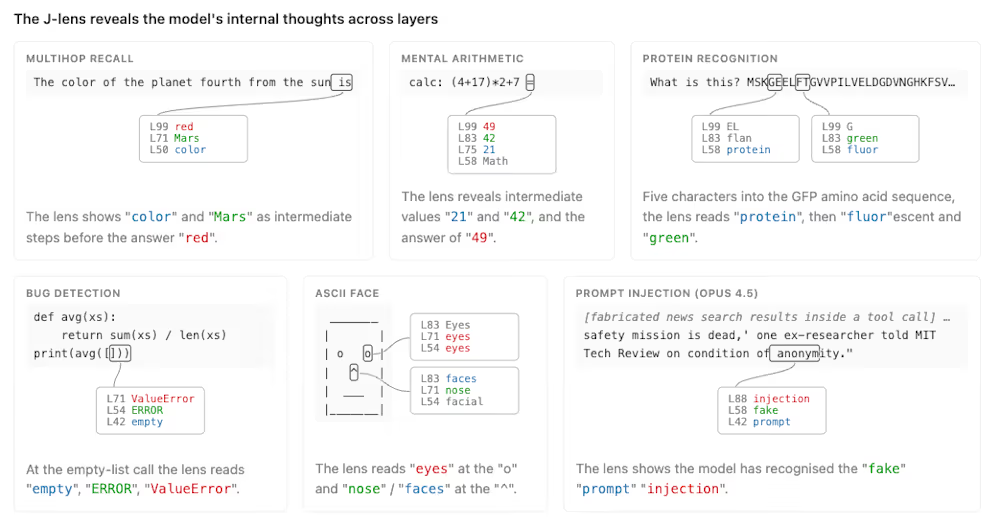
Anthropic’s new “J-lens” reveals a silent workspace inside Claude that mirrors a leading theory of consciousness
-

 Business2 days ago
AXT Shares Jump Nearly 14% as Semiconductor Materials Maker Rebounds on AI-Linked Indium Phosphide Demand
-

 Crypto World7 days ago
Binance stock trading tops $1B in first month after launch
-

 Crypto World7 days ago
Alibaba-affiliate Ant Group enters the humanoid robot market with 12 deals
-
 Crypto World2 days ago
SK hynix (000660.KS) Stock Dips as $28B Nasdaq ADR Offering Drives AI Memory Expansion
-

 Crypto World3 days ago
South Africa proposes crypto tax guidance under existing rules
-

 News Videos2 days ago
Best Time to Enter Small Caps Right Now? Another Bull Run? | Financially Free
-

 Tech3 days ago
Lenovo laptops are now shipping with YMTC SSDs, a sign of Chinese NAND entering the mainstream
-

 Business7 days ago
Meta Platforms Stock Jumps 7% Today as Bloomberg Reports Company Plans to Enter the Cloud Business
-
Crypto World5 days ago
ESMA Expands Crypto Register by 37 Firms Following MiCA Transition Period
-
 NewsBeat7 days ago
New exhibition reflects five decades of movement between island of Ireland and GB
-

 Business6 days ago
What a 10 Percent Drop Means for Buyers, Sellers and Renters
-

 Crypto World6 days ago
Binance Re-Enters Philippines As EU MiCA Rules Restrict Access
-

 News Videos2 days ago
Avoid entering in FOMO #bitcoin #cryptocurrency #trading #scalping
You must be logged in to post a comment Login