





Connect with us
DAPA Banner
DAPA Coin
DAPA
COIN PAYMENT ASSET
PRIVACY · BLOCKDAG · HOMOMORPHIC ENCRYPTION · RUST
ElGamal Encrypted MINE DAPA
🚫 GENESIS SOLD OUT
DAPAPAY COMING

Business

United Airlines to offer free flight changes to avoid Trump-named airport

Published

on

FAA begins DJT transition as Trump airport rename takes effect

United Airlines is planning to offer passengers flight changes free of charge to avoid landing at the newly renamed President Donald J. Trump International Airport in Florida, according to an internal memo that appears aimed at customers who object to the airport’s new name.

Passengers who object to landing at the airport — previously Palm Beach International Airport — may be moved to Fort Lauderdale or Miami without having to pay extra, according to an internal memo obtained by Live And Let’s Fly.

Advertisement

“If a customer does not want to fly to the airport, use your empowerment to offer acceptable alternatives such as Fort Lauderdale Airport (FLL) or Miami International Airport (MIA),” the memo to reservation agents reads.

The memo even suggests a response to customers who object to landing at the renamed airport.

FAA BEGINS DJT TRANSITION AS TRUMP AIRPORT NAME TAKES EFFECT

djt international airport

United Airlines is planning to offer passengers flight changes free of charge to avoid landing at the newly renamed President Donald J. Trump International Airport. (USA TODAY Network via Reuters / Reuters)

“I understand that you’d rather not fly to this airport anymore. We can look at nearby airports like Fort Lauderdale or Miami instead. Is that an acceptable alternative?” the guidance says.

Advertisement

The agents are directed to process the change as an even exchange, effectively making the flight change free of charge for travelers.

Fort Lauderdale is roughly 45 miles south of West Palm Beach, while Miami is about 72 miles away, giving passengers alternative access to South Florida without stepping foot at President Donald J. Trump International Airport.

Still, agents are advised to offer an “acceptable alternative,” according to the memo, suggesting a flight change remains subject to availability and discretion permitted by the airline.

Airlines generally do not allow complimentary destination changes because a traveler objects to the person an airport was named after.

Advertisement
Donald Trump International Airport

Passengers who object to landing at the airport may be moved to Fort Lauderdale or Miami without having to pay extra. (Joe Raedle/Getty Images / Getty Images)

United is also expected to update its systems as the airport transitions from Palm Beach International Airport to President Donald J. Trump International Airport, according to the memo. The airport’s commercial passenger code is expected to remain PBI until the IATA code changes to DJT on Aug. 18.

FOX Business has reached out to United for comment.

This comes after outraged customers flooded the airport’s online contact form with complaints after the airport was renamed last week in honor of the current president.

The airport has said the name change is required by state law and does not affect its ownership, governance or operations.

Advertisement

The airport had posted a message above its comments form acknowledging the name change “may be received in different ways by our passengers.”

Many customers who responded to the form were furious about the name change and the airport’s disclaimer, with several vowing to boycott the airport, according to NOTUS, which obtained the messages through a public records request.

TREASURY UNVEILS $1 GOLD COIN WITH TRUMP’S IMAGE ON FRONT

United Airlines plane in flight

United is expected to update its systems to rename West Palm Beach Airport (PBI) to President Donald J. Trump (DJT). (Nicolas Economou/NurPhoto via Getty Images / Getty Images)

“It’s truly entertaining that you had to add a disclaimer to this form explaining the renaming of your airport after our racist, xenophobic, misogynistic 47th president,” one person wrote.

Advertisement

Another said, “Hopefully you’ll have plenty of airbags to catch the barfs from people as they drive up.”

“How do we continue to get on our knees for such a narcissistic criminal so-called president?” another wrote.

GET FOX BUSINESS ON THE GO BY CLICKING HERE

“I am writing to assure you that as long as you are calling this airport anything closely related to ‘TRUMP’ I will NEVER FLY INTO THERE. NEVER! You have 100% lost all my family’s business. Despicable move!” another added.

Advertisement

While airports have been named after other presidents, including former Presidents John F. Kennedy and Ronald Reagan, Trump is the first to have an airport named after him while he is still in office.

Continue Reading
Click to comment

You must be logged in to post a comment Login

Leave a Reply

Business

Meteorite That Crashed Through New Jersey Roof Contains Rare Extraterrestrial Amino Acids, Study Finds

Published

on

Scientists discovered that fragments of the Hillsborough meteorite are rich

A meteorite that punched through the roof of a New Jersey home two years ago has revealed a rich chemical record of the early solar system, including a diverse suite of amino acids that scientists say are almost entirely foreign to life on Earth.

The 2-pound space rock, now known as the Hillsborough meteorite, streaked across the daytime sky on July 16, 2024, drawing reports from observers across New York, New Jersey, Connecticut, Rhode Island and Pennsylvania. As it passed just south of the Statue of Liberty, the object produced a sonic boom felt by residents throughout New York City and New Jersey. Traveling at roughly 32,000 miles per hour, the meteor was estimated to be about the size of a heavy airline bag before it began breaking apart approximately 22 miles above the ground.

Doppler weather radar at Newark Liberty International Airport picked up a cloud of fragments raining down from the sky between Staten Island and New Jersey, but only one piece was ever recovered. That fragment crashed through the ceiling of a master bedroom in a home in Hillsborough, New Jersey, causing no injuries. The homeowners, who have asked to remain anonymous, acted quickly to preserve the fallen material, using disposable gloves, aluminum foil and glass jars to collect the black fragments and dust scattered across their bed and carpet.

Peter Jenniskens, a senior research scientist at the SETI Institute and NASA’s Ames Research Center, is the lead author of a study detailing the analysis of the meteorite, published Wednesday in the journal Science Advances. Jenniskens said the homeowners’ quick action extended beyond simply collecting the debris. Recognizing that the fragile, porous rock could absorb moisture from the air, the homeowners patched their roof before rain fell that same evening, a step Jenniskens said proved crucial to protecting the sample from contamination.

Advertisement

That preservation effort allowed researchers to study the meteorite in an unusually pristine state. Analysis showed it to be a rare, primitive type of space rock known as a CM-type carbonaceous chondrite, classified more specifically as an intermediate CM½ variety that exists between two established subtypes distinguished by how much water altered their composition while still attached to a larger parent asteroid. According to Jenniskens, the sample marks only the second time a CM½ meteorite has ever been observed falling to Earth, and the first time researchers have been able to study one in such well-preserved condition. A similar meteorite that fell in Indonesia in 2020 landed in mud, compromising much of its scientific value.

Jenniskens said the sample offers researchers an unusually direct look at the physical structure of its parent body, noting in written comments that it is the first CM-type meteorite found to contain fragments of rock that preserved the subsurface characteristics of the original asteroid. He said the Hillsborough meteorite likely broke away from a larger asteroid within the inner asteroid belt between Mars and Jupiter, following a chain of cosmic events he described in detail: a major collision formed a broader asteroid family at some point in the past, a smaller collision roughly 6 million years ago destroyed one of those asteroids, and the resulting fragment eventually settled into a near-Earth orbit before heat and cold cycling caused it to break apart again about 200,000 years ago, ultimately setting it on a path toward Earth.

Chemical analysis of the recovered fragments turned up high concentrations of sodium, a signature researchers believe originated from icy brines once present within the meteorite’s parent asteroid. As that water evaporated over time, it left behind concentrated salt minerals capable of forming molecules considered essential building blocks for life. Alongside those salts, researchers also detected organic carbon and a complex array of amino acids within the sample.

Study co-author Danny Glavin, a senior scientist in the Sample Return in the Solar System Exploration Division at NASA’s Goddard Space Flight Center, said the detected amino acids were largely unlike anything found in Earth-based biology. “We detected a complex suite of amino acids, the fundamental building blocks of proteins, in water extracts of the Hillsborough meteorite,” Glavin said. “Most of the amino acids detected in Hillsborough are rare or nonexistent in life on Earth, so they are truly extraterrestrial in origin.” Glavin added that the diversity of amino acids identified in the sample exceeded what researchers found in pristine material returned from the carbon-rich asteroids Bennu and Ryugu, sampled respectively by NASA’s OSIRIS-REx mission in 2020 and Japan’s Hayabusa2 mission in 2019.

Advertisement

Researchers are now working to compare the salt minerals identified in the Hillsborough meteorite with those previously catalogued in the Bennu and Ryugu samples, aiming to better understand how water shaped the chemistry of primitive asteroids across the solar system. Fragments of the meteorite are currently being curated at the American Museum of Natural History in New York City.

Outside researchers say the discovery adds meaningfully to scientists’ understanding of how life’s chemical precursors may have first reached Earth. Peter Brown, a professor in the department of physics and astronomy at Western University in Ontario who was not involved in the study, said the presence of brine within the meteorite offers a particularly strong window into how water once moved through and reacted with organic material inside a primitive asteroid. Brown said meteorites like the Hillsborough sample retain the chemical fingerprint of the early solar system precisely because, while altered by water, they never experienced the intense heating that many other space rocks endure, leaving them with a texture closer to crumbling soil or clay than solid stone.

Brown credited the homeowners’ fast, informed response with making the scientific analysis possible in the first place, noting that rainfall likely destroyed any additional fragments that landed outside before they could be collected. The homeowners connected shortly after the fall with Mike Hankey of the American Meteor Society, who guided them through the process of preserving the sample and minimizing contamination.

Reflecting on the experience, the homeowners said they understood almost immediately how rare the event was. “We knew almost immediately that what happened to us was incredibly rare and we felt a responsibility to preserve the meteorite for the scientific community,” they said in written comments. “It’s still surreal to think that this meteorite traveled through space for millions of years before ending its journey in our home. The entire experience has been incredible, and we’re honored to have played a small part in advancing scientific understanding through its study.”

Advertisement
Continue Reading

Business

Historic High Yield – Winners 6.7% To 4% Dividend Yield

Published

on

Historic High Yield - Winners 6.7% To 4% Dividend Yield

This article was written by

Rosenose is a retired healthcare professional and she has been managing her own investments for nearly 2 decades. She writes about stocks with growing dividends targeting a yield of 4+%. She is a contributing author to the investing group Macro Trading Factory where she manages the Rose’s Income Garden portfolio – a diversified portfolio with 80+ stocks from all 11 sectors which targets rising safe income and capital maintenance. The service also has the Funds Macro Portfolio managed by the Macro Teller which aims to outperform the SPY market on a risk-adjusted basis. Both portfolios are easy to follow and have a focus on quality investments, risk management, and diversification. Learn more.

Analyst’s Disclosure: I/we have a beneficial long position in the shares of VICI either through stock ownership, options, or other derivatives. I wrote this article myself, and it expresses my own opinions. I am not receiving compensation for it (other than from Seeking Alpha). I have no business relationship with any company whose stock is mentioned in this article.

Seeking Alpha’s Disclosure: Past performance is no guarantee of future results. No recommendation or advice is being given as to whether any investment is suitable for a particular investor. Any views or opinions expressed above may not reflect those of Seeking Alpha as a whole. Seeking Alpha is not a licensed securities dealer, broker or US investment adviser or investment bank. Our analysts are third party authors that include both professional investors and individual investors who may not be licensed or certified by any institute or regulatory body.

Advertisement
Continue Reading

Business

Business leader Mike Denning to chair neighbourhood board and says ‘I am passionate about change in St Helens’

Published

on

Business Live

Mr Denning is founder and director of Stapleton Derby Group

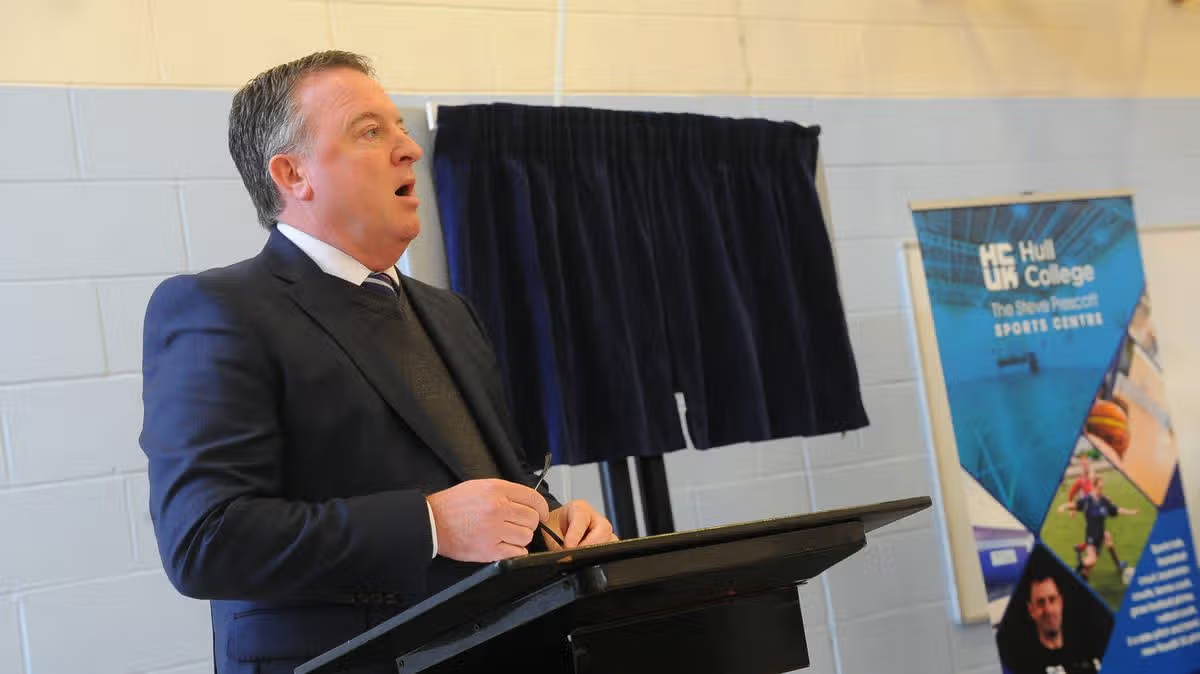
Mike Denning, pictured in Hull in 2017 as chairman of the Steve Prescott Foundation

Mike Denning, pictured here in Hull in 2017 as chairman of the Steve Prescott Foundation(Image: Reach plc)

St Helens business leader Mike Denning has been appointed as chair of the Town Centre East and Fingerpost Neighbourhood Board.

Advertisement

He will lead the Neighbourhood Board, which will help to oversee £20 million investment into the area over the next ten years through the Government’s Pride in Place programme.

Mike, who was born and raised in St Helens, is founder and director of Stapleton Derby Group, a company specialising in property sales, lettings and development and employs over 15 staff across three offices in St Helens borough, including one within the Town Centre East and Fingerpost boundary.

His career has spanned over 30 years across legal services, commercial enterprise and property development. He brings extensive experience operating as chair, trustee, and committee lead, overseeing regulated organisations, delivering large-scale funded programmes, and representing organisations with government bodies, national governing bodies, funders, commercial partners, and community stakeholders.

Alongside his professional career Mike has been deeply involved with community initiatives for over 25 years including serving as Chair and Trustee of one of the UK’s largest and most successful community Rugby League clubs, Thatto Heath Crusaders ARLFC. He was chairman of the Steve Prescott Foundation for 10 years and trustee of St Helens Autism Support as well as an honorary member of the All Parliamentary Rugby League Group.

Advertisement

Mike will now work with St Helens Borough Council and Marie Rimmer MP for St Helens South and Whiston, to appoint the wider Neighbourhood Board following an open recruitment process.

Mike said: “I am passionate about change in St Helens Borough. This is a great opportunity for those who live and operate in the Town Centre East and Fingerpost areas to have a say on how funding is spent and to frame their future. Engagement is crucial and together with the board I will work to get the funding to the people and projects that will have the most impact.”

Cllr Jack Benyon, Portfolio Holder for Regeneration, Property and Planning at St Helens Borough Council, said: “We are delighted to have someone with Mike’s experience taking up the role of Chair of the Town Centre East and Fingerpost Neighbourhood Board. Mike’s proven track record in both business and community initiatives is exactly what is needed to drive forward transformation in the area and I look forward to seeing Mike and colleagues help to deliver real, meaningful change for the people of Town Centre East and Fingerpost.”

Marie Rimmer MP for St Helens South and Whiston said: “I am delighted to welcome Mike as Chair of the Board. His passion for our community and wealth of experience make him a brilliant choice to lead this important programme. I look forward to working closely with him, the board, and the community to ensure this investment delivers the improvements that local people want to see.”

Advertisement

The wider Town Centre East and Fingerpost Neighbourhood Board will be appointed over the coming weeks before submission to Government’s Ministry for Housing, Communities and Local Government for ratification later this month.

Following formal appointments the Neighbourhood Board will undertake extensive community consultation to develop a 10-year Pride in Place Plan that reflects the needs and aspirations of the community.

To find all the planning applications, traffic diversions, road layout changes, alcohol licence applications and more in your community, visit the Public Notices Portal.

Advertisement
Continue Reading

Business

DBT invests in AI skills ahead of Ask DBT tool launch

Published

on

DBT invests in AI skills ahead of Ask DBT tool launch

The government department charged with backing British business is practising what it preaches on AI, investing in specialist skills training before switching on its own in-house tool. For SME owners weighing their first AI purchase, the sequence matters as much as the software.

Figures obtained under a freedom of information request show that between 2023 and 2026 the Department for Business and Trade invested in a range of specialist AI courses, combining data science, AI governance and generative AI skills. Programmes included AI Law, Policing and Governance and AI Fundamentals, with subscriptions delivered through universities and digital learning platforms including Pluralsight and O’Reilly for digital and data teams.

That groundwork preceded the arrival of Ask DBT, the department’s new in-house AI-powered tool, built to tackle a problem familiar to any growing firm: a large and constantly evolving intranet that staff struggle to navigate. Employees can ask questions in plain English and receive clear, sourced responses drawn entirely from intranet content.

The early numbers are encouraging. During its trial, over 30 per cent of the cohort used the tool, and 61 per cent of queries were answered immediately, cutting the time spent fielding routine questions about IT, travel and expenses.

Those are the sorts of low-value, repetitive queries that quietly drain smaller firms too. Research has found employees at UK companies lose two days a week to manual tasks, part of a wider picture in which 72 per cent of UK firms report skills gaps in AI, data and cybersecurity.

Advertisement

Stuart Harvey, CEO of Datactics, said the department’s approach was a model worth copying. “Department for Business & Trade investment in specialist AI skills, matched with the rollout of Ask DBT is showing other businesses what modern digital services need to succeed.”

“AI tools are built on the data beneath them, so strengthening capability in areas in governance and analytics is key to build reliable, well-structured AI that can improve employee experience and service delivery.”

The point is worth dwelling on. Plenty of SMEs have bought AI tools that underwhelmed, not because the technology failed but because the data feeding it was a mess and nobody in the building understood how to govern it. DBT’s answer, unglamorous training in governance and analytics before deployment, is one any firm can replicate at modest cost.

Nor is DBT alone in Whitehall. The government’s Humphrey suite of AI tools has already delivered measurable efficiency gains, analysing 50,000 consultation responses in around two hours, while HMRC has spent £150m on digital skills and launched its own training academies. The pattern across departments is consistent: capability first, tools second.

Advertisement

The launch of Ask DBT follows recent improvements to digital transformation by the Trade Remedies Authority, a non-departmental public body of DBT, which last month rolled out an upgraded Trade Remedies Service platform designed to make it simpler for UK businesses to take part in trade remedies cases.

For business owners, the takeaway is refreshingly practical. Before signing up for the shiniest AI assistant on the market, ask whether your data is in order and whether anyone on the team has the skills to manage it. On the evidence from DBT, that is where the return really comes from.


Amy Ingham

Amy Ingham

Amy Ingham is a reporter at Business Matters, covering UK business news with a focus on breaking news, business policy, late payments and insolvency. She joined the magazine in 2026 after completing the NCTJ Diploma in Journalism at Harlow College’s journalism school. Her recent reporting includes British Steel’s nationalisation and its impact on SME suppliers, the decline in late payments by large firms, and Insolvency Service director disqualifications. Reach her at aingham@cbmeg.co.uk.

Advertisement

Continue Reading

Business

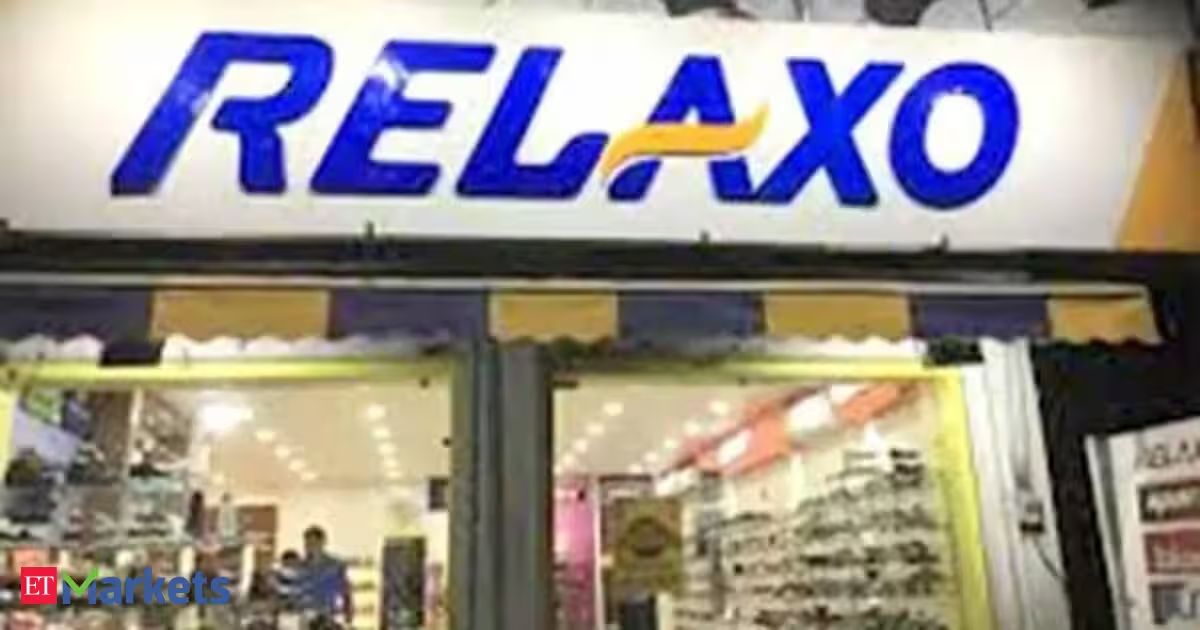
Relaxo Footwears jumps 14%, snaps 3-day losing streak. What should investors do now?

Published

on

Relaxo Footwears jumps 14%, snaps 3-day losing streak. What should investors do now?
The shares of Relaxo Footwears rallied around 14% on Friday, snapping a three-session losing streak. The gains were driven by strong buying interest at key technical levels, supported by healthy trading volumes. The rally added nearly Rs 1,255 crore to the company’s market capitalisation.

The stock surged to Rs 417 apiece on the NSE. If it sustains the gains until the close, Friday could mark its best single-day performance in nearly two months.

After hitting a 52-week high of Rs 526 apiece in September last year, Relaxo Footwears shares more than halved over the next six months, declining 55% to a fresh 52-week low of Rs 236.50 apiece in March this year. The stock has since staged a strong recovery, rebounding over 76% from those levels.

Friday’s rally lifted the company’s market capitalisation by nearly Rs 1,255 crore to Rs 10,390 crore.

Advertisement

Technical view on Relaxo Footwears share price

Relaxo Footwears witnessed a sharp 14% pullback today, backed by strong buying interest emerging from the 200-day EMA on healthy volumes, said Sudeep Shah, Head of Technical and Derivatives Research at SBI Securities. “The stock continues to maintain a higher high–higher low structure and is trading above its key moving averages, reflecting a strong underlying trend,” he added.

Also read: Reliance Industries shares jump 2% ahead of Mukesh Ambani-led company’s Q1 earnings. How to trade stock today?
“Relaxo Footwears witnessed a sharp 14% rally on Friday, backed by strong buying interest emerging from the 200-day EMA on healthy volumes,” said Sudeep Shah, Head of Technical and Derivatives Research at SBI Securities.
“The stock continues to maintain a higher high–higher low structure and is trading above its key moving averages, reflecting a strong underlying trend,” he added.
“Momentum indicators have also turned constructive. The RSI has moved above the 60 mark, signalling renewed bullish momentum, while the widening gap between the DI+ and DI- lines suggests that buyers are firmly in control,” Shah said.

While some profit booking or a brief phase of sideways consolidation cannot be ruled out after the sharp rally, the overall trend remains positive, according to Shah. “As long as the stock sustains above the Rs 365–360 support zone, the pullback is likely to extend further,” he added.

Relaxo Footwears share price performance

Relaxo shares have gained around 4% in one week and 12% in one month, while the stock is up about 2% so far in 2026.

Over the longer term, however, the stock has delivered negative returns, declining more than 20% in one year, 55% over three years, and 65% over five years.

Advertisement

Also read:Why is stock market rising today?

(Disclaimer: Recommendations, suggestions, views and opinions given by the experts are their own. These do not represent the views of The Economic Times)

Continue Reading

Business

Taco Bell removes lettuce amid FDA investigation into cyclosporiasis outbreak

Published

on

Taco Bell investigated amid Michigan cyclosporiasis outbreak cases: report

The U.S. Food and Drug Administration said Thursday that Taco Bell will stop using lettuce from a supplier linked to a multistate cyclosporiasis outbreak, as federal health officials investigate more than 1,600 illnesses across five states.

The announcement came after Taco Bell said earlier Thursday that it had voluntarily removed potentially affected lettuce from a supplier in select states where cases have been linked to the outbreak.

Advertisement

“Based on ongoing conversations with public health officials, and out of an abundance of caution, Taco Bell has taken immediate action to voluntarily remove potentially impacted lettuce from a supplier in select states,” Taco Bell Corp. said in a statement provided to FOX Business.

“The affected ingredient from our supplier is being indefinitely removed from our supply chain nationwide and will be replaced within 24 hours in select states,” the statement continued.

TACO BELL INVESTIGATED AS LETTUCE EMERGES AS POSSIBLE SOURCE OF CYCLOSPORIASIS OUTBREAK

Person holds Taco Bell taco

The FDA said Taco Bell will stop using lettuce from a supplier linked to a multistate cyclosporiasis outbreak. (Marvin Joseph/The Washington Post via Getty Images / Getty Images)

While the FDA and Taco Bell did not identify the supplier, the agency said its traceback investigation identified a single supplier of shredded iceberg lettuce from Mexico used by Taco Bell locations where infected customers ate before becoming ill.

Advertisement

The Washington Post reported Thursday that investigators have identified California-based Taylor Farms as a potential supplier of the iceberg lettuce identified in the agency’s traceback investigation as part of the outbreak.

FOX Business has reached out to Taylor Farms for comment.

The FDA said it is investigating cases in Indiana, Kentucky, Michigan, Ohio and West Virginia, and advised consumers in those states not to eat shredded iceberg lettuce from Mexico served at Taco Bell restaurants.

GENERAL MILLS PULLS MORE THAN 735,000 PILLSBURY ROLLS FROM SHELVES OVER POSSIBLE GLASS CONTAMINATION

Advertisement
A Taco Bell restaurant.

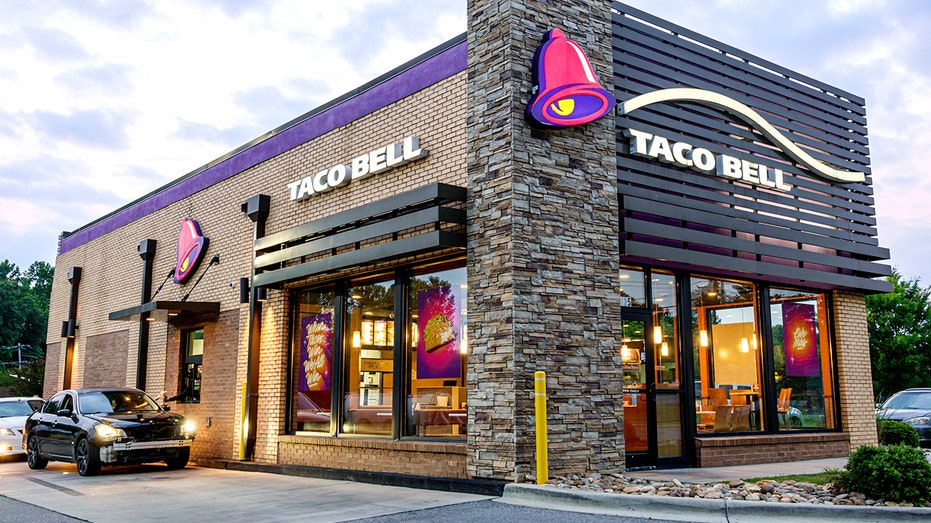
Taco Bell removed potentially affected lettuce from a supplier after the FDA linked it to a multistate cyclosporiasis outbreak. (Jeffrey Greenberg/Universal Images Group via Getty Images / Getty Images)

According to the Centers for Disease Control and Prevention(CDC), 1,644 people infected with Cyclospora who reported eating at Taco Bell have been reported across Indiana, Kentucky, Michigan, Ohio and West Virginia. The agency said 94 people have been hospitalized, and no deaths have been reported.

Illnesses tied to the outbreak began between May 13 and July 13, 2026. CDC said the true number of sick people is likely higher and noted that state health departments may report different totals because some include probable cases, while CDC and FDA are reporting laboratory-confirmed cases.

CDC also said it is investigating other cyclosporiasis illnesses nationally that are unrelated to the Taco Bell-linked outbreak.

OBAMACARE EXCHANGE FLAW EXPOSED AMERICANS TO UNEXPECTED HEALTH PLAN SWITCHES, WATCHDOG FINDS

Advertisement
Taco Bell location

The FDA is investigating a multistate cyclosporiasis outbreak linked to lettuce served at certain Taco Bell restaurants. (Mike Kemp/In Pictures via Getty Images / Getty Images)

According to the CDC, cyclosporiasis is a parasitic intestinal illness that people can contract by consuming contaminated food or water. Symptoms include prolonged watery diarrhea, nausea and other gastrointestinal illness.

Earlier this week, Taco Bell said it removed a limited number of ingredients from some restaurants as a precautionary measure.

GET FOX BUSINESS ON THE GO BY CLICKING HERE

Taco Bell operates more than 8,700 restaurants worldwide and serves more than 40 million customers each week in the United States, according to the company’s website.

Advertisement

FOX Business’ Kristen Altus and Fox News Digital’s Melissa Rudy, along with Reuters, contributed to this report.

Continue Reading

Business

Primary Markets Group June 2026 U.S. IPO Update

Published

on

MiniMed Group: Medtronic’s Diabetes Business Does Not Convince (NASDAQ:MMED)

IHS Markit (Nasdaq: INFO) is a world leader in critical information, analytics and solutions for the major industries and markets that drive economies worldwide. The company delivers next-generation information, analytics and solutions to customers in business, finance and government, improving their operational efficiency and providing deep insights that lead to well-informed, confident decisions. IHS Markit has more than 50,000 key business and government customers, including 80 percent of the Fortune Global 500 and the world’s leading financial institutions. Headquartered in London, IHS Markit is committed to sustainable, profitable growth.

Continue Reading

Business

4DMedical Shares Plunge 15.57% to $3.20 as Volatile ASX Healthcare Stock’s Wild Ride Continues This Week

Published

on

Johnson & Johnson Vaccine

Shares of 4DMedical fell sharply again this week, dropping 15.57%, or 59 cents, to $3.20, extending a punishing stretch for one of the Australian Securities Exchange’s most volatile healthcare names as investors continue reassessing the medical imaging company’s valuation following a spectacular run-up earlier this year.

The latest decline builds on a selloff that has been building for weeks. Shares fell 5.64% to $3.68 during Thursday’s session, a move that came without any confirmed company-specific announcement, according to market data, suggesting the drop reflected broader trading sentiment rather than a specific catalyst. That followed an even steeper plunge earlier in the year, when the stock closed down 10.53% at $3.40 in a single session, part of a broader reversal that has now wiped out more than half of the company’s value from its April peak.

4DMedical, listed on the ASX under the ticker 4DX, develops medical imaging technology aimed at improving the diagnosis and monitoring of respiratory diseases. The company’s proprietary imaging platform is designed to provide functional lung analysis without the need for invasive procedures, and its technology is used across both clinical and research settings. The company’s broader commercial strategy has focused on expanding adoption of its imaging platform while pursuing regulatory approvals, new partnerships and additional healthcare applications for its technology.

The stock’s recent volatility stands in sharp contrast to the extraordinary rally that preceded it. 4DMedical shares surged approximately 1,000% over the trailing twelve months at one point earlier this year, a run driven in part by a string of high-profile contract wins and index inclusions that fueled enthusiasm among investors. In mid-April, the company announced a one-year contract with pharmaceutical giant GlaxoSmithKline to supply its quantitative lung-imaging analytics for pulmonary drug development and clinical research, a deal that took effect May 1. Around the same period, 4DMedical secured inclusion in the S&P/ASX 200 index effective April 20, following an earlier addition to the ASX 300 index in early May, milestones that typically bring increased visibility and institutional investment to a smaller company’s stock.

Advertisement

Alongside those commercial wins, 4DMedical moved to shore up its balance sheet through a series of capital raises earlier in the year. The company completed at least two large institutional placements in 2026, raising a combined $150 million in January and additional capital in March, with total placements for the year reaching approximately $233 million. Those raises left the company with pro-forma cash of around $283 million as of March 31, according to earlier reporting, providing significant capital to fund what the company has described as aggressive expansion plans across the United States and other global markets. The January capital raise included an institutional offering of roughly $79 million priced at $3.80 per share, with a subsequent placement later in the first quarter priced at $5.90 per share.

Those placement prices have since become a point of concern for some investors, given how far the stock has fallen since. With shares now trading below both major placement prices from earlier in the year, some market watchers have pointed to a resulting supply overhang as a factor weighing on the stock, as investors who participated in those earlier raises may be more inclined to sell once their holdings become profitable, adding downward pressure during periods of broader market weakness.

The scale of the reversal has been dramatic by any measure. At its April high, 4DMedical shares traded as high as $7.55. The stock has since fallen more than half from that level, erasing over $2 billion in market capitalization in the process. Despite that steep pullback, the stock had still traded up roughly 1,000% over the trailing twelve months as of earlier this year, illustrating both the scale of the company’s earlier rally and the severity of its subsequent correction. More recently, however, even that outsized annual gain has narrowed considerably as the stock has continued to slide through the middle of the year, with some reporting placing the stock down as much as 25% year-to-date at points during the recent volatility.

Broader trading data underscores just how far 4DMedical has fallen from its record highs even during relatively calmer stretches of trading. In one recent session, the stock traded around $4.10, described by market commentators at the time as sitting roughly 46% below its record high, even after a modest single-day gain. The stock’s overall trajectory over the past six months has included a pullback of approximately 12%, a figure that has since been dwarfed by the sharper declines seen in more recent sessions, including this week’s 15.57% single-day drop.

Advertisement

Market analysts covering the stock have generally maintained a Hold consensus rating on 4DMedical, according to data compiled by financial research platforms, reflecting a cautious stance among the relatively limited number of major brokers currently covering the company. The stock is not covered by all major research houses, and some data compilations have noted gaps in broker coverage that make it more difficult to establish a fully consensus-driven price target for the shares.

Without a confirmed company-specific catalyst behind this week’s decline, investors are likely to look toward future ASX announcements, upcoming financial results and commercial updates for greater clarity on the company’s near-term trajectory. Progress in customer adoption of its imaging platform, additional regulatory developments, and any new partnership announcements are expected to remain key areas of investor focus in the weeks ahead. As with any single trading session, market watchers cautioned that short-term price swings do not necessarily determine a company’s longer-term performance, particularly for a stock that has already demonstrated significant volatility in both directions over the past year.

For now, 4DMedical remains one of the more closely watched smaller-cap healthcare names on the ASX, with its share price continuing to reflect the tension between strong underlying commercial momentum, including its GlaxoSmithKline partnership and index inclusions, and a market increasingly cautious about the premium valuation the stock commanded during its earlier rally.

Advertisement
Continue Reading

Business

Burnham’s ‘Manchesterism’ got him to No 10 – but will it work for the UK?

Published

on

A photo dated 16 June 1996 shows the scene of devastation in Manchester City Centre following the bomb attack. Police tape stretches across the street and rubble is strewn over the road. Behind is the Arndale shopping centre. Its windows have been blown out.

He relays a story about his time as chief secretary to the Treasury in 2007 when he was told: “No project in the north passed the Green Book, Minister.” He told me the same in 2020 when there were murmurings of reform to the formula. Chancellor Rachel Reeves pursued pilot projects to change the approach that could favour local investment.

In the book, Burnham also advocates tearing up the Barnett formula, which allocates public spending, topping up spend for Scotland, Wales and Northern Ireland so they do not lose out to England as a whole. The effect, Burnham argues, is that the north of England is left squeezed in a “pincer”.

In Head North and his recent speech, Burnham points to Germany’s “Basic Law”, with its duty of “equivalent living standards” across the regions. Such a law, he argued, would protect local government and give regions a right to be consulted on long-term decisions.

Burnham also advocates significant constitutional change, including a form of proportional representation and the replacement of the House of Lords with a “Senate of the Nations and the Regions”, alongside devolution of powers over large swathes of public services to regional level.

Advertisement

On Net Zero he proposes a “Northern Way”, which subsidises the transition, retrofits, cutting bills, and building exportable locally owned industry. He contrasts this with a “Whitehall way”, which he characterises as bans, charges and taxes that hit the poorest.

The actual policy consequence of this will have to reckon with rising global energy prices, pressure on household budgets, and some impatience from North Sea energy interests to pump more oil and gas. There are some contradictions in for example, full tax and spend devolution for every region. Would the south-east get to keep the taxes it raises? Some aides recently played down any changes to the Barnett formula amid concerns from Scottish politicians.

Continue Reading

Business

Nell’s and Common owner urges customers to keep visiting amid 3-week Metrolink closure

Published

on

Business Live

Major Metrolink disruption is affecting the Eccles, Trafford Centre and Altrincham lines until August 2

Johnny and Charlotte Heyes are the owners of Nells and Common

Johnny and Charlotte Heyes, the owners of Nells and Common(Image: Kenny Brown | Manchester Evening News)

The proprietor of a collection of well-loved bars and restaurants throughout Greater Manchester has urged customers to ‘keep visiting us’ as major tram works get underway that are set to cause disruption for three weeks.

Advertisement

From this week until August 2, a programme of essential improvement works will be carried out at the Deansgate-Castlefield and Trafford Bar tram stops, with further work scheduled across the city centre and along the Eccles line simultaneously. That means no trams will run on the Eccles, Trafford Centre and Altrincham lines.

The Metrolink works will also see the East Didsbury and Airport lines terminate at Firswood, and will clash with a host of major events taking place across Greater Manchester including Manchester Day, Comic Con Manchester and The Hundred at Emirates Old Trafford.

Charlotte Heyes, the co-owner of pizza destination Nell’s, says she first became aware of the planned works in mid-June – and warned the line closures will have a significant impact on the Nell’s sites in the city centre, MediaCity, and the Northern Quarter. “I think it will most affect us at MediaCity because it’s right by the tram stop there and people will get off and head to us,” Charlotte told the Manchester Evening News.

“We don’t have that now for the next three weeks. I think it could have a real impact on the area – we’ve had to adjust our forecasts lower as a result.”

Advertisement

Despite initial concerns, Charlotte reveals that the first few days have been somewhat more encouraging than she and her team had anticipated. She explained: “Thankfully, it’s not been as bad as we thought it would be so far but we have still noticed a bit of a drop in trade. The fact that we’ve had nice weather has certainly helped us out with that.”

Charlotte, who co-owns Common alongside her husband Jonny, describes the tram improvement works that took place over the Easter Bank Holiday weekend, from April 3 to 6, as ‘disastrous’ for their business. Much like the current month’s disruption, that period saw services suspended across the Eccles, Trafford Centre and Altrincham lines.

“We really suffered at MediaCity because of that,” she explains. “We were really down that weekend and everyone struggled. It was really bad for us. I was fearing these works would have had a similar impact on our summer.”

Charlotte revealed she contacted the Bee Network upon first learning of the works to explore whether any support could be offered to her business and neighbouring establishments in the vicinity.

Advertisement

Replacement bus services are operating in the impacted areas while the lines remain closed, with passengers also advised to utilise Bee Network buses and trains where feasible.

A spokesperson for Transport for Greater Manchester (TfGM) described the works as the ‘biggest track upgrades’ they have ever undertaken and stressed they are ‘vitally important’ in improving journey reliability. The organisation apologised for the disruption caused to both passengers and local businesses.

“I do feel like we weren’t given enough notice about this,” Charlotte suggests. “I expect these works had been planned for a long time. If we had known about this six months, or even three months, earlier, it would have helped us figure things out a bit more thoroughly on how we can deal with it. In hospitality, you do try to look at the whole year ahead in terms of predicted revenue and costs, and that helps to set your budgets.

Metrolink's Eccles line

Metrolink’s Eccles line (Image: TfGM)

“But we know at this point that there’s nothing that we can do about it – they’re already taking place. It’s just a case of us now trying to make it work as much as possible for us.”

Advertisement

Charlotte said she hoped that customers would continue to back hospitality businesses throughout the city-region, with bus and train services still anticipated to run as normal. “We just want to remind customers to still come visit us, there are still lots of ways of getting into town and into MediaCity whether it’s by bus or by cycling,” she said.

“We’re still open. Remember your local businesses, make the most of them.

“It’s been quite a challenging climate for us as a sector with the increased cost pressures so this has not come at the best of timing for us, but we’re just hoping people will still come and visit us.”

A TfGM spokesperson said: “This is vitally important work that will make Metrolink journeys quicker and more reliable once complete.

Advertisement

“This is one of the biggest track upgrades we’ve ever done, and it was always going to be disruptive for passengers given the scale of the job. We’re sorry for the inconvenience and are doing everything we can to keep people moving.

“We have been and continue to heavily promote the closure, to let people know in advance and give them a chance to prepare.

“Passengers are encouraged to allow extra time for their journey and to check the Bee Network website or app before they travel for the latest information, including about replacement buses.”

Advertisement
Continue Reading

Trending

Copyright © 2025