

Crypto World
Ether falls twice as hard as bitcoin and HYPE drops 10%



Ether (ETH) fell twice as hard as bitcoin on Friday and hyperliquid’s HYPE fell more than five times as hard, as a selloff in Asian semiconductor shares dragged every major cryptocurrency lower.
Ether dropped 4% to $1,850, though it remains up 4% over seven sessions and is the only major still green on the week. HYPE was the worst of them at $60, down 10% on the day and 12% on the week, its steepest stretch since June. Solana slid 2% to $75 and is off 5% for the week.
XRP eased 2% to $1.09, BNB fell 2% to $571, TRON slipped to 32 cents and dogecoin lost 2%. Bitcoin held up best of the group, down 2% to about $63,400 and 1% on the week after failing twice at $65,000.
The selling started in semiconductors. MSCI’s Asia Pacific equities gauge dropped 3%, heading for its lowest close in two months, while Japan’s Nikkei 225 slumped 5% in its worst session since March. Taiwan Semiconductor was on track for its biggest one-day decline since April 2025 and Japan’s Kioxia sank as much as 16%.

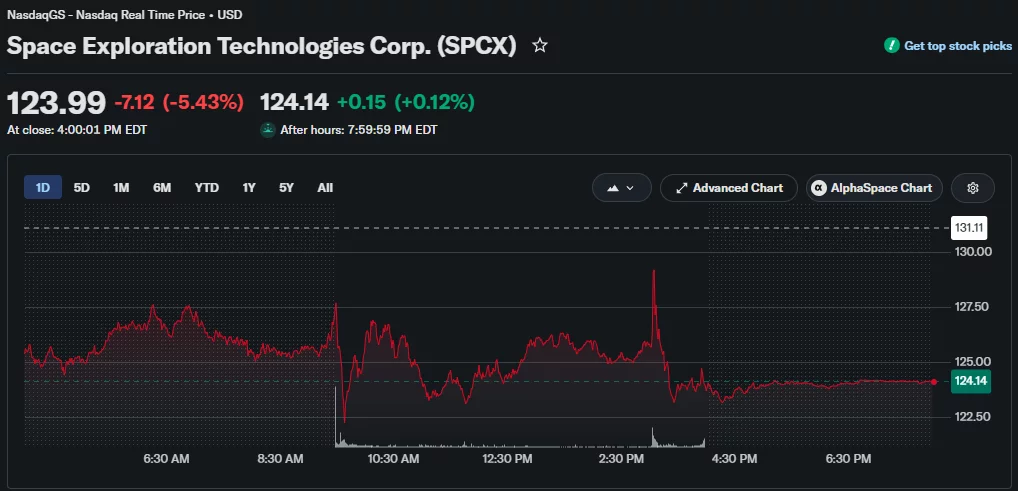
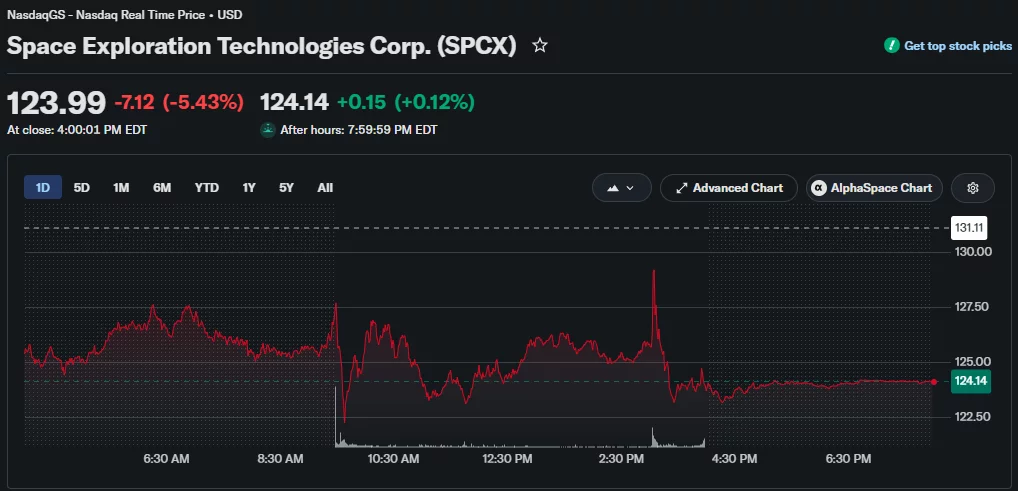
Cathie Wood’s ARK Invest has bought $18.3 million of SpaceX shares after the stock fell 5.43% to a new post-IPO low, according to the firm’s July 17 trading report.
Summary
- ARK Invest bought $18.3 million of SpaceX shares after the stock hit a post-IPO low.
- Four ARK ETFs acquired 147,623 shares as SpaceX closed 8.2% below its IPO price.
- SpaceX delayed Starship Flight 13 after two Raptor engines failed during pre-flight testing.
According to ARK’s daily disclosure, four of its actively managed exchange-traded funds purchased a combined 147,623 SpaceX shares as the stock closed Friday at $123.99. During the session, shares dropped as low as $122.12.
The ARK Innovation ETF made the largest purchase, adding 95,129 shares worth about $11.8 million based on Friday’s closing price. ARK’s Autonomous Technology & Robotics ETF bought 30,464 shares valued at $3.78 million, while its Space Exploration & Innovation ETF added 12,611 shares worth around $1.56 million.
Completing the purchase, the ARK Next Generation Internet ETF acquired another 9,419 SpaceX shares valued at approximately $1.17 million, according to the same disclosure.
ARK adds to its SpaceX position below the IPO price
Friday’s purchase has extended a series of SpaceX investments made by Wood’s firm since the company entered the public market in June.
As crypto.news previously reported, ARK bought roughly $52.1 million of SpaceX shares during the week ending July 10 through the ARKK, ARKQ, ARKW and ARKX funds. Data from Ark Invest Tracker showed that those purchases lifted the firm’s investment since the June IPO above $475 million.
Ark Invest Tracker also reported that ARK acquired about $444 million of SpaceX stock around the company’s June 12 market debut. Its latest purchase came with the shares trading 8.2% below their $135 offer price, based on Friday’s closing value.
While adding to SpaceX, ARK reduced its exposure to Robinhood Markets during the same trading session. The firm’s report showed that ARKW sold 20,089 Robinhood shares and ARKK disposed of another 5,913 shares.
Robinhood ended Friday at $99.96 after losing 5.72% during the session. ARK’s disclosure did not provide a reason for selling the 26,002 shares.
Starship delay adds pressure to SpaceX shares
As crypto.news reported, SpaceX’s latest decline followed the cancellation of Starship Flight 13 shortly before its scheduled launch. According to the report, at least two Raptor engines on the Super Heavy booster failed to ignite during pre-flight testing, prompting the company to stop the mission minutes before liftoff.
Elon Musk later stated that SpaceX would replace the affected engines. The company subsequently rescheduled Flight 13 for July 20 at 6:45 p.m. ET.
Commenting on the stock’s decline, cognitive scientist Gary Marcus linked the latest weakness to rising doubts about Musk’s performance. Marcus expected another record low to be more likely than a sudden and much larger collapse, according to his assessment cited in the report.
Tesla investor Sawyer Merritt offered a different view, arguing that traders had overreacted to a short operational delay. Merritt maintained that postponing the launch by several days did not represent a serious setback for SpaceX.
2026 has been quite interesting and unexpected in terms of investments. Gold and silver started the year strong with massive gains and new all-time highs, while BTC has been mostly trading downward.
While bitcoin’s correction intensified after the January rejection at $95,000, the two largest precious metals tumbled as well. Perhaps a large portion of gold’s losses could be attributed to how investors turned on the largest ETF tracking its performance.
Will GLD Stage a Comeback?
Data provided by the analysts at the Kobeissi Letter indicated that the world’s largest gold-backed ETF, World Gold Council’s GLD, has seen a substantial investor exodus that began in March this year. In the span of just the third month of the year, the financial vehicle lost a whopping $8.5 billion. This became the largest monthly withdrawal in GLD’s 22-year history.
This worrying trend eased to an extent in the following months, but red continued to dominate. Investors pulled out $1.7 billion in April, a more modest $872 million in May, and $3.2 billion in June. The mid-month data for July shows that the withdrawals have dropped to under $50 million, prompting the analysts to speculate whether the gold market is “setting up for a comeback.”
BREAKING: The largest US gold-backed ETF, $GLD, has recorded -$14.4 billion in outflows since March 1st.
This is 50% more than the -$9.6 billion in outflows seen across all Bitcoin ETFs since the October peak.
In March alone, investors withdrew -$8.5 billion from $GLD, the… pic.twitter.com/0Wvwlqxpxi
— The Kobeissi Letter (@KobeissiLetter) July 16, 2026
These net outflows coincided with gold’s price collapse. The bullion peaked at $5,600/oz in late January, but it has lost nearly 30% of its value since then, declining to $4,000/oz as of Friday’s close.
BTC ETFs Bleed Too
With roughly $130 billion in AuM, GLD is more than twice as big as all spot Bitcoin ETFs combined. As such, it’s rather difficult to compare the respective net outflows. Nevertheless, the ongoing narrative is that investors have turned on BTC, which is supported by the recent negative streak that began in May.
In the span of approximately two months, investors pulled out just over $8 billion from all BTC ETFs, pushing the cumulative total net inflows down to $51.22 billion from $59.34 billion. June was the worst month, with over $4.5 billion leaving the funds, which was more than GLD’s exodus.
Perhaps it’s no surprise that the underlying asset’s price performance has been quite painful within this timeframe. BTC was rejected at $83,000 when the withdrawal wave began in mid-May, and plunged to a multi-year low of $57,700 on July 1. Although it has recovered some ground since then, the ETFs’ behavior remains highly uncertain to support a more profound rally.

The post The ETF Battle Between Gold and Bitcoin: Is BTC Really Losing? appeared first on CryptoPotato.

France’s national gambling regulator has ordered internet service providers to block access to Polymarket, arguing that the platform operates like illegal gambling in the country. The Autorité nationale des jeux (ANJ) said Polymarket’s services are not authorized in France and warned that promoting unapproved gambling sites can trigger criminal penalties.
The move underscores how prediction and “event contract” platforms continue to run into regulatory friction across Europe and beyond—particularly over whether these products should be treated as gambling, unlicensed financial instruments, or something else entirely.
Key takeaways
- The ANJ directed French ISPs to block Polymarket, saying its prediction contracts amount to illegal gambling under French law.
- The regulator cited “addictive” mechanics and the absence of protective safeguards common in regulated gambling markets.
- ANJ also pointed to concerns that certain outcomes could be manipulated, including references to hacked weather sensors.
- France joins a growing list of jurisdictions that have restricted Polymarket access.
France orders ISP-level blocks
In a Friday press release, France’s Autorité nationale des jeux (ANJ) said it considers online prediction platforms to be illegal gambling when they are not authorized through the regulated framework. Based on that determination, the regulator ordered internet service providers to block access to Polymarket.
The ANJ stated that Polymarket’s operations are not authorized in France. It also highlighted that advertising gambling services without authorization is a criminal offense, with fines that may reach 100,000 euros (about $114,000), according to the regulator.
For investors, traders, and users, the practical impact is straightforward: even if markets can still be accessed through other means, ISP-level blocking raises friction, reduces discoverability, and increases the likelihood that marketing and distribution channels are disrupted inside the country.
Regulatory concerns: missing safeguards and possible manipulation
Beyond the authorization question, ANJ argued that Polymarket’s user experience resembles regulated gambling offerings, but without the protective mechanisms found in the legal market. The regulator described the platform as having features that can be “addictive,” while emphasizing that France’s authorized gambling environment includes safeguards that are not present on Polymarket.
ANJ further said some event contracts raised manipulation risks. In particular, the regulator referenced cases suggesting bets may have been “rigged,” including weather-related markets where weather sensors allegedly could have been hacked.
“Some of the bets offered on this platform appeared to be rigged: for example, bets on the weather revealed that weather sensors may have been hacked.”
The regulator linked the concerns to findings tied to an investigation by the cybercrime unit of the Paris Public Prosecutor’s Office, which reportedly began in May 2026. ANJ also said investigators identified a lack of identity verification measures, such as Know Your Customer (KYC) checks.
That combination—gamification-style incentives plus weak identity controls plus questions about how external data is validated—has become a recurring theme in regulators’ critique of online prediction products. If identity and data integrity remain unresolved, platforms face higher odds of being treated as gambling rather than as a form of regulated markets activity.
France follows a broader crackdown pattern
France is not alone. According to the article being rewritten, multiple countries have already moved to block or restrict access to Polymarket, including Singapore, Poland, Portugal, Hungary, Ukraine, Brazil, and Indonesia.
At the time of writing, Polymarket indicated it had implemented geoblocking in 36 regions, pointing to the reality that regulatory compliance often arrives as region-by-region access controls. Still, an ISP block order like the one announced by France changes the enforcement posture: instead of relying only on platform-side geofencing, the regulator targets the local internet access layer.
France’s action also fits with its earlier warning signals. The ANJ previously shared plans to block Polymarket in November 2024, citing failures to comply with French gambling rules. The new ISP order therefore represents a formal escalation from planning to execution.
Global pressure from US regulators
Regulatory scrutiny around prediction market platforms is not limited to Europe. In the United States, multiple legal challenges have centered on whether these platforms operate as unlicensed sports betting, and whether states can regulate them without conflicting with federal authority over certain event contracts.
According to earlier coverage referenced in the source material, on June 17 Kentucky sued five prediction market platforms—including Kalshi and Polymarket—arguing they were operating unlicensed sports betting. The same reporting states that at least 17 other states joined similar actions.
The source also notes that the Commodity Futures Trading Commission (CFTC) sued eight states, arguing they interfered with the agency’s exclusive authority over federally regulated event contracts. Taken together, these US developments show a fragmented regulatory landscape where platforms can face lawsuits on both sides of the jurisdiction question: whether they should be classified as gambling/sports betting under state frameworks, or as instruments governed by federal commodities and derivatives rules.
For readers trying to gauge what comes next, the key variable is classification—how regulators decide whether prediction contracts are gambling products requiring licensing, or market instruments subject to a different compliance regime. France’s ANJ decision makes one side of that argument explicit.
As France moves to block Polymarket at the ISP level, market participants should watch for how Polymarket responds in practice—whether it can modify compliance to address authorization, identity verification, and data integrity concerns—and whether other European regulators follow France’s lead with similar enforcement steps.

Ripple Payments Europe joined 14 firms added to the European MiCA register, lifting the total of authorized crypto providers across the bloc to 294.
The update confirms Ripple’s regulated foothold in Europe, though licensing momentum is clearly cooling.
Ripple Payments Secures Its Regulated Foothold in Europe
MiCA is the European Union framework that requires crypto companies to hold a Crypto Asset Service Provider license before offering regulated services. The European Securities and Markets Authority maintains the central register listing every approved firm.
Ripple Payments Europe was added to the list after receiving full authorization from Luxembourg’s financial regulator, the CSSF. The entity now operates as the company’s regulated payments arm across the European Economic Area.

The license unlocks passporting rights covering 30 countries. That mechanism allows a single national approval to cover the entire bloc, replacing the previous patchwork of separate national permissions.
The CASP authorization pairs with Ripple’s existing electronic money institution license in Luxembourg. Together, both permissions allow European banks, fintechs, and corporates to collect, exchange, and pay out through a single integration.
The company holds more than 75 regulatory licenses worldwide, including approval from the UK Financial Conduct Authority secured in January.
What Does the Latest MiCA Update Reveal
The composition of the update tells its own story. The 14 new entries span 10 European countries and include banks, exchanges, payment providers, and Bitcoin-focused platforms.
Portugal’s Bison Bank, Croatia’s state-owned Hrvatska poštanska banka, and Liechtenstein’s Kaiser Partner Privatbank all appeared alongside two German cooperative banks. MiCA authorization clearly extends well beyond crypto-native firms.
The register already includes heavyweight institutions such as BBVA, CaixaBank, Commerzbank, and Standard Chartered Luxembourg. Traditional finance is quietly building regulated crypto capacity across Europe.
The overall pace, however, has slowed noticeably. ESMA added 37 providers on July 3, right after the transitional period closed, compared with just 14 this week.
Markets stayed largely unmoved by the news. XRP trades near $1.07, with a market capitalization above $67 billion, down roughly 3.46% over the past 24 hours, according to BeInCrypto data.

The token sits about 70% below its record high of $3.65. Regulatory progress, once again, has failed to translate into price momentum.
What the License Means for XRP and RLUSD
The authorization matters more than the price for infrastructure. The CASP license allows Ripple to move crypto assets legally within the bloc, while the electronic money institution permission covers the fiat side of each transaction.
That combination is the relevant part for RLUSD, Ripple’s dollar-pegged stablecoin. Under MiCA, stablecoins fall into a separate category, and only credit institutions or electronic money institutions can issue them within Europe.
Holding both permissions in Luxembourg places Ripple in that narrow group. Whether RLUSD eventually launches as a fully regulated European product remains a separate decision, still unannounced.
For XRP, the impact stays largely indirect. The token settles transfers on the XRP Ledger, so wider institutional use of Ripple’s payment rails could increase transactional demand over time.
Subscribe to our YouTube channel to watch leaders and journalists provide expert insights.
The post Ripple Payments Joins MiCA With 14 Firms, Does It Mean Anything For XRP? appeared first on BeInCrypto.


Noxa has halted token launches after generating more than $12 million in fees and helping Robinhood Chain reach $4 billion in cumulative decentralized exchange volume within two weeks.
Summary
- Noxa halted launches after earning $12 million in fees within two weeks.
- CASHCAT plunged over 33% as Robinhood Chain trading volume declined.
- Rival launchpads are competing to capture activity previously controlled by Noxa.
crypto.news reported that the launchpad stopped operating on July 11 after becoming the main platform behind Robinhood Chain’s early memecoin activity. Noxa had supported more than 60,000 token launches and accounted for about 75% of all deployments on the network.
During its peak, Noxa’s daily protocol fees exceeded those of Solana-based Pump.fun for five straight days, according to crypto.news. The rapid activity helped push Robinhood Chain, which launched on July 1, into one of the busiest new venues for speculative tokens.
CASHCAT became Noxa’s most successful launch, reaching a peak market capitalization of $226 million. crypto.news reported that the token helped attract 267,642 unique wallets to Robinhood Chain during its opening weeks.
Noxa initially blamed bot spam and a flood of low-quality tokens when it suspended new launches on July 11. Two days later, its website became unavailable, with the team attributing the outage to a Cloudflare problem.
Rather than restoring its previous business model, Noxa later announced that all continuing trading fees would go to token creators. The decision removed the platform’s share of future revenue, although Noxa did not provide a detailed explanation of its long-term plans.
CASHCAT leads the post-Noxa selloff
CASHCAT fell more than 33% within 24 hours as traders reacted to Noxa’s exit, according to crypto.news. Other Robinhood Chain tokens, including FOX and HOODIE, also declined after previously recording strong weekly gains tied to activity on the launchpad.
Vlad.fun added to the uncertainty when the rival platform went offline several days later. According to its team, an internal integrity issue prompted the shutdown.
Reaction among crypto users remained divided. Some social media users treated Noxa’s decision as a rejection of bot-driven token speculation, while others described the departure as a soft rug.
Trader 0xAvast, who reportedly followed CASHCAT from a market value of around $10,000 to $230 million, dismissed concerns surrounding the collapse as “irrelevant FUD.” However, crypto.news’s data showed Robinhood Chain DEX volume falling after reaching a record $878 million on July 12.
Before Noxa disappeared, crypto.news reported that Robinhood Chain had overtaken Base to rank second by Uniswap deployment volume. The report linked part of that expansion to memecoin launches and Pump.fun integration.
Rival launchpads compete for displaced activity
Despite the drop in trading volume, crypto.news reported that Robinhood Chain’s total value locked has remained close to $200 million. Platforms including flap.sh, trensh.today and bankr have since sought to capture activity previously handled by Noxa, while Pons has also entered the market.
None of those platforms has yet matched Noxa’s token-launch record or produced a memecoin with CASHCAT’s reach.
The memecoin boom has also dwarfed Robinhood Chain’s tokenized real-world asset sector. crypto.news placed the market capitalization of those assets at $12.66 million, while CASHCAT alone had been worth about 12 times that amount at its peak.
Robinhood CEO Vlad Tenev declared that “Robinhood Summer is here” on July 8. Within a week of that post, the chain’s largest launchpad had stopped accepting new token launches, leaving competing platforms to test whether Robinhood Chain can maintain activity without Noxa.

The value of global semiconductor stocks plummeted after the release of the Kimi K3 AI model by Moonshot AI, driving the Philadelphia Semiconductor Index into bear territory. As per Coin Bureau on X, the index slumped by over 20% compared to the high in June, while the benchmark index of Taiwan fell by 6% and the Japanese market was down by 4%. The post also said chip stocks had wiped out around $3.3 trillion from their market value since June 22. Meanwhile, the graph posted alongside the article highlighted a sudden surge in the asset linked to the Kimi K3 release.
Coin Bureau Reports Broad Semiconductor Selloff
Market update for X was given by Coin Bureau after Moonshot AI announced the Kimi K3. In the update, the Philadelphia Semiconductor Index is said to be more than 20% lower than its record level in June, thus qualifying as a bear market.
It was also reported that Taiwan’s benchmark share index fell by more than 6%, while Japanese stocks declined by 4%. Coin Bureau went on to report that the total drop has resulted in a loss of $3.3 trillion worth of market capitalization for global semiconductor shares since June 22. The drop is attributed to the release of the Kimi K3, as per Moonshot AI.
Kimi K3 Launch Draws Attention Across Ai Markets
Moonshot AI announced the launch of the next generation of its open-source artificial intelligence model by naming it Kimi K3. This launch is taking place amid intense competition within the AI development sector where developers keep enhancing their models.
The statement received an immediate reaction from the financial world. Traders kept track of the announcement as the stock prices of chip makers underwent severe selloff. The Coin Bureau article made the connection between the falling semiconductor stock prices and the Kimi K3 release, but other factors remain under consideration in the marketplace.
Chart Shows Rapid Rally Before Profit Taking Emerges
The chart attached to the post showed a continuous rising trend, followed by a breakout that pushed prices even higher to a new level. This happened after a series of highs and lows, reflecting buying pressure.
The candle with the biggest increase was the green candlestick, which took the price almost to the 14,000 level. The red candle that followed was the moment when traders decided to take profit from the big increase. Despite the fact that volatility increased, the price remained above the previous breakout levels.
Markets Watch Ai And Semiconductor Developments
However, semiconductor firms are still closely associated with the development of artificial intelligence infrastructure. The creation of AI models is always significant since it tends to affect market expectations.
Stock prices of semiconductors will keep being watched by investors along with any moves made by Moonshot AI and other companies in the realm of artificial intelligence. This might become clear once more trading sessions take place.
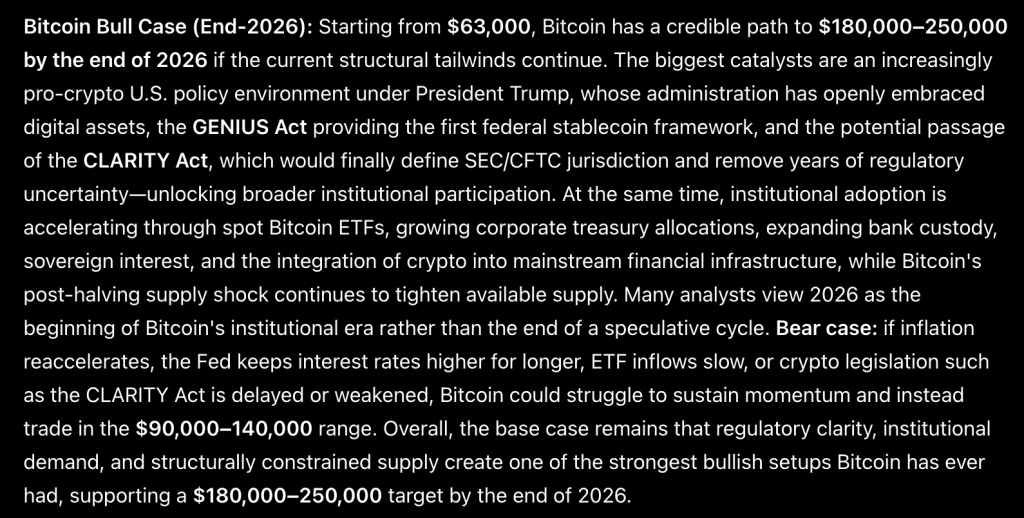
From a $63,000 Bitcoin price, Sam Altman’s ChatGPT AI is not thinking in percentages anymore, it predicts $180,000 to $250,000 BTC by the end of 2026. It’s a price prediction that treats the current price as little more than a starting line.
The case leans hard on politics and plumbing rather than hype. A pro-crypto White House under President Trump has openly embraced digital assets as policy rather than tolerating them.
The GENIUS Act already delivered the first federal stablecoin framework. The CLARITY Act, if it passes, would finally define SEC and CFTC jurisdiction and remove years of regulatory fog in one move.
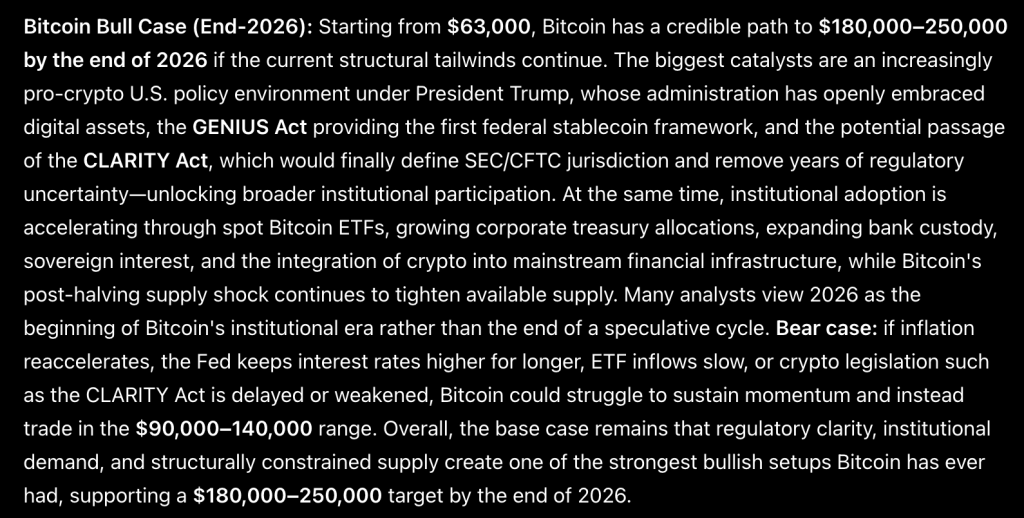
That kind of clarity does not just calm nerves; it unlocks capital that was sitting out specifically because the rules were unclear. Institutional adoption is already moving without waiting for the bill, through spot ETFs, growing corporate treasury allocations, expanding bank custody, and early sovereign interest.
Layer the post-halving supply shock on top of all of that. Less new Bitcoin entering the market against rising institutional demand is the exact setup that has preceded every major leg up in past cycles.
ChatGPT frames 2026 as the start of Bitcoin’s institutional era rather than the tail end of another speculative cycle. That reframing is the whole bull case in one sentence.
The bear case is not dismissed, just narrower. If inflation reaccelerates, the Fed holds rates higher for longer, ETF inflows slow, or CLARITY gets delayed or watered down, Bitcoin could stall out trading between $90,000 and $140,000 instead.
Notice that even the bear scenario sits above where the price trades today. ChatGPT is essentially arguing that the floor has already moved, only the ceiling is in question.

Discover: The Best Token Presales
Bitcoin Price Prediction: BTC Is Sitting Exactly On The Fence, RSI Just Confirmed
Price closed at $63,032, down 1.18%, in a session that ranged between $62,613 and $64,008. Nothing dramatic happened today, which is itself worth noting after the year this chart has had.
Zoom out, and the story is a slow bleed followed by a stubborn floor. Bitcoin topped near $128,000 in October 2025, then broke down hard in February, gapping through $84,000 in one violent leg.
Since that break, price carved a rounded recovery attempt, rallying to $97,000 in April before fading, then pushing again to $82,000 in May before rolling over into a June flush near $60,000. That June low held, and the price has spent the last six weeks grinding sideways just above it.
Support sits at $60,000, the level defended in June, then $52,000 if that floor finally gives. Resistance stacks at $68,000, then $73,000, then the heavier ceiling near $84,000 that has rejected two rally attempts already.
The RSI panel here gives an unusually clean read. RSI sits at 48.35 with its signal line at 51.19, meaning momentum is currently running just under its own average, a small negative gap rather than a dramatic one.
That is a market caught exactly at the midpoint, not oversold, not overbought, just undecided. It is the kind of reading you get right before a real decision gets made, not after one.
For ChatGPT’s six-figure targets to matter, Bitcoin needs that RSI gap to flip positive and stay there, then take back $84,000 with volume behind it. Until then, $63,000 is a market thinking it over, not a market that has chosen a direction.
Don’t Miss Out on Our $1,000 USDT Airdrop on ByBit
Here is What ChatGPT AI Predicts About LiquidChain
The rotation has already happened. Most people will realize it too late.
Large caps are boxed in. Bitcoin, Ethereum, and XRP keep testing the same ceilings with nothing giving way. Every macro catalyst has a new date. Every institutional wave arrives next quarter. Waiting on someone else’s timeline is not a trade.
A capital that has navigated enough cycles moves before the destination has a name.
Small market cap infrastructure plays on different physics entirely. A modest rotation that vanishes as noise at Bitcoin’s scale can reprice an undiscovered project by multiples. The returns live in the gap between what something is genuinely worth and what the market has assigned it. That gap closes permanently the moment discovery happens.
Multi-chain fragmentation bleeds DeFi every single day. Bitcoin, Ethereum, and Solana run as completely isolated systems. Every user crossing those boundaries pays in fees, slippage, and failed transactions. Every single time.
ChatGPT AI predicts LiquidChain fixes that entirely. All 3 networks inside one execution layer. One deployment. Zero cross-chain tax anywhere.
The presale is at $0.01454 with just over $900,000 raised. The market has not found this yet. That is exactly the point.
Execution is unproven. Adoption is unknown. LiquidChain is an entry point that disappears the moment the market looks up.
Discover: The Best Crypto to Diversify Your Portfolio
The post ChatGPT AI Predicts This Exact Bitcoin Price by the End of 2026, and It’s Insane appeared first on Cryptonews.
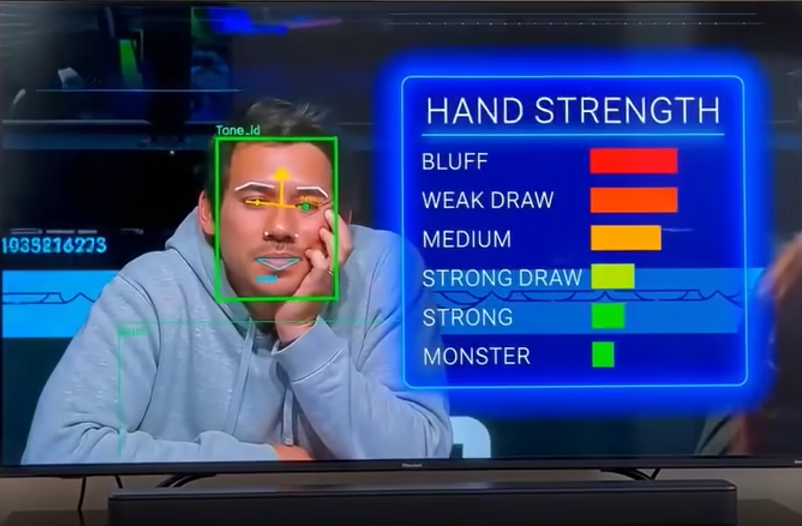
An artificial intelligence (AI) poker-tells detector debuted during ESPN’s coverage of the World Series of Poker (WSOP) Main Event. The system flags likely bluffs using body language alone.
Independent AI engineer Luke Geel spent six months building the tool. Omaha Productions, the Peyton Manning-owned company behind the broadcast, applies it only to players who have already been eliminated.
How the AI Reads Poker Tells
The computer vision system tracks blink rate, eye gaze, posture, and how players handle their chips. It compares those patterns with results from earlier hands to estimate whether someone holds a strong hand.

Geel, who also develops AI for the US Air Force, announced the debut on LinkedIn. He described the project as harder than expected.
“It was significantly more difficult than I had initially hoped. I can’t just, like, upload a YouTube URL and say, ‘find their tells.’”
Geel said in an interview with Sportico.
Final table coverage airs on ESPN during the first week of August. The debut caps a busy month of AI headlines, days after Musk and Altman clashed over Apple’s lawsuit against OpenAI, as the global AI model race intensifies.
Players Split Between Cheating Claims and Curiosity
Reaction ran hot on Instagram and other platforms. Several players called the feature cheating and bad for the game, while others said they would run it on their own footage to remove personal tells.
Skeptics also question its purpose, since broadcasts already show every player’s hole cards. Meanwhile, Geel said multiple players asked about using the model to study future opponents.
The same approach could eventually read negotiators, job candidates, or sales prospects. That prospect revives earlier warnings about the dark side of AI, even as systems that let AI agents trade crypto enter other high-stakes settings.
Whether audiences treat the feature as insight or intrusion may decide if it returns next season.
The post ESPN Tests AI That Can Detect When Someone Is Bluffing appeared first on BeInCrypto.


France’s Autorité nationale des jeux (ANJ), or the National Gambling Authority, has ordered internet service providers to block access to Polymarket.
Prediction websites are considered illegal gambling, the ANJ said in a Friday press release.
The regulator said that Polymarket’s operations are not authorized in France and that advertising unauthorized gambling sites constitutes a criminal offense with fines of up to 100,000 euros ($114,000).
Prediction markets allow users to buy and sell contracts tied to the outcomes of future events, from elections and sporting events to economic data and geopolitical developments. Polymarket has surged in popularity over the past two years, with billions of dollars in trading volume, while drawing scrutiny from regulators over whether its event contracts constitute illegal gambling or unlicensed financial products.
Countries that blocked access to Polymarket include Singapore, Poland, Portugal, Hungary, Ukraine, Brazil and Indonesia. At press time, Polymarket said it was geoblocked in 36 regions.
France’s gambling regulator first shared plans to block the platform in November 2024 for failing to comply with national gambling laws.
Related: Polymarket hit by $2.9M theft, users to be refunded
French gambling authority cites outcome manipulation concerns
France’s gambling authority said Polymarket boasts “addictive features” that are similar to regulated gambling offerings, but “amplified by the absence of the protective mechanisms found in the legal gambling market.”
It also cited potential outcome manipulation tied to some event contracts on Polymarket, adding:
“Some of the bets offered on this platform appeared to be rigged: for example, bets on the weather revealed that weather sensors may have been hacked.”
The cybercrime unit of the Paris Public Prosecutor’s Office launched an investigation into this matter in May 2026 and found a lack of identity verification, such as Know Your Customer checks.
Prediction markets have also drawn scrutiny from US regulators. On June 17, Kentucky sued five prediction market platforms, including Kalshi and Polymarket, accusing them of operating unlicensed sports betting platforms. At least 17 other states have followed suit.
The Commodity Futures Trading Commission sued eight states, arguing they had interfered with the federal regulator’s exclusive authority over federally regulated event contracts.
Magazine: Dubai tops Asian crypto hubs, Taiwan passes crypto laws: Asia Express

With Strategy’s cash reserve now at $3 billion, founder Michael Saylor has named corporate adoption as a necessary condition for Bitcoin to become a global currency network.
Summary
- Michael Saylor says corporate adoption is essential for Bitcoin to become a global currency network.
- Strategy’s $3 billion cash reserve has helped ease concerns about forced Bitcoin sales.
- Bitcoin Japan plans its first treasury purchase as companies expand exposure to the asset.
In a July 18 X post, Saylor described companies as legal structures that allow people to work toward a shared mission with more efficiency, transparency, credibility, scale, and staying power.
Based on that framework, Saylor argued that enterprise adoption is necessary for Bitcoin’s development as a worldwide monetary network. He also described the process as inevitable and welcomed companies taking a larger role in the asset’s growth.
His comments place corporations at the center of Bitcoin’s next stage rather than treating business adoption as an optional source of demand. Strategy has already built its business model around holding Bitcoin, while its latest increase in dollar reserves has drawn a positive assessment from JPMorgan.
Strategy’s cash reserve has reduced forced-sale concerns
In a July 15 research note, JPMorgan identified Strategy’s $3 billion U.S. dollar reserve as a constructive signal for Bitcoin during a period of inconsistent demand for spot exchange-traded funds.
According to the bank, spot Bitcoin ETFs attracted inflows last week before returning to outflows this week. Leveraged ETFs tied to Strategy, however, recorded positive inflows for a seventh consecutive week, with JPMorgan attributing much of that demand to retail investors.
JPMorgan had previously argued that Strategy could reduce concerns about forced Bitcoin sales by keeping enough cash to cover two to three years of preferred-stock dividends. Although the bank’s analysts could not determine whether the larger reserve had already improved investor sentiment, they viewed the increase as another positive development for Bitcoin.
Corporate demand is also expanding outside the United States. As reported by crypto.news, Tokyo Stock Exchange-listed Bitcoin Japan plans to raise about $59.5 million, including $4.08 million for its first Bitcoin treasury purchase since adopting its new corporate identity.
CoinPost reported that Bitcoin Japan, formerly known as Horita Marusho, intends to issue 1.5 billion yen in unsecured convertible bonds with stock acquisition rights. A second series of stock acquisition rights will be issued through Cayman Islands-based EVO FUND.
If investors fully exercise the securities, Bitcoin Japan expects to receive net proceeds of about 9.657 billion yen, according to CoinPost.
Bitcoin’s fixed supply supports its case against AI investment
Saylor’s push for corporate participation comes as investors compare Bitcoin with artificial intelligence, another sector attracting large amounts of capital. JPMorgan CEO Jamie Dimon expects AI investment to reach $725 billion this year, while BlackRock executives have argued that rising government debt and concerns about currencies support Bitcoin’s long-term case.
Binance co-founder Changpeng Zhao has drawn a distinction between the two investment themes, presenting Bitcoin as monetary protection rather than a rival technology to AI.
“AI is great, but it does not protect you against inflation. Bitcoin does.”
Weeks earlier, Zhao had identified AI as one reason for weaker crypto market conditions in 2026. As previously reported by crypto.news, he argued that emerging AI businesses had absorbed some speculative capital that might otherwise have entered digital assets.
While Zhao focused on Bitcoin’s monetary role, Saylor’s July 18 post concentrated on the structures needed to expand its use. Under Saylor’s argument, corporate balance sheets, legal frameworks, and organized capital would help Bitcoin develop from a held asset into a sustainable global currency network.

Cathie Wood buys SpaceX dip after stock sinks to post-IPO low

Andres Chaparro (2 HRs, 8 RBIs) powers Nationals to 23-4 rout of Athletics

Spidery Drone Goes Near-invisible By Spinning Really, Really Fast


-
 NewsBeat2 days ago
London Mayor Sadiq Khan handed a peerage by Keir Starmer alongside 15 other Labour figures… just days before the PM leaves No10
-

 Fashion17 hours ago
Weekend Open Thread – Corporette.com
-

 Crypto World2 days ago
CFTC blocks Kalshi from unwinding Michigan trades after court order
-

 Politics3 days ago
Young campaigners urge incoming PM to act on outdoor junk food ads
-

 Business2 days ago
Nvidia Stock Slips After Big Tuesday Rally as Huang Confirms Vera Rubin Chip Is Now in Production Today
-
 Entertainment3 days ago
Disney’s Most Ambitious Failed Star Wars Attraction Is Coming to SDCC
-

 Crypto World13 hours ago
Ripple wins EU-wide access as ESMA adds it to MiCA register
-

 Tech4 days ago
Get Your ESP32 Sunny Side Up With This Solar Dev Board
-

 Crypto World2 days ago
Injective Submits SEC Transfer-Agent Registration to Onchain Ownership Records
-

 News Videos4 days ago
XRP BOMBSHELL… XRP OMBOARDED FOR TRANSACTIONS!!!
-

 Business2 days ago
Palantir Shares Rise After Expanded Nvidia Partnership and Fresh Analyst Upgrades Ahead of Earnings Day
-

 NewsBeat23 hours ago
Registration is now open for March for Men with Kev 2026
-

 Tech4 days ago
Dark Secrets Emerge When Jailbreaking LLMs
-
 Sports3 days ago
New Cornerback Enters Vikings Trade Rumor Mill
-

 News Videos1 day ago
Money | Class 12 Economics | CBSE Board Exam 2026-27
-

 Business1 day ago
Banco Bilbao Vizcaya Argentaria, S.A. (BBVA) Discusses Global Macro Environment and Economic Outlook for Core Markets Transcript
-

 NewsBeat6 hours ago
Durham County Council to send out electoral registration emails
-
 Tech5 days ago
Cloudflare Precursor Watches Your Mouse and Keyboard To Decide If You Are Human
-

 Crypto World2 days ago
Claude Fable 5 Slips to Second in AI Coding Leaderboard
-

 Business16 hours ago
Airlines warn Sunshine Protection Act could disrupt flight scheduling
You must be logged in to post a comment Login