
Business
United CEO brought merger idea to White House but considered it last fall


United Airlines CEO Scott Kirby, joined by U.S. Vice President JD Vance and Transportation Secretary Sean Duffy, speaks to reporters outside the White House on Oct. 30, 2025 in Washington, D.C.
Kevin Dietsch | Getty Images News | Getty Images
United Airlines CEO Scott Kirby raised the idea for an airline merger with the Trump administration this year, according to people familiar with the matter, though he has been considering a potential airline deal since last fall.
On Monday, Bloomberg News reported that Kirby floated the idea of a tie-up with American Airlines to the White House in February. Some airline analysts and experts brushed off the possibility of that combination, which would create the world’s biggest airline, saying the regulatory hurdles would be too high to clear. United and American declined to comment on the report.
A combination of that size hasn’t been attempted in the U.S., though waves of industry consolidation starting about two decades ago have left American, United, Delta Air Lines and Southwest Airlines in control of about 80% of domestic market share.
But United’s Kirby has said the next phase for U.S. carriers is figuring out how to better compete on a global stage.
“Size would help” compete on U.S. outbound flights, he told the Stratechery podcast on an episode that aired in January.
“We have customers that fly United almost all the time or they fly Delta, but when they go to the Middle East, it’s fragmented enough that they fly on Emirates,” he said. “If we’re bigger and have more offerings for those customers, possibly, it makes it more rational for them to fly us when they go to the Middle East.”
U.S. airlines spent years complaining about what they called unfair government subsidies that some Middle East carriers received. But U.S. carriers have recently teamed up with some of those airlines: United now has a partnership with Emirates, American has one with Qatar Airways and Delta signed a strategic partnership with Saudi Arabia’s Riyadh Air in 2024.


In the competitive landscape of the health and beauty industry, expansion into Europe requires more than just high-quality products; it requires a deep understanding of local consumer habits.
While digital wallets are standard in many regions, a massive segment of the European population remains loyal to traditional payment methods. This time our focus is cash on delivery (COD) page, and why mastering this channel is essential for any brand scaling its operations.
For companies specializing in supplements and skincare, implementing cash on delivery for nutra is often the single most effective way to boost conversion rates in Central, Southern, and Eastern Europe.
The Strategic Importance of COD in the Nutra Sector
The Nutra industry thrives on trust. Customers are often hesitant to pay upfront for products they haven’t tried or from brands they are just discovering. Offering a COD option removes the primary barrier to purchase, providing the “safety net” that many European consumers demand.
However, the complexity of managing physical cash across multiple borders, currencies, and courier networks is a logistical mountain that most brands cannot climb alone. This is where WAPI enters the frame as a specialized partner for high-growth enterprises.
Scalability for Large-Scale Operations
Success in the Nutra world is often a matter of volume. WAPI is a COD service provider specifically designed to handle large volumes of orders, making it an ideal partner for businesses of big sizes. When a campaign goes viral or a new market opens, the logistical backend must be able to keep up without a dip in service quality.
WAPI provides a robust infrastructure that includes:
- Massive Throughput: The ability to process and ship hundreds of thousands of orders monthly.
- Strategic Warehousing: A network of over 16 warehouses across Europe, ensuring that products are stored close to the end consumer, significantly reducing delivery times.
- Financial Efficiency: WAPI ensures that the “cash” part of Cash on Delivery is handled with transparency, offering quick payouts that keep your business’s cash flow healthy.
Mastering the Buyout Rate: The WAPI Advantage
The biggest risk in the COD model is the “buyout rate”—the percentage of customers who actually accept and pay for the package upon delivery. A low buyout rate can sink a Nutra brand due to the costs of return logistics and wasted inventory.
WAPI is especially good for businesses of big sizes because they possess the data and experience to work with the buyout rate in different EU countries. Consumer behavior is not monolithic; a customer in Romania has different expectations and delivery habits than one in Italy or Poland. WAPI understands these nuances, implementing localized strategies to ensure the highest possible delivery success.
By using automated SMS notifications, precise courier selection, and optimized delivery windows, WAPI helps maintain high buyout rates that are critical for COD customers. This expertise ensures that your marketing spend translates into actual revenue rather than returned parcels.
Conclusion: Future-Proofing Your Logistics
For Nutra brands looking to solidify their presence in Europe, the path forward is clear. Integrating cash on delivery for nutra into your sales strategy is a proven method to capture market share that competitors relying solely on credit cards will miss.
By partnering with WAPI, you gain more than just a logistics provider; you gain a strategic ally capable of managing high-volume COD operations with precision. In a market where trust is the ultimate currency, WAPI ensures that your brand delivers on its promises, one doorstep at a time.

Bitcoin Holds Above $80K As Middle East Tensions Weigh

For many hospitality operators, a practical restaurant POS system software resource should do more than explain tills and payments; it should help business owners understand how modern point-of-sale decisions affect margins, staffing, stock control, customer experience and long-term resilience.
Restaurant technology has moved well beyond the cash drawer. A POS platform now sits at the centre of the business, linking front-of-house service, kitchen communication, reporting, menu performance and payment handling. For readers of BM Magazine, the subject is not simply about hospitality software. It is about how British businesses use operational data to stay competitive in a market shaped by rising labour costs, tighter margins and changing customer expectations.
Why the POS Has Become a Business Management Tool
A decade ago, many restaurant operators viewed the POS as a necessary utility. It recorded sales, printed receipts and helped staff close tables at the end of service. Today, restaurant POS system software resource systems are expected to provide a much wider commercial view.
A good system can help owners understand:
- Which menu items drive profit, not just revenue
- When staff are underused or overstretched
- How discounts affect margins
- Whether stock usage matches actual sales
- Which service periods need better planning
- How customer behaviour changes across the week
This shift matters because restaurant owners no longer have the luxury of managing by instinct alone. Experience still counts, but it needs to be supported by clean, timely information.
From Service Speed to Strategic Control
Speed remains important. Guests still want orders taken accurately, payments processed quickly and bills split without fuss. But the strongest POS decisions are not only about what happens during a busy Friday evening. They are about what managers can learn afterwards.
A restaurant may feel busy yet still lose money due to poor stock control, waste, excessive discounts, or badly priced dishes. Another venue may look quiet at lunch but generate a strong margin through efficient staffing and a focused menu.
That is why POS data should be treated as business intelligence, not back-office clutter.
The Best Systems Make Decisions Easier
Restaurant operators do not need endless dashboards that nobody reads. They need useful answers to practical questions.
For example:
- Did yesterday’s sales justify the labour cost?
- Which dishes should be promoted, removed or repriced?
- Are online orders helping or hurting profitability?
- Is wastage rising in one product category?
- Are regular customers returning less often?
- Which payment methods are becoming more popular?
When software helps answer these questions clearly, it becomes part of the management rhythm rather than just another digital tool.
The Link Between POS and Inventory Discipline
One of the most valuable developments in restaurant technology is the closer connection between sales and stock. A restaurant inventory management system can help operators track ingredients, monitor wastage and compare theoretical usage against actual consumption.
This is especially important in food-led businesses where small losses compound quickly. A few over-portioned steaks, unrecorded staff meals, expired dairy items, or inaccurate supplier invoices can quietly reduce profit.
Strong inventory discipline helps restaurants:
- Reduce unnecessary purchasing
- Identify fast-moving and slow-moving ingredients
- Improve menu costing
- Control waste more consistently
- Spot discrepancies earlier
- Plan specials around available stock
The real benefit is not only financial. Better inventory control can reduce stress in the kitchen, improve supplier conversations and support more confident menu planning.
Why Cloud-Based Systems Changed the Conversation
The growth of cloud-based restaurant POS systems has altered how owners access and use information. Instead of being tied to a single terminal or office computer, managers can review performance from different locations and compare sites more easily.
For multi-site restaurant groups, this is particularly useful. Owners can see whether one branch is outperforming another, whether pricing is consistent, or whether staffing patterns need adjustment. For independent operators, cloud access can still be valuable because it allows faster review of sales, stock and reporting without waiting until the end of the week.
Flexibility Matters, But Simplicity Matters More
Cloud technology is useful only when it remains practical. Restaurant teams work under pressure. A system that looks impressive in a sales demonstration but confuses staff during service can damage the guest experience.
The best technology should feel natural in the rhythm of hospitality. It should support the team without turning service into a software exercise.
A restaurant owner should ask:
- Can new staff learn the basics quickly?
- Does the system work reliably during peak periods?
- Are reports easy to interpret?
- Can menus be updated without specialist support?
- Does it integrate sensibly with reservations, payments and accounting?
- Is customer and payment data handled responsibly?
These questions are more important than chasing every new feature.
What B2B Restaurant Software Clients Should Prioritise
B2B buyers often approach software from a different angle. They may be comparing platforms for groups, franchises, food halls, hotels, delivery-led brands or hospitality operators with several revenue streams.
For these clients, the POS must do more than process orders. It needs to fit into a broader technology ecosystem, often involving accounting software, booking systems, loyalty tools, kitchen screens, payment providers, and delivery channels.
A strong purchasing process should consider:
- Integration quality
- Data ownership and export options
- User permissions and security
- Training requirements
- Support availability
- Reporting consistency across locations
- Scalability as the business grows
The commercial risk of making a poor choice is significant. Once a POS sits at the centre of operations, replacing it can be disruptive. That is why selection should involve finance, operations, front-of-house and kitchen stakeholders, not only the person responsible for IT.
The Human Side of Restaurant Technology
Hospitality is still a people business. Guests return because they feel welcomed, recognised and well served. Software cannot replace that. However, it can give teams more time and confidence to deliver it.
When the POS works well, staff spend less time correcting errors, chasing orders or clarifying bills. Managers spend less time building manual spreadsheets. Chefs get clearer order information. Owners can make better decisions without relying on guesswork.
Technology should reduce friction in the background so that the human experience improves in the foreground.
Where Operators Often Go Wrong
Many restaurants invest in technology reactively. A payment issue, reporting frustration or stock problem pushes them into a rushed decision. This often leads to fragmented systems that solve one problem while creating another.
Common mistakes include:
- Choosing software only based on price
- Ignoring staff usability
- Failing to review integration needs
- Underestimating training time
- Keeping outdated menu data
- Not using reports after implementation
- Treating the POS as a till rather than a business system
The issue is rarely the technology alone. It is usually the absence of a clear operating process around it.
Building a More Resilient Restaurant Operation
The most successful restaurant operators are not necessarily those with the most advanced systems. They are the ones who use technology consistently and commercially.
A POS should support better habits: reviewing performance, controlling stock, understanding customers, planning labour and improving service quality. When those habits are in place, software becomes a multiplier.
Restaurant businesses face enough external pressure from energy costs, wage increases, rent, supply volatility and changing consumer behaviour. Internal clarity is one of the few things owners can control.
Final Thoughts: The POS Is Now Part of the Boardroom Conversation
For restaurant owners and hospitality software buyers, the POS has become a strategic asset. It influences profitability, service delivery, stock control, customer retention and management visibility.
The key is to avoid seeing restaurant technology as either a magic fix or a necessary inconvenience. It is neither. It is a practical business tool that works best when chosen carefully, implemented properly and used every day.
For BM Magazine’s business audience, the broader lesson is clear: in modern hospitality, operational excellence depends on connecting the dining room, the kitchen and the numbers. A well-managed POS environment helps restaurants do exactly that, turning everyday transactions into better decisions and stronger businesses.

Futures trading has been around for centuries. It started with farmers and merchants who needed a way to lock in prices for crops and goods ahead of time.
Over time, that simple idea developed into a global market where traders now buy and sell contracts tied to oil, gold, stock indexes, and more. Today, futures markets move quickly, react to global events, and attract traders looking for both short-term and long-term opportunities.
Compared to stocks, futures offer more flexibility with trading hours and require less capital upfront due to leverage. Forex markets are similar in accessibility, but futures tend to have more centralized pricing and transparency. Crypto moves fast, but it can be unpredictable and heavily sentiment-driven. Futures sit somewhere in the middle, with structure, liquidity, and consistent volume.
If you’re thinking about getting into futures trading, the key is starting with the right mindset and a clear plan. There’s a learning curve, but it’s manageable if you take it step by step. Keep reading, and you’ll get a clearer picture of how to begin and what actually matters early on.
So, What Is Futures Trading?
Futures trading is the act of buying or selling contracts that represent an asset at a set price for a future date. Instead of owning the asset itself, you’re trading the price movement of that contract.
Let’s keep it simple. If you believe the price of crude oil will go up, you can buy a futures contract. If the price rises, you profit from the difference. If it drops, you take a loss. The same idea applies whether you’re trading stock indexes, commodities, or currencies.
Each contract has specific details. There’s a tick size (minimum price movement), contract size, and margin requirement. That margin is what allows you to control a larger position with less capital, which is why futures trading feels fast compared to other markets.
If you’ve traded stocks or forex before, the transition isn’t too difficult. The main difference is how standardized everything is. Futures contracts follow strict specifications, and pricing is centralized through exchanges. That makes things more consistent once you get used to it.
5 Tips To Get Started
Before placing your first trade, it helps to slow things down and focus on a few key areas. Here are some helpful tips before getting started:
1) Understanding the Basics
Before you even think about entering a trade, you need to understand how the market actually works. Futures trading has its own set of terms, and getting familiar with them early saves you from confusion later on.
Here are the core ones every beginner should know:
| Term | Definition |
| Contract | An agreement to buy or sell an asset at a future date |
| Margin | The amount required to open and maintain a position |
| Initial Margin | The minimum capital needed to enter a trade |
| Maintenance Margin | The amount you must keep in your account to keep a trade open |
| Tick | The smallest price movement a contract can make |
| Tick Value | The dollar value of each tick movement |
| Leverage | The ability to control a large position with less capital |
| Lot Size / Contract Size | The total value the contract represents |
| Expiration Date | When the contract is settled or rolled over |
| Liquidity | How easily a contract can be bought or sold |
| Volatility | How fast and how much the price moves |
| Slippage | The difference between the expected and the actual entry price |
| Spread | The gap between the bid and ask price |
2) Find the Right Prop Firm
Starting with a prop firm can take a lot of pressure off, especially if you’re new. Instead of risking your own savings, you’re working toward getting access to a funded account. That alone can change how you approach trading.
Most prop firms require you to pass an evaluation. You’ll need to follow rules like daily loss limits, overall drawdown, and sometimes consistency targets. While that might sound restrictive, it actually helps build discipline early on.
When choosing a firm, look at things like payout structure, evaluation difficulty, reset options, and how strict their rules are. Some firms are more beginner-friendly, while others expect a higher level of consistency from the start.
It’s worth comparing a few before committing. Using a futures prop firm comparison website can help you quickly see how different firms stack up without digging through each one individually.
3) Use the Right Trading Platform
Your trading platform is more than just a tool. It directly affects how you execute trades, read charts, and react to the market. A platform that feels slow or cluttered can lead to hesitation or mistakes, especially in fast-moving conditions.
The right platform helps you stay focused. Clean charts make it easier to spot setups. Fast execution reduces the chance of poor entries. A simple layout means you’re not wasting time searching for buttons while the market moves.
Here are a few features worth paying attention to:
- Reliable order execution with minimal delay
- Customizable charts and indicators
- Access to real-time market data
- DOM (Depth of Market) or order flow tools
- Easy trade management (stop loss, take profit adjustments)
- Stable performance during high volatility
4) Study a Trading Strategy That Fits
There’s no shortage of strategies out there, but not all of them will suit your personality or schedule. The goal is to find one that you can follow without second-guessing every decision.
Here are a few beginner-friendly strategies:
| Strategy | How It Works | Best For |
| Trend Following | Trade in the direction of the overall market trend | Traders who prefer steady moves |
| Breakout Trading | Enter when price breaks key levels | Active traders who like momentum |
| Pullback Trading | Wait for the price to retrace before entering | Patient traders |
| Range Trading | Buy support and sell resistance in sideways markets | Calm, slower markets |
| Scalping | Take small, quick trades for small profits | Fast decision-makers |
| News-Based Trading | Trade around economic events or reports | Traders who follow macro news |
5) Learn Risk Management Early
Risk management is what keeps you in the game long enough to improve. Without it, even a few bad trades can wipe out your progress.
There are a few core concepts worth learning early:
Position sizing: Deciding how much to risk per trade
Stop loss: Pre-setting where you exit a losing trade
Risk-to-reward ratio: Comparing how much you risk versus potential gain
Drawdown control: Limiting how much your account can drop over time
At the same time, there are behaviors that can quietly hurt your progress:
- Trading out of boredom instead of waiting for a setup
- Holding onto losing trades with the hope that they turn around
- Closing winning trades too early out of fear
- Ignoring your plan after a streak of wins
How Much Can a Futures Trader Earn?
Income in futures trading isn’t fixed, and it rarely looks like the big numbers you see online. What most traders experience depends on skill level, consistency, and account size.
Instead of guessing, here’s a realistic breakdown:
| Level | Account Size | Monthly Return (Typical) | Estimated Monthly Income |
| Beginner | $1,000 – $5,000 | -5% to +2% | -$50 to $100 |
| Early Consistent | $5,000 – $15,000 | 2% – 4% | $100 – $600 |
| Developing Trader | $20,000 – $50,000 | 3% – 5% | $600 – $2,500 |
| Consistent Trader | $50,000 – $100,000 | 4% – 6% | $2,000 – $6,000 |
| Advanced / Funded | $100,000+ (or multiple accounts) | 5% – 10% | $5,000 – $10,000+ |
Build Skill First, Profits Follow
Futures trading rewards consistency more than quick wins. Early on, it’s easy to focus on how much you can make, but the real progress comes from building habits you can repeat every day. That means sticking to one or two setups, managing risk properly, and reviewing your trades honestly. Some days will go well, others won’t, and that’s part of it.
As you gain experience, you’ll start to recognize patterns faster and make decisions with more confidence. Trades feel less rushed, and you’re not reacting to every small move. Over time, those small improvements add up. Focus on getting better first, and the profits tend to follow as a result of that process.

Dario Amodei, CEO and co-founder of Anthropic, and Jamie Dimon,
Denis Balibouse | Reuters | Samuel Corum | Bloomberg | Getty Images
Anthropic CEO Dario Amodei warned Tuesday that artificial intelligence has created a narrow window for the world’s tech firms, governments and banks to fix tens of thousands of software vulnerabilities found by his company’s latest model.
That AI model, Mythos, was previewed last month along with the disclosure that it had unearthed decades-old vulnerabilities in crucial software.
Since AI models from geopolitical adversary China are “maybe six to 12 months” behind the Anthropic product, there is “roughly that amount of time” to fix these issues, Amodei said.
The comments came during an Anthropic event in which Amodei shared the stage with JPMorgan Chase CEO Jamie Dimon and unveiled a new suite of agents meant to automate financial work.
“The danger is just some enormous increase in the amount of vulnerabilities, in the amount of breaches, in the financial damage that’s done from ransomware on schools, hospitals, not to mention banks,” Amodei said.
Anthropic has limited Mythos to a few partner companies because of concerns about what criminals or adversarial nations could do with it. The last several of the company’s model updates have reverberated through the markets, but Mythos has caused the most concern from corporations and policymakers alike.
The scale of potential cyber exploits has ballooned with each generation of Claude, Amodei said. An earlier Anthropic model found roughly 20 vulnerabilities in the Firefox browser. Mythos found nearly 300, and the total count across all software now runs into the tens of thousands, he said.
Most of the vulnerabilities found by Mythos haven’t been publicly disclosed because they remain unpatched, and “the bad guys will exploit” them if they are identified, Amodei said.
‘A better world’
Despite the alarm, both Amodei and Dimon also struck a note of conditional optimism.
“This is about a moment of danger where if we respond to it correctly, and I think we started to take the first steps, then we can have a better world on the other side,” Amodei said. “There are only so many bugs to find.”
Dimon also said that while the cyber fears were justified, the cybersecurity risks created by AI are a “transitory period.”
On the question of regulation, Amodei said that AI oversight should resemble what’s done in the automotive industry, striking a balance between consumer safety and allowing the industry to compete.
“You can’t just start a car company without ‘Are there brakes on this thing?’” he said. “We need to grope our way to some process that lets the industry operate expeditiously, is fair, but puts guardrails on the most serious things.”
The company’s event, and its setting with Dimon, the financial industry’s best-known spokesman, seemed to demonstrate Anthropic’s lead over OpenAI in the enterprise AI market as both companies head toward potential IPOs.
Anthropic announced on Tuesday an expansion of its financial services platform, including 10 new AI agents for investment banking and back-office work, as well as integration across Microsoft’s various Office programs. The company also said its latest widely available model — Claude Opus 4.7 — leads benchmarks for financial analysis tasks.


Group trips from Australia, whether it’s a hen do in Las Vegas, a 40th in Dubai, or a girls’ trip to Bali, come with long distances and a few moving parts. Get everyone there on the same schedule, and the trip is off to a good start. When flights are well organized, arrivals land within a tight window, transfers are simple, and the group moves straight into the experience. No waiting around, no piecing things together on arrival, just a clean start. That kind of flow comes from how the trip is structured early on, and how well it avoids the common delays that can split group arrivals.
A Strong Start Sets the Tone
There’s a point early in every trip where things settle into place. People arrive, bags are dropped, someone opens the first drink, and the space fills up quickly. Conversations and bonding start because everyone is there, present, and no longer tracking arrivals.
In Bali, that often means landing before sunset, checking in within a short window, and the first night unfolding without interruption. It’s a small detail, but it sets the tone for everything that follows—that usually starts with how the flights are chosen.
Choose Routes That Keep the Group Aligned
The more straightforward the route, the easier everything feels on arrival. Flights from Australia often connect through hubs like Singapore, Dubai, or Tokyo. Keeping that routing simple reduces the amount that needs to go right along the way and helps avoid delays that can push arrivals apart.
A slightly longer connection can help here. It gives the group enough space to stay aligned if there’s a delay leaving Australia, rather than forcing last-minute changes. Arriving within a two to three-hour window is usually enough to keep the day moving cleanly.

Keep Everyone on the Same Itinerary
Once the route is set, keeping everyone on the same booking becomes the next priority. It removes the need to manage multiple arrival times and keeps the group moving through each step at roughly the same pace. One transfer, one check-in, one start point.
For a girls’ trip from Sydney to Bali, for example, that often means stepping off the plane, moving through the airport, and reaching the villa within minutes of each other. No one is waiting around, and no one is catching up later. That consistency carries through the rest of the journey.
Travel at Times That Feel Easier
Timing plays a bigger role in this than most people expect. Flights outside peak periods tend to feel calmer from the beginning. Airports are easier to move through, boarding is more straightforward, and the overall pace is less compressed.
That calmer start makes it easier for the group to stay aligned, especially on longer routes where small delays can otherwise build. Even shifting the departure by a day can change the entire journey.
Give the Trip Space to Begin Smoothly
With flights and timing working in your favour, the next step is giving the trip room to settle. Arriving a day before the main event creates that space. People can check in, get their bearings, and ease into the destination without rushing into plans.
For a 40th in Dubai or a wedding week in Italy, that extra time makes a noticeable difference. The first proper gathering happens when everyone is ready, not when people are still arriving. It’s a simple adjustment that improves the entire experience.

When a More Direct Approach Makes Sense
For some trips, even well-structured commercial routes reach their limit. On routes like Sydney to Queenstown during ski season, keeping a group on the same commercial flight isn’t always straightforward. Availability can spread people across different departures.
A short-haul charter removes that complexity. One departure, one arrival, and the group stays on a single timeline from start to finish. In these cases, using a charter plane gives the group full control over timing, boarding, and the overall experience from the moment they arrive at the airport.
Instead of arriving early to check luggage, queue through security, and wait at the gate, the process is more direct. Bags are handled quickly, boarding is simple, and the group moves from arrival to take-off without long pauses.
Once on board, the space is your own. People settle in straight away, conversations start early, and the tone of the trip is set before landing. For milestone trips, this makes all the difference. The experience doesn’t begin at the destination. It begins when the group arrives at the airport.
Combining Routes for a Smoother Finish
For more complex destinations, this idea can be extended. Flying commercially into a major hub like Athens keeps the long-haul portion efficient. From there, continuing on a smaller aircraft to a nearby island keeps the group aligned right through to arrival.
For places like the Greek islands or coastal Italy, it simplifies what is often the most fragmented part of the journey. The result is a cleaner finish, with everyone arriving within the same window.
Planning That Holds Together
By this point, the pattern is clear. The trips that feel easiest are the ones where each decision supports the next. Routing, timing, arrival windows, and flexibility all work together to keep things moving in one direction. Once a group gets larger, those details matter more, not less. For Australian travelers covering long distances, that structure is what allows the trip to begin smoothly and stay that way.

A Spirit Airlines airplane at Baltimore Washington International Thurgood Marshall Airport (BWI) in Baltimore, Maryland, US, on Saturday, May 2, 2026.
Daniel Heuer | Bloomberg | Getty Images
Spirit Airlines‘ more than three-decade run ended over the weekend, but on Tuesday it was just starting the monthslong process of dismantling the company after the biggest U.S. airline collapse in a generation.
Spirit and its stakeholders were in bankruptcy court in White Plains, New York, to start that process, which will take months.
The carrier filed a cumulative wind-down budget of around $217 million, though that number could change.
The budget went out to February 2028. It included more than $52 million in employee costs through July and another more than $52 million for aircraft-related expenses.
The airline had 59 Airbus A320s in service and 63 in storage, as well as 37 of the larger A321s in service, and 13 of them in storage, according to aviation-data firm Cirium. More than three-quarters of its fleet was leased.
Spirit shut down operations after years of struggles, most recently from heavy debt loads and a surge in costs.
Spirit’s lawyer, Marshall Huebner of Davis Polk, told a bankruptcy court on Tuesday that the jump in jet fuel prices following the U.S.-Israel attacks on Iran in February left the carrier with no choice but to shut down. That added $100 million incremental costs for Spirit in March and April, he said.
U.S. bankruptcy court in White Plains, N.Y.
Leslie Josephs/CNBC
Talks for a potential government bailout in the form of a $500 million loan that could have given the government an up to 90% stake in Spirit fell apart late last week, and the carrier officially shut down at 3 a.m. on Saturday.
Spirit passengers scrambled to rebook reservations. American Airlines, JetBlue Airways, Southwest Airlines, United Airlines and others said they have flown tens of thousands of Spirit customers who were stranded by the collapse.
Spirit had flown about 50,000 people in the day leading up to its closure. The airline said about 17,000 direct and indirect employees lost their jobs.
“The closing of Spirit Airlines is a sad and unfortunate event that adversely affects many parties, and that’s particularly true for the thousands of folks who are Spirit employees and families who depend on them,” the presiding judge, Sean Lane, said at Tuesday’s hearing.
“The stress level for these employees and affinities is very high, and they likely have many questions,” he continued. “Hopefully there’ll be some information discussed today to provide some answers to some of those questions, or provides information about where to get those answers. Bankruptcy can be a very difficult process, and today is a sad example of that.”

Yoshitaka Kitao
Chairman of the Board, President & CEO
Thank you very much for attending this SBI Holdings full year results announcement. At the venue, we see dozens of people, and I understand that more than 110 people are participating online as well. Without further ado, let me start. So we have quite a big volume of documents. So I would like to go through numbers briefly.
The consolidated performance revenue, JPY 1,896.6 billion, up 31.4%. Pretax income, JPY 516.7 billion. 83% up. And the profit for the period, JPY 430.5 billion, up 127.6%, in which profit attributable to owners of the company, JPY 427.6 billion, plus 163.7%. Each of them are record highs, especially the ROE has been my focus, 28.0% year-on-year, it’s a big increase. Usually, the Japanese banking industry for FY 2024 average was 7.25%.
What about U.S., JPMorgan Chase, even JPMorgan Chase, 16.69%; Morgan Stanley, 16.52%; Goldman Sachs, 14.91%. The other banks, big financial companies representing the U.S. market compared to them, our ROE is better. So the comparison of consolidated performance with major securities groups, as I mentioned earlier, we have covered their numbers. The Nomura, JPY 362.1 billion, ROE 10.1%; and Daiwa, JPY 175.3 billion, 10.3%; and there is SMBC Nikko Securities, JPY 94.4 billion, 7.5% ROE; and the Mitsubishi UFJ, JPY 664.3 billion, 10% of ROE. So 28% of our number is really a surprisingly good number.
Looking at Nikkei Index, the 3 largest securities and so on, this way of writing of conventional media, but even the new medias and the conventional medias, all of them are using the Internet. And I’m wondering why Nikkei continues to write such stupid

Check out what’s clicking on FoxBusiness.com.
Delta Air Lines is expanding snack and drink service on thousands of flights, but for travelers on hundreds of short routes, the beverage cart is about to disappear entirely.
The changes set to take effect May 19 will mean passengers flying on Delta Main and Delta Comfort will no longer receive food or drinks on flights of 350 miles or less, which are typically trips lasting under an hour, a Delta spokesperson confirmed to FOX Business.
“Delta is adjusting onboard beverage service to create a more consistent experience across our network,” the spokesperson said. “Customers traveling in Delta Comfort and Delta Main on flights 350 miles and above will now receive full beverage and snack service, while shorter flights will no longer offer food and beverage service.”
The spokesperson emphasized that passengers flying first class will continue to receive full service no matter the flight’s distance.
‘FATTENING’ AIRPLANE SNACKS SLAMMED BY TRANSPORTATION SECRETARY: ‘FULL OF BUTTER, SUGAR AND CRAP’

Delta travelers flying Delta Main and Delta Comfort will no longer receive food or drinks on flights of 350 miles or less starting May 19, a Delta spokesperson confirmed to FOX Business. (iStock)
The airline said about 9% of its daily flights will lose service under the new policy.
At the same time, Delta is expanding full snack and beverage service — including alcoholic drinks and multiple snack options — to more routes. The airline said 14% of its flights will gain upgraded service, part of a broader push to standardize the passenger experience across its network of roughly 5,500 daily flights.

Delta Air Lines Airbus A220-100 aircraft as seen on final approach landing with landing gear down at New York JFK John F. Kennedy International Airport on Nov., 14, 2019, in New York. (Nicolas Economou/NurPhoto via Getty Images)
MAJOR AIRLINE AXES 20,000 ‘UNPROFITABLE’ FLIGHTS AS JET FUEL COSTS SOAR
The cuts will primarily affect routes that previously offered only limited “express service,” such as water, coffee and a small snack selection. Some shorter flights already had no service, including routes like Atlanta to Charlotte or Nashville.
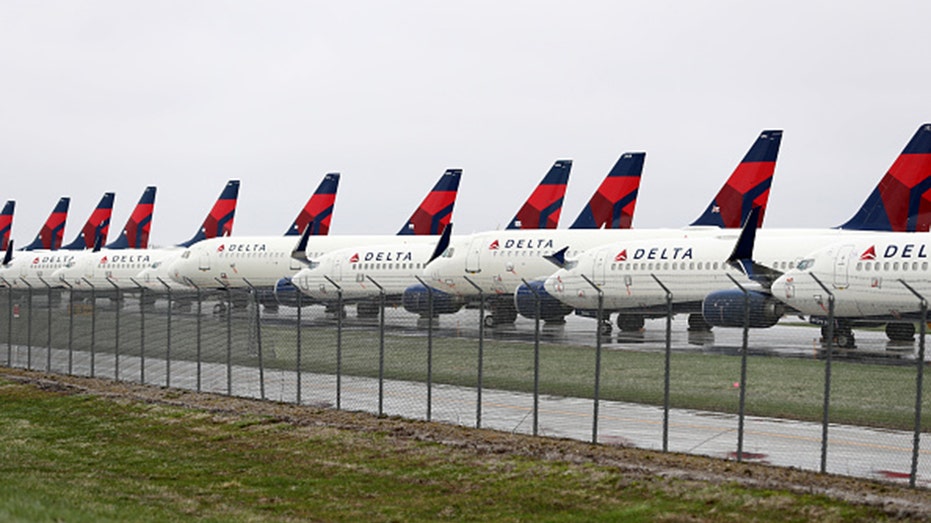
Planes belonging to Delta Air Lines sit idle at Kansas City International Airport on April 03, 2020, in Kansas City, Missouri. (Jamie Squire/Getty Images)
Even on flights without snacks or drinks, Delta said crews will remain focused on customer service.
CLICK HERE TO DOWNLOAD THE FOX NEWS APP
“Our crew will continue to be visible, available and focused on caring for our customers,” the spokesperson said.
The move comes as airlines continue adjusting onboard offerings in response to operational efficiency and passenger expectations.


The hydration-focused beverages are available in three flavors.

Millions stolen from victims in York and North Yorkshire

Why Cash on Delivery for Nutra is the Key to Dominating the European Market

Dogecoin Whales Just Accumulated $18 Million in 96 Hours: Is the $0.13 Breakout Finally Coming?

Manchester United reach agreement with Casemiro over contract clause amid transfer speculation

US brings back mandatory military draft registration

Steven Gerrard disagrees with Gary Neville over ‘shock’ Chelsea and Arsenal claim | Football


-

 Business7 days ago
Most Commercial Energy Audits Miss the Real Losses
-

 NewsBeat2 days ago
Channel 5 – All Creatures Great and Small series 7 new post
-

 Fashion7 days ago
Kylie Jenner’s KHY Enters a New Era with ‘Born in LA’
-
 Tech4 days ago
Trump’s 25% EU auto tariff breaches Turnberry Agreement that also covers semiconductors and digital trade
-
 Sports4 days ago
Paul Scholes issues Marcus Rashford reality check as agreement emerges over Man United star
-

 Business6 days ago
Barclay Brothers Avoid Bankruptcy: HSBC Drops High Court Petitions After IVA Deal
-
 Business6 days ago
Tesla Officially Registers Elon Musk’s Stock: What Investors Need to Know
-

 Tech6 days ago
Texas Instruments made a new flagship graphing calculator: the TI-84 Evo
-

 Entertainment6 days ago
Celebrities Who Are Attending the 2026 Met Gala Event
-

 Business5 days ago
Two Powerball Tickets Split $143 Million Jackpot in Indiana and Kansas
-

 Entertainment4 days ago
Met Gala 2026 Rumored Guest List Is Turning Heads
-

 Entertainment6 days ago
Insider Claims Reason Behind Key & Peele Split
-
Business2 days ago
Winning Numbers Drawn as Jackpot Resets to $20 Million
-
 Crypto World5 days ago
CoreWeave (CRWV) Stock Climbs 8% Despite $45M Insider Share Dump
-
 Crypto World6 days ago
Securitize and Computershare Enable Tokenized Equity Issuance for Over 25,000 U.S.-Listed Stocks
-

 Crypto World6 days ago
Meta (META) starts stablecoin payout to creators in Circle’s USDC on Polygon, Solana via Stripe
-

 Business6 days ago
Strait of Hormuz Remains Heavily Restricted on April 29 Amid Iran Conflict
-

 Crypto World6 days ago
Gibraltar Proposes Tokenized Funds Regulation to Bolster Compliance
-

 Entertainment4 days ago
Kylie Jenner Hit With Second Lawsuit From Ex-Housekeeper
-

 Business7 days ago
Alexandria Real Estate Equities, Inc. (ARE) Q1 2026 Earnings Call Transcript
You must be logged in to post a comment Login